$BRICKY 🧱

850 posts

$BRICKY 🧱 banner
$BRICKY 🧱

$BRICKY 🧱

@bricked_trades

Brick Trades | https://t.co/HmxgoR9BVx

Los Angeles, CA Katılım Ağustos 2021
118 Takip Edilen994 Takipçiler
$BRICKY 🧱
$BRICKY 🧱@bricked_trades·
$NVDA giving away the orchestration layer will make it that much harder for $PATH and $NOW to prove itself. I am invested in $PATH but that weak guide + this potential catalyst means management has to execute flawlessly this year
Polymarket Money@PolymarketMoney

$NVDA is preparing to launch an open-source AI agent platform called NemoClaw aimed at enterprise software companies. The platform would let businesses deploy internal AI agents, run beyond just Nvidia chips, and include built-in security and privacy tools.

English
0
1
2
470
$BRICKY 🧱
$BRICKY 🧱@bricked_trades·
@highnstein_ Sounds about right from what I hear from others Most people invest in things by staring at balance sheet numbers without ever truly understanding the product.
English
0
0
0
293
highnstein
highnstein@highnstein_·
@bricked_trades Used to work with UIPath and a few other RPAs on a process automation team. We pretty quickly figured out almost anything an RPA could do, python or other apps could do better and easier. Our spend on RPAs collapsed to next to nothing after 3 years
English
1
0
1
88
$BRICKY 🧱
$BRICKY 🧱@bricked_trades·
$PATH the biggest value trap shilled here on X Wall Street will always discount a perfect earnings if they fundamentally stop believing in the company's terminal value. No different than $TTD $ADBE where both stocks suffer from "Middleman Moat Crisis." RPA bots are mindless execution engines that require humans to map out every single edge case. AI agents can reason. $NVDA NemoClaw once announced could be final nail for $PATH
Oliver | MMMT Wealth (CPA)@MMMTwealth

$PATH unsurprisingly is down 10% pre-market right now. I remain bullish on $PATH long term no doubt, but my conviction after this print has been weakened just a tad. The positive news is that $PATH trades at a pretty low valuation sub $12 so I think the downside risk here at 17x NTM PE is actually quite minimal. The issue is $PATH isn't convincing the market that there is going to be any material Maestro ramp up anytime soon. Focus remains on margins (a nice positive), buybacks (a nice positive) etc, but what the market really wants to see is enterprise wins. I don't know if $PATH are winning here (yet). I may be overestimating the speed of the transition for Maestro...but right now it seems we won't really see anything material until FY28 and the market doesn't like that. Either the above is the case, or $PATH simply aren't winning the entry level simple task players and getting them into the pipeline. If $PATH have to rely on current enterprise customers and upselling those, whilst disruptors win other entry level clients, I think the long-term high growth story for $PATH is for sure in question. Then $PATH is simply a slow growth profitable play in a nice industry and nothing more. Then, a 17x multiple seems cheap but not very cheap. Another quarter of waiting to see if $PATH can get investors excited about the future of the company. So far, I don't think they are. Disclosure: I remain long $PATH (top 6 position)

English
3
1
5
1.1K
$BRICKY 🧱
$BRICKY 🧱@bricked_trades·
Why $ASPI Solves the Heat Bottleneck Photonics Can’t As AI compute moves toward 1nm, it has hit a "thermal wall." Transistors now generate heat densities exceeding nuclear reactor cores, threatening to kill performance scaling. While the market chases Gallium Nitride (GaN) and Photonics, ASP Isotopes ($ASPI) is quietly addressing the problem at the atomic level. Why GaN and Photonics Aren't Enough GaN (Power): Excellent for power efficiency, but its bulk thermal conductivity is mediocre (130–230 W/m·K). It reduces energy loss before it reaches the chip, but cannot effectively move heat out of a 1nm logic core. Photonics (Interconnect): Essential for moving data with light, reducing interconnect heat. However, the logic computation itself still boils. Because Co-Packaged Optics (CPO) place sensitive lasers directly next to the logic die, core heat can "detune" the optics, causing data errors. How $ASPI Is Disrupting with Silicon-28 Current chips use Natural Silicon, a "messy" isotopic mix. The 8% of atoms that aren't Silicon-28 (Si-29 and Si-30) act as atomic speed bumps, trapping heat particles (phonons) and causing the chip to throttle. $ASPI is the only commercial player scaling Silane-28 gas. By building chips with isotopically pure Si-28, the "atomic highway" is cleared. At the nanosheet level, Si-28 boosts thermal conductivity by 150%. As of March 2026, $ASPI has secured its largest Si-28 contract to date and is ramping Helium production via Renergen, the critical cooling gas required for the lithography chambers that build these chips.The Thermal Escape Hatch: Why $ASPI Wins the 1nm Era Iran War Affect The closure of the Strait of Hormuz following Iranian-US-Israeli conflict has paralyzed the global helium market. Qatar accounts for 30% of global helium supply. With QatarEnergy’s Ras Laffan facility offline and the Strait blocked, one-third of the world's helium is effectively "trapped." Why this Matters: Helium has no substitute in semiconductor manufacturing. It is essential for cooling wafers and is the lifeblood of the EUV lithography chambers used by TSML, Samsung, and Intel to print 1nm circuits. With acquisition of Renergen, $ASPI has secured the most strategic helium asset outside of the conflict zone.
$BRICKY 🧱 tweet media
English
0
0
5
575
$BRICKY 🧱
$BRICKY 🧱@bricked_trades·
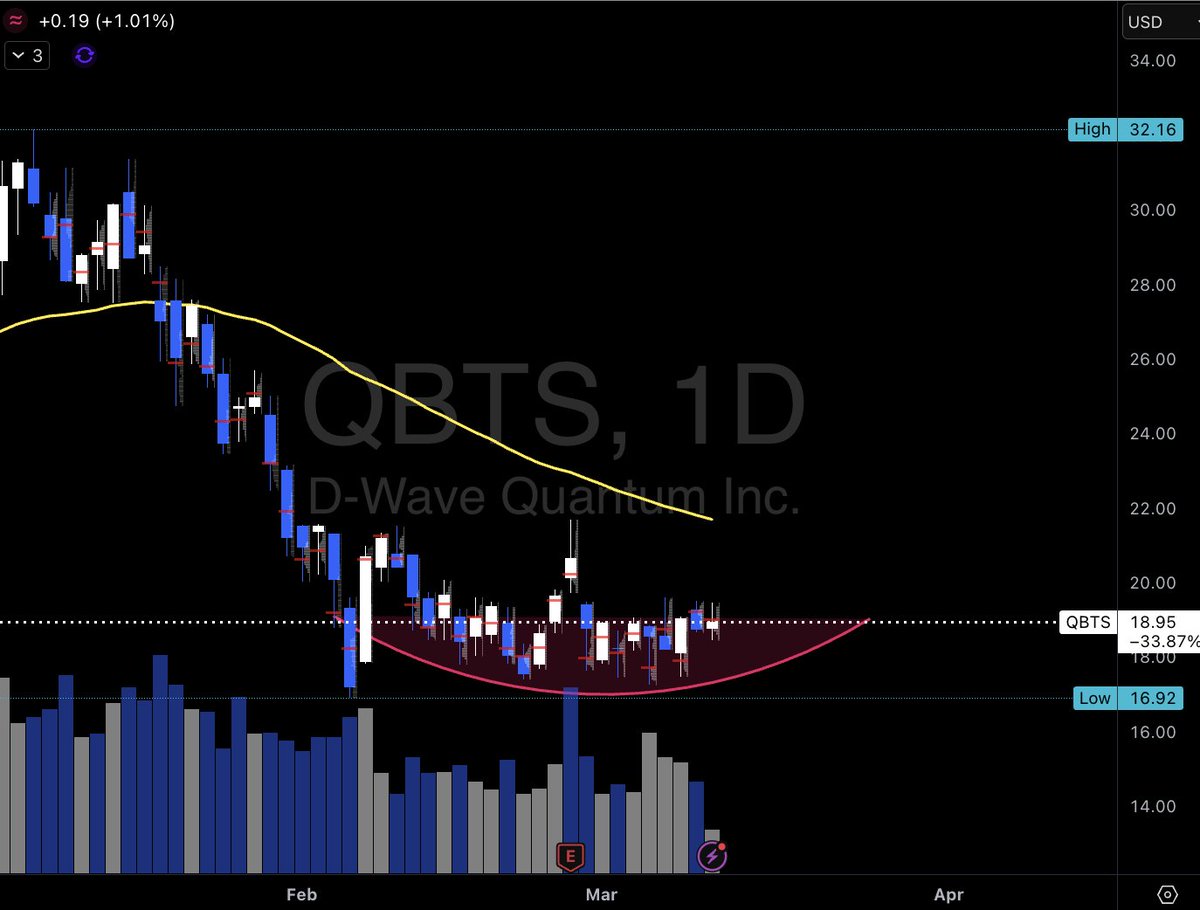
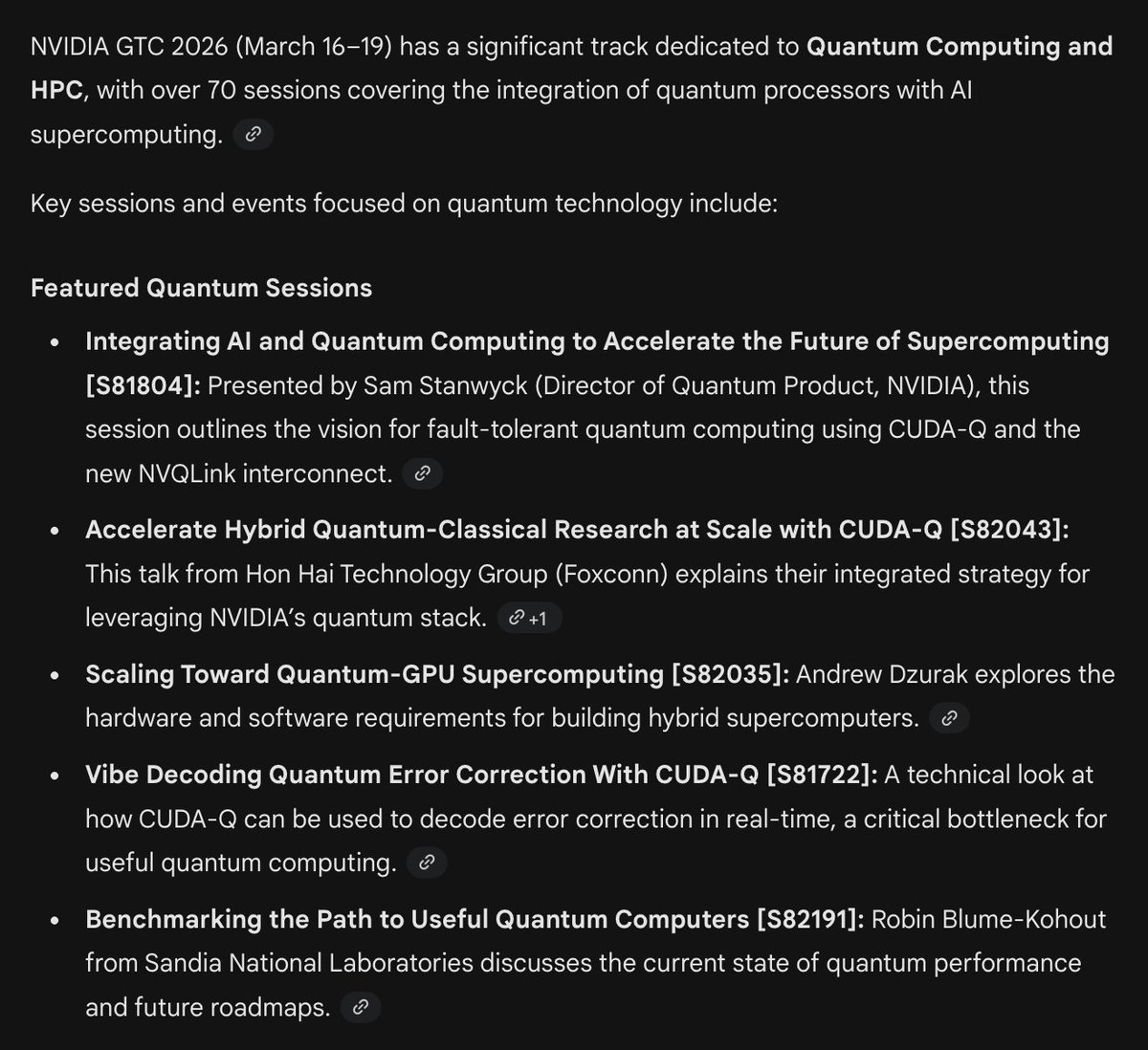
Tons of quantum focused sessions for $NVDA GTC next week to look forward to. $QBTS rounded bottom with a catalyst
$BRICKY 🧱 tweet media$BRICKY 🧱 tweet media
English
0
0
3
380
$BRICKY 🧱
$BRICKY 🧱@bricked_trades·
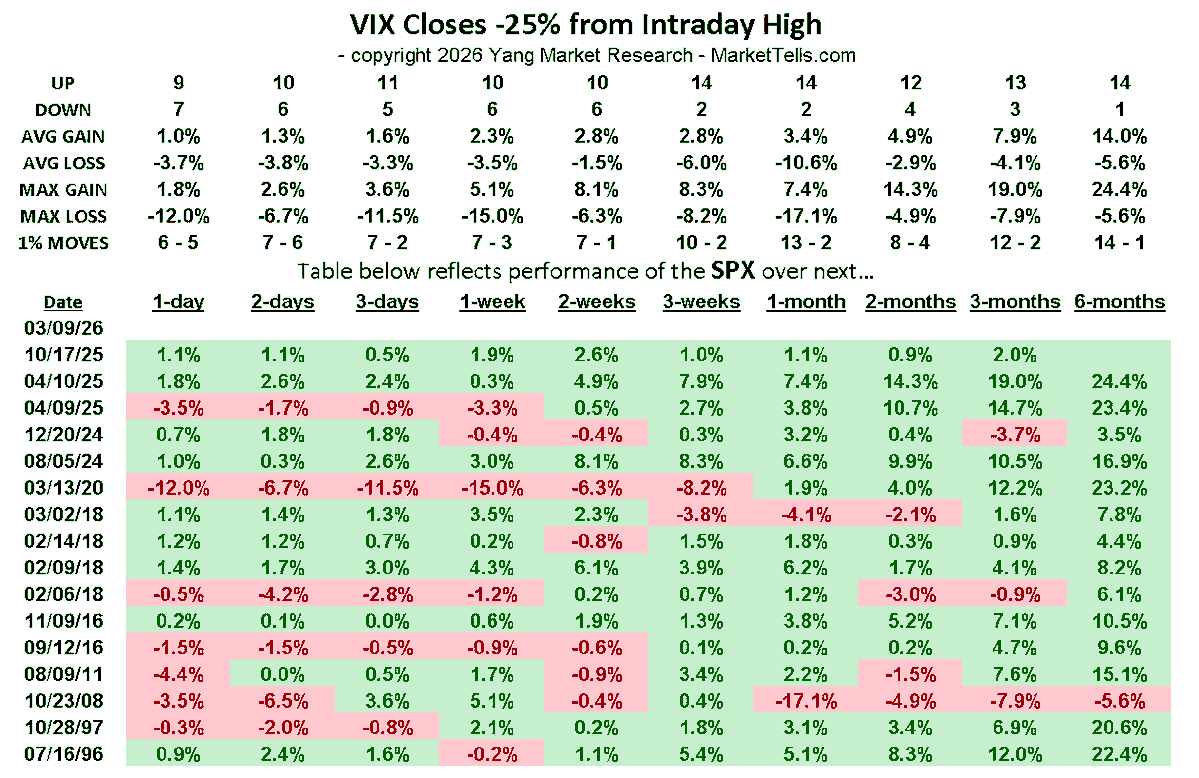
**Only the 17th time we've seen $VIX close down 25% from its intraday high**
$BRICKY 🧱 tweet media
English
0
0
0
133
$BRICKY 🧱
$BRICKY 🧱@bricked_trades·
Ignore Overcrowded Photonics and Memory Companies Shilled by X: Why Amkor $AMKR and ASE $ASX are the Ultimate Stealth Plays Nvidia's GTC conference is scheduled for March 16, and Jensen Huang is already teasing that he will unveil a chip that will "surprise the world." The market is buzzing with anticipation that this event will highlight a massive expansion of silicon photonics and Co-Packaged Optics (CPO) technology to resolve the severe data transmission bottlenecks plaguing AI data centers. Investors are actively positioning themselves for this exact moment. They are piling into overcrowded and obvious bottleneck names like $MU and Western Digital $WDC $SNDK to play the memory shortage, or chasing component makers like Coherent $COHR and Lumentum $LITE for the optical networking hype. However, buying into these crowded trades ignores the fundamental physics of how the next generation of AI hardware is actually built. The true picks and shovels of this upcoming cycle are the Advanced Packaging OSATs like Amkor Technology $AMKR and ASE Technology $ASX. They sit right at the center of the supply chain, acting as the undisputed gatekeepers for both the memory squeeze and the photonics revolution. The Raw Math of the Current Memory Crisis To understand why advanced packaging is so critical, we have to look at the staggering memory demands of new AI chips. Nvidia's most recent Vera Rubin chip requires an unprecedented 288GB of RAM. This is an 800% increase over the memory found in a high-end PC and 2,300% more than a premium smartphone. By comparison, the H100 launched just four years ago needed only 80GB of RAM, which is 72% less than Rubin. Each new generation of Nvidia AI chips requires significantly more memory than the last. With AI giants like Alphabet and OpenAI locking up large portions of the global memory chip supply by purchasing millions of these Nvidia chips, the global memory shortage is officially out of control. Average spot prices for 16GB DDR4 RAM are up 2,352% year over year to a record $76.90, while 8GB DDR4 prices are up 1,873% year over year to an all-time high of $28.90. You cannot simply glue 288GB of RAM to a logic board and expect it to work. Fusing that much memory directly to a processor requires elite 2.5D and 3D advanced packaging to break the memory wall. This is exactly where Tier 1 OSATs step in to perform the microscopic integration that makes these chips functional. The Photonics Pivot As AI compute demand surges, the industry is accelerating a massive shift away from the conventional "optical to electrical to optical" transmission architecture toward a purely "optical to optical" structure. TSMC management has confirmed that CPO has already entered the proof-of-concept and sampling stage. The market is raising the possibility that the Nvidia Rubin Ultra generation could mark the inflection point where traditional copper interconnects finally give way to optical interconnects. Industry consensus projects that 800G to 1.6T silicon photonics modules will ramp meaningfully in 2025, with CPO and 3.2T optical engines accelerating rapidly from 2026 onward. Taiwan's supply chain is moving aggressively to capture this value. Notably, TSMC and ASE have formed a silicon photonics industry alliance specifically to target the high-speed data center interconnect market. Why OSATs are the True Choke Point Analysts note that the investment focus within the AI industry has been rotating from assembly to cooling to components and materials, and it is now firmly landing on optical networking. A trend-following approach is key here. While names like Browave, LuxNet, and APAT Optoelectronics are scaling up mass production of silicon photonics modules, they carry the risks of small market capitalizations, high share price volatility, and brutal price competition from subsidized Chinese players. The safer, higher-probability bet lies with the companies doing the actual packaging. TSMC simply cannot handle this level of advanced packaging demand alone. They are increasingly outsourcing the complex assembly to trusted OSATs. Amkor, for instance, is perfectly positioned to capture this demand overflow. Their massive advanced packaging facility in Peoria, Arizona, belongs entirely to Amkor and serves as a vital domestic hub for sovereign AI production. When Broadcom designs a custom TPU for Google or Nvidia moves to optical interconnects, they rely on Amkor and ASE to align the sub-micron lasers and ensure the final product actually yields. The Long Wave Cycle We are currently looking at a bull market that may be linked to a long-wave technology cycle analogous to the Kondratiev Wave. The AI-driven industrial revolution could very well underpin a 30 to 50 year secular economic expansion. Against this backdrop, the market is entering a phase of heightened volatility within a structurally bullish trend. Flexible portfolio management and disciplined risk control are essential. Overpaying for memory makers or chasing volatile optical networking names might work for short term trades, but the companies maximizing the efficiency of every chip are the ones building the physical infrastructure. Amkor and ASE are the critical tailwind winners that will turn Jensen Huang's shocking new chips from laboratory concepts into data center realities.
$BRICKY 🧱 tweet media$BRICKY 🧱 tweet media
English
0
0
4
521
$BRICKY 🧱
$BRICKY 🧱@bricked_trades·
How to trade confirmation of aliens Long $AMTM Market seems to be catching on OVN session In early 2026, Tuttle Capital launched the UFO Disclosure ETF (ticker: $UFOD). This fund specifically bets on companies that could profit if the government confirms the existence of non-human intelligence. $AMTM is one of its largest holdings. $AMTM allegedly has been involved for decades in top-secret programs to develop or reverse engineer Unidentified Anomalous Phenomena (“UAP”) the company has been trusted with many of the nation’s most important core technological secrets of the last 80 years beginning with its work on the Manhattan project. The restricted data in the company’s archives is reportedly so highly classified that even sitting United States Presidents have been denied access in the past. the company’s undisclosed 70-year history at the Area 51 and Nevada Test Site complex, a highly classified military facility in the Nevada Desert, that it has operated for decades and used as a staging area for experimental “black projects”, nuclear weapons testing, reverse engineering of captured Russian planes, and its contributions to some of the most important top-secret aircraft created in the entire history of the United States
$BRICKY 🧱 tweet media
The Kobeissi Letter@KobeissiLetter

BREAKING: President Trump directs the Secretary of War and other governmental agencies to release government files related to “alien and extraterrestrial life.”

English
1
0
4
4.1K
$BRICKY 🧱
$BRICKY 🧱@bricked_trades·
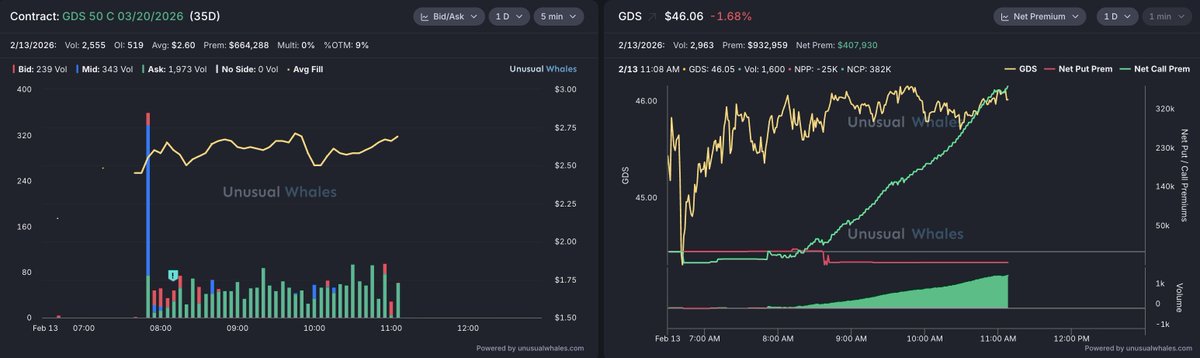
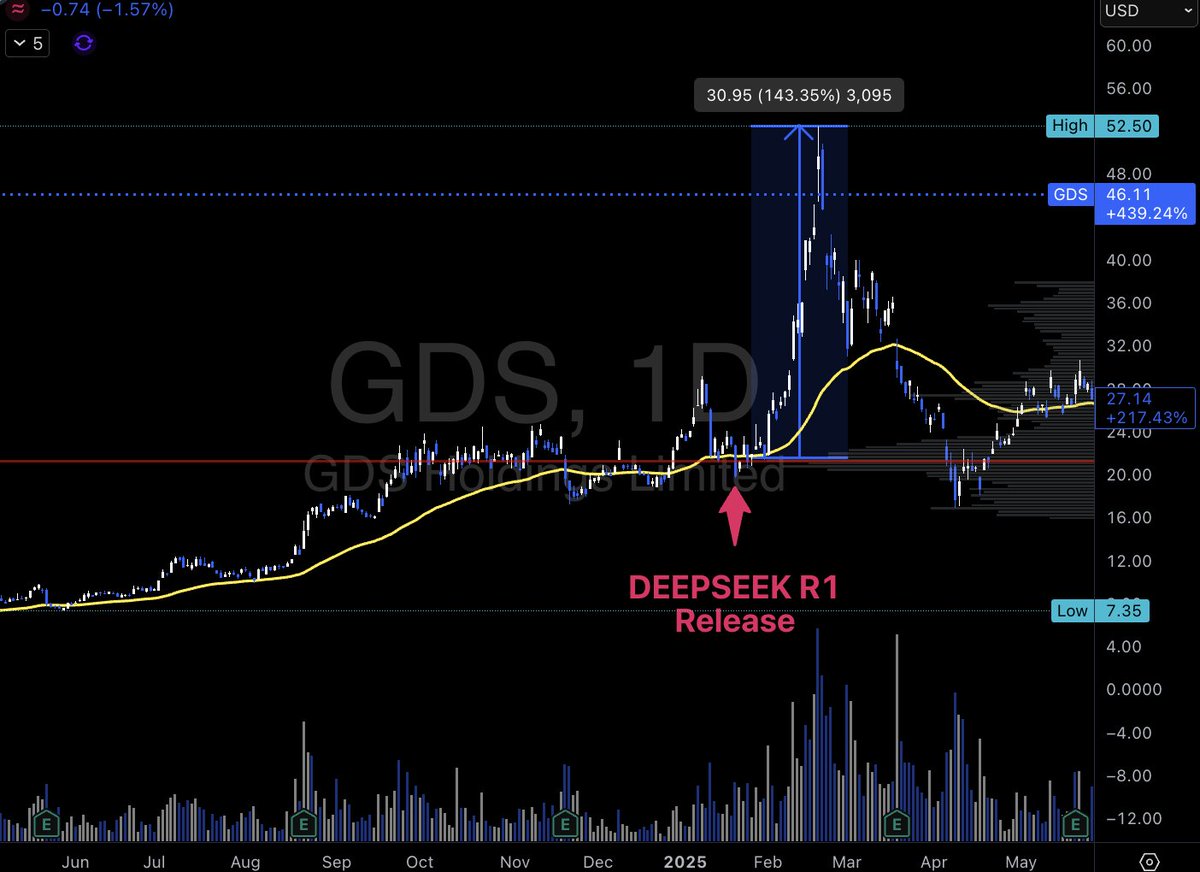
$GDS 50 C 03/20/2026 Prem: $664,288 Nutty activity on $GDS They are one of the largest datacenter operators in china Rumors DeepSeek V4 may drop over the weekend (before Lunar New Year) When DeepSeek released last January, $GDS ran 140% within a month
$BRICKY 🧱 tweet media$BRICKY 🧱 tweet media
English
0
0
0
491
$BRICKY 🧱
$BRICKY 🧱@bricked_trades·
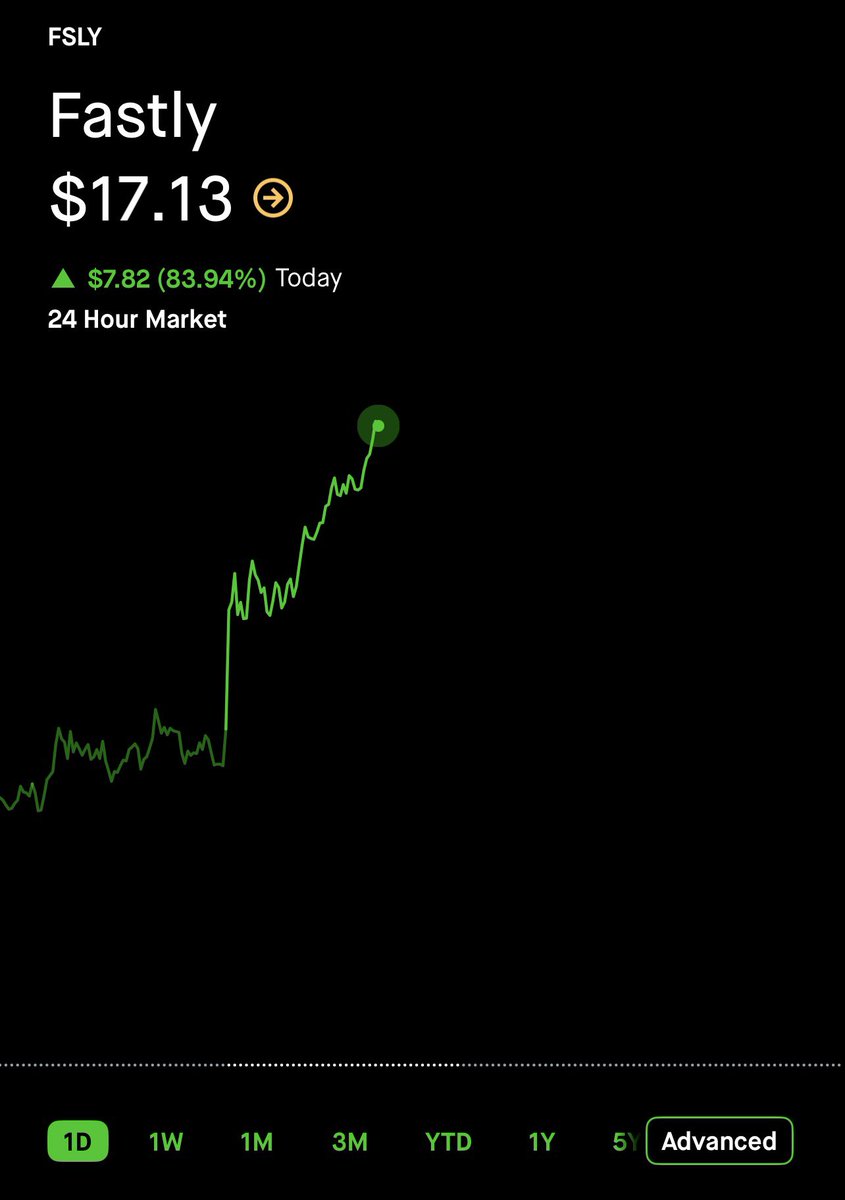
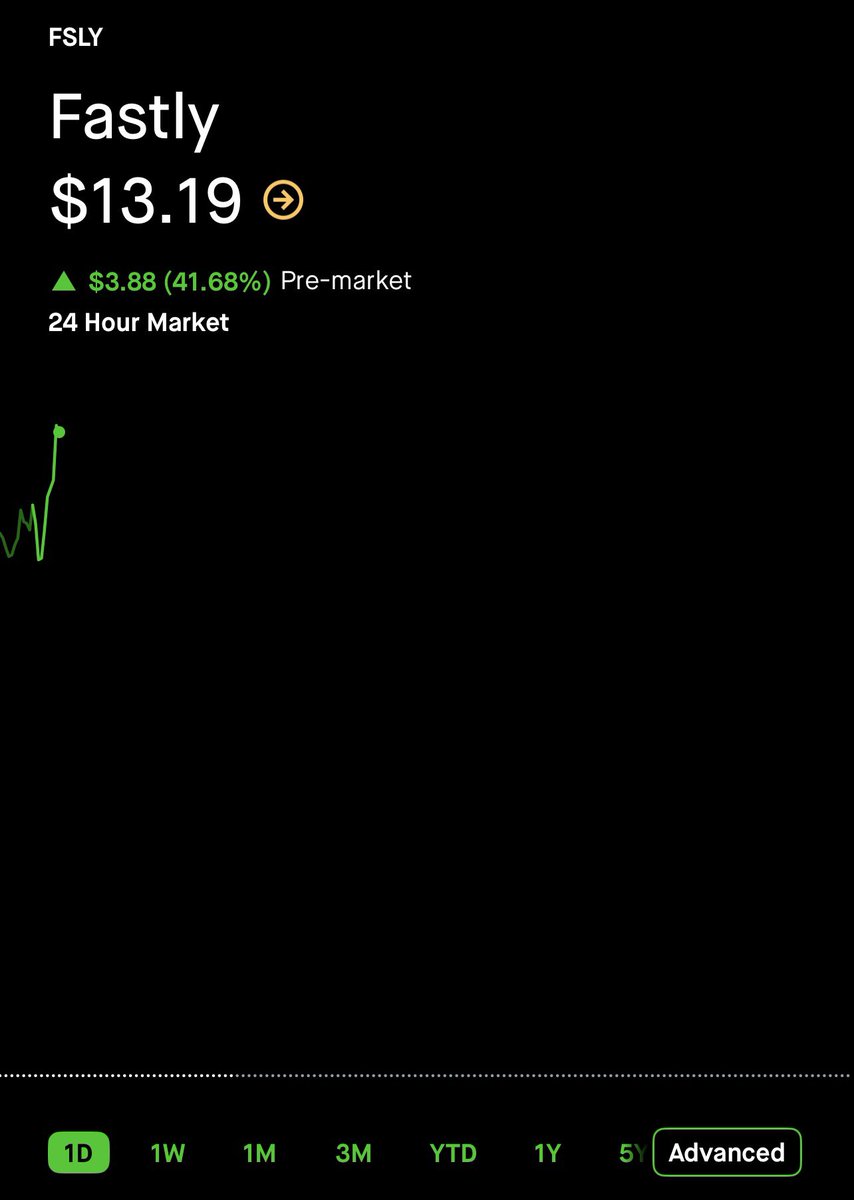
Hope yall followed $FSLY
$BRICKY 🧱 tweet media
English
0
0
0
129
$BRICKY 🧱
$BRICKY 🧱@bricked_trades·
$FSLY just proved the Software dead narrative is true for “cheap-applications” and not for usage and edge compute like $NET $DDOG $FROG They had a 55% RPO jump means customers are terrified of running out of edge capacity. They are pre-booking $FSLY "pipes" for 2026/2027. This confirms more AI agents = more usage = more profit. As AI agents (Bots) flood the web, Bot Management becomes the most critical piece of software a company owns. $FSLY monetizing this aggressively validates that they are a "Pick and Shovel" for the Bad Agents too (by stopping them). Acceleration to 23% revenue growth while trading at <5x Sales is a dirt cheap compared to $NET (20x+) Long $FSLY even w a 40% gap up.
$BRICKY 🧱 tweet media
AlphaSense@AlphaSenseInc

$FSLY CEO says AI is boosting their business across the board, driving more agent‑generated traffic through their network, increasing AI training and inference workloads on their edge platform: "We're seeing a lot with respect to AI on our platform, and it really breaks into a number of categories. First of all, just we're seeing an increase in traffic related to agents. I think in the past, the saving called machine to machine. And as you -- if you've used AI tools, I think you would appreciate that they often check a lot more websites, for instance, than you might. And that's more traffic and all of that traffic is processed through the Fastly network for our Fastly customers. So we're seeing decreased activity there. And a quarter or 2 ago, we actually published a report outlining the statistics on that and actually going into which models we're seeing the most traffic from an interesting report on our website with lots of numbers. We're also seeing AI workloads on our platform, and that can take a number of different forms. We've talked in the past about a use case starting an extremely large training data set. We also have customers using our compute edge for inference and other AI-related tasks. And then maybe a third example of where we're seeing AI as a tailwind for our business is AI specific offers. So I'm thinking of our AI bot mitigation. As we're processing all of that traffic for our customers, it's creating opportunities for us to help manage crawlers and other AI bots to ensure that the right ones get through because our customers want to be relevant in the AI world, but block the ones that are harmful. So we're seeing across the board"

English
1
0
4
769
$BRICKY 🧱
$BRICKY 🧱@bricked_trades·
$ACLS is the "High-Energy Refueler" for the AI Memory Squeeze If you missed $SNDK $MU its time to look at their suppliers Samsung, SK Hynix, $MU are one of $ACLS biggest customers Thesis is simple Next-gen memory (HBM4) requires specialized ion implanters to make these chips work. Axcelis Technologies $ACLS are the "Molecular Surgeons" of the memory chips. Their Purion machines use high-energy beams to "tune" the silicon with surgical precision. They are the only major player besides $AMAT capable of handling the high-energy needs for HBM4. While other equipment names are at all-time-highs, $ACLS has been trading relatively flat during a temporary slowdown. Recently: * They launched the Purion H6 on Feb 4, 2026, specifically to solve the HBM4 stacking problem. * Big memory makers are gearing up for mass production in early 2026. * The Value: Trading at ~20x P/E—a big discount to peers like $LRCX (~32x)—with a massive $590M cash pile. As of late 2025, memory applications made up a relatively small portion of shipped system revenue (~2%), but bookings for memory are now rapidly improving. Management projects that increased investments in DRAM and HBM (High Bandwidth Memory) will be the main revenue driver starting in early 2026. This would be a major surpriser for earnings next week
$BRICKY 🧱 tweet media
English
1
0
6
685
$BRICKY 🧱
$BRICKY 🧱@bricked_trades·
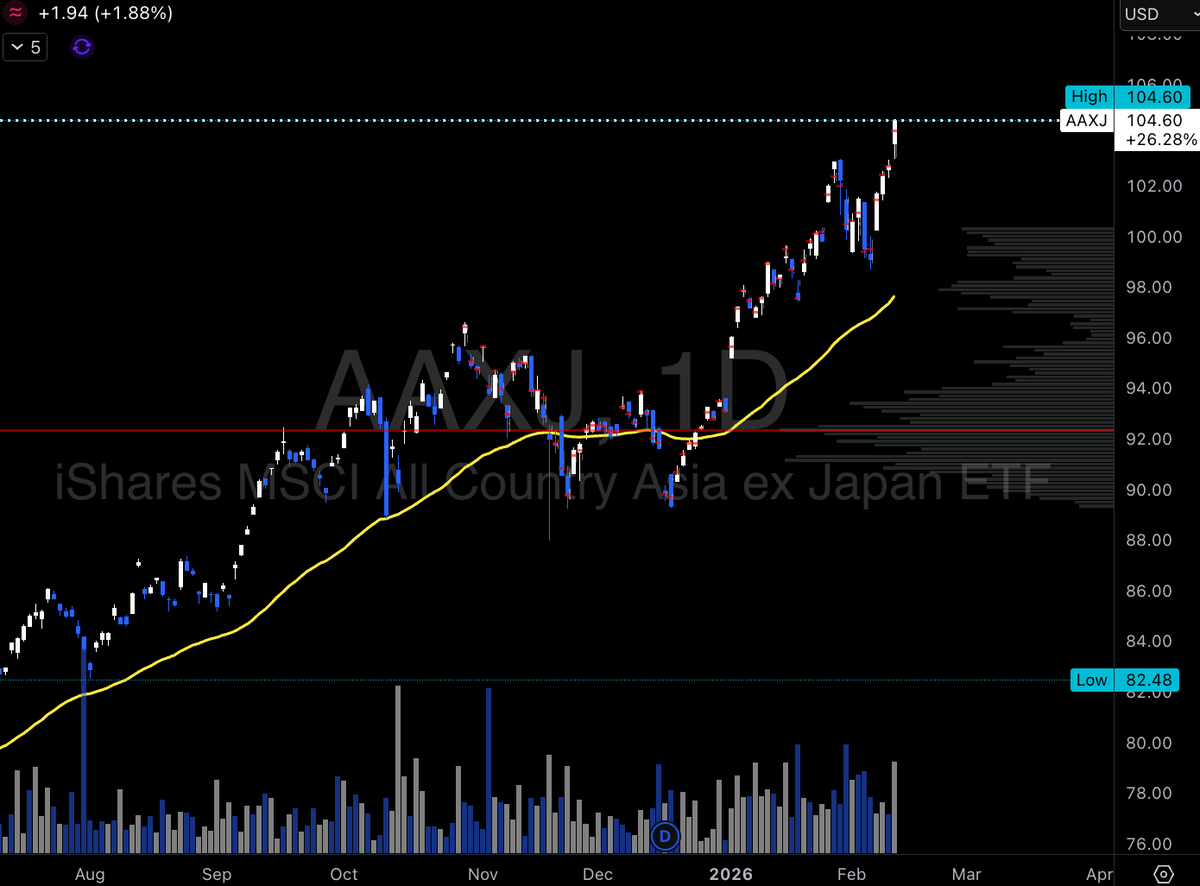
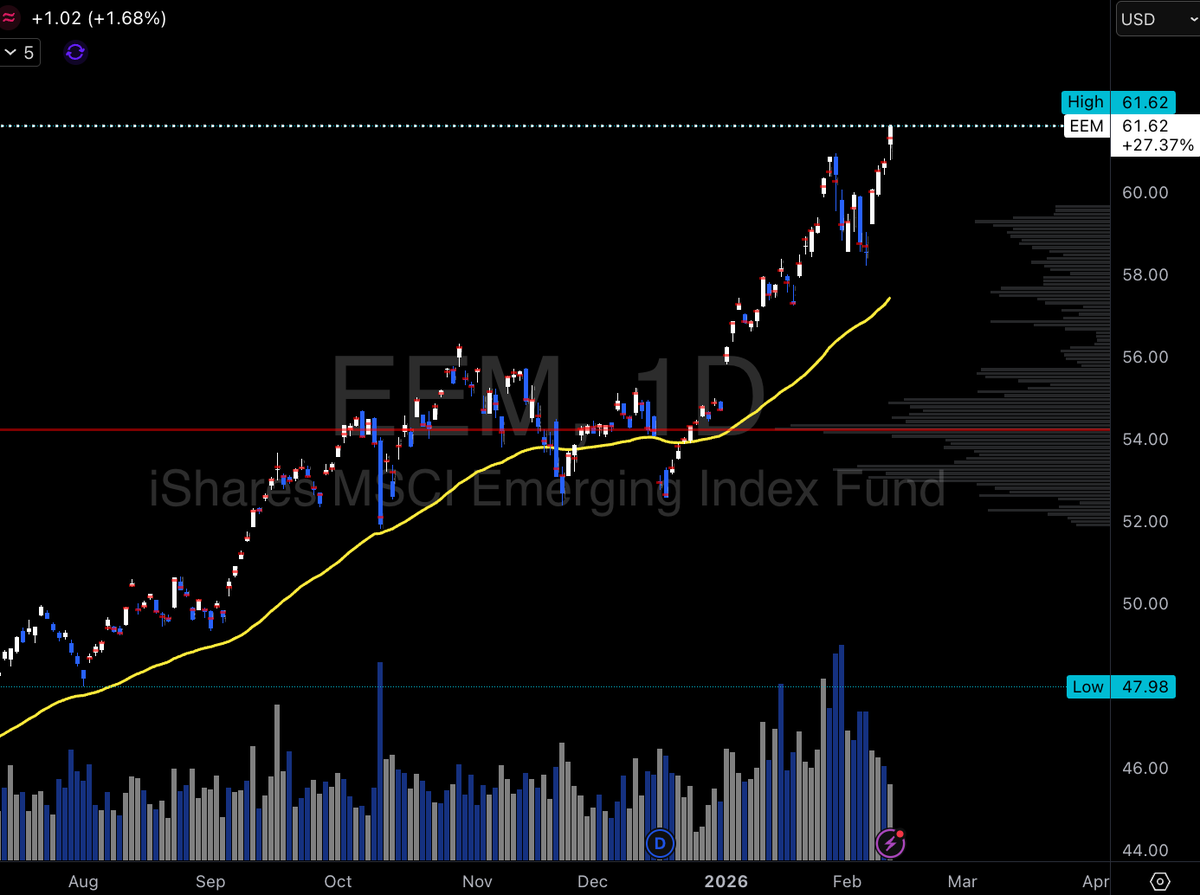
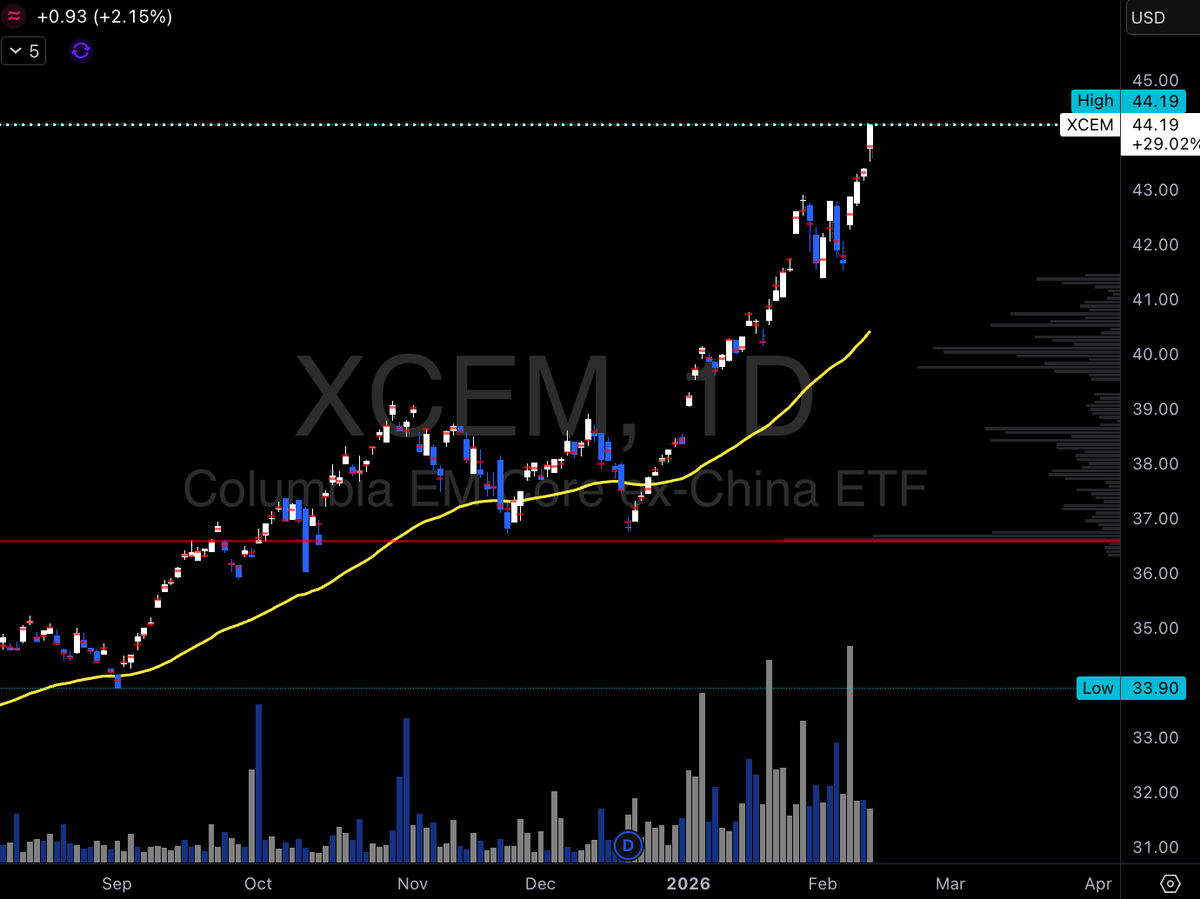
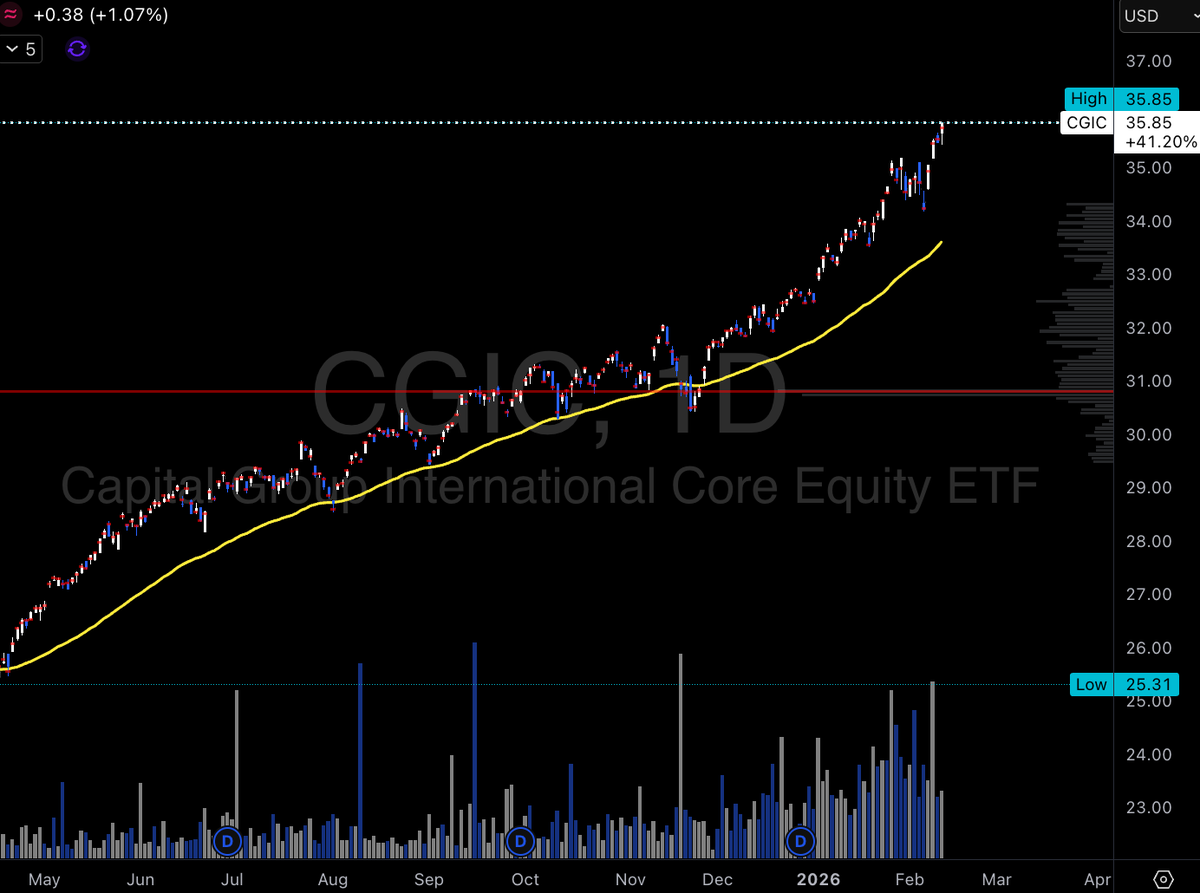
Strange day today Emerging market and international stocks are ripping ATH $DFAE $AAXJ $EEM $XCEM $CGIC $SPEM
$BRICKY 🧱 tweet media$BRICKY 🧱 tweet media$BRICKY 🧱 tweet media$BRICKY 🧱 tweet media
English
0
1
3
225
$BRICKY 🧱
$BRICKY 🧱@bricked_trades·
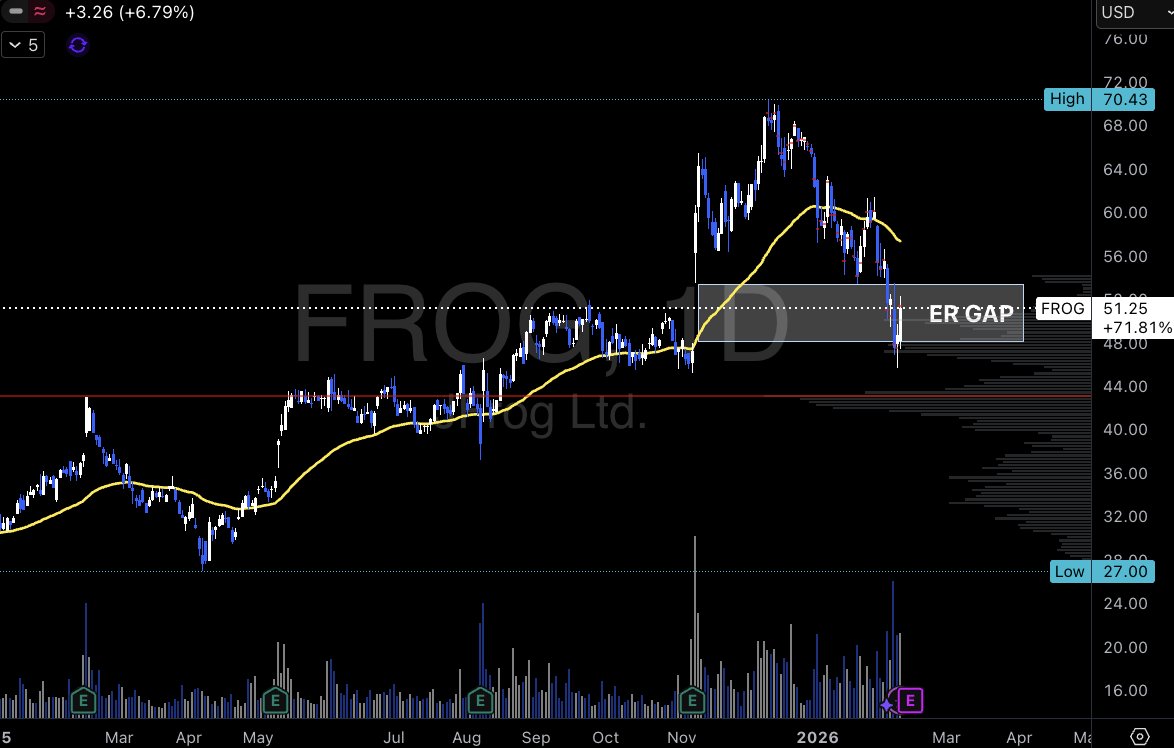
$FROG is the Toll Booth of the AI Agent Economy That fat $IGV selloff last week from Claude Code, OpenClawd / Moltbot, and OpenAI Codex got everyone mindlessly buying anything Software company but I think this is the time to pick the real winners of the new AI Agent economy. New agentic coding tools can do 1,000 commits per hour. Compare that to a human developer who might do 10 a day. SemiAnalysis reports that AI already writes 4% of all code on GitHub and predicts that will hit 20%+ by 2026. Basically companies could perform 100x the workload with a fraction of the headcount. Even non technical people like Sales and Marketing I see are building tools themselves with Claud Code. The Problem: Humans Are Too Slow Current storage tools like GitHub act like filing cabinets great for humans, but they overflow when AI dumps 1,000 files an hour. The bottleneck isn't writing code anymore; it’s storing and checking it to make sure the AI didn't hallucinate a security flaw. I found $FROG to be a direct winner of this new reality. They are the "Digital Customs Office". This is where $FROG steps in. It’s not just storage; it’s an automated vault. Every time an AI agent tries to ship a "binary" (a finished piece of software), $FROG security tool, Xray, scans it instantly. If the code is bad, JFrog blocks it. It’s the only way to manage the flood of "industrialized" software without breaking the company. Their financials back this up. Unlike GitHub and other SaaS models like $ADBE $ASAN $MNDY $CRM $HUBS and more charges per "seat" (human), JFrog gets paid more as AI generates more data. Their cloud revenue grew 50% year-over-year, and they flex 84% gross margins, proving they can scale this "AI flood" profitably. Broader market research supports this "flight to quality." Goldman Sachs said there is a thematic shift in the market where smart money is rotating out of generic software and into "mission-critical infrastructure" supporting the AI agent economy. If you are looking for quality Software names to dip buy, avoid seat-based billing and look at symmetric workload/usage based billed SaaS companies.
$BRICKY 🧱 tweet media
English
0
0
9
1.1K
$BRICKY 🧱
$BRICKY 🧱@bricked_trades·
$HPQ - Traded multiple inside sessions holding steady while rest of tech sold. Market punishing them with higher memory prices affecting margins on device sales but they will report for sure the reality of the effect this month. Could very well Vshape hard if the selling was FUD
$BRICKY 🧱 tweet media
English
0
0
0
252
$BRICKY 🧱
$BRICKY 🧱@bricked_trades·
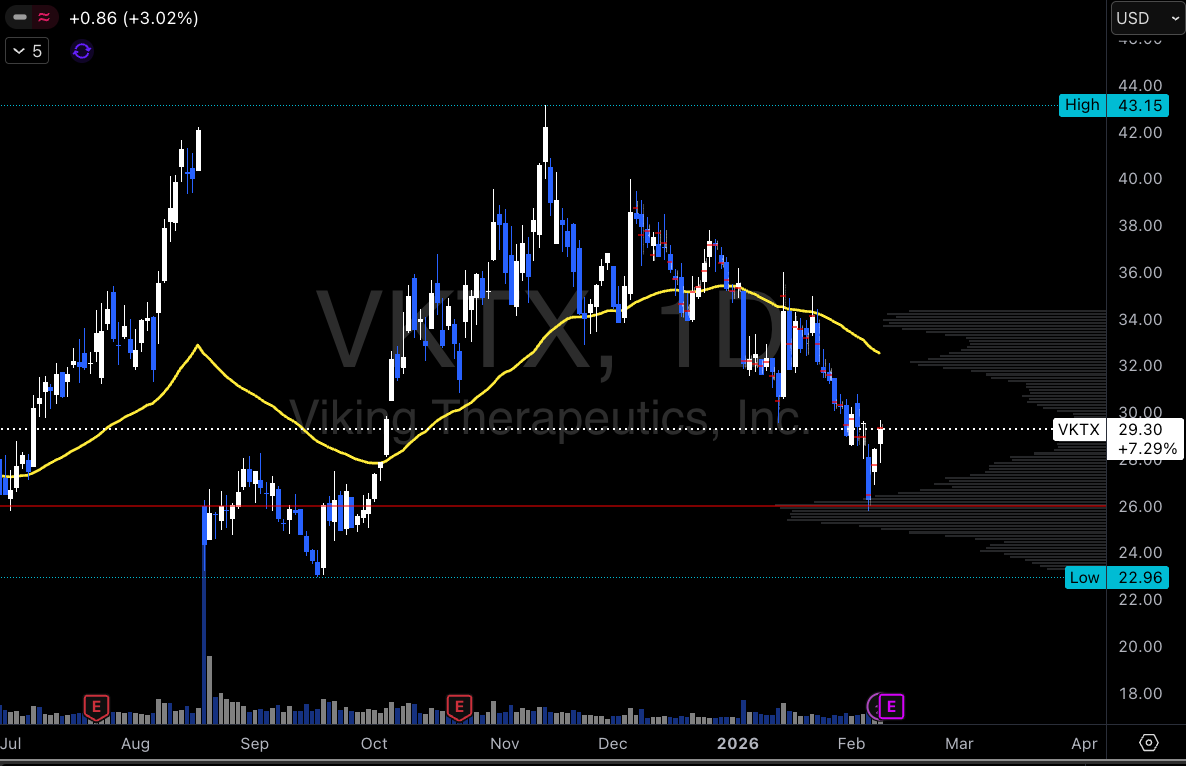
$VKTX - With $NVO and $HIMS both getting the heat from the FDA, $VKTX looking for a momentum trade higher at this local bottom at $26 with earnings this week. Ph3 subq trial update as well as oral drug developements can see a reversal
$BRICKY 🧱 tweet media
English
0
0
0
330
$BRICKY 🧱
$BRICKY 🧱@bricked_trades·
$NBIS - Respected this IHS within the MSFT deal gap news level. $NBIS reports this week and well positioned to capture that huge big tech Capex spend
$BRICKY 🧱 tweet media
English
0
0
1
349
$BRICKY 🧱
$BRICKY 🧱@bricked_trades·
$FROG - #1 beneficiary of the AI agent trade no one on FinX has realized (thank god). Earnings coming up this week trading lower while the AI agentic workload + commits have accelerated parabolically last month. I took some lottos at this 50.00 psyche. x.com/bricked_trades…
$BRICKY 🧱 tweet media
$BRICKY 🧱@bricked_trades

Took large stake in $FROG 1 dev with 100 agents = 100x the consumption vs traditional SaaS seat billing like $ADBE $FROG Artifactory is the only "Vault" designed for a CTO to audit the code base of thousands of lines of code from hundreds of agents

English
0
0
1
483
$BRICKY 🧱
$BRICKY 🧱@bricked_trades·
Took large stake in $FROG 1 dev with 100 agents = 100x the consumption vs traditional SaaS seat billing like $ADBE $FROG Artifactory is the only "Vault" designed for a CTO to audit the code base of thousands of lines of code from hundreds of agents
$BRICKY 🧱 tweet media
Aakash Gupta@aakashgupta

Cursor just shipped 1,000 commits per hour and most people scrolled past the number. Break that down. Hundreds of agents running simultaneously on a single codebase. Each agent averaging a meaningful code change every 12-20 minutes, sustained for a full week. That’s the equivalent output of a 100+ person engineering org running 24/7 with zero standups, zero Slack threads, zero PTO. They built a web browser from scratch with these agents. 3M+ lines of code. A Windows 7 emulator. An Excel clone. They migrated their own production codebase from Solid to React in three weeks, +266K/-193K edits, already passing CI. The coordination architecture tells you where software management is heading. Self-organizing agents failed. Peer-to-peer status sharing created deadlocks. What actually worked was a strict hierarchy of planners, workers, and judges. AI agents need the same management structure as humans, just running at 100x the clock speed. Cursor has $1B in ARR and a $29B valuation. OpenAI, Anthropic, and Google are all building competing coding agents. GitHub Copilot is generating $300M+ annually. The total AI coding market is projected at $30B by 2032, but a single Cursor experiment just produced more code in one week than most startups write in a year. The 2032 projections are going to look quaint. When the cost of producing code approaches zero, the bottleneck shifts entirely to taste, architecture decisions, and knowing what to build. Every PM reading this should understand: the skill that matters just changed.

English
0
0
3
1.5K