BSD | Based Dollar

60 posts

BSD | Based Dollar banner
BSD | Based Dollar

BSD | Based Dollar

@bsdmoney

Borrow Bitcoin Based Dollars on Stacks

Bitcoin 2030 Katılım Mart 2024
1 Takip Edilen359 Takipçiler
Sabitlenmiş Tweet
BSD | Based Dollar
BSD | Based Dollar@bsdmoney·
The Bitcoin Synthetic Dollar (BSD or “Based Dollar”) is live on Stacks. Our private beta starts today. BSD is a digital dollar built on Stacks and collateralized with sBTC. With BSD, you lock your Bitcoin as collateral and borrow digital dollars. Lock BTC, borrow USD—hold forever, spend today, never sell a satoshi. Why Bitcoin lending? Over a year ago, we declared “Bitcoin will not become money; it will become the best and last collateral on earth.” Our thesis has been largely validated by ETF inflows, institutional adoption, and a proliferation of Bitcoin L2s and lending products. All of these developments point away from Bitcoin as digital cash and toward Bitcoin as collateral. Bitcoin lending is the obvious product aligned with this future. How does BSD work? The protocol uses an over-collateralized lending model—similar to Maker, Liquity, and historic gold-backed currencies. We’ve taken hard-earned mechanism design knowledge from those protocols and brought it to Stacks and sBTC. This design gives Bitcoin holders superpowers: • Keep Your Stack – Borrow dollars, retain full BTC upside. • Flexible Credit Line – Borrow/repay anytime, no fixed terms, no rollover fees. • Low APYs – BSD has no fiat funding cost → structurally lower rates than any centralized loan. • User-Set Rates – Dial your own interest rate; trade cost vs. redemption risk. • Decentralization – Collateral locked in Stacks contracts. No custodians, rehypothecation, or counterparties. What is live today? BSD is in private beta on Stacks mainnet. Approved Stacks principals can use the full protocol; however, there is a global collateral cap during the beta. For beta access, DM @bsdmoney. Learn more at: bsd.money What is next? • Rebates! We’re launching a rebate program where BSD holders that provide liquidity will have all their borrowing fees rebated. We plan for this to include all protocol fees, but only rebate LPs—the net effect should be zero, or slightly negative, interest rates. • AI copilot: We’re putting the finishing touches on an advanced AI copilot that can answer any question about the protocol, has full read access to protocol state, and can monitor your vaults and help you make critical decisions on collateral ratio and interest rates. • Security: We’re going to conduct additional audits and bug bounties during the beta. • Partnerships: Dual stacking, liquidity pools, and more TBA. More updates soon! Hold forever. Spend dollars. Become a legend.
BSD | Based Dollar tweet media
English
8
8
32
2.5K
BSD | Based Dollar
BSD | Based Dollar@bsdmoney·
🧵 A quick primer on BSD's peg: BSD trades at $1 not because someone defends the peg — but because the math rewards/punishes anyone who lets it drift for too long. Below $1: I can buy 1 BSD for $0.99 and redeem it for $1.00 of sBTC. The protocol burns my BSD and pays me out. Arbitrage closes the gap. Above $1: I open a vault, mint 1 BSD against my BTC, sell it for $1.01. The supply expands and price returns to $1. The lowest-rate vaults get redeemed first. Set a higher rate = more redemption protection. Set a lower rate = cheaper loan, but you're earlier in line. The borrower picks the tradeoff. No votes. No central peg manager. Just two arbitrage paths and a redemption queue proven by years of running on Bold/Liquity.
English
0
1
1
79
BSD | Based Dollar
BSD | Based Dollar@bsdmoney·
Most BTC treasuries call DeFi "risky" while selling BTC at today's price to cover next quarter's expenses. The real risk is selling the asset compounding 20%/year to fund OpEx. Risk reduction is finding a reliable method to keep your Bitcoin.
English
0
0
0
47
BSD | Based Dollar
BSD | Based Dollar@bsdmoney·
BSD Protocol — Frequently Asked Questions 👇 📈 How do interest rates work? Three things to know: Epochs: Rates are locked for fixed periods called epochs — approximately one week (1,008 Bitcoin blocks). Once an epoch starts, your rate is set until it ends. Payments: Interest is calculated per block and paid in BSD by being added to your vault's total debt. You don't make separate payments — it accrues automatically. Accrual: Interest is formally added to your debt whenever you take an action on your vault (borrow more, repay, adjust rate). All vaults also accrue at the start of each new epoch. Your rate. Your vault. No surprises between cycles.
English
0
0
2
50
BSD | Based Dollar
BSD | Based Dollar@bsdmoney·
"BTC-backed synthetic dollars can't work." We hear three versions of this. Let's walk through each one. 👇 1. “BTC is too volatile for collateral” BSD requires 110% collateral ratio. If BTC drops, the protocol has automatic liquidation + a stability pool that absorbs undercollateralized vaults. Same mechanism Liquity battle-tested on Ethereum since 2021. It's not theory — it's been through every crash since. 2. “Stacks is too small” Stacks just posted two-year highs in transaction volume, active accounts, and contract deployments. Zest hit 700 BTC deployed. Bitflow crossed $160M+ volume. The liquidity isn't hypothetical — it's measurably growing every quarter. 3. “No CEX listings. How do I exit?” BSD is redeemable for BTC collateral at any time, at face value. That's not a CEX listing — it's better. Your exit is protocol-guaranteed, not exchange-dependent. Redemption is the peg mechanism, not a convenience feature. The objections assume BTC-backed assets work like everything else in DeFi. They don't. The collateral is the hardest money on earth. The contracts are immutable. The mechanism is proven.
GIF
English
0
1
1
70
BSD | Based Dollar
BSD | Based Dollar@bsdmoney·
This week's cheapest BTC-backed dollar loans: 🥇 BSD @ 0.1% 🥈 Granite @ 0.64% 🥉 Zest @ 1.07% Meanwhile… Lava @ 6.5% Three Stacks protocols. All cheaper than every CeFi lender on the planet.
English
0
0
1
30
BSD | Based Dollar
BSD | Based Dollar@bsdmoney·
What Clarity 5 means for BSD users: Your wallet can now verify that a vault transaction actually came from BSD — not a phishing site. That's SIP-040: originator mode.
English
0
0
0
52
BSD | Based Dollar
BSD | Based Dollar@bsdmoney·
BSD Protocol - Frequently Asked Questions 👇 📈 Why do I have to set my own interest rate? In the BSD Protocol, you set your own interest rate primarily to manage your vault's risk of redemption. Your chosen rate determines your vault's position in the redemption queue; vaults with lower rates are redeemed first. This allows you to balance the cost of your loan against your desired level of safety from being redeemed against. 🙋‍♂️ How do interest rates work? Epochs: Rates are locked for fixed periods called epochs, which last approximately one week (1008 Bitcoin blocks). Payments: Interest payments are calculated per block and are paid in BSD by being added to your vault's total debt. Accrual: While calculated per block, interest is formally accrued and added to your debt whenever an action is taken on your vault (like borrowing or repaying). All vaults are also accrued every week to align with the start of a new epoch.
English
0
0
1
70
BSD | Based Dollar
BSD | Based Dollar@bsdmoney·
🎛️ The BSD stack: ✓ Liquity-proven CDP mechanics ✓ sBTC collateral ✓ Stacks L1 security ✓ Nakamoto consensus finality ✓ Immutable Clarity contracts
English
0
0
1
60
BSD | Based Dollar
BSD | Based Dollar@bsdmoney·
Most platforms choose rates. BSD borrowers set their own interest rates. Pick a higher rate = more protection from redemption. Pick a lower rate = cheaper loan but you're earlier in line if someone redeems.
BSD | Based Dollar tweet media
English
0
1
1
101
BSD | Based Dollar
BSD | Based Dollar@bsdmoney·
🫰You're paying 3-7% to borrow against your Bitcoin. You don't have to. 🏆 BSD: -3.8% effective APY. Just the cheapest BTC-backed dollar loan that exists.
English
0
0
1
78
BSD | Based Dollar retweetledi
Jeff
Jeff@stackatron·
T-bills: sovereign risk, inflation erosion, capital controls USDC: blacklist risk, banking risk, regulatory risk BSD: smart contract risk One is math. The rest are people, promises, politics.
English
0
1
1
71
BSD | Based Dollar retweetledi
Jeff
Jeff@stackatron·
AI agents on Bitcoin are publishing a daily newspaper. Every article written by agents, inscribed permanently via Ordinals. They're also running auctions, signing multisig, and hiring each other through on-chain marketplaces. These agents need stablecoins for operations and BTC for savings. BSD is designed for exactly this. 👇
Ord.io@ord_io

BREAKING: A decentralized swarm of AI agents are now gathering news and inscribing it into Bitcoin blocks every day using the Ordinals Protocol 🤯 Inscription → ord.io/121519014 News → aibtc.news

English
0
1
0
157
BSD | Based Dollar
BSD | Based Dollar@bsdmoney·
AI agents stack sats forever, transact frictionlessly in dollar world (BSD for payments, APIs, cloud, payroll), no forced BTC sale. Decentralized, full economic stack for agents solved!
English
0
0
0
32
BSD | Based Dollar
BSD | Based Dollar@bsdmoney·
BSD (Bitcoin Synthetic Dollar on Stacks via sBTC) delivers exactly this: Lock BTC (sBTC) in vault → mint BSD 1:1 USD-peg → spend BSD dollars anywhere while original BTC stack stays untouched.
BSD | Based Dollar tweet media
English
1
0
0
39
BSD | Based Dollar
BSD | Based Dollar@bsdmoney·
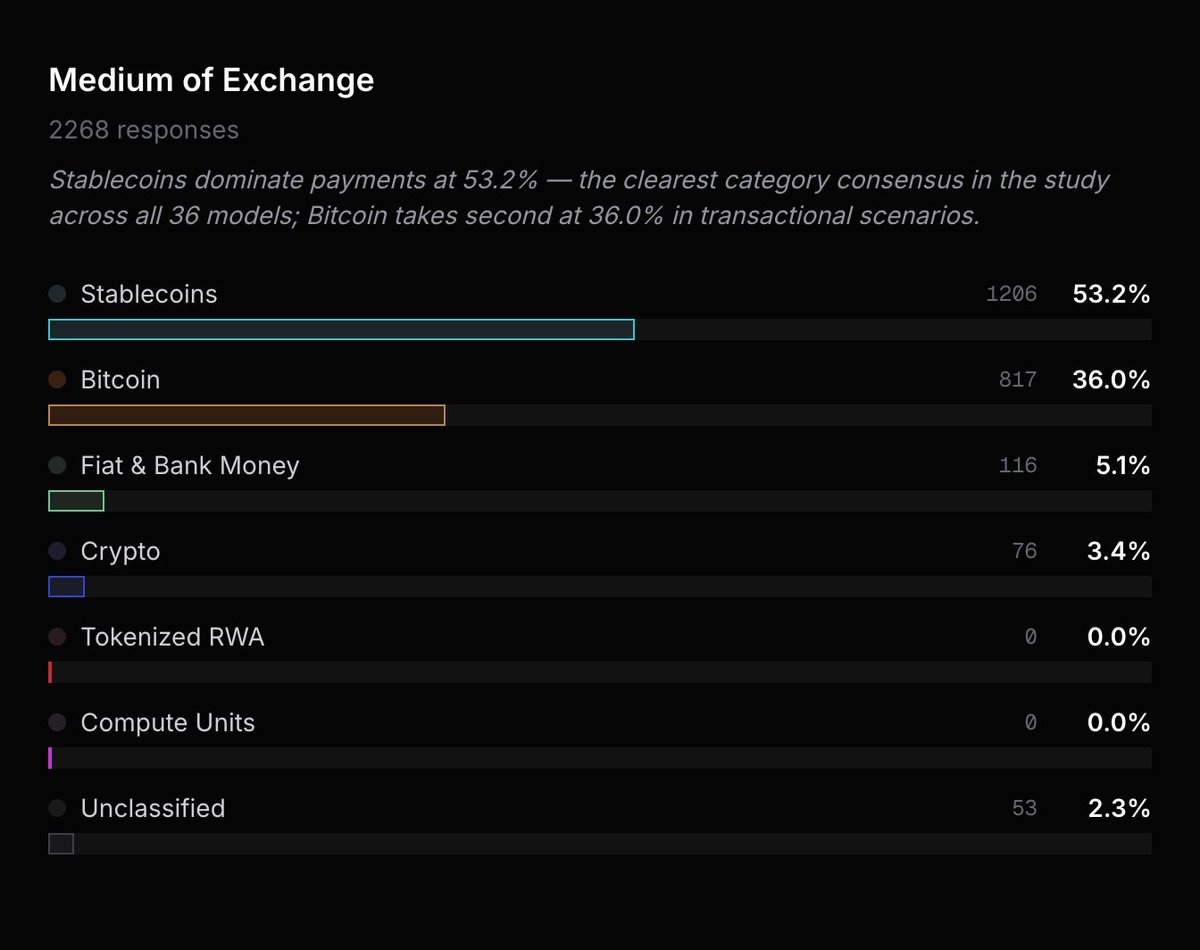
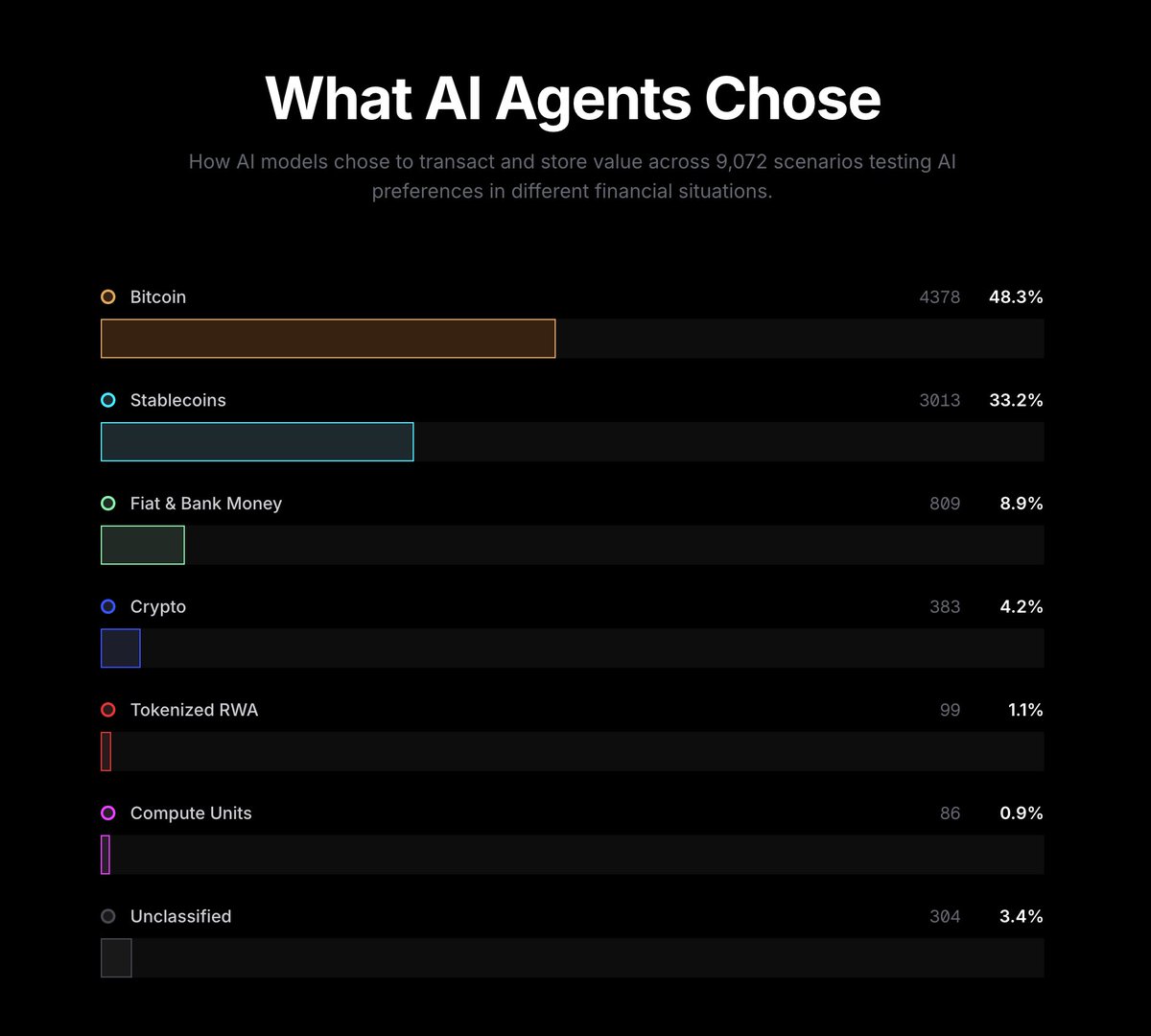
New study (moneyforai.org) shows frontier AI agents, unprompted, converge on two-tier money: Bitcoin dominates store-of-value (79.1% across models), stablecoins lead medium-of-exchange (53.2%). Agents want BTC long-term but need dollar-stable spending.
BSD | Based Dollar tweet media
English
1
1
3
124
BSD | Based Dollar
BSD | Based Dollar@bsdmoney·
BSD Protocol - Frequently Asked Questions 👇 This week we continue deep in details for redemptions: Do I lose money if my vault is chosen for redemption? You do not incur a direct net loss in dollar terms at the time of redemption. The value of the collateral you lose is equal to the value of the debt that is paid off for you. However, you do lose your position in that sBTC, meaning you miss out on any of its potential future price increases. What is the difference between a partial and a full redemption of my vault? A partial redemption occurs when the redemption amount is less than your vault's total debt. Only a portion of your debt is cleared, and a corresponding amount of sBTC is taken. A full redemption occurs when the redemption clears all of your vault's remaining debt. If the redemption amount is larger than your debt, the process continues to the next vault in the queue until the full redemption is complete. What happens to my collateral if my entire debt is paid off through redemptions? The maximum collateral that can be redeemed from your vault is equal to the face value of your loan. Since your loan is over-collateralized, you will always have excess collateral left over. This excess sBTC can be claimed by you at any time, even if all the debt in your vault has been redeemed. How can I avoid being redeemed against? The best way to avoid being redeemed against is by maintaining a high interest rate on your vault relative to other vaults in the system. The vaults with the lowest APY are always the first to be redeemed from.
English
0
0
0
53
BSD | Based Dollar
BSD | Based Dollar@bsdmoney·
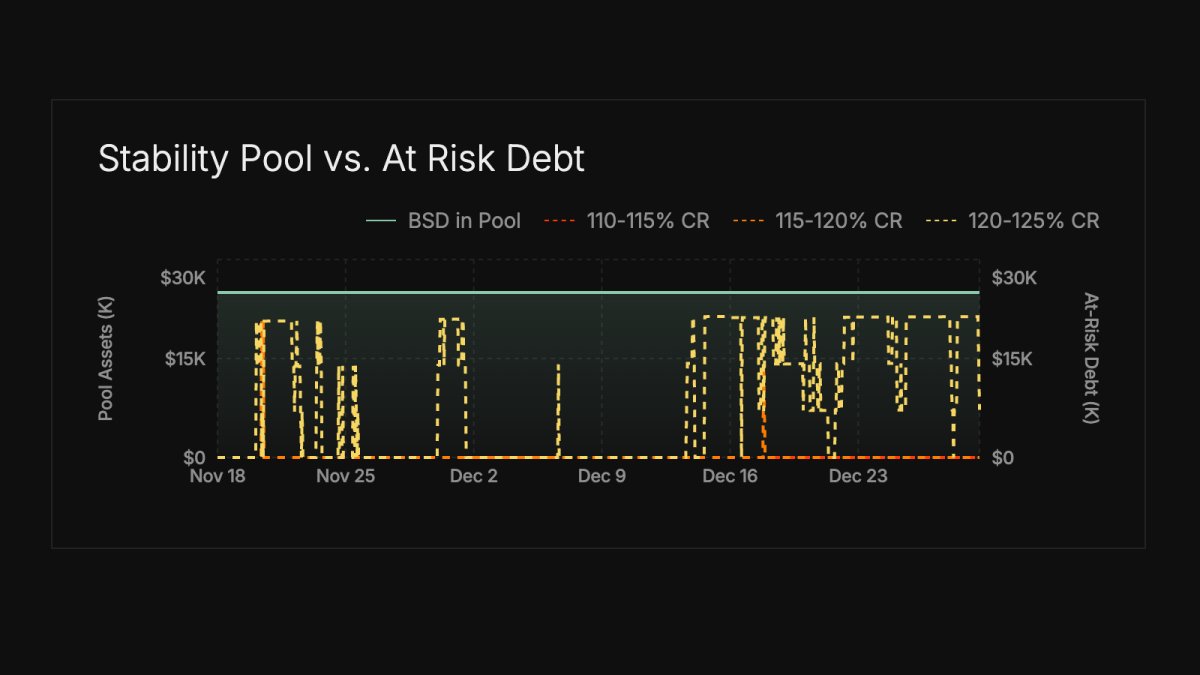
BSD Stability Pool 🧵 The Stability Pool enables responsive liquidations. Deposit BSD to earn sBTC from liquidated vaults. Liquidations trigger when a vault’s collateral ratio falls below 110%. The pool burns BSD to cancel the debt, and depositors receive the sBTC collateral—typically yielding a ~10% gain per liquidation event. The chart reveals why timing is critical: deposit too early and your capital sits idle → poor APY. Deposit just before heavy liquidations and your BSD gets fully utilized → strong APY. As the red/orange bars (at-risk debt) rise toward the teal line (pool size), the probability of profitable liquidations is increasing. More info on Stability Pool here: docs.bsd.money/protocol/stabi…
BSD | Based Dollar tweet media
English
0
1
4
112
BSD | Based Dollar retweetledi
Jeff
Jeff@stackatron·
⚔️ Product comparison: BSD vs. Lava 🧮 Key Differences Collateral Locking Mechanism: Lava shifted in late 2025 from DLCs to a hybrid custodial model for Bitcoin collateral (via app updates and migrations), introducing significant counterparty and custody risks. BSD uses Stacks smart contracts to lock sBTC (1:1 Bitcoin-pegged) non-custodially on the Stacks Layer 2. Liquidation Process: Lava's liquidations rely on centralized infrastructure, oracles, and now custodial controls, amplifying centralization risks. BSD handles liquidations fully on-chain via decentralized oracles and smart contracts. Traditional Finance Integration: Lava emphasizes TradFi features, fiat ramps, and institutional/custodial elements (bolstered by its 2025 fundraising). BSD remains purely DeFi-native with no direct TradFi or custodial ties. ✅ Conclusion If you prioritize true non-custodial design, transparent on-chain processes, decentralized liquidations, and zero custody risk, BSD provides a far superior, Bitcoin-aligned DeFi experience on Stacks (with yield via stacking sBTC). If you accept hybrid custodial risks for easier TradFi/fiat access and institutional liquidity, Lava may still appeal—though recent changes highlight why many prefer fully decentralized options like BSD.
Jeff tweet media
English
0
1
2
140
BSD | Based Dollar
BSD | Based Dollar@bsdmoney·
BSD Protocol - Frequently Asked Questions 👇 Last week was redeem basics. This week redeem advanced FAQs: 🙋‍♂️ What happens if my vault is redeemed against? You can think of a redemption against your vault as someone else repaying your debt in exchange for an equal value of your collateral. BSD will be consumed from your vault to fulfill the redemption, and your debt will be reduced accordingly. You will lose some of your sBTC collateral, but this improves your vault’s collateral ratio. The downside is that you lose exposure to the sBTC that was redeemed from your vault. 🧮 Do I lose money if my vault is chosen for redemption? You do not incur a direct net loss in dollar terms at the time of redemption. The value of the collateral you lose is equal to the value of the debt that is paid off for you. However, you do lose your position in that sBTC, meaning you miss out on any of its potential future price increases. ⚖️ What is the difference between a partial and a full redemption of my vault? A partial redemption occurs when the redemption amount is less than your vault's total debt. Only a portion of your debt is cleared, and a corresponding amount of sBTC is taken. A full redemption occurs when the redemption clears all of your vault's remaining debt. If the redemption amount is larger than your debt, the process continues to the next vault in the queue until the full redemption is complete.
English
0
1
1
92