Jason Burke

734 posts

Jason Burke banner
Jason Burke

Jason Burke

@burke_jason

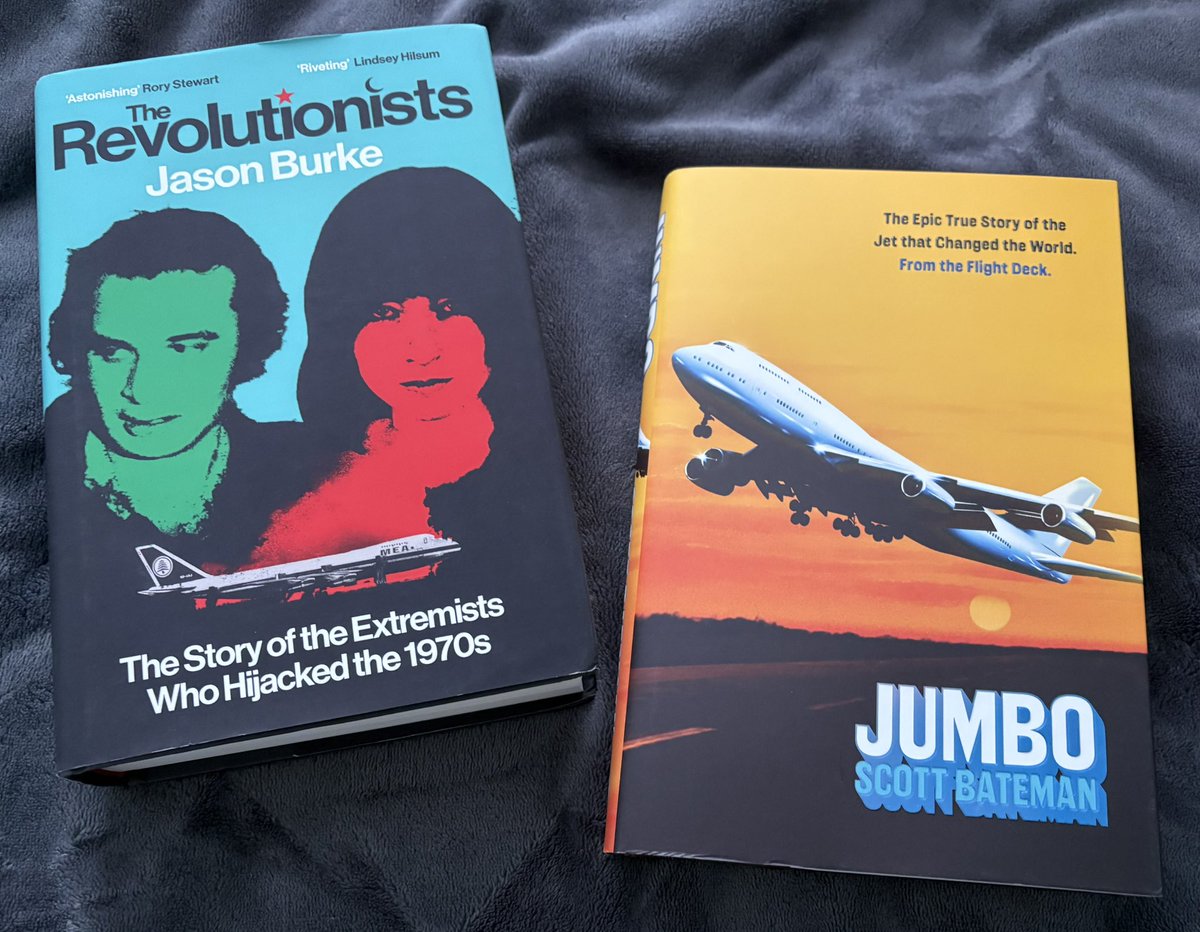
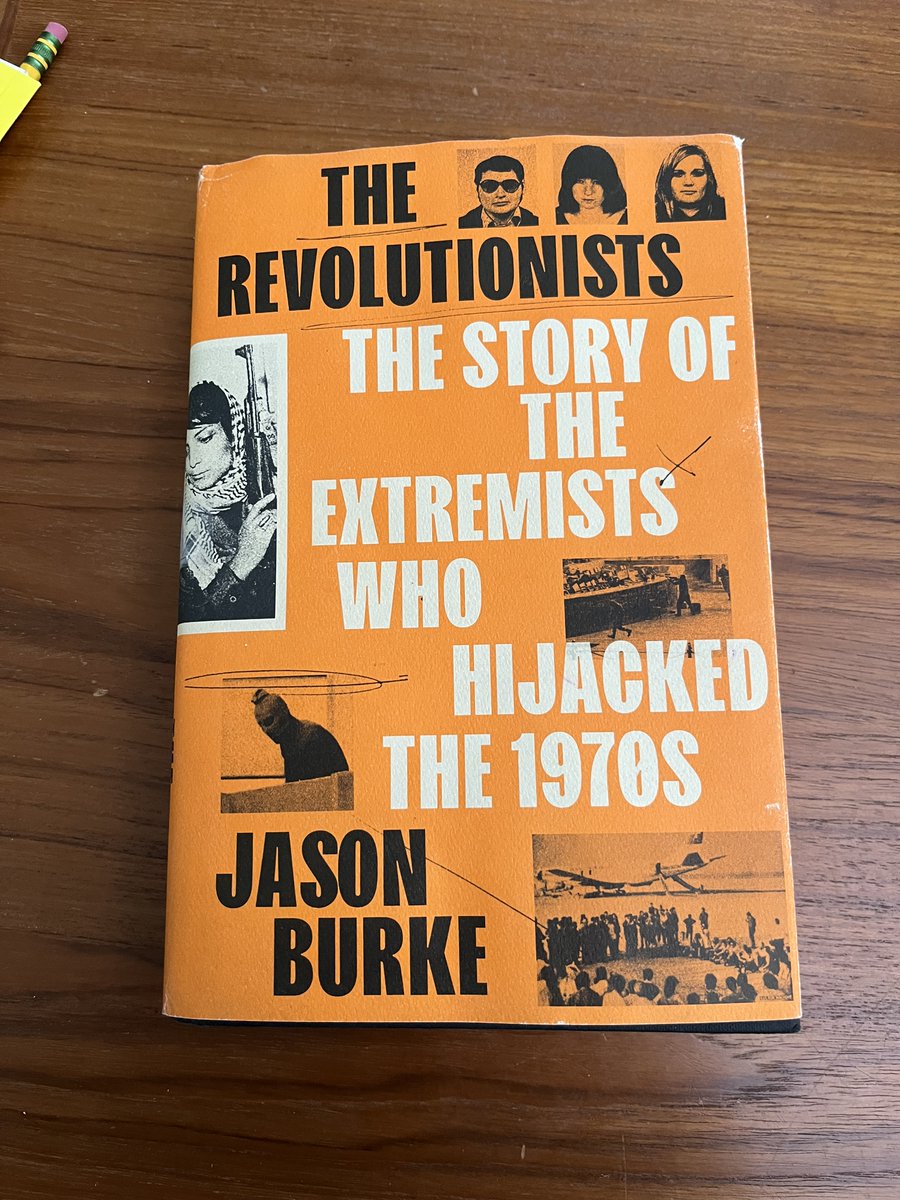
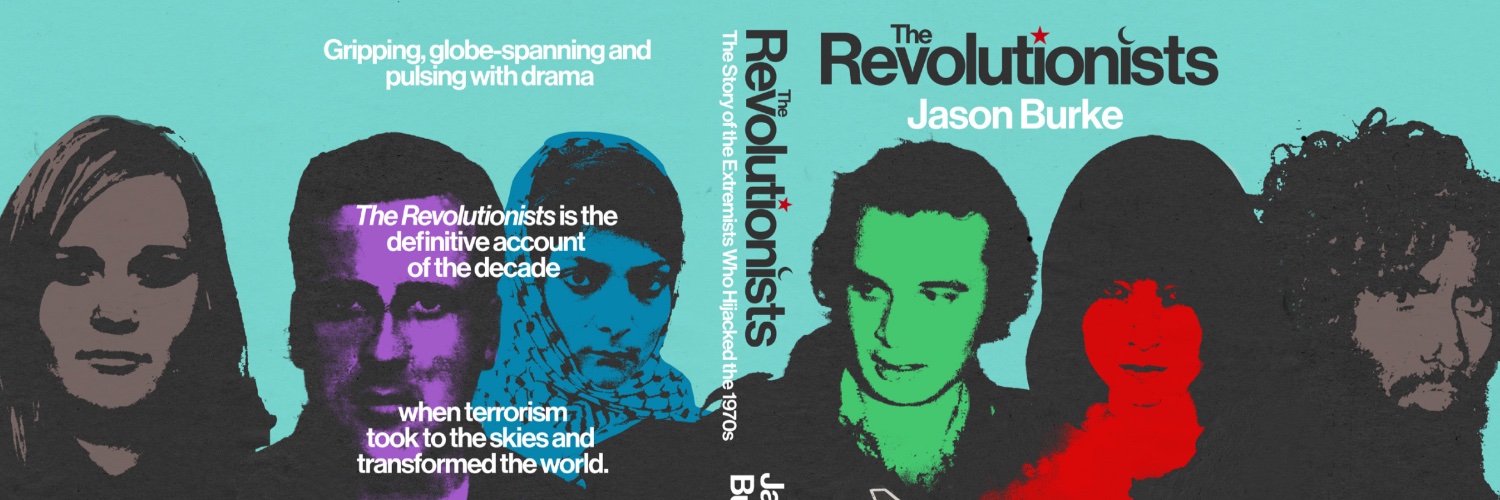
New book The Revolutionists out in UK, US and everywhere. staff reporter at The Guardian. London now after 20+ years in ME, S Asia, Europe, Africa. Dad.

in transit, probably Katılım Ocak 2011
4.3K Takip Edilen40.1K Takipçiler
Jason Burke
Jason Burke@burke_jason·
@Confusezeus It was on YouTube when I watched it a few years ago. Harder to find now though.
English
1
0
1
20
Jason Burke retweetledi
Patrick Wintour
Patrick Wintour@patrickwintour·
No civilisation thankfully died last night, but a Presidency deserves to. Here below a former senior US security official concedes that the ceasefire agreement Trump has signed is not “status quo ante bellum” ie the US is now worse off than at the start of this war of choice. To spell it out, Trump needlessly started a war at the urging of Israel, refused to listen to those experts urging caution, devised a strategy built on a misapprehension of Iran, sparked a ruinous regional conflict, caused the death of thousands of civilians, unhinged the world economy, strengthened, for now, the repressive instincts of the Iranian and Russian governments, left America more discredited & isolated, provoked serious questions about the President’s fitness for public office, laid waste to large parts of Iran and Lebanon, including medical research centres, primary schools and universities, did not resolve Iran’s stockpiles of highly enriched uranium or its future nuclear program, strengthened those in Iran backing possession of a nuclear weapon, and yes ensured Iran and Oman still plan to control and toll the Strait of Hormuz for the first time. A return to war will doubtless soon be threatened even before the 2 week ceasefire ends, but the use of force in this decades old conflict has now been test driven and proven the wrong vehicle since it can only achieve its objectives at an inconceivable price. Trump has now agreed that Iran’s 10 point maximalist plan is a “workable basis for negotiation”, and Trump’s 15 point plan will also be considered. But that leaves him worse off than when Witkoff and Kushner were in Geneva in February. The US with a weaker hand may need to send a team led by Vance and some proper nuclear experts to Islamabad to rescue the negotiating progress previously made, and prematurely spurned. Iran will feel less to no pressure to concede on its right to enrich uranium domestically, the single biggest previous point of dispute. Iran has also not explicitly conceded the need to negotiate over its ballistic missiles or support for proxy resistance groups such as Hezbollah. It will instead negotiate bilateral or multilateral “non aggression pacts with its regional neighbours”. Trump is now prematurely speaking of a golden era for the Middle East but scars are deep and negotiations will require far more than a fortnight. With luck the exhausting governing style of threats, deadlines, expletives, and menacing abuse that demeans America will now be set aside or denounced, starting with Cuba. Someone in the Trump cabinet may even look in the mirror and realise dollops of sycophantic praise may feed the narcissist, but only sullies them, and the political future of Republicans. Even Lindsay Graham might learn there is virtue in reticence. Some way of tethering Trump in the seven months to the mid terms is badly needed. European countries including UK Italy and Germany will now have to decide what lessons they learn from this shameful episode, and how they secure their national sovereignty. The European pillar in NATO may have to become the only pillar relatively soon. For when the US vice president crosses the Atlantic to campaign to keep a pro Russian authoritarian Viktor Orban in office, it looks as if America has tragically evolved into something more sinister than a wayward ally. As Mark Carney at Davos advised “it’s time to live in truth”.
Brett McGurk@brett_mcgurk

Trump posts Iranian FM statement: transit through the SoH “will be possible via coordination with Iran’s Armed Forces.” That is not status quo ante bellum.

English
8
131
245
39.5K
Jason Burke
Jason Burke@burke_jason·
War is testing operating principle that has guided Trump for decades: construct a narrative, declare it to be true and relentlessly force the world to submit to it Clever piece from our Washington correspondent theguardian.com/us-news/2026/m…
English
0
3
2
2.1K
Jason Burke retweetledi
Anshel Pfeffer אנשיל פפר
Anshel Pfeffer אנשיל פפר@AnshelPfeffer·
“What this war exposes is a failure not only of strategy but of literacy. Literature and history, at their most serious, train precisely the faculties these leaders lack: the capacity to grant that other minds are not transparent to us” @Yonatan_Touval nytimes.com/2026/03/29/opi…
English
0
24
52
9.4K
Jason Burke retweetledi
Alan Eyre
Alan Eyre@AlanEyre1·
Excellently researched, fascinating account by @burke_jason of the waves of leftist and Islamic 'revolutionists' prevalent in the 70s and early 80s. The book does a wonderful job contextualizing the various extremists historically, to include how international relations influenced who supported them and why.
Alan Eyre tweet media
English
5
3
21
7.6K
Jason Burke retweetledi
Shah Meer Baloch
Shah Meer Baloch@ShahmeerAlbalos·
Month-long chasing of the US bombing of the school story. Hours before the world learned that a US missile had hit Minab school, parents were already searching the rubble for their sons and daughters. Exclusive report families describe the events of 28 Feb theguardian.com/global-develop…
English
1
54
81
38.9K
Jason Burke
Jason Burke@burke_jason·
Data reveals 800 or so individual pre-regime demos in Iran. Whatever is happening after a month of war, Irans leaders retain the ability to organise and mobilise supporters My report theguardian.com/world/2026/mar…
English
0
2
5
1.8K
Jason Burke retweetledi
Raz Zimmt
Raz Zimmt@RZimmt·
Some insights on Iran’s situational assessment nearly a month into the campaign: A. Iran is interested in a ceasefire. However, from its perspective, there is a worse scenario than a ceasefire, namely, a temporary ceasefire. Following the 12-day war in June, senior Iranian officials and commentators warned that it would only be a temporary ceasefire and that the U.S. and/or Israel would resume attacking Iran in the near future. Tehran is not prepared for endless cycles of war and therefore insists on ending the current campaign with guarantees that no further attacks will occur. B. Surrender has never been part of the Islamic Republic’s lexicon and is not on the table even a month after the outbreak of the war. Regardless of the Iranian leadership’s current assessment of its situation, it is not willing to concede to American demands. This is also tied to the identity of Iran’s current leadership, which is largely composed of veterans of the Islamic Revolutionary Guard Corps, whose formative experience is the Iran–Iraq War. Iran’s leaders belong to hardline circles that not only viewed the 8-year war as a national trauma shaping their strategic outlook, but also adopted the revisionist narrative of a “stab in the back,” according to which Khomeini was forced to “drink the poison chalice” after being betrayed and misled by politicians led by Akbar Hashemi Rafsanjani and Mir-Hossein Mousavi, who compelled him to accept a ceasefire with Iraq. Will the new leadership in Tehran nevertheless be willing to make certain compromises that Iran rejected prior to the war? Possibly. Will it eventually conclude that it cannot bear the costs of the war and become willing to make even more far-reaching concessions? Perhaps. But for now, this is clearly not on the agenda. C. To this should be added Tehran’s current assessment, which is based on several assumptions: 1) They believe that, after the initial blow they suffered in the early days of the war, they have managed to adapt to the situation. 2) They assess that there is currently no significant threat to regime stability. The growing number of reports citing intelligence assessments and leadership circles in Washington and Jerusalem that the war will not lead to the collapse of the Iranian regime, alongside the adjustments made by security forces to attacks on IRGC bases, Basij headquarters, and internal security forces, reinforce this assessment in Tehran. 3) Tehran has adopted a “mindset of achievement” (and perhaps even a sense of victory), based on the belief that not only will the Islamic Republic survive the war, but that it can leverage its asymmetric capabilities—foremost among them the (partial) closure of the Strait of Hormuz and attacks on critical infrastructure in Gulf states—as a strategic leverage. This could enable Iran not only to return to the pre-war status quo but also to establish a new regional architecture based on recognition of its sovereignty over the strait, and possibly even the withdrawal of U.S. forces from the region, taking into account Iran’s regional standing and its capacity to inflict damage on the global economy. 4) In Tehran’s assessment, the two main escalatory options available to the U.S. are strikes on Iran’s energy and electricity infrastructure, and a ground operation to seize control of the strait or one of the islands (Khark or Abu Musa). Iran does not ignore this possibility, but believes that its own escalation could at the very least disrupt American plans. In the event of strikes on Iranian infrastructure, Iran has the capacity to retaliate in ways that would severely damage critical infrastructure across the region. In the case of a ground operation (even if successful), it is doubtful that it would allow for the immediate reopening of the strait. Seizing Khark Island would expose U.S. forces to Iranian fire, and it is uncertain whether the high economic cost to Iran would translate into immediate Iranian concessions, as Tehran may be able to absorb the economic consequences for weeks or even months while continuing to impose high costs on U.S. forces, regional states, and the global economy. Even a successful operation in the strait itself would not necessarily prevent Iran from continuing to threaten tanker traffic, for example, by drones, and this alone provides a level of deterrence that could prevent the resumption of activity in the strait even in the event of a successful U.S. military operation. In sum, Iran is open to diplomacy, negotiations, and possibly even significant compromises—but without relinquishing minimum demands, including guarantees against the resumption of hostilities, sanctions relief (which could be framed as reparations), and the preservation of certain nuclear capabilities, especially missile capabilities. If an agreement with the U.S. cannot be reached based on Iran’s position, Tehran is prepared to continue a prolonged war of attrition, based on its assessment that its resilience and stamina are greater than those of the U.S. and its regional allies. In any case, from Tehran’s perspective, the cost of total capitulation remains far higher than the risks of continuing the war.
English
28
136
436
201.5K
Jason Burke retweetledi
Thomas Juneau
Thomas Juneau@thomasjuneau·
According to multiple media reports, Trump is seriously considering ground operations against Iran. Here is why that would be a very, very bad idea that shows a pathological failure to learn from history. -(Keep in mind that with Trump, who knows what is true; this may be only a pressure tactic on Iran) -The US could seize Persian Gulf islands (Kharg, possibly other small ones). It would not be easy (they are well fortified, and Iran retains a strong drone and missile capability, so just getting there would be a challenge), but it is probably doable -The major problem is what comes next. US troops and assets (ships, helicopters, etc.) on these small and mostly flat islands would be vulnerable to Iranian missiles and drones; losses would be inevitable -And then what? The US would be bogged down in a much longer war with very uncertain outcomes. Iran would most likely hit back against energy infrastructure across the Gulf in the UAE, Qatar, Saudi. Oil prices would shoot up (hello recession and high inflation). These impacts would long outlast whenever the war would end, by the way. -War always brings unexpected and negative second and third order consequences (Iraq 2003 ➡️ISIS 11 years later). The US appears completely unable to remember and process this. -Some could reply by saying this would all be worth it if it leads to the collapse of the Islamic Republic. Plausible in theory - but not so clear in practice. That is a hope, not a strategy. As long as there is no clear plan for the day after, in the absence of a viable opposition able to take over, the most likely consequence of the fall of the Islamic Republic* is prolonged chaos and instability - in a country of 90 million, on top of the Strait of Hormuz, awash with weapons. -*The Islamic Republic is not on the verge of collapse. The more likely scenario is a weakening but also a hardening of what will become an increasingly vengeful and aggressive regime.
English
16
52
154
25.6K
Jason Burke retweetledi
Richard Fontaine
Richard Fontaine@RHFontaine·
This far into the war - and with no obvious end in sight - we've learned a few things: 1. The US and Iran are engaged in diplomatic shaping operations, not negotiations. Each side presents a maximalist position, and both insist the other is desperate. It would be great if Iran agreed to the current US terms - on nukes, missiles, proxies, etc. - but it won't. The current posturing could lead to real negotiations, but that will probably require more time - and fighting. 2. Watch the troops, not the talks. The diplomacy buys time for thousands of US ground forces to assemble in the region. There is a lot of talk about taking Kharg Island. Maybe, but doing so would not automatically solve the key U.S. problem, which is the blocked Strait of Hormuz. Other operations - along the Iranian coast or otherwise - may do more to open the Strait, and therefore be more likely. 3. Significant escalation potential here remains. Gulf Arab states could start shooting into Iran. The Houthis could enter the fight and block the Bab el-Mandeb. Israel could proceed with a ground invasion and occupation of southern Lebanon. Shia militias in Iraq could become more militarily active. The US and Iran could increase strikes on regional power and energy infrastructure. All of that is wholly apart from the potential engagement of US ground forces. 4. The White House continues to pare back its objectives. Out with regime change, the right to choose Iran's supreme leader, and unconditional surrender. Now Tehran must commit never to develop a nuclear weapon. But Iranian leaders made that commitment over and over before the war started. The aim should be to change Iranian capability - degrading its drones, missile, navy, nuclear, and defense industrial base - rather than a grand attempt to alter Iranian will. 5. Declaring victory and moving on is no longer an option. CENTCOM will likely complete most of its target set in another week or two. But that still leaves a closed Strait, which must open via agreement or force. The President's ability to spin situations as success will face limits here; everyone will know if the Strait remains closed, the price of oil still high, and the drag on the world economy still significant. 6. Once the Strait is reopened, the US will want to guarantee its security with an international coalition escorting ships and conducting patrols. For that we need allies and partners. The current approach of insulting and threatening them is not particularly productive. Leading them in a common effort would be a better approach. 7. After the shooting stops, we may see eerie parallels to 1990s Iraq. In 1991, the U.S. liberated Kuwait but was left with a weakened, hostile, and deeply repressive Iraqi regime still in place. Containing it required harsh sanctions and the long-term engagement of U.S. forces over years. In 2026, this war may well leave a weakened, hostile, and deeply repressive Iranian regime still in place. Containing it may require harsh sanctions and the long-term engagement of U.S. forces over years. War's unpredictable, so anything is possible. But we may be seeing a rough replay of an old movie.
English
42
84
305
125.7K
Dominic Green
Dominic Green@DrDominicGreen·
@burke_jason I know you didn't write the "tangled web" line, but if it's a web, it wouldn't lead "from Golders Green" to Tehran: it would lead the other way round.
English
1
0
18
2.5K
Jason Burke
Jason Burke@burke_jason·
British investigators are cautious about the Golders Green attack but experts and security officials say incident looks v like work of Iranian intelligence/IRGC ... as are a series of other similar recent incidents my analysis here: theguardian.com/world/2026/mar…
English
102
56
118
113.5K
Jason Burke
Jason Burke@burke_jason·
useful profile of Mohammad Bagher Ghalibaf, who is something of a hardliner, and is being weighed up as potential interlocutor to help end war... others, who might hv bn much more malleable and/or credible, have been killed of course. theguardian.com/world/2026/mar…
English
0
2
2
1.8K
Jason Burke retweetledi
Richard Holmes 🕵🏻‍♂️
Richard Holmes 🕵🏻‍♂️@Richard_AHolmes·
NEW: The 'terror' group supporting Iranian sabotage attacks across Europe. Harakat Ashab al-Yamin al-Islamiyya (HAYI) says it is responsible for the arson attack in North London, as well as a number of other small-scale attacks across Europe this month. HAYI is operating in support of the regime through Telegram channels where it claims to be the “European Frontier” for “the Islamic right-wing movement”. The group's Telegram profile was only created on Saturday and has since claimed responsibility for seven attacks across Europe, issuing a warning for an eighth in Paris. British security agencies believe Iran could be behind the Golders Green attack, which came just weeks after UK security sources warned of a rise in “gig-economy” Iranian spies offered cash for operations across Europe. w/@sanyaburgess and @janemerrick23 inews.co.uk/news/telegram-…
English
31
80
145
24.8K
Jason Burke retweetledi
Gregg Carlstrom
Gregg Carlstrom@glcarlstrom·
My sense of things from a few conversations (an incomplete picture at best, of course): - messages exchanged via intermediaries, no proper negotiations yet (contra Trump) - Trump acting as if Iran has already made major concessions, no one believes that is the case - little optimism amongst regional officials that talks will succeed, given the enormous gap between the two sides - Iran has previously conveyed to intermediaries that it doesn't want to deal with Witkoff again, given past experience; hence the talk of Vance - if the talks don't happen or flop, Trump bought himself a few days to move military assets to the region, and perhaps a calmer stretch in oil markets
English
29
201
671
128.7K