John Burroughs

111 posts

John Burroughs

John Burroughs

@burroj2

John Burroughs, USAF Security Police/Retired. A native of Illinois,

Normal Illinois Katılım Nisan 2014
109 Takip Edilen338 Takipçiler
John Burroughs retweetledi
KGRA UAP Reporter
KGRA UAP Reporter@MarkedByTheSky·
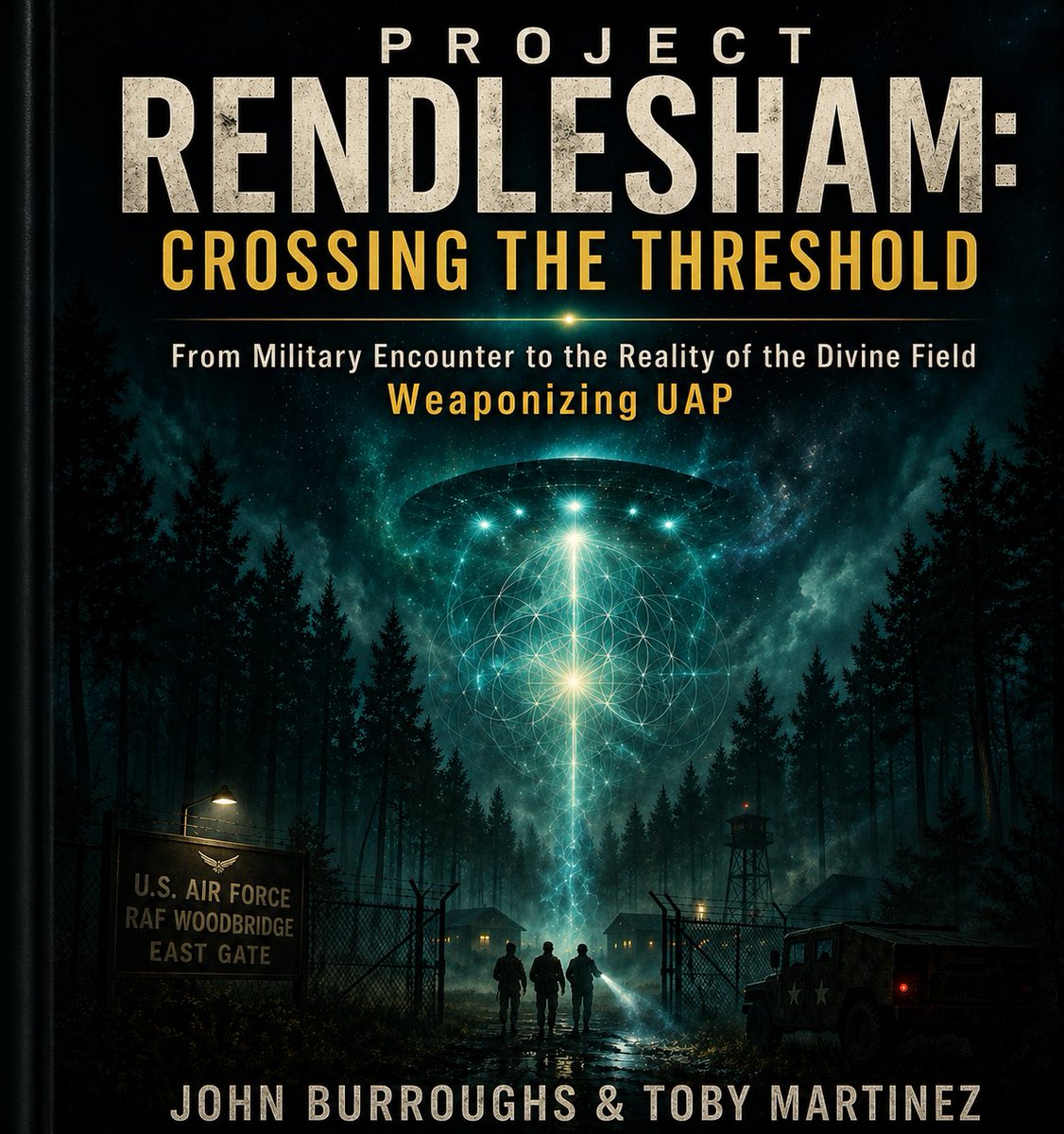
⚡️ FLASH SALE: Get the Kindle version for 99¢ (24hrs only!) or paperback for $9.99: amazon.com/dp/B0GXJDTST1 📧 Want a FREE reviewer copy? The first 25 to email johnfburr@yahoo.com with "Book" in the subject line get one!
English
1
2
2
298
John Burroughs retweetledi
KGRA UAP Reporter
KGRA UAP Reporter@MarkedByTheSky·
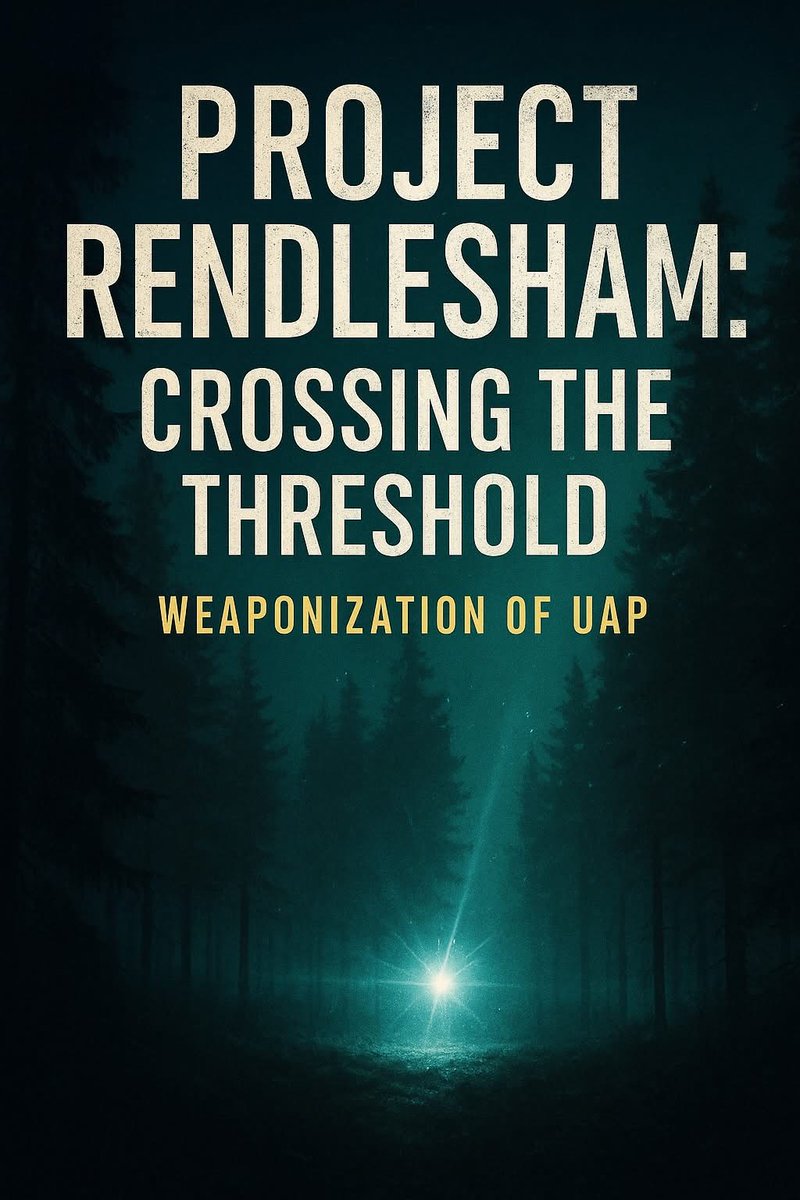
From the 1980 Rendlesham incident to a landmark VA settlement, "Project Rendlesham: Crossing the Threshold" exposes the fight for UAP injury recognition. Uncover unreleased docs on Washington’s "Shadow Network" and the quest for veteran accountability. Special sale below
KGRA UAP Reporter tweet media
English
1
2
3
425
John Burroughs retweetledi
KGRA UAP Reporter
KGRA UAP Reporter@MarkedByTheSky·
CALL FOR INTERVIEWS: Are you a current or former service member injured in a UAP incident. Have you also has sought or are seeking VA benefits? Or are you a lawyer representing such veterans? I'm writing a news article on the importance of caring for our military veterans after such encounters and I want to hear your story. Please reach out: 📷 toby@rdrnews.com 📷 rdrnews@proton.me #UAP #UFO #OVNI #Veterans #VABenefits #Military
KGRA UAP Reporter tweet media
English
0
5
5
891
John Burroughs retweetledi
KGRA UAP Reporter
KGRA UAP Reporter@MarkedByTheSky·
John Burroughs @burroj2 also added "I aIso want to thank Ross Coulthart @rosscoulthart and NewsNation @NewsNation for bringing attention to my VA settlement. Later this year, I’ll be sharing the full story behind my journey in Project Rendlesham: Crossing the Threshold, coming in Fall 2025."
KGRA UAP Reporter tweet media
English
0
2
9
838
John Burroughs retweetledi
KGRA UAP Reporter
KGRA UAP Reporter@MarkedByTheSky·
A statement from John Burroughs @burroj2 : @NewsNation and @rosscoulthart have reported on it— but now, for the first time, you’ll hear the real toll Rendlesham took on those who lived it. Join Adrian Bustinza and me as we recount our experiences—beginning with the events we witnessed in Rendlesham Forest and continuing through the U.S. Government’s acknowledgment that we were injured in the line of duty during that encounter. We’ll also be joined by Cheryl Bennett, Pat Frascogna, Chuck DeCaro, and Col. Charles Halt as we review the extraordinary chain of events that have unfolded over the past 45 years.
English
0
5
14
1.5K
John Burroughs retweetledi
KGRA UAP Reporter
KGRA UAP Reporter@MarkedByTheSky·
🚨 Huge blow to #UAP transparency that most people missed! The closure of the Office of Net Assessment (ONA) is a strategic error with severe implications for defense innovation & understanding #UnidentifiedAerialPhenomena. #NationalSecurity John Burroughs @burroj2 and I covered this office in our book, Rendlesham Signals from the Threshold. Here is a post from John examining what this closure means: Closing the Office of Net Assessment (ONA) is a deeply consequential decision that could severely undermine progress in UAP-related transparency, defense innovation, and long-term national strategy. While the move may appear bureaucratic or budgetary on the surface, the loss of this office has far-reaching implications, especially for those tracking how the U.S. government assesses and conceals emerging threats, including unidentified aerial phenomena (UAPs). ONA’s Role in Identifying “Outlier” Threats Like UAPs ONA’s mandate was not to react to threats, but to anticipate, model, and strategically assess long-term competitive asymmetries. That made it uniquely suited to study: Low-observable technologies (stealth, radar-evading craft) Cognitive warfare and non-kinetic influence operations Emerging phenomena that don't fit into conventional threat categories, such as UAPs Relevance to UAPs: ONA had the intellectual freedom and deep bench to commission classified studies and engage unconventional researchers—many of whom (including those studying UAPs or consciousness-related aspects) would never have fit inside DIA or CIA stovepipes. It’s no accident that key early thinkers in the UAP field, such as those aligned with AAWSAP and the NIDS/BAASS effort, intersected ideologically (and sometimes professionally) with ONA alumni or protégés. FOIA Implications: Reduction in Trackable, Declassifiable Analysis ONA historically produced internal white papers, outside academic studies, and commissioned contractor reports that, though often classified, left a paper trail. With the office shuttered: These streams of long-range assessments will stop Contractors and academics who worked through ONA lose a key platform FOIA requests related to these reports will become harder to trace (especially as their personnel are dispersed) Why that matters: Much of what we know about how the U.S. has historically thought about UFOs/UAPs comes not from the operators (DoD, AFOSI, CIA), but from thinkers and assessors who studied implications from a broader perspective. Impact on Strategic Contextualization of UAP Technology ONA’s job was to contextualize military technology across asymmetric dimensions: What new technologies make us vulnerable? How would an adversary human or not think differently? How do unacknowledged capabilities or phenomena influence the balance? Closing ONA means those asking these questions are now more likely to come from operational commands who may see UAPs as immediate threats, public relations issues, or classified embarrassments, rather than as long-term strategic phenomena to be understood. Likely Suppression of UAP-Relevant Insights ONA helped seed key ideas into defense circles that took years to manifest—like the rise of precision-guided munitions or awareness of the Soviet collapse. For UAPs, ONA could have: Offered space to investigate phenomenon behavior modeling Partnered with defense scientists or DARPA to test sensor interface anomalies Sponsored long-term tracking of UAP data signatures—something normal Pentagon budgeting avoids due to short funding cycles Killing ONA ensures these ideas never take root, and any internal momentum toward broader study of UAPs gets buried under short-term, reactive policy environments. Why They Might Want ONA Closed Political & Strategic Reasons a. Intellectual Threat to the Status Quo ONA historically empowered thinkers outside the Pentagon's operational hierarchy. That’s dangerous if: They start asking the wrong (right) questions about hidden black programs They challenge contractor secrecy They push too far into paranormal or ontological questions, like those surrounding UAP consciousness or nonhuman intelligence UAP Oversight Vulnerability ONA could theoretically cross-analyze: Special Access Programs (SAPs) Covert aerospace and ISR testing UAP events tied to strategic sites (like Rendlesham, Skinwalker, etc.) With this capacity, ONA becomes a liability to those wishing to limit disclosure of programs that may blur the line between UAP and classified tech experimentation. Ideological Hostility Pete Hegseth and other Trump-aligned figures have openly disparaged intellectual institutions they view as elitist or globalist. ONA’s alliances with: Academics Strategic historians Foreign threat modelers made it a target for politically motivated dismantling, regardless of its national security value. The Intellectual Vacuum Left Behind ONA’s closure removes: One of the few remaining bastions of long-term strategic thought The ability to think beyond doctrine and platform acquisition A critical safe zone for strategic analysis of UAP implications across: Quantum sensors Human cognitive interface Biological effects Historical patterns of observation and contact Summary: Why This Hurts the UAP Field, Research, and Disclosure Impact Area Strategic Analysis No institutional home for long-term study of anomalous phenomena FOIA & Records Access Fewer documents, dispersed personnel, harder traceability Policy Influence Loss of independent strategic voices weakens UAP-related advocacy Scientific Innovation Stops flow of funding to outside researchers who challenge orthodoxy Disclosure Risk Shifts control of UAP narrative back to reactive DoD structures and political gatekeepers Final Thought ONA represented a quiet fulcrum of influence—not through weapons, but through ideas. In a world increasingly shaped by ambiguous threats—UAPs included—it may be precisely the kind of office the Pentagon fears most: A place where the truth might finally be seen. Ultimately, ONA wasn't about weapons; it was about ideas and independent thought. In a world increasingly defined by ambiguous threats like UAPs, it might have been the very kind of office the Pentagon feared most: "A place where the truth might finally be seen". Its closure is a stark reminder that the path to UAP disclosure remains fraught with powerful interests opposed to full transparency. #UFO #ufotwitter #uapx #ovni
English
0
3
7
587