
Sabitlenmiş Tweet
Brad Horn
3.7K posts


Brad Horn
@bxhorn
Saffron Capital. Tactical asset allocations. Risk managed portfolios. Market reports daily prior to open.
Minneapolis, MN Katılım Mart 2012
198 Takip Edilen347 Takipçiler
Thank you for reading and following my work.
Saffron Capital - Risk Disclosure
Futures market analysis is presented to assess the market risk regime, to manage capital in the underlying cash markets, and to price capital preservation strategies. The ‘View from the Trenches’ post contains opinions only and are subject to change without notice. The content provided is for marketing purposes and is not legal, tax, or investment advice. Always do your own research and consult a registered investment advisor that considers your personal financial situation, investment goals, and risk tolerance. Saffron Capital accepts no liability for any use that may be made of these comments or for any consequences that arise. Investing involves risk. The risk of loss from trading futures contracts can be substantial. For this reason, the trading of futures (or options on futures) is not suitable for most investors. Under US regulations, market access is limited to accredited investors only.
English
$DXY - The Market’s New Favorite Trade
The dollar delivered exactly what bulls wanted and what commodity traders feared. DXY exploded through resistance and reached its highest level in more than a year. The move surprised many because falling oil prices normally support foreign growth and reduce demand for safe-haven dollars. Instead, interest-rate differentials overwhelmed everything else. Markets rapidly repriced future Fed tightening while other central banks, including the Bank of England, remained cautious. The technical picture strengthened dramatically over the last 24 hours. DXY broke above major channel resistance near 100.40 and now trades near 100.50. Both daily and intraday RSI readings sit above 70, confirming powerful momentum but also warning of near-term overbought conditions. Resistance stands at 100.75 and 101.00. Support moves up to 100.00 and then 99.75. Fundamentally, lower oil prices and a hawkish Fed create a favorable backdrop. However, much good news now sits in the price. We finally sold into strength at 100.52 pre-open with a buy stop at 100.67. The next sales opportunity for more defensive traders is a failed breakout above 101.00 ... 4/4

English
#Macro - View from the Trenches 🧵
Does the market care more about falling oil prices or rising rate expectations? For now, the answer is both, but in different asset classes. Yesterday's FOMC meeting shifted the narrative from Middle East risk and energy inflation back toward monetary policy. New Fed leadership delivered a more hawkish message than investors expected. Markets now price a much higher probability of a rate hike by September (50.4% today vs 43.9% yesterday). This is supported by nine FOMC members who projected one additional increase this year. The growth backdrop remains resilient. Retail sales rose 0.9% in May, and pending home sales posted their strongest gain since September 2024. Much of the retail strength is inflationary, reflecting nominal spending rather than a surge in real purchasing power. Real retail sales remain flat when adjusted for inflation. Looking abroad, the signing of the U.S.-Iran agreement accelerated crude oil flows back into global markets and pushed gasoline prices below $4 per gallon. The result is a transition away from a stagflation scare toward a late-cycle growth regime characterized by solid activity, easing energy inflation, and tighter monetary policy. Risk appetite remains intact despite yesterday's selloff. Equity futures recovered overnight, crude continues lower, and the dollar extends its breakout. Tactical bias: bullish dollar, buying equities on pullbacks, neutral-to-bullish bonds provided economic data softens and disinflation continues ... 1/4

English

BoA says there's a "decent chance" that Warsh announces a return today to quarterly press conferences. Some other thoughts:
Our base case remains that Warsh will lean dovish. We think he will say that the Iran conflict doesn’t affect underlying inflation (it only has a one-off effect on price levels) so the Fed should look through it, particularly given recent news on a resolution. He’ll also reiterate that the Fed should be forward looking about the disinflationary AI productivity shock.
Still, the data flow doesn’t allow him to argue credibly for near term cuts, and he likely recognizes that. So we expect him to just make a case for patience and note that there could be room for cuts later this year, once the Iran conflict has been resolved.
As he did in his nomination hearing, we think Warsh will emphasize the Dallas Fed trimmed mean, which is running at 2.35%, nearly 100bp below core PCE. But if we're wrong and Warsh concedes that inflation is becoming problematic, markets will become more strident about pricing in hikes.
Warsh doesn’t tend to talk much about labor, but we think that will need to change if he wants to make a compelling dovish argument.
Warsh will likely also field questions about the balance sheet. We expect him to say that it is imperative to reduce the Fed's footprint in markets. In our view, it is too early for him to announce specific measures to this end.
English

$SNAP CEO Evan Spiegel just showed off the new Specs AR glasses for the first time.
This is the kind of product reveal that explains how a social media company can be down over 90% during one of the best tech bull markets in history.
English
Thank you for reading and following my work.
Saffron Capital Risk Disclosure:
Futures market analysis is presented to assess the market risk regime, to manage capital in the underlying cash markets, and to price capital preservation strategies. The ‘View from the Trenches’ post contains opinions only and are subject to change without notice. The content provided is for marketing purposes and is not legal, tax, or investment advice. Always do your own research. Saffron Capital accepts no liability for any use that may be made of these comments or for any consequences that might arise. Investing involves risk and the risk of loss from trading futures contracts can be substantial. For this reason, the trading of futures (or options on futures) is not suitable for most investors. Under US regulations, market access is limited to accredited investors only.
English
$DXY - The Dollar Lost Its Inflation Wingman
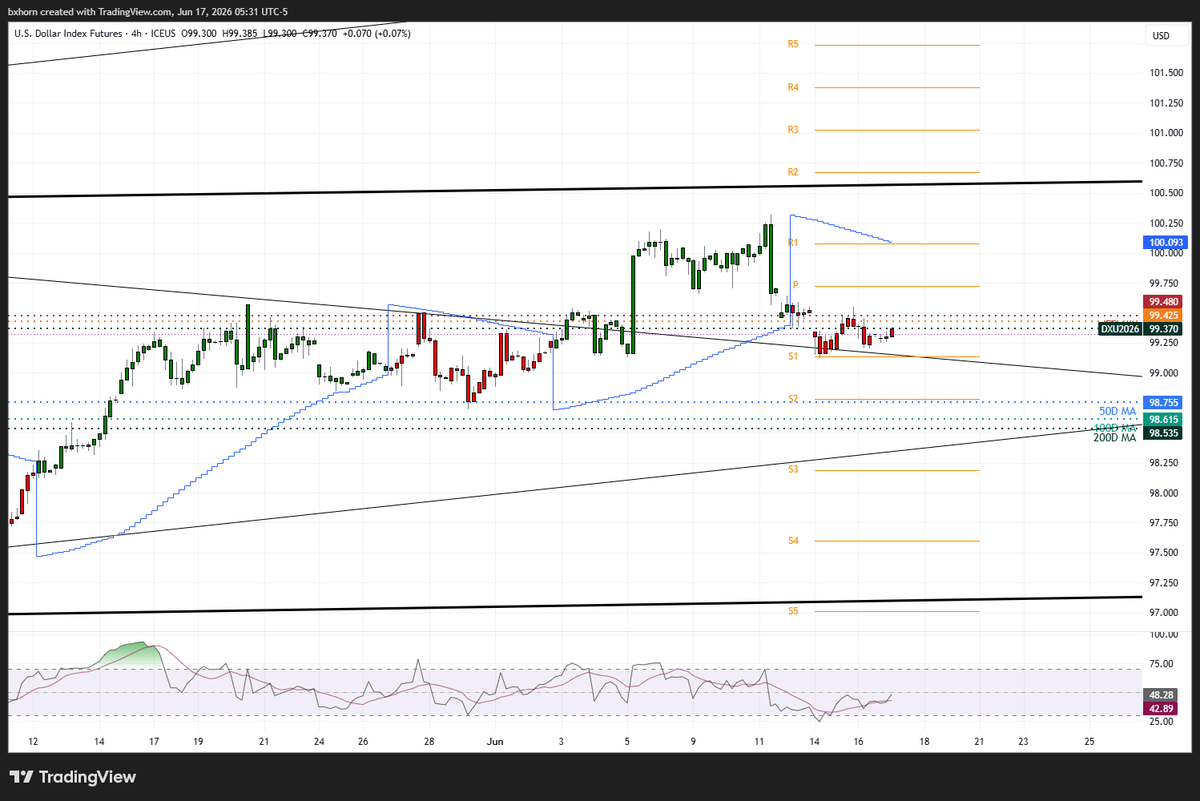
The dollar’s problem is not economic growth. Energy prices drove much of the recent inflation scare and supported expectations for a more hawkish Federal Reserve. That support is fading quickly just as housing data weakened and Treasury yields rolled over. As a result, DXY enters today’s FOMC meeting without clear fundamental support. The market has already priced a relatively firm Fed stance. That leaves asymmetric risk if Warsh sounds balanced rather than aggressively hawkish. The technical picture also deteriorated. DXY failed near the upper boundary of its broader trading range and now trades below key resistance near 99.75-100.00. Momentum remains weak. The daily chart shows a series of lower highs and declining relative strength. The 50-day moving average near 98.75 represents the first meaningful downside target. Below that, the longer-term support zone between 98.35 and 98.50 comes into view. The burden of proof remains with dollar bulls. Unless the Fed materially upgrades its inflation concerns, rallies will likely attract sellers. We are still flat, but stalking the rallies for a higher margin of safety ... 4/4
English
#Macro - View from the Trenches 🧵
The core question for markets today is simple: does collapsing oil outweigh sticky inflation? Over the last 24 hours, crude oil extended its decline as traders dissected news on the terms of the US-Iran agreement. Brent fell below $79 given increased insight into China oil demand curtailments, transparency on dark oil traffic under US escort, and new producer commitments to rush oil to market. Treasury yields drifted lower in response. Meanwhile, economic data refused to cooperate with the disinflation narrative. US import prices rose 1.9% month-over-month and export prices jumped 1.3%, both above expectations. At the same time, US tariff policy promises an increase in the effective tariff rate by year-end, moderating the pace of interest rate declines. Expect no policy change under new Chair Kevin Warsh when the FOMC meets today. However, the FOMC statement, projections, and press conference carry unusual importance because investors now debate whether the next Fed move is a cut or a hike. The business cycle still resembles a late-stage expansion. Growth continues. Labor markets remain resilient. Asset prices remain elevated. However, housing weakness and falling energy prices suggest inflation pressure may ease into the second half of the year. The risk regime remains is cautiously risk-on. Stocks benefit from lower oil and falling yields. Bonds benefit from cooling inflation expectations. The dollar remains vulnerable, especially if Warsh sounds less hawkish than markets fear ... 1/4

English
@TaxAlphaInsider Pride and confidence never replace the need for a second opinion. Theg guy is tok sophisticated gor his own gojd.
English

I spoke with an ex-SpaceX engineer today. His position is mid-8-figures. He said some private bankers took him and his buddies out to steak dinners last week.
He is considering decumulation strategies (VPF, long/short, exchange fund, etc.) for when his position opens up (August) and knows how each works (risk, tax, liquidity) quite well.
His whole deal was why would I hire a wealth manager when I feel like I know the solutions better than they do?
This is interesting and worth pulling apart.
1) The engineer was happy to pay for asset management: 150bps-300bps for highly-leveraged tax-aware long/short? Sure, take my money.
2) The engineer was happy to pay for an accountant who was going to get this stuff exactly right come tax return time.
Both of these things felt like real, irreplaceable value to the engineer.
But a wealth manager... the engineer was highly skeptical.
My takeaway from this conversation was that, for this client, the bar was extremely high. He wanted asset manager-grade analysis (analytics, engineering, rigor) applied to wealth design, and even then, he might have passed, since, in his mind, he could have cobbled together something roughly as good himself.
I have many thoughts:
1) Wealth managers can ignore this type of client. There's no/little client/adviser fit.
2) Wealth managers can try to meet this client's bar, and might be unsuccessful even if they did.
3) DIY/DTC solutions will get a bump from these type of clients suddenly coming into wealth, but there's plenty of others out there who still want help for urgent and routine matters.
Thoughts?
English
Thank you for reading and following my work. For early email delivery, subscribe on substack.
Saffron Capital Risk Disclosure:
Futures market analysis is presented to assess the market risk regime, to manage capital in the underlying cash markets, and to price capital preservation strategies. The ‘View from the Trenches’ post contains opinions only and are subject to change without notice. The content provided is for marketing purposes and is not legal, tax, or investment advice. Always do your own research. Saffron Capital accepts no liability for any use that may be made of these comments or for any consequences that might arise. Specifically, seek independent professional advice that provides trade recommendations that properly aligns to your personal financial situation, investment goals, and risk tolerance. Investing involves risk. The risk of loss from trading futures contracts can be substantial. For this reason, the trading of futures (or options on futures) is not suitable for most investors. Under US regulations, market access is limited to accredited investors only.
English
$DXY: The Dollar Lost Its Inflation Tailwind
The dollar staged a modest rebound overnight, but the larger trend remains lower. The fundamental backdrop deteriorated materially over the past week. Oil prices collapsed, inflation fears faded, and foreign central banks continue moving toward tighter policy. The Bank of Japan raised rates to 1.00% and signaled additional normalization ahead. Meanwhile, markets increasingly expect the Federal Reserve to remain patient as lower energy prices work their way into inflation data.
The technical picture also favors sellers. DXY failed to hold above the psychological 100.00 level and remains trapped beneath major resistance at 100.50. The daily chart shows a series of lower highs and weakening momentum despite the recent bounce. The 4-hour chart reveals a descending trendline capping rallies near 99.80-100.00. First support remains 98.80, followed by 98.50 where both the 100D and 200D MAs converge. RSI recovered from oversold conditions but remains well below levels typically associated with a sustainable bull trend. The core question is whether the dollar can regain its inflation premium. Falling oil prices argue no. Unless tomorrow’s Fed surprises markets with a significantly hawkish message, rallies into resistance still look like selling opportunities . Currently, we have no position as our sales targets were never hit. Look to sell rallies into 99.80-100.00 resistance. Initial targets remain 98.80 and 98.50. Reward/risk still favors dollar weakness ... 4/4

English
#Macro - View from the Trenches 🧵
The market narrative shifted from traders pricing a Middle East supply shock to pricing a reopening of the Strait of Hormuz, impacting across every major asset class. Oil collapsed from crisis highs, volatility contracted, equities surged, inflation expectations eased, and Treasury shorts are under pressure. The problem is that markets have priced a great deal of good news while many details remain unresolved. Iran and the United States still have not released the final agreement, shipping companies remain cautious, and actual traffic through Hormuz is yet to normalize. Meanwhile, today's economic calendar shifts attention back toward housing, trade prices, and tomorrow's FOMC decision. Housing data looks vulnerable after the NAHB index fell to 35, its weakest reading in months, while industrial production and regional manufacturing data point toward slower but positive growth. The dominant regime remains a late-cycle slowdown. Falling oil prices reduce inflation pressure while growth continues to soften around the edges. That combination favors duration, supports risk assets, and removes one of the biggest bullish arguments for the dollar. The core question for investors is whether lower energy prices create a soft landing or merely delay a slowdown. For now, the tape says relief wins. My bias is modestly bullish bonds, bullish equities, and bearish the U.S. dollar ... 1/4

English
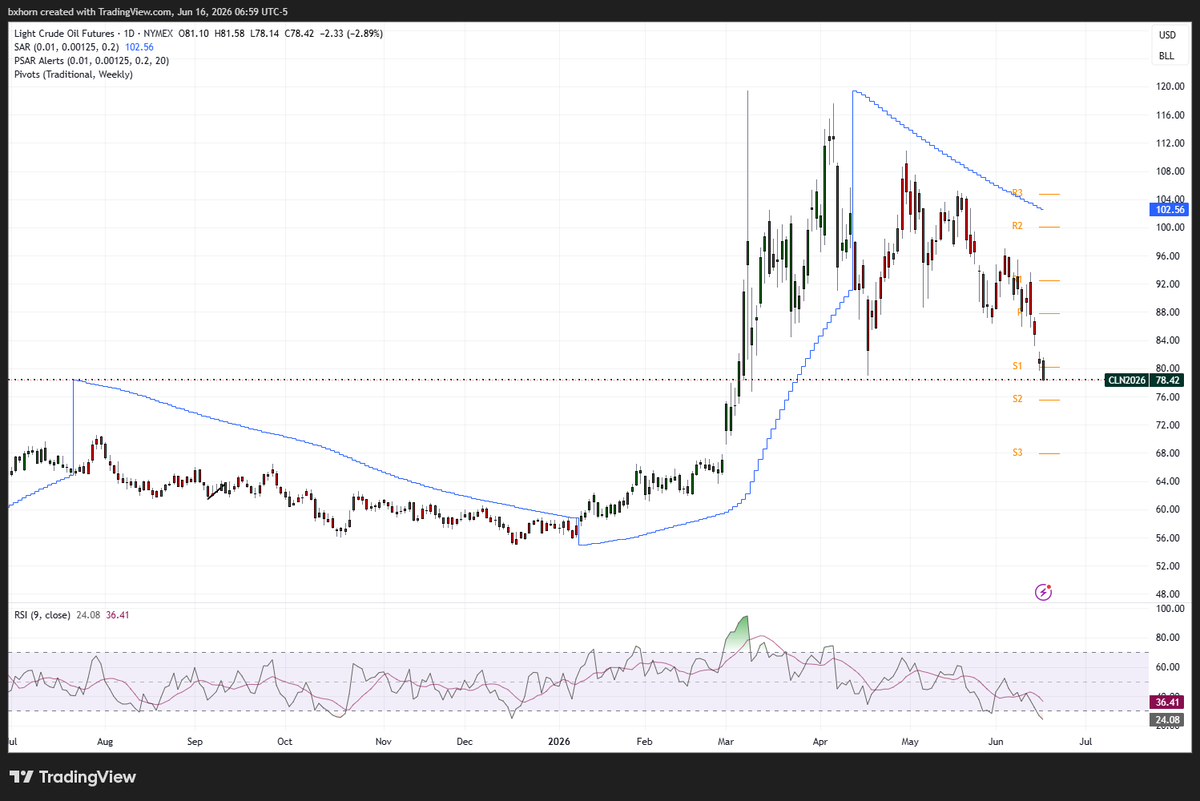
#Oil - Top executives from ExxonMobil and Chevron both warned how the production losses due to the closure of the SoH would lead to prices of oil prices of $150 even if the SoH is opened. Are the leaders of the two largest US oil companies really that bad at supply/demand/price forecasting?
#OOTT $XOM $CVX
English