Jose de Cabo

568 posts

Jose de Cabo

Jose de Cabo

@cabo80

Co-founder of @RemotelyWorksHQ Previously @Olapic (acq.)

London Katılım Mart 2009
430 Takip Edilen925 Takipçiler
Jose de Cabo
Jose de Cabo@cabo80·
We used to joke that if Olapic ever worked out, we’d start an investment vehicle called Siesta Ventures. Tagline: “You work while we sleep.” Back then, building a startup was hard (spoiler: it still is). So we imagined a future where we’d trade the chaos of operating for the ease of angel investing. Fast forward - Siesta is real. We’ve been investing in early-stage startups for the past 8 years now (50+ to-date), and we have a new investment vehicle, Clara.Ventures, that focuses on the immigrant entrepreneur. But… the sleep part hasn’t quite materialized. We are operators, and we love building.
English
1
0
2
34
Jose de Cabo
Jose de Cabo@cabo80·
Ben Horowitz says the thing that defeats people is expecting life to be fair. Hard to argue with that. I am trying to transmit to my kids that when given lemons, they should make lemonade and all that jazz. We are still working on the concept; it will probably take years to sink in. A lot of stuff happens in building a company that has nothing to do with merit: An investor pulls the term sheet at the 11th hour You lose a deal because someone had a connection you didn’t. A competitor with a weaker product gets funded because the timing lined up for them. You can spend days trying to make sense of it, but it doesn’t change what’s on your desk the next morning. The only real move is deciding what you’re doing next. Fix the thing that broke. Replace the person who left. Adjust the plan that stopped working. Keep going. You don’t have to like the problems, but you need to enjoy solving them. You just can’t let them turn into a story that slows you down. "What should I do now?” is usually a helpful question.
English
0
1
1
55
Jose de Cabo
Jose de Cabo@cabo80·
I’ve never liked the term “remote engineer.” It makes it sound like there’s a separate species of developer who codes from a distant planet, instead of someone who happens to live a planet ride away, but sometimes in almost the same timezone. What we’ve seen while building @RemotelyWorksHQ is that geography was never the variable that made the difference. Context was. Engineers in Latin America have worked at unicorns. They’ve shipped at scale. They understand startup chaos, legacy code, and the 2 am bug that nobody else can reproduce. The only difference is they do it from Medellín or Buenos Aires instead of Austin or Denver and with better coffee. We’ve been conditioned to see “remote” as a compromise. In practice, it’s been the opposite. Time-zone overlap, shared culture, English fluency, and startup experience have made our teams more aligned, not less. The engineers we work with don’t need “managing.” They need context, trust, and good problems to solve - same as anyone else. Maybe it’s time we drop the label altogether. They’re not remote engineers. They’re engineers.
English
0
0
0
23
Jose de Cabo
Jose de Cabo@cabo80·
We've left millions on the table over the past 5 years. And I'd do it again. Take a simple example: one full-time developer at 40 hours a week. Standard staff augmentation model: Developer makes $4,550/month Agency bills customer $13,000/month Agency keeps $8,450 65% take rate Our model: Developer wants $6,625/month Developer gets $6,625/month We charge a flat fee on top It's the same role with same hours. But the customer pays less, developer earns more, and we earn less. When I tell people this, they look at me like I set money on fire. They're right. If we ran the opaque model, we'd be doing 2-3x the revenue right now. But that doesn't sit well with us. There are a lot of problems with the traditional model, here's the one about retention: the moment a developer becomes valuable for your company, the model starts working against you. The developer might be really good but it's hard to reward them. If you try to give them a raise, it turns into a negotiation with a third party. If you try to promote them, more problems arise. Basically, everyone’s incentives are pointed in different directions. We removed all of it. Developer and company negotiate directly. Raises go 100% to the developer. Bonuses go 100% to the developer. Our fee stays the same whether they make $5k or $15k a month (and we have many making more than that) Hiring managers finally know where their money goes. We left money on the table. But because we built it tech-enabled from the start, in the age of AI, we can provide an excellent service with a margin that incumbents cannot replicate. When you're not trying to squeeze maximum value out of year one, things are more fun. Customers send us their friends. Developers stick around. We're cash flow positive and growing fast. No regrets leaving money on the table.
Jose de Cabo tweet media
English
0
0
1
46
Jose de Cabo
Jose de Cabo@cabo80·
Success leaves its own kind of scar tissue. When people ask why we’re so disciplined about profitability, I tell them it’s muscle memory. Our first company, Olapic, was a success by most definitions. We raised $20M+, built a big team, and eventually got acquired. But behind those headlines were the months of board decks, fundraising cycles, and the constant pressure to keep the curve going up and to the right. You learn how much energy it takes to feed that machine. How every new dollar raised comes with expectations that change how you think, hire, and move. You get used to optimizing for speed even when you can feel the wheels shaking. We burned a lot of cash every month; we were never profitable pre-acquisition. That experience leaves a mark. It’s why, at Remotely, we built the business to be profitable early. Why we care more about transparency and alignment than about chasing a valuation. It’s not fear. It’s a kind of muscle memory, and it's amazing how fast one can grow being profitable. We are killing the rule of 40, but that is for another time. When you’ve already been through the game once, you start playing for long-run instead of headlines.
English
0
0
0
9
Jose de Cabo
Jose de Cabo@cabo80·
When we started Remotely, one of the first things we agreed on was that we weren’t going to play the same game as everyone else in our industry. Most staff augmentation firms charge opaque markups and hide what portion of the customer’s payment actually reaches the developer. We went the other way. We decided every dollar a customer pays should be split transparently: the developer sees exactly what they make, and our fee sits separately on top. It sounds simple, but it changes everything. It means you can’t hide behind margins. You have to build real operational discipline. You have to earn efficiency through process and technology. Running a low-take-rate business forces you to think like an engineer: every small inefficiency compounds. Every extra layer of coordination, every redundant tool, every unnecessary handoff eats into what would be someone else’s salary. It also changes the kind of trust you build. Customers know exactly what they’re paying for. Developers know exactly what they’re earning. There’s no guessing, no suspicion, no “what’s the real rate?” Slack message after the call. Five years in, we’ve proven you can build a transparent, low-margin business in a high-margin industry -- and still grow profitably.
English
0
0
0
34
Jose de Cabo
Jose de Cabo@cabo80·
Most companies do annual off-sites with packed agendas and team-building exercises. We do the opposite. We’ve been remote since day one. But once a year, we fly everyone in for a week. There’s never much of an agenda. A few sessions, a loose outline, then it all unravels in the best way. People find corners to talk, argue, wander off to get coffee and end up sketching ideas on napkins. It’s good chaos. This year, something small kept showing up - people bringing a bit of home with them. Candies, snacks, little things from where they grew up. One table turned into a small food fair. People trying each other’s sweets, asking questions, telling stories about childhood, families, places that suddenly felt a little less far away. (I'm no sugar, low carb - but these moments with the team make me genuinely happy, and I absolutely take advantage.) It made me think about our customers. They’re building teams like ours - people spread across time zones, collaborating through screens, trying to make distance feel smaller. They want what we want: connection that doesn’t feel forced. We keep trying to build systems that make that easier. But it starts with us figuring out how to stay close while being apart. Most of the year, we’re scattered across countries and calendars. But a few days together, a few stories shared over sugar and coffee - somehow, it resets the whole thing. One week a year. Enough to remember what we’re building, and who we’re building it with.
Jose de Cabo tweet media
English
0
0
0
23
Jose de Cabo
Jose de Cabo@cabo80·
Tell me if this sounds familiar. Three weeks in, the engineer you hired stops making sense. Tasks slow down. Answers get evasive. You ask for a fix and get a response that reads like it came from ChatGPT. You double check the code test - something’s off. It’s too polished and generic. Then you realize: the GitHub was forked. The commits are synthetic. The person you interviewed might not be the one doing the work. Founders are running into this more often. At first, it feels like bad luck. But after the third “no-show” dev, or the fourth weirdly scripted interview, you start to see the pattern. It’s not always fraud in the obvious way. Sometimes it’s someone real, just pretending to be more senior than they are. Sometimes it’s two people sharing one identity. Sometimes it’s someone who passed your interview - then handed the job off to a cousin. And most hiring funnels aren’t built to catch it. Especially if you’re sourcing through sources that reward speed and volume. They’ll send you polished profiles with good-looking resumes, glowing blurbs, even decent test results. But when things break, there’s no continuity. No accountability. Just a quiet handoff and another name in your inbox. It’s not just the interview that wastes your time - it’s the weeks you spend ramping the wrong person. Sprints slip. Roadmaps shift. Teams lose momentum. And eventually, you stop trusting what “qualified” even means. That’s the real cost. (btw, we don’t have this problem at Remotely. The devs we place are vetted extensively, interviewed multiple times, and the best remote devs in the world. If you’re hiring senior engineers, send me a DM).
English
0
0
0
48
Jose de Cabo
Jose de Cabo@cabo80·
We once accidentally onboarded a new customer because they thought we were someone else. They filled out the signup form, signed, and started using us. They hired a great team. They kept calling us Remotely.io and introduced us to other founders and their VCs. We reached out and said: “Hey, just checking, are you sure you meant to sign up with us?” They said: “Oh. No. But this actually works better than what we had.” Source: I could've made this up (but it is actually true).
Jose de Cabo tweet media
English
0
0
0
18
Jose de Cabo
Jose de Cabo@cabo80·
This is what “async” looks like when it’s not a buzzword.
English
0
0
0
21
Jose de Cabo
Jose de Cabo@cabo80·
When you think about it… enterprise sales is just Dungeons & Dragons with QBRs. You assemble your party: - Account Executive (charisma) - Solutions Engineer (intelligence) - Founder (luck check only) You enter the dungeon: - Procurement Roll for a discount. Roll for redlines. Roll to survive a 42-person demo with no decision-maker present. Final boss is a VP who says - “This is great. Let’s revisit next fiscal.” You die inside.
English
0
0
0
25
Jose de Cabo
Jose de Cabo@cabo80·
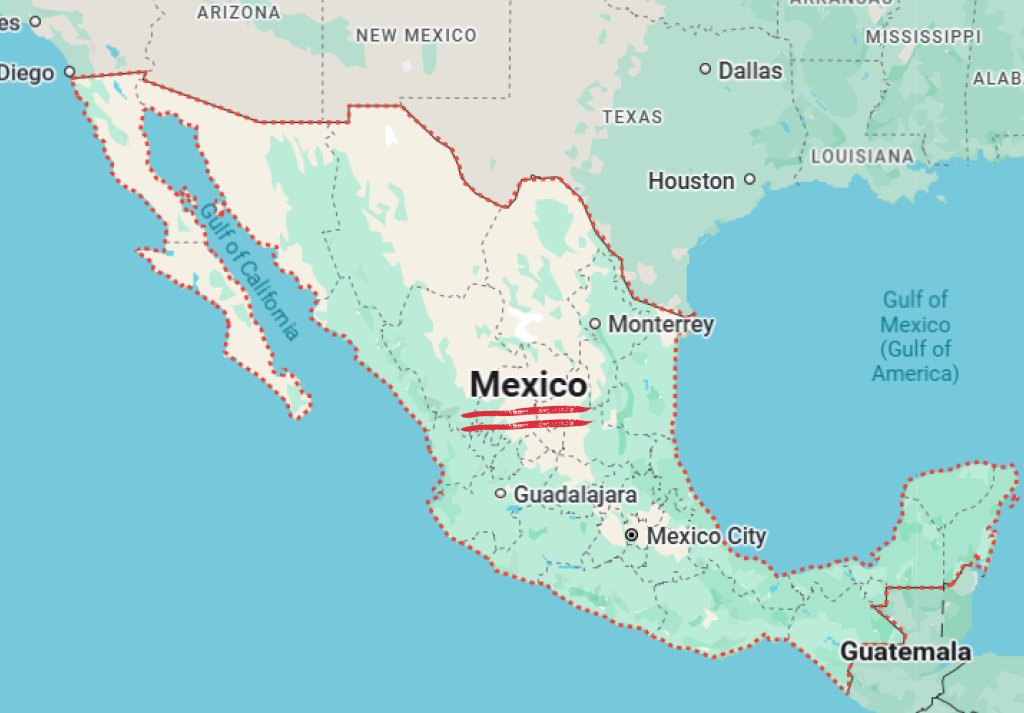
Mexico has some of the most baller software engineers in the world. It’s the second largest economy in LatAm, has 440,000+ engineers, and is home to fintech giants like Kavak .com and Bitso. They produce amazing senior engineers who have scaled products inside unicorns, speak fluent English, and want to build with US startups. At Remotely, we’re seeing it firsthand: - More developers from Mexico applying to our network than ever before - Retention rates on par with (and most often higher) than US counterparts - Salaries that make sense for both sides (developers here still earn meaningfully more than local shops would ever pay, while US companies save 50%+ on engineering costs) Imagine finding a hub of startup-minded engineers two hours south of Texas, in the same time zone, ready to solve problems without hand-holding. And unlike the old-school nearshore shops, we don’t skim off the top - developers keep their full rate, and we add a flat fee separated from their salary. Keeps things clean, keeps everyone aligned. If you’re scaling engineering in the US and haven’t looked at Mexico for talent yet, check us out.
Jose de Cabo tweet media
English
0
0
0
87
Jose de Cabo
Jose de Cabo@cabo80·
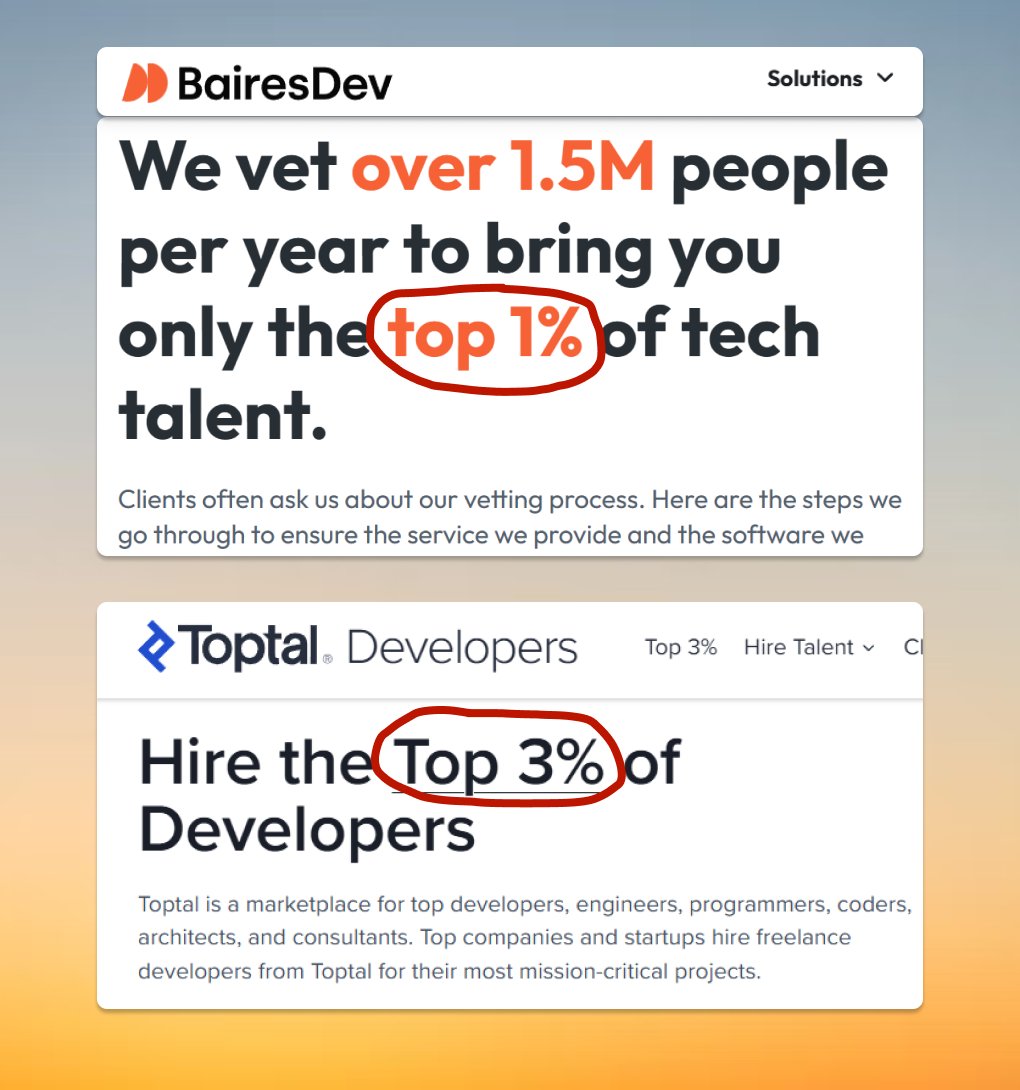
“Top 3% of developers.” The biggest lie in the software services industry. BairesDev says 1%. Toptal says 3%. But when their candidates apply to Remotely, 75% get rejected. Because passing a coding test isn’t the same as being a senior engineer. At Remotely, to qualify, you need: - 5+ years shipping in fast-paced environments - Fluent English and clear communication - A startup mindset – autonomy, ownership, accountability - A track record of sticking around and delivering long-term That’s why our 6,000+ vetted developers are the kind of people you actually want on your team. They're actually the “top 3%”.
Jose de Cabo tweet media
English
0
0
0
528
Jose de Cabo
Jose de Cabo@cabo80·
When we met Lucas, he was a mid-level engineer from São Paulo. We usually place very senior folks at Remotely, but a few years back we took a chance on him because his work/code spoke louder than the résumé. First stop: a VC-backed startup we supported that later got acquired by Pinterest. Our model allows companies to buy out their team so Lucas spent a couple of years inside Pinterest. As he continued to be part of the Remotely network. That’s how he joined Further -- a second-time founding team disrupting how first-time homebuyers make the most important purchase of their lives with AI. They have a few other engineers hired through Remotely and, a month ago, they shipped a big AI release. If you are considering buying a house, you should check them out. (full disclosure, I like the founding team so much that I angel invested, so I am biased) Why share this? Because seeing someone like Lucas grow from a promising mid-level into a trusted senior teammate is exactly why we chose the harder, transparent model over the easy, opaque one. So if you’re building your engineering team and need exceptional dev talent, check us out!
Jose de Cabo tweet media
English
0
0
2
22
Jose de Cabo
Jose de Cabo@cabo80·
Why do developers leave after 6-12 months with most agencies? Because most staff augmentation agencies ROOT for your developer to quit. Sounds extreme, but follow the money. You pay $10-12k a month. The engineer receives $4k. The agency keeps the $8k spread. As the engineer gains tenure, they become more valuable to you and more expensive for the agency to retain. The easiest path is churn: replace them, reset the salary, and preserve margin. That’s why attrition is built into the model. Your success doesn’t compound; their profits do. We built Remotely on the opposite principle. Developers keep 100% of their negotiated rate. We charge a flat fee. When the engineer grows, both sides win. Retention has stayed above 90% for 3+ years. Transparency doesn’t sound like a growth strategy, but it’s the one thing that compounds better than churn.
English
0
0
2
24
Jose de Cabo
Jose de Cabo@cabo80·
I met a recruiter in NYC who only places developers with side hustles more profitable than their main job. If you’re not quietly running a Shopify empire or arbitraging prediction markets while coding your sprint tickets, you don’t make the cut. Her pitch to clients: “These engineers don’t work for you because they need the money. They work for you because they’re bored.” Retention is high because quitting means they’d have to take their DTC brand seriously.
English
0
0
1
49
Jose de Cabo
Jose de Cabo@cabo80·
If you’re still hiring in India or Eastern Europe for your US product team, it's time to rethink your strategy. It used to make sense when the goal was cost reduction. Now it’s a tax on speed. The teams that ship the fastest today work in sync. They’re building in real-time loops where engineers, PMs, and designers can actually talk, adjust, and ship -- not hand off work into the void at 6 pm and wake up to half-baked pull requests. That’s why more US tech companies are shifting their core engineering to Latin America. Same talent density. Same startup DNA. But most importantly, same working hours. When teams share daylight, they build trust faster. They solve problems before they snowball. And they stay longer because collaboration feels natural, not transactional. Developers across Mexico, Colombia, Brazil, and Argentina have worked at unicorns, contributed to open source at scale, and operated in English-speaking teams for years. In a world where AI is compressing build cycles and shrinking iteration time, speed is all we've got. And you can’t be fast if your team lives in different time zones.
English
0
0
2
27
Jose de Cabo retweetledi
Pau Sabria
Pau Sabria@kuap·
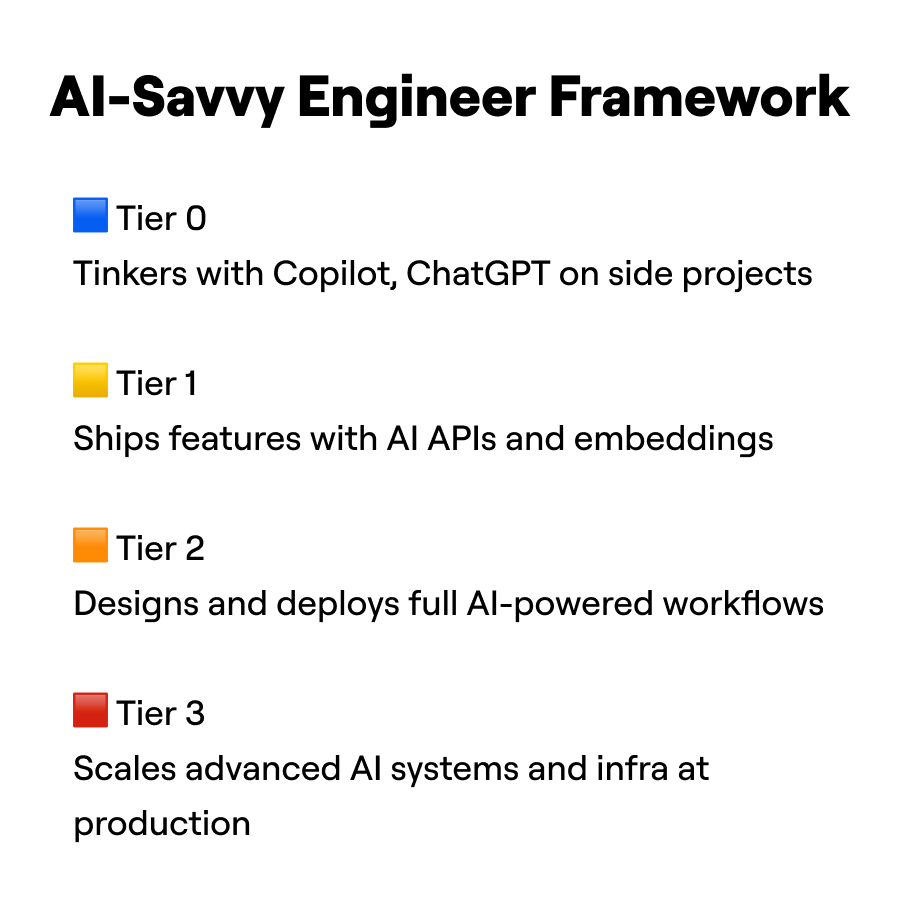
Hiring an “AI engineer” without defining what that means is like asking for a “cloud engineer” in 2010. Back then, did you want someone who could spin up an EC2 instance? Or someone who could architect a multi-region system serving millions of users? The gap was massive.
Pau Sabria tweet media
English
2
1
0
164
Jose de Cabo
Jose de Cabo@cabo80·
I’ve helped build engineering teams in Latin America twice: first at Olapic (acquired for $130mm), and now at @RemotelyWorksHQ ($40mm+ GMV), where 400+ developers are building careers with US tech companies. And here’s the uncomfortable truth about remote hiring that most founders still get wrong: They treat remote engineers like contractors, not like teammates. That single mindset shift makes or breaks distributed teams. Let me explain: 1) “They’re cheaper” Yes, cost savings are real. But the moment you frame an engineer’s value in terms of discount, you kill the upside. These aren’t “budget line items.” They’re builders who can (and should) be thinking like product owners. I’ve watched teams in Mexico and Argentina come up with architectural changes that saved their US counterparts six months of work. That doesn’t happen when someone is treated like a plug-and-play resource. 2) “They need close supervision” This one drives me crazy. Successful remote engineers don’t need more check-ins; they need more trust. When you hire seniors in Sao Paulo who’ve shipped for years in high-stakes environments, micromanagement is a tax. Remove it, and they’ll start anticipating issues before they even reach your backlog. I’ve seen mid-levels in Bogota take ownership of release cycles simply because no one was hovering. That’s how leadership seeds itself. If you want to get remote right, don’t start with cost. Start with trust and ownership. The rest follows.
English
0
0
0
51