

Chris Cassa
1.1K posts



Chris Cassa retweetledi

There are days in life that shake you.
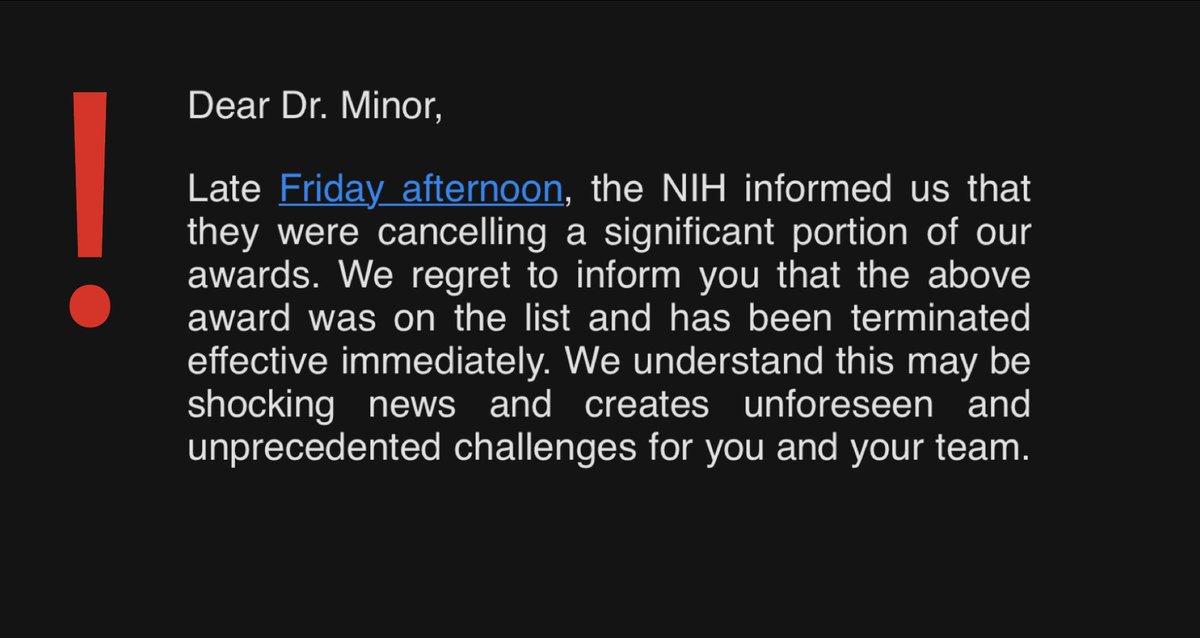
I’m shattered 💔 to share that I just found out that the US Government terminated my 2024 NIH Director’s Early Independence Award (~$2 million), threatening my long-promised assistant professor job at @Columbia & academic career... 1/🧵
English

Chris Cassa retweetledi

Every city or county with a commitment to Vision Zero should have an ad like this playing in their local market.
English
Chris Cassa retweetledi

I don’t understand why you object to me burning your house down, you admit it isn’t perfect. Isn’t this a chance to rebuild it better?
English
Chris Cassa retweetledi

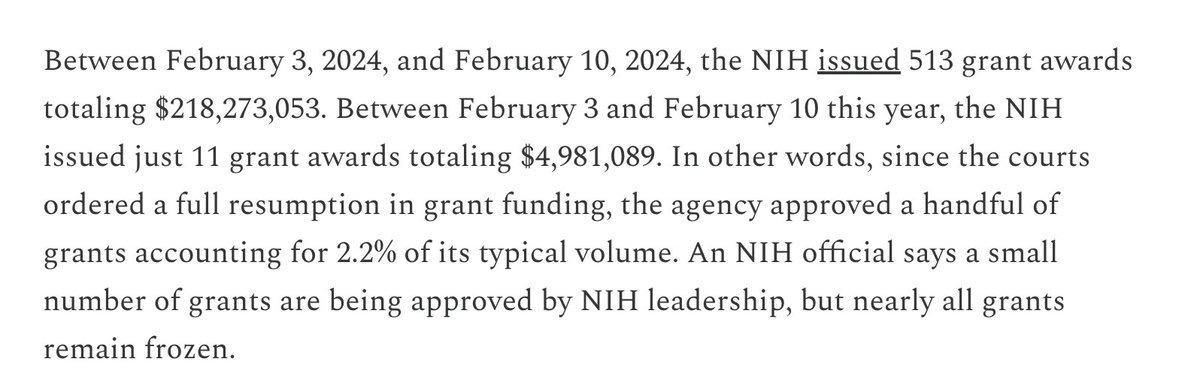
98% of NIH grants that should have gone out this month, didn't. Despite court orders 'unfreezing' the funds, they are frozen. Biomedical research will grind to a halt. Clinical trials will end. All for no reason: the total impact on the US budget is miniscule
English
@macroRoc1 @transitmatters MassDOTs portal shows 6,000 people biking daily on the Mass Ave bridge in Fall, and 2,300 daily last Winter. Would you like to venture a guess for how many people take the 1 bus daily, along the entire route? Hint: it's fewer. Is the bus a niche mode of transportation?
English

@ccassa @transitmatters Bicyclists can take the bus like the rest of us, and bike lanes can’t be put on secondary streets. It’s a niche transport mode. There have been essentially no bikes the last month with the weather.
English

Since MassDOT installed separated bike lanes on the Mass Ave Bridge in 2021, Boston has counted a daily average of 6,160 bikes, a 51% increase. 🚲
English
@macroRoc1 @transitmatters When was the last time you were there? It's pretty different now, and bikes are not a niche mode there. Plus they work together with transit to help solve the last mile. momentummag.com/more-people-tr…
English
@ccassa @transitmatters I’ve visited Paris many times. Bikes are a nice secondary transit mode, the heavy lifting is done by the subway and buses, which all fit on the wide Haussmann streets.
English
@macroRoc1 @transitmatters This really doesn't have anything to do with bikes. I can't make Mass Ave wider. You have 44', how are you going to allocate it?
English
@ccassa @transitmatters And seriously: Budapest, Vienna, even Mexico City makes street trolley/BRT work. You really claim it’s impossible in Boston? I don’t believe it. Bikes have became a Progressive religion canon over the last four years, not a rationale policy choice.
English
@macroRoc1 @transitmatters Unfortunately they do not fit. 44' is only enough room for the four 11 foot travel lanes. It leaves no room for passenger or commercial loading/unloading, no buffer to make it 'BRT', and no space for bus stops. It also removes bikes from our transportation ecosystem.
English
@ccassa @transitmatters You can actually if you get rid of the on street parking. There may be few tens of feet of road here and there, but there is sufficient space. (I used to live in Central.)
English
@macroRoc1 @transitmatters The changes added bus priority to both sides of the bridge, allowing buses to skip traffic at both lights. Most bus (and car) delay happens at intersections. BRT would probably make a minimal difference on the bridge unless there were a crash, where the bus would get stuck again.
English
@ccassa @transitmatters I imagine the bike lanes did not have a major impact on bus efficiency one way or the other. How much did it increase? How much would BRT make it increase?
English
@macroRoc1 @transitmatters Central, Harvard, and Porter are on Mass Ave, and we do have a rapidly improving transit system. Speaking of Paris... their massive investment in the bike network has been a massive boost to their mobility and urban connectivity.
English
@ccassa @transitmatters Oh, sorry! We have PLENTY of space to increase density. But without decent mass transit, the resulting mass congestion will kill us. Paris has 3X density, but it has a well functioning mass transit system.
English
@macroRoc1 @transitmatters These would be great, but unfortunately major segments of Mass Ave are not that wide in Cambridge - big chunks right after you get into Cambridge are ~44ft. Center running bus lanes need two 11' bus lanes, and ~8' for safe loading/pedestrian refuge, plus width for buffers
English
@ccassa @transitmatters WBUR had a story a few years back describing how Mexico City has implemented BRT. I think something like this could work very well for Boston Metro:
wbur.org/news/2019/04/2…
English
@macroRoc1 @transitmatters Also can we dig into "we can’t realistically increase housing density"? There are lots of 1 story buildings near central square, so with Cambridge's 20% inclusionary requirement and AHO, its a great place to build affordable housing
English
@ccassa @transitmatters Without better mass transit (e.g. BRT) congestion will remain high, poorer/older people don’t have reliable all weather transportation, and we can’t realistically increase housing density. Thus the current bike lanes are an impediment to progress for better urban planning.
English
@macroRoc1 @transitmatters When you say BRT, do you mean a bus lane, or do you mean center running bus lanes, or do you mean fully physically separated BRT where cars cannot turn through it?
English
@ccassa @transitmatters Thanks. I look at this from a different perspective tho: we prioritize BRT. BRT is more efficient, equitable, & all weather.
For instance, BUMC to Arlington, Porter Sq. to Union, etc.. The current bike lanes makes BRT physically impossible, even w/ removal of parking.
English
@macroRoc1 @transitmatters advocated for bridge changes, which added bus priority at both intersections to improve reliability! @berkie1 shared the mode share for vehicles (~20%), but I'm not sure if there's good data for individuals.
English
@berkie1 How does that compare to the daily average of people in cars and people in buses? I want to get a sense of what percent we are talking about here. Also, if Bus Rapid Transit was installed instead, any estimates of how many passenger per day that would carry?
English
Chris Cassa retweetledi


Chris Cassa retweetledi
3-million square feet of asphalt could be converted to a new mixed-use neighborhood after the Mall Road rezoning plan was approved by Burlington Town Meeting this week.
"It's our choice for smart growth. That's huge. Because we understand the economic benefit."
📍Burlington, MA


English