

Carson Chow
2.4K posts
Carson Chow
@ccc1685
Applied mathematics, biology, computational neuroscience
Katılım Aralık 2010
170 Takip Edilen142 Takipçiler
Explore this gift article from The New York Times. You can read it for free without a subscription. nytimes.com/2026/03/15/bus…
English
@TrentonBricken I admire the principled actions but the usual contract states that the product is to only be used for legal activities. But if random killing and mass surveillance is considered legal then I think we may have bigger problems.
English

Time and time again over my three year tenure at Anthropic I've seen us stand to our values in ways that are often invisible from the outside. This is a clear instance where it is visible:
English
@ATabarrok I mostly don't bother trying to get reimbursed. The Swiss method is the best. They just hand you a wad of Francs
English

Whoever decided that a university speaker getting reimbursed for an Uber needs to complete the same supplier onboarding as a firm bidding on a $1M waste disposal contract: please rot in hell, with respect.
English
At Pitt in the late 90's, we used this great database tool from Peoplesoft. Oracle knew it was better and did a hostile takeover, which no one thought would succeed and we were stuck with their inferior product. I knew Paramount would win Warner because Larry never quits.
English
@SuryaGanguli 2) So it it may not be a fair comparison to use 20 W for the human use per token. On the flip side, the 20 W doesn't account for the energy to keep the brain alive such as pumping blood, making glucose, etc. Anyway it's not a trivial comparison.
English

Brain:
20 Watts * 20 yrs ~ 3500 kW-hours
Llama-405B:
700 W/GPU * 30M GPU hours ~ 21M kW-h
AI training = 6000 * human training
Chief Nerd@TheChiefNerd
🚨 SAM ALTMAN: “People talk about how much energy it takes to train an AI model … But it also takes a lot of energy to train a human. It takes like 20 years of life and all of the food you eat during that time before you get smart.”
English
@SuryaGanguli 1) The 20 watts, which is the average a human brain uses, is the baseline rate which would use 20 watts independent of what you are doing. Metabolic measurements seem to indicate that "thinking hard" has essentially non-measureable effect on energy.
English
AI inference energy cost for a >405B model:
~ 5 kWh per 1M output tokens (order of magnitude)
Human response time:
1M tokens * (3/4 words/token) / 2.5 (words/second) = ~ 83 hours for a human to say 1M tokens
Human energy cost:
20 watts * 83 hours = 1.66 kWh / 1M tokens
Good to hear from you @sschoenholz! The original post was addressing the incorrect statement that human training costs more energy than AI training.
For inference, the above is a rough comparison - it suggests for inference they are similar in energy costs, but operating at very different points on the tradeoff curve between power and time: AI is high power and fast, while humans are low power and slow, but energy cost, or the integral of power * time, is similar for both, with humans perhaps a little better, depending on the exact value assumed for the first statement.
Of course any individual human cannot answer all the questions an LLM can, but the energy cost of a human to *say* the same answer as the LLM is a little less.
Sam Schoenholz@sschoenholz
@SuryaGanguli 👋 Hi, hope everything is going great!! Just would observe that AI training is amortized over all inference from that model, which isn’t true for people! So LLMs are kind of a steal.
English
@nblqbl Beautiful example of the ambiguity of English. Grammati ally, it is not clear if "swirling grain pattern" applies to the apple or to the pate.
English

The image features a highly realistic, glossy red apple placed on a wooden plate with a rich, swirling grain pattern. The setting includes a wooden table and a sharp knife with a wooden handle in the background, suggesting a rustic kitchen environment. Warm lighting enhances the-

English
Here is a game: ask an AI to generate an image. Ask a fresh model to describe it. Use that description to generate a new image.
Repeat and see what happens.
The results are strange and unsettling.
To start:
"An apple sits on a table." 1/N

English
@SebastianSeung A premise of AGI zoomers is that instances of the AI can learn independently and link to each other. Human intelligence has several billion minds learning and processing information independently (or at least quasi-independently). Not sure the hive mind beats a decorrelated MCMC
English

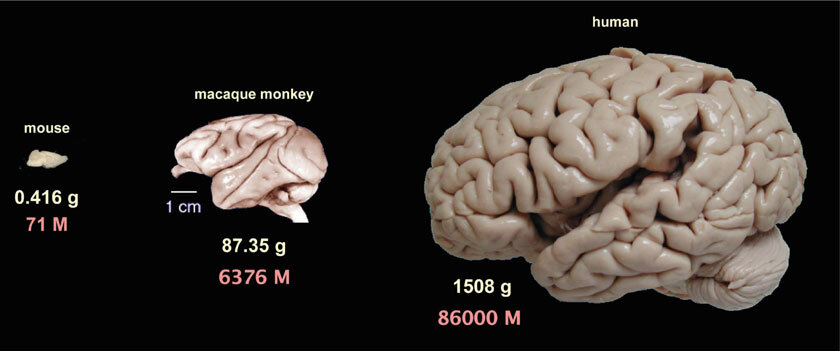
Move over AI-2027! Here's my forecast of the AGI timeline. Based on the model size of the human brain, I predict that human-level AI is 15 YEARS away. My reasoning in 🧵below👇
English

Looking for a neuroscientist to interview on my podcast.
Keen for someone who can draw ML analogies for how the brain works (what's the architecture & loss/reward function of different parts, why can we generalize so well, how important is the particular hardware, etc).
English
Has anyone told Elon that there is such a thing as reversible computing (which means there is no minimum amount of energy needed), so you can have super AGI and not need all the power in the galaxy to run it?
English
If Karpathy is correct, and he usually is, then current AI is just the perfect homework doing machine. I would hate to be a student today.
English
The world right now does not lack IQ, it lacks compassion and wisdom
English
It's not like people are saying AGI will suddenly make SHA-512 encryption obsolete. All these Bitcoin farms won't go away with AGI so why does everyone think biology is easier?
English
That is biology. It is not IQ limited. AGI won't suddenly find the guests. You have to try the keys in the locks. There is nothing specific about GLP-1 that makes it magical. The body could have chosen any number of hormones. We are the end result of a bunch random events.
English
Imagine a giant hotel with a trillion rooms and each room has a thousand locks. You need to find 100 guests in 100 different rooms. Now you are given 20000 keys and you have to figure out what combination of keys opens the locks. That is all you know. How do you find the guests?
English