

CED Solutions
19.9K posts
CED Solutions
@CEDSolutions
Microsoft training, Cisco Training, CompTIA training, EC Council training, Oracle training, Certification Courses and Classes w/exams. Onsite training also.
All Over North America Katılım Ekim 2009
7K Takip Edilen7.3K Takipçiler

Lloyd Burke, a lieutenant from Arkansas that everybody called Scooter, was done with Korea. His thirteen month tour was over. He was standing at the command post with his orders in hand and a plane waiting to fly him home. All he had to do was get on it.
Then word came back that his old company was stuck. G Company of the 5th Cavalry was trying to take a hill near Chong-dong and the Chinese had them pinned down cold, dug into bunkers, chewing the attack to pieces. The company was exhausted, bleeding, and going nowhere. Scooter Burke had a ticket out of the war in his pocket. He put it down and went forward to his men instead.
What he did next reads like something out of a movie that nobody would believe. The attack was stalled by three enemy bunkers, so Burke went after them himself. He charged the first one alone and killed the crew. He charged the second one alone and killed that crew too. At the third bunker he threw grenades in, and when the enemy threw their grenades back at him, he caught them and threw them right back before they went off.
Then he really got going. He grabbed a light machine gun, tore it off its mount, and started firing it from the hip as he walked into the enemy, carrying it in his arms like a rifle. He pulled the shattered company back together, got them up and moving again behind him, and led them up and over the hill.
By the time it was finished, Scooter Burke had personally killed more than a hundred of the enemy and been wounded doing it, and the hill that had stopped a whole company was taken because one man who was supposed to be on a plane home decided he could not leave.
And he lived. Burke got the Medal of Honor for it, stayed in the Army, and retired decades later as a full colonel with five Purple Hearts to go with the medal. The man who tore up his ticket home became a legend precisely because, when it counted, going home was the one thing he would not do.

English
@VoicesofWW2 Semper Fi! RIP My father, 2ndLt Richard R Rodgers, USMC was KIA leading a squad to stop the Japanese on this date in Guam.
English
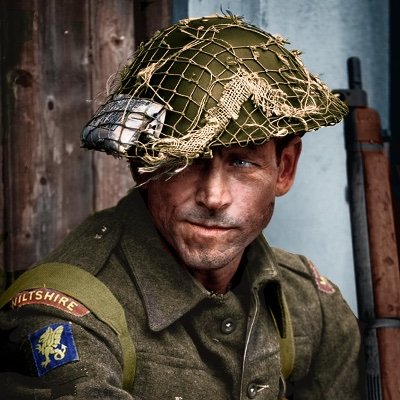
Leonard Mason was a 24 year old from Middlesboro, Kentucky, an automatic rifleman on Guam, and on July 22, 1944, on the same Asan beachhead where Luther Skaggs was holding his foxhole with a shattered leg, Mason did something that cost him everything and he did it knowing it would.
His squad was clearing out enemy positions in a gully when two Japanese machine guns opened up on them from close range, no more than fifteen yards off, right on top of them. Pinned, taking fire, in real trouble.
Mason did not wait to be told. On his own, entirely his own idea, he climbed up out of the gully and moved around the flank, working his way toward the rear of the enemy position to take those guns from behind. The moment he showed himself, Japanese riflemen up on higher ground opened up on him, and they hit him, again and again, tearing up his arm and shoulder.
He kept going. Shot up, bleeding, he pushed on until he reached the spot he was aiming for, and just as he got there a burst of machine gun fire hit him again, this time a wound that was going to kill him and he must have known it. And still he finished the job. He cleared the position himself, killed five of the enemy, wounded a sixth, and silenced the guns that had his squad pinned.
Then, mortally wounded, he did the most soldier thing in the whole story. He walked back to his platoon and reported. Told them the position was clear and what he had done, so they would know, so they could move. Only after he had made his report did he agree to be evacuated.
He died of his wounds. They gave him the Medal of Honor posthumously, and later named a destroyer after him. Leonard Mason, 24, Middlesboro, Kentucky, who climbed out of cover on his own, took a machine gun nest apart while it killed him, and used his last strength not to call for help but to file a report.
English
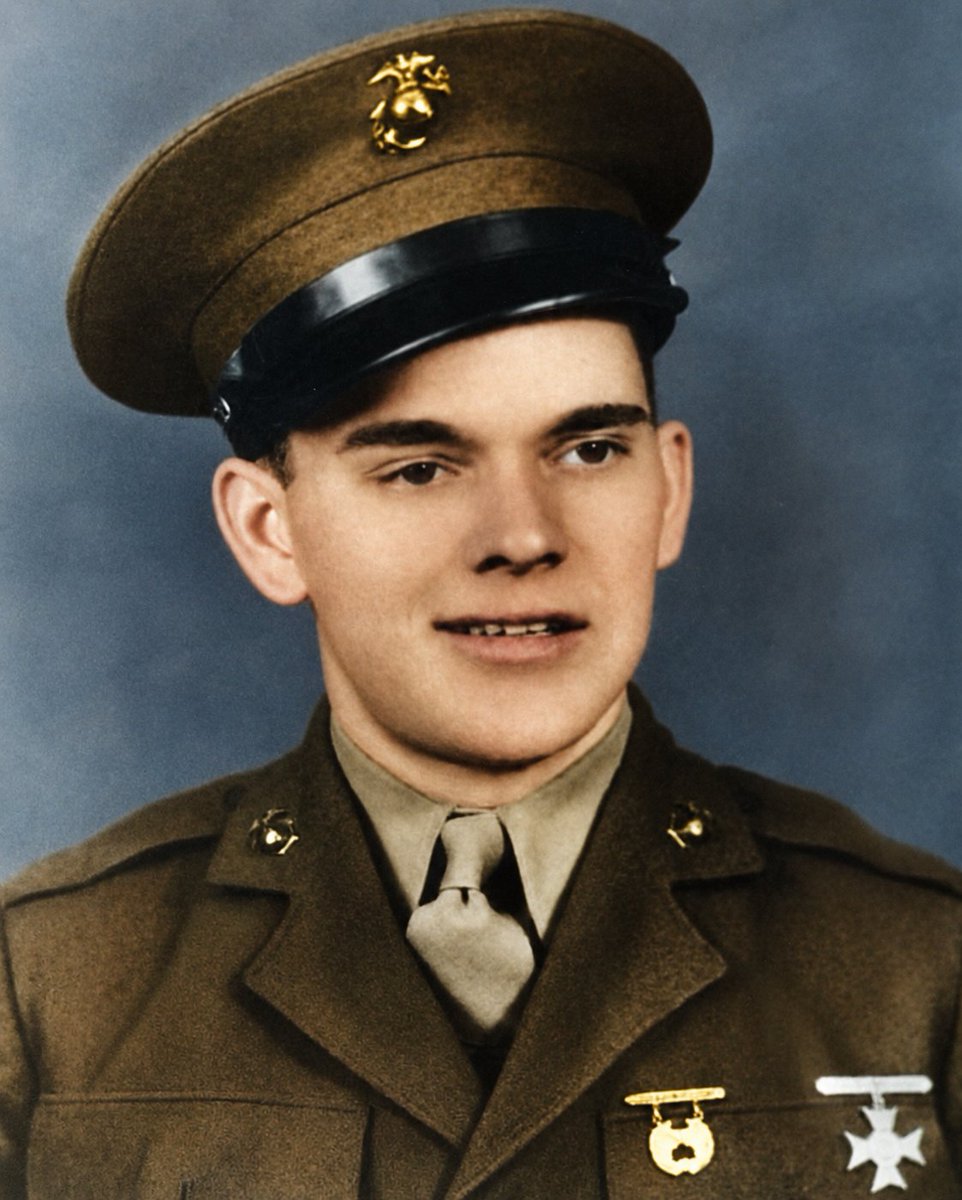
There is a famous photograph from the Korean War of a young Marine officer scrambling over a seawall, rifle in hand, leading his men off the boats and into the fight at Inchon. The man in that picture, Lieutenant Baldomero Lopez, was dead within minutes of it being taken. He is one of the very few people on earth photographed in the last moments of his own life while earning the Medal of Honor.
Lopez was a Tampa kid, the son of Spanish immigrants, sharp enough to earn his way into the Naval Academy at Annapolis. By September 1950 he was a Marine first lieutenant, and he came ashore in the assault waves at Inchon, the daring amphibious landing that turned the whole war around. That is where the photographer caught him, going up and over the seawall at the head of his platoon, straight into the teeth of the beach defenses.
The beach was a mess of enemy bunkers and pillboxes, and one of them had his men pinned down with automatic weapons fire. Lopez did what a good officer does. He went after it himself. He crept up alongside the position, pulled the pin on a grenade, and raised his arm to throw it into the gun port.
At that exact instant an enemy gun caught him, hitting him in the shoulder and the chest. The wounds knocked him backward, and the live grenade fell out of his hand and dropped to the ground right next to his own Marines.
He was badly hit, bleeding, in shock. His arm no longer worked well enough to pick the grenade back up and throw it clear. He had a couple of seconds and one terrible decision to make. He could roll away and try to save himself, and let the grenade go off among his men. Or not.
Lopez pulled the grenade in underneath his own body, wrapped himself around it with a sweep of his ruined arm, and took the entire blast into himself. It killed him. It saved the men around him.
He was twenty five years old. His parents received his Medal of Honor. And that photograph of him going over the wall has hung in Marine Corps history ever since, a young officer forever frozen at the front of his men, seconds from giving up everything so they could live.

English










🇺🇸 Most Badass Americans You Don’t Know: Alford L. McLaughlin
One Marine, two machine guns, and a legendary night defense in Korea.
Born in 1928 in Leeds, Alabama.
He enlisted in the Marine Corps in 1945 at the end of WW2.
Assigned to Company L, 3rd Battalion, 5th Marines, 1st Marine Division.
On the night of September 4–5, 1952, during the savage fighting near Bunker Hill, he volunteered for a second consecutive tour of duty on an isolated position called Outpost Bruce.
The Chinese counterattacked in overwhelming battalion strength.
He had set up two separate machine guns and poured withering enfilade fire into the attackers, alternating between them so they wouldn’t overheat.
Wave after wave slammed into his position.
As the enemy got closer and tried to use cover, he stood up in full view and fired the machine guns from the hip until the heat blistered his hands.
He kept firing even after he was painfully wounded by shrapnel.
When the guns grew too hot to touch, he laid them down to cool and kept fighting with his carbine and hand grenades.
He stood fully exposed in the open to shout encouragement to his fellow Marines as the attacks kept coming through the night.
He helped beat back attack after attack as the enemy kept pushing forward in waves.
By the time the fighting finally died down, McLaughlin was still alive, still at his gun, and had accounted for an estimated 150 dead and 50 wounded enemy soldiers.
For his extraordinary heroism he was personally presented the Medal of Honor by President Dwight D. Eisenhower.
Alford L. McLaughlin is an American Badass 🇺🇸

English