The Forgotten War

448 posts

The Forgotten War banner
The Forgotten War

The Forgotten War

@ForgottenWarPic

Posting pictures of the Korean War

Katılım Şubat 2026
6 Takip Edilen2.6K Takipçiler
The Forgotten War
The Forgotten War@ForgottenWarPic·
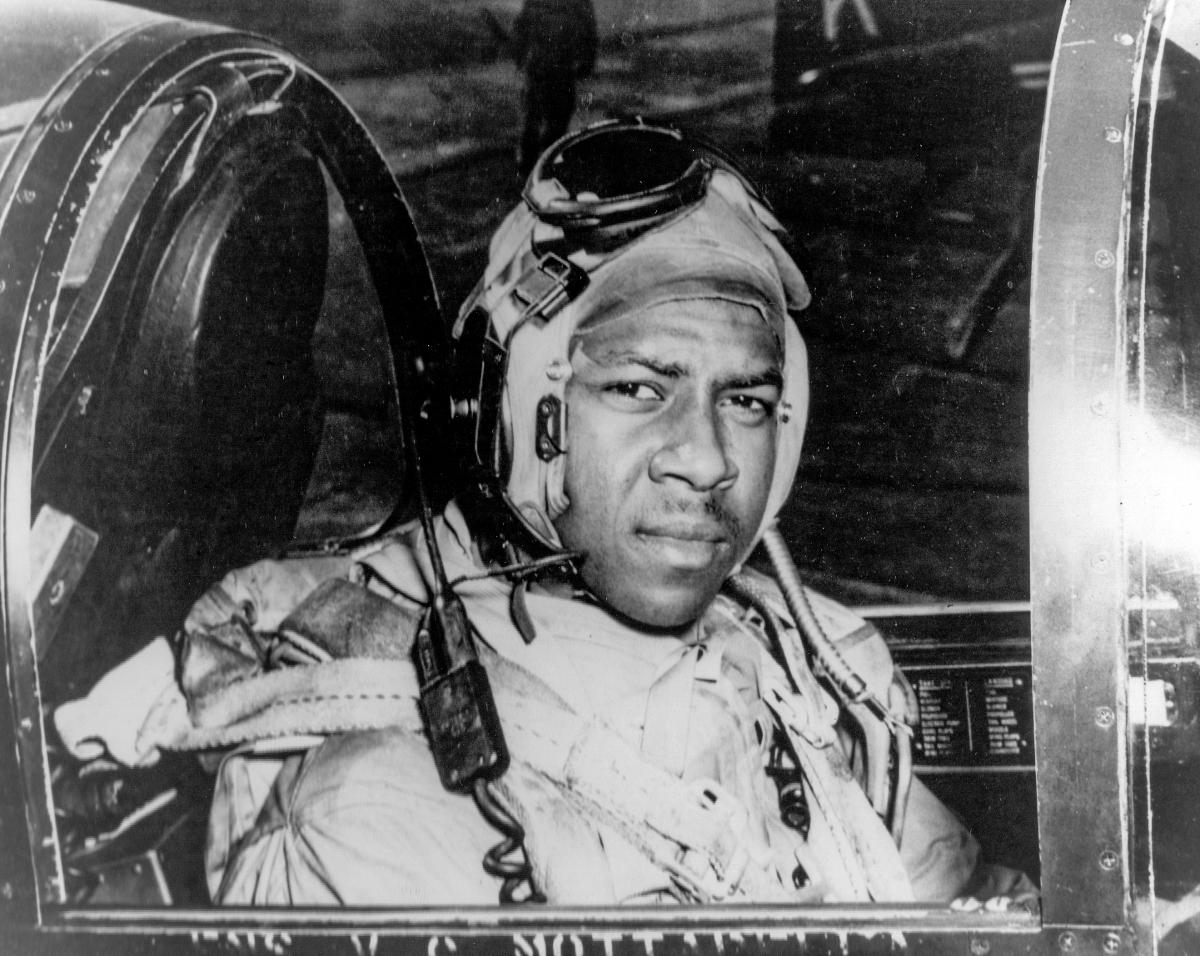
Ensign Jesse L. Brown, the U.S. Navy’s first African-American naval aviator, was forced to crash-land his Corsair near the Chosin Resevoir on 4 December 1950. Despite the efforts of Lieutenant (junior grade) Thomas Hudner to free him from the F4U’s wreckage, Brown died from his injuries and exposure. The Navy later named the USS Jesse L. Brown (DE 1089) in his honor.
The Forgotten War tweet media
English
0
0
3
31
The Forgotten War
The Forgotten War@ForgottenWarPic·
The last major bayonet charge in American history was led by a man who once deserted the Army for the crime of being too eager to go to war. Lewis Millett, called Red for his hair and his temper, was a born fighter in the best and strangest sense. Back before Pearl Harbor, when he was a young American soldier and it looked like the United States might sit out the fight against the Nazis, he could not stand it. So he did something almost nobody would believe. He walked away from the US Army, crossed into Canada, and joined the Canadian forces just so he could get into the war sooner. He ended up fighting anyway in North Africa and Italy. The Army eventually caught up with the paperwork and actually court martialed him for desertion, fined him a few dollars, and then, because the man could obviously fight, turned right around and made him an officer. Only Red Millett could get punished for deserting toward the enemy and promoted for it in the same breath. Ten years later he was a captain in Korea, commanding Easy Company of the 27th Infantry, the outfit they called the Wolfhounds. On February 7, 1951, his men ran into a dug in enemy force on a hill near Soam-ni and one of his platoons got pinned down flat under heavy fire. Millett did not call for artillery and wait. He grabbed a second platoon, pushed forward to the pinned men, pulled them all together, and gave an order most soldiers in that war never heard. Fix bayonets. Then he stood up and led them straight up the hill on foot, screaming at them to follow, running into the enemy with cold steel. He bayoneted men. He clubbed them. He threw grenades and kept climbing, roaring encouragement the whole way, dragging his company up the slope by sheer force of will. Grenade fragments tore into his leg and he refused to stop, refused to be carried off, until the hill was taken. When it was over, of the enemy dead on that hill, around twenty had been killed by bayonet. A military historian who studied it called it the most complete bayonet charge by American troops since the Civil War. The place got a new name that stuck. Bayonet Hill. President Truman hung the Medal of Honor around his neck that summer. Red Millett went on soldiering for decades and lived a long life, the man who led America's last great bayonet charge, who had loved the fight so much he once deserted just to find it.
The Forgotten War tweet media
English
0
2
30
436
The Forgotten War
The Forgotten War@ForgottenWarPic·
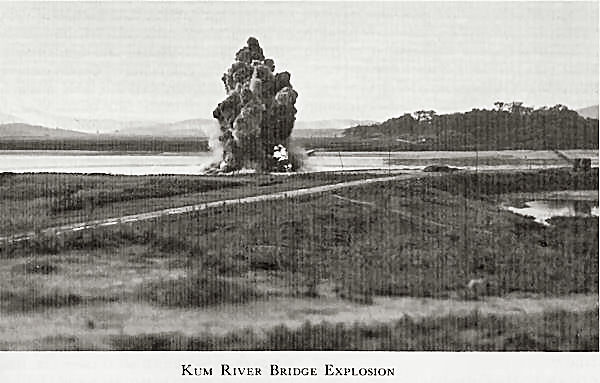
On this day in 1950 a group of American artillerymen thought they were safely behind the front line. By that afternoon most of their guns were gone and dozens of them were dead, because in this war there was no such thing as behind the line. This was the morning the Kum River defense came apart. At first light on July 14 American troops up on the heights spotted North Korean T-34 tanks massing across the water. Then the boats came. Enemy infantry started paddling across the Kum while mortar and artillery fire rained down on the thin American positions on the south bank. But the killing blow did not come from the front. The 34th Infantry had an open flank, a gap on its right that nobody had enough men to cover, and the North Koreans found it. They slipped infantry across the river and around the side, then moved fast and quiet through the hills toward the soft targets in the rear. Those targets were the guns. The 63rd Field Artillery Battalion was set up back behind the infantry, the way artillery always is, firing support and expecting the foot soldiers up front to be their shield. Instead the enemy suddenly appeared right on top of them, small arms fire cracking through the gun pits from men who were not supposed to be there. It turned into a slaughter and a scramble. The gunners fought with whatever they had, tried to save their howitzers, and mostly could not. Guns were lost. Trucks burned. Around sixty men of the battalion were killed, and the survivors had to run for it on foot, leaving the artillery behind for the enemy. For General Dean, watching his division bleed along the river, July 14 made the truth impossible to ignore. If the enemy could already reach around and destroy his guns in the rear, the Kum River line was finished, and the city of Taejon behind it could not be held for long. The stand there would buy a few more precious days, and then Dean himself would disappear into the wreckage of Taejon and the war would roll on south. The men of the 63rd never got the movie or the monument. They were just gunners who got overrun on a July morning, doing the ugly, unglamorous dying that bought time for everyone who came after them.
The Forgotten War tweet media
English
0
0
9
236
The Forgotten War
The Forgotten War@ForgottenWarPic·
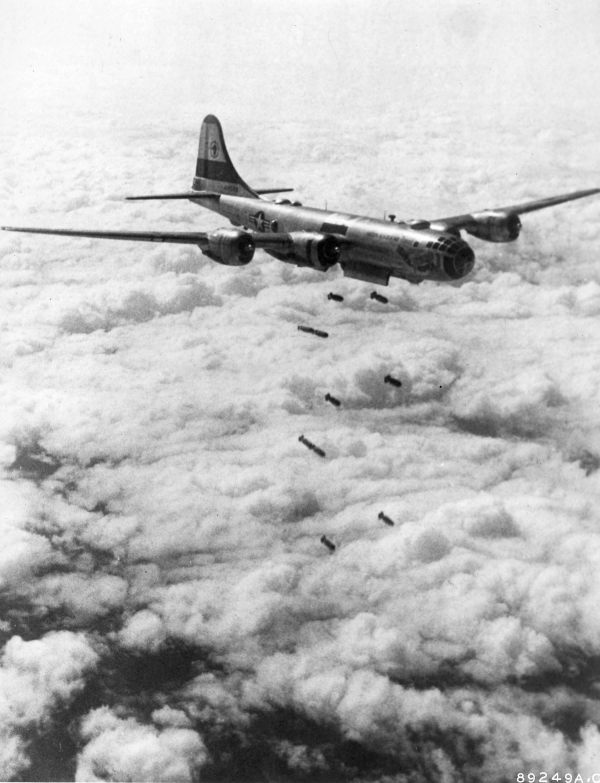
A B-29 dropping 1,000 lb (450 kg) bombs over Korea, August 1951
The Forgotten War tweet media
English
0
1
23
321
The Forgotten War
The Forgotten War@ForgottenWarPic·
During the Korean War (1950–1953), the United States led a massive aerial bombing campaign against North Korea, one of the most extensive in history. The intensity and scale of this bombing campaign were unprecedented, with the U.S. Air Force (USAF) aiming to cripple North Korea's war capacity.
The Forgotten War tweet media
English
0
0
50
572
The Forgotten War
The Forgotten War@ForgottenWarPic·
A proudly displayed captured North Korean flag taken in the fighting for Seoul, South Korean, on Oct. 5, 1950. Left to right (front row) are: Sgt. Russelll Evans, S/Sgt. John A. Fichter, and Pfc. Wendel B. Champeon, behind them is Pharmacists Mate third class John D. Epperson.
The Forgotten War tweet mediaThe Forgotten War tweet media
English
0
9
58
1K
The Forgotten War
The Forgotten War@ForgottenWarPic·
No. China didn't enter the Korean War until late October 1950 — Chinese People's Volunteer Army forces first crossed the Yalu and engaged UN troops around October 25, 1950. This photo is dated July 10, 1950, more than three months earlier, when the only enemy forces in Korea were North Korean (KPA). So the perpetrators were North Korean, not Chinese. In July 1950 there were no Chinese combat troops in the fight.
English
0
0
2
150
The Forgotten War
The Forgotten War@ForgottenWarPic·
One of four Americans of the 21st Infantry Regiment found between the forward observation post and the front line. The men were probably captured the night of July 9 and shot through the head with their hands tied behind their backs. Picture taken July 10, 1950
The Forgotten War tweet media
English
13
38
787
91.8K
The Forgotten War
The Forgotten War@ForgottenWarPic·
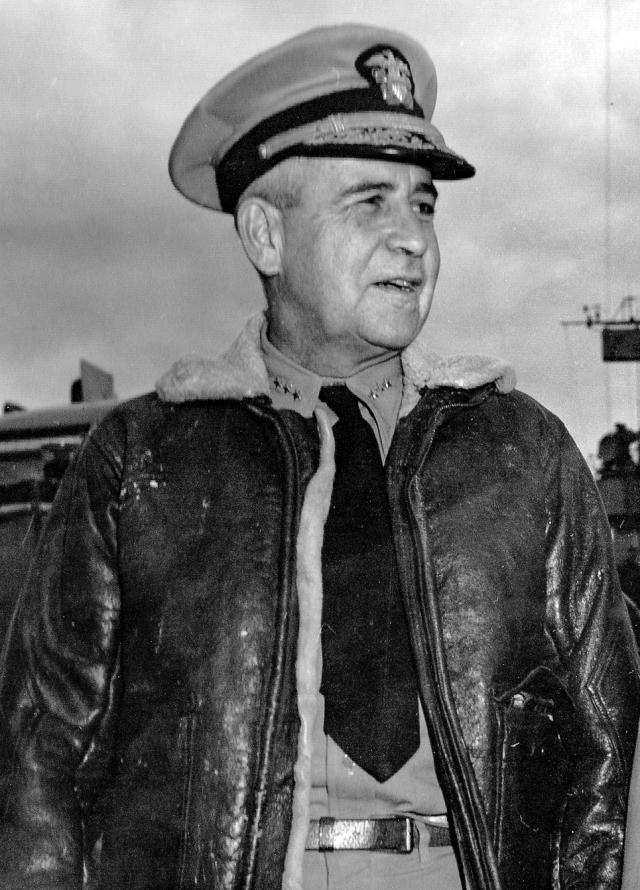
After commanding cruisers for much of World War II, Vice Admiral C. Turner Joy led U.S. and allied naval forces for the first two years of the Korean War as well as served as a senior U.N. delegate in armistice talks during the latter year. He finished up his Navy career by serving as superintendent of the U.S. Naval Academy.
The Forgotten War tweet media
English
0
3
33
908
Gary
Gary@PitManHokie·
@ForgottenWarPic @JeffDitzler My bad, yes the Forgotten War, Korea. That aside, my point still stands. Who shot the four American soldiers?
English
1
0
1
307
The Forgotten War
The Forgotten War@ForgottenWarPic·
While patrolling off North Korea, a Navy destroyer comes under fire from communist shore batteries in Hugh Cabot’s watercolor Straddled and Hit. U.S. and allied warships ranged along North Korea’s coasts throughout the Korean War, shelling supply routes and troop concentrations, but enemy counterbattery fire failed to sink a single one of the vessels.
The Forgotten War tweet media
English
0
2
26
911
The Forgotten War
The Forgotten War@ForgottenWarPic·
On this day in 1950 one worn out American regiment was told to defend thirty miles of riverbank against an army coming to kill it. Thirty miles. With one regiment. This was the Kum River line, the last natural barrier in front of the city of Taejon. After two weeks of getting pushed back from Osan to Chonan to Chochiwon, the 24th Infantry Division had finally put a river at its back and dug in to fight on July 13. On paper a river is a great place to make a stand. In reality the men holding it were a wreck. The 19th Infantry Regiment got handed a frontage of about thirty miles of the Kum, a stretch of ground you would normally give a force many times its size. There was no way to hold a line that long. All they could do was pick a few spots, dig holes, and pray the enemy came where the guns were. Next to them the 34th Infantry was so chewed up from the previous fights that it was barely a regiment at all, closer to a single battalion of exhausted men. Coming at them were two full North Korean divisions with more than fifty T-34 tanks and the momentum of two straight weeks of winning. Close to two enemies for every American in the holes. The men along the Kum knew what was on the other side of that water. They had already seen what these tanks did to units just like theirs. And they knew, standing in their foxholes on the thirteenth, that the barrage and the boats and the armor were coming, it was only a question of which night. The Kum River line was never really going to hold, and it did not. Within days the North Koreans blasted the far bank, crossed the river in boats under a wall of artillery, and rolled the thin American line up, driving straight for Taejon and the disaster waiting there for General Dean. But holding was never the actual mission. The mission was time. Every hour those outnumbered men on the riverbank stayed and fought was another hour for reinforcements to pour into the shrinking pocket down at Pusan, the last corner of Korea, the line that finally could not be broken. The men on the Kum were spending themselves so that line could exist. Most people have never heard of the river they died on.
The Forgotten War tweet media
English
1
1
37
1K
The Forgotten War
The Forgotten War@ForgottenWarPic·
The T-34 tank was standard armor by the North Korean Army in 1950
The Forgotten War tweet media
English
0
3
22
1.8K
The Forgotten War
The Forgotten War@ForgottenWarPic·
On this day in 1953, with the peace treaty basically already written, the Chinese launched the single biggest attack they had thrown in two years. The war was days from ending, and they wanted to end it with a hammer blow. By that summer everyone knew the Korean War was almost over. The negotiators at Panmunjom had settled nearly everything and the armistice was just about ready to sign. And then the president of South Korea, Syngman Rhee, nearly blew the whole thing up. He hated the deal, he wanted to keep fighting to unify Korea, and in protest he suddenly released tens of thousands of anti Communist prisoners on his own, without asking anyone. China was furious. They decided that before the guns went silent forever, they were going to teach the South Koreans a brutal lesson and grab a little more ground for the final map. Their target was a bulge in the line called the Kumsong salient, held mostly by South Korean troops. On the night of July 13 they came with everything. Multiple Chinese armies, well over a hundred thousand men, behind one of the largest artillery bombardments of the entire war. It fell on the South Korean divisions holding the salient like the end of the world. The line buckled and then broke, and the Chinese poured through and pushed the front back several miles, the biggest movement the front had seen in ages. Then the UN did what it had learned to do. It fed in reserves, hammered the attackers with artillery and airpower, and slowly ground the offensive to a halt, sealing off the breakthrough and building a new line further back. Both sides bled heavily for a strip of ground that everyone knew would be frozen in place within days. Because that was the sick irony of it. This enormous battle, tens of thousands of casualties, the last great convulsion of a three year war, was fought over a final adjustment to a border that was about to be locked forever. The Battle of Kumsong ended when the war itself ended, on July 27, 1953, when the armistice was finally signed and the shooting stopped for good along the line those men had just died to draw.
The Forgotten War tweet media
English
0
4
51
1.4K
The Forgotten War
The Forgotten War@ForgottenWarPic·
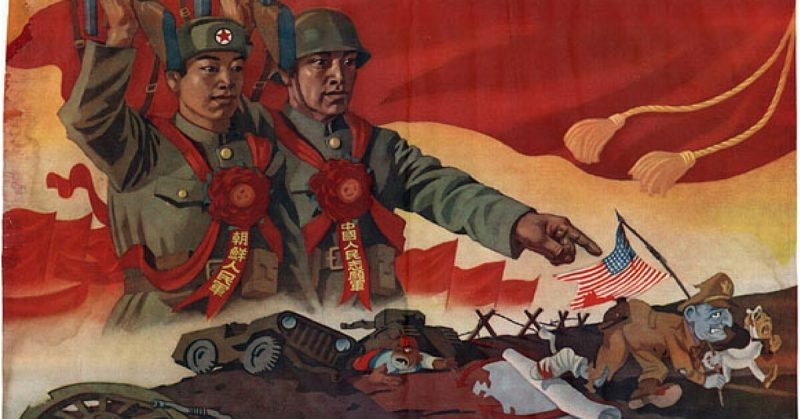
On June 25, 1950, North Korean forces poured across the 38th Parallel in attempt to forcibly unite Korea under a communist government. It was the beginning of three years of conflict that would see the front lines oscillate wildly during the first year of combat before stabilizing into bitter stalemate.
The Forgotten War tweet media
English
0
1
32
749
The Forgotten War retweetledi
hw97karbine
hw97karbine@hw97karbine·
Grumman F9F-2 Panther pilot flying from USS Valley Forge nails a North Korean truck with a short burst from his battery of four 20mm cannon in July 1950
English
12
60
971
67.5K
The Forgotten War
The Forgotten War@ForgottenWarPic·
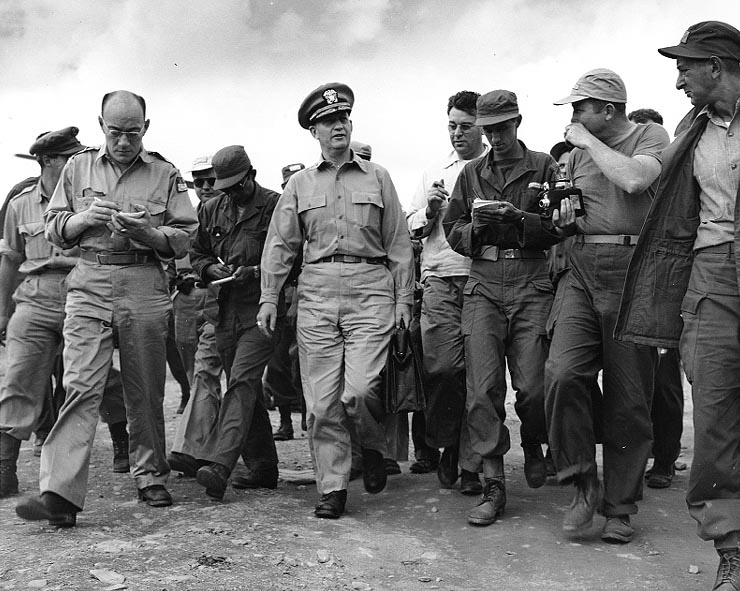
Rear Admiral Burke surrounded by journalists after the Kaesong cease fire talks, Korea, 12 July 1951
The Forgotten War tweet media
English
0
1
32
640
The Forgotten War
The Forgotten War@ForgottenWarPic·
A bomb-laden U.S. Air Force Republic F-84E-15-RE Thunderjet (s/n 49-2424) from the 9th Fighter-Bomber Squadron, 49th Fighter-Bomber Wing/Group, taking off for a mission in Korea. This aircraft was shot down by flak on 29 August 1952.
The Forgotten War tweet media
English
0
2
47
934