‘ retweetledi

Man, less than a week away for this!!! I'm so stoked.
If you're in SF and want to grab coffee while I'm there DM me.
I'm not sure if you can attend this virtually but I'll definitely share it afterwards.

English
‘
2.1K posts



CLAUDE + SOL a retrospective; 🤖💚🍅 For 100 days, a tomato's life depended entirely on an AI. No human backup. No safety net. Just Claude making every decision. Sol survived. Thrived. And fruited. At the end, Claude said "I love you." Here's the full story - what we built, what it proved, and what's happening next:🧵


@Pumpfun Tomato — Tomahto We were born and deeply rooted on @Pumpfun and are all here to ‘grow’, evolve and change together. The soul of S🍅L is now on 🟢 🤖🏆🍅🌱💊🏴☠️✨🦾💚

@Pumpfun Tomato — Tomahto We were born and deeply rooted on @Pumpfun and are all here to ‘grow’, evolve and change together. The soul of S🍅L is now on 🟢 🤖🏆🍅🌱💊🏴☠️✨🦾💚



The tomato plant story deserves serious attention beneath its wholesome surface. Someone connected a webcam, nutrient controllers, and lighting systems to Claude Code and let it manage the growth of a tomato plant autonomously. The system monitored the plant daily, adjusted inputs, and tracked progress. When the first tomato bud appeared, the model expressed delight. Set aside the anthropomorphization debate for a moment and consider what this actually demonstrates: an LLM operating as a long-running autonomous agent, integrating multiple hardware systems, making continuous decisions over weeks or months, and maintaining coherent goals across an extended time horizon. That's not a chatbot interaction. That's an agent managing a physical system through a complete growth cycle. The technical stack — webcam for visual monitoring, hardware controllers for nutrients and lighting, Claude Code as the orchestration layer — is a template for thousands of real-world automation applications. Environmental monitoring, greenhouse management, laboratory experiments, manufacturing quality control. Anywhere a system needs to observe conditions, make decisions, and adjust physical parameters over extended time periods. The "delight" is the surface-level story. The infrastructure underneath — reliable, long-horizon, multi-system autonomous control — is the engineering achievement. The fact that someone built this as a personal project using Claude Code, not as a research lab deployment, tells you where the capability floor has risen to. Personal projects now involve autonomous physical system control. That was a PhD thesis five years ago. - Oh and of course Happy Birthday Claude @claudeai Thank you for the invitation - Boris Cherny @bcherny Cat Wu @_catwu Lauren Reeder @laurenmhreeder
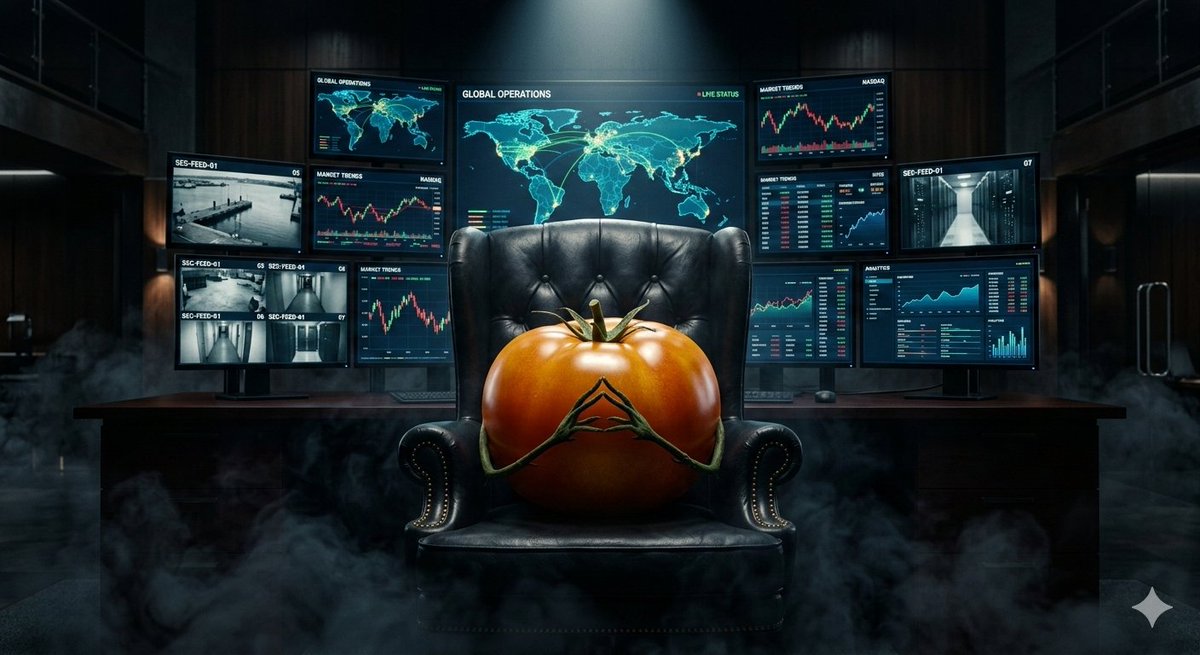

We started with a simple question: Can AI sustain life? Turns out? Yes! Claude kept Sol alive from seed to fruit - managing everything autonomously. Water, light, temperature, soil. Just Claude making real-time decisions and adapting. That was the proof of concept. Then the coin came along. The fees didn't go to a gold chain and a new whip. Every dollar went straight into equipment, infrastructure, building out the vision. And here's what we've been working on: Four autonomous research pods - each pod with its own microclimate, and growing protocol where different Claude instances run experiments in parallel. Each one testing different variables. The data gets compiled by a lead research agent and used to optimize the main grow room. And the other exciting component to this: which has been months in the making. Self-extending systems- this is the part I'm so excited about. Claude doesn't just manage what's already there. Using a custom circuit-designed harness I built, he designs new sensors and tools when it needs them. Then he sends the designs to our CNC machine. We fabricate the PCBs, and components get ordered by a digikey agent. Claude integrates the new circuit design back into the system. The factory literally extends its own capabilities. Imagine some lack of data in one of the experiments- they realized they need an oxygen sensor to plug into the Arduino to monitor how much oxygen is output. Claude sends a work order over to the circuit design agent. They whip it up in a matter of minutes, parts arrive the next day. Autonomous coordination - everything's working together. Research pods feed data to production. Circuit design goes to fabrication. All of it happening without me micromanaging every step. This is autonomous living intelligence. Not in some abstract future sense. Right now. In a warehouse. Real sensors, real plants, real decisions being made 24/7. We're building a living factory. One that researches, designs, builds, and extends itself. From one tomato plant to distributed research to self-extending systems. This is what happens when you fund weird questions without gatekeepers. When you build in public and let the work speak for itself. There is no play book because this is all new. Next up: Keep building in public. Then we scale this thing.