César Medina retweetledi
César Medina
6.5K posts

César Medina
@cesarmedina50
Papá en entrenamiento. Esposo a prueba. Me aplicaron varios RR en #LaUdelaVida A veces facilitador, foodie, ilustrador y coach.
Santiago, Chile Katılım Haziran 2010
15.5K Takip Edilen13.9K Takipçiler

@sudanalytics_ La bajó como Zidane, se acomodó como Ronaldinho y definió como Ronaldo Nazario 🔥
Español
César Medina retweetledi

THE WORLD GOES TO SCHOOL DIFFERENTLY:
1. Finland: No major exams until the final year of high school. Teachers are highly educated and respected. Consistently one of the best education systems in the world.
2. Japan: Students clean their own classrooms daily. Respect and responsibility are taught before academics. Character comes first.
3. South Korea: Students study until midnight. The university entrance exam is so critical that flights are rerouted on exam day. Burnout among young people is a serious national crisis.
4. United States: Standardized testing dominates everything. School quality depends on neighborhood wealth. Rich areas get better schools. Poor areas get what is left.
5. Germany: At age 10 students are placed into different school paths. Vocational training is taken as seriously as university. Youth unemployment stays low because of it.
6. India: The system runs on memorization and high-stakes exams. 1.5 million students compete for just 17,000 IIT seats. Pressure begins long before a child is ready.
7. Singapore: Ranked number one globally for math, science, and reading in 2022. Extremely competitive. Even the government admits student pressure has gone too far.
8. France: Philosophy is a required subject and counts toward the national exam. Students are trained to think critically and argue clearly from a young age.
9. Cuba: Education is completely free at every level. Literacy rate sits above 99 percent according to UNESCO. One of the most educated populations in Latin America.
10. Netherlands: Students are assessed at age 12 and placed into paths that suit their strengths. Academic and vocational routes are treated equally. No path is seen as lesser.
11. China: The Gaokao exam determines almost everything about a student's future. Pressure starts in early childhood and is carried by the entire family, not just the student.
12. Kenya: Primary school became free in 2003. Secondary school fees still push many families to breaking point. Dropout rates in rural areas remain high.
13. Russia: Historically strong in mathematics, science, and engineering. The system valued compliance over curiosity. That tension still shapes education today.
14. Brazil: Private schools are well funded and deliver strong results. Public schools are severely underfunded. Where you are born almost entirely determines the education you receive.
15. Denmark: University is free for Danish and EU citizens. Students also receive a monthly government stipend just for attending. Education is treated as a public good, not a personal expense.
16. Canada: Each province runs its own education system independently. Quality varies across the country. Indigenous history inclusion in the curriculum is real but still inconsistent.
17. Australia: Universities are strong and globally respected. Indigenous history is now formally part of the national curriculum. The debate over equal funding between public and private schools remains unresolved.
18. Sweden: No formal grades until age 12 or 13. Early pressure is believed to kill curiosity before it grows. Research consistently supports this approach.
19. New Zealand: Māori language and culture are officially part of the national curriculum. Legally protected but depth of teaching varies greatly between schools.
20. Switzerland: Two thirds of students enter vocational apprenticeships rather than university. Both paths are equally respected. Both lead to strong careers.
21. Norway: Public university is free for everyone including international students. Teachers must hold a master's degree. Teaching is one of the most respected professions in the country.
22. Israel: Schools emphasize critical thinking and entrepreneurship from an early age. Combined with technical military training, this directly feeds one of the most active startup ecosystems in the world.
English
César Medina retweetledi

You’ve seen the meme of the guy eating soup in pouring rain. It’s a joke about acceptance. The joke is real. Scientists at Harvard and MIT proved it on a brain scan in 2017. A Roman philosopher who started life as a slave figured it out in 125 AD.
In the study, 21 women with severe anxiety went into a brain scanner. Researchers read out their personal worries and gave three different instructions: keep worrying, push it away, or just accept it. Worrying lit up the brain’s panic button, the same area that flashes when a snake crosses your path. Acceptance was the surprise. The panic button quieted. A different region took over, the part that handles tough choices, with a much stronger line of communication to the alarm system. The brain stopped wrestling with itself.
A Roman philosopher named Epictetus, who started life as a slave, opens his handbook around 125 AD with the same point. Some things are up to you, he writes. Most are not. Your judgments belong on the first list. Your body, your reputation, the weather, what other people do, all go on the second. Mix the two up and you suffer. Sort them out and almost nothing can hurt you.
Not accepting has real costs. When you can’t stop replaying a worry, a specific brain region fires harder than it should. A study combining 14 brain scans of 286 people found this pattern is one of the most reliable markers of depression. The body pays too. A 2026 study tracked more than 205,000 UK adults and found those with the most long-term stress damage were over twice as likely to develop heart disease. Stress hormones also chew away at the part of your brain you need to manage stress in the first place.
In 1967, Martin Seligman and Steven Maier shocked dogs that couldn’t escape. Later, in a box where escape was easy, the dogs didn’t try. The textbook called this “learned helplessness.” In 2016, Seligman and Maier published a paper saying they’d had it backward. Giving up is the default, hardwired by an old deep brain region. What animals learn, when they learn anything, is the opposite. They learn that what they do can change things. Helplessness is the starting state. Agency is the achievement.
Now look at the guy with the soup. He’s seen the rain, worked out he can’t argue with it, and decided to keep eating. This is the scarce skill.
Acceptance and Commitment Therapy, developed by Steven Hayes in the 1980s, has been tested in more than 325 randomized clinical trials. It teaches people to act on what they can change and stop wrestling with what they can’t. The American Psychological Association lists it as a well-supported treatment for chronic pain.
Two thousand years apart, a Roman handbook and a Boston brain scanner are finding the same answer. The rain keeps doing what rain does. You keep eating.
andrés.@andresmiguer
aceptando que hay cosas fuera de mi control y que no puedo hacer nada al respeto
English
César Medina retweetledi

The tire in this video rolls right over the man who invented it. He stands up smiling because it’s too soft to crush him.
The tweet got the year right (1951), but the name got mangled in translation. The actual name is Rolligon. In Japanese, R and L sound basically the same, so the translator picked the wrong letter.
Sixteen years before he built the tire, William Albee was a teacher in a tiny village on the Bering Strait, the western edge of Alaska. One day he was coming back from a walrus hunt with the local hunters. A big chunk of floating ice had blocked their usual landing spot, so they had to land on a rocky shore instead. The boat held about 4 tons of meat, and the sealskin hull was about to get torn up on the rocks.
So the hunters did something clever. They inflated big sealskin bags and rolled the boat across them like fat air balloons. The bags were soft enough to swallow the rocks but strong enough to hold the weight. Albee never forgot it. Sixteen years later, back in California, he was building a tire based on the same idea.
The tires are very soft inside. A normal car tire has air pressure of 30 to 35 PSI (pounds per square inch). A Rolligon has just 1 to 5 PSI. The pressure pressing into the ground is up to 30 times lower than a regular tire. When it rolls over you, it just squishes around your body, like a beanbag wraps around your hand when you push your fist into it.
Life magazine called the experience “a vigorous massage.” Albee even got his wife Ruth in on the act. She made the cover of Mechanix Illustrated in 1957, smiling under a 7-ton truck.
Goodyear made the actual tires. The U.S. Army tested them for two years in the early 1950s, putting them on Jeeps and Dodge trucks. But the Korean War was ending, the military stopped buying, and the tires were too expensive for regular drivers. Albee sold his company in 1960.
Today the patent is owned by a Texas oil-and-gas company. They use Rolligons to haul drilling equipment across the frozen Arctic in northern Alaska, where regular trucks would sink. The tires float over the soft ground at about 10 mph, without leaving tracks. An idea from Inuit hunters in 1935 now drags oil rigs across the same Alaskan ground they once crossed on foot.
ロアネア@roaneatan2
1951年に発明されたロリゴンタイヤ、どんな地面でも容易に走行でき、人をひいても問題ない
English
César Medina retweetledi

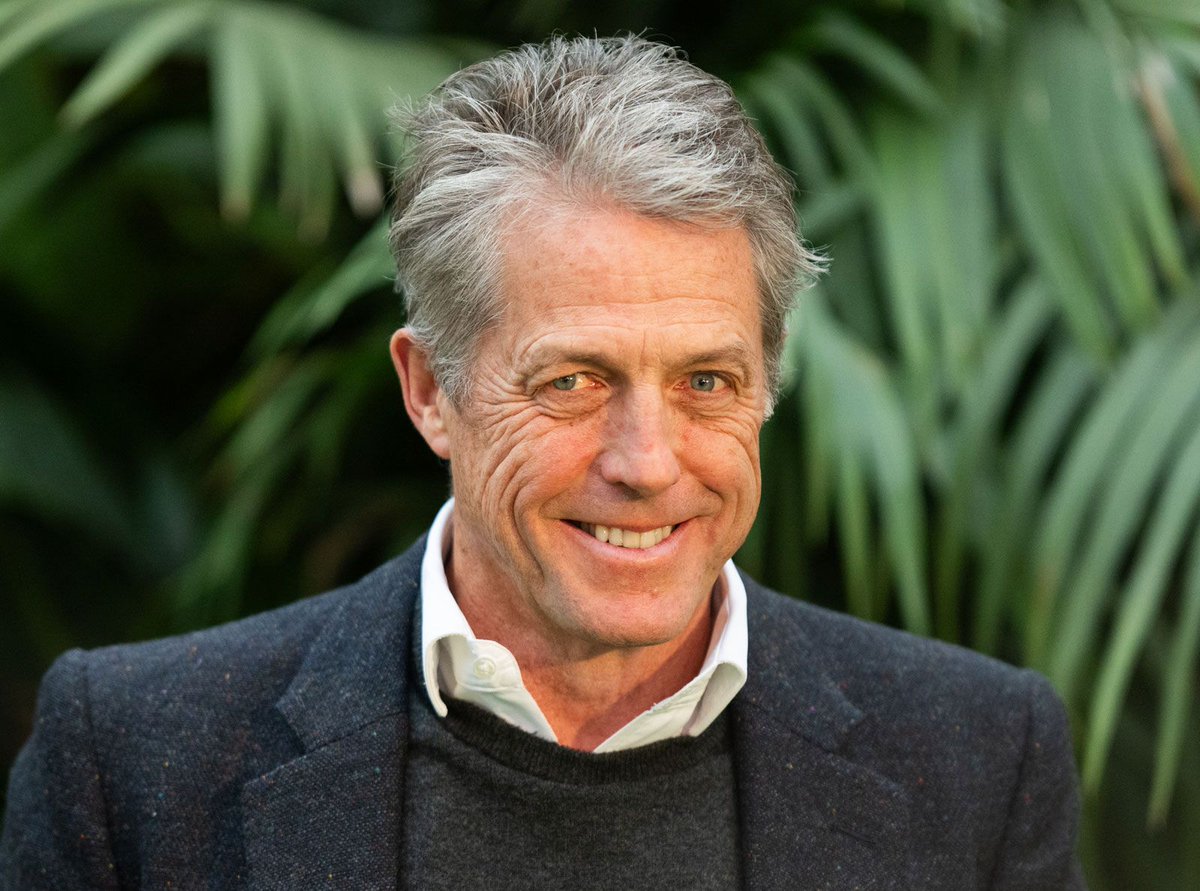
Dijo una vez Hugh Grant: “Soy otro padre enfadado que lucha la eterna, agotadora y depresiva batalla con niños que solo quieren estar frente a una pantalla. La gota que colmó el vaso fue cuando el colegio empezó a decir, con cierta pedantería: ‘Les damos a todos los niños una Chromebook, y dan muchas clases en ella, y hacen todas sus tareas en ella’. Y uno simplemente piensa: ‘Esa es la última puta cosa que necesitan’, y lo último que necesitamos nosotros” .

Español
César Medina retweetledi

The whole Super Mario Bros game fits in 40 kilobytes. The selfie on your phone is bigger than that. Nintendo had so little memory to work with that five of the levels you played as a kid are exact copies of earlier ones.
World 5-3 is World 1-3 with a few Bullet Bills flying in from off-screen. World 5-4 is World 2-4 with every fire bar turned on at once. Worlds 6-4, 7-2, and 7-3 also reuse old level data. Same map, different paint job.
In 1985, Miyamoto’s team had 32 kilobytes for the game’s code and 8 for the graphics. About one phone photo’s worth of space, total, to hold the entire game including physics, music, art, and 32 levels. So they wrote each level as a recipe. “Place a pipe here. Stack twelve bricks here. Drop a Goomba at this spot.” The game cooked the level live as Mario walked through it. When the cartridge ran low on space, the team pointed to an old recipe and dropped new enemies on top.
The two screenshots in the source tweet look like cousins for the same reason. Miyamoto built every Mario level from the same tiny pile of building blocks. Start with the brick staircase that ends most stages, the pyramid stack of question blocks, the pipes that always rise from a shared baseline, and the rule that Mario can only jump four blocks high. That last one sets every platform’s height across all 32 levels. Move those pieces around and the player feels like they are somewhere new, even though they have seen the parts a hundred times.
That is what makes 8-1 and 8-3 feel like the same world wearing different clothes. The 8-1 staircase is a solid wall of bricks. The 8-3 version is the same staircase shape, but built out of floating coin blocks with empty sky between them. Same outline. Completely different game.
This was Nintendo trying to save space. It accidentally became one of the most copied design tricks in video game history. Forty years and 40 million copies later, the game still teaches designers a single lesson. Build a small box of pieces well, and the player will think the box is endless.
🍗🇺🇲Bojangles Champion 🇺🇲🍗@JZ_Graham
How did i not notice this until my 40s....
English
César Medina retweetledi