Chaktomuk Insight

206 posts

Chaktomuk Insight banner
Chaktomuk Insight

Chaktomuk Insight

@chaktomukINS

From Chaktomuk, to the World | We turn Cambodian perspectives into global conversations. From foreign affairs to local takes, we break down what matters, with b

Cambodia Katılım Temmuz 2025
0 Takip Edilen975 Takipçiler
Chaktomuk Insight
Chaktomuk Insight@chaktomukINS·
A recent social media clip shows a mother who sells cosmetic products comparing her daughter to a “prettier” girl standing nearby. The comparison focuses heavily on body shape, suggesting that being slim is the standard of beauty. Throughout the video, the daughter appears visibly uncomfortable, especially when her mother points out her weight gain. The situation becomes more concerning when the mother encourages her to take weight-loss supplements in order to achieve a “fit” body. The comment section reveals a divided response. Many users recommend specific supplement brands, while others argue that the girl is too young to take such products and should instead focus on exercise or healthier habits. There is no clear evidence linking the mother directly to any particular supplement brand. However, the overall message remains deeply contradictory and potentially harmful. This issue goes beyond one video. During adolescence, the human body undergoes critical stages of physical growth, hormonal change, and brain development. Weight-loss supplements, many of which contain stimulants, laxatives, or poorly tested compounds, can interfere with metabolism, disrupt nutrient absorption, and negatively affect long-term health. For teenagers, the risks are not only physical but also deeply psychological. Promoting weight-loss products to young people increases the likelihood of developing eating disorders such as anorexia nervosa or bulimia, as well as body dysmorphia. It also encourages a mindset that prioritizes quick, chemical solutions over sustainable and healthy habits. Instead of building confidence and self-awareness, such messaging can create a harmful dependence on external “fixes.” From a behavioral perspective, the mother’s actions, whether intentional or not, raise serious concerns. By repeatedly highlighting her daughter’s body as a “problem,” she is shaping a negative self-image. This can be understood as a form of manipulation within choice architecture: creating a sense of inadequacy and then presenting a supplement as the solution. In behavioral economics, this resembles a “dark nudge,” where psychological vulnerabilities are exploited to influence decisions, in this case, targeting a teenager at a highly sensitive stage of identity formation. More broadly, this reflects a worrying trend across social media. It is increasingly common to see girls under the age of 18 expressing distress about their appearance, complaining about being “too dark” or “too fat,” and associating beauty with being lighter-skinned or thinner. What is even more troubling is that some adults behind the camera reinforce these insecurities, advising them to use medication or products to change their bodies. This raises an uncomfortable question: when does content creation cross the line from entertainment into harm? In a digital environment where attention often rewards extreme or emotional content, the boundaries between influence, parenting, and marketing become blurred. Yet when the subject is a teenager, still forming her identity, the consequences are far more serious. This is also about the kind of messages that are being normalized. If beauty continues to be framed narrowly, and reinforced through products rather than healthy development. A healthier approach would shift the focus away from comparison and quick fixes, and toward long-term well-being, confidence, and self-acceptance. Because for teenagers, the issue is not simply about looking “fit” or “fair.” It is about growing up without being taught that they are not enough. #chakinsight #chaktomukinsight #Cambodia #inbrief Author: PanhaCHEZDA
Chaktomuk Insight tweet media
English
0
0
0
40
Chaktomuk Insight
Chaktomuk Insight@chaktomukINS·
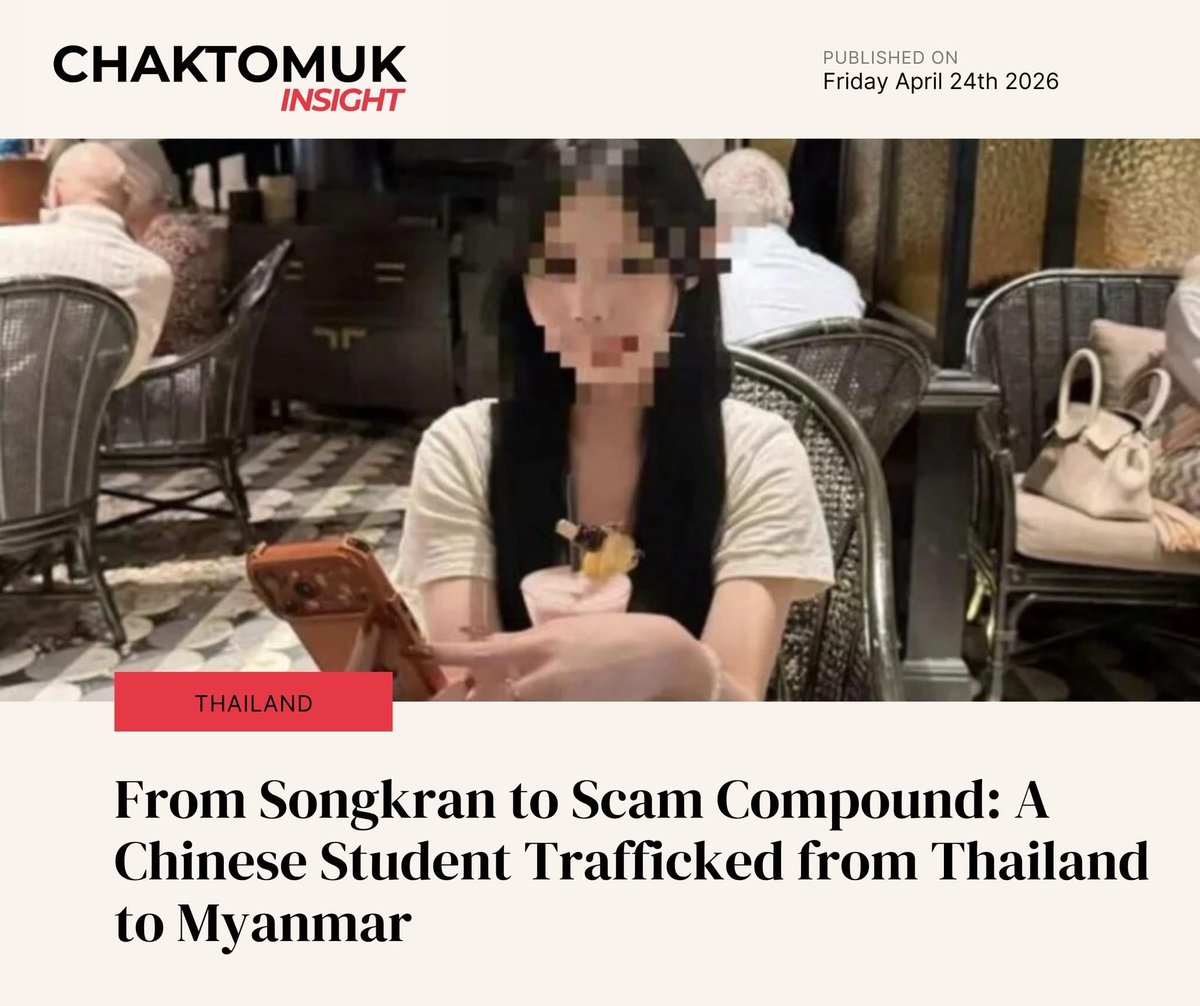
Mothership SG reported that a university student from Guangdong, China, who had travelled to Thailand for the Songkran Festival, was allegedly trafficked to Myanmar by a scam syndicate, according to Chinese media. The student, identified as Xiao Yang, arrived in Thailand in mid-April but was reportedly intercepted by a stranger instead of meeting her friend. She was later taken to the area near Three Pagodas Pass and is suspected to have been sold to a scam syndicate operating across the Myanmar border. Her family has since paid around US$30,000 in ransom through stablecoins after receiving threats that she could be harmed or resold. Despite the payment, her release has been repeatedly delayed, with the alleged traffickers citing logistical and administrative reasons. While the student has remained in limited contact with her family, her actual condition remains unclear. This is not the first time Chinese nationals have fallen victim to such schemes. In 2025, Chinese actor Wang Xing was reportedly lured to Thailand under the pretext of attending an “opening ceremony” for a film production. After arriving at Suvarnabhumi Airport, he was picked up by a vehicle claiming to represent a legitimate Thai entertainment agency. Instead of being taken to a film set, he was driven to the border district of Mae Sot and trafficked across the river into a scam compound in Myanmar known as Apollo Park. The case quickly went viral on Chinese platforms, fuelling widespread fear. The impact has since extended beyond individual cases. Following the Wang Xing incident and broader concerns about “grey businesses” in Thailand, major Chinese celebrities such as Eason Chan and Zhao Benshan cancelled or postponed events in Bangkok, citing safety concerns for their fans. These high-profile decisions reinforced a growing perception among Chinese audiences that Thailand is unsafe, even though the most severe risks are concentrated in poorly governed border zones rather than central urban areas. Ultimately, these incidents point to a deeper reality: scam trafficking is not confined to one country, but operates as a regional system with its own economic logic. Criminal networks exploit cross-border mobility, weak governance gaps, and digital finance to create a supply chain of victims, ransom, and forced labour. As long as this underground economy remains profitable and transnational, isolated crackdowns or warnings will have limited impact without coordinated regional responses. Click here to read more articles: chakinsight.com
Chaktomuk Insight tweet media
English
0
5
3
175
Chaktomuk Insight
Chaktomuk Insight@chaktomukINS·
Cambodia’s economic story is supposed to be about rising opportunity, yet youth crime in Cambodia began to look less like isolated incidents and more like a pattern. Cases involving violent assault, theft, and even domestic killings by teenagers have become harder to ignore. This is not just a problem of individual behaviour, but a sign that social institutions are not keeping up with a rapidly changing society. Cambodia has historically reported relatively low levels of juvenile offending compared with many countries in the region, but recent evidence suggests a worrying shift. A 2025 UNICEF-supported assessment of Cambodia’s juvenile-justice system found that offences committed by children are no longer limited mainly to minor misconduct; they increasingly include petty theft, drug-related offences and violence, with boys making up the majority of offenders. Reports from LICADHO also point to growing concern over youth involvement in crime, particularly in urban areas. At the same time, broader child-protection reporting in Cambodia has highlighted persistent exposure to violence and weak protection systems, especially in fast-changing urban environments. Yet the evidence remains incomplete. Cambodia still lacks a consolidated national dataset that tracks youth-crime trends over time, making it difficult to measure the exact scale of any increase. What can be said with more confidence is that the issue appears to be growing in visibility and seriousness, even if the full national trend remains hard to quantify. Click here to read more articles: chakinsight.com
Chaktomuk Insight tweet media
English
0
0
0
37
Chaktomuk Insight
Chaktomuk Insight@chaktomukINS·
The word “Scambodia” was first initiated by Thai netizens in 2025 during the border conflict, after the first shots were fired from Thailand and killed one Cambodian soldier. It is a form of name-calling, similar to how people use the phrase “Don’t Thai to Me.” This is why the world was shocked when a major international media outlet, The Wall Street Journal, used the term “Scambodia” as a headline. Beyond the headline itself, the issue also highlights how powerful media narratives can travel. What makes this issue even more sensitive is the broader media ecosystem. In 2019, Bangkok Post announced a partnership with The Wall Street Journal to bring WSJ articles and analysis to its readers. This created an institutional pathway through which WSJ content could move more deeply into the regional media space. That fact does not, by itself, prove editorial coordination over this specific headline. Still, it raises a reasonable question about how loaded narratives can travel through formal media networks and acquire wider credibility. The concern, therefore, is not just who coined the term, but how such a label can circulate and harden into an accepted description. Can Cambodia deny its scam problem? None of this means Cambodia does not have a scam problem. The Cambodian government has acknowledged the issue repeatedly, and Prime Minister Hun Manet has publicly committed to cracking down on scam operations. The National Bank of Cambodia’s recent annual report also highlighted the risks that scams pose to Cambodia banking sector. At this point, cyber scam activity is undeniably a serious problem in Cambodia. Yet the existence of a major scam problem does not mean the Cambodian state treats it as a legitimate economic strategy. In fact, the government has taken visible steps to respond. Cambodia’s parliament approved a law to combat online scam rings in 2026, and enforcement operations had already begun before the WSJ feature was published. Authorities had been targeting sites, shutting compounds, opening cases, and repatriating victims. Senior officials were also being sent to trial in relation to online scam involvement and money laundering. This does not mean Cambodia’s response has been sufficient, but it does mean the chronology is more complex than a simple narrative of late action under foreign pressure. So, by not acknowledging the new law and the earlier enforcement record, the WSJ headline narrows the reader’s understanding of the state response. The second problem lies in the economics of the framing. The WSJ article’s “nearly 40% of GDP” figure is not just a statistic; it is what gives the headline much of its force. It makes the scam problem appear so large that readers may begin to see it as part of Cambodia’s economic identity, rather than as a serious but still contested criminal issue. If that number is uncertain, highly sensitive to calculation, or overstated, then the article’s framing becomes less solid than the headline suggests. The third issue is country-exclusive blame. The scam industry in mainland Southeast Asia is regional, not uniquely Cambodian. UN reporting has described an operational system spanning multiple countries, while ASEAN-level data show that scam operations are a regional concern. Even some of the same critiques note Thailand’s large domestic fraud losses and its role as a transit and enforcement hub in the broader ecosystem. Research from ISEAS has also pointed to Thailand as an important part of this evolving landscape, not only as a logistical corridor but also as a target and enabler. Click here to read more articles: chakinsight.com
Chaktomuk Insight tweet media
English
2
2
3
103
Chaktomuk Insight
Chaktomuk Insight@chaktomukINS·
A recent Facebook post questioning Cambodia’s ambition to reach upper-middle-income status by 2030 raises a familiar concern: whether the country is moving fast enough, particularly in building human capital. The premise is reasonable. Human capital does drive development. And Cambodia’s trajectory deserves scrutiny. But the comparison itself rests on incomplete assumptions. It risks reducing a complex development story into a single variable—and, in doing so, draws conclusions that are too simple to be useful. Two things can be true at once: Cambodia is growing. And Cambodia still lags behind Vietnam. The problem is not acknowledging both realities. It is misunderstanding why they coexist. Both Cambodia and Vietnam share histories of colonisation and conflict, so the comparison is not without basis. Vietnam was colonised by France and experienced prolonged wars, including conflict with China and the United States. Cambodia, too, endured French rule and civil war. The difference, however, lies less in the existence of conflict than in its timing and institutional impact. Vietnam emerged from war earlier and retained a functioning state structure, allowing it to begin economic reforms in the late 1980s. Cambodia’s civil conflict persisted until 1998, delaying reconstruction by nearly two decades. More importantly, the Khmer Rouge regime did not merely damage infrastructure; it systematically eliminated much of the country’s educated class, including doctors, teachers and administrators. This created a deeper rupture in human capital and institutional continuity. As a result, the gap between the two countries is not simply a matter of effort or policy choice. It reflects differences in when recovery began and how much institutional capacity survived. Cambodia is not just catching up, it is rebuilding from a later and more disrupted starting point. The criticism that Cambodia lacks an aggressive education agenda, however, is less convincing. The government’s Education Strategic Plan for 2024–2028 outlines a comprehensive reform programme, covering access, higher education, skills development and governance, with an estimated budget of $5bn over five years. The issue is not the absence of policy ambition. It is the difficulty of execution. Calls for a rapid transformation within four years conflate urgency with strategy. Education reform does not scale at the pace of political ambition. Teacher training, curriculum redesign and institutional culture change unfold over years, often decades. A system pushed too quickly risks becoming inefficient or fragile. The more relevant question is not how to accelerate change before 2030, but how to sustain it through 2040 and beyond. More importantly, the debate over human capital alone overlooks deeper structural constraints. Economic performance depends on the interaction of multiple factors: land, labour, capital and entrepreneurship. Labour quality matters, but so do infrastructure, access to energy, regulatory predictability and institutional trust. Vietnam’s advantage lies not only in its workforce, but in a broader alignment of these factors. Monetary sovereignty presents an even sharper distinction. Cambodia’s economy remains heavily dollarised, limiting the central bank’s ability to adjust interest rates or exchange rates in response to economic conditions. Vietnam, with control over its currency, retains these policy levers. In a competition for exports and foreign investment, this flexibility is not marginal—it is decisive. It shapes competitiveness before any education reform takes effect. Seen in this light, the comparison is not wrong, but incomplete. By focusing narrowly on human capital, it obscures the structural conditions that shape outcomes. The risk is not that Cambodia is compared with Vietnam. Click here to read more articles: chakinsight.com
Chaktomuk Insight tweet media
English
0
0
0
40
Chaktomuk Insight
Chaktomuk Insight@chaktomukINS·
The race between income and expenses in Phnom Penh is no longer just a private struggle. It has become a public concern, visible in memes, complaints, and comparisons on social media. Behind the humour lies a serious question: how should Cambodia respond to this pressure, especially if it wants to avoid falling into a growth trap? Cambodia’s economy depends heavily on imports, which makes the prices of many goods not very different from those in Malaysia, Thailand, or even Singapore. Yet Singapore also relies heavily on imports, and its people are still able to manage such costs. The key difference is purchasing power. Singaporeans can absorb higher prices because their incomes are far higher than those in Cambodia. Singapore has upgraded into a high-income service-based economy, generating income from sectors such as finance, logistics, and tourism. Another major difference is human capital. Singapore has a more skilled and productive workforce, which supports higher wages. By contrast, Cambodia still faces major human capital constraints. According to the World Bank, Cambodia’s challenge is not simply access to education, but the gap between schooling and real productivity. Moreover, high labour force participation and low unemployment can hide a deeper structural problem: many workers are concentrated in low-productivity jobs, which limits income growth. Raising wages alone is not a sufficient answer. If productivity stays weak, higher pay may simply be overtaken by higher costs. Cambodia’s real bottleneck is not only rising prices, but weak productivity, unequal urban opportunity, and heavy exposure to imported costs. That is why the government’s first priority should be to strengthen human capital. As the World Bank has argued, Cambodia’s challenge is not merely getting children into school, but ensuring that education translates into real productivity and higher-value work. But human capital is not only about skills but also health. In Cambodia, non-communicable diseases are now both a public health and economic problem. According to the World Health Organization, they are the leading cause of death, and nearly one in four Cambodians dies prematurely before age 70 from conditions such as heart disease, diabetes, cancer, and chronic respiratory illness. Poor health lowers productivity, weakens earning power, and raises medical costs. Improving human capital, therefore, means skills help people earn more, but good health helps them keep more of it. Cambodia must diversify its economy and move up the value chain, and tourism is a realistic place to start. The country already has clear advantages in culture, temples, and natural attractions. The challenge is to make tourism safer, more convenient, and more attractive through better infrastructure, stronger service quality, and more effective promotion. In From Third World to First, Lee Kuan Yew recalled how Singapore prioritised roads linking the airport to major hotels and government offices. The lesson was simple: connectivity, order, and presentation matter. Cambodia can apply the same logic today. Techo International Airport is an important start, but surrounding facilities and road links to the city, hotels, and key institutions remain just as important. With limited public resources, Cambodia does not need to upgrade everything at once. It can focus first on key tourism and investment corridors so that visitors and investors experience the country as safe, orderly, and modern. Tourism areas should therefore be cleaner, safer, and better managed. If Cambodia cannot transform everything at once, it should at least ensure that the places shaping first impressions reflect the country it wants to become.
Chaktomuk Insight tweet media
English
0
0
0
56
Chaktomuk Insight
Chaktomuk Insight@chaktomukINS·
Are some people in Phnom Penh living in poverty, or is everyday life simply becoming more expensive? Across social media, comparisons between Cambodia and Singapore have once again gone viral. Many users complain that although incomes remain stubbornly local, living costs are starting to feel “Singaporean”. Some dismiss this as a matter of lifestyle. People choose premium coffee, dine out more often, and rely on convenience services. Such choices do matter. But they do not explain the whole picture. For many households, the pressure comes less from luxury than from the basics. Rent, transport, food and utilities already absorb a large share of income, especially for young workers and lower-middle-income earners in Phnom Penh. Affordability, after all, should not be measured by whether people can merely survive until the end of the month. It should be judged by whether their salaries allow them to save, prepare for emergencies and gradually improve their standard of living. According to job platforms such as BongThom and JobNet, fresh graduates often earn around $250 to $400 a month. Many mid-level professionals still earn below $1,500. Yet recent cost-of-living estimates reported by Cambodiness suggest that a single person in Phnom Penh in 2026 may spend roughly $780 to $1,250 a month, depending on rent and lifestyle. Even allowing for variation in such estimates, the gap between wages and urban costs is hard to ignore. Regional comparisons reinforce the sense of unease. Numbeo’s 2025 Cost of Living Index places Phnom Penh as the fourth most expensive city in ASEAN, behind Singapore, Phuket and Bangkok. Mercer’s 2024 ranking put Phnom Penh as the second most expensive city in the region. Such rankings are not perfect measures of local hardship, but they do suggest an uncomfortable reality: Phnom Penh is among the region’s more expensive cities, even though incomes of the people remain far lower than in Thailand and vastly below those in Singapore. Part of the explanation lies in the structure of Cambodia’s economy. The country remains heavily dependent on imports, from consumer goods to fuel and production inputs. That raises costs across the board. Even local goods are often expensive because producers rely on imported materials, face logistical constraints and operate in a relatively small market. As a result, many prices in Cambodia are not far below those in Thailand, Malaysia or even Singapore, despite far lower incomes. Rapid urban development can deepen the pressure on ordinary households. As cities modernise, rents climb, land becomes more expensive, and everyday services cost more. Wages may rise too, but often not by enough. A young worker who receives a small raise may still find that more of their income is eaten up by rent and food than before. In that sense, growth becomes a trap. The city grows richer and more modern, yet many residents remain stuck, able to survive but unable to save, plan ahead, or feel more secure. That is why the issue is not inflation alone. Nor is it simply poverty in the traditional sense. The real question is whether Cambodian incomes are strong enough to sustain a decent urban life. When young people can survive but cannot build savings, form families or imagine long-term security, the problem is no longer just economic. It becomes social, political and generational.
Chaktomuk Insight tweet media
English
0
0
0
142
Chaktomuk Insight
Chaktomuk Insight@chaktomukINS·
In this digital era, we also face digital anxiety. When we go out, we often do not bring cash, yet your card may be ghosting you or your phone cannot scan KHQR for payment. The most terrifying situation is when you have already finished your food, but your payment transaction fails. Maintenance is normal, either to fix issues or to update the system for better security. Yet what happens when maintenance turns into a whole week? That is why the Technology and Cyber Risk Management Guidelines (TCRMG), issued in January 2026 by the National Bank of Cambodia, guide how banks should behave during these moments. Why Banks Cannot Afford Long System Downtime The TCRMG 2026 serves as a vital safety standard for Cambodia’s digital economy, ensuring that banks maintain robust plans to manage system interruptions. A core element of this standard is the concept of critical functions. The TCRMG defines critical functions as business activities that cannot remain unavailable for several business days without significantly jeopardizing an institution’s operations. To manage such risks, the framework requires banks to establish a Maximum Tolerable Downtime (MTD). However, the National Bank of Cambodia does not prescribe a specific duration for the MTD. Instead, banks are expected to determine appropriate limits based on the criticality of their services. By requiring institutions to define these boundaries, the National Bank of Cambodia ensures that system maintenance remains a controlled process rather than an open-ended lockout of customers’ funds. Another important metric is the Recovery Time Objective (RTO), which measures how quickly a bank must restore a business function or IT resource after a disruption occurs. In essence, RTO reflects the speed and efficiency of a bank’s response when facing a technical failure, cyber incident, or operational disruption. While institutions have the flexibility to define these limits, the main goal remains protecting customers and maintaining the stability of the digital financial ecosystem. The exact number is not set because downtime tolerance depends on each bank’s systems and services, so the guideline uses a risk-based approach rather than a fixed rule. How Banks Reduce the Risk of Prolonged Service Outages To avoid long service blackouts, the TCRMG 2026 provides a clear roadmap for banks to handle major system updates safely. Instead of taking a “big risk” with a sudden switch, the framework recommends two essential technical safety nets. One is parallel run, which means running the old and new systems at the same time during a trial period. This allows the bank to check for errors and make sure no data is lost before the old system is completely turned off. The second is a rollback plan, which means banks should have an undo function so that if the new update causes a major problem, they can quickly switch back to the previous working version, preventing customers from being stuck offline for days. These technical guardrails do more than protect banks’ systems; they protect the public from extended outages. These rules ensure that even if an update fails, banks have alternative ways to recover and keep services running for the public. Author: PanhaCHEZDA Click here to read more articles: chakinsight.com
Chaktomuk Insight tweet media
English
0
0
1
52
Chaktomuk Insight
Chaktomuk Insight@chaktomukINS·
This week, a performance in The Next Level: RapStar captured attention across Cambodia, from Gen Z listeners to senior policymakers. The rapper JAYX performed a song titled “Rice Field.” Unlike many rap songs that focus on money, status, flex, or personal success, this one touched something deeper: Cambodia’s relationship with rice. In just a few minutes, the performance managed to bring together culture, economics, and social reflection, reminding audiences of a simple truth: “behind every bowl of rice is a farmer.” The song begins with a powerful contrast. On one side, wealthy diners sit around a table, casually wasting rice. On the other, a farmer works in the rice fields. This contrast immediately resonates with many Cambodians. Rice is not just a staple food; it is part of the country’s economic foundation and cultural identity. Cambodia remains one of the world’s important rice producers, and millions of rural households still depend on rice farming for their livelihoods. One of the themes in the song is food waste, an issue that is often overlooked. Rice production requires significant labor, land, and water. Farmers face unpredictable weather, rising input costs, and fluctuating market prices. Yet once rice reaches the dining table, its value is often forgotten. The lyrics serve as a reminder that wasting rice is not just wasting food; it also means overlooking the effort of the farmers who produced it. For many listeners who are Cambodian, and especially those who have family members who are farmers, this message struck a familiar emotional chord. Rice has long been associated with respect, family, and gratitude in Cambodian culture. Cambodia even has a slogan: “Plant rice with water, Fight Battle with Rice” (ធ្វើស្រែនឹងទឹក ធ្វើសឹកនឹងបាយ). The hook of the song, which is perhaps the most interesting moment, is the lyric: “I wish rice was as expensive as in 2008.” At first, this line might sound surprising, as higher rice prices are usually seen as a burden for consumers. In other words, farmers are happy when rice becomes expensive, while consumers will complain about the expense. Why did the song mention 2008? It was because rice back then was like white gold; while the world was panicking about banks, Asia was panicking about its bowls. Deputy Prime Minister Hun Many later posted that this lyric reflects an understanding of how market demand influences commodity prices. Just as oil prices fluctuate due to geopolitical events and global supply conditions, rice prices also move according to international demand and production cycles. For policymakers, the challenge is to support stable farmer incomes while keeping rice affordable for consumers. Raising rice prices to improve farmer earnings without triggering broader food inflation is a difficult balance. This is why policymakers increasingly need to focus not only on production volume, but also on value-added strategies and market positioning. Recent global developments highlight this challenge. Shipping disruptions in the Gulf, illustrated by the March 2026 suspension of roughly 80,000 tons of Thai rice shipments to Iraq, show how geopolitical instability can quickly reshape regional food supply chains. However, this volatility creates a complex reality for Cambodia. While the country’s rice sector has shown notable resilience, with exports rising 83% year-on-year, Cambodia remains largely a “price taker” in a regional market heavily influenced by Thailand and Vietnam. When Thai prices fall due to domestic gluts, the effects quickly spill over into Cambodia’s market. The current regional volatility creates a significant opportunity to optimize the existing framework by shifting from bulk exports toward value-added, SPS-compliant fragrant rice. Cambodian exporters have already been expanding commercial outreach in Gulf trading hubs following the implementation of the UAE-Cambodia Comprehensive Economic Partnership Agreement in 2024. By leveraging this framework to secure direct, high-value contracts in Middle Eastern markets, Cambodia can move beyond being a flexible alternative supplier and build greater pricing power in premium rice segments. This strategic positioning is essential to stabilizing farmer incomes, ensuring resilience even when regional commodity prices decline due to external market pressures. #chakinsight #chaktomukinsight #cambodia #rice #economy Author: PanhaCHEZDA Click here to read more articles: chakinsight.com
Chaktomuk Insight tweet media
English
0
1
4
97
Chaktomuk Insight
Chaktomuk Insight@chaktomukINS·
According to Thai Enquirer, Thailand lodged a protest with Iran after an attack on a Thai cargo ship in the Strait of Hormuz. Thailand seeks an apology from Iran after the incident, yet from yesterday until now, Iran has given no response regardless of Thailand’s protest. Responding to questions about why the Thai vessel travelled through the strait despite Iran’s warnings of potential attacks, Anutin said it remained unclear how maritime navigation decisions were made and whether the route was considered international waters. Anutin’s response is fair enough, balancing the need to avoid provoking Iran while also avoiding placing blame on Iran. In this regard, if he answered “it was definitely international waters,” he would be directly challenging Iran’s sovereignty claims. If he answered “it was Iranian territory,” it would make the ship appear to have ignored a clear warning and the blame would be on that Thai major company. Therefore, leaving it “unclear” keeps the diplomatic door open. Moreover, by stating that it is “unclear how maritime navigation decisions were made,” Anutin effectively distances the government from the ship's captain and the private company owning the vessel. This strategy allows the government to maintain a “wait-and-see” approach rather than putting itself in hot water by immediately defending or criticizing the decision. Anutin’s statement is a textbook example of cautious diplomacy. When facing Iran, Thailand avoids accusations, keeps the facts “unclear,” distances itself from the ship’s decision, and leaves the door open for dialogue. In other words, when the stakes are real, the language suddenly becomes careful, balanced, and humble. Author: PanhaCHEZDA Click here to read more articles: chakinsight.com
Chaktomuk Insight tweet media
English
1
0
4
621
Chaktomuk Insight
Chaktomuk Insight@chaktomukINS·
The Nation Thailand frames the story as Cambodia facing rising debt risks and financial pressure, but the introduction of distressed-asset buyers may also signal a step toward institutional development in Cambodia’s financial market. The article mainly talks about how the increasing bad loans in Cambodia could provide a signal of financial instability. These concerns are understandable; however, rising NPLs alone cannot be used to judge financial distress, as doing so may overlook a broader context. Another way to understand this policy is to examine Cambodia's financial and banking health over the last decade. Over the past decade, Cambodia’s banking and microfinance sectors have grown quickly as credit became easier to access for households and businesses. Additionally, Cambodia pushed financial inclusion through the National Financial Inclusion Strategy 2016–2025, which encouraged people to use formal financial services. This expansion helped many people buy homes, start their own SMEs, and support daily consumption. The fast-growing loans that matched the blooming economy in the post-COVID-19 period may contribute to today's situation. The COVID-19 pandemic disrupted economic activity, while the slowdown in parts of the property market and global economic uncertainty also affected many borrowers’ incomes. Moreover, the slowdown in the real estate sector may also be one of the factors. Therefore, risks such as rising household debt, pressure in parts of the property market, and repayment challenges in some microfinance portfolios remain issues that regulators must continue to monitor. In this context, rising NPLs are not unusual. Many countries experience similar adjustments after periods of rapid credit growth. Seen from this perspective, Cambodia’s policy is not only about managing risk. It is also about giving the financial system more tools to deal with credit cycles. Allowing companies to buy distressed loans can help create a real market for bad debt. In many developing countries, banks often keep troubled loans on their books because there are few buyers willing to take the risk. As a result, these loans can remain unresolved for years. The problem becomes even more complicated when banks grant debt relief or repeatedly restructure loans during difficult periods such as the COVID-19 pandemic, floods, or other economic shocks. In some cases, banks are also reluctant to take borrowers to court to seize collateral because they want to avoid reputational and social risks. This hesitation can delay the resolution of non-performing loans. However, once specialized investors are allowed to step in and purchase these loans, the situation begins to change. The market can start to decide what those bad loans are actually worth. In practice, this can make it easier for banks to deal with bad loans and move forward. Rather than carrying troubled assets indefinitely, they can sell them, clean up their balance sheets, and focus on new lending. Over time, this also brings more transparency to the financial system because the true scale and value of distressed debt becomes visible. The Nation said that the average personal loan in Cambodia reached about US$6,500 per borrower by the end of 2025. From one angle, it can be seen as high, but at the same time, it also reflects how access to formal credit has expanded in recent years. At the same time, the share of loans overdue by more than 30 days (PAR30) increased from 7.3% to 8.3%, according to data from Credit Bureau Cambodia. This suggests that some borrowers are under repayment pressure after recent economic disruptions. However, and again, such changes are common when economies adjust after rapid credit expansion. It is also important to distinguish between liquidity pressure and solvency risk. Rising NPLs may make lending conditions tighter, but they do not necessarily mean that banks lack the capital to absorb losses. Cambodian banks continue to maintain relatively strong capital and liquidity levels, which help protect financial stability. According to a National Bank of Cambodia report, in 2025, the capital adequacy ratio stood at 21.9%, well above regulatory requirements. At the same time, the liquidity ratio reached 177.3% for deposit-taking institutions. Cambodia is also not alone in facing such adjustments. Several Asian economies have experienced rising household debt pressure in recent years. For example, Thailand had the highest household debt-to-gross domestic product (GDP) ratio in Southeast Asia, according to a report by the Institute of International Finance in late 2023. At about 90% and valued at US$482 billion, it ranks only behind South Korea across Asia as a whole, and well above regional neighbors. Another point often missed in the discussion is the timing of the policy itself. The introduction of companies that can purchase non-performing loans should not automatically be interpreted as a crisis response. In fact, it can just as easily be understood as a preventive step designed to strengthen the financial system before problems escalate. The policy looks less like a desperate response to rising bad loans and more like a sign of regulatory maturation. It may instead show that the regulator is preparing the system to handle stress more effectively, which is precisely what prudent financial supervision is supposed to do. #chakinsight #chaktomukinsight #Cambodia #Banking #NPL Author: PanhaCHEZDA Click here to read more articles: chakinsight.com
Chaktomuk Insight tweet media
English
0
0
3
68
Chaktomuk Insight
Chaktomuk Insight@chaktomukINS·
Cambodia has taken a new step to address rising financial pressure in its banking system. The National Bank of Cambodia recently introduced a legal framework allowing Asset Management Institutions (AMIs) to purchase distressed loans from banks and microfinance institutions. The policy comes at a time when Cambodia’s non-performing loan (NPL) ratio, according to ASEAN+3 Macroeconomic Research Office (AMRO), has reached around 8.1%, the highest level in roughly a decade. At first glance, the policy seems straightforward. By allowing specialized asset managers to buy bad loans, banks can remove distressed assets from their balance sheets and regain their capacity to lend. However, the policy also raises deeper questions about why bad loans are increasing and whether the new framework addresses the root causes of the problem. One structural factor behind rising NPLs is Cambodia’s credit boom over the past decade. From the early 2010s until the years before the pandemic, bank and microfinance lending expanded rapidly. This credit growth supported economic activity in sectors such as real estate, construction, and small household businesses. When economic conditions slowed during and after COVID-19, many borrowers faced declining income or stalled projects, making loan repayment more difficult. At the same time, slower property markets weakened the value of collateral that many loans depend on. In this context, it shall be often watched several warning signals before financial stress develops into a crisis. The first is rapid credit growth followed by a slowdown, which Cambodia experienced after years of strong lending expansion. The second is a rise in non-performing loans, now visible in both banking and microfinance sectors. A third signal is pressure in asset markets, particularly real estate. Finally, regulators often introduce stabilization measures when financial risks begin to accumulate. The new framework for distressed-loan buyers reflects such a policy response. However, rising NPLs do not automatically mean a banking crisis will occur. Several indicators suggest that Cambodia’s financial system still has important stabilizing factors. Banks continue to maintain strong financial buffers. In 2025, the capital adequacy ratio reached 21.9%, well above regulatory requirements, while liquidity levels remained high at around 177.3% for deposit-taking institutions. These figures indicate that banks have sufficient capital to absorb potential losses and enough liquidity to meet depositor withdrawals. Deposits have also grown faster than credit, suggesting that public confidence in the banking system remains strong even as banks adopt a more cautious approach to lending. Cambodia’s financial system is also relatively simple compared with those of many advanced economies that rely heavily on complex financial instruments and highly interconnected institutions. For this reason, current developments suggest that Cambodia is moving into a post-credit-boom adjustment phase, rather than experiencing a systemic banking crisis. The introduction of asset management institutions could help banks gradually clean up their balance sheets and manage distressed debt in a more orderly way. Yet the policy alone may not fully solve the underlying problem. Asset managers can remove bad loans from banks, but they cannot eliminate the structural factors that created the debt buildup in the first place. There is also a longer-term concern about moral hazard. If banks believe distressed assets can eventually be transferred to external asset managers, they may have weaker incentives to carefully manage lending risks in the future. Ultimately, the new framework reflects a financial system facing its first real test after years of rapid expansion. Whether it becomes a stabilizing tool or only a temporary solution will depend on how effectively Cambodia addresses the deeper economic forces behind rising debt. #chakinsight #chaktomukinsight #Cambodia #banking #nationalbankofcambodia Author: PanhaCHEZDA Click here to read more articles: chakinsight.com
Chaktomuk Insight tweet media
English
0
0
1
50
Chaktomuk Insight
Chaktomuk Insight@chaktomukINS·
Global oil markets have entered a period of renewed uncertainty. Escalating tensions involving Iran and disruptions around the Strait of Hormuz, one of the world’s most critical oil shipping routes, have pushed crude prices above $100 per barrel. For many countries, especially in Asia, the shock has revived concerns about energy security and inflation. For Cambodia, which imports nearly all of its petroleum products, the development highlights how closely domestic economic stability remains tied to global oil markets. Last night’s announcement from the Ministry of Commerce regarding new fuel prices quickly stirred reactions across social media, as many consumers rushed to petrol stations before the increase officially took effect. Some stations reportedly raised prices even before the announcement, while others temporarily closed. The ministry later fined several fuel sellers for violating price regulations. The episode reflects growing public anxiety over rising petrol costs. Yet a closer look at retail prices suggests that the increases may not be evenly distributed across fuel types. Based on Caltex price ranges, regular petrol and diesel were both around 3,850 riels per litre in late February, while premium petrol stood at roughly 4,600–4,700 riels. Following the escalation of the Iran conflict and disruption to global oil shipments, diesel climbed to about 5,150 riels and regular petrol to around 4,400 riels. Premium petrol, however, surged more sharply to roughly 6,800 riels. This pattern suggests that recent price volatility may be concentrated more heavily on premium fuels, while the most widely used petrol types experience relatively more moderate increases. Because regular petrol is widely used by motorbikes, tuk-tuks and delivery services, a backbone of Cambodia’s urban transport and logistics, keeping its increase relatively moderate could help prevent fuel costs from quickly spreading into food prices and everyday goods. At the same time, the episode highlights Cambodia’s broader vulnerability to global energy shocks, as domestic fuel prices remain closely tied to international oil markets. Neighbouring countries have already begun preparing policy responses to the global energy shock. Vietnam, for instance, has considered cutting petroleum import taxes to help reduce domestic fuel costs. Thailand has signalled that it may rely on its Oil Fuel Fund to stabilise prices and has highlighted that the country maintains strategic oil reserves covering roughly three months of supply. These announcements are not only economic policies; they also serve as signals of stability aimed at reassuring markets and consumers. Cambodian authorities have also moved to reassure the public that supply remains stable. Officials from the Ministry of Mines and Energy have stated that Cambodia has not experienced any gasoline shortage and continues to import fuel daily despite global tensions. According to the ministry, the country’s fuel reserves are currently sufficient for about 21 days, suggesting that supply disruptions are unlikely in the immediate term. While prices may fluctuate in response to international markets, officials emphasise that fuel availability remains secure. Nevertheless, during periods of global energy volatility, communication itself becomes an important policy tool. Clear signals about fuel availability, pricing mechanisms and contingency planning can help reduce uncertainty among businesses and consumers. In the absence of such signals, speculation and anxiety may spread quickly, as seen in the rush to petrol stations following the latest price announcement. In energy markets, confidence can matter almost as much as supply itself. #chakinsight #chaktomukinsight #Cambodia #Economy #Oild #Energy Author: PanhaCHEZDA Click here to read more articles: chakinsight.com
Chaktomuk Insight tweet media
English
0
1
1
84
Chaktomuk Insight
Chaktomuk Insight@chaktomukINS·
Cambodia’s prime minister, Hun Manet, has pledged to eliminate online scam centres in the country by April 2026.
English
0
0
0
39
Chaktomuk Insight
Chaktomuk Insight@chaktomukINS·
Cambodia’s prime minister, Hun Manet, has pledged to eliminate online scam centres in the country by April 2026. Speaking at the ASEAN Business Summit 2026, attended by hundreds of regional business leaders, Mr Hun Manet said the move forms part of a broader effort to strengthen the rule of law, improve institutional compliance and safeguard Cambodia’s investment environment. The announcement reflects growing concern that scam networks, often linked to transnational criminal groups, have damaged Cambodia’s international reputation. In previous remarks to the news agency Agence France-Presse, the prime minister described such operations as part of a “black economy” that undermines the country’s legitimate economic activity. Beyond reputational harm, the industry has also raised worries among investors and tourists, sectors that Cambodia has been eager to expand in recent years. Authorities began intensifying enforcement against technology-based fraud operations in mid-2025. According to Cambodia’s Ministry of Interior, large-scale crackdowns have led to the detention of tens of thousands of foreign nationals suspected of involvement in online scam activities. Roughly 30,000 foreigners were deported following investigations, while more than 210,000 others voluntarily left the country. Yet eliminating the networks entirely may prove difficult. Across parts of Southeast Asia, online scam operations have grown into sophisticated transnational enterprises, often exploiting regulatory gaps and cross-border mobility. Cambodia’s pledge therefore represents not only a domestic law-enforcement campaign but also a test of the state’s ability to dismantle a criminal economy that has spread across the region. Click here to read more articles: chakinsight.com
Chaktomuk Insight tweet media
English
2
9
23
863
Chaktomuk Insight
Chaktomuk Insight@chaktomukINS·
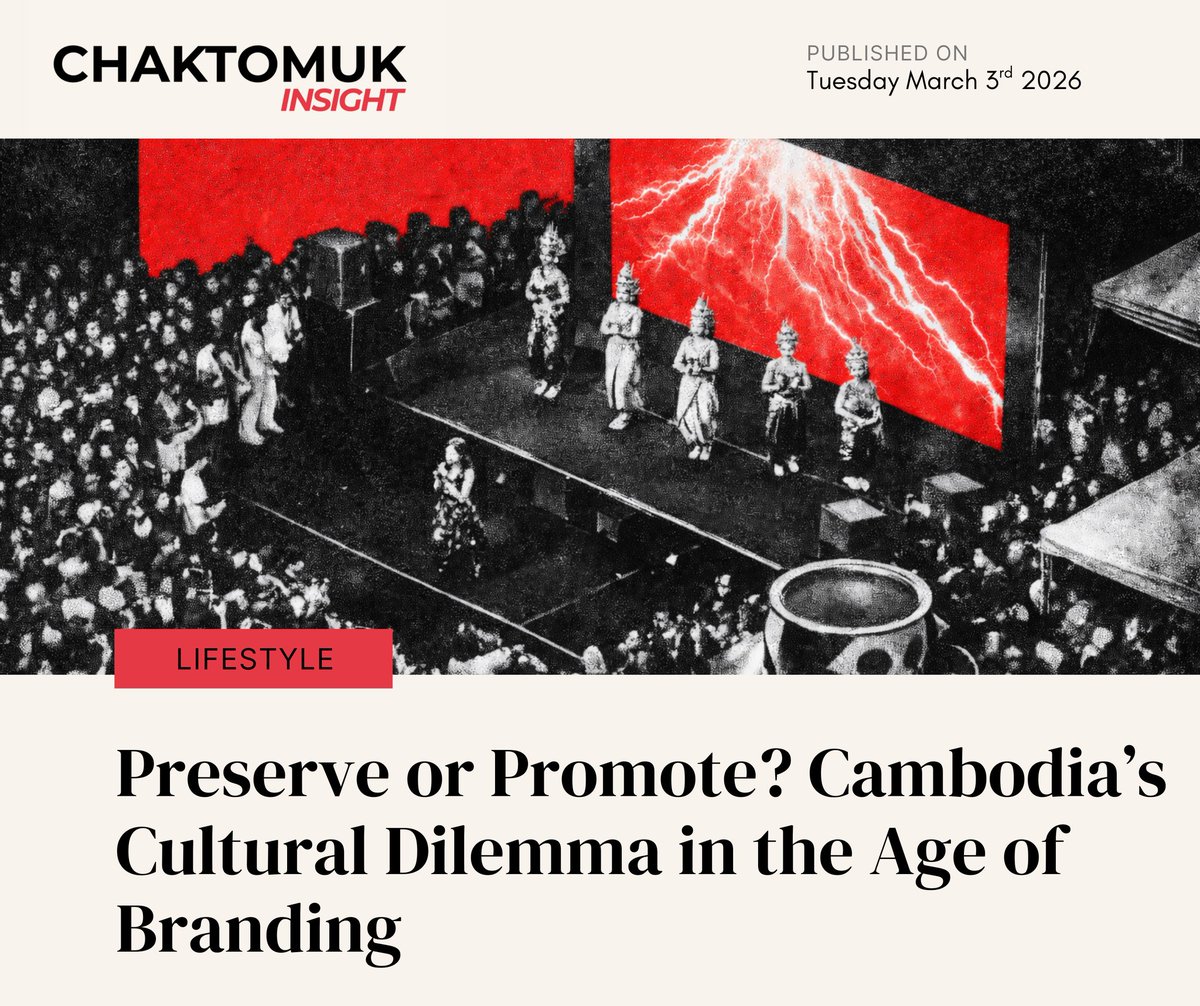
A recent performance of Cambodian classical dance along Sisowath Quay has sparked debate. A foreign observer described it as “a grim day for Cambodian sacred dance,” suggesting that grace had been replaced by branding. Yet the controversy raises a deeper question: when sacred dance enters public space, who defines its legitimacy? Cambodia’s Royal Ballet is not merely performance. It carries cosmological meaning, ritual discipline, and centuries of historical continuity. Rooted in sacred court traditions and ancient religious imagery, classical dance symbolises spiritual order and royal authority. Inscribed by UNESCO in 2003 as a Masterpiece of the Oral and Intangible Heritage of Humanity, it embodies refinement, symbolism, and national identity. For generations, it was performed in royal courts and temple ceremonies, representing harmony between heaven and earth. It is therefore understandable that some take a conservative position. Sacred gestures traditionally begin with ritual ceremonies such as Sampeah Krou, reinforcing artistic discipline and spiritual continuity. When these movements appear in commercial or casual settings, critics fear that meaning may be diluted. Cultural heritage, in this view, should not become mere aesthetic decoration. Yet history shows that Khmer classical dance has never remained confined to one space. During the colonial era, French curator George Groslier documented royal dancers out of concern that modern change might threaten the tradition. After the devastation of the Khmer Rouge, which destroyed much of Cambodia’s artistic community, revival efforts brought the Royal Ballet onto international stages. It became not only ritual art but also a symbol of national resilience. Today, the debate must also be understood within a regional context. Southeast Asia is increasingly competitive in cultural diplomacy. Thailand has invested heavily in projecting its classical performance traditions as regional cultural icons, and sometimes presents stylistic elements that overlap historically with Khmer forms. In a region where artistic exchange has long occurred across borders, narratives of origin can become politically sensitive. In such an environment, restricting Cambodian classical dance only to sacred spaces may weaken its global visibility. Cultural authority is preserved not through isolation alone, but through confident projection. If Cambodia does not actively present its heritage, others may shape international perceptions instead. Yet this effort to promote Cambodian classical dance does not happen in isolation. It now takes place within market conditions. The commercial logo behind the performance shows how culture and business are increasingly connected. Cultural traditions cannot survive on meaning alone; they need financial support, strong institutions, and public visibility. In a tourism-based economy, companies often want to associate their brands with heritage because it gives them prestige and public recognition. Sponsorship can help protect the arts by providing funding and wider exposure. However, it can also change how the performance is seen. When sacred dance appears together with commercial branding, some may feel that its deeper meaning is reduced. The main question is not whether business should be completely removed, but whether economic support helps maintain artistic integrity or slowly changes the character of the tradition. Promotion, however, must not compromise integrity. The issue is not purity versus publicity, but governance. Who sets standards? How is meaning communicated alongside movement? Sacred space safeguards continuity. Public space secures relevance. A confident nation must master both. #chakinsight #chaktomukinsight #cambodia #traditionaldance Author: PanhaCHEZDA Click here to read more articles: chakinsight.com
Chaktomuk Insight tweet media
English
0
4
8
164
Chaktomuk Insight
Chaktomuk Insight@chaktomukINS·
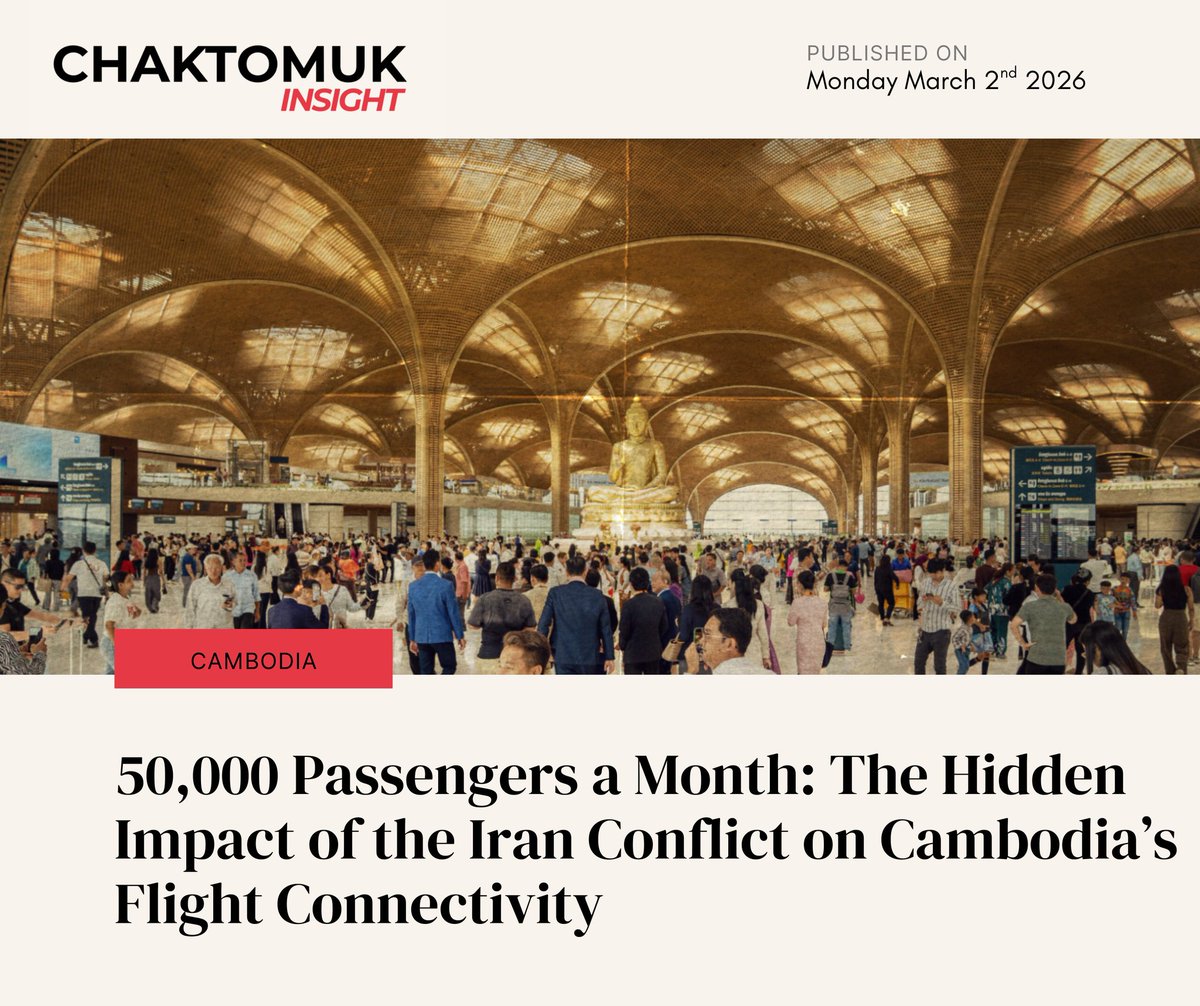
According to the State Secretariat of Civil Aviation (SSCA), Cambodia’s flight connectivity with the Middle East has been affected following the outbreak of war involving Iran, the United States, and Israel. SSCA spokesperson Mr. Sin Chansereyvutha told Fresh News on March 2, 2026, that the recent escalation of military tensions in the Middle East, which began on February 28, 2026, has resulted in temporary airspace closures, operational disruptions at major airport hubs in the Gulf region, rerouting of Europe–Asia air corridors, as well as higher fuel costs and increased war-risk insurance premiums. The Middle East serves as one of the world’s principal aviation crossroads. Major Gulf hubs, including Doha, Dubai, and Abu Dhabi, function as critical transit points connecting Europe, North America, Africa, and Asia. For Cambodia, these hubs are essential gateways for long-haul travel. Airlines such as Qatar Airways, Emirates, and Etihad Airways play an important role in linking Phnom Penh and Siem Reap to global markets. When airspace restrictions or heightened security conditions arise in the Gulf region, these routes may experience delays, rerouting, or temporary adjustments. At present, dozens of weekly round-trip flights operate between Cambodian airports and Middle Eastern transit hubs. These hubs serve as transfer gateways for passengers traveling to Europe, North America, Africa, and parts of the Middle East. The implications extend beyond operational inconvenience. Cambodia is pursuing efforts to diversify its tourism base, particularly by attracting higher-spending long-haul visitors. A significant share of travelers from Europe and North America rely on Gulf carriers to reach Southeast Asia. If flight connections become less reliable or more expensive, travel demand may decrease in the short term. In addition, rising fuel prices and higher insurance costs caused by regional instability could lead to an increase in airline ticket prices worldwide. Continued disruptions along Europe–Asia flight routes, together with the need for additional coordination in rescheduling and rerouting passengers, have created further operational challenges for airlines. These adjustments increase logistical pressure and require greater customer service support. For a country that is working to strengthen its position as an emerging tourism and business destination, maintaining stable and reliable air connectivity remains a critical policy priority for sustaining tourism growth and international business integration. #chakinsight #chaktomukinsight #tourism #cambodia #Iran Author: PanhaCHEZDA Click here to read more articles: chakinsight.com
Chaktomuk Insight tweet media
English
0
0
1
239
Chaktomuk Insight
Chaktomuk Insight@chaktomukINS·
Recently, social media has been discussing a viral clip of a female KOL who argued that her male partner should give her money when they go out because she needs to buy clothes and perfumes. She stated that she brings her beauty to the outing, not “a body that has not taken a shower.” The clip quickly went viral. Many people criticized her statement, while others, both women and men, supported her view. Some even argued that men who reject this expectation are immature or less masculine, commonly described in Khmer as “Ah Nhi” (អាញី). As the debate escalated, some supporters reframed the idea by saying that providing money to a girlfriend is an “investment” in the future mother of a man’s children. Some also argued that women invest a great deal in maintaining their beauty, so if men want a pretty partner, they should be willing to invest as well. Instead of reacting emotionally, perhaps we can look at this issue through a policy and trade-off lens. Technically, what the KOL expressed is not entirely wrong. Every relationship is different, and people are free to choose arrangements that suit their values and preferences. Personal choices should not be harshly judged. However, her statement raises broader structural questions about gender roles, power, and long-term consequences. The key concept here is trade-off, gaining something while giving up something else. Globally, many governments are working to empower women by increasing access to education, leadership roles, and economic participation. In Cambodia, for example, women are increasingly encouraged to pursue higher education and take on leadership positions, including roles as governors and ministers. These efforts aim to create genuine gender equality and maximize the country’s human capital. If society simultaneously promotes the idea that men must always be sole financial providers, including covering personal lifestyle expenses such as clothes and perfumes, it may unintentionally reinforce traditional gender roles. Historically, women were expected to stay home and depend financially on their husbands. While this arrangement may work for some families, it can limit broader structural empowerment. One perspective suggests that if men take full financial responsibility, women may experience a more comfortable or easier lifestyle in certain aspects. However, the trade-off could be reduced bargaining power or less decision-making authority within the family and society. When financial contribution is unequal, influence can also become unequal. On the other hand, a shared-responsibility model, where both men and women contribute financially and socially, may feel more demanding. Both sides must work, make sacrifices, and carry responsibility. Yet the trade-off here is shared power, shared decision-making, and more equal standing within both the household and society. The long-term empowerment of women should not depend solely on beauty. Beauty is subjective and temporary. Sustainable empowerment comes from education, skills, economic independence, and institutional opportunities. Young girls should be encouraged to invest in their talents, knowledge, and capabilities, rather than viewing dependence as a pathway to security. Therefore, the issue may not be about who is right or wrong. Both viewpoints reflect different values and lifestyle preferences. The real question lies in understanding the trade-offs: comfort versus authority, dependency versus shared power, tradition versus modern partnership. In the end, equality is not simply about who pays for clothes or perfumes. It is about structure, responsibility, and long-term balance, within families and within society. #chakinsight #chaktomukinsight #Cambodia Author: PanhaCHEZDA Click here to read more articles: chakinsight.com
Chaktomuk Insight tweet media
English
0
0
2
71