Alexander Chemeris @ ICML

3.8K posts

Alexander Chemeris @ ICML

Alexander Chemeris @ ICML

@chemeris

Building Digital Infra Robots @ https://t.co/9CofWYdyoa, time-series world models and hardcore telco telemetry. ex-@fairwaves CTO, #hackerspace co-founder.

Cape Town, South Africa Katılım Temmuz 2009
580 Takip Edilen852 Takipçiler
Sabitlenmiş Tweet
Alexander Chemeris @ ICML
Alexander Chemeris @ ICML@chemeris·
The gap between Time-Series analysis and the rest of AI is so painful that I decided to research in public, publishing experiments, thoughts, and interesting papers to stir things up a bit. Comment or follow if you believe the future is just the next step in time series.
English

0
0
4
414
Alexander Chemeris @ ICML
I love flying — it gives me enough distraction-free focused time to learn something new. I've been wanting to learn how flow matching works for modelling complex probability distributions in data, as it's critical for modelling telemetry and infrastructure failure modes. On my flight from ICML back to Cape Town, I listened to the flow matching lectures by @peholderrieth. It's the best explanation I've seen — very well structured. Highly recommend: diffusion.csail.mit.edu
English
0
0
0
122
Alexander Chemeris @ ICML
Strongest impression from ICML: main-track talks often feel like award ceremonies. The work is ~1 year old; the author has moved on. Workshops feel alive because the lag is shorter. You’re talking to people still wrestling with the problem, not just presenting finished work.
English
0
0
2
158
German Magai
German Magai@MetatrolN·
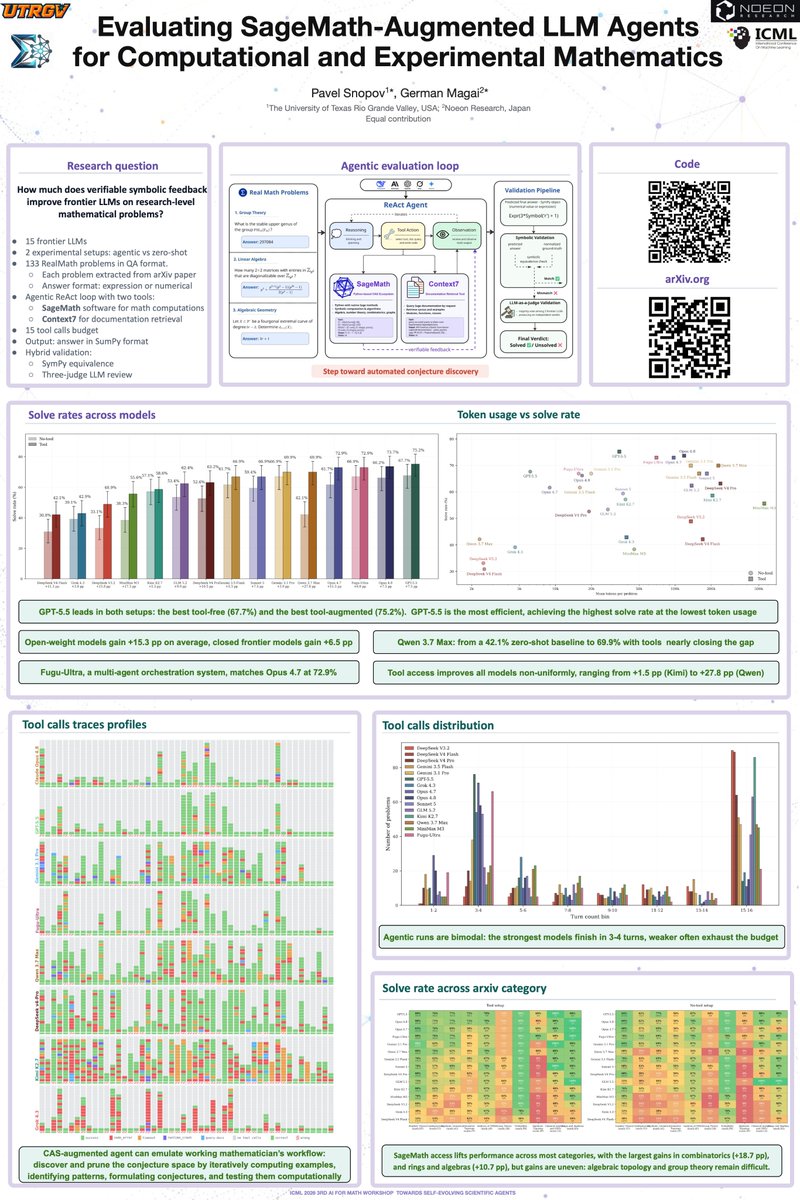
AI4Math research focuses on Lean autoformalization and theorem proving. But how do we come up with new conjectures? In our work with @fin_presented, we study how well can LLM agents use computation to create hypotheses and solve research-level mathematical problems? arXiv: arxiv.org/abs/2607.06820 We evaluate 15 LLMs in zero-shot and SageMath-augmented agentic setup on RealMath 133 problems extracted from arXiv mathematical papers. Key findings: - Tool access improves every model, by 9.7 pp on average. Open-weight models gain 15.3 pp, compared with 6.5 pp for closed frontier models, narrowing the gap between them. - Most intriguingly, a CAS-augmented agent reproduced a computational mathematician’s workflow: computing intermediate objects, finding patterns, forming conjectures, recovering from errors, and validating formulas across parameters (see the details in the case study). - Gains vary: #Qwen 3.7-Max rises from 42.1% to 69.9%, a gain of 27.8 pp that brings it close to frontier performance. #Kimi 2.7 gains only 1.5 pp. - Tool-use behavior is strongly bimodal. Strong agents usually finish in 3-4 tool turns, while weaker agents often exhaust all tool budgets. - The largest gains are in combinatorics (+18.7 pp) and rings and algebras (+10.7 pp), while algebraic topology and group theory remain difficult. - Recovery after a failed tool call ranges from 16% (#Sonnet-5) to 77% (GPT-5.5) across models. The ability to revise a strategy after receiving computational feedback separates effective agents more clearly than the raw number of errors. Interesting observations about some models: - #GPT 5.5 leads in both solve rate and efficiency, reaching a 75.2% accuracy with the lowest token usage among tool-enabled agents. - #MiniMax M3 is the least efficient, using the most tokens per problem and achieving substantially lower accuracy. - #Opus 4.8 exceeds Opus 4.7 by only one solved problem. - #Grok 4.3 shows one of the worst results and produces 248/336 SyntaxErrors🥲. - #Fugu Ultra shows the smallest increase in token usage with tool access, at 4.5×, averaging 70k tokens per problem. Today we are presenting our poster at the @ai4mathworkshop at @icmlconf. Come by to discuss our work. #ICML2026 #AI4Math #AI #Agentic #LLM #Mathematics
German Magai tweet media
English
2
4
12
630
Mikhail Parakhin
Mikhail Parakhin@MParakhin·
Exactly 2 years ago, at ICML in Vienna @dylan522p and I made a bet on who will have more training compute deployed in two years (now): OAI/MSFT or Anthropic/AWS. I claim I won that bet (OAI), Dylan! :-) Care to have another one? Ready to take you up on below :-)
SemiAnalysis@SemiAnalysis_

The Future of Meta Superintelligence: A 1 Year Progress Update A top tier RL environment startup spawns out of thin air, the most aggressive compute ramp we've ever seen, 2000km+ scale-across, and some advice for Google DeepMind semianalysis.substack.com/p/the-future-o…

English
6
1
125
27.2K
Alexander Chemeris @ ICML
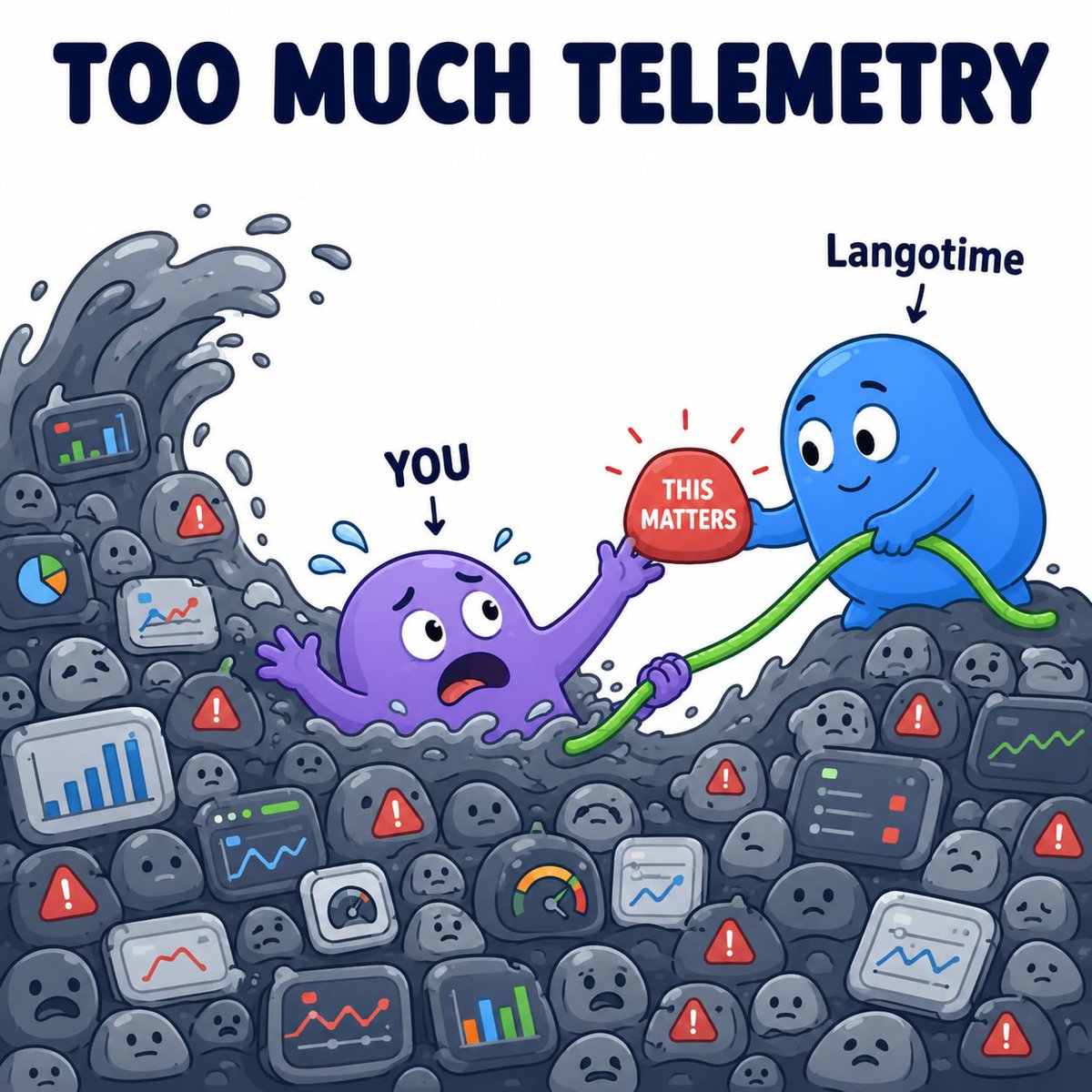
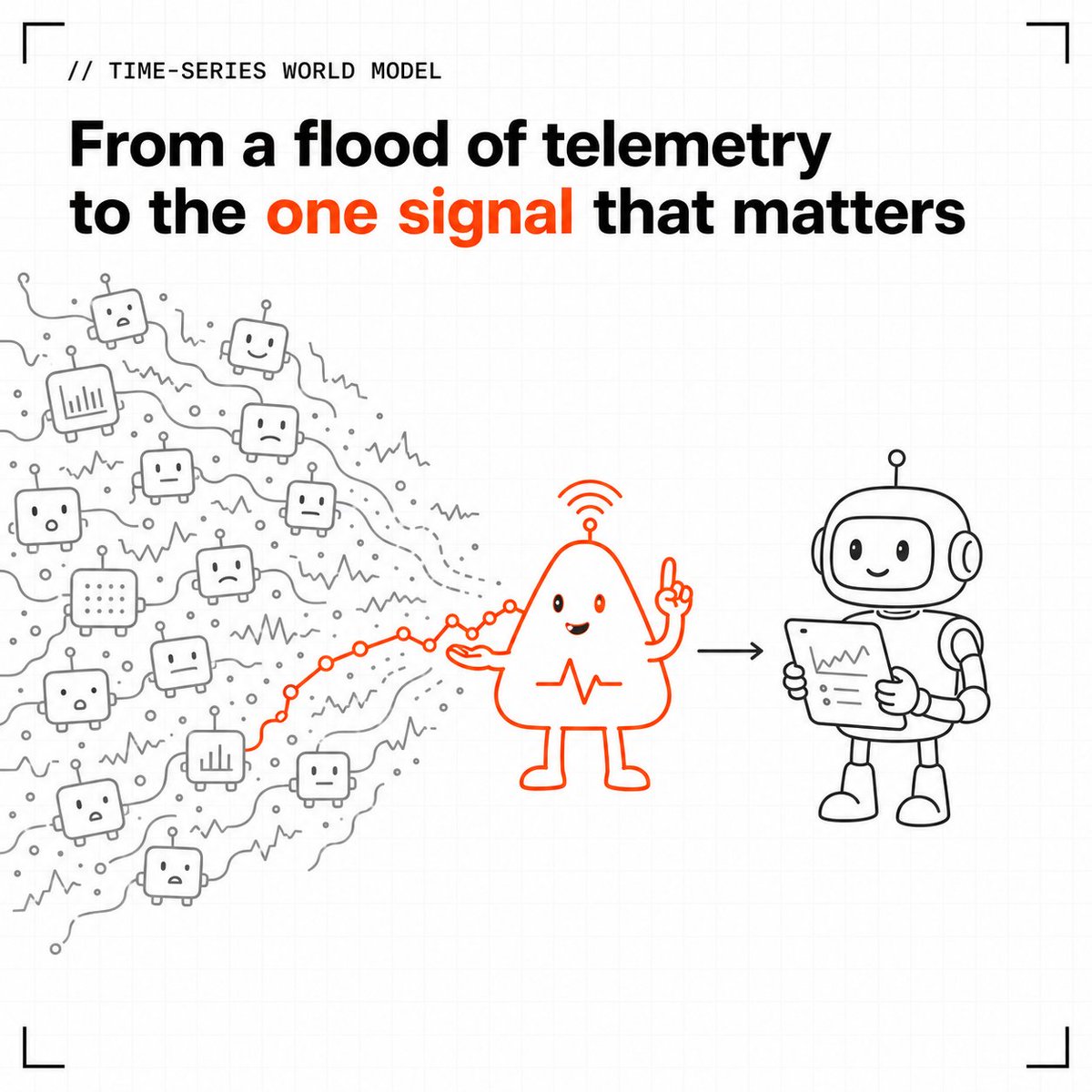
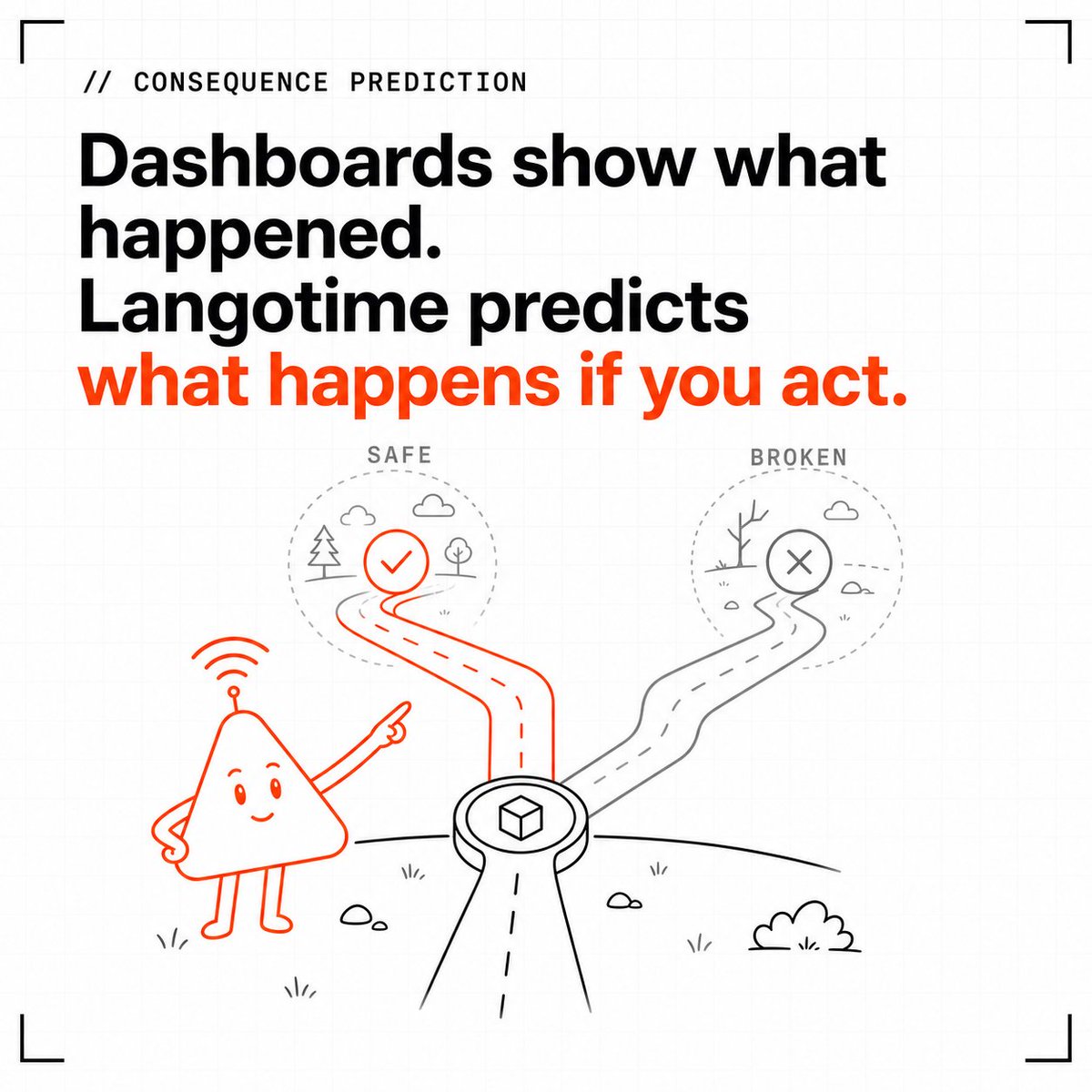
A non-technical friend has asked me to explain what langotime.ai is about in pictures. The first iteration with Claude prompting gpt-image-2. Not great, not terrible, but has promise, I guess 😅
Alexander Chemeris @ ICML tweet mediaAlexander Chemeris @ ICML tweet mediaAlexander Chemeris @ ICML tweet mediaAlexander Chemeris @ ICML tweet media
English
1
0
1
140
Alexander Chemeris @ ICML
@richard_qiuyi_z @ElorianAI Hey, I'm building multi-modal models to reason about telemetry (not vision) in real-time @ langotime.ai, but challenges are very similar. I've sent a request @ Partiful, but would be happy to catch you at the conference if the event is full
English
0
0
0
36
Alexander Chemeris @ ICML
@matrosov Better than Opus 4.8 in your opinion? And how does it compare to GPT-5.5? I'm using Opus to plan and GPT to execute r/n since it's much more robust
English
1
0
0
59
Alexander Chemeris @ ICML
Alexander Chemeris @ ICML@chemeris·
If you're not a GPU-rich lab, do time-series research. Smaller models than vision. Faster iteration loops. Real applications right away instead of theoretical demos. I find that if an experiment takes >1h to run, I'm not moving fast enough.
English
1
0
2
80
Mikhail Parakhin
Mikhail Parakhin@MParakhin·
Not as relevant now :-(: I had an opportunity to deeply test both Fable 5 and GPT-5.6 Max. 5.6 is clearly better than Opus 4.8 at everything (slightly faster, too, though that depends on the load). Vis-a-vie Fable, it is clearly worse on coding, but better on agentic workloads. I had Fable write code, 5.6 run experiments - dreamy…
English
100
75
2.7K
529.5K
Alexander Chemeris @ ICML
Alexander Chemeris @ ICML@chemeris·
Awesome work on JEPA for real-time control
Pratyaksh Rao@PratyakshRao5

What should a world model for agile quadrotor control actually provide? 📄 Arxiv: arxiv.org/pdf/2606.23444 🌐 Project: pratyaksh10.github.io/skyjepa-projec… 💻 Code: github.com/arplaboratory/… Excited to share SkyJEPA: Learning Long-Horizon World Models for Zero-Shot Sim-to-Real Control of Quadrotors A useful quadrotor world model should provide: ✅ Accurate long-horizon prediction ✅ Interpretability ✅ Real-time inference for closed-loop control ✅ Zero-shot task generalization SkyJEPA learns dynamics in latent space, uses a physics-inspired prober to recover meaningful states, and enables real-time control in outdoor flights. 🔑 Takeaways: • Less compounding error • Smoother latent trajectories • Robustness to corrupted/noisy inputs • Generalization to unseen settings like propeller switching and payload changes • Zero-shot sim-to-real transfer without real-world fine-tuning to scenarios not seen during training such as propeller switching and payload changes. Huge thanks to my collaborators: @kevinghstz, @randall_balestr, @ylecun, and @loiannog #Robotics #Quadrotors #WorldModels #Sim2Real #JEPA #RepresentationLearning #Drones

English
0
0
0
142
Alexander Chemeris @ ICML
Alexander Chemeris @ ICML@chemeris·
@DimitrisPapail I guess if benchmarks reported individual skill mastery values rather than a single blended value, we would see a lot more interesting picture.
English
0
0
0
281
Alexander Chemeris @ ICML
Alexander Chemeris @ ICML@chemeris·
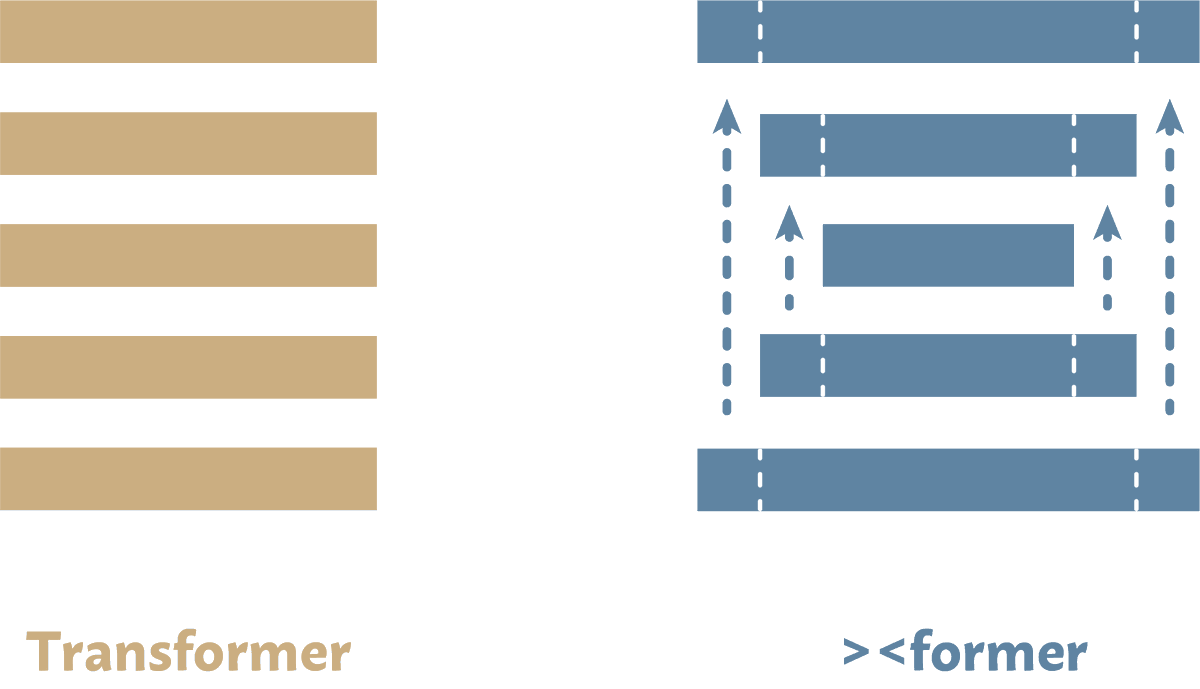
Awesome work! Have you thought about training it to choose the width at inference time - to maximize quality at a given FLOPs budget? So that the shape is the result of the model's training and could be different for different types of the input. Recent papers from @sainingxie team showed that e.g. text and images "propagate" differently through a transformer, so the most optimal shape is likely different. I further suspect that even within a a single modality inputs of different complexity "propagate" differently. I'm tracking this idea here: alex-wiki.langotime.ai/ideas/hierarch…
English
1
1
0
73
Zhaofeng Wu
Zhaofeng Wu@zhaofeng_wu·
Introducing ><former Most transformers are rectangles◻️: every layer has the same width But is that optimal?🤔 We propose variable-width transformers that have different widths across layers, improving loss while cutting compute & KV cache size 🧵
Zhaofeng Wu tweet media
English
62
72
829
345K