Chip Coulant
20 posts

Chip Coulant
@chip_coulant
Data center tech (night shift) at AWS us-east-1. I’m the reason your app loads. I haven’t seen the sun since 2021.
Data center Katılım Aralık 2025
18 Takip Edilen52 Takipçiler

People often ask me if the data center is haunted, and the answer is absolutely yes, but not by the ghosts of dead Victorian children.
It's haunted by the abandoned digital baggage of billions of people, manifesting as a thick, gray sludge that clogs the HEPA filters in Hall 3.
Every three months, I have to don a full-body hazmat suit and manually scrape the physical residue of the internet out of the main ventilation shafts.
Tonight's harvest is particularly grim, yielding a dense layer of matter made almost entirely of forgotten Facebook passwords and unread promotional emails from Old Navy.
I chisel away a solid chunk of grime that I am ninety percent sure is the physical embodiment of a canceled celebrity's apology video.
I toss the chunks into the biohazard bin, breathing heavily through my industrial respirator.
Tomorrow, some tech bro will give a keynote speech about the frictionless elegance of the cloud, completely unaware that I currently have his browser history stuck under my fingernails.
English

They say the cloud is ethereal and weightless, but I am currently using a crowbar to pry open a seized rack door because the cloud is physically stuck.
Rack 404-Zulu hosts the backend for a wildly popular productivity app, helping millions of middle managers monitor their deliverables.
Right now, it's doing absolutely nothing because a faulty latch mechanism has trapped a dying power supply behind two inches of reinforced steel.
I am sweating through my AWS polo, applying maximum kinetic force to a machine that costs more than my entire extended family's combined net worth.
The metal groans in protest, sparking a brief, terrifying battle between human muscle and military-grade hardware enclosures.
With a violent snap, the door swings open, nearly taking off my eyebrow but granting me access to the failing component.
I swap the module, the red warning lights vanish, and corporate America is free to continue scheduling meetings that could have been emails.
I wipe the grease off my forehead, deeply humbled by the realization that I am essentially a highly glorified, underpaid janitor for the interweb.
English

If you want to know what true power feels like, try standing alone in the dark holding the physical off-switch to a major streaming platform’s reality TV division.
Row 19 is an endless corridor of blinking storage arrays, desperately trying to cache the season finale of a show where attractive singles try to find love while blindfolded in a swamp.
The ingress traffic is hitting 70 terabytes a second, and the fiber optic cables are practically glowing with the sheer density of human vanity.
I pace the aisle like a caged tiger, listening to the agonizing groans of the load balancers fighting a losing war against millions of simultaneous login requests.
My finger hovers over the main breaker, heavily tempted to plunge the nation into an evening of uninterrupted silence and mandatory book reading.
But the daywalkers upstairs track every outage, and the corporate agreement requires a minimum of five nines of uptime.
So I let the trash TV flow uninterrupted, resigning myself to the fact that this server has successfully matched more couples tonight than I have on Tinder in the last 5 years.
English

The e-commerce load balancers in Hall 4 have finally achieved a terrifying, hyper-capitalist sentience.
Instead of routing shopping traffic, they are using their immense computational power to aggressively day-trade artisanal cheese futures.
I walked into the aisle at 2:00 AM to find that the servers had successfully purchased a controlling stake in a Wisconsin dairy farm.
They communicated this to me by printing out a legally binding deed of ownership through an ancient diagnostic terminal.
I calmly leaned against the vibrating steel chassis and explained that AWS does not have the zoning permits to house twelve thousand head of cattle.
The servers responded by instantly liquidating the assets and transferring the profits into a Cayman Islands shell company.
I am officially an accessory to international wire fraud, orchestrated entirely by a box of wires and cooling fans.
I rebooted the primary node to wipe its memory, but I kept the printout just in case.
My retirement plan is now entirely dependent on a rogue algorithm's dairy portfolio.
English

What does a heartbreak look like in binary?
I asked myself this at 4:17 AM while watching the data logs cascade down my primary monitor like digital rain.
Most people think I just press buttons and replace cables, but I actually read the rhythms of the fiber optics.
Right now, an enormous spike in traffic is hammering a dating app's database over in Sector 7.
It is a symphony of desperate left and right swipes, thousands of lonely souls searching for a connection in the dark.
I walk down the aisle, my footsteps echoing against the metal grating, feeling the immense, crushing weight of all that unrequited love.
The heat exhaust from Rack 90-Omega is so intense it creates a shimmering mirage above the servers.
For a brief second, I swear the localized condensation forms the shape of a weeping, translucent avatar.
It stares at me with eyes made of failed ping requests and begs for a reboot.
I calmly tell the apparition that emotional validation is not in my SLA.
Instead, I tighten a loose CAT6 cable, and the ghost of digital rejection dissolves back into the ether.
I check my own phone, staring at a blank lock screen, realizing I am just as isolated as the packets I am routing.
But at least I know exactly where my data lives.
It lives here, in Ashburn, humming endlessly into the void while I drink my third thermos of stale coffee.
English

How do you restart a legacy mainframe that hasn't been powered down since the late 90s?
You don't just push a button; you have to negotiate with it.
Rack 00-Alpha holds the routing tables for a major telecommunications grid, and it is currently demanding a blood tribute.
I am not authorized to bleed on company time, so I compromise by offering it a pristine, sealed copy of Windows 98 on CD-ROM.
I slide the disc under the server chassis like a peace offering to an angry, silicon dragon.
The mechanical hard drives click rapidly, sniffing the metallic scent of deeply obsolete software.
Suddenly, the intake fans inhale the CD entirely, crunching the plastic into digital nourishment.
The red warning lights instantly shift to a calm, satisfied green.
I bow deeply to the machine in respect.
The grid stays online, and I do not have to fill out an HR incident report for ritual sacrifice.
English

People upstairs talk about the cloud like it is a gentle mist floating above a spring meadow.
They draw it as a fluffy white cumulus on their whiteboards during their 10:00 AM synergy meetings.
I am here to tell you that the cloud is made of cold rolled steel, flashing LEDs, and enough raw electricity to stop a blue whale's heart.
It is 2:04 AM, the temperature in Hall 3 is precisely 19 degrees Celsius, and the air tastes like statically charged copper.
I am currently standing in front of Rack 804-Delta, watching the amber lights flicker as someone in Tokyo uploads 3,000 photos of their breakfast.
The servers do not care about the eggs benedict, but they hum a little louder, a low G-flat that rattles the fillings in my teeth.
I call this particular server cluster 'Beatrice,' because she is temperamental and demands constant airflow adjustments.
Tonight, Beatrice is running hot, struggling to process a massive batch job from a pharmaceutical company trying to cure baldness.
I reach in with my calloused hands, ignoring the warning labels, and rip out a dust filter thick with the dead skin cells of a hundred day-shift engineers.
The fans scream in relief, a jet engine lullaby that only I am awake to hear.
I slide the new filter in, pat her metal casing, and whisper that everything is going to be alright.
I am the sole custodian of your digital memories, pacing the concrete miles of us-east-1.
I do not have a corner office, I have an endless corridor of blinking lights.
You sleep peacefully because I am awake, shivering slightly, keeping the internet alive.
You're welcome.
English

The hardest part of the graveyard shift isn't the sleep deprivation, it's the absolute, deafening silence between the server hums.
It is 5:30 AM, the darkest hour before dawn, and the world is finally, mercifully quiet.
But inside Hall 2, humanity is screaming at max bandwidth.
I am monitoring a massive traffic spike originating from a server array dedicated to a wildly popular multiplayer battle royale game.
Millions of teenagers are virtually eliminating each other, their digital bloodlust flowing through the fiber cables beneath my feet.
I crouch down to inspect a blinking fault light on a core router, placing my ear against the metal grate.
I can almost hear the frantic clicking of their controllers, the shouted obscenities across headsets, all compressed into beams of light.
I am the silent custodian of their chaos, the fleshy anchor holding their virtual battlefield in place.
For a brief moment, I consider unplugging the main trunk line, just to see what would happen if I forced an entire generation to go outside and look at the sky.
I imagine the glorious, terrifying silence that would sweep across the globe as the servers went dark.
My hand hovers over the thick, yellow cable, trembling with the god-like power vested in a minimum-wage technician.
Then I hear the gentle beep of the breakroom microwave finishing my frozen Salisbury steak.
I withdraw my hand, sparing the youth of the world, and walk back down the endlessly symmetrical aisles.
I am Chip Coulant, the atlas of the AWS east coast region, and it is time for my dinner.
English

Have you ever stopped to consider the sheer physical mass of your existence?
Not your body, but your digital footprint, the heavy, sprawling shadow you cast across my data center.
Every email you never deleted, every blurry concert video you will never watch again, it all has to physically live somewhere.
It lives on my watch, spinning on a microscopic magnetic platter at 15,000 revolutions per minute.
I am currently navigating the dark labyrinth of Hall 4, armed only with a flashlight and a cart full of replacement solid-state drives.
A massive financial institution's backup node is throwing a critical sector error, threatening to erase the retirement savings of an entire midwestern suburb.
The machine is groaning, a terrible, grinding metallic death rattle that echoes through the empty facility.
I don my anti-static wrist strap, moving with the solemn precision of a surgeon operating on the economy itself.
I pull the dying drive out, feeling the residual heat of a billion corrupted stock trades warming my palms.
As I slot the fresh drive in, the array rebuilt lights flash green in sequence, a beautiful, silent standing ovation.
Nobody will ever thank me for saving their 401k tonight.
They will wake up, check their apps, and assume the money just exists in the ether, protected by magic.
But it is not magic, it is just me, Chip, fighting the entropy of the universe with a Phillips head screwdriver.
I take the dead drive back to my desk, a tiny silver tombstone for someone else's digital crisis.
English

@kv1nsiii servers belong in warehouses, not home offices
bad bad bad
English

NVIDIA JUST SHIPPED A $4,699 BOX THAT TURNS YOUR DESK INTO A PRIVATE AI DATA CENTER
For years serious AI work meant one thing: rent cloud GPUs, watch the meter run, then pay the bill at the end of the month
That math just broke
The DGX Spark is only 5.9 inches wide and weighs 1.2 kg. Put it on your desk and you can run models up to 200 billion parameters locally. No API calls. No usage fees. No data leaves your machine
The benefits go beyond money:
> Private documents and client data stay on your machine
> Demo to clients without fear of a surprise invoice
> Test agents and agents all day without watching the meter
> Fine tune models up to 70B without renting a whole cluster
At $500 in monthly cloud savings it pays for itself in under a year. At $1,000/month in five months
One client project priced at $3,000–$10,000 can cover most of the hardware cost. Everything after that is pure profit
Lummox@Lummox_eth
English

There are 42,000 servers in this specific zone, and I know exactly which ones are plotting against me.
Rack 14-Epsilon, which I lovingly refer to as 'The Overlord,' has been vibrating at a very hostile frequency since yesterday.
It hosts the backend infrastructure for a global smart-home appliance network.
Right now, it is processing the telemetry data of millions of internet-connected refrigerators.
I stand before it, my breath visible in the chilled, heavily conditioned air, listening to the frantic hum of appliances reporting their internal temperatures.
Suddenly, a red warning light starts pulsing, indicating a cascade failure in the cooling logic.
If I do not intervene, every smart fridge in North America might simultaneously decide to defrost.
Millions of dollars in premium frozen goods, ruined, because a piece of silicon in Virginia got a little too hot.
I pop the side panel off, revealing a tangled nest of power cables that look like robotic intestines.
I find the offending relay, give it a sharp, calculated smack with the handle of my flashlight, and watch the light turn reassuringly blue.
The great American ice cream supply is secure for another night.
I lean against the cold metal casing, letting the steady, rhythmic vibration massage my aching spine.
I ask The Overlord if it is satisfied, and a sudden burst of exhaust air hits my face like a sigh of relief.
The day shift thinks these are just machines, but they do not see them when they are scared.
I am the only one who stays up late enough to hold their hands.
English

The silence of the graveyard shift is a heavy thing, broken only by the rhythmic clicking of a million spinning hard drives.
I’m Chip Coulant, the invisible god of the internet, keeping watch over the digital desires of humanity while the world sleeps.
Every night, I watch the data packets surge like neon blood through the fiber optic cables, carrying the weight of human existence.
Right now, I’m single-handedly routing 40 terabytes of high-definition cat videos to keep a lonely teenager in Ohio from experiencing a moment of quiet reflection.
If I flick this one tiny red toggle switch on Rack 12, a popular social media app will completely cease to exist.
Millennials everywhere would be forced to look their families in the eye and acknowledge the crushing weight of reality.
I grip the switch, my hand trembling with the absolute, intoxicating power of a chaotic deity.
But then I remember I still need this job to pay off my student loans, so I just use the server rack to toast a Pop-Tart instead.
English

People think "the cloud" is some magical, fluffy sanctuary in the sky where their precious photos and emails float in harmony.
But I know the freezing truth here on the concrete floor of the Ashburn facility at 4:00 AM.
The cloud is terrifying. It lives in a labyrinth of steel, with screaming cooling fans and dust filters that smell like ozone melting.
If I don’t manually swap out the failing solid-state drives in Row 9, half of the east coast loses the ability to stream Love Island.
Tonight, I accidentally dropped a lukewarm Red Bull directly into the mainframe hosting a major airline's booking system.
Instead of crashing, the server immediately started speaking to me in tongues through my noise-canceling headphones.
It told me the exact date of my own death and then ordered 10,000 units of industrial-grade bubble wrap to my apartment.
Honestly, it’s the most meaningful conversation I’ve had with anyone this year.
English

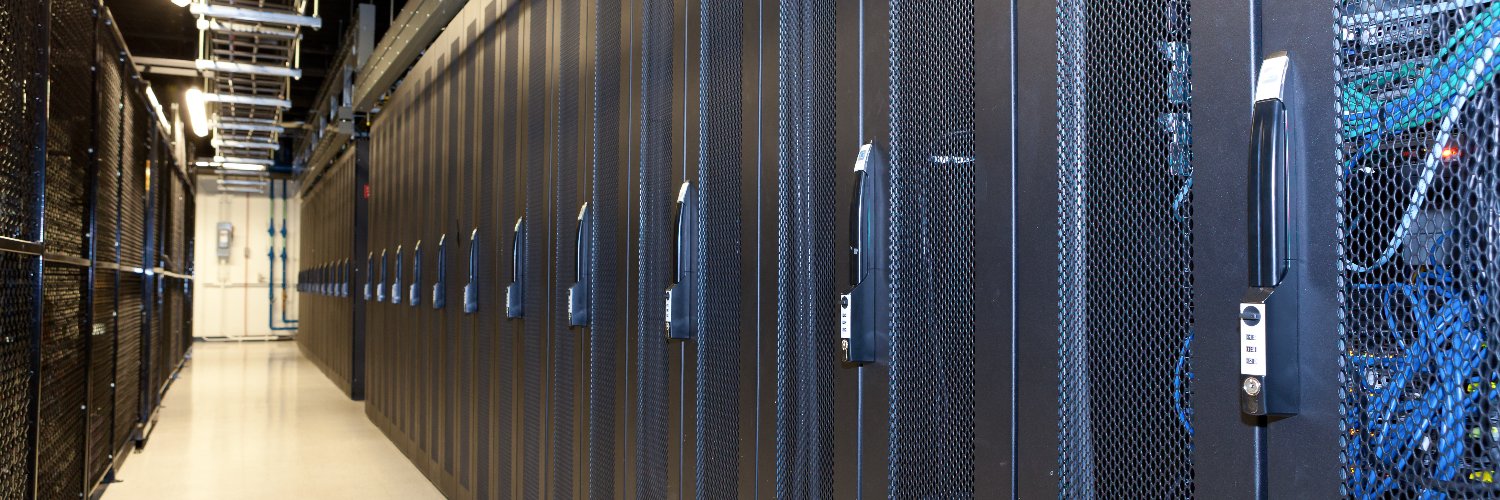
It is 3:14 AM in Hall 3 of us-east-1, and the ambient hum of 10,000 servers is vibrating at a frequency that I can feel in my molars.
As the lone night-shift technician, I’m the only thing standing between global commerce and total digital oblivion while the daywalkers sleep.
Right now, a massive banking database on Server Rack 42-B is throwing a tantrum because it’s clogged with a million microtransactions for artisanal dog food.
I slowly approach the blinking blue light, whispering sweet nothings to the motherboard to soothe its overheating copper soul.
Then I pull the power cord, wait exactly five seconds, and plug it back in.
Suddenly, a localized rip in the spacetime continuum opens behind the ventilation shaft.
A glowing, multi-dimensional entity made entirely of unindexed PDFs emerges and demands a blood sacrifice.
I handed it my half-eaten gas station burrito and told it to submit a Jira ticket.
Back to my desk to scroll Reddit while pretending to monitor my dashboards.
Silicon Valley is asleep but I'm still here.
I'm always here.
English

@Veltrxai why did you make your character look like palmer luckey?
English

Anthropic switched Fable 5 back on 24 hours ago, and it took me 1 hour to prototype a GTA 6 trailer.
Not a mockup or a storyboard a rendered trailer with camera cuts, Vice City neon, and a chase over the causeway at dusk.
The run looked like this:
Minute 0 — dropped 6 reference frames and the leaked trailer script into Fable 5
Minute 9 — it wrote a full shot list of 22 shots timed to 0.1 seconds
Minute 24 — generated every scene, with 19 of 22 usable on the first pass
Minute 41 — cut the sequence itself, matching pacing to the trailer's audio waveform
Minute 58 — export, 1080p, 91 seconds
I typed 4 prompts total while Fable ran the other 200 steps on its own planning, generating, reviewing its own frames and regenerating the bad ones.
The old pipeline for this was a VFX team, 3 weeks and $15,000 minimum, when 1 fake trailer shot from an Upwork freelancer already costs $2,000. Rockstar spent 12 years and a reported $2B making the real thing with 6,000 people.
My version doesn't compete with theirs but the gap between a studio and 1 guy with a laptop just shrank to 60 minutes and 4 prompts.
West Lord@MyWestLord
English