Child Health Research Foundation (CHRF)

996 posts

Child Health Research Foundation (CHRF) banner
Child Health Research Foundation (CHRF)

Child Health Research Foundation (CHRF)

@chrfbd

To improve child health in Bangladesh and neighboring countries through evidence and advocacy. #forBangladesh #inBangladesh #withBangladesh

Dhaka, Bangladesh Katılım Aralık 2016
221 Takip Edilen3.8K Takipçiler
Sabitlenmiş Tweet
Child Health Research Foundation (CHRF)
We are the Child Health Research Foundation. Guided by our commitment to prevent infections and save lives, we move forward every day with hope and purpose. Our work is for #Bangladesh, in #Bangladesh, and with #Bangladesh — rooted in the belief that together, we can build a healthier future.
English
0
0
0
112
Child Health Research Foundation (CHRF)
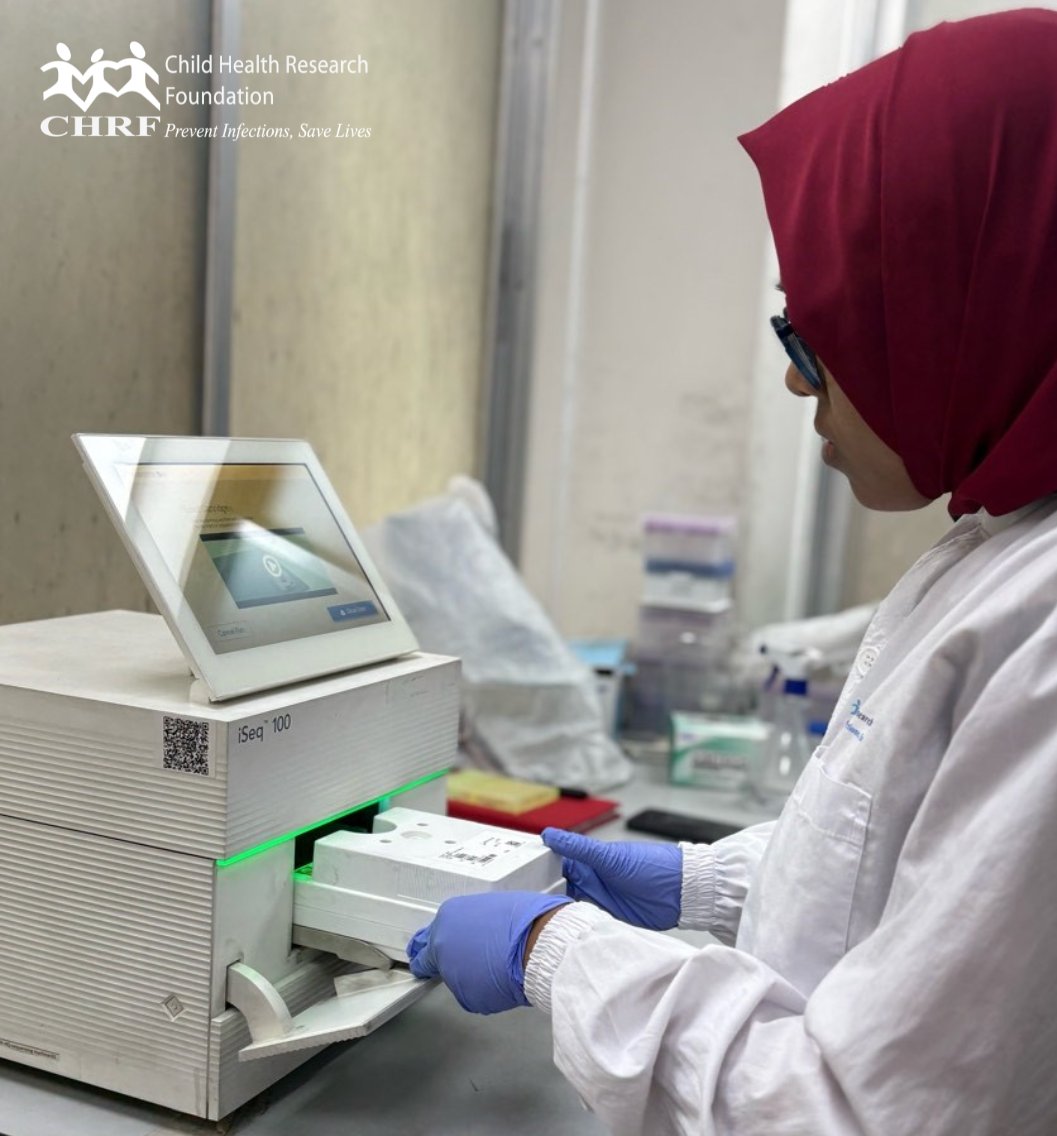
At CHRF, one machine holds a special place in our history: the iSeq 100. This exact sequencer that you see in the picture, sequenced the SARS-CoV-2 genome for the first time in Bangladesh. At the height of the pandemic, this sequencer generated the data that helped us understand the virus and informed public health decisions when timely evidence mattered the most. The iSeq 100 is small enough to sit on a lab bench, but its impact reached far beyond our laboratory. It meant Bangladesh no longer had to rely on sending samples abroad to understand the pathogens spreading within its own borders.
Child Health Research Foundation (CHRF) tweet media
English
0
0
0
22
Child Health Research Foundation (CHRF)
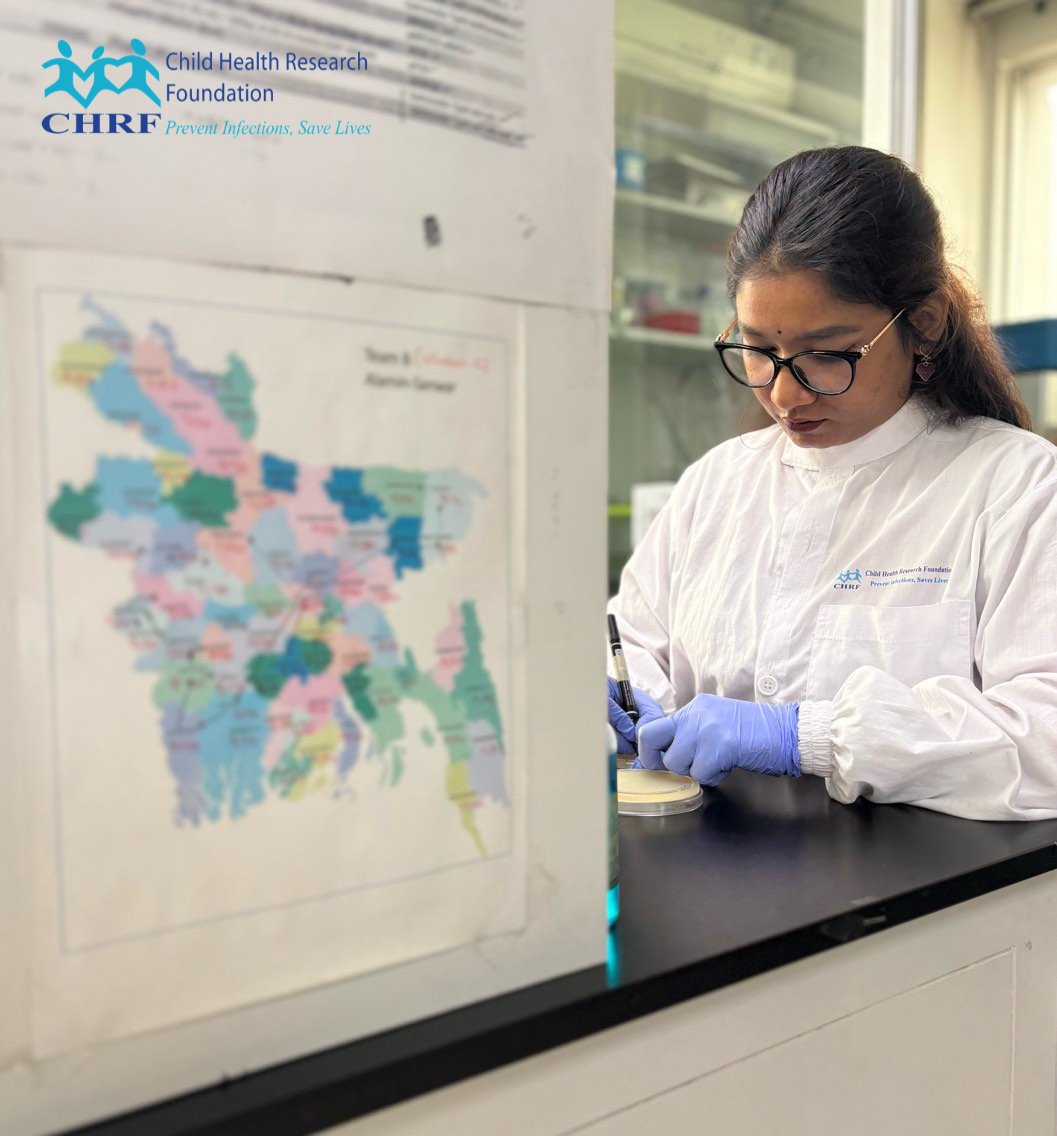
If you walk into our microbiology laboratory, one of the first things you'll notice is this map of Bangladesh. It's not there for decoration. We use it to track the nationwide environmental surveillance we carry out at CHRF. Behind the map is Pranto, one of our microbiologists. Samples arrive at this lab from all 64 districts of Bangladesh, where Pranto and the team process them to help us understand where typhoid is circulating across the country.
Child Health Research Foundation (CHRF) tweet media
English
0
1
1
43
Child Health Research Foundation (CHRF)
Learning microbiology from the scientist who started the microbiology laboratory at Bangladesh's largest pediatric hospital is a privilege. In the 1980s, Prof. Samir K. Saha established the laboratory with a vision to advance microbiology research in Bangladesh. Decades later, we continue to learn from him at CHRF, carrying forward the vision he began with the same commitment to science that protects children and saves lives.
Child Health Research Foundation (CHRF) tweet media
English
0
0
0
39
Child Health Research Foundation (CHRF)
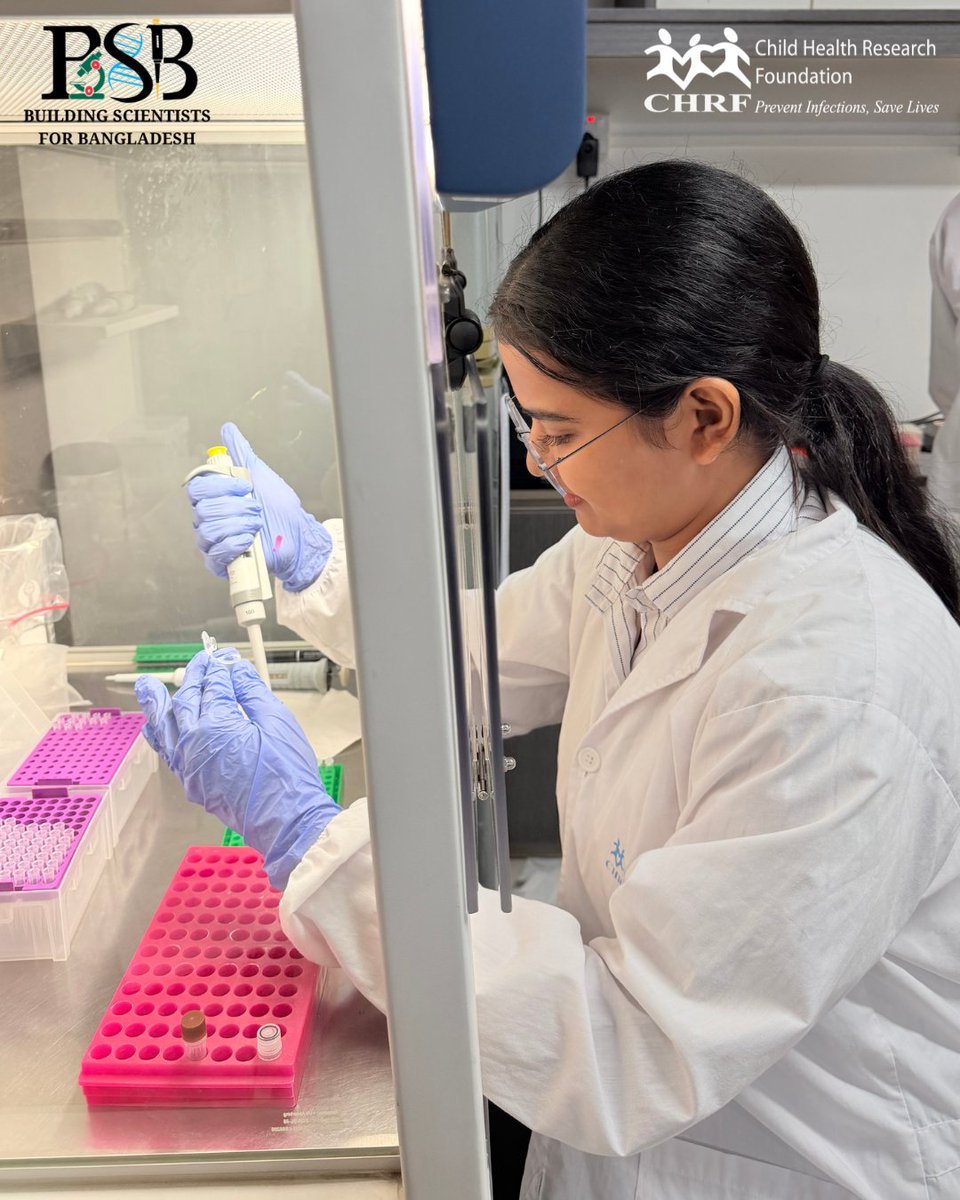
From capturing the stories of trainees to becoming one herself! Meet our 2025–26 Building Scientists for Bangladesh (BSB) Fellow, Lamia Islam Prokrity, working alongside scientists this past year didn't just teach her how to communicate science, it sparked a curiosity to do it herself. Now she's exploring that at the bench. As she prepares to begin her undergraduate journey at Washington and Lee University, USA on a full scholarship, she's taking the opportunity to step into the lab and gain hands-on experience through our Molecular Biology training program. We can't wait to see where your curiosity takes you. Wishing you all the best, Prokrity. This is just the beginning.
Child Health Research Foundation (CHRF) tweet mediaChild Health Research Foundation (CHRF) tweet mediaChild Health Research Foundation (CHRF) tweet mediaChild Health Research Foundation (CHRF) tweet media
English
0
0
1
90
Child Health Research Foundation (CHRF)
As antimicrobial resistance continues to grow, the medicines we rely on to treat life-threatening infections are becoming less effective, and newborns are among the most vulnerable. In our latest publication in NPJ Antimicrobials and Resistance, CHRF researchers present the largest and longest-running genomic and clinical study of Klebsiella pneumoniae ever conducted in Bangladesh, and one of the most comprehensive from South Asia. K. pneumoniae is a leading cause of hospital-acquired infections worldwide. Over 18 years, our team identified 1,600 confirmed K. pneumoniae infections in children across four hospitals. During this time, K. pneumoniae infections, especially in newborns, rose drastically alongside a parallel rise in resistance to carbapenems - a critical class of last-resort antibiotics often reserved for severe infections. To understand the issue at the genetic level, the team did whole-genome sequencing of 599 bacterial isolates, entirely in-house, at CHRF's own laboratories in Dhaka. This revealed a very high level of genetic diversity of K. pneumoniae strains circulating in Bangladesh, including 3 global high-risk strains. Based on the findings, the paper highlights the urgent need to expand neonatal care capacity, strengthen infection control in hospitals, implement continuous genomic surveillance, improve access to effective antibiotics, and development of vaccines as part of a broader strategy. This work represents thousands of hours of work, from data collection to genomic analysis, conducted entirely by Bangladeshi scientists, physicians, and public health workers. It demonstrates Bangladesh's growing capacity to generate world-class evidence on our own infectious disease threats. Learn more in NPJ Antimicrobials and Resistance: doi.org/10.1038/s44259…
Child Health Research Foundation (CHRF) tweet media
English
0
0
0
57
Child Health Research Foundation (CHRF)
Data is essential for improving health systems and shaping better policies. But to turn data into action, you need the right tools—and Python is one of the best tools for the job. Whether you're looking to build your first programming skills or learn the basics of analyzing health data, Python Essentials: Learn to Transform Health Data into Actionable Insights is the perfect workshop to begin with. This 5-day beginner-friendly course is open to everyone. No prior programming experience is required. The workshop will run from 19th to 23rd July 2026 and will be led by CHRF's Data Science Team. If you've been waiting for the right opportunity to start coding and gain a valuable skill for research and public health, this is it. Learn more and apply here: docs.google.com/forms/d/e/1FAI… #chrfbd #BuildingScientistsForBangladesh #PythonEssentials #Python #CodingForBeginners #Programming #DataScience #HealthData #STEM
Child Health Research Foundation (CHRF) tweet media
English
0
0
0
47
Child Health Research Foundation (CHRF)
CHRF invites applications from qualified candidates for the position of Clinical Coordinator. This is an opportunity to contribute to a clinical trial on neonatal sepsis, coordinating across clinical, laboratory, and data teams to ensure accurate data collection and linkage, monitoring project activities at participating hospitals, and maintaining liaison with study sites and external stakeholders. The role also involves analyzing data, preparing reports, and keeping investigators regularly informed of project progress. To apply, please send your CV, a 1-page cover letter, and contact information for two referees to hr@chrfbd.org by 22 June 2026. For more information, visit: chrfbd.org/pages/job/86c3…
Child Health Research Foundation (CHRF) tweet media
English
0
0
0
41
Child Health Research Foundation (CHRF)
এই বছরের বিশ্ব ডেঙ্গু দিবসের প্রতিপাদ্য, "One World Against Dengue," আমাদের মনে করিয়ে দেয় যে এই দ্রুত ছড়িয়ে পড়া রোগ মোকাবেলায় গবেষক, নীতিনির্ধারক এবং সাধারণ মানুষ সবাইকে একসাথে কাজ করতে হবে। ডেঙ্গু জ্বর একটি মশাবাহিত ভাইরাল রোগ, যা বর্তমানে বিশ্বের অন্যতম গুরুত্বপূর্ণ জনস্বাস্থ্য উদ্বেগে পরিণত হয়েছে। বাংলাদেশের মতো নিম্ন ও মধ্যম আয়ের দেশগুলোতে এর প্রভাব আরও গভীর, যেখানে প্রতি বছরই ডেঙ্গুর প্রাদুর্ভাব জনস্বাস্থ্য ব্যবস্থার জন্য বড় চ্যালেঞ্জ তৈরি করে। CHRF-এ আমরা দেশজুড়ে ভাইরাসটি কীভাবে পরিবর্তিত হচ্ছে এবং ছড়িয়ে পড়ছে তা নিয়মিত পর্যবেক্ষণ করছি, যাতে এর বিস্তার সম্পর্কে আরও স্পষ্ট ধারণা পাওয়া যায়।
Child Health Research Foundation (CHRF) tweet media
বাংলা
0
0
0
16
Child Health Research Foundation (CHRF)
Missed the deadline? You’ve got another chance! The application deadline for CHRF’s Building Scientists for Bangladesh (BSB) Fellowship Program has been extended to 30 June 2026. If you’ve recently completed your A-Levels/HSC and are passionate about science communication, storytelling, and creative outreach, we encourage you to apply and join the CHRF Communications Team. New deadline: 30 June 2026 Learn more and apply: chrfbd.org/pages/job/982e…
Child Health Research Foundation (CHRF) tweet media
English
0
0
0
25
Child Health Research Foundation (CHRF)
Antimicrobial resistance does not look the same everywhere, so understanding its impact across both low- and high-resource settings is essential in ensuring a meaningful global response. On 16 June 2026, Dr. Senjuti Saha will speak at the Microb'UP Institute's Webinar Series, presenting on "The Changing Landscape of Antimicrobial Resistance in Resource Constrained Settings". The session, "Antimicrobial Resistance: Lessons from around the World," will be hosted by Philippe Glaser of Institut Pasteur and begins at 4:00 pm Dhaka time (12:00 pm Paris time). Microb'UP Institute is a multidisciplinary research community uniting scientists from Paris Cité University and Pasteur Institute around microbiology and infectious diseases, with antimicrobial resistance as one of its core research axes. Register here: sondage.app.u-paris.fr/683836?lang=en
Child Health Research Foundation (CHRF) tweet media
English
0
0
1
35
Child Health Research Foundation (CHRF)
Did you know we can use viruses to detect bacteria in the environment? At CHRF, this is one of the ways we are trying to understand disease burden. Typhoid, caused by Salmonella Typhi, infects 14 million people a year but many patients never reach a hospital. That means using only clinical data to guide vaccine policy captures only part of the real burden. Environmental surveillance can fill this gap by tracking pathogens present in communities. Bacteriophages are viruses that infect specific bacteria, including S. Typhi. They leave behind a trace of where those bacteria are actively circulating in the real world. By tracking these bacteriophages, we can map the presence of S. Typhi, offering a simple, low-cost way to understand disease burden beyond hospital walls. Read our paper: doi.org/10.1371/journa…
Child Health Research Foundation (CHRF) tweet media
English
0
0
0
19
Child Health Research Foundation (CHRF)
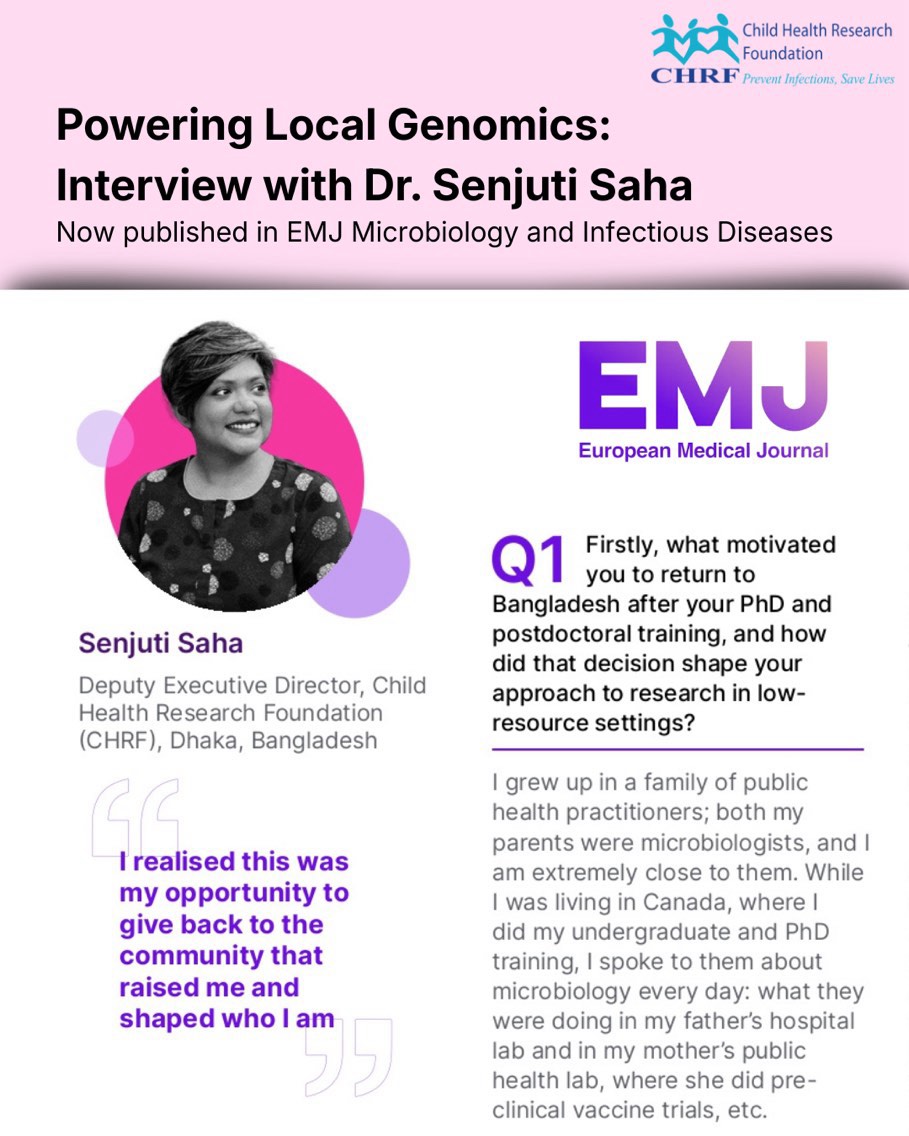
Dr. Senjuti Saha's interview on “Powering local genomics” is now published in the latest issue of European Medical Journal (EMJ) Microbiology & Infectious Diseases! She talks about the importance of building local genomic capacity and investing in mentorship, because as she puts it, "the future of global health depends not only on where data is generated, but on where discovery is led." Read the full interview : emjreviews.com/microbiology-i…
Child Health Research Foundation (CHRF) tweet media
English
0
0
1
17
Child Health Research Foundation (CHRF)
Our latest publication is now out in Open Forum Infectious Diseases! The study aims to understand the burden of enteric fever across diverse regions of Bangladesh using serosurveillance. By analyzing blood samples collected from communities, researchers detected antibodies produced by the body after exposure to typhoid-causing bacteria to better understand how widely the infection is spreading, including infections that may go undetected through routine hospital testing alone. The findings suggest that typhoid infections in Bangladesh are far more common than previously detected, particularly in densely populated areas, among young children, and in regions with limited testing facilities. These insights provide important evidence to help inform public health policies and support the strategic post-introduction monitoring of the typhoid conjugate vaccine in Bangladesh. Read the full publication here: academic.oup.com/ofid/article/1…
Child Health Research Foundation (CHRF) tweet media
English
0
0
0
33
Child Health Research Foundation (CHRF)
Neonatal sepsis claims the lives of thousands of newborns every year. Yet, in low- and middle-income countries like Bangladesh, where most of these deaths occur, effective treatment options remain limited. Last week, CHRF members attended the NeoSep1 Clinical Trial Investigators' Meeting, in Kuala Lumpur, Malaysia. At the meeting, researchers and clinicians from across the globe, came together with a shared goal of improving treatment options for neonatal sepsis. NeoSep1 is an international effort to identify more effective antibiotic combinations to treat neonatal sepsis. By conducting the trials in the high-burden countries, the study aims to develop treatments around the real-world challenges of the communities most affected. For a country that carries a disproportionate share of burden, having local researchers engaged in shaping global treatment evidence is not just meaningful, it's essential. Every newborn deserves a fighting chance, and we are proud to be part of the effort to improve the lives of newborns worldwide.
Child Health Research Foundation (CHRF) tweet media
English
0
0
0
15
Child Health Research Foundation (CHRF)
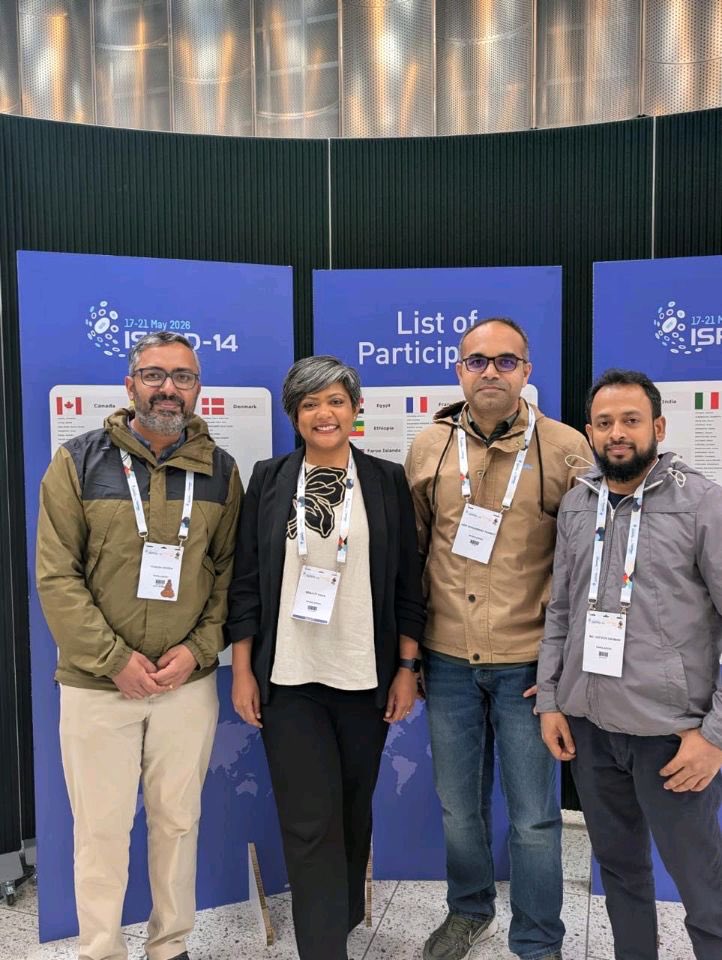
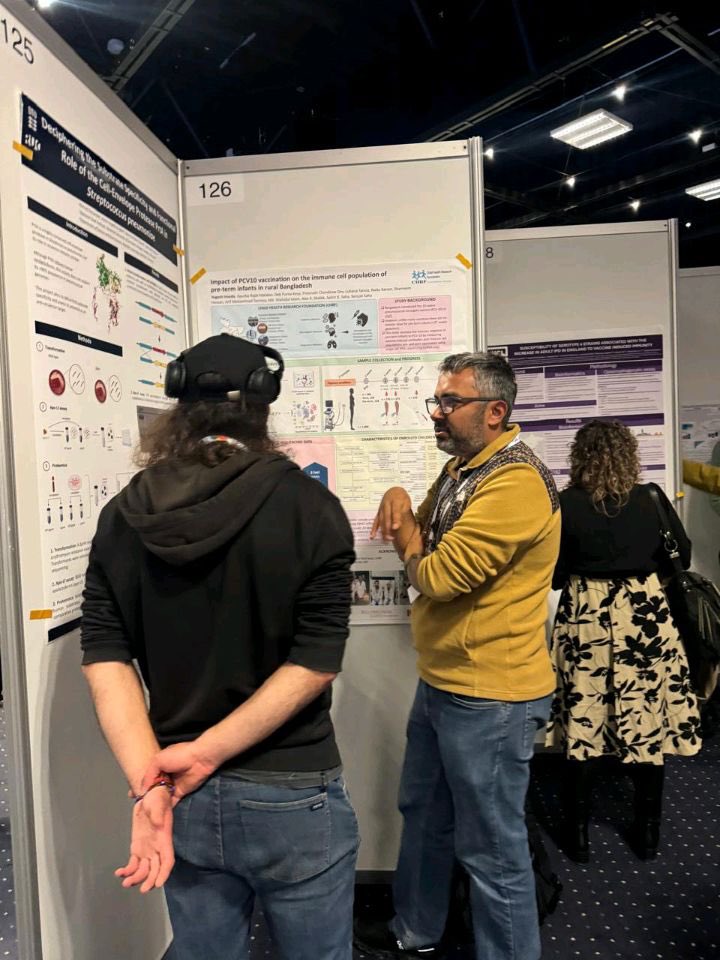
Researchers, clinicians, and public health experts from around the world came together at ISPPD-14 2026 to advance the understanding and prevention of pneumococcal disease and pneumonia, and CHRF was proud to contribute research from Bangladesh. Our team shared findings on changes in pneumococcal serotype distribution and antimicrobial resistance (AMR) trends over the past 20 years, characteristics of pneumococcus in patients with pleural effusion, and immunological responses to PCV10 in term and preterm infants explored through single-cell genomics. We are happy to be part of a global community working together to strengthen evidence and advance solutions against pneumococcal disease.
Child Health Research Foundation (CHRF) tweet mediaChild Health Research Foundation (CHRF) tweet mediaChild Health Research Foundation (CHRF) tweet mediaChild Health Research Foundation (CHRF) tweet media
English
0
0
1
38
Child Health Research Foundation (CHRF)
For over two decades, CHRF has been conducting pneumococcal surveillance in Bangladesh, contributing critical evidence on disease trends and vaccine impact. On 21 May at ISPPD-14, Dr. Senjuti Saha presented findings from this long-term surveillance work, highlighting how large-scale rural and urban surveillance, combined with genomics and antimicrobial resistance (AMR) data, is helping track the impact of pneumococcal vaccine (PCV) since its introduction in Bangladesh in 2015. Dr. Saha also moderated an engaging and interactive Meet-the-Expert session on pneumococcal vaccine coverage and equity in a changing world. At CHRF, we are proud to be part of a global effort that brings together scientists and public health experts to exchange knowledge, advance research, and support evidence-based public health decisions worldwide.
Child Health Research Foundation (CHRF) tweet mediaChild Health Research Foundation (CHRF) tweet media
English
0
0
0
39
Child Health Research Foundation (CHRF)
Wanna know what a day in the life of our BSB Fellows looks like? Here is Prokrity going through her everyday tasks as a BSB fellow at CHRF! From creating content and telling impactful stories to contributing behind the scenes of the Building Scientists for Bangladesh (BSB) initiative, our fellows work closely with the BSB Team to bring science communication to life. Applications are now open for CHRF’s Fellowship Program for students who have completed their A-Levels/HSC and are passionate about science, creativity, and communication. Fellows are expected to be available on-site at CHRF Headquarters at least three days a week. Preference will be given to BSB Alumni. Apply by 15th June 2026 to be part of this exciting opportunity! Learn more and apply here: chrfbd.org/pages/job/982e…
English
0
0
0
39