

Dr. Carissa Romero
1.6K posts
Dr. Carissa Romero
@clrom
Co-founder and Managing Director @prdgm; co-founder and board chair @pertslab; growth mindset expert; PhD in child development
San Francisco, CA Katılım Temmuz 2012
549 Takip Edilen1.6K Takipçiler

Dr. Carissa Romero retweetledi
What Elon and others are taking issue with is Kamala saying “everyone should end up in the same place.” I want to share what I think she’s saying here vs. what they think she's saying. This distinction gets to the core of the anti-DEI sentiment I’ve seen over the last year. And it's important because when we define this clearly, I think most people are actually aligned that equity is a good thing.
First, her wording is inartful, and if she were saying this today, understanding the backlash we’re seeing to this concept, I think it would be inexcusable. But as far as I can tell, she made these comments at a time when people and companies around the world were talking about equity, and we all kinda just assumed everyone knew what we were all talking about. (A bad assumption, in hindsight.)
She doesn’t mean that every *individual* should end up in the same place as every other individual. Why don’t I think that’s what she means? Because it would be inconsistent with literally any other perspective she has on any other topic, including the work she did as a prosecutor and AG. It would also be an extreme perspective that not even ultra-left DEI advocates I’ve met would agree with.
Instead, what she’s talking about is what should happen in aggregate - at a *societal* level. If we built a truly fair + meritocratic society, we would expect to see similar outcomes, in aggregate, across demographic groups.
In such a world, your gender, race, nationality, sexual orientation, etc. wouldn’t predict things like whether you’d be hired into a given role, how much money you’d make, how likely you’d be to die in childbirth, how likely you’d be to get pulled over by police, and on and on.
Unfortunately, identity *does* predict outcomes in our society. Significantly. Believing in equity means believing in everyone having a fair opportunity to do their best. A fair shot to get hired, get promoted, get funded, get a mortgage, get ahead.
In my view, equity is a prerequisite to meritocracy. How can we possibly hope to have a meritocratic society if we’re not judging people by the same standards? If some people are running uphill while others are on a racetrack?
If we want outcomes to be based on merit, we need to ensure people can actually show us what they’ve got. I work with organizations, so I think a lot about what role companies can and should play in expanding equity.
Take one example (a real one). Imagine a tech company that’s growing quickly. They’re hiring a lot, and they find that candidates who are referred to roles in that company make it through their hiring processes at far higher rates than candidates who come in any other way.
There are lots of reasons that might be true. But one hypothesis could be that referral candidates just have a lot more knowledge than non-referrals about what to expect in a hiring process and how to perform well. That knowledge might create an uneven playing field that allows candidates who *aren’t actually better* to perform better. Not equitable. Not meritocratic. An equity-minded approach would be to acknowledge this uneven playing field, and ideally try to do something about it.
In this real case, the company created an overview of their hiring process and what candidates could expect in interviews. They shared it with all candidates, with the goal of democratizing access to information. Guess what happened?
The gap between referred and non-referred candidates shrunk. Is that Communism? Obviously not. It’s a decision the company made to give itself the best shot at hiring the best people, by acknowledging that people had different starting points, and proactively solving for that.
While extremists are trying to paint equity as some new leftist fad, there are many areas of society where we already take an equity minded approach - we acknowledge that people experience the world differently, and we do something to try to make things a bit more fair.
We give paid parental leave to people who have kids. We give parking spaces closer to a building for disabled people. We allow military servicemembers to board airplanes early in gratitude for their service. (Thanks to Robert Livingston for these examples hbr.org/2020/09/how-to……)
We can disagree about what it looks like to create that fair opportunity, and how best to go about it. But whether this is a reasonable goal shouldn’t be all that controversial.
What I think(?) most people would agree on is that seeing comparable outcomes across demographic groups in aggregate would suggest we’ve created a more fair society where the best people actually can rise to the top.
Ability, effort, resilience, luck, etc. would then be the biggest predictors of success, instead of identity. Why wouldn't we want that?
Elon Musk@elonmusk
Kamala is quite literally a communist. She wants not merely equal opportunity, but equal outcomes.
English
Dr. Carissa Romero retweetledi
Every year, we aggregate and analyze the data from our Blueprint strategy & analytics platform to quantify the state of DEI. How did companies fare in 2023, and what does that mean for 2024? Some insights...🧵 paradigmiq.com/blog/new-data-…
English
@GundersonLab @sarah_grip More of my thoughts on applying growth mindset to parenting here: open.substack.com/pub/youcandoha…
English
Praise good strategies instead of traits. In a study I co-authored with @GundersonLab and @sarah_grip, we found that parents who praised actions had children with more of a growth mindset than parents who praised traits. 4/
English
I’m on sabbatical from work spending time with my two young kids and thinking a lot about how I currently apply - and want to apply - my own research on growth mindset as a parent. Here are three things I’m trying with my own children. 1/
English
Dr. Carissa Romero retweetledi

In 2022, we partnered with hundreds of orgs committed to driving DEI impact. Read more below about the highlights, including improvements in employee representation and feelings of inclusion, as well as data that shows DEI training does, in fact, work paradigmiq.com/blog/the-case-…
English
Dr. Carissa Romero retweetledi
Building an anti-harassment workplace requires giving everyone strategies for taking action when they witness unwanted behavior. Today, we’re releasing an online bystander intervention course that does just that bit.ly/3eMrda0
English
Dr. Carissa Romero retweetledi
Hispanic or Latino? Latinx or Latine? For #HispanicHeritageMonth, our expert senior consultant @diegodlr82 explores some of the terms used to describe a diverse, complex group bit.ly/3S1Yjkp
English
Dr. Carissa Romero retweetledi

Paradigm shifts your DEI efforts from aspirational to data-driven techcrunch.com/2022/09/06/par… by
@ron_miller
English
I am proud of our latest Paradigm offering — harassment prevention trainings. One of the things I appreciate most is the modern, trauma-informed content. No more triggering trainings!
Paradigm@prdgm
We’re thrilled to announce harassment prevention trainings with inclusion at their core! Our newest offering: ☑️Fosters cultures where harassment isn’t tolerated ☑️Empowers bystanders & victims to take action ☑️Meets compliance requirements in 50 states bit.ly/3cQT33K
English
Dr. Carissa Romero retweetledi
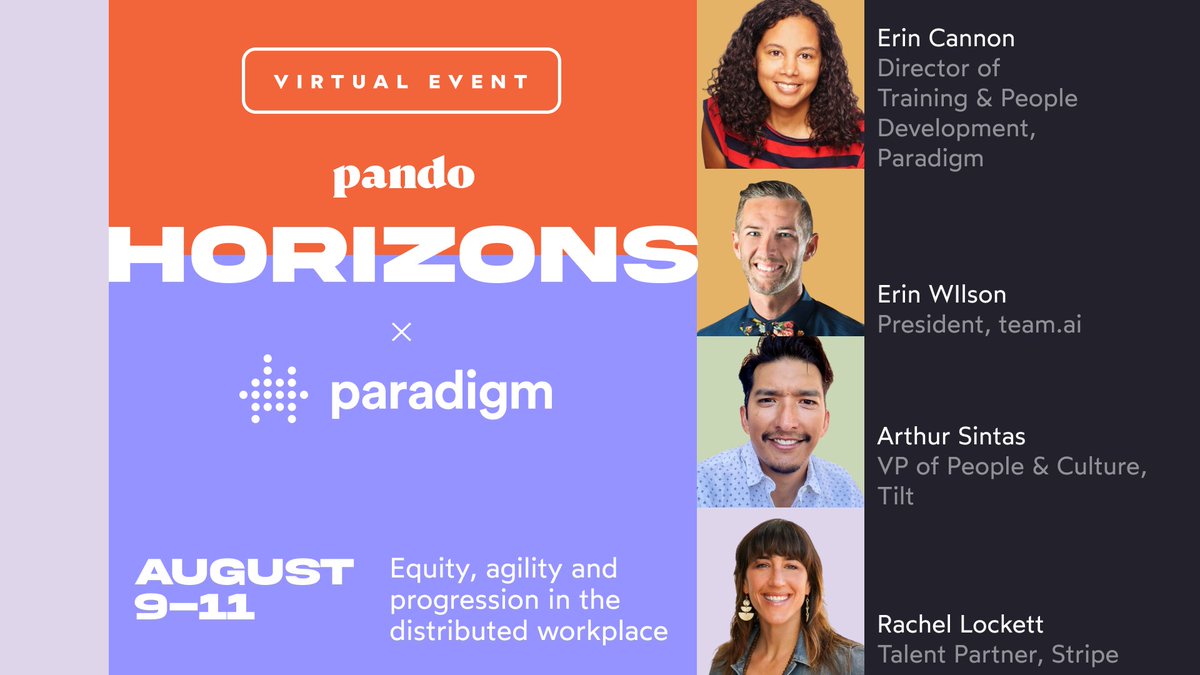
We are excited to partner with Pando on #pandohorizons 2022! Don’t miss our Director Erin Mindell Cannon on the “Breaking Down Barriers: Hiring Folks from Non-traditional Backgrounds” panel. Register here to attend (it’s free!) bit.ly/3PTDK8P
English
Dr. Carissa Romero retweetledi
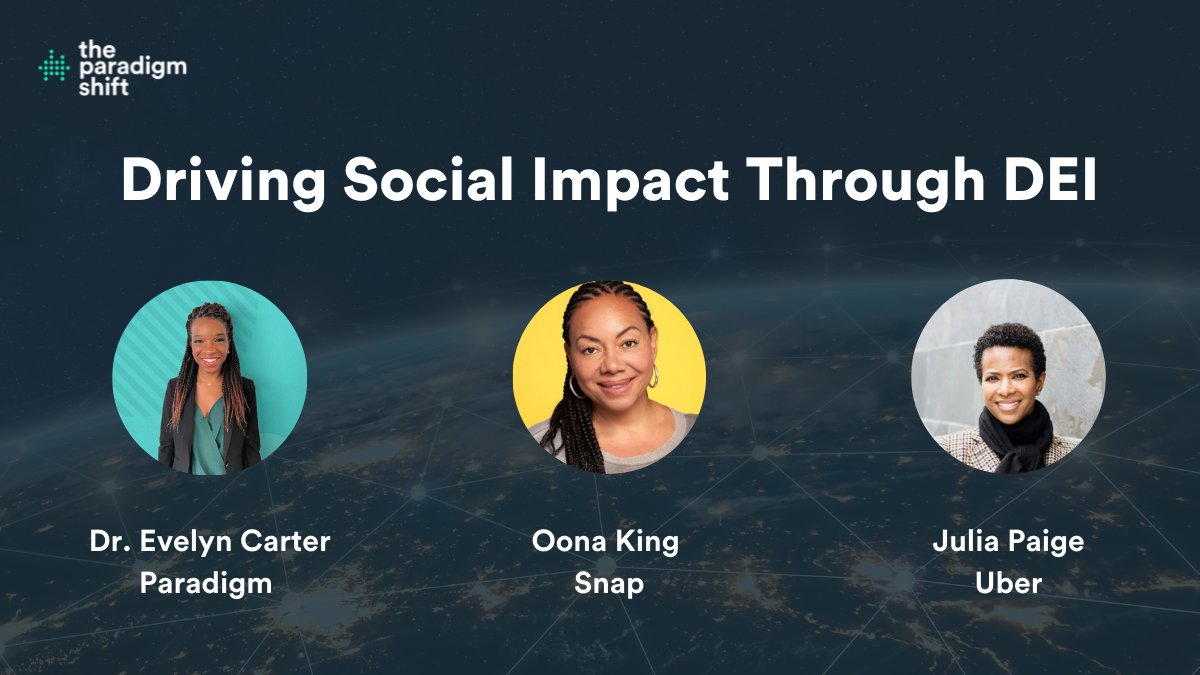
What role should organizations play in social change? Next month, join our President @drevvycarter, Snap’s @Oona_King, and Uber’s Julia Paige for a webinar exploring how DEI leaders can continue driving change in their companies AND the world around them bit.ly/3PuabKY
English
Employees are critical to bringing DEI to life in organizations, and they need education to be successful. But, not all training is effective. How can you ensure your training efforts are driving an impact? Download our latest whitepaper to find out bit.ly/3OMVv9x
English
Dr. Carissa Romero retweetledi
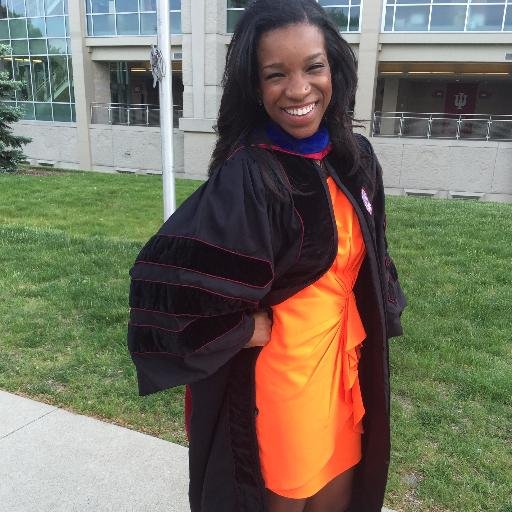
today's the day! i'm excited to share that i’m taking on a new role at @prdgm — President! in this new position, i’ll be focusing on how we can advance and evolve the practice of DEI, with an emphasis on driving positive impact for marginalized groups. 1/
Paradigm@prdgm
Hey President Carter! Today, we’re thrilled to share @drevvycarter is the new President of Paradigm! In this position, she’ll use her academic expertise & data/insights from our work with 1,000+ orgs to help evolve the practice of DEI. Learn more 🔽 bit.ly/32hgwpC
English
Dr. Carissa Romero retweetledi
I'm SO excited to announce the launch of Paradigm Blueprint, our DEI analytics and strategy platform. We’re excited to put everything we’ve learned over the past 7 years into a product that makes data-driven DEI accessible and affordable for all companies paradigmiq.com/blueprint/
English
Dr. Carissa Romero retweetledi

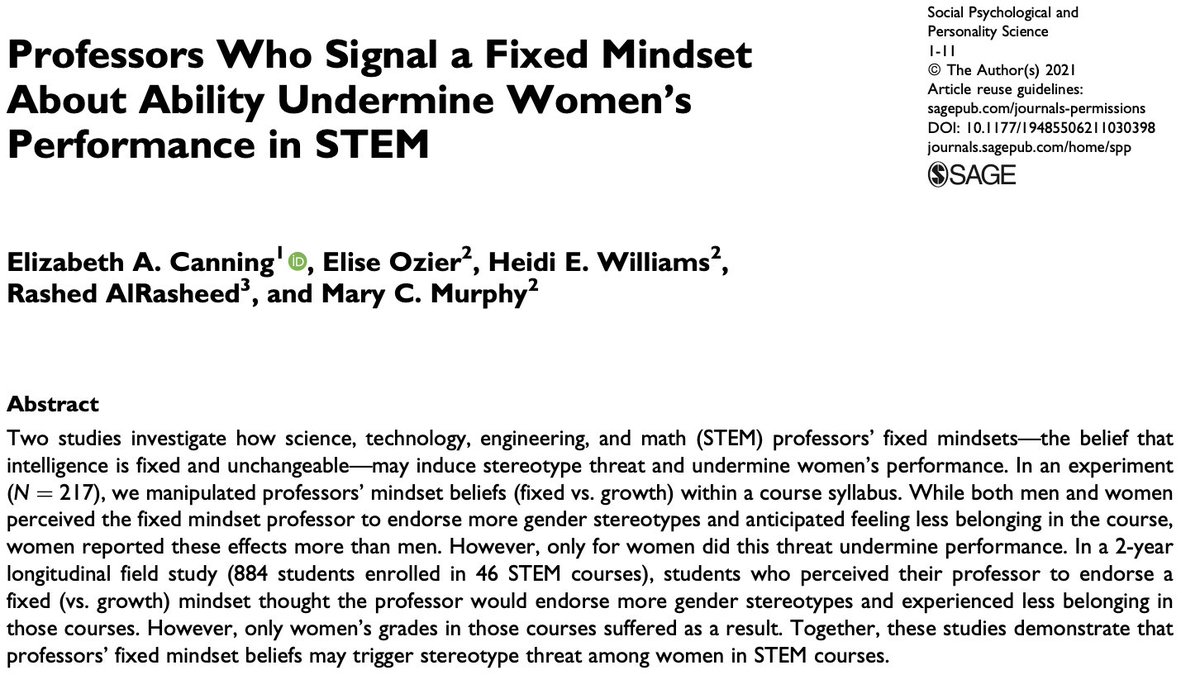
Are you rushing to finish your syllabus? Consider adding some growth mindset language!
Our new paper out this week in SPPS shows that faculty who signal a growth mindset about ability narrow gender gaps in STEM. Here's what we found: 1/
tinyurl.com/6zfyp4s4
English
Dr. Carissa Romero retweetledi
happy #BlackHistoryMonth! how are you going to advance equity for the Black folks *currently* in your midst? --> paradigmiq.com/2021/01/29/how…
English