Musk-Zuckerberg ‘cage match’ PPV would cost $100, bring in over $1 billion: ‘This would be the biggest fight ever in the history of the world,’ per CNBC.
When one of the richest people in the world asks for money on his own social platform to read his hot takes...
What in the world goes through your head these days @elonmusk?
You can answer your emails much faster using AI.
Just write a few words and it'll take care of writing everything.
Here's how to use a free tool to save your time:
JUST OUT: Tucker Responds to Trump Arrest – Reveals the Precise Moment the Government Decided to Send Trump to Prison (VIDEO) thegatewaypundit.com/2023/06/just-t…
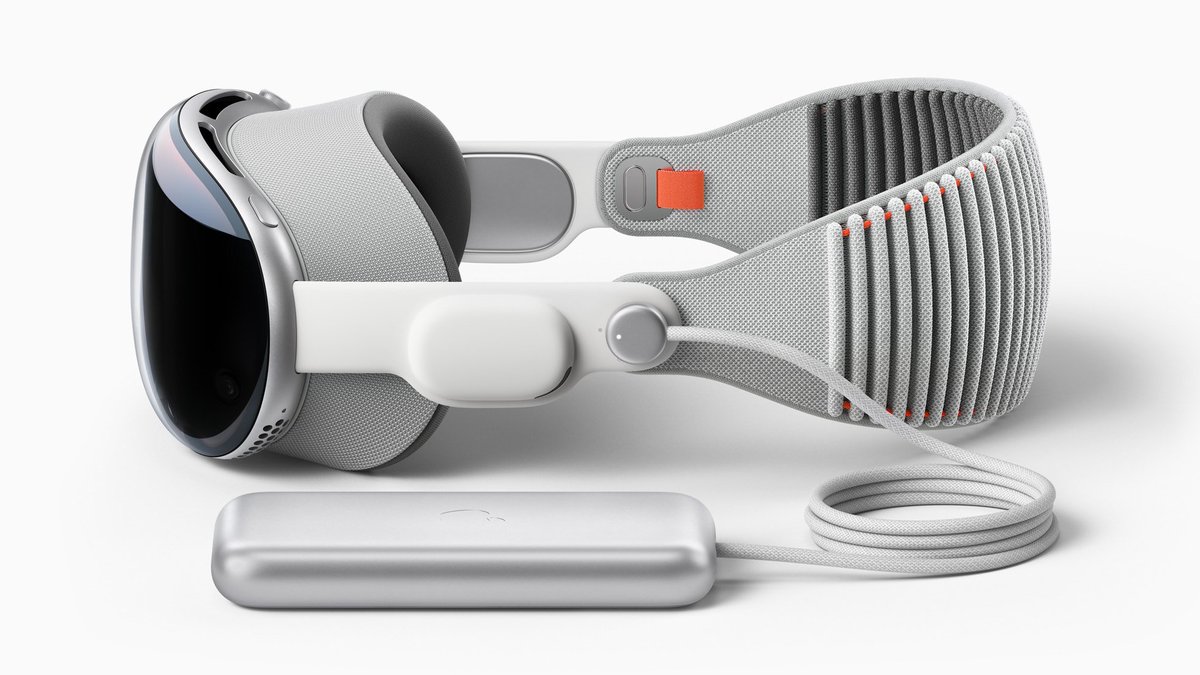
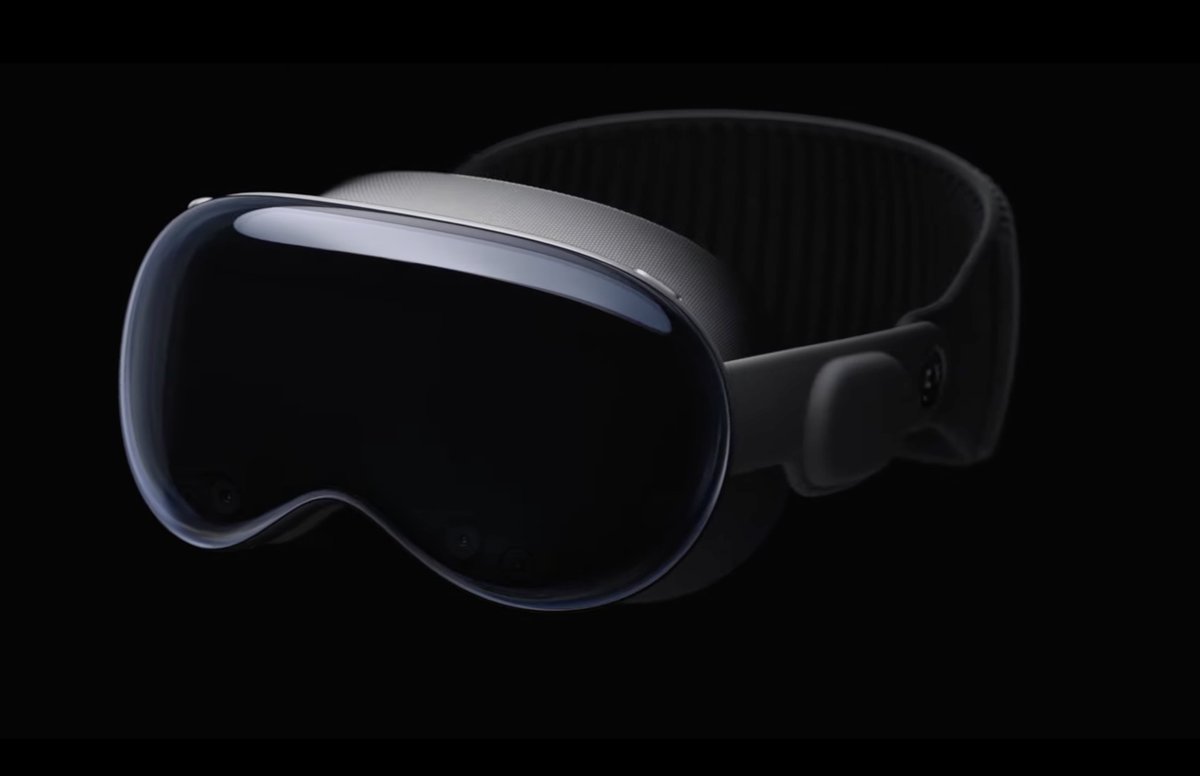
One aspect of #VisionPro that I think people haven't fully been able to appreciate is the advanced Spatial Audio system. It's insane, and the whole device is really the most advanced consumer electronics device ever created.
The audio system creates the feeling that sounds are coming from the environment around you. The system measures the geometry of your ears and head with an iPhone depth camera to create a personal profile. It also analyzes your room's acoustic properties, including the physical materials. And when a sound is played it uses audio raytracing.
What's all that mean? Imagine you're in nature and you hear a bird chirp to the left of you. The sound waves the bird makes travel in all directions, bouncing off of trees, the grass, your body, and finally into your ears. Some of those objects dampen the sound, some reflect the sound, others bend the sound. And the sound takes a slightly different amount of time to reach each of your ears. Then the sound echos off of the unique shape of your ears, which changes its pitch, and all of this lets your brain know what direction the bird chirp came from, and also what else is in your environment.
So again, the advanced spatial audio system of Vision Pro knows the geometry of your ears if you've calibrated that with an iPhone, it analyzes the acoustic properties of your room including the physical materials, and simulates the propagation of sound using audio ray tracing. I don't think theres any other system on earth capable of this. When you're in a face time call, it sounds as if people are speaking right from where they are. That sounds obvious and like a simple feature, but this is impossible to fully appreciate without experiencing it.
George Lucas is famous for saying sound is more than half the experience when watching a movie. And there's really no way of fully communicating the spatial audio system without hearing it for yourself. Imagine putting on a high end pair of headphones to Vision Pro and watching a 3D movie with a screen that feels 100 feet wide.
I spent 10% of my life contributing to the development of the #VisionPro while I worked at Apple as a Neurotechnology Prototyping Researcher in the Technology Development Group. It’s the longest I’ve ever worked on a single effort. I’m proud and relieved that it’s finally announced. I’ve been working on AR and VR for ten years, and in many ways, this is a culmination of the whole industry into a single product. I’m thankful I helped make it real, and I’m open to consulting and taking calls if you’re looking to enter the space or refine your strategy.
The work I did supported the foundational development of Vision Pro, the mindfulness experiences, ▇▇▇▇▇▇ products, and also more ambitious moonshot research with neurotechnology. Like, predicting you’ll click on something before you do, basically mind reading. I was there for 3.5 years and left at the end of 2021, so I’m excited to experience how the last two years brought everything together. I’m really curious what made the cut and what will be released later on.
Specifically, I’m proud of contributing to the initial vision, strategy and direction of the ▇▇▇▇▇▇ program for Vision Pro. The work I did on a small team helped green light that product category, and I think it could have significant global impact one day.
The large majority of work I did at Apple is under NDA, and was spread across a wide range of topics and approaches. But a few things have become public through patents which I can cite and paraphrase below.
Generally as a whole, a lot of the work I did involved detecting the mental state of users based on data from their body and brain when they were in immersive experiences.
So, a user is in a mixed reality or virtual reality experience, and AI models are trying to predict if you are feeling curious, mind wandering, scared, paying attention, remembering a past experience, or some other cognitive state. And these may be inferred through measurements like eye tracking, electrical activity in the brain, heart beats and rhythms, muscle activity, blood density in the brain, blood pressure, skin conductance etc.
There were a lot of tricks involved to make specific predictions possible, which the handful of patents I’m named on go into detail about. One of the coolest results involved predicting a user was going to click on something before they actually did. That was a ton of work and something I’m proud of. Your pupil reacts before you click in part because you expect something will happen after you click. So you can create biofeedback with a user's brain by monitoring their eye behavior, and redesigning the UI in real time to create more of this anticipatory pupil response. It’s a crude brain computer interface via the eyes, but very cool. And I’d take that over invasive brain surgery any day.
Other tricks to infer cognitive state involved quickly flashing visuals or sounds to a user in ways they may not perceive, and then measuring their reaction to it.
Another patent goes into details about using machine learning and signals from the body and brain to predict how focused, or relaxed you are, or how well you are learning. And then updating virtual environments to enhance those states. So, imagine an adaptive immersive environment that helps you learn, or work, or relax by changing what you’re seeing and hearing in the background.
All of these details are publicly available in patents, and were carefully written to not leak anything. There was a ton of other stuff I was involved with, and hopefully more of it will see the light of day eventually.
A lot of people have waited a long time for this product. But it’s still one step forward on the road to VR. And it’s going to take until the end of this decade for the industry to fully catch up to the grand vision for this tech.
Again, I’m open to consulting work and taking calls if your business is looking to enter the space or refine your strategy. Mostly, I’m proud and relieved this has finally been announced. It’s been over five years since I started working on this, and I spent a significant portion of my life on it, as did an army of other designers and engineers. I hope the whole is greater than the sum of the parts and Vision Pro blows your mind.
Let's sum up our discussion over the last 24 hours or so.
When you thank a veteran for their service, you're doing it to make yourself feel good, not them.
You're making us feel weird, uncomfortable, and awkward.
If that is your intention, then by all means, keep annoying us.