The Cobra Effect Podcast

229 posts

The Cobra Effect Podcast banner
The Cobra Effect Podcast

The Cobra Effect Podcast

@cobraeffectpod

From ancient Mesopotamia to current world events, The Cobra Effect Podcast covers the unintended consequences of government policies throughout history.

Katılım Ağustos 2023
18 Takip Edilen70 Takipçiler
The Cobra Effect Podcast retweetledi
Visuals of the Ancients
Visuals of the Ancients@visualsancients·
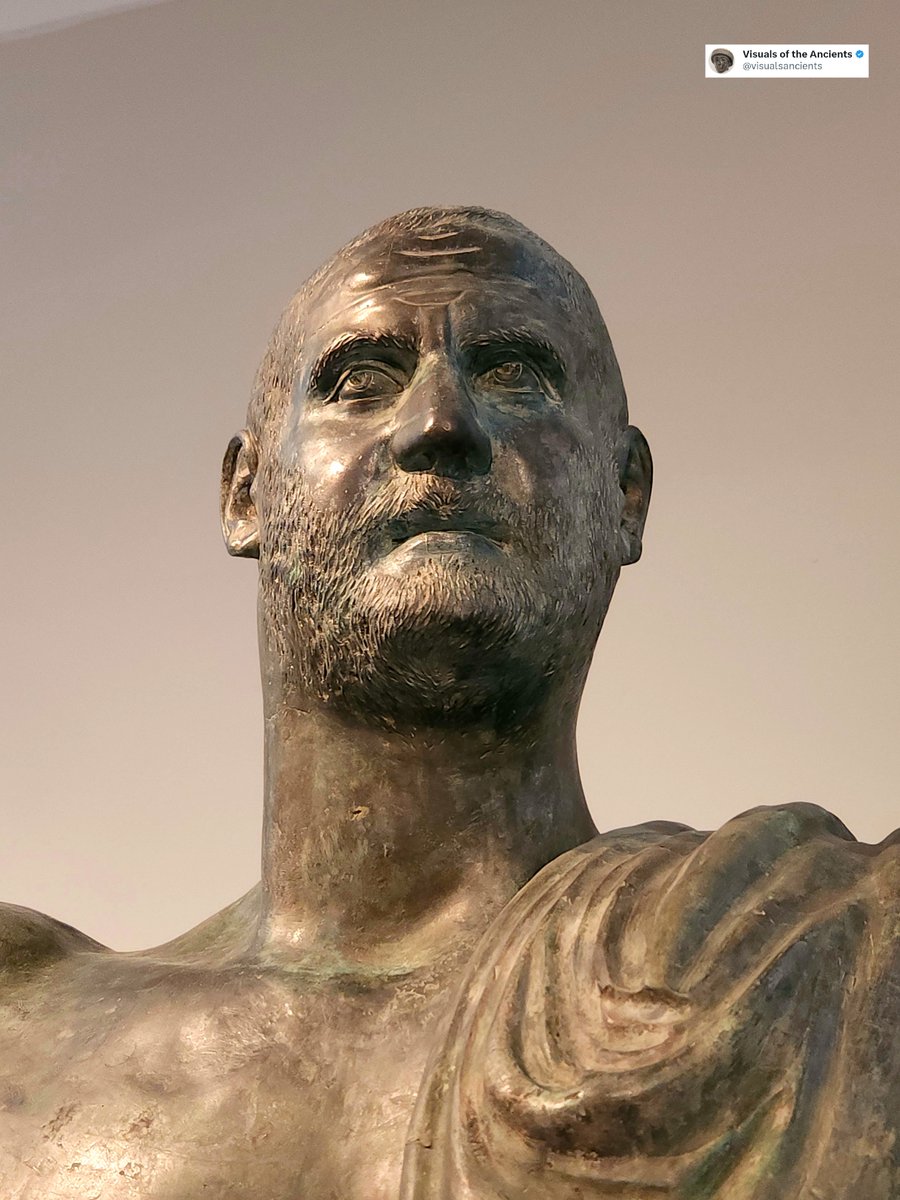
Trebonianus Gallus was but one of the around 50 emperors and usurpers of the 50 years of the Crisis of the Third Century. However, his statue personifies this period of chaos and turmoil. The crude, brutish facial traits are far from the realistic, delicate details of previous emperors.
Visuals of the Ancients tweet media
English
1
1
28
643
The Cobra Effect Podcast retweetledi
Visuals of the Ancients
Visuals of the Ancients@visualsancients·
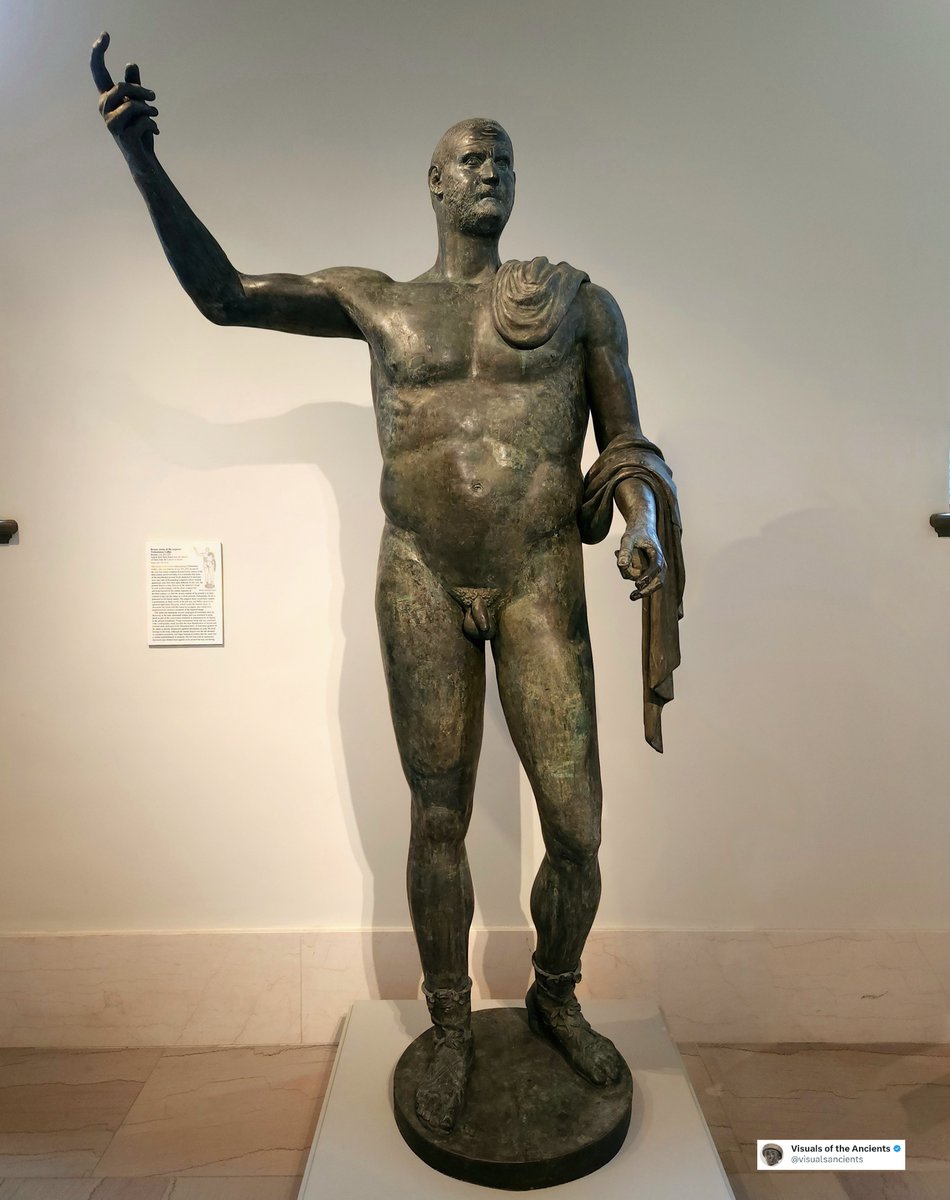
From AD 251 to 253, the destinies of Rome fell into the hands of this man, Trebonianus Gallus. If you ask for an image of the Crisis of the Third Century, it's this one, his bronze statue at the MET. Let's talk about him and Crisis of the Third Century in this 🧵 of 📸 today!
Visuals of the Ancients tweet media
English
5
21
127
5.1K
The Cobra Effect Podcast retweetledi
Visuals of the Ancients
Visuals of the Ancients@visualsancients·
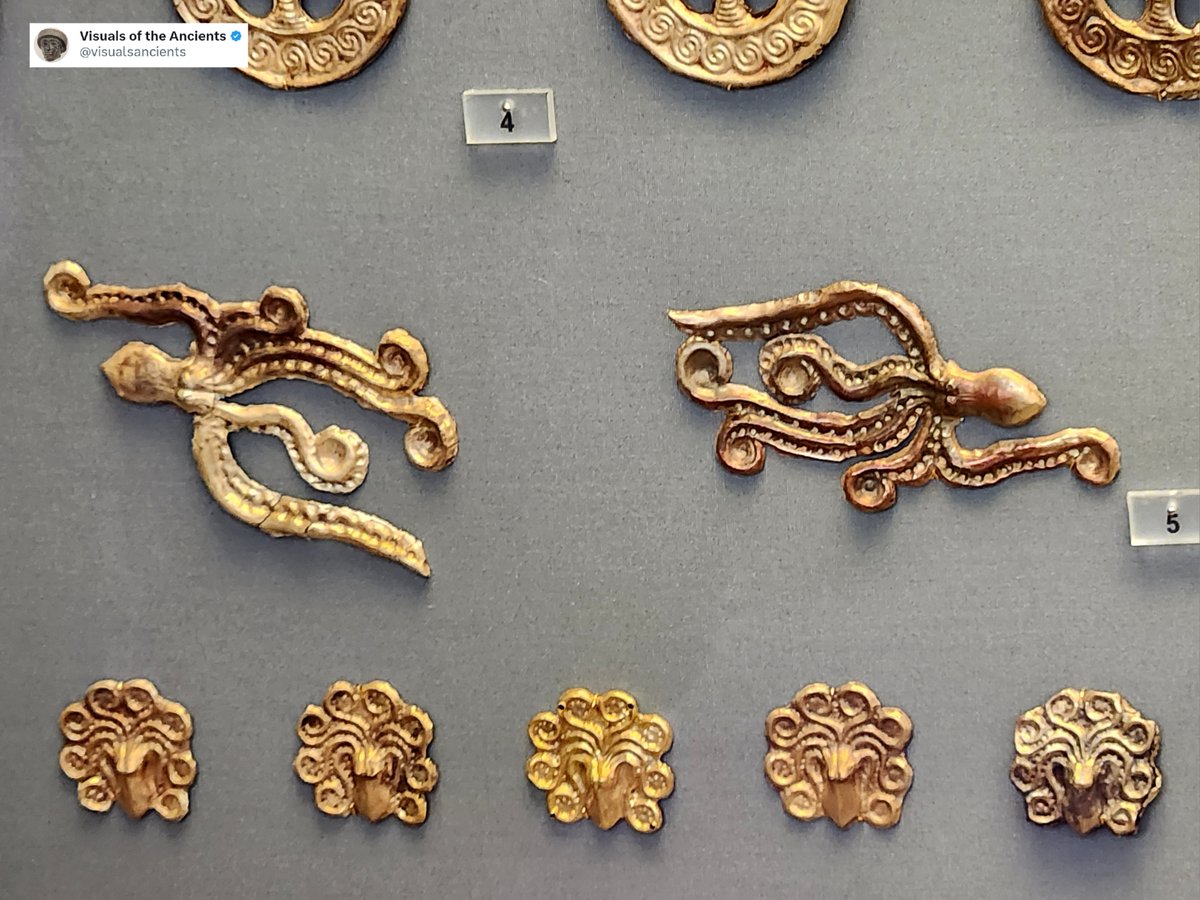
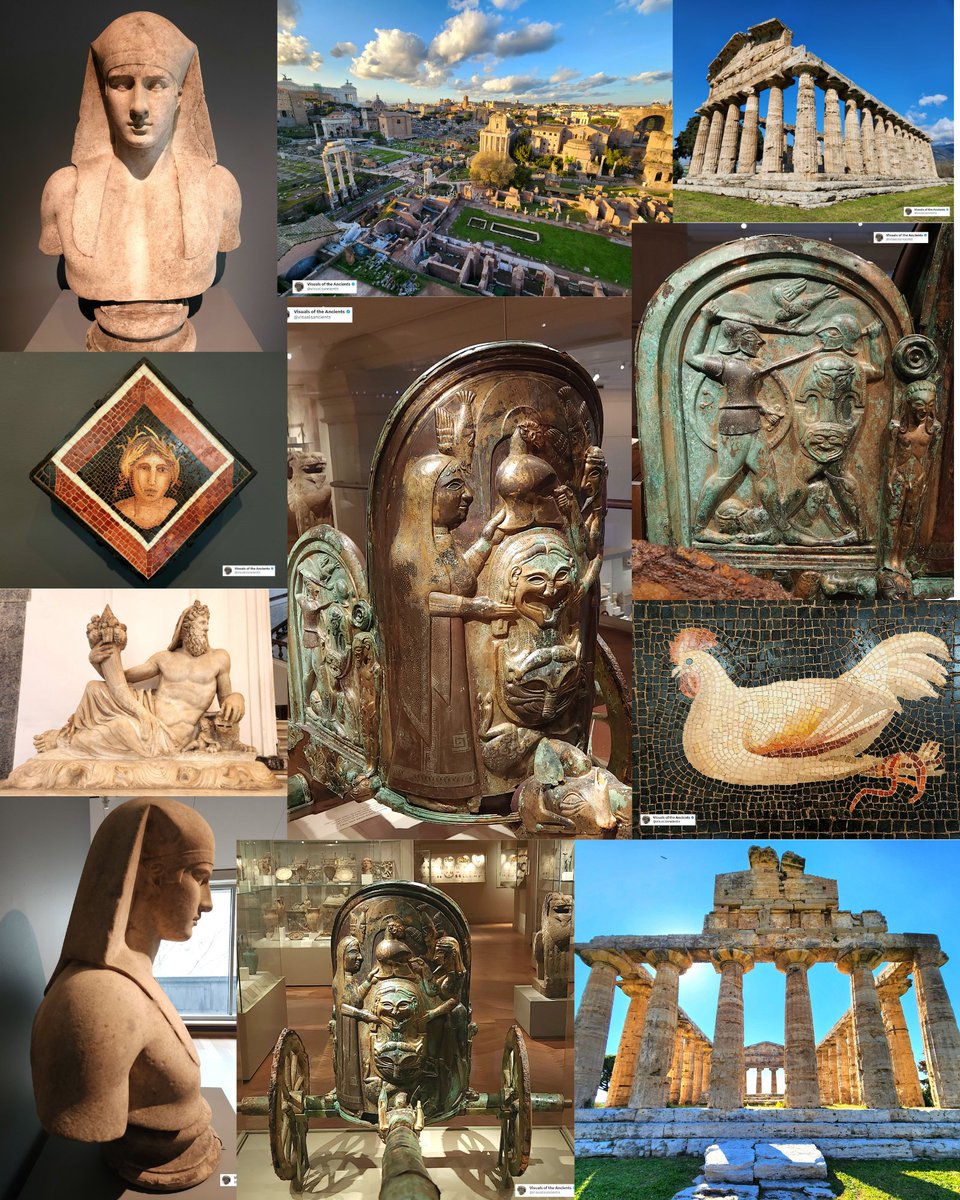
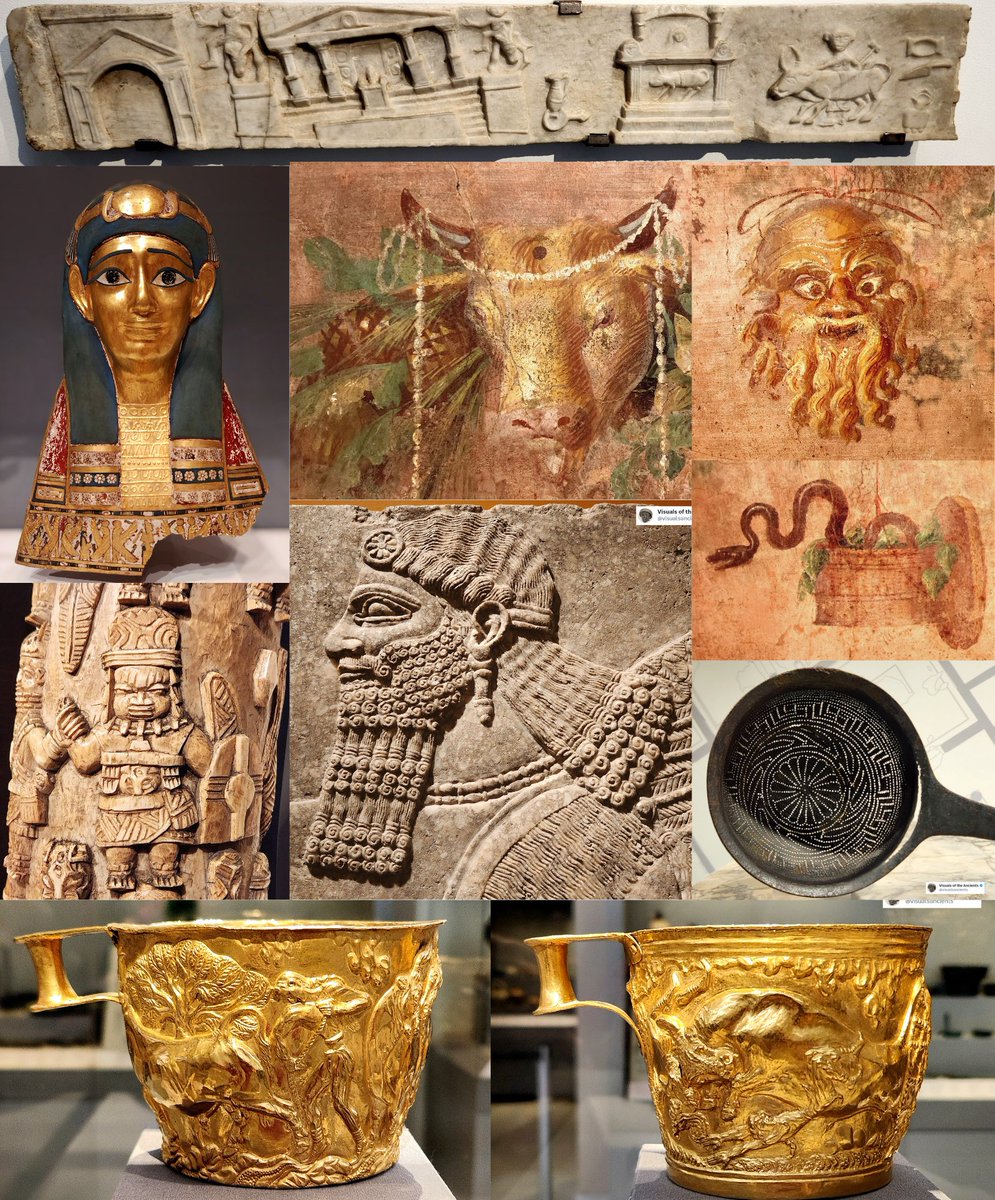
Octopus designs were also popular among the elites. Likely sewn onto clothing, here you have these gold brooches found in the Grave Circle A, right next to the Lion Gate, inside the citadel of Mycenae. 16th century BC. Dimensions of those in the first pic: 2 1/2 x 2 1/8 x 1/16 in. (6.4 x 5.4 x 0.2 cm). 📸 by me at the National Archaeological Museum, Athens.
Visuals of the Ancients tweet mediaVisuals of the Ancients tweet media
Visuals of the Ancients@visualsancients

The Roman poet Horace (65-8 BC) wrote: “Conquered Greece took captive her savage conqueror and brought her arts into rustic Latium.” But this was not the first time the conqueror admired the arts of the conquered. Let's talk about Minoans and Mycenaeans. Thread of 📸 below!

English
4
9
84
2K
The Cobra Effect Podcast retweetledi
Visuals of the Ancients
Visuals of the Ancients@visualsancients·
The Roman poet Horace (65-8 BC) wrote: “Conquered Greece took captive her savage conqueror and brought her arts into rustic Latium.” But this was not the first time the conqueror admired the arts of the conquered. Let's talk about Minoans and Mycenaeans. Thread of 📸 below!
Visuals of the Ancients tweet media
English
3
18
192
5.1K
The Cobra Effect Podcast retweetledi
Visuals of the Ancients
Visuals of the Ancients@visualsancients·
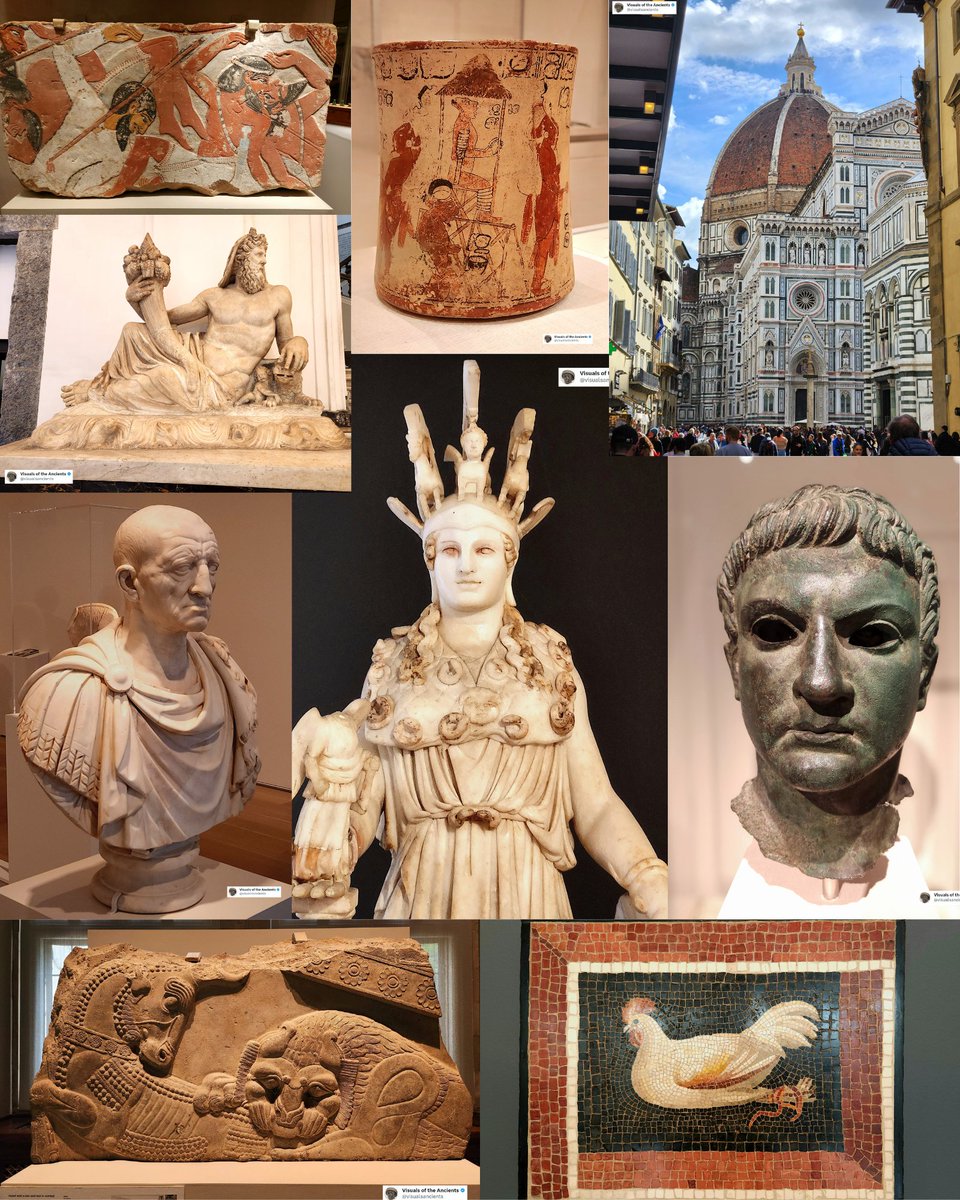
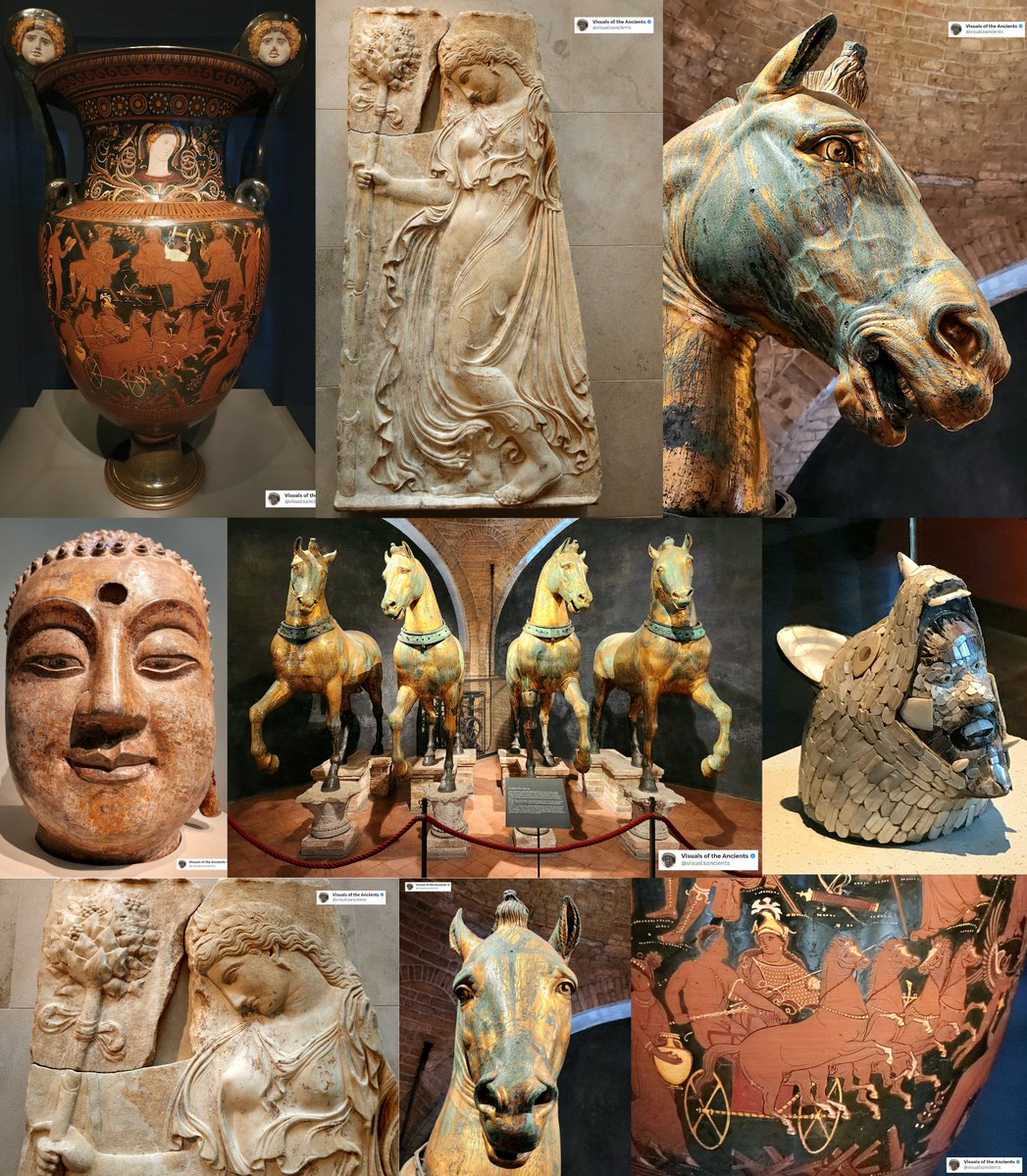
Thanks to the new 1k followers who joined this humble account since Saturday. Here, I post about history and art using my own photos. My guarantee is zero AI slop and opportunistic ragebait. I hope you enjoy this journey as much as I do.
Visuals of the Ancients tweet mediaVisuals of the Ancients tweet mediaVisuals of the Ancients tweet mediaVisuals of the Ancients tweet media
English
42
166
2.8K
63.9K
The Cobra Effect Podcast retweetledi
Visuals of the Ancients
Visuals of the Ancients@visualsancients·
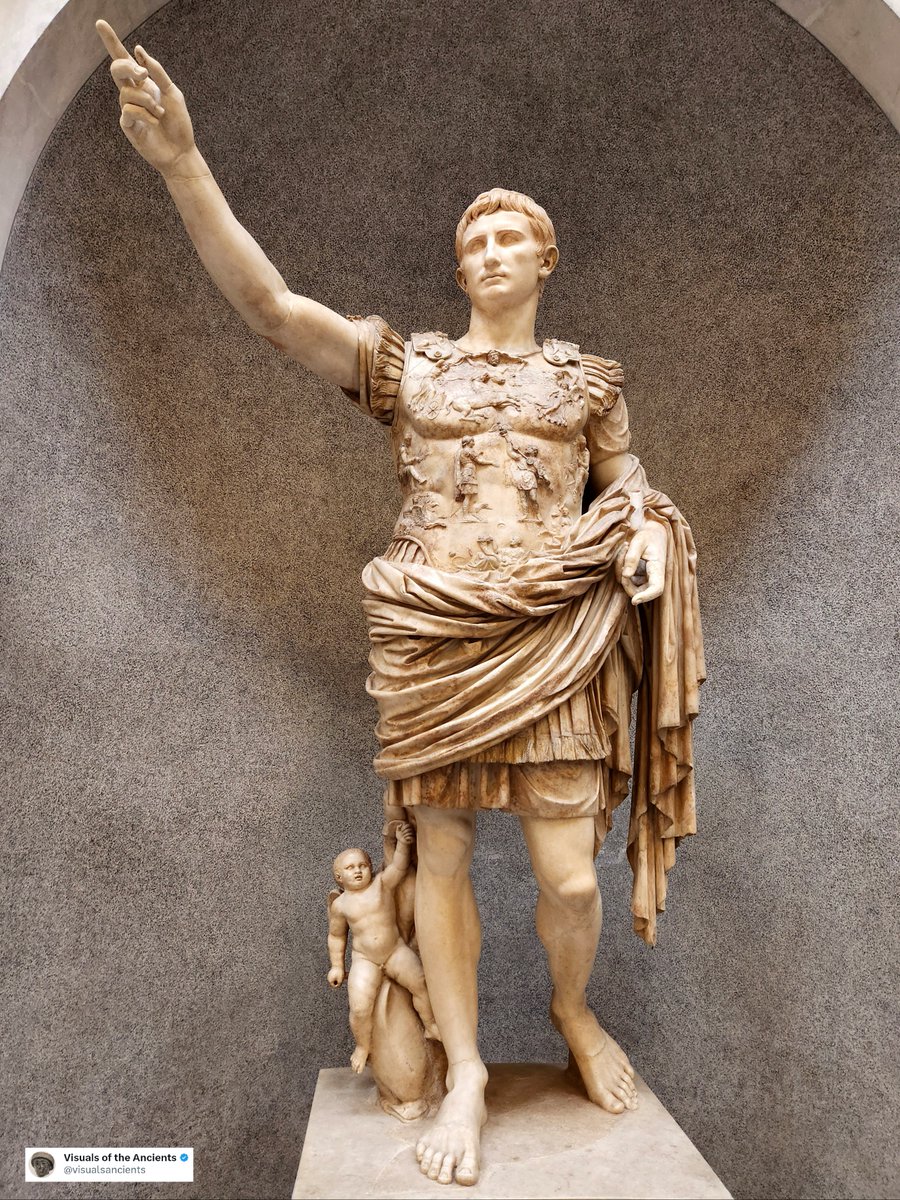
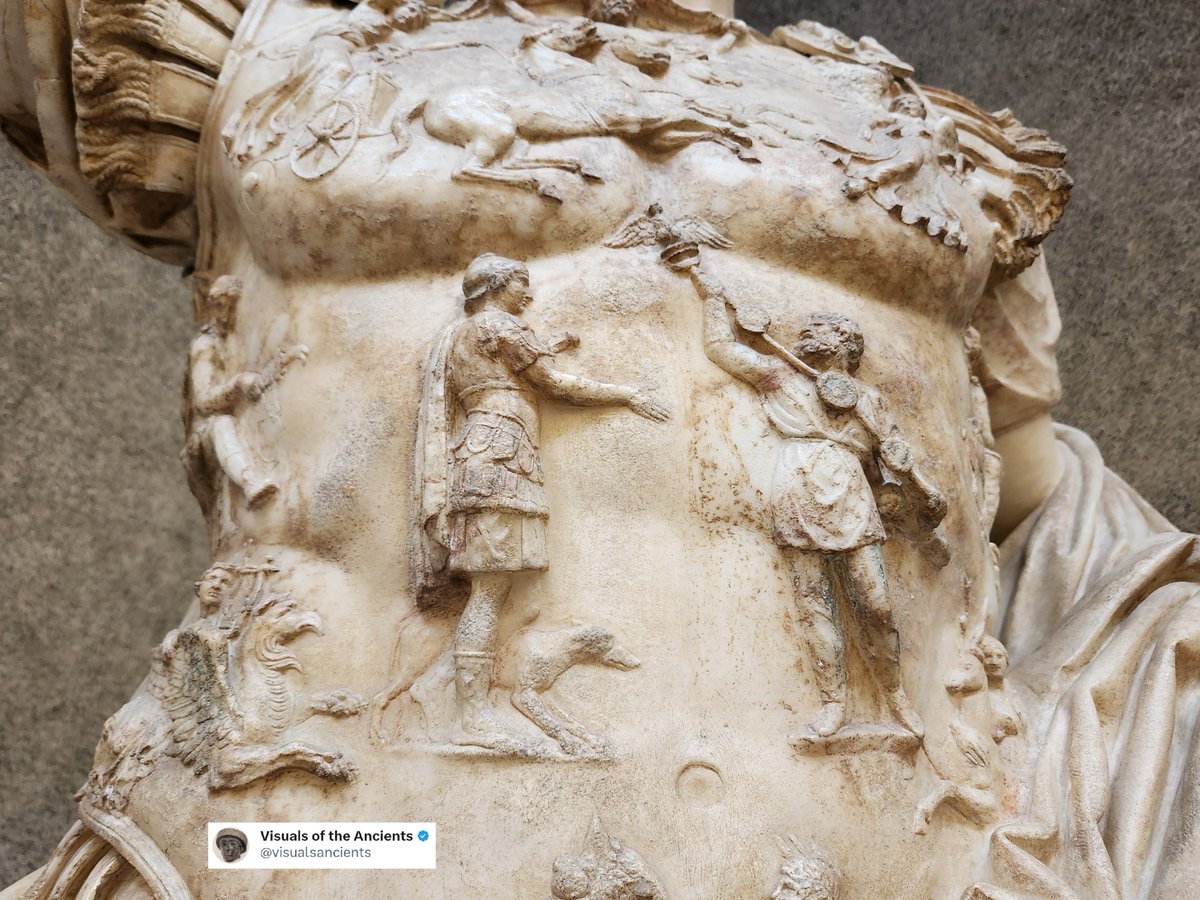
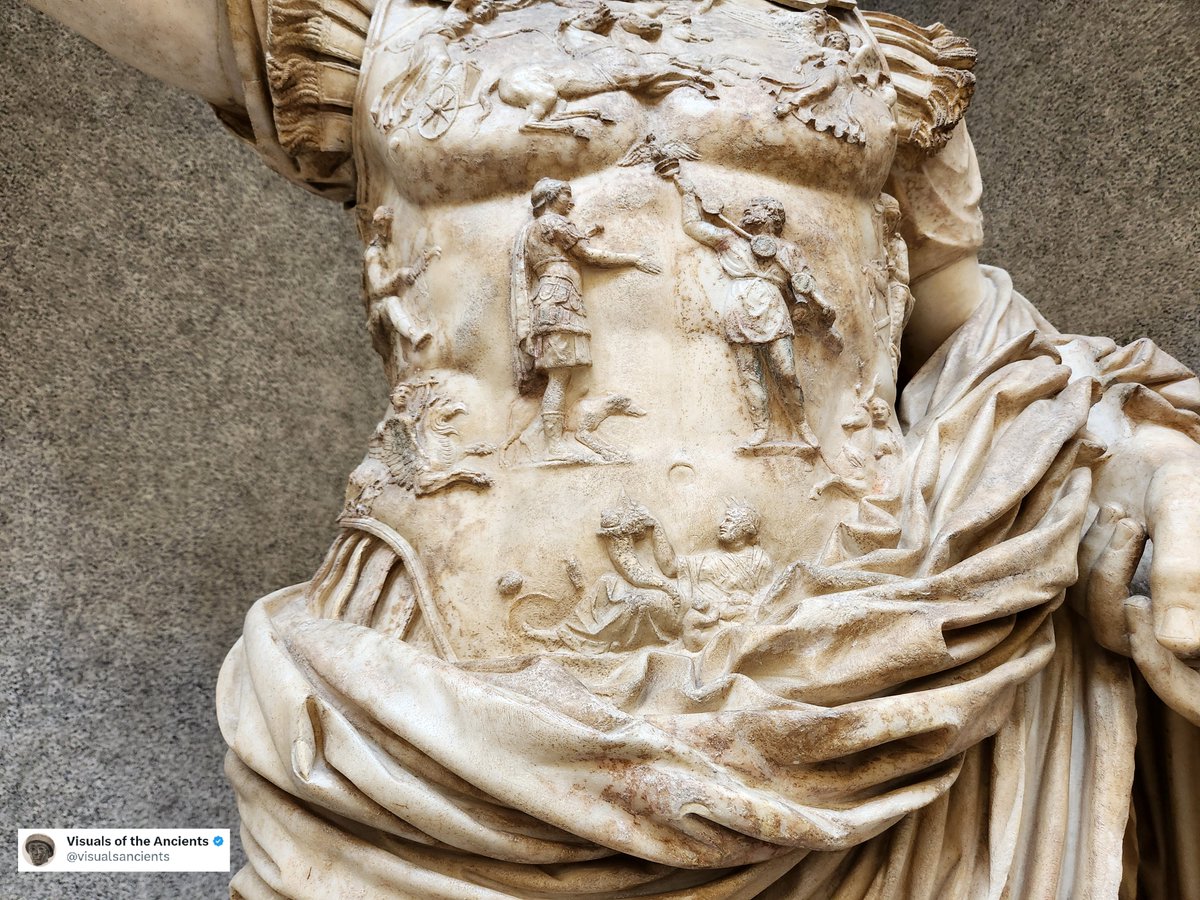
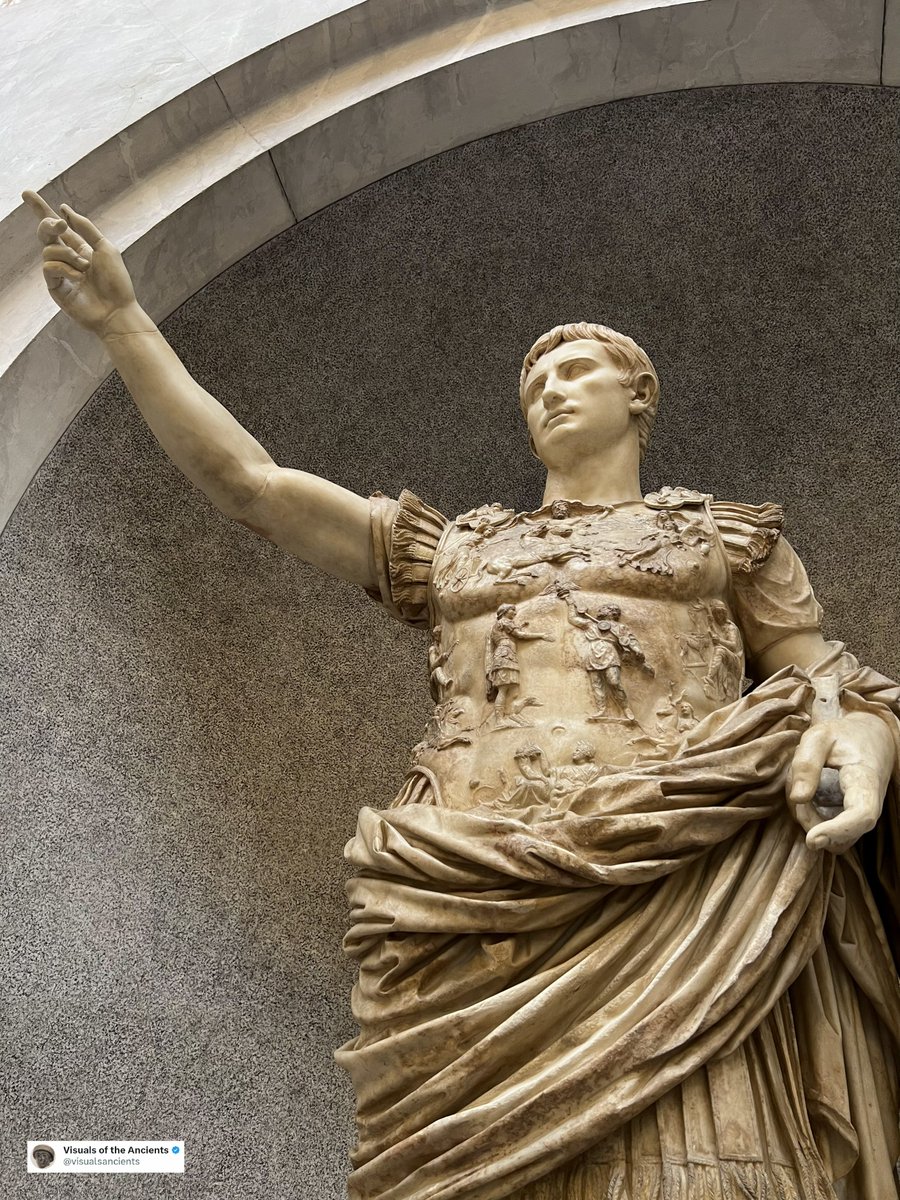
Currently on display at the Vatican Museums, the 7 ft. (2.08 m.) tall statue of Augusto di Prima Porta is perhaps the most representative piece of Imperial Rome. Book covers, documentaries, trinkets… everywhere we look into Roman history, this figure is there, as omnipresent as imperial propaganda was 2,000 years ago. To talk a bit about Roman imperial propaganda, well, let me bring you a close-up of the cuirass of the Augusto di Prima Porta itself. In the center, two figures tell us a story. The man on the right is a Parthian, and we know this because of his tunic and trousers. He may be the Parthian king Phraates IV returning an Aquila standard that the Roman general Crassus lost. The Aquila standard, with an eagle on top, was sacred to the Roman legions. In 53 BC, Crassus lost the battle of Carrhae to the Parthians and, with it, his life. But times were different now; at least, that is what this statue of Augustus tells us. The man on the left is a high-ranking Roman army officer, as indicated by his helmet, cuirass, and military boots. This man may be Tiberius, Augustus’ stepson, sent to negotiate with the Parthians the return of the standards lost by Crassus decades before. Rome was compensated through a show of strength and diplomacy, and its pride was restored. This is Roman imperial propaganda at its finest. 📸 by me. I hope you enjoyed this post. If so, please Share and Follow!
Visuals of the Ancients tweet mediaVisuals of the Ancients tweet mediaVisuals of the Ancients tweet mediaVisuals of the Ancients tweet media
English
4
23
177
3.8K
The Cobra Effect Podcast retweetledi
Visuals of the Ancients
Visuals of the Ancients@visualsancients·
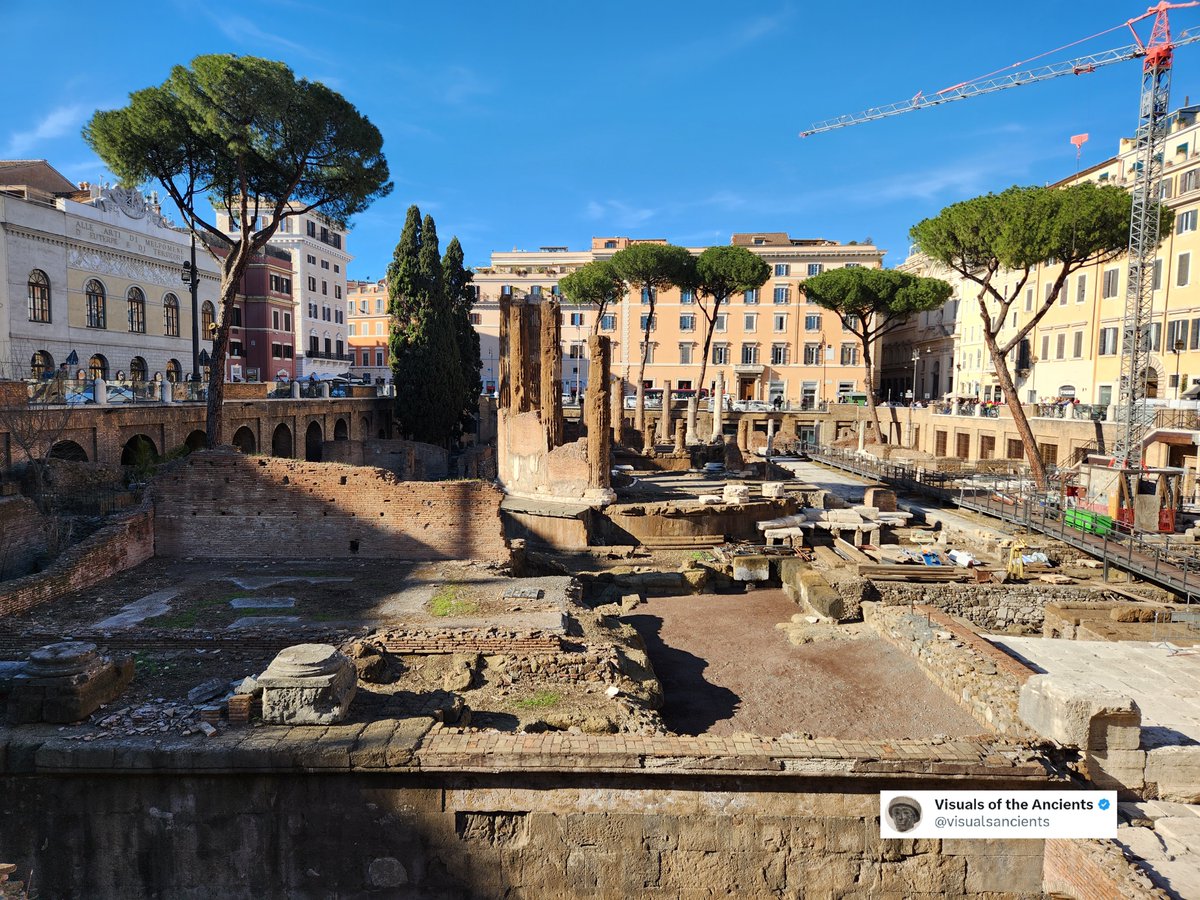
Let me show you the exact spot where Julius Caesar was assassinated on this day, 2,070 years ago. Here’s a 🧵 of 📸 and some history.
Visuals of the Ancients tweet media
English
43
283
2.8K
212.3K
The Cobra Effect Podcast retweetledi
Visuals of the Ancients
Visuals of the Ancients@visualsancients·
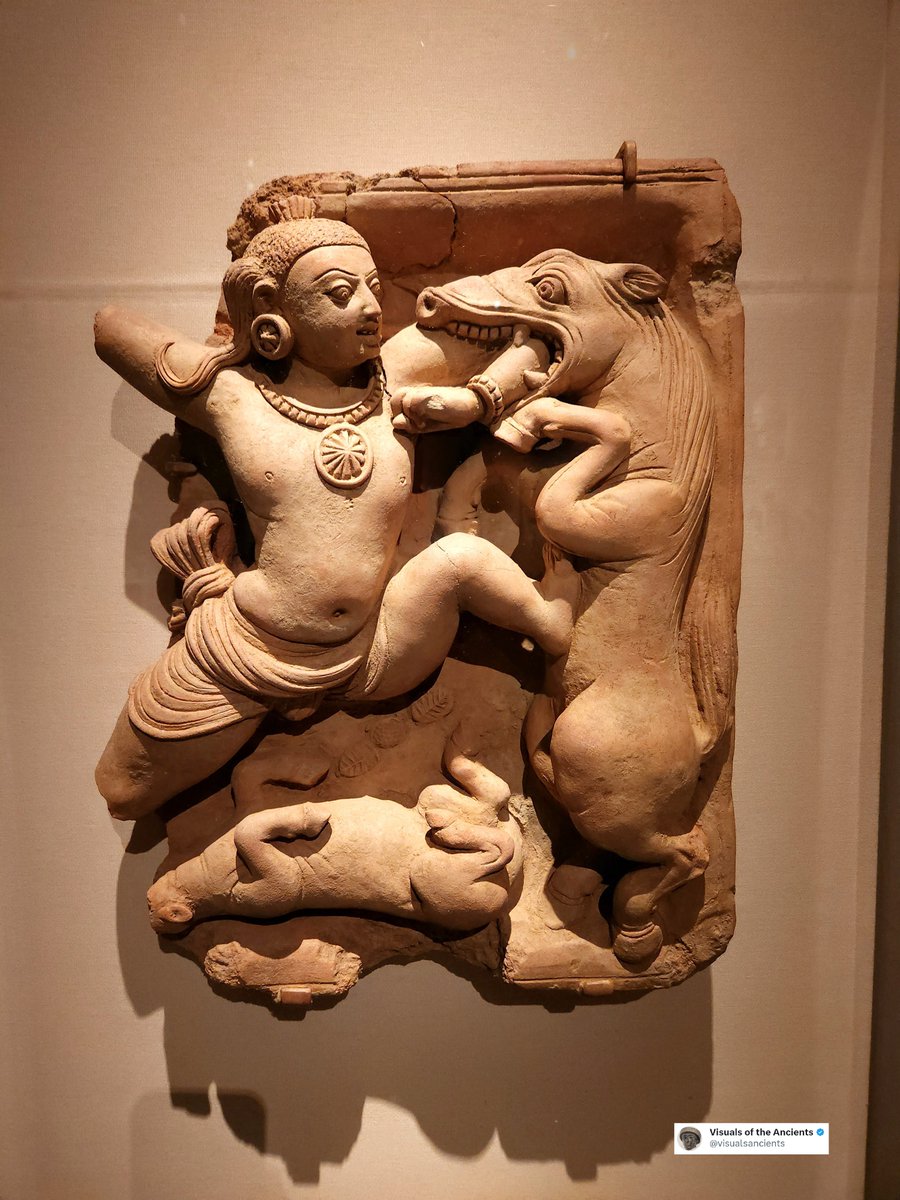
In each of his ten incarnations or avatars known as Dashavatara, Vishnu came to earth to battle evil and restore cosmic order. As one of them, here he is as Krishna thrusting his arm into the mouth of the horse demon Keshi and suffocating it to death. The figure below is Keshi’s dead body. In Hindu tradition, Krishna is praised as Keshava, meaning “the slayer of Keshi.” India (Uttar Pradesh), Gupta Period, 5th century AD, Terracotta. Many temples of this period were decorated with terracotta plaques such as this one. 📸 by me at the MET.
Visuals of the Ancients tweet media
English
4
8
63
2.1K
The Cobra Effect Podcast retweetledi
Visuals of the Ancients
Visuals of the Ancients@visualsancients·
Similar to the torc that Titus Manlius Torquatus took from his Gallic opponent, here the "Dying Gaul" only wears a torc as a distinctive sign of belonging.
Visuals of the Ancients tweet mediaVisuals of the Ancients tweet media
🏛 𝐒𝐭𝐞𝐯𝐞𝐧 🏛@nonregemesse

𝐋𝐞𝐭 𝐭𝐡𝐞 𝐛𝐫𝐚𝐯𝐞𝐬𝐭 𝐦𝐚𝐧 𝐨𝐟 𝐑𝐨𝐦𝐞 𝐜𝐨𝐦𝐞 𝐨𝐮𝐭 𝐚𝐧𝐝 𝐟𝐢𝐠𝐡𝐭 𝐦𝐞! In 361 BC the Gauls invaded and the Romans marched out to meet them, when the battle lines were drawn, a huge Gallic warrior approached the Romans and bellowed a challenge to any Roman willing to fight him in single combat. The Romans were silent until a young officer named Titus Manlius told the commander of the Roman host ‘I want to show that monster as he stalks so proudly in front of their lines that I am a scion of that family which hurled the Gauls from the Tarpeian rock’, referencing his ancestor Manlius Capitolinus. When the battle commenced all around were ‘in suspense between hope and fear’ as the Gaul struck the shield of Titus Manlius with enormously powerful blows. But the Roman slid his shield under that of the Gaul, lifted it up, and ‘gave two rapid thrusts in succession and stabbed the Gaul in the belly and the groin’. That was the end of it. Titus Manlius took only a single item from his fallen foe, the torque from his neck, and was named Titus Manlius Torquatus from that point on. After his victory the Romans charged and defeated the Gauls.

English
1
6
98
4.2K
The Cobra Effect Podcast retweetledi
Visuals of the Ancients
Visuals of the Ancients@visualsancients·
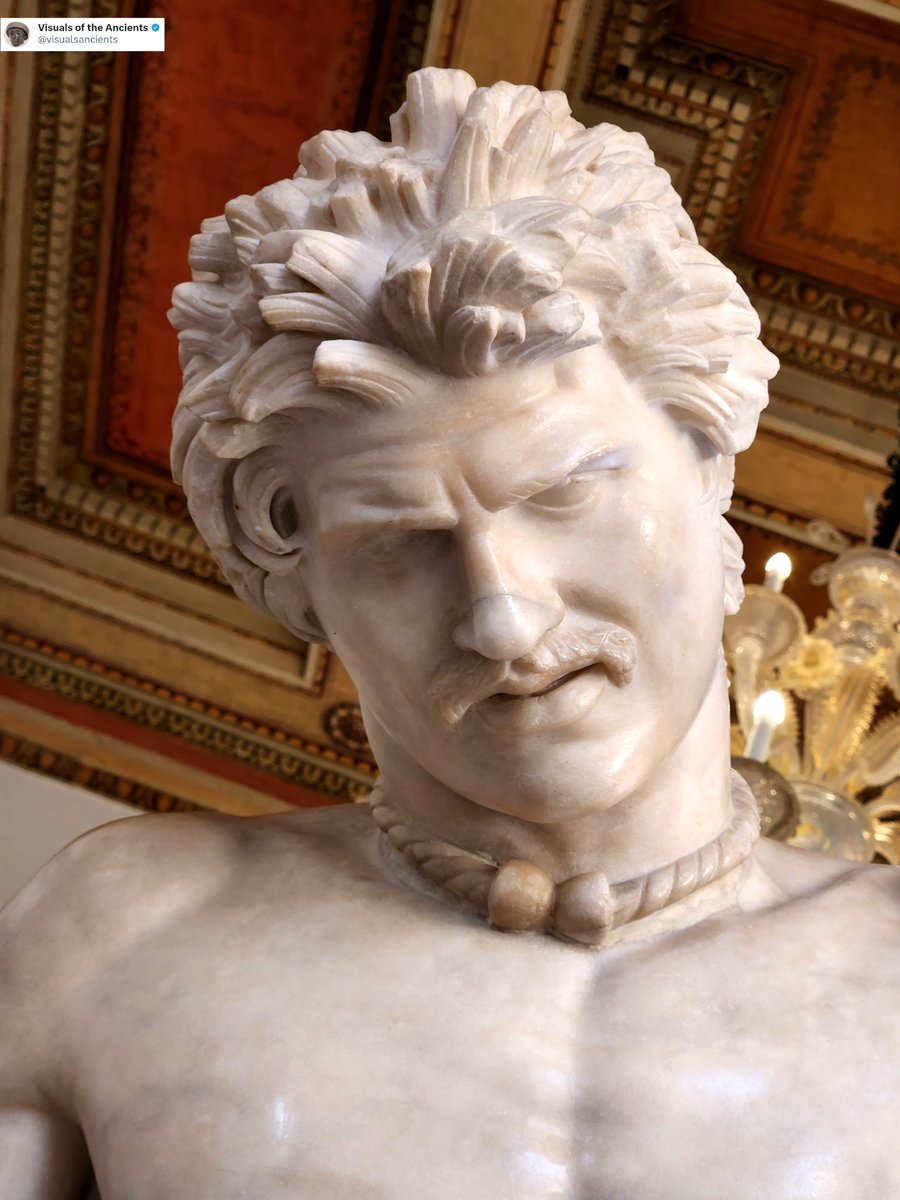
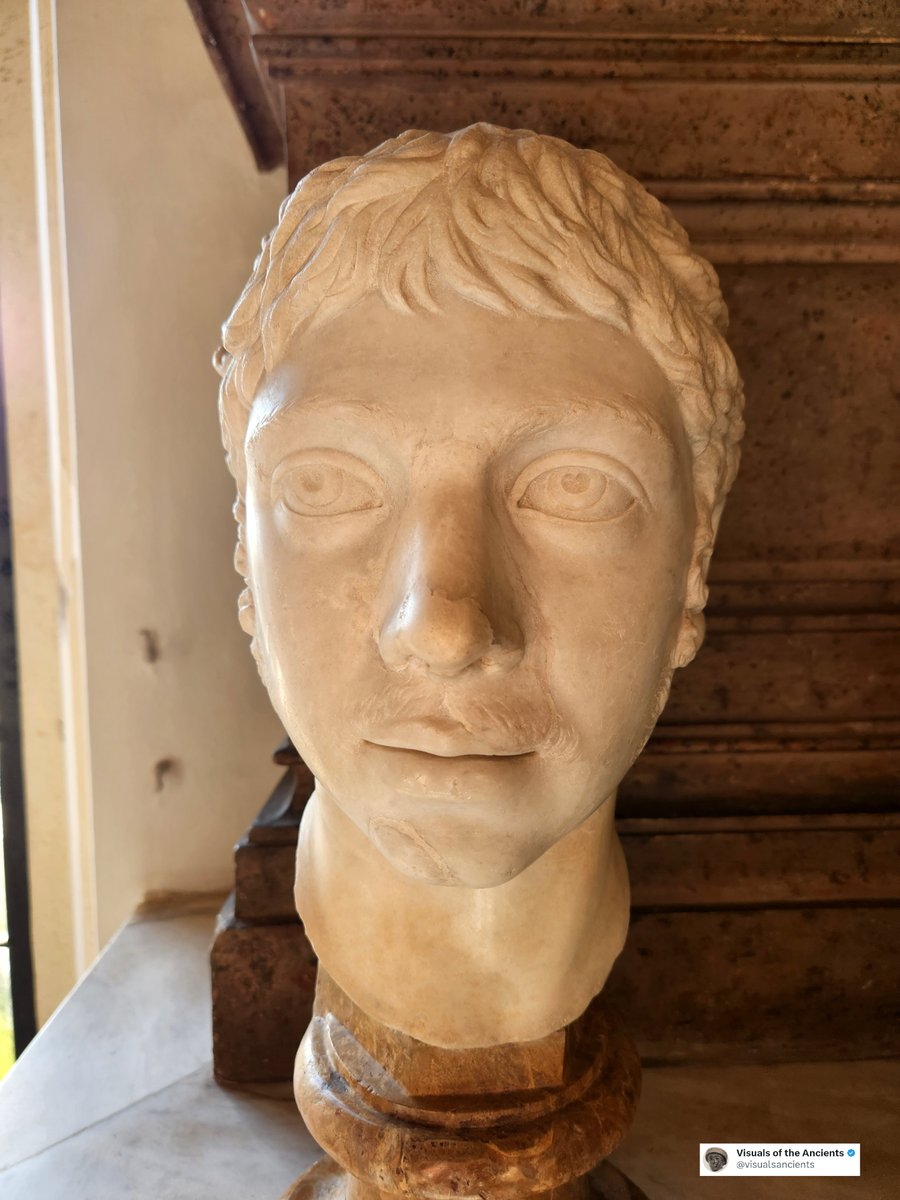
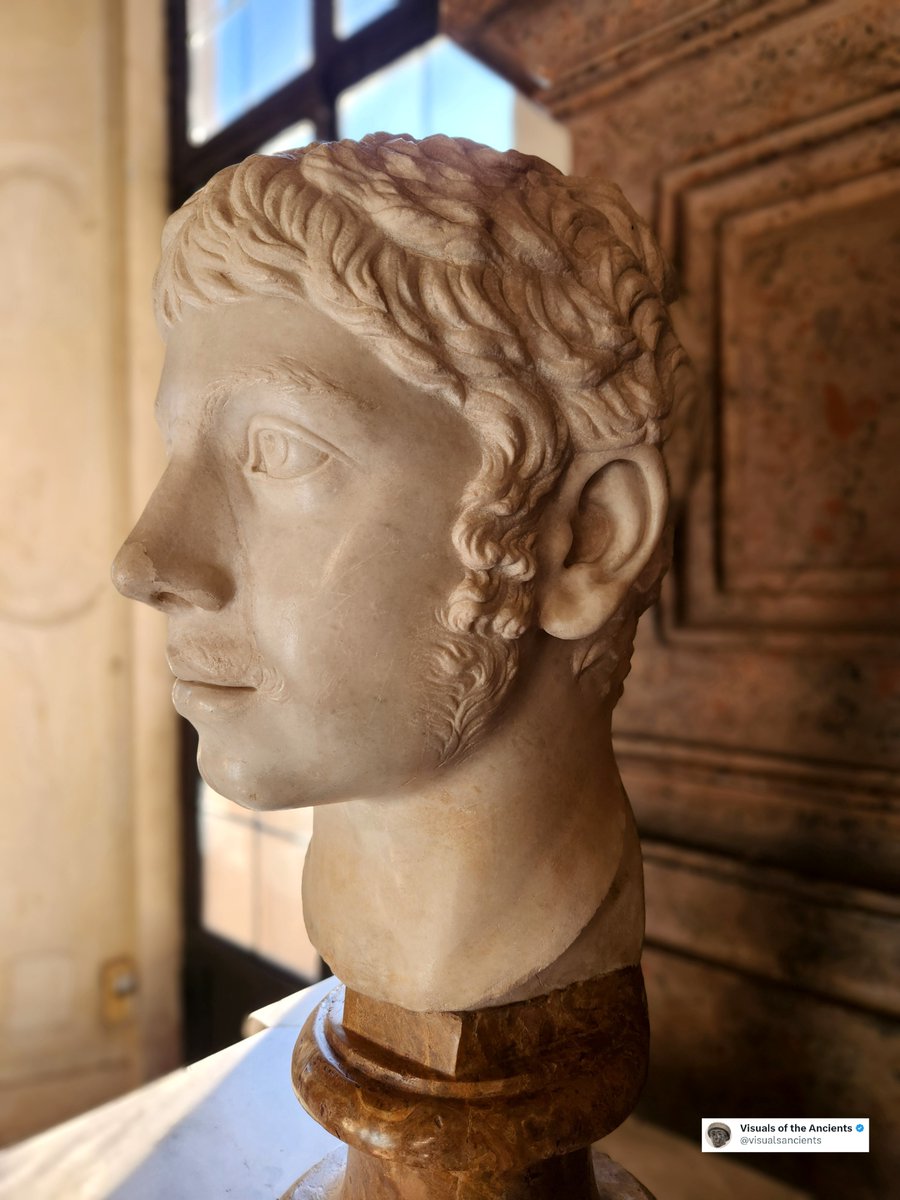
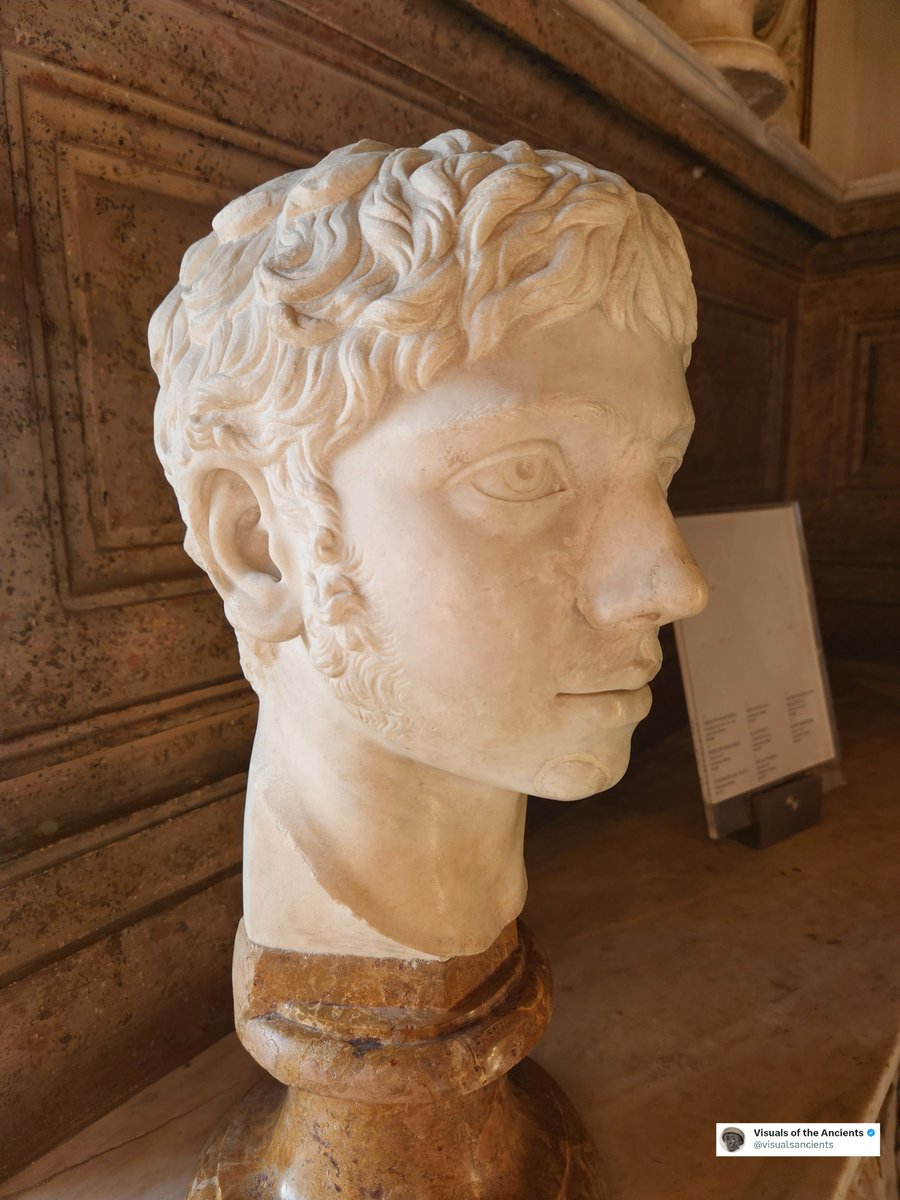
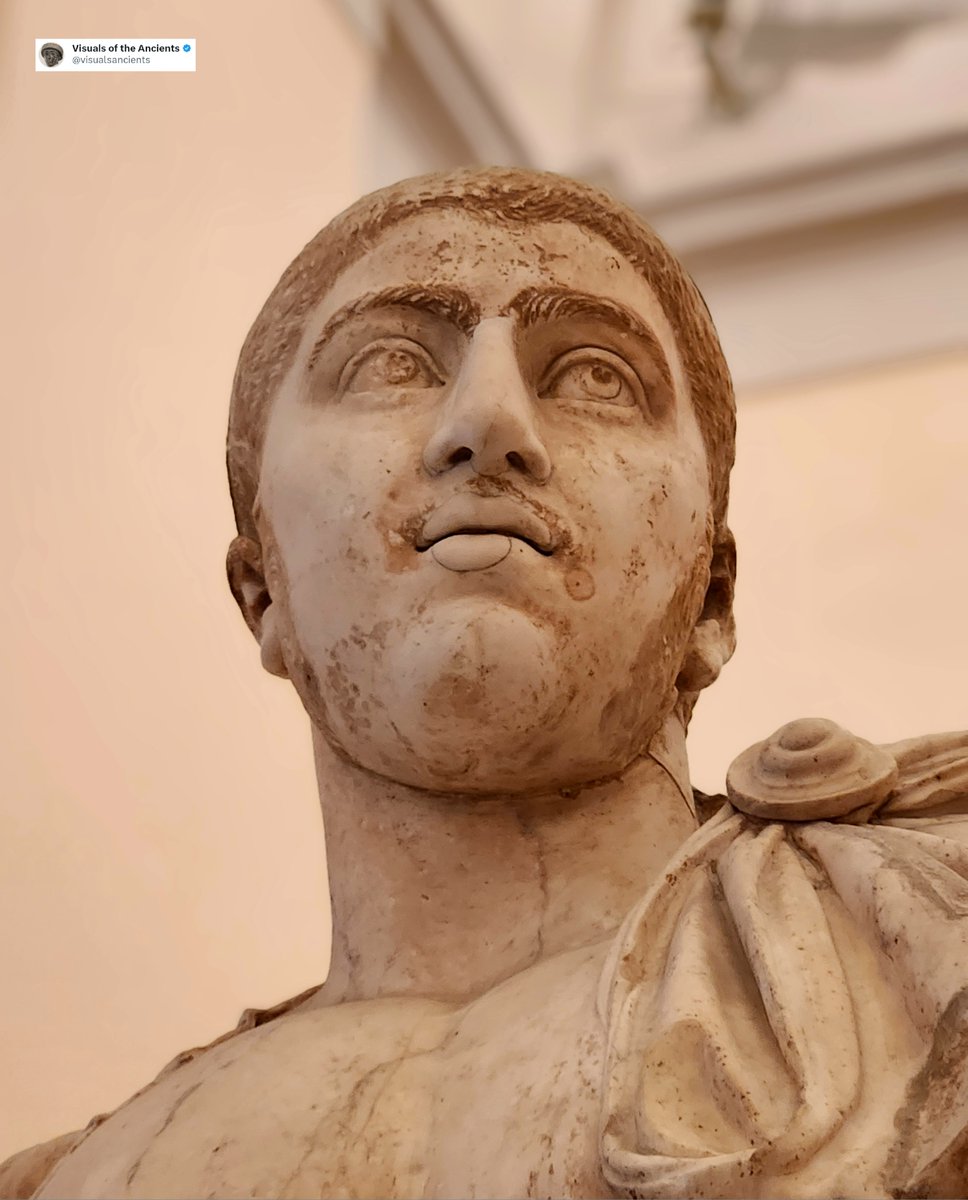
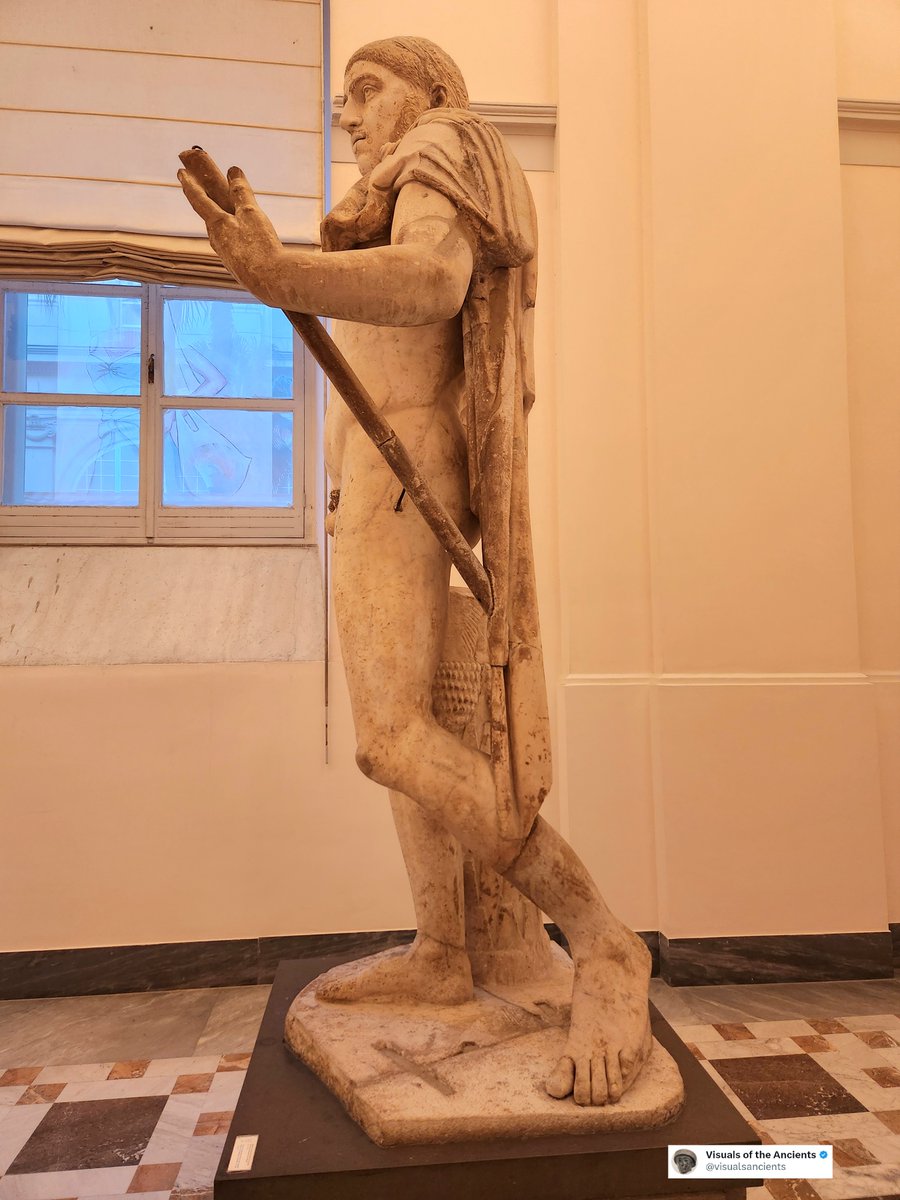
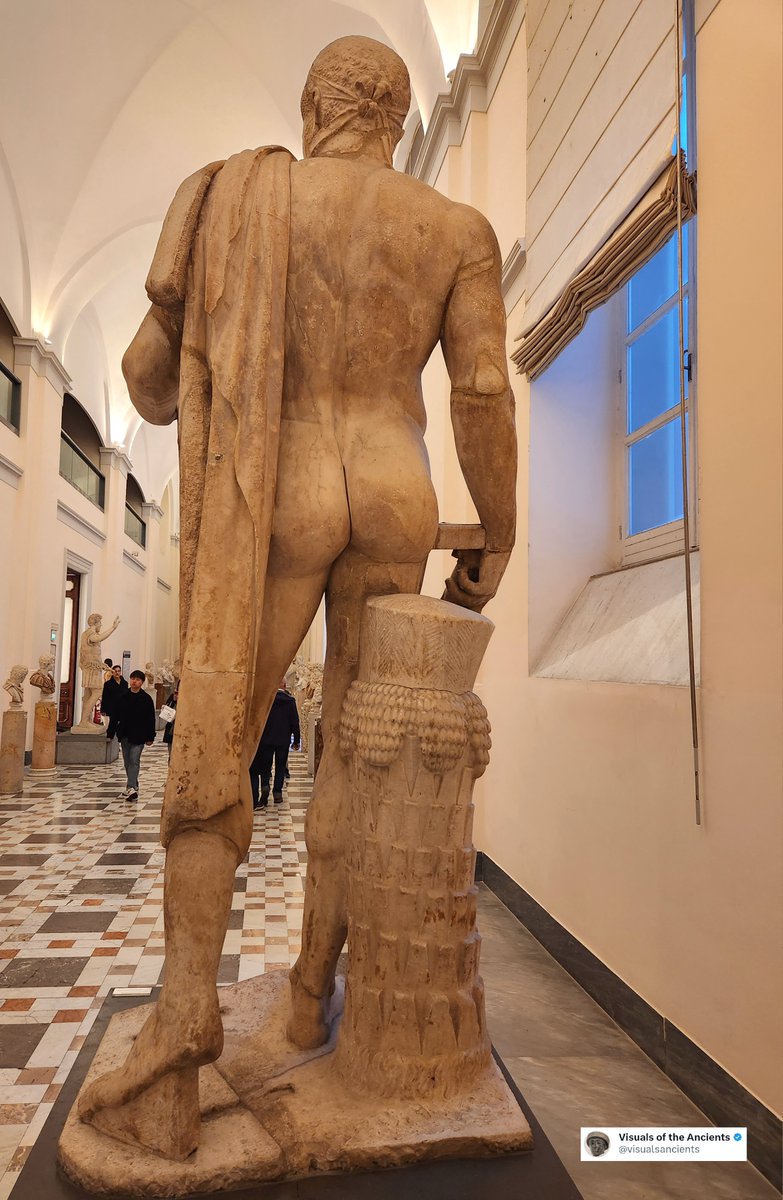
Talking of Elagabalus, emperor Severus Alexander's cousin and predecessor, who reigned from AD 218 to 222, here's his most famous bust currently on display in the Hall of the Emperors, part of the Capitoline Museums. 📸 by me.
Visuals of the Ancients tweet mediaVisuals of the Ancients tweet mediaVisuals of the Ancients tweet media
Visuals of the Ancients@visualsancients

𝐓𝐡𝐢𝐬 𝐢𝐬 𝐨𝐧𝐞 𝐨𝐟 𝐭𝐡𝐞 𝐛𝐞𝐬𝐭 𝐞𝐱𝐚𝐦𝐩𝐥𝐞𝐬 𝐨𝐟 𝐝𝐚𝐦𝐧𝐚𝐭𝐢𝐨 𝐦𝐞𝐦𝐨𝐫𝐢𝐚𝐞 𝐚𝐧𝐝 𝐭𝐡𝐞 𝐭𝐫𝐚𝐠𝐞𝐝𝐲 𝐨𝐟 𝐡𝐨𝐥𝐝𝐢𝐧𝐠 𝐩𝐨𝐰𝐞𝐫 𝐢𝐧 𝐑𝐨𝐦𝐞. Here's the marble colossus of Severus Alexander as Hercules, part of the Farnese Collection and today on display at the National Archaeological Museum of Naples. It stands 12.4 ft tall (3.8 mt). The face originally portrayed Elagabalus, Severus Alexander's cousin and predecessor. On this day of AD 222, at just 18 years old, the Praetorian Guard assassinated Elagabalus in Rome. According to Historian Cassius Dio, Elagabalus' mother, Julia Soaemias, "embraced him and clung tightly to him, (and) perished with him." Elagabalus' body was thrown into the Tiber River, a fate shared by other unpopular emperors, such as Vitellius in AD 69 and Petronius Maximus in AD 455. By AD 222, Elagabalus' reign had become highly unpopular with the elites and the populace, a lethal combination. That same year, his own grandmother, Julia Maesa, plotted his violent removal from power. Once Elagabalus and his mother, Julia Soaemias, were no longer in the picture, Severus Alexander and his mother, Julia Mamaea, took the throne. Yes, this is also the story of three Julias: Maesa, the mother, and her daughters Soaemias and Mamaea. A Damnatio Memoriae fell upon Elagabalus’ reign as soon as he was removed from power in AD 222. As a result, it's likely that this colossus, originally portraying the deposed emperor as Hercules, was defaced. At some point between AD 222 and AD 235, the face of the new Emperor, Severus Alexander, was sculpted. But the fate of Severus Alexander and his mother was not different from that of their predecessors. Also in March, but 13 years later in AD 235, while at a meeting with his generals in Moguntiacum (modern Mainz), a mutiny of his legionnaires ended the lives of both Severus Alexander and Julia Mamaea. This marked the end of the Severan Dynasty and the beginning of the Crisis of the Third Century, when the Empire was on the brink of self-destruction. The difference with his cousin and predecessor, Elagabalus, is that this time, Alexander's legacy did not suffer the Damnatio Memoriae. 📸 by me.

English
2
11
78
3.3K
The Cobra Effect Podcast retweetledi
Visuals of the Ancients
Visuals of the Ancients@visualsancients·
𝐓𝐡𝐢𝐬 𝐢𝐬 𝐨𝐧𝐞 𝐨𝐟 𝐭𝐡𝐞 𝐛𝐞𝐬𝐭 𝐞𝐱𝐚𝐦𝐩𝐥𝐞𝐬 𝐨𝐟 𝐝𝐚𝐦𝐧𝐚𝐭𝐢𝐨 𝐦𝐞𝐦𝐨𝐫𝐢𝐚𝐞 𝐚𝐧𝐝 𝐭𝐡𝐞 𝐭𝐫𝐚𝐠𝐞𝐝𝐲 𝐨𝐟 𝐡𝐨𝐥𝐝𝐢𝐧𝐠 𝐩𝐨𝐰𝐞𝐫 𝐢𝐧 𝐑𝐨𝐦𝐞. Here's the marble colossus of Severus Alexander as Hercules, part of the Farnese Collection and today on display at the National Archaeological Museum of Naples. It stands 12.4 ft tall (3.8 mt). The face originally portrayed Elagabalus, Severus Alexander's cousin and predecessor. On this day of AD 222, at just 18 years old, the Praetorian Guard assassinated Elagabalus in Rome. According to Historian Cassius Dio, Elagabalus' mother, Julia Soaemias, "embraced him and clung tightly to him, (and) perished with him." Elagabalus' body was thrown into the Tiber River, a fate shared by other unpopular emperors, such as Vitellius in AD 69 and Petronius Maximus in AD 455. By AD 222, Elagabalus' reign had become highly unpopular with the elites and the populace, a lethal combination. That same year, his own grandmother, Julia Maesa, plotted his violent removal from power. Once Elagabalus and his mother, Julia Soaemias, were no longer in the picture, Severus Alexander and his mother, Julia Mamaea, took the throne. Yes, this is also the story of three Julias: Maesa, the mother, and her daughters Soaemias and Mamaea. A Damnatio Memoriae fell upon Elagabalus’ reign as soon as he was removed from power in AD 222. As a result, it's likely that this colossus, originally portraying the deposed emperor as Hercules, was defaced. At some point between AD 222 and AD 235, the face of the new Emperor, Severus Alexander, was sculpted. But the fate of Severus Alexander and his mother was not different from that of their predecessors. Also in March, but 13 years later in AD 235, while at a meeting with his generals in Moguntiacum (modern Mainz), a mutiny of his legionnaires ended the lives of both Severus Alexander and Julia Mamaea. This marked the end of the Severan Dynasty and the beginning of the Crisis of the Third Century, when the Empire was on the brink of self-destruction. The difference with his cousin and predecessor, Elagabalus, is that this time, Alexander's legacy did not suffer the Damnatio Memoriae. 📸 by me.
Visuals of the Ancients tweet mediaVisuals of the Ancients tweet mediaVisuals of the Ancients tweet mediaVisuals of the Ancients tweet media
English
4
21
162
9.3K
The Cobra Effect Podcast retweetledi
Visuals of the Ancients
Visuals of the Ancients@visualsancients·
This is the last fragment of 𝐄𝐩𝐢𝐬𝐨𝐝𝐞 𝟎𝟔 𝐏𝐚𝐫𝐭 𝟎𝟐 – 𝐄𝐦𝐩𝐞𝐫𝐨𝐫 𝐃𝐢𝐨𝐜𝐥𝐞𝐭𝐢𝐚𝐧’𝐬 𝐩𝐫𝐢𝐜𝐞 𝐜𝐨𝐧𝐭𝐫𝐨𝐥… 𝐨𝐧 𝐜𝐚𝐦𝐞𝐥 𝐡𝐚𝐢𝐫? 𝐓𝐡𝐞 𝐩𝐮𝐛𝐥𝐢𝐜 𝐠𝐚𝐦𝐞𝐬. After seeing the types and examples of Roman public festivals and games, their infrastructure, and how they were paid, it's time to see how much they cost. "(...) Can we put a tag on how much was spent on public games? A number. At least when it comes to gladiatorial games, this is a brave attempt that Professor Thomas Scanlon makes in “The Oxford Handbook of Sport and Spectacle in the Ancient World.” I will quote some parts of the text: “Roman games (ludi) occupied about two and a half months of the Roman calendar in the first century BC and rose to almost six months every year by the mid-fourth century AD.” This inflation of public games was caused by the inflation of festivals I talked about at the beginning of this episode. Professor Thomas Scanlon then explains how the public games were financed, how they were free of charge to spectators, and how the price limit for gladiators that Marcus Aurelius and Commodus set in the year AD 177 is a good index of the costs. Taking this cost reduction into account, Professor Thomas Scanlon estimates that empire-wide annual gladiatorial games cost an average of 90 million sesterces before the reforms of AD 177 and 65 million sesterces after the reforms. He then writes: “We can compare that with the total annual military costs, estimated to be about 670 million sesterces in about AD 150. In short, the annual cost of gladiators in the mid to late 2nd century AD amounted to between 10% and 13% of the military budget. Note that the gladiator costs are only a portion of the total annual costs for Roman spectacles, which would be much higher if we included the costs of circus events, beast hunts, and so on.” He concludes that: “Arguably, then, the cost of spectacles could have been about 20% of that for the military.” Note that he is not including the costs of the hundreds upon hundreds of theaters, amphitheaters, and circuses built across the empire. Certainly, some of it was covered by the private wealth of local provincial elites and authorities, but the majority was covered by provincial state coffers and then by the emperors themselves. That is quite a lot for the state coffers! Entertaining the masses was certainly expensive for the empire’s public finances. CONCLUSION To summarize, in this episode, we explored the types and examples of festivals and public games, the infrastructure the empire built to host such spectacles, and the costs this all entailed for the imperial coffers. As a general trend, we saw how the ludi, these public games free of charge to the spectators and the infrastructure to provide such games, kept increasing in number and degree of lavishness. From which we can conclude that their cost to the imperial coffers kept increasing over time. But public games were not the only expense the Roman state had to cover. As we advance through these eight parts and make progress in understanding the full picture, the issues discussed will become more complex, and the episodes will grow longer. In the previous and first part, we talked about the state-sponsored distribution of food, the Cura Annonae. In today’s second part, we talked about the state-sponsored public games, the Ludi. In the third part, we will discuss two other imperial expenses: handouts as gifts in cash and public construction works. In the fourth episode, we continue exploring the remaining expenditure items: the state bureaucracy and the largest expense of all, the military. In the fifth part, we will touch on whether the Roman Empire could finance these public expenses through public debt and whether the empire lost or gained money through trade. We will also talk about the short-term or unpredictable sources of revenue to cover these expenses. I am referring to mining, the spoils of war,and confiscations from the wealthy elite. Later, in the sixth and seventh parts, we will see the subjects of taxes and treasuries, respectively, as they were long-term or more predictable sources of revenue. Finally, in the eighth and last part, we will talk about debasement, inflation, Diocletian’s Edict on Maximum Prices, and why it failed. I want to conclude the topic of these two episodes already covered of “bread and circuses” with this phrase I love from historian Jerome Carcopino: “A people that yawns is ripe for revolt. The Caesars saw to it that the Roman plebs suffered neither from hunger nor ennui.” (...)" See the link to this episode and all podcast platforms here: thecobraeffectpodcast.com
Visuals of the Ancients tweet media
English
2
6
39
1.6K
The Cobra Effect Podcast retweetledi
Visuals of the Ancients
Visuals of the Ancients@visualsancients·
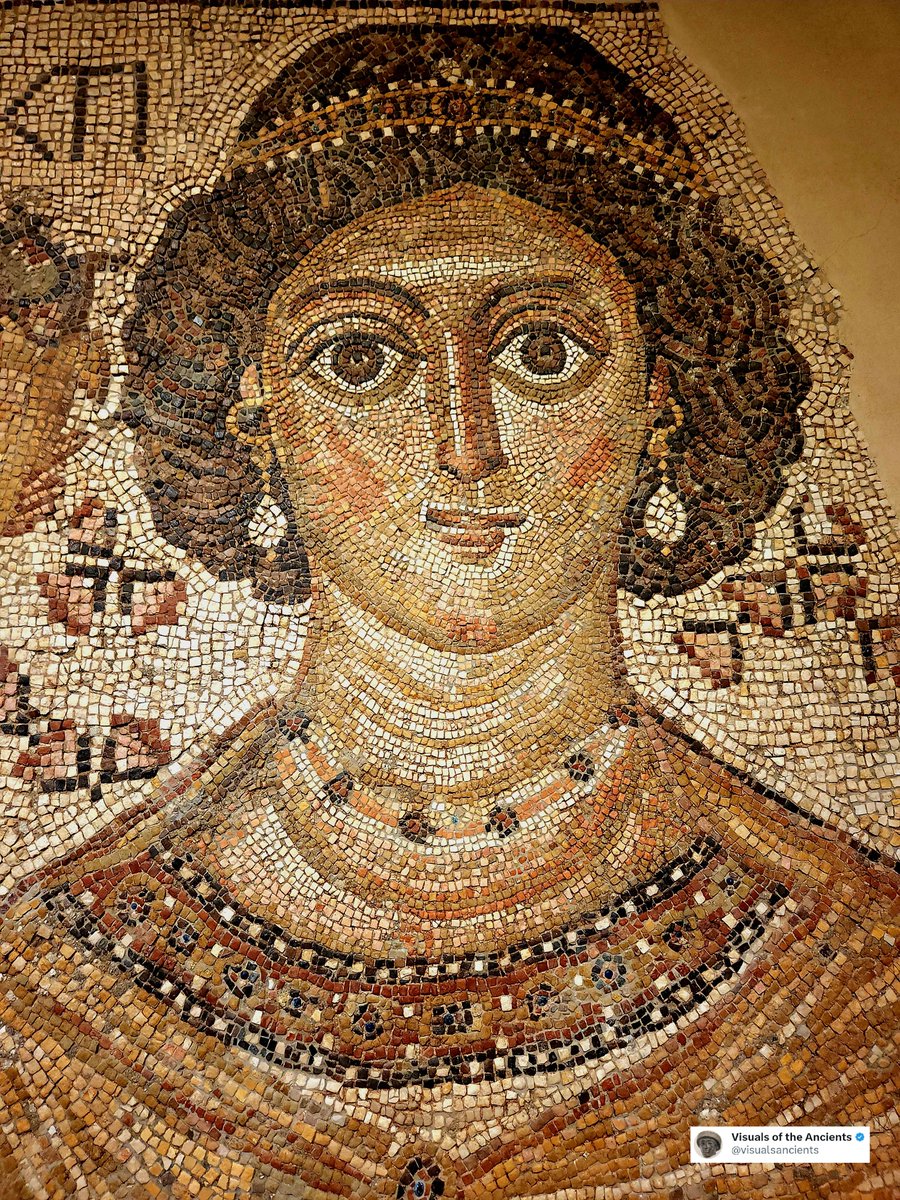
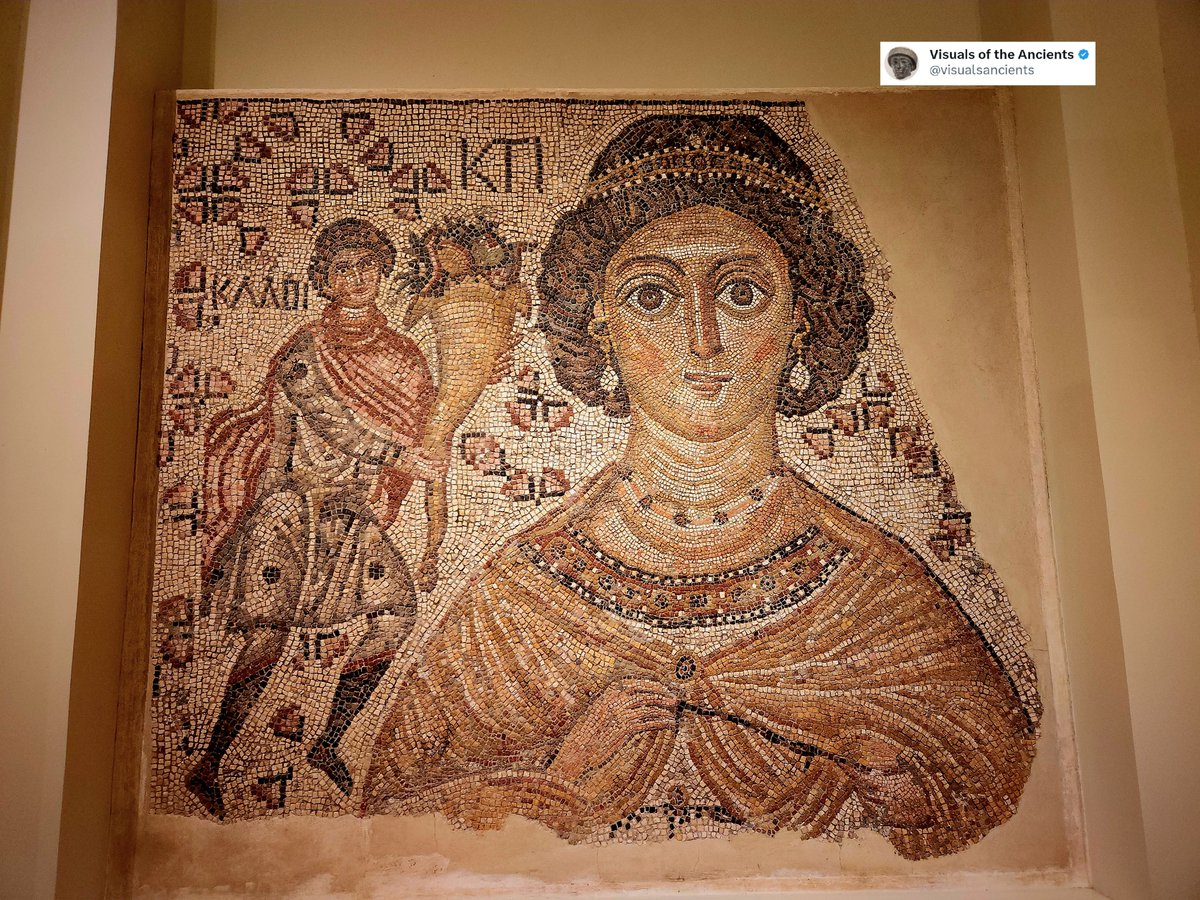
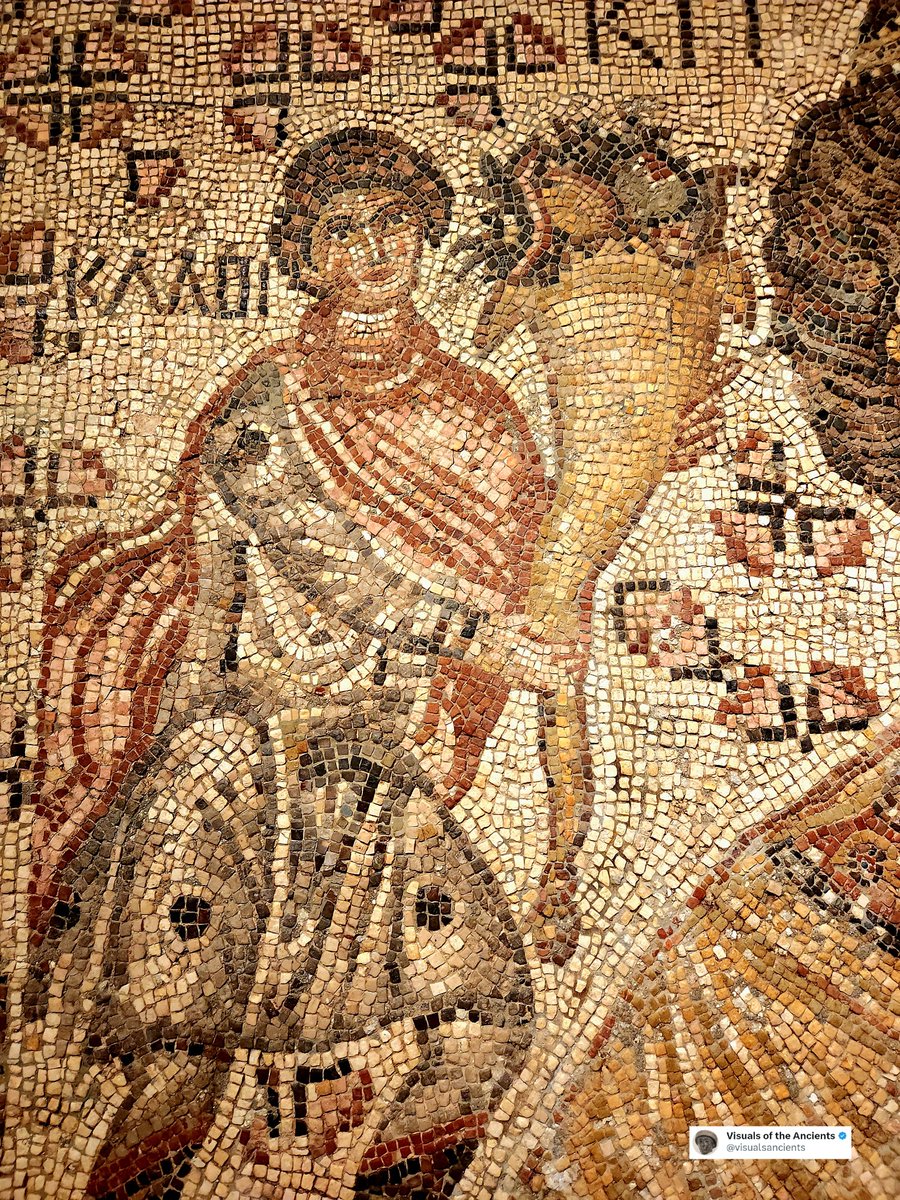
𝐇𝐚𝐩𝐩𝐲 𝐈𝐧𝐭𝐞𝐫𝐧𝐚𝐭𝐢𝐨𝐧𝐚𝐥 𝐖𝐨𝐦𝐞𝐧'𝐬 𝐃𝐚𝐲! She represents Ktisis, the personification of generous donations. The man with a cornucopia, originally a flanking pair, bears the Greek inscription meaning "good." With the other half, the whole expression was probably "good wishes." This fantastic piece of Byzantine (Eastern Roman) art is on display at the MET. It’s a fragment of a floor mosaic from between AD 500 and 550. To put it in context, this is when Theodora (AD 490 – 548) rose from humble origins to become Empress as the wife of Justinian the Great. She may have been beautiful, and that helped when Justinian set his eyes on her, but her judgment made her Justinian's most trusted adviser. Her name appeared in the royal decrees, and she was active in the empire's diplomatic activities, receiving foreign envoys, a role usually reserved for emperors. Theodora also worked in favor of women as she was influential in some changes of the law: r@pe was punishable by death despite the rank and class of the offender whose property passed to the victim; property could go be inherited by wives; she did not make prostitution illegal but forcing women to work as such was strictly forbidden; the ban on intermarriage between different social classed was lifted (Theodora's life was an example of this). When the Nika Revolt broke out in AD 532, Theodora stood firm, showing she was not only smart but also brave. Procopius (not a big fan) records her words in that critical moment: "I do not care whether it is proper for a woman to give brave counsel to frightened men; but in moments of extreme danger, conscience is the only guide. Every man who is born into the light of day must sooner or later die, and how can an Emperor ever allow himself to become a fugitive? (…) As for me, I stand by the ancient saying: royalty makes the best shroud." Here's to Theodora and other brave women in history!
Visuals of the Ancients tweet mediaVisuals of the Ancients tweet mediaVisuals of the Ancients tweet media
English
0
17
101
1.9K
The Cobra Effect Podcast retweetledi
Visuals of the Ancients
Visuals of the Ancients@visualsancients·
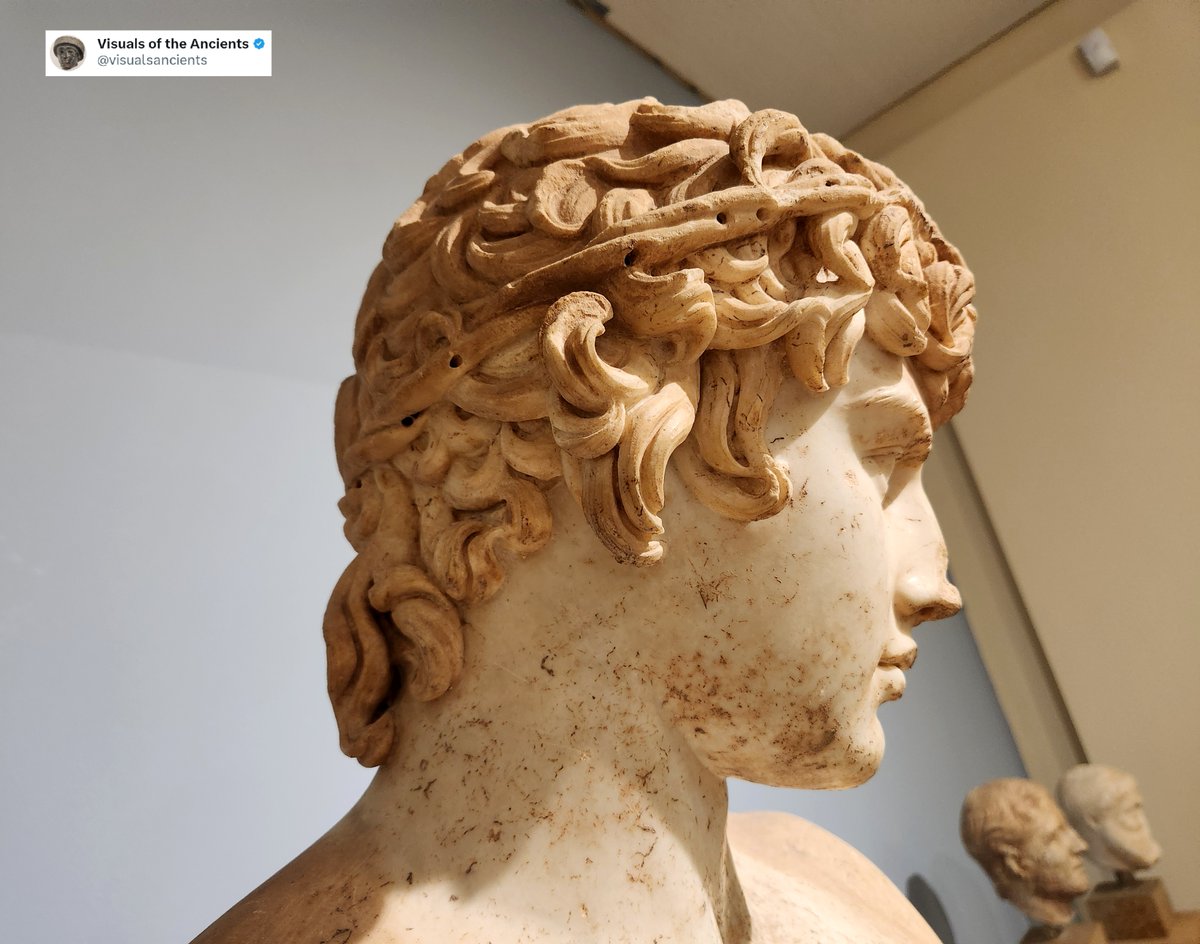
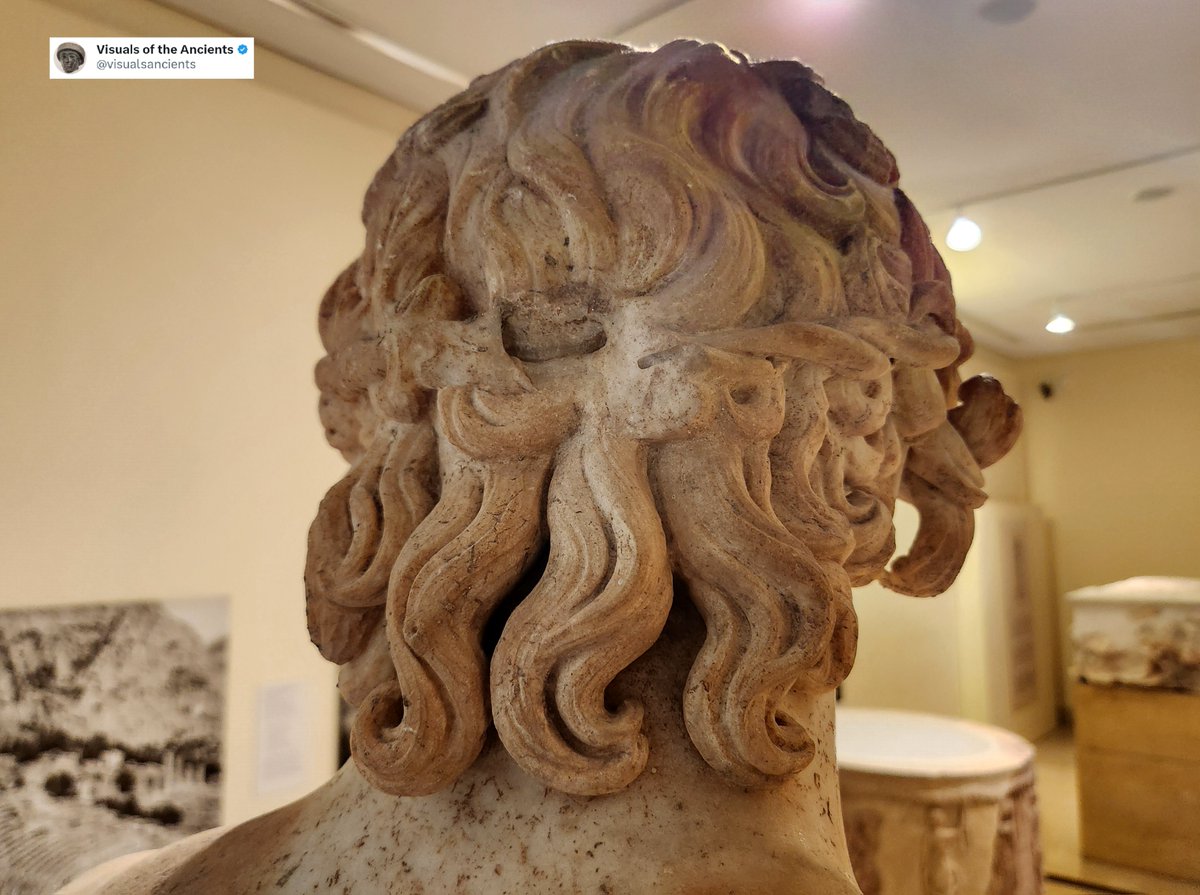
The holes you see in these close-ups were used to attach a bronze or gold wreath of laurel leaves. 📸 by me at the Archaeological Museum of Delphi.
Visuals of the Ancients tweet mediaVisuals of the Ancients tweet mediaVisuals of the Ancients tweet media
Visuals of the Ancients@visualsancients

When Antinous, the young Bithynian lover of Emperor Hadrian, mysteriously drowned in the Nile, Hadrian ordered his deification, minted coins in his honor, founded the city of Antinoöpolis on the east bank of the Nile, and commissioned statues of him across the empire. This one, discovered in 1894 in Delphi, modern Greece, is perhaps the most famous of such pieces. Carved from high-quality Parian marble somewhere between the death of Antinous in AD 130 and the end of Hadrian’s reign in AD 138, this life-size 1.8-meter-tall statue (6 feet) is renowned for its excellent preservation, polished surface, and luminous white appearance. According to the museum, this appearance is due to the special oil used in antiquity to polish the skin of marble statues. Antinous’ statue was found standing upright on its original pedestal inside a small brick chamber or chapel near the Temple of Apollo. His posture, which evokes comparisons to Apollo himself, is the typical contrapposto that originated in Classical Greece. However, I find it amusing that the museum needed to mention in its description: “With its heroic-divine nudity, the statue follows the stylistic traditions of the great 5th and 4th century BC artists but lacks the inner vitality of the archetypes.” 📸 by me at the Archaeological Museum of Delphi.

English
1
30
282
9.2K
The Cobra Effect Podcast retweetledi
Visuals of the Ancients
Visuals of the Ancients@visualsancients·
When Antinous, the young Bithynian lover of Emperor Hadrian, mysteriously drowned in the Nile, Hadrian ordered his deification, minted coins in his honor, founded the city of Antinoöpolis on the east bank of the Nile, and commissioned statues of him across the empire. This one, discovered in 1894 in Delphi, modern Greece, is perhaps the most famous of such pieces. Carved from high-quality Parian marble somewhere between the death of Antinous in AD 130 and the end of Hadrian’s reign in AD 138, this life-size 1.8-meter-tall statue (6 feet) is renowned for its excellent preservation, polished surface, and luminous white appearance. According to the museum, this appearance is due to the special oil used in antiquity to polish the skin of marble statues. Antinous’ statue was found standing upright on its original pedestal inside a small brick chamber or chapel near the Temple of Apollo. His posture, which evokes comparisons to Apollo himself, is the typical contrapposto that originated in Classical Greece. However, I find it amusing that the museum needed to mention in its description: “With its heroic-divine nudity, the statue follows the stylistic traditions of the great 5th and 4th century BC artists but lacks the inner vitality of the archetypes.” 📸 by me at the Archaeological Museum of Delphi.
Visuals of the Ancients tweet mediaVisuals of the Ancients tweet mediaVisuals of the Ancients tweet mediaVisuals of the Ancients tweet media
English
7
71
615
30.3K
The Cobra Effect Podcast retweetledi
Visuals of the Ancients
Visuals of the Ancients@visualsancients·
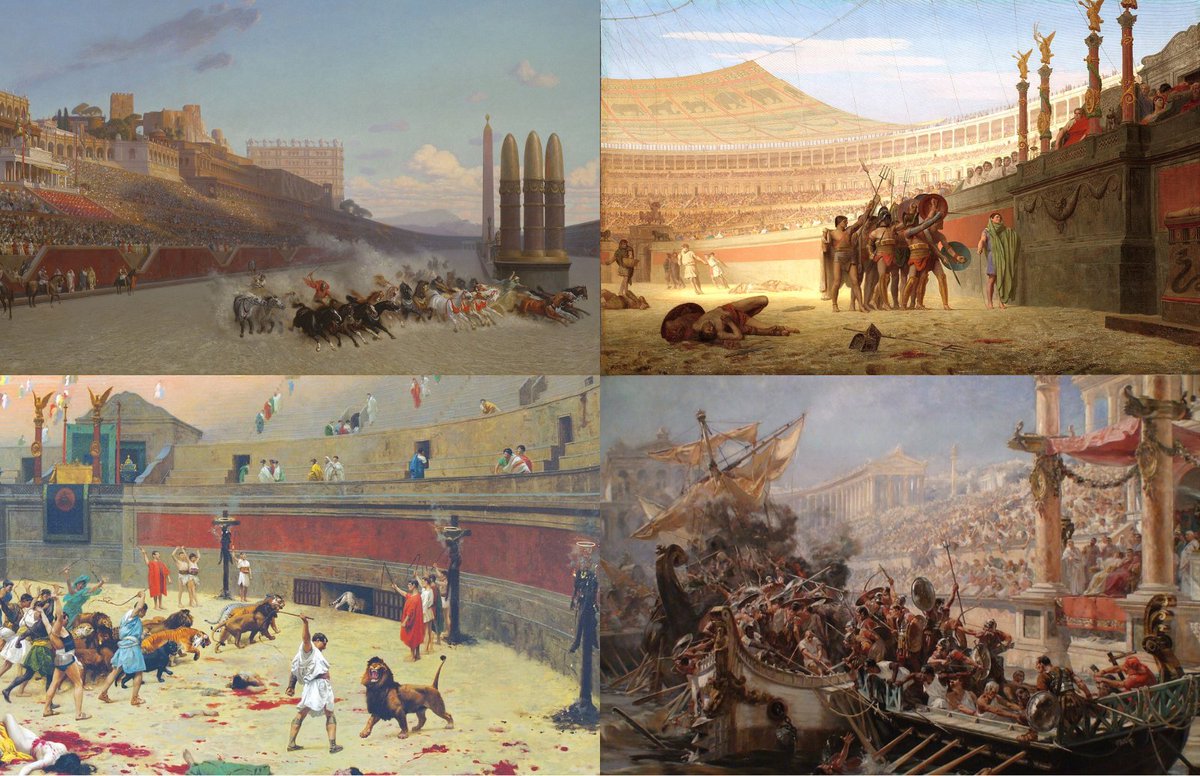
You watched Gladiator and Ben-Hur and probably wondered 'who paid for all this?' 'How much was the Colosseum?' 🫰 The ruins of theaters, amphitheaters, and circuses are scattered across Europe, Northern Africa, and the Levant. Who paid for these buildings? 👇
Visuals of the Ancients@visualsancients

After seeing the types and examples of Roman public festivals and games, and their infrastructure, a question comes to mind: how were they paid, and how much did it cost? Today's post is very long, but I hope you enjoy it. This is another fragment of Episode 06 Part 02 – Emperor Diocletian’s price control… on camel hair? The public games. Let's discuss the "how." Tomorrow, let's try to put a price tag on it. "(...) Now, were they expensive? Well, let’s look at the Colosseum, the most famous of the Roman amphitheaters. Doctor Garrett Ryan, creator of the YouTube channel toldinstone estimates that the Colosseum may have cost 100 million sestertii. But what does this mean? Let’s put it in perspective. Emperor Titus inaugurated the Colosseum in the year AD 80, and Emperor Domitian completed the final details in AD 82. Military spending was the most important of all imperial expenditure. After all, the survival of the emperor himself depended on it. Total military expenditures on salaries and benefits per year were around 450 and 550 million sesterces at this time. By the way, later in AD 84, Domitian increased the salaries of military personnel by almost one-third. So, on the one hand, we have the Colosseum for 100 million sestertii. Built in around 10 years, we have 10 million sestertii per year. Just to keep the numbers simple and clean. On the other hand, total military expenditure under Vespasian, Titus, and the first years of Domitian averaged 500 million sestertii per year. After comparing the two amounts, the cost of the Colosseum accounted for 2% of all military expenditure per year. Imagine that in this world today, for 10 consecutive years, a government takes 2% of a country’s annual TOTAL defense budget to construct a SINGLE entertainment building. That’s as if, in 2024, from the Department of Defense budget, the US government spent after 10 years 170 billion dollars to build a football stadium. Today, the most expensive sports and entertainment facility in the world is the SoFi Stadium in Los Angeles, California. Its price tag was 5.5 billion dollars, more than double that of the next stadium in the ranking. So, the cost of the SoFi Stadium was 5.5 billion. And 170 billion is the cost of the imaginary US government-sponsored Colosseum, where everyone would have free entrance, as in the real Colosseum. It’s crazy! I got carried away with these numbers, but you get the idea. Now, the Colosseum was funded by the proceeds of the sack of Jerusalem and its wealthy Temple in AD 70. Emperor Vespasian ruled from Rome, and his son and successor, Titus, led the Siege of Jerusalem during the First Jewish–Roman War. In what was probably an architrave that covered a passageway in the Colosseum, scholars have deciphered an inscription that reads: “The Emperor Titus Caesar Vespasian Augustus ordered the new amphitheater to be made from the plunder.” It’s understood to read: The Emperor Titus Caesar Vespasian Augustus ordered the new amphitheater to be made from the proceeds from the sale of the plunder. Vespasian and his sons got a once-in-a-lifetime opportunity to ingratiate themselves with the people of Rome. But not every emperor had the Temple of Jerusalem to sack, and the Colosseum, although the most spectacular of amphitheaters, was not the only entertainment building in the empire. As we saw before, people living within the borders of Roman cities enjoyed free entry to approximately 260 or 280 amphitheaters, 57 circuses, and hundreds upon hundreds of theaters, for certain more than 345. All of this, while modern archeologists discover new entertainment buildings every year. The cost of these many constructions for spectacle was too high for local private benefactors to fully fund from their private pockets. In the times of the Late Republic, Pompey paid for a fabulous theatre in Rome. But Pompey Magnus, Pompey the Great, was no ordinary man. He was extremely wealthy and shared power with Caesar and Crassus in what we know as the First Triumvirate. There were remarkable exceptions, but there were not many provincial Pompey Magnus around with the political influence and wealth to fully pay for a circus or amphitheater in a province like Britannia or Hispania Baetica. Certainly, local elites contributed, and again, there were exceptional individuals that we will see in the third and next part of this series, for example, Herodes Atticus and his theater built on the southwest slope of the Acropolis of Athens. However, the bulk of construction costs for entertainment buildings were borne by the State, at the local/provincial and the central levels. We will talk in the next episode about private funding of local constructions such as baths, arches, etc., but a circus or an amphitheater was just too expensive to be fully privately funded. In his pioneering and monumental book “Roman Circuses: Arenas for Chariot Racing,” scholar John H. Humphrey tells us the following: “The evidence suggests that monumental circuses were always likely to be beyond the resources of a town and/or its private benefactors. As Richard Duncan-Jones has pointed out, even amphitheaters were not built from private resources. The cost of a monumental circus surely required government intervention at a level well above that of the local town council.” Knowing the cost of entertainment buildings to the imperial coffers is impossible. However, we can certainly deduce that it was a significant item of state expenditure. Furthermore, evidence suggests that the last few of these constructions in the West of the empire took place in the first half of the AD 300s. This means that the vast majority of the expenses for infrastructure to provide free spectacles to the masses occurred before Diocletian’s Edict on Maximum Prices in the year AD 301. I mentioned earlier that throughout the empire, provisional entertainment structures were built and dismantled after each game. But with a permanent building like an amphitheater, a theater, or a circus, well, why would you pay for such an expensive project just to have games sporadically, from time to time? In the long term, providing frequent games was probably even more expensive than the buildings themselves. During the empire, as we have seen throughout this episode, public games grew exponentially in number and lavishness in the city of Rome and the provinces. Outside of the city of Rome, there was a scheme of co-sponsored funding for regularly held public games. The evidence is scarce to give an exact picture of who was paying what and where. Furthermore, the empire was vast, but the Lex Ursonensis can shed some light on this. The Lex Ursonensis is the foundational charter of the town of Urso, located in modern Spain. A bronze slab copy from the 1st century AD tells us that, depending on the title of the senior official, they were required to organize gladiatorial or theatrical spectacles. For this purpose, they were to take no less than 2000 sestertii from their own money and up to 2000 or 1000 sestertii from public funds, depending on the position of each of these officials. In addition to senior local political officers, the high priests of the imperial cult in the provinces were required to personally contribute to fund the spectacles. These are the priests of the cult to the deceased and divinized previous emperors. Over time, this duty became a financial burden on the private wealth of these individuals, as for example the price of gladiatorial games kept rising. In the first half of the second century AD, Emperor Hadrian granted permission to the high priests of the imperial cult in the small city of Aphrodisias, in modern Turkey, to finance the construction of an aqueduct rather than sponsoring gladiatorial games. The priests had argued that they could not afford to pay for the games. Around 50 years later, in the year AD 177, when Commodus began to co-rule with his father and predecessor Marcus Aurelius, they had to set a price limit for gladiators to contain the ruinous expense such responsibility represented to local religious and political authorities. Although one can be certain it was Marcus Aurelius' idea, it is ironic that Commodus was onboard with the idea of reducing prices for gladiators in the provinces. The man spent money on spectacles as if there was no tomorrow. He even took part in them! That was something that Ridley Scott’s movie Gladiator got right from a historical perspective. Although he was not killed in the arena of the Colosseum by Maximus Decimus Meridius. Some emperors themselves sponsored games outside of Rome, as confirmed by two ancient Roman sources. This is what Suetonius tells us about Caligula, and Cassius Dio wrote that Hadrian “constructed theatres and held games as he travelled about from city to city.” Of his 21 years on the throne, Hadrian spent half the time travelling the provinces. He was a restless man. In the capital city of Rome, the cost of ordinary games was shared between the state treasury and the private funds of the senior government official responsible for organizing such ludi. These co-sponsored games were regularly held at a fixed time of the year, and the total costs were limited, meaning that they were not as impressive as the other extraordinary spectacles provided by the emperor himself. As we saw before, public spectacles were an essential part of imperial propaganda during a military victory, the emperor's birthday, or funeral, and so on. The primary sources of the time give us an idea of how much emperors liked to spend providing spectacles for the people in the city of Rome. For example, about Caracalla, Cassius Dio says: “The emperor himself kept spending the money upon the soldiers, as we have said, and upon wild beasts and horses.” Caracalla loved the chariot races and the venationes, the beast hunts we saw earlier. Now, hold on to your chairs. Listen to what Suetonius says about Nero: 'At the games which he gave for the ‘Eternity of the Empire,’ which by his order were called the Maximi… every day all kinds of presents were thrown to the people; these included a thousand birds of every kind each day, various kinds of food, tickets for grain, clothing, gold, silver, precious stones, pearls, paintings, slaves, beasts of burden, and even trained wild animals; finally, ships, blocks of houses, and farms.' (...)" This is the second part of an eight-part podcast series about the imperial finances of the Early Empire. In this part, I explore the types and examples of both public festivals and the public games they were associated with, the infrastructure the empire built to provide such spectacles, and the cost this all represented to the imperial coffers. In the previous and first part, I covered the Cura Annonae, the state-sponsored food distribution system. See the link to this episode and all podcast platforms here: thecobraeffectpodcast.com

English
0
7
26
1.3K
The Cobra Effect Podcast retweetledi
Visuals of the Ancients
Visuals of the Ancients@visualsancients·
After seeing the types and examples of Roman public festivals and games, and their infrastructure, a question comes to mind: how were they paid, and how much did it cost? Today's post is very long, but I hope you enjoy it. This is another fragment of Episode 06 Part 02 – Emperor Diocletian’s price control… on camel hair? The public games. Let's discuss the "how." Tomorrow, let's try to put a price tag on it. "(...) Now, were they expensive? Well, let’s look at the Colosseum, the most famous of the Roman amphitheaters. Doctor Garrett Ryan, creator of the YouTube channel toldinstone estimates that the Colosseum may have cost 100 million sestertii. But what does this mean? Let’s put it in perspective. Emperor Titus inaugurated the Colosseum in the year AD 80, and Emperor Domitian completed the final details in AD 82. Military spending was the most important of all imperial expenditure. After all, the survival of the emperor himself depended on it. Total military expenditures on salaries and benefits per year were around 450 and 550 million sesterces at this time. By the way, later in AD 84, Domitian increased the salaries of military personnel by almost one-third. So, on the one hand, we have the Colosseum for 100 million sestertii. Built in around 10 years, we have 10 million sestertii per year. Just to keep the numbers simple and clean. On the other hand, total military expenditure under Vespasian, Titus, and the first years of Domitian averaged 500 million sestertii per year. After comparing the two amounts, the cost of the Colosseum accounted for 2% of all military expenditure per year. Imagine that in this world today, for 10 consecutive years, a government takes 2% of a country’s annual TOTAL defense budget to construct a SINGLE entertainment building. That’s as if, in 2024, from the Department of Defense budget, the US government spent after 10 years 170 billion dollars to build a football stadium. Today, the most expensive sports and entertainment facility in the world is the SoFi Stadium in Los Angeles, California. Its price tag was 5.5 billion dollars, more than double that of the next stadium in the ranking. So, the cost of the SoFi Stadium was 5.5 billion. And 170 billion is the cost of the imaginary US government-sponsored Colosseum, where everyone would have free entrance, as in the real Colosseum. It’s crazy! I got carried away with these numbers, but you get the idea. Now, the Colosseum was funded by the proceeds of the sack of Jerusalem and its wealthy Temple in AD 70. Emperor Vespasian ruled from Rome, and his son and successor, Titus, led the Siege of Jerusalem during the First Jewish–Roman War. In what was probably an architrave that covered a passageway in the Colosseum, scholars have deciphered an inscription that reads: “The Emperor Titus Caesar Vespasian Augustus ordered the new amphitheater to be made from the plunder.” It’s understood to read: The Emperor Titus Caesar Vespasian Augustus ordered the new amphitheater to be made from the proceeds from the sale of the plunder. Vespasian and his sons got a once-in-a-lifetime opportunity to ingratiate themselves with the people of Rome. But not every emperor had the Temple of Jerusalem to sack, and the Colosseum, although the most spectacular of amphitheaters, was not the only entertainment building in the empire. As we saw before, people living within the borders of Roman cities enjoyed free entry to approximately 260 or 280 amphitheaters, 57 circuses, and hundreds upon hundreds of theaters, for certain more than 345. All of this, while modern archeologists discover new entertainment buildings every year. The cost of these many constructions for spectacle was too high for local private benefactors to fully fund from their private pockets. In the times of the Late Republic, Pompey paid for a fabulous theatre in Rome. But Pompey Magnus, Pompey the Great, was no ordinary man. He was extremely wealthy and shared power with Caesar and Crassus in what we know as the First Triumvirate. There were remarkable exceptions, but there were not many provincial Pompey Magnus around with the political influence and wealth to fully pay for a circus or amphitheater in a province like Britannia or Hispania Baetica. Certainly, local elites contributed, and again, there were exceptional individuals that we will see in the third and next part of this series, for example, Herodes Atticus and his theater built on the southwest slope of the Acropolis of Athens. However, the bulk of construction costs for entertainment buildings were borne by the State, at the local/provincial and the central levels. We will talk in the next episode about private funding of local constructions such as baths, arches, etc., but a circus or an amphitheater was just too expensive to be fully privately funded. In his pioneering and monumental book “Roman Circuses: Arenas for Chariot Racing,” scholar John H. Humphrey tells us the following: “The evidence suggests that monumental circuses were always likely to be beyond the resources of a town and/or its private benefactors. As Richard Duncan-Jones has pointed out, even amphitheaters were not built from private resources. The cost of a monumental circus surely required government intervention at a level well above that of the local town council.” Knowing the cost of entertainment buildings to the imperial coffers is impossible. However, we can certainly deduce that it was a significant item of state expenditure. Furthermore, evidence suggests that the last few of these constructions in the West of the empire took place in the first half of the AD 300s. This means that the vast majority of the expenses for infrastructure to provide free spectacles to the masses occurred before Diocletian’s Edict on Maximum Prices in the year AD 301. I mentioned earlier that throughout the empire, provisional entertainment structures were built and dismantled after each game. But with a permanent building like an amphitheater, a theater, or a circus, well, why would you pay for such an expensive project just to have games sporadically, from time to time? In the long term, providing frequent games was probably even more expensive than the buildings themselves. During the empire, as we have seen throughout this episode, public games grew exponentially in number and lavishness in the city of Rome and the provinces. Outside of the city of Rome, there was a scheme of co-sponsored funding for regularly held public games. The evidence is scarce to give an exact picture of who was paying what and where. Furthermore, the empire was vast, but the Lex Ursonensis can shed some light on this. The Lex Ursonensis is the foundational charter of the town of Urso, located in modern Spain. A bronze slab copy from the 1st century AD tells us that, depending on the title of the senior official, they were required to organize gladiatorial or theatrical spectacles. For this purpose, they were to take no less than 2000 sestertii from their own money and up to 2000 or 1000 sestertii from public funds, depending on the position of each of these officials. In addition to senior local political officers, the high priests of the imperial cult in the provinces were required to personally contribute to fund the spectacles. These are the priests of the cult to the deceased and divinized previous emperors. Over time, this duty became a financial burden on the private wealth of these individuals, as for example the price of gladiatorial games kept rising. In the first half of the second century AD, Emperor Hadrian granted permission to the high priests of the imperial cult in the small city of Aphrodisias, in modern Turkey, to finance the construction of an aqueduct rather than sponsoring gladiatorial games. The priests had argued that they could not afford to pay for the games. Around 50 years later, in the year AD 177, when Commodus began to co-rule with his father and predecessor Marcus Aurelius, they had to set a price limit for gladiators to contain the ruinous expense such responsibility represented to local religious and political authorities. Although one can be certain it was Marcus Aurelius' idea, it is ironic that Commodus was onboard with the idea of reducing prices for gladiators in the provinces. The man spent money on spectacles as if there was no tomorrow. He even took part in them! That was something that Ridley Scott’s movie Gladiator got right from a historical perspective. Although he was not killed in the arena of the Colosseum by Maximus Decimus Meridius. Some emperors themselves sponsored games outside of Rome, as confirmed by two ancient Roman sources. This is what Suetonius tells us about Caligula, and Cassius Dio wrote that Hadrian “constructed theatres and held games as he travelled about from city to city.” Of his 21 years on the throne, Hadrian spent half the time travelling the provinces. He was a restless man. In the capital city of Rome, the cost of ordinary games was shared between the state treasury and the private funds of the senior government official responsible for organizing such ludi. These co-sponsored games were regularly held at a fixed time of the year, and the total costs were limited, meaning that they were not as impressive as the other extraordinary spectacles provided by the emperor himself. As we saw before, public spectacles were an essential part of imperial propaganda during a military victory, the emperor's birthday, or funeral, and so on. The primary sources of the time give us an idea of how much emperors liked to spend providing spectacles for the people in the city of Rome. For example, about Caracalla, Cassius Dio says: “The emperor himself kept spending the money upon the soldiers, as we have said, and upon wild beasts and horses.” Caracalla loved the chariot races and the venationes, the beast hunts we saw earlier. Now, hold on to your chairs. Listen to what Suetonius says about Nero: 'At the games which he gave for the ‘Eternity of the Empire,’ which by his order were called the Maximi… every day all kinds of presents were thrown to the people; these included a thousand birds of every kind each day, various kinds of food, tickets for grain, clothing, gold, silver, precious stones, pearls, paintings, slaves, beasts of burden, and even trained wild animals; finally, ships, blocks of houses, and farms.' (...)" This is the second part of an eight-part podcast series about the imperial finances of the Early Empire. In this part, I explore the types and examples of both public festivals and the public games they were associated with, the infrastructure the empire built to provide such spectacles, and the cost this all represented to the imperial coffers. In the previous and first part, I covered the Cura Annonae, the state-sponsored food distribution system. See the link to this episode and all podcast platforms here: thecobraeffectpodcast.com
Visuals of the Ancients@visualsancients

That I could find, the Roman Empire had 57 circuses, up to 280 amphitheaters, and 345 theaters on the Western half, with probably more in the East. With all spectacle buildings at full capacity, 1 in every 4 or even 3 residents of urban areas had access to free entertainment. The following is a fragment of Episode 06 Part 02 – Emperor Diocletian’s price control… on camel hair? The public games. "(...) Entertainment was not only important in terms of seating capacity. We also must keep in mind the number of entertainment buildings. All the following numbers are estimates. But I love to play detective and quantify things, even though I know it can be risky when discussing ancient history. So, the total population of the Roman Empire at its peak, right before the year AD 165, when the Antonine Plague killed at least a third of the population, was between 60 and 75 million people, and about one-fifth of them lived in cities. Then, on average, around 13.5 million people lived in cities having easy access to circuses, amphitheaters, and theaters. As of today, we know of between 260 and 280 Roman amphitheaters with a seating capacity of approximately 3 million spectators. Doing the math, almost 1 in every 4 or 5 people living in urban areas had access to entertainment in amphitheaters, for free! It gets better if we count more than amphitheaters. When we count the circuses, which, remember, had a larger capacity, it is estimated that there were around 40 in the West and 17 in the East. So, as far as we know today, there were approximately 57 circuses in total. There were also hundreds of theaters across the whole empire. Certainly, I could find a study about this; there were at least 345 on the Western side. So, one could say that, hypothetically, on a single day with all spectacle buildings at full capacity, let’s push to the max, one in every four or even three residents of urban areas had access to free entertainment. Plus, every year we discover more of these buildings. If you Google “new discovery, roman, amphitheater,” you will find the following headlines: - From 2022: A Gladiator Arena, Possibly the Last Ever Built, Discovered in Switzerland. - From 2023: Archaeologists Find Roman Military Amphitheater in Israel. - Also from 2023: Roman amphitheater discovered at ancient Ategua, in Spain. What about the other types of entertainment buildings, such as theaters and circuses? Well, from 2023, an article in Forbes reads: "Nero’s Ancient Theater Discovered in Rome." In 2024, an article in La Vanguardia reads: "Evidence of a 5,000-seat Roman circus discovered in northern Spain." You get my point. There were some amphitheaters and circuses built during the Late Roman Republic. Very few, though, and it is with the empire that these few previously existing amphitheaters and circuses are expanded and embellished. The Circus Maximus in the city of Rome is an example of this. In the East, some of the theaters were inherited from the previous Hellenistic kingdoms. The same was true of hippodromes, also used for entertainment later in the empire. However, most of the entertainment facilities that were part of the Roman urban landscape were built anew during imperial times. The Colosseum is an example of this. Now, were they expensive? (...)" This is the second part of an eight-part podcast series about the imperial finances of the Early Empire. In this part, I explore the types and examples of both public festivals and the public games they were associated with, the infrastructure the empire built to provide such spectacles, and the cost this all represented to the imperial coffers. In the previous and first part, I covered the Cura Annonae, the state-sponsored food distribution system. See the link to this episode and all podcast platforms here: thecobraeffectpodcast.com
English
0
7
28
2.6K
The Cobra Effect Podcast retweetledi
Visuals of the Ancients
Visuals of the Ancients@visualsancients·
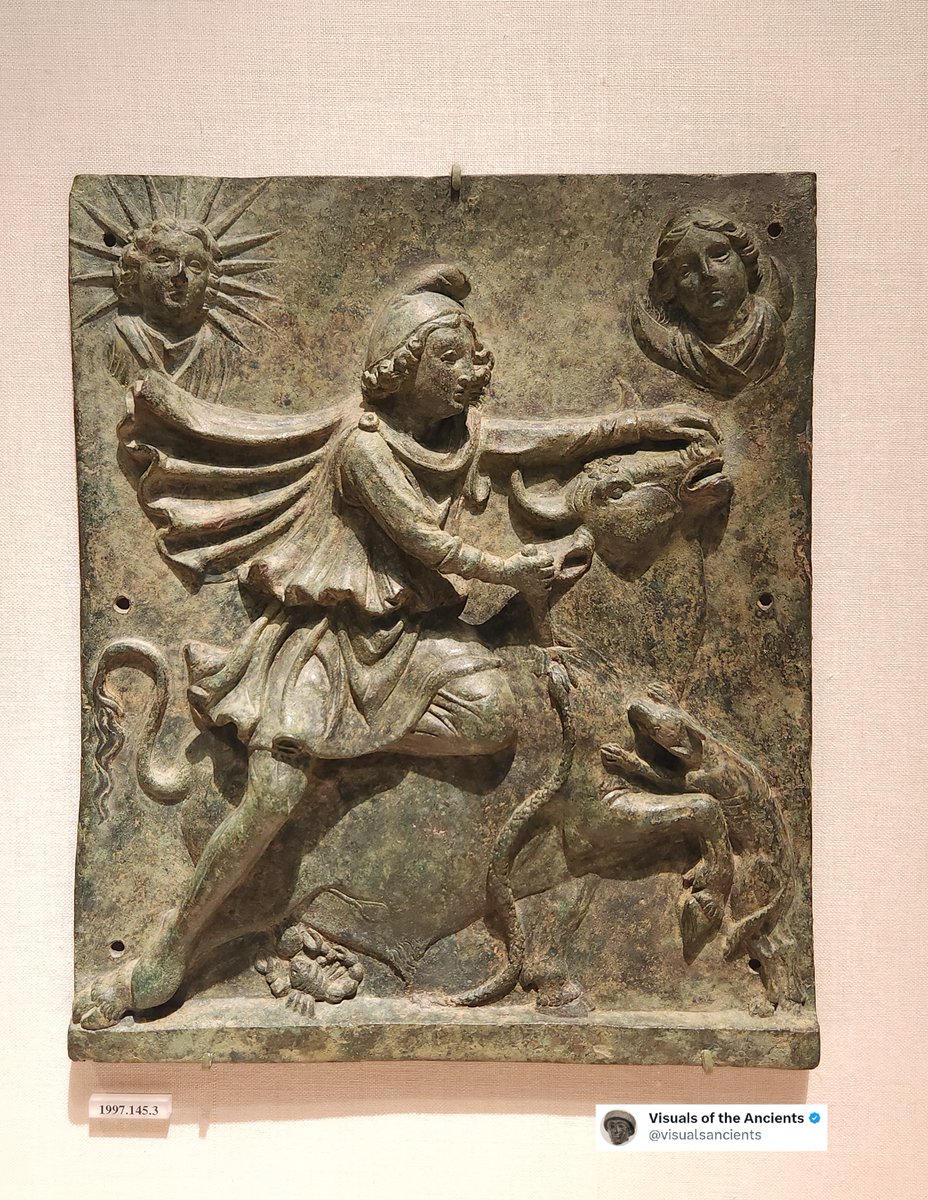
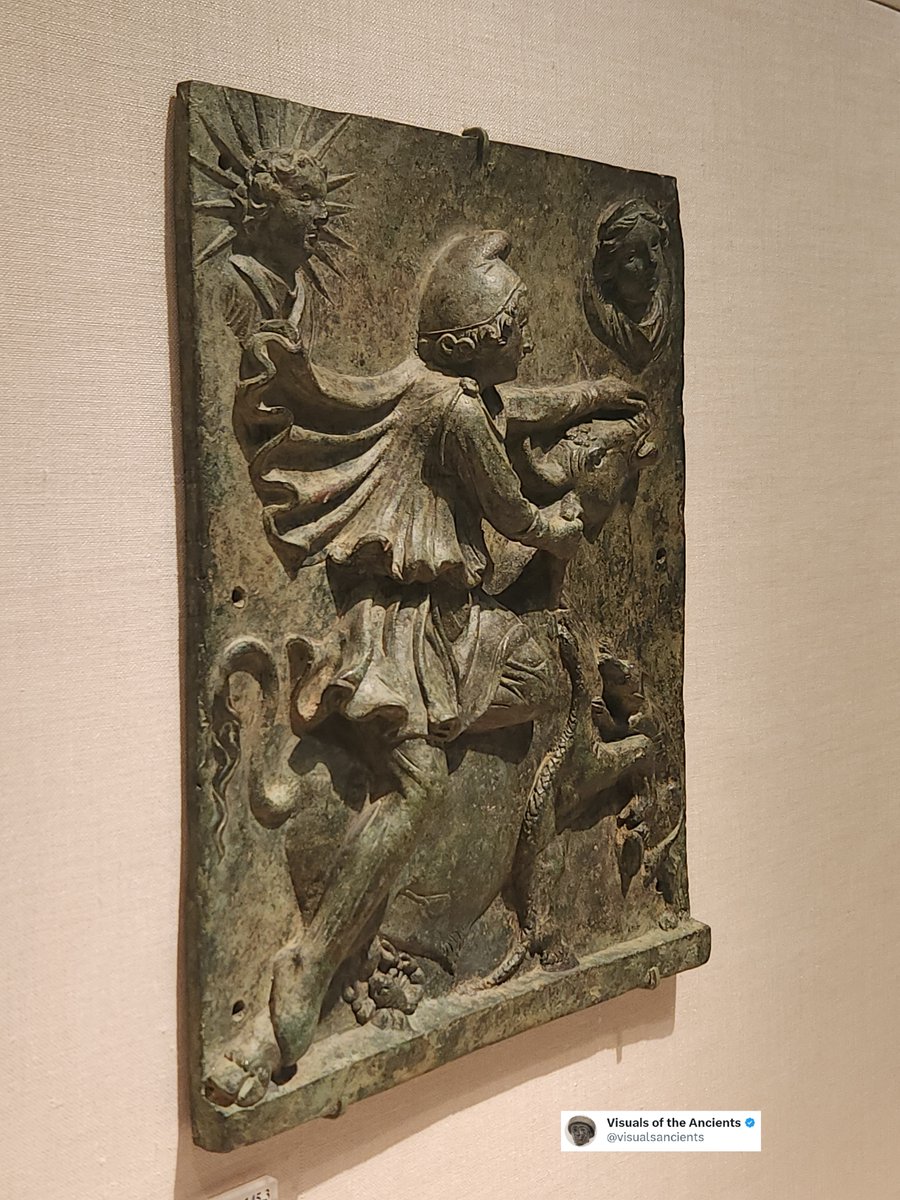
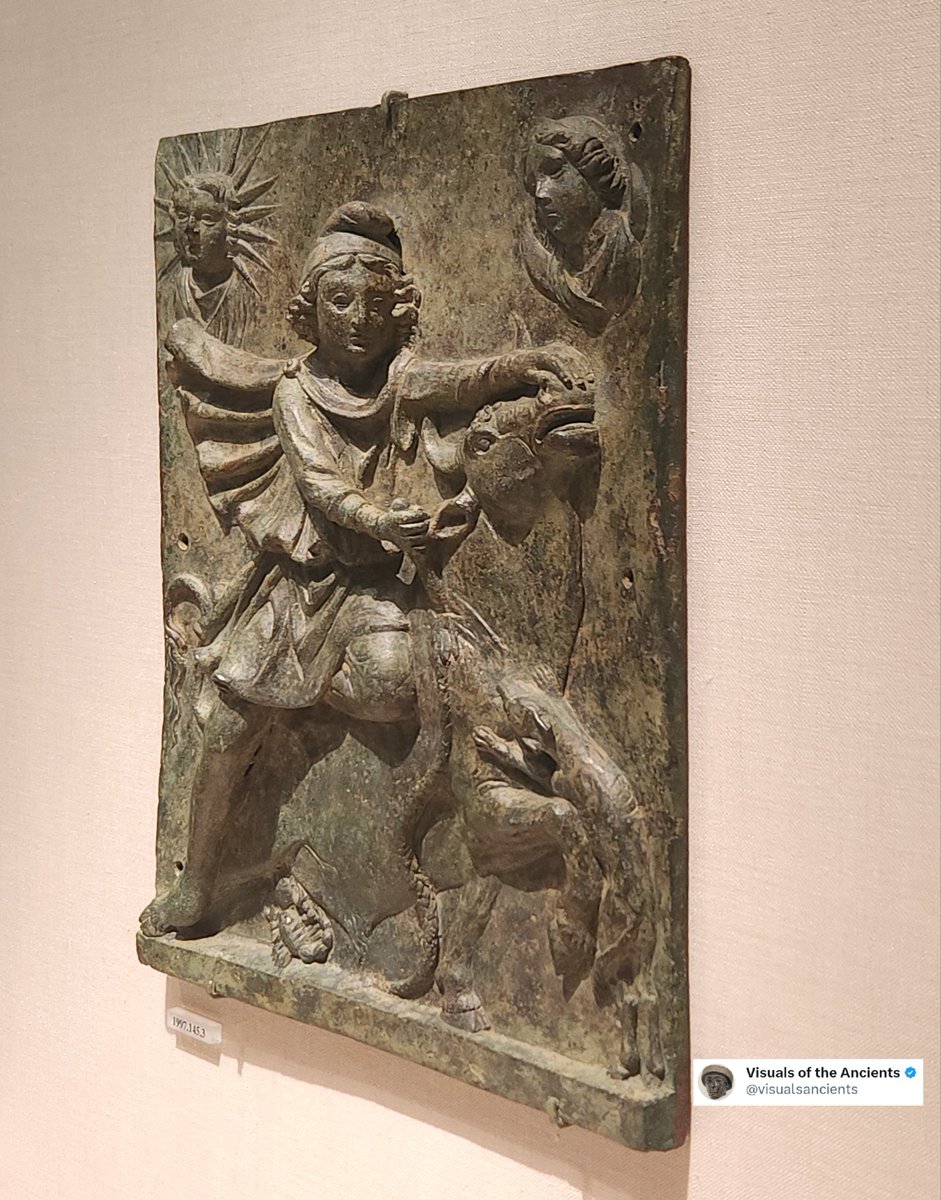
Bronze plaque of Mithras slaying the bull. Roman, mid-2nd to early-3rd century AD. 📸By me at the MET. The Mithraic Mysteries spread throughout the empire quickly in the 1st century AD, and it was especially popular among the soldiers. This plaque was probably part of a Mithraeum, the place of worship often built underground away from the public’s sight. Today, there are over 200 remains of Mithraeums stretching from Britain to Syria. This scene of Mithras slaying the bull is named “tauroctony.” Rebirth was essential to the cosmogony of the cult. Here, the bull represents fertility, and a new universal order is born from his sacrifice. The dog and the snake drink from the blood while the scorpion reaches for the testicles. The sun god Sol Invictus and the moon goddess Luna watch over the ritual. Some scholars interpret this imagery as astrological meanings. Probably of Eastern origins, born as a Roman adaptation from the Persian religion of Zoroastrianism, the Persian deity Mithra evolved in the Roman Empire as Mithras. Modern scholars debate at length the extent of this influence. As Mithraism was a mysterious cult, no written source of its members has come down to us. With Christianity taking hold of the empire in the 4th century AD, Mithraism started to fade, although some Mithraeums were still used a century later.
Visuals of the Ancients tweet mediaVisuals of the Ancients tweet mediaVisuals of the Ancients tweet media
English
3
32
177
3.6K