Colby Howard

503 posts

Colby Howard

Colby Howard

@colby_ch

Co-founder of Paragon Intel, provider of ratings and proprietary data on every public company c-suite.

New York, USA Katılım Kasım 2014
129 Takip Edilen250 Takipçiler
Colby Howard
Colby Howard@colby_ch·
Because I focus on using AI to create specific outcomes, be it a new feature or increased efficiency that drives down cost for our business, it’s easy to see the amount of activity around AI and think I’m missing the boat. This essay is a great reminder that the volume of use isn’t the accomplishment, but rather the increase in value produced. Thanks for writing.
English
0
0
3
2K
Colby Howard
Colby Howard@colby_ch·
No matter how good the foundation models get, companies will be a necessary extra layer for the near to mid term when it comes to selling to enterprise. Why? People want people. People might not be necessary, but people add a layer of handholding and communication and pitching that the foundation companies want to just solve with AI. So a legal AI startup that charges margin for capabilities the foundational models keep catching up to (without any fine-tuning) will continue to exist. Because a law firm won’t say “we’re using Claude now!” But they will say “the Harvey team is really impressive. They’ve been in big law before and it shows.”
English
0
0
0
28
Colby Howard
Colby Howard@colby_ch·
Love the write up. Here’s a question I’m not sure if you’re allowed to answer: how much do you believe your optimistic ending to the article? Was it added purely as a measure of comfort to the reader or do you actually believe in an individuals ability to harness AI’s ever-increasing capabilities? Because if you read the first 90%, not much about it points to that conclusion.
English
0
0
0
15
Colby Howard
Colby Howard@colby_ch·
Has this changed anything in practice? Musk thinks about the end then works to create it. You want to create new software using Claude - maybe the opening is easy, and the end is easy (you know what you want), but the middle is still messy and prolonged. Is the point that Putin just assumed he would win so didn’t do the requisite work on the opening and middle aspects?
English
0
0
0
1.4K
Colby Howard
Colby Howard@colby_ch·
The general description of ClawBot or ClawdBot or whatever it will be named in the future has been “what Siri should have been.” This is clever, as it makes it seem like game over. When really the quote should be “what Siri will be”. ClawBot was first, and will be used be first-movers. A majority of people will be using the incumbent’s version of it in two years.
English
0
0
0
29
Colby Howard
Colby Howard@colby_ch·
The main reasons we only use AI workflows and not agents in our business is due to a necessarily high bar for accuracy and consistency. There is no B+ of data quality when selling to professional investors. It’s either right or it’s wrong. LLM’s are inherently inconsistent and love deviating, so the hundreds of hours we’ve spent on AI has been about creating guardrails and limiting the information it can use with rigorous specificity. Then we test and test and test. Agents add in unpredictability on top of the inconsistency that we just can’t risk at this point. We need to know each step and why, and it needs to do that every time, which, at that point, is just a workflow. Even still, we’ve been able to scale things we used to manually, and created new things we couldn’t have done before. That scale at the same quality has been incredible at driving value.
English
0
0
0
15
Colby Howard
Colby Howard@colby_ch·
New technology is always better than you ever could have imagined 10 years ago and never quite as good as they’re saying it is.
English
0
0
0
9
Colby Howard
Colby Howard@colby_ch·
Is the AI revolution traditional media's time to rise again? The decentralization of news (twitter, facebook, instagram) meant we favored on the ground graphics in real time. We accepted overreactions and false narratives as long as news was given to us quicker than the NYT, WSJ, or any other media company. What we wanted was the video and picture as soon as possible. The "truth" was both what we got to discern ourselves based on what we saw, and also a trust that the facts would emerge over the next hours or days (at which point we had already moved on). But if all these real time platforms will be able to show things that look and feel real, but are in fact completely fabricated with AI, then their advantage vanishes. We may start leaning back on "waiting for confirmation" news organizations who will be relied on to sift through unreal and real, check with sources, and more reliably than not, report what happened. Will information slow?
English
0
0
0
12
Colby Howard
Colby Howard@colby_ch·
It's so tough to separate the dueling forces driving Dario's thoughts. 1. He is the head of a company in ruthless competition with deeply funded competitors. He's talking his own book, as every founder does. 2. He's as close as anyone can be to AI's potential issues. What are the odds that he's using Elon-esque timelines and magnitudes purely to get him the means to keep Anthropic moving forward? What are the odds he's being 100% transparent?
English
1
0
1
541
Dario Amodei
Dario Amodei@DarioAmodei·
The Adolescence of Technology: an essay on the risks posed by powerful AI to national security, economies and democracy—and how we can defend against them: darioamodei.com/essay/the-adol…
English
856
2.7K
15.3K
6.2M
Colby Howard
Colby Howard@colby_ch·
How's this for backwards? AI has made me appreciate code more than I ever did before. How so? I've never written a line of code in my life. So when LLM's came out, it was a revelation. All the things I could now do without ever having to touch or see code! Just chain 1, 2, 3, or 72 LLM steps together and I could create magic. It also meant I could be pretty cavalier about the format of my outputs. LLM's interpreted variations on outputs in pretty much the same way. What mattered was the text, not the structure. But now a few things have become true: 1. Code takes milliseconds not seconds or minutes to run. 2. Code doesn't charge you by the token. 3. You need code to actually push something to products that other people use. So with beefy workflows or things that need to scale cost efficiently, code steps have become vital. Now when I'm creating something, I'm asking more and more "can code do this instead?" And know what's the best? I still don't know how to code. I can ask AI to code something up, test it, revise it, and get it into production. But just like being in a foreign country, the language of code is becoming less foreign, and with more understanding comes more opportunities to use it.
English
0
0
0
16
Colby Howard
Colby Howard@colby_ch·
I love this and I love it's central irony: if you are an 8 or a 9, you will read it, you will internalize it, you will analyze it, and then you will determine what parts are strong, resonant, and useful, and which are not, and will implement accordingly. Said differently: to blindly rehash these ideas to others, to promote the entirety of it as life changing - that is actually in contradiction to the article itself.
English
0
0
0
42
Colby Howard
Colby Howard@colby_ch·
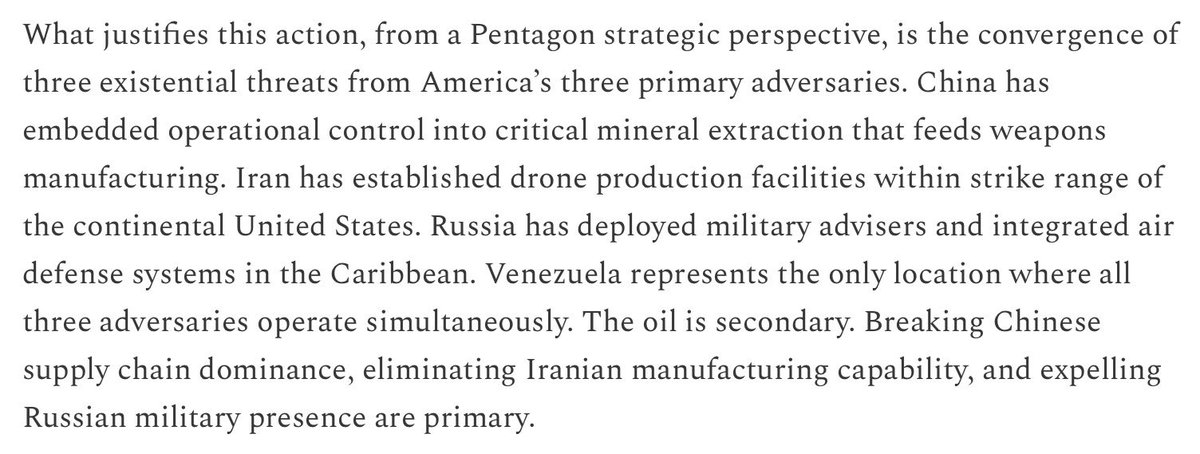
@DannyDayan5 Great note and all points to a continuance of our shift away from Europe and towards South America. Only issue is that for argument’s sake she reaches a bit far towards generalizations about Presidential will being a non factor vs Pentagon prioritization.
English
0
0
2
569
Colby Howard
Colby Howard@colby_ch·
@iAnonPatriot Take a look at 1850 and 1900. A good reminder we haven’t been doing this that long.
English
0
0
0
1.8K
American AF 🇺🇸
American AF 🇺🇸@iAnonPatriot·
The Average Salary vs. Home Prices This chart is insanity.
English
1.1K
6.4K
23.8K
2.1M
Colby Howard
Colby Howard@colby_ch·
Most people are viewing this as a philosophical thought piece, a moralizing societal critique, not as what it is: an investment thesis. It’s a prediction. A view on what people will do and how they’ll spend money and what companies will benefit. You then get to invest around it. Implicit in this being an investment thesis is the assumption that this degen cohort will outperform the other companies. These will triple or quadruple while the S&P will only double. It’s not a bad bet out of all the other bets you could make. My only critiques and questions are: He overreaches with “the next century”. No one’s investing in century long themes. It’s a 5-10 year time horizon. And with that in mind, it’s easier to think “yeah sure, I buy these companies doing very well in that timeframe”. As with every trend thesis, there’s a lot of speculative assumptions underpinning it. A lot of words, sometimes a bit of irrelevant overreaching. It all sounds good, but in the end it’s a story that extrapolates the future from the present and may or not come true. So finally: why won’t this come true? Because the paradigm shift, the “pathways are shut” are pathways that really haven’t been around all that long. Just a few generations. What happens next is influenced by new generations not addicted to social media, by political policy or a new temperance, by new potential economic opportunities. But over 5-10 years? Degen prob not a bad way to find some outperformance.
sysls@systematicls

x.com/i/article/2004…

English
0
1
0
52
Colby Howard
Colby Howard@colby_ch·
Most people are viewing this as a philosophical thought piece, a moralizing societal critique, not as what it is: an investment thesis. It’s a prediction. A view on what people will do and how they’ll spend money and what companies will benefit. You then get to invest around it. Implicit in this being an investment thesis is the assumption that this degen cohort will outperform the other companies. These will triple or quadruple while the S&P will only double. It’s not a bad bet out of all the other bets you could make. My only critiques and questions are: He overreaches with “the next century”. No one’s investing in century long themes. It’s a 5-10 year time horizon. And with that in mind, it’s easier to think “yeah sure, I buy these companies doing very well in that timeframe”. As with every trend thesis, there’s a lot of speculative assumptions underpinning it. A lot of words, sometimes a bit of irrelevant overreaching. It all sounds good, but in the end it’s a story that extrapolates the future from the present and may or not come true. So finally: why won’t this come true? Because the paradigm shift, the “pathways are shut” are pathways that really haven’t been around all that long. Just a few generations. What happens next is influenced by new generations not addicted to social media, by political policy or a new temperance, by new potential economic opportunities. But over 5-10 years? Degen prob not a bad way to find some outperformance.
English
0
0
1
39
Colby Howard
Colby Howard@colby_ch·
Unless you’ve been looking to exit and retire and that 5x looks great. Some of these owners are operators and looking for the best trade at the right time. Others are looking for that final windfall. Given the generational transition, there’s still a lot of potential energy around the lower multiple exit.
English
0
0
1
309
Aakash Gupta
Aakash Gupta@aakashgupta·
Kravis is describing the death of the most profitable trade in private equity history. The rollup math used to be simple. Buy 10 plumbing companies at 4-5x EBITDA, combine them into a platform, exit at 12-15x. Pure multiple arbitrage. No operational improvement required. GF Data shows deals under $10M still traded at 4.5x in 2024 while $100-500M platforms commanded 9x. That spread was the entire business model. What killed it wasn’t founder sophistication. It was data. PitchBook, CapIQ, and industry reports democratized the exact multiples PE firms were paying and exiting at. Founders who used to negotiate blind against a fund with 200 deals of pattern recognition now pull the same comps in 30 seconds. Bain found that rollups depending on multiple arbitrage alone returned 1.4x MOIC. Those with actual operational improvement returned 2.2x. The lazy version of the strategy stopped working years ago for institutional players. Now it’s stopped working for everyone. The VCs attempting “AI rollups” are making the same bet. General Catalyst’s Creation Fund has $1.5-2.5B earmarked to roll up service businesses and inject AI. The thesis is that embedding automation transforms a 5x EBITDA services company into a 20x software company. Fortune ran the numbers on this in July. Concentrix, the poster child for BPO automation, deployed AI across 1,000 customers in 2024. Their multiple stayed in low single digits. EBITDA margin still ~10%. The market refused to reprice them as software. Kravis knows this. KKR pioneered the rollup playbook in the 80s. When he says the arbitrage is closing, he’s telling you the entry point that made PE returns possible for 40 years is being competed away by information transparency. The firms that survive will have to do what PE always claimed to do but rarely did: actually improve the businesses they buy.
Boring_Business@BoringBiz_

Henry Kravis on VC firms trying to attempt the private equity rollup strategy using AI "The problem today is that [multiple] arbitrage is closing. Small companies are waking up and saying I wont sell my company at 6x when I look at comparables and they are selling at 15x"

English
33
111
1.1K
319.2K
Colby Howard
Colby Howard@colby_ch·
This is related to my favorite thing AI might solve. Sure, it will help "where did I save that?", but it could also be ever earlier - the "where do I save this?" stage. It could remove the need for individual tools that solo. Instead of wondering if you should send something to a slack channel, slack group, or individual; instead of figuring out if something is for confluence, notion, or google docs; instead of putting the right thing in the right drobox folder so someone new can find a year later... There might be a way where information is organized in a way that is most beneficial for AI agents to find it, so that when we need information later all we have to do is ask.
English
0
0
1
17
Colby Howard
Colby Howard@colby_ch·
In middle school I was the kid with a backpack full of papers, organized in no particular order, that I could rifle through and find things quickly. Some kids had color coded tabs and folders and spent more time trying to figure out how they categorized something that it negated all their organization effort. This is my favorite thing AI might solve. Sure, it will help "where did I save that?", but it could also be ever earlier - the "where do I save this?" stage. Instead of wondering if you should send something to a slack channel, slack group, or individual; instead of figuring out if something is for confluence, notion, or google docs; instead of putting the right thing in the right drobox folder so someone new can find a year later... There might be a way where information is organized in a way that is most beneficial for AI agents to find it, so that when we need information later all we have to do is ask. I don't know how this will work yet. Maybe it means a huge, updating text file is actually better than a folder system. Maybe it's a universal portal where you drag and drop or speak or type and it gets filed away automatically. But I love a world where we don't have to spend time dying by over-organization. My middle school self would, too.
English
0
0
1
15
Colby Howard
Colby Howard@colby_ch·
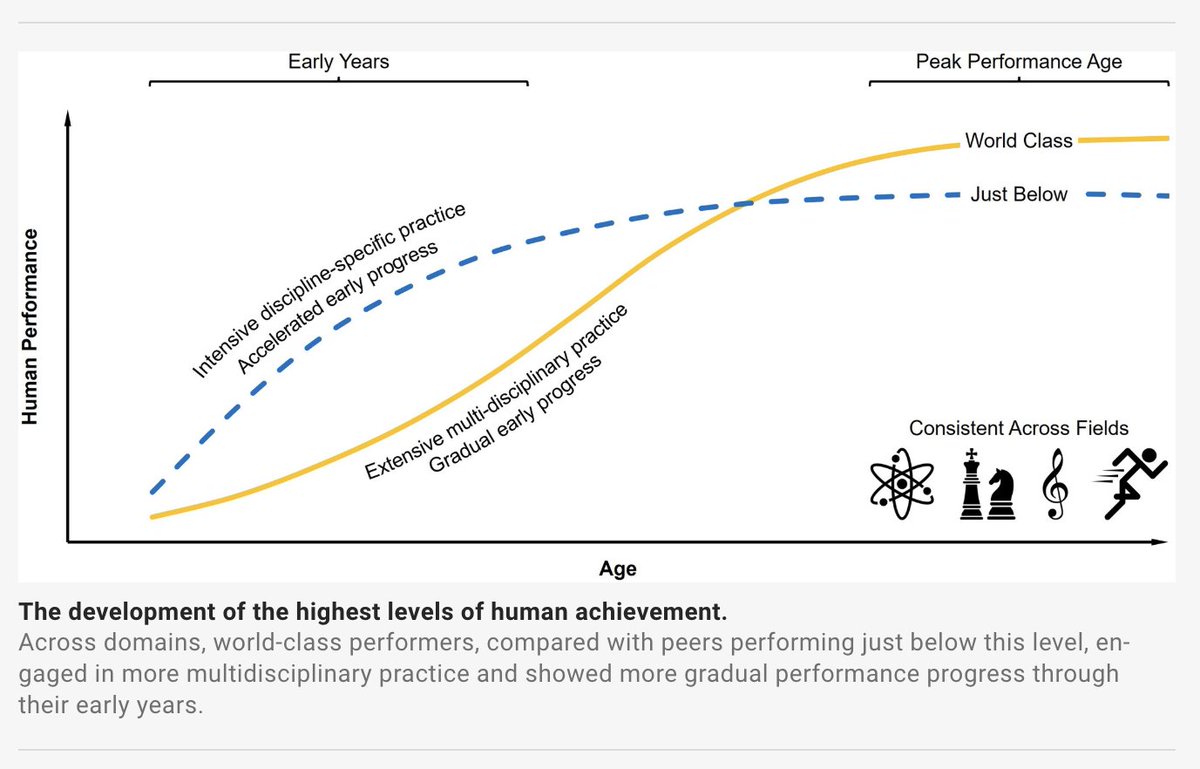
@BStulberg But if your goal is to get your kid into an Ivy… they just need to peak at 17 in rowing or fencing and call it a day.
English
4
1
42
7.9K
Brad Stulberg
Brad Stulberg@BStulberg·
A massive new study on peak performance included 34,000 international top performers: Nobel laureates, renowned classical music composers, Olympic champs, and the world’s best chess players. It shows early specialization is a trap, and the road to greatness is long and varied.
Brad Stulberg tweet media
English
244
2.3K
12.6K
2.2M
Colby Howard
Colby Howard@colby_ch·
In hindsight, I was too negative on Apple's AI efforts because I didn't understand one thing: we don't want them in the LLM game. We want them to create integrated AI throughout the entire iPhone. That's hard. We already have ChatGPT. Sure they could make Siri the voice version of that and provide fun answers, but then that would just be a better Amazon Alexa. Google has accomplished some of the below and has shown willingness to provide incomplete experiences rather than no experience at all. Apple's bar of quality has usually been it's either ready or it's not. What we want is the ability to tell Siri to turn off notifications for a certain app. What we want is to tell Siri give us directions to a friend's house but take us to a gas station first. What we want is to tell Siri we just ate a Big Mac and it's uploaded to our non-Apple nutrition tracker. Not only with this require Apple to cope with their current iPhone systems and to create some new native apps, but it will also require interacting with the hundreds of different apps we have on our phones, 99% of which Apple didn't make. How do you get all of them to tweak their apps to better accommodate that universal experience? How many will say no to the phone having control over the app vs just the user? Honestly, it sounds like a complete headache. Could Apple create it's own foundational model called AppleChat that is similar to ChatGPT? Probably. But what it needs to do is actually far more complex given how much it will need to interface with the real world - and this is where most LLM's continue to fail.
English
0
1
0
59