Colleanto 🐬

1.7K posts

Colleanto 🐬 banner
Colleanto 🐬

Colleanto 🐬

@colleanto

“Temono l’amore perché crea un mondo che non possono controllare” George Orwell, 1984

Italia Katılım Aralık 2014
838 Takip Edilen119 Takipçiler
Colleanto 🐬
Colleanto 🐬@colleanto·
@MMmarco0 @fsyloslab Anche lo scorso anno tra fine Maggio e gli inizi di Giugno la Spagna si prese un’ondata di caldo da over 40°.
Italiano
0
0
0
425
Marco M.M.
Marco M.M.@MMmarco0·
La ringrazio per il titolo di meteorologo del Twitter, Lei lo considera un insulto ma io lo considero quasi un riconoscimento. Il punto però è semplice. Un’ondata di caldo a fine maggio sull'Europa Occidentale è un episodio meteorologico. Può essere molto intenso, può essere favorito da un clima di fondo più caldo, può inserirsi in una tendenza ormai evidente ma resta un episodio meteorologico. Il clima si valuta sulle serie, sulle frequenze, sulle persistenze, sulle anomalie ripetute nel tempo altrimenti facciamo il solito gioco. Quando fa più freddo del normale è "solo meteo", quando fa caldo è automaticamente “clima”. La scienza non funziona a senso unico. Il cambiamento climatico esiste, è robusto, ed è ovviamente anche antropico ma proprio per questo andrebbe comunicato con precisione, non usato come clava retorica ogni volta che un termometro sale.
Italiano
75
59
936
19.5K
Colleanto 🐬
Colleanto 🐬@colleanto·
@HiddenHistoryYT I also think that the capture of the Enigma machine on May 9, 1941, on Uboat 110, changed the fate of the war both at sea and on land.
English
1
0
4
320
Hidden History
Hidden History@HiddenHistoryYT·
In March 1943, Germany was winning the Battle of the Atlantic. U-boat wolfpacks were sinking Allied ships faster than the shipyards could replace them. Churchill later admitted it was the only thing during the war that truly frightened him. If the Atlantic convoys failed, Britain starved. If Britain starved, there was no D-Day. Two months later, the war was decided. May 1943, "Black May." The Allies sank 41 U-boats in 31 days. Entire wolfpacks vanished. The killers became the hunted, and they had no idea why. What changed? Everything, all at once. Escort carriers closed the "Black Pit," the mid-Atlantic gap where Allied air cover ran out and U-boats had hunted unmolested. B-24 Liberators with new centimetric radar could find a surfaced submarine from miles away, at night, in fog. Hedgehog mortars threw 24 contact-fused bombs ahead of an escort. A U-boat below didn't even hear them coming. And Bletchley Park was reading Dönitz's mail in near real time. On May 24, 1943, Admiral Dönitz did something unthinkable: he ordered his U-boats out of the North Atlantic. Five days earlier, U-954 had been sunk with all hands. One of the dead was his 21-year-old son, Peter. The longest continuous battle of the Second World War, six years, was effectively over. And most people have never heard of the month it ended.
Hidden History tweet media
English
13
58
496
28.1K
Colleanto 🐬
Colleanto 🐬@colleanto·
@MarcoDabizzi Le zanzare “pizzicano” tutti, solo che una minima parte della popolazione non è allergica e non sviluppa prurito e gonfiore. Per gli altri, me compreso, è una tortura continua.
Italiano
0
0
3
365
Marco Dabizzi
Marco Dabizzi@MarcoDabizzi·
Come non farsi pinzare dalle zanzare? In Australia, ogni singola persona ha il rimedio naturale "perfetto", ma nessuno funziona, se non la robaccia chimica più forte. Nei giorni scorsi, l'albergo dove eravamo a Chengdu non aveva le zanzariere. Io e Mrs Nut non amiamo l'aria condizionata e preferiamo aprire le finestre, e visto che eravamo al 22esimi piano, non credevo avremmo avuto problemi. Ed invece siamo stati invasi da un nugolo di zanzare grosse come pipistrelli, e Mrs Nut si è svegliata la mattina gonfia come un panda, piena di bozzi giganteschi. Io? Nulla. Mi hanno tenuto sveglio ronzandomi intorno e posandosi sul viso, ma non mi hanno pinzato, e se lo hanno fatto non me ne sono accorto. E così succede anche in Australia. "Gruppo sanguigno!" esclameranno i bergamaschi. Nope, Baby Nut ha lo stesso gruppo sanguigno e dorme senza problemi nel bush dove Mrs Nut sarebbe sollevata di peso e portata via dalle zanzare. E quindi? Ciccini, mica ho tutte le soluzioni. Non ho idea perché le zanze pizzichino delle persone più di altre, posso dire che se cercate una soluzione chimica, il vechio zampirone è probabilmente la più efficace e meno tossica.
Italiano
13
3
64
4.9K
hw97karbine
hw97karbine@hw97karbine·
German U-boat manufacturing scenes circa early 1942
English
9
89
891
30.1K
Colleanto 🐬
Colleanto 🐬@colleanto·
@Bluefidel47 Io me lo faccio fare sempre al momento al banco, non prendo mai quello confezionato perché spesso mettono conservanti. Anche se c’è scritto “preparato da noi”
Italiano
0
0
0
132
George
George@Bluefidel47·
La gerarchia della dieta carnivora non vede la costata (ribeye) al vertice. Il re è il macinato di manzo, pecora e capra . Ti fornisce aminoacidi dal tessuto muscolare, collagene e glicina dal tessuto connettivo e un rapporto di grassi che ti dà realmente energia, invece di lasciarti affamato un'ora dopo. È il mix dei ritagli di ogni taglio, miscelato in uno solo. La cosa più economica nel reparto macelleria è anche la più completa. Aldi, Tesco, o qualsiasi confezione sia in offerta. Questa è la dieta. Chi punta alle bistecche "boutique" sta pagando un sovrapprezzo per mangiare solo una parte dei bovini, ovini. Il mio tocco personale: Per completare questo protocollo, la mia base prevede l'integrazione strategica di grassi nobili per ottimizzare il metabolismo: uova, burro, burro ghee, olio di cocco ed olio di oliva. Sono questi elementi a chiudere il cerchio, garantendo una stabilità energetica totale. Flash Report Stato di Allerta: Basso. Focus sulla semplificazione e ottimizzazione dei costi nutrizionali. Ultimo Evento Cinetico: Ridefinizione della "gerarchia carnivora" per massimizzare la biodisponibilità dei nutrienti tramite il macinato di manzo e i grassi di alta qualità. Movimento Strategico: Abbandono del marketing dei tagli "premium" a favore dell'efficienza metabolica e della completezza nutrizionale. Impatto Mercati: La domanda di tagli economici ad alta densità proteica/lipidica cresce tra gli ottimizzatori che cercano un approccio sostenibile e scientificamente solido.
Sama Hoole@SamaHoole

The carnivore hierarchy isn't ribeye at the top. It's ground beef. You're getting amino acids from the muscle, collagen and glycine from the connective tissue, and a fat ratio that actually fuels you rather than leaving you starving an hour later. It's the trim from every cut, blended into one. The cheapest thing in the meat aisle is also the most complete. Aldi. Tesco. Whichever pack is on offer. That's the diet. The boutique steak crowd are paying a premium to eat less of the cow.

Italiano
14
63
266
10.8K
Colleanto 🐬
Colleanto 🐬@colleanto·
@Bluefidel47 Grazie per la risposta, pensavo che gli omega6 sono uguali a prescindere dall’alimento
Italiano
0
0
2
37
George
George@Bluefidel47·
@colleanto Neanche per sogno, abbiamo bisogno di omega 6 ma non dagli altri cibi che ho spesso elencato
Italiano
1
0
2
152
George
George@Bluefidel47·
1900: L’uovo viene descritto nei testi di nutrizione come l’alimento più completo della natura. I medici lo raccomandano a convalescenti, lattanti e anziani. A un bambino in crescita se ne danno uno o due al giorno. Un lavoratore ne mangia quattro a colazione. 1950: L’uovo viene implicato in un’ipotesi sul colesterolo e le malattie cardiache. L’ipotesi non è dimostrata. All’uovo si dice che deve aspettare. 1968: L’American Heart Association emette una raccomandazione ufficiale per limitare il consumo di uova a tre alla settimana. La raccomandazione si basa su un singolo studio osservazionale e sull’opinione personale di Ancel Keys. 1973: Viene lanciato il primo prodotto sostitutivo dell’uovo. È composto da albumi con l’aggiunta di conservanti, gomme e coloranti sintetici. Viene venduto come alternativa salutare per il cuore all’uovo, che è presente sulla tavola della colazione umana da diecimila anni. 1980–2010: Le popolazioni britannica e americana consumano miliardi di uova in meno ogni anno rispetto al 1950. Le malattie cardiovascolari continuano ad aumentare. L’obesità cresce rapidamente. Il diabete di tipo 2 triplica. 2015: Il comitato consultivo delle Linee Guida Dietetiche degli Stati Uniti, dopo aver esaminato l’insieme delle evidenze disponibili, elimina la raccomandazione di limitare il colesterolo alimentare. L’uovo, afferma il comitato, non è più un nutriente problematico. 2025: L’uovo torna di moda. L’uovo è nel menu della colazione dei ristoranti di tendenza. L’uovo è nei ricettari focalizzati sulle proteine. L’uovo è nella routine mattutina degli influencer. Durante i cinquantacinque anni in cui l’uovo è stato bandito, l’uovo non è cambiato. L’uovo è sempre stato lo stesso. I consigli sono cambiati. L’uovo no. I consigli erano sbagliati. Nessuno si è scusato. Le nonne che hanno continuato a dare uova ai loro nipoti per tutti gli anni ’80, contro le indicazioni esplicite di ogni autorità sanitaria del mondo occidentale, avevano ragione. Le nonne dovrebbero essere nel comitato.
Sama Hoole@SamaHoole

1900: The egg is described in nutrition texts as nature's most complete food. Doctors recommend it for invalids, infants, and the elderly. A growing child is given one or two a day. A working man eats four for breakfast. 1950: The egg is implicated in a hypothesis about cholesterol and heart disease. The hypothesis is unproven. The egg is told it must wait. 1968: The American Heart Association issues an official recommendation to limit egg consumption to three per week. The recommendation is based on a single observational study and the personal opinion of Ancel Keys. 1973: The first egg-substitute product is launched. It is composed of egg whites with added preservatives, gums, and synthetic colour. It is sold as the heart-healthy alternative to the egg, which has been on the human breakfast table for ten thousand years. 1980 to 2010: The British and American populations consume billions of fewer eggs per year than they did in 1950. Cardiovascular disease continues to rise. Obesity rises sharply. Type 2 diabetes triples. 2015: The United States Dietary Guidelines Advisory Committee, after reviewing the entirety of the available evidence, removes the recommendation to limit dietary cholesterol. The egg is, the committee states, no longer a nutrient of concern. 2025: The egg is back in fashion. The egg is on the breakfast menu of the trendy restaurant. The egg is in the protein-focused cookbook. The egg is in the influencer's morning routine. During the fifty-five years the egg was banned, the egg did not change. The egg has been the egg the entire time. The advice has changed. The egg has not. The advice was wrong. Nobody has apologised. The grandmothers who kept feeding their grandchildren eggs through the entire 1980s, against the explicit advice of every health authority in the Western world, were correct. The grandmothers should be on the committee.

Italiano
18
378
1.1K
27.7K
WW2 The Eastern Front
WW2 The Eastern Front@ShoahUkraine·
What was happening on April 24, 1945, on the Eastern Front? Let’s get into it! By April 24, the Red Army had fully closed the ring around Berlin, severing the last overland links between the city and the German 9th Army to the southeast. The 5th Shock Army under Colonel-General Nikolai Berzarin and the 1st Guards Tank Army under Colonel-General Mikhail Katukov pushed in from the southeast, overcame a counterattack by the German LVI Panzer Corps, and by evening reached the Berlin S-Bahn elevated railway ring north of the Teltow Canal. Supporting operations saw the 5th Shock Army cross the Spree River north of Treptow Park, aided by gunboats from the Dnieper Flotilla. The 1st Ukrainian Front assaulted across the canal after a massive pre-dawn bombardment, with nearly 3,000 guns and mortars firing from 6 a.m. They met fierce resistance from the German 20th Panzergrenadier Division, which briefly eliminated a bridgehead at Lankwitz. In the north, the 12th Guards Rifle Corps advanced into Berlin’s Wedding district and encountered the heavily fortified Humboldthain Flak Tower, one of three massive concrete anti-aircraft towers. Red Army forces contained but bypassed it, while additional units pushed toward Spandau in the west to tighten the encirclement. German defenses inside the city were commanded by General Helmuth Weidling, appointed Berlin Defense Area commandant that morning. He controlled roughly 45,000 regular troops from battered units, including the 20th Panzergrenadier Division in the west, the 9th Parachute Division in the north, the Müncheberg Panzer Division in the northeast, and the 11th SS Panzergrenadier Division Nordland in the south and southeast, along with about 40,000 Volkssturm, police, and Hitler Youth. Late that evening, the last major reinforcements arrived: 300 to 330 French volunteers from the SS Charlemagne Division, the 33rd Waffen Grenadier Division of the SS, led by SS-Brigadeführer Gustav Krukenberg. They reached Berlin via a circuitous route through Neuruppin and the Grunewald forest. At the same time, southeast of Berlin in the Spree Forest, about 30 to 50 km from the capital, the Battle of Halbe erupted on April 24. The German 9th Army under General Theodor Busse, around 80,000 men with limited armor and vehicles, was cut off in a shrinking pocket after Red Army pincers linked near Teupitz. Adolf Hitler had ordered the army to hold and relieve Berlin, but Busse, ignoring these orders, launched breakout attempts westward to link with the German 12th Army under General Walther Wenck and surrender to the Western Allies rather than face Soviet captivity. Fighting was savage in dense pine forests and around Halbe. The first major breakout attempt came on April 24, followed by repeated assaults over the next week. Red Army forces from the 1st Belorussian and 1st Ukrainian Fronts hammered the pocket with artillery, air strikes, and ground attacks. The area became a nightmare of destroyed convoys, civilians mixed with troops, and close-quarters combat. Farther south in Silesia near the Polish border, Army Group Center under Field Marshal Ferdinand Schörner launched one of the final German counterattacks, the Battle of Bautzen, beginning around April 21 to crush Soviet and Polish advances and relieve pressure elsewhere. The Soviet 294th Rifle Division was encircled at Weißenberg by the German Brandenburg Division, and its breakout attempt saw large parts destroyed. The German 20th Panzer Division linked with trapped units inside Bautzen and launched a coordinated assault, recapturing most of the town after intense house-to-house fighting, while a hasty Polish counterattack failed. Although tactically successful, often described as the Germans’ last victory on the Eastern Front, it had negligible strategic impact on Berlin and was quickly contained.
WW2 The Eastern Front tweet media
WW2 The Eastern Front@ShoahUkraine

What was happening on the Eastern Front between April 21 to 23, 1945? The Polish 2nd Army and the Red Army go on the house to house hunting of the last remnant of the Wehrmacht and the SS! 🇵🇱✊ April 21, 1945 The Red Army arrived at the outskirts of Berlin and began entering the city limits. Soviet troops under Marshal of the Soviet Union Ivan Konev also captured the German military headquarters at Zossen, south of Berlin, disrupting command structures. From his Führerbunker, Adolf Hitler ordered a final, all-out counterattack by forces in the Berlin area, to be led by SS-Obergruppenführer Felix Steiner. He demanded every available man, tank, and aircraft be committed. One of the last major engagements on the Eastern Front erupted around Bautzen (in present-day Saxony, east of Dresden). This was part of Konev’s 1st Ukrainian Front’s southern flank operations during the broader Berlin Offensive. German Army Group Center (remnants of the 4th Panzer Army and 17th Army, roughly 50,000 troops with armor) launched a counteroffensive against the Polish 2nd Army and supporting Soviet units. Fierce house-to-house fighting saw Germans recapture Bautzen and exploit gaps in Polish lines, creating chaos but achieving no strategic breakthrough toward relieving Berlin. April 22, 1945 The 1st Belorussian Front advanced into the northern and eastern suburbs of Berlin. Street fighting intensified as The Red Army pushed deeper into the city. During an afternoon situation conference, Hitler learned that the Steiner attack had failed to occur and that The Red Army was already entering Berlin’s northern suburbs. He erupted in a tirade, denouncing his generals and the army as cowards and traitors, declared that " everything is lost," and announced he would remain in Berlin until the end and then commit suicide. He permitted others in the bunker to leave if they wished. This marked a pivotal psychological collapse. German forces pressed their local counterattack, driving deeper into Polish-Soviet lines (reaching areas like the Schwarzer Schöps River by the next day) and inflicting heavy losses on Polish units, including the near-destruction of some formations. Soviet reinforcements began arriving to stabilize the front. April 23, 1945 The Red Army ground forces began penetrating the outer suburbs and moving into central Berlin districts, with house-to-house combat escalating. The city was increasingly isolated. German radio broadcast that Hitler was personally in the " main fighting line " in Berlin and would stay there. (This was largely false, he remained in the bunker.) Meanwhile, Hermann Göring sent a telegram from southern Germany offering to assume leadership of the Reich if Hitler was incapacitated. Hitler viewed it as treason, stripped Göring of all titles, and ordered his arrest. The German tactical push continued, recapturing territory and linking up isolated units, though it had no impact on the encirclement of Berlin. The battle would drag on until late April with heavy casualties on both sides but ultimately failed strategically. In summary, these three days represented the death throes of Nazi Germany on the Eastern Front. The Red Army had effectively encircled Berlin (full encirclement was completed by April 25), while Hitler’s regime disintegrated amid delusional orders and betrayals. The Battle of Bautzen was a brief German tactical success on the southern flank but changed nothing about the overall Soviet victory. Fighting in Berlin would continue street-by-street until early May, with the German surrender following shortly after.

English
8
38
215
27.9K
Colleanto 🐬
Colleanto 🐬@colleanto·
@DeLasAmericas0 Try printing out a plan of the Pantheon and placing it in front of your bed, not too far away. You'll dream all night!
English
0
0
0
1.1K
Labbra & Sole
Labbra & Sole@LabbraiSole·
🇮🇹🏛️ EL PANTEÓN DE ROMA: El misterio del agujero que nunca inunda 🌧️. Podrías pensar que tener un agujero de ocho metros en el techo es una falla de diseño, pero en el Panteón de Roma es una obra maestra de ingeniería. Este óculo deja entrar la lluvia directamente al edificio, sin embargo, el interior jamás se inunda. El secreto reside en su suelo de mármol, que posee una ligera curvatura convexa casi imperceptible que dirige el agua hacia los bordes. Allí, una red de 22 drenajes ocultos evacua el líquido de forma inmediata, un sistema que ha funcionado a la perfección durante casi dos mil años. Esta estructura nos demuestra la genialidad romana para canalizar los elementos en lugar de simplemente bloquearlos. El Panteón sigue en pie como un testimonio de una arquitectura diseñada para la eternidad, donde la funcionalidad y la estética se fundan en una solución técnica que hoy seguimos admirando. ¿Crees que la arquitectura moderna ha perdido esa capacidad de crear estructuras que duran milenios, o simplemente hemos cambiado la durabilidad por la conveniencia inmediata?
Español
64
1.6K
6.5K
437.9K
Hidden History
Hidden History@HiddenHistoryYT·
U-372 was a Type VIIC U-boat and was laid down on 17 November 1939 by Kriegsmarinewerft Kiel as construction number 3, launched on 8 March 1941 and commissioned on 19 April 1941 under Kapitänleutnant Heinz-Joachim Neumann. The boat's career began with training at 1st U-boat Flotilla on 19 April 1941, followed by active service on 1 July 1941 as part of the 1st Flotilla until 13 December 1941, whence she joined 29th U-boat Flotilla for operations in the Mediterranean. In 6 patrols she sank 3 merchant ships, for a total of 11,751 gross register tons (GRT), and an auxiliary warship of 14,650 GRT. U-372 was sunk on 4 August 1942 in the Mediterranean, SW of Haifa, in position 32°28′N 34°37′E, by depth charges from Royal Navy destroyers HMS Sikh, HMS Zulu, HMS Croome, HMS Tetcott and an RAF Wellington bomber. All hands survived.
Hidden History tweet media
English
3
21
246
7.4K
hw97karbine
hw97karbine@hw97karbine·
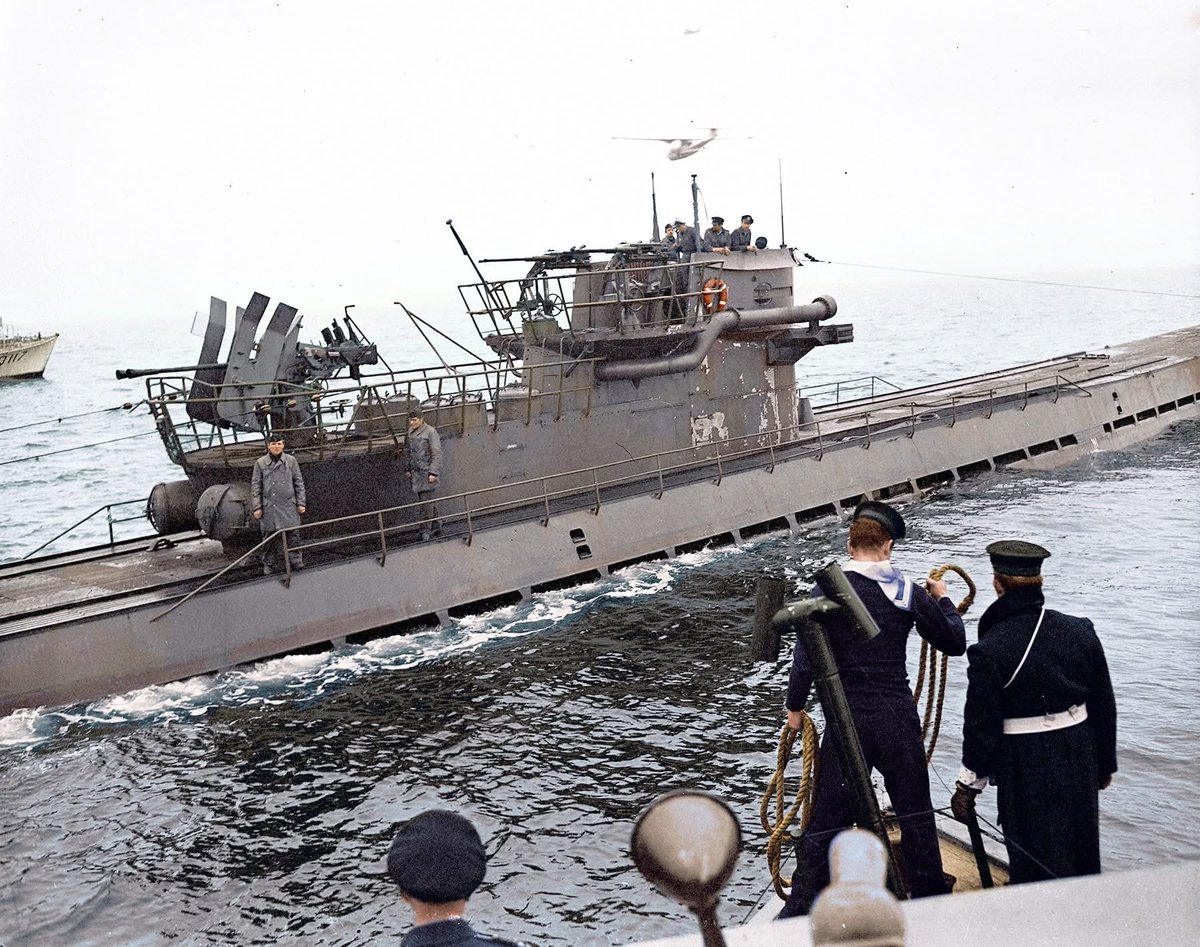
Kriegsmarine Type VIIC U-boat U-564 bearing her distinctive "Black Cat 3x" insignia resupplied with torpedoes at sea during her sixth war patrol from Type IXC U-boat U-154 Northeast of Puerto Rico in early August 1942 The latter submarine was returning from her third patrol
English
9
47
571
25.3K
Colleanto 🐬
Colleanto 🐬@colleanto·
@MMmarco0 Ieri a Capri si stava bene al sole, all’ombra bisognava coprirsi. Alle 18:30 era fresco/freddo
Italiano
0
0
2
434
Marco M.M.
Marco M.M.@MMmarco0·
Perché oggi lungo le coste si sta meglio con qualche grado in meno, mentre nelle zone interne sembra quasi tarda primavera? In molte aree d’Italia le zone interne pianeggianti e di bassa collina stanno salendo fino a 24-25 °C, mentre lungo le coste si resta un po’ più bassi. Il motivo è semplice: la terra si scalda più in fretta, il mare molto più lentamente. E così in primavera basta spostarsi di pochi chilometri per cambiare del tutto sensazione. È uno dei segnali più tipici di questa stagione: stessa regione, stesso giorno, aria molto diversa tra costa ed entroterra.
Italiano
27
36
443
16.3K
Francesco Mosca
Francesco Mosca@FmMosca·
🇮🇹 Non c’è emergenza petrolio 🇮🇹 C’è emergenza GAS, ma #UE mente per non trattare con la Russia 🇮🇹 Non c’è emergenza petrolio 🇮🇹 C’è emergenza GAS, ma #UE mente per non trattare con la Russia MENTONO MENTONO MENTONO #UscITA
Italiano
26
162
447
5.1K
Hidden History
Hidden History@HiddenHistoryYT·
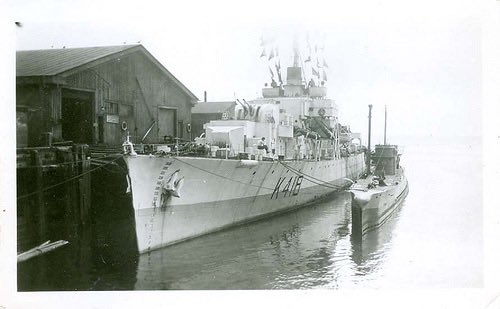
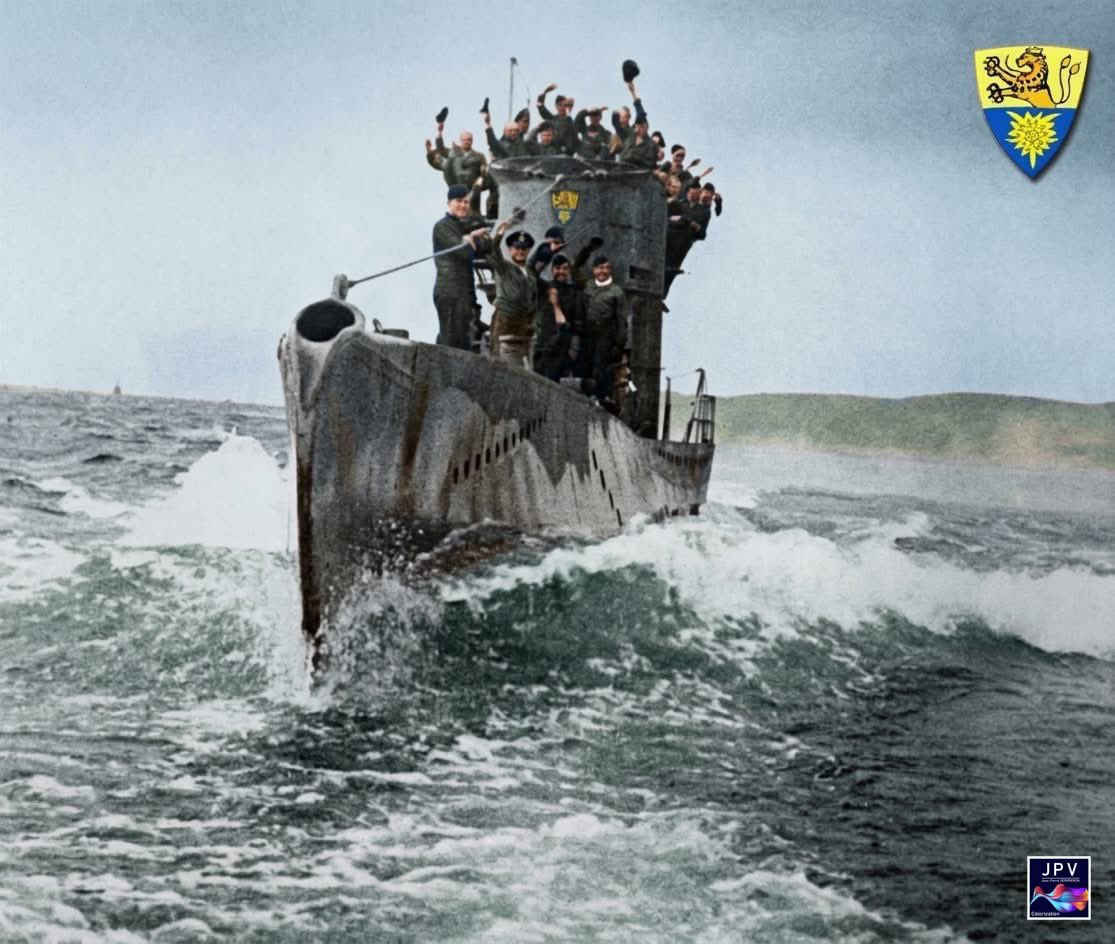
Surrender of the U-889 to the Royal Canadian Navy near Shelburne, Nova Scotia, May 13, 1945
Hidden History tweet media
English
6
43
516
18.7K
Hidden History
Hidden History@HiddenHistoryYT·
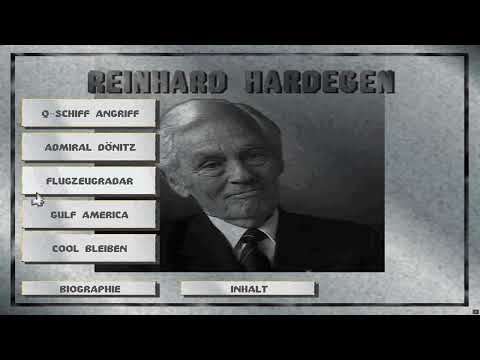
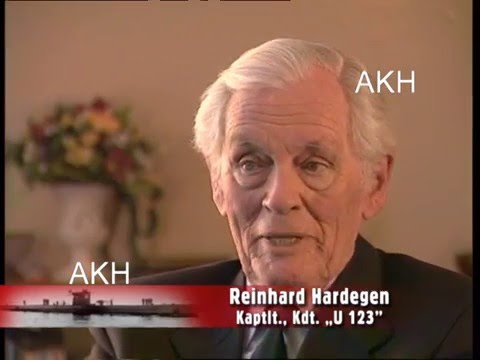
He attacked America’s coast… sank ships in the dark… and lived to be 105. Sounds unreal, right? But this is the story of Reinhard Hardegen, one of the most feared submarine commanders of World War II. Born on March 18, 1913, Hardegen rose through the ranks of the German Kriegsmarine to become a Korvettenkapitän and commander of the U-123. At a time when naval warfare was becoming more ruthless and unpredictable, he mastered one of its deadliest forms… submarine warfare. But everything changed in early 1942. In what became known as Operation Drumbeat, German U-boats launched a bold and unexpected assault along the eastern coast of the United States. Cities were lit up at night. Ships moved without proper protection. Many believed the war was still far away. They were wrong. Under the cover of darkness, Hardegen and other U-boat commanders struck with precision. Tankers burned. Cargo ships vanished beneath the waves. The Atlantic turned into a hunting ground, and the U.S. coastline became dangerously exposed. Hardegen quickly became one of the standout figures of this campaign. His missions alone led to the sinking of at least 25 Allied ships. Each patrol added to his growing reputation as a calculated and highly effective commander. For his actions, he was awarded the Knight’s Cross of the Iron Cross with Oak Leaves, one of the highest military decorations in Germany at the time. It marked him as one of the elite figures in submarine warfare. But what makes his story even more remarkable is not just what he did during the war… it is how long he lived after it. While many of his contemporaries were lost to the conflict, Hardegen survived. He returned to civilian life, witnessed decades of global change, and outlived almost an entire generation connected to the war. He passed away on June 9, 2018, at the age of 105. From commanding a submarine in one of the most dangerous naval campaigns in history… to becoming one of the last living links to that era… his life stretched across a timeline few could ever imagine. A man shaped by war. A witness to history. A story that refuses to fade.
Hidden History tweet media
English
59
340
3.1K
113.5K
Colleanto 🐬
Colleanto 🐬@colleanto·
@hw97karbine Great video! 95% of those productions are at the bottom of the Atlantic.
English
1
0
4
188
hw97karbine
hw97karbine@hw97karbine·
Kriegsmarine U-boat manufacturing scenes in 1942
English
11
88
874
23.7K