Collin Cleary

226 posts

Collin Cleary banner
Collin Cleary

Collin Cleary

@collin_cleary

I am an independent scholar with a Ph.D. in philosophy, author of several books dealing with Asatru, mysticism, and philosophy.

Sandpoint, Idaho Katılım Aralık 2025
139 Takip Edilen2K Takipçiler
Chris Menahan 🇺🇸
Chris Menahan 🇺🇸@infolibnews·
British Col. Richard Kemp (ret.) to Jewish News Syndicate Summit in Jerusalem: "I speak as a goy, a mere goy: the Jews were put on the face of the earth to be a light unto nations, and Israel is being that light."
English
272
198
620
129.3K
Collin Cleary
Collin Cleary@collin_cleary·
Studies have shown that being Left-wing correlates with low agreeableness, low conscientiousness, and high neuroticism. More than 50% of females under the age of 30 who identify as far Left have been diagnosed with a mental illness, most often depression. Being far Left has also been found to correlate with the so-called “dark triad” personality traits: narcissism, Machiavellianism, and psychopathy. The most conspicuous of these traits is narcissism – something we have all noticed in SJW-types. These are highly insecure individuals with a fragile sense of identity who crave approval and adoration from others. They attempt to achieve this by signaling their adherence to the values and beliefs that prominent authority figures have declared to be morally correct. They expect, in return, approval and “likes,” from which they derive a sense of self-worth. But this situation is highly unstable. If those beliefs are questioned – or, worse yet, if their signaling is met with skepticism or ridicule – they fly into fits of narcissistic rage. Interestingly, transsexualism strongly correlates with borderline personality disorder and narcissism. Leftists claim that they are concerned about equality and about injustice done to others. Conservatives suspect that they are insincere, and psychological testing largely bears this out. Leftists do identify with groups or individuals who they see as low in power, but this is because they perceive themselves as weak and thus also low in power. They place so much of an emphasis on equality because they feel they deserve more power than they have. Leftists are also concerned about harm avoidance insofar as they feel that others have power over them, and they feel oppressed by this. Since they perceive themselves as physically weak, Leftists feel they have no choice but to try to acquire power in a subterranean fashion. Thus, they virtue signal about equality and harm avoidance. This is clever, because most people do indeed fail to recognize it as a strategy for attaining status and power. Leftists also “victim signal,” another covert means of attaining power, and strongly correlated with narcissism and Machiavellianism. As Edward Dutton writes, the Leftist “loudly proclaims that he is compassionate and kind in order to hide the fact that he is selfish and ruthless and in order to allay his own feelings of inferiority by convincing himself and others of his moral superiority.” He cites one psychological study that identifies “malicious envy” as the single biggest motivator of radical Leftists. I should note that although these findings are extremely interesting, fundamentally they add little to what Friedrich Nietzsche was already saying about the Left in the 19th century. Principally in The Genealogy of Morals (1887), Nietzsche theorized that Leftists (as well as the first Christians) were constitutionally weak individuals whose envy and resentment of the strong led them to concoct a “slave morality” which inverts natural values and celebrates instead weakness, victimhood, and asceticism.
English
1
1
6
184
Collin Cleary retweetledi
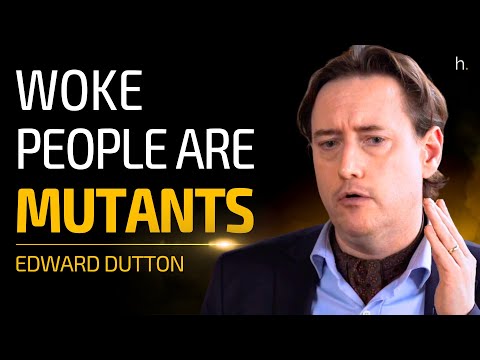
Edward Dutton
Edward Dutton@jollyheretic·
How a world with too many old people can only mean tyranny Link Below!
Edward Dutton tweet media
English
2
1
19
2.2K
Collin Cleary retweetledi
Martin Sellner
Martin Sellner@MartinSellner_·
Es gibt keine Massenproteste mehr gegen Remigration. Aber überall in Europa gibt es Demos für Remigration. Der linke Widerstand ist gebrochen, und wir werden jeden Tag stärker. Noch ist nichts entschieden, aber die Chancen stehen gut. Weitermachen, voranpreschen.
Deutsch
80
430
3.7K
25.2K
Collin Cleary
Collin Cleary@collin_cleary·
@ramzpaul The poor defenseless, powerless state of Israel. They always try this "we're powerless" stuff. No one is buying it anymore. They can no longer play the victim.
English
0
0
3
43
Strawman
Strawman@collapsologist·
@collin_cleary Large scale industrial society requires interchangeable units of human labor that can easily be uprooted and put to work in a location that is more economically efficient Modern liberalism is the conception of human nature that allows us to do that
English
1
0
1
63
Collin Cleary
Collin Cleary@collin_cleary·
Classical liberalism arrives at its conception of human nature by abstracting man from society, considering him in the "state of nature." The modern approach is the complete inversion of the ancient. Aristotle defined man as a political (i.e., social) animal, as well as a rational animal. Individuals were understood to derive their identity from their various relations to others, within a definite cultural context into which they had been born. The moderns, by contrast, try to understand the human individual by artificially removing him from all relations to others. But, if we do that, what exactly is left? Aren’t virtually all of our uniquely human characteristics socially embedded ones, such as language, morality, and the capacity for artistic expression? When we abstract man from all social relations, all that is left of him is what he shares with the animals: appetite. Thus, modern liberal society conceives of man as exclusively a being of appetite, and individuals are motivated to behave in various ways through appeals to their appetitive nature. It is the promise of satisfying one’s appetites that is offered as compensation for the drudgery of the modern work world, the loss of family ties, the loss of religion, the alienation of urban life, and much else.
English
2
2
14
426
Collin Cleary
Collin Cleary@collin_cleary·
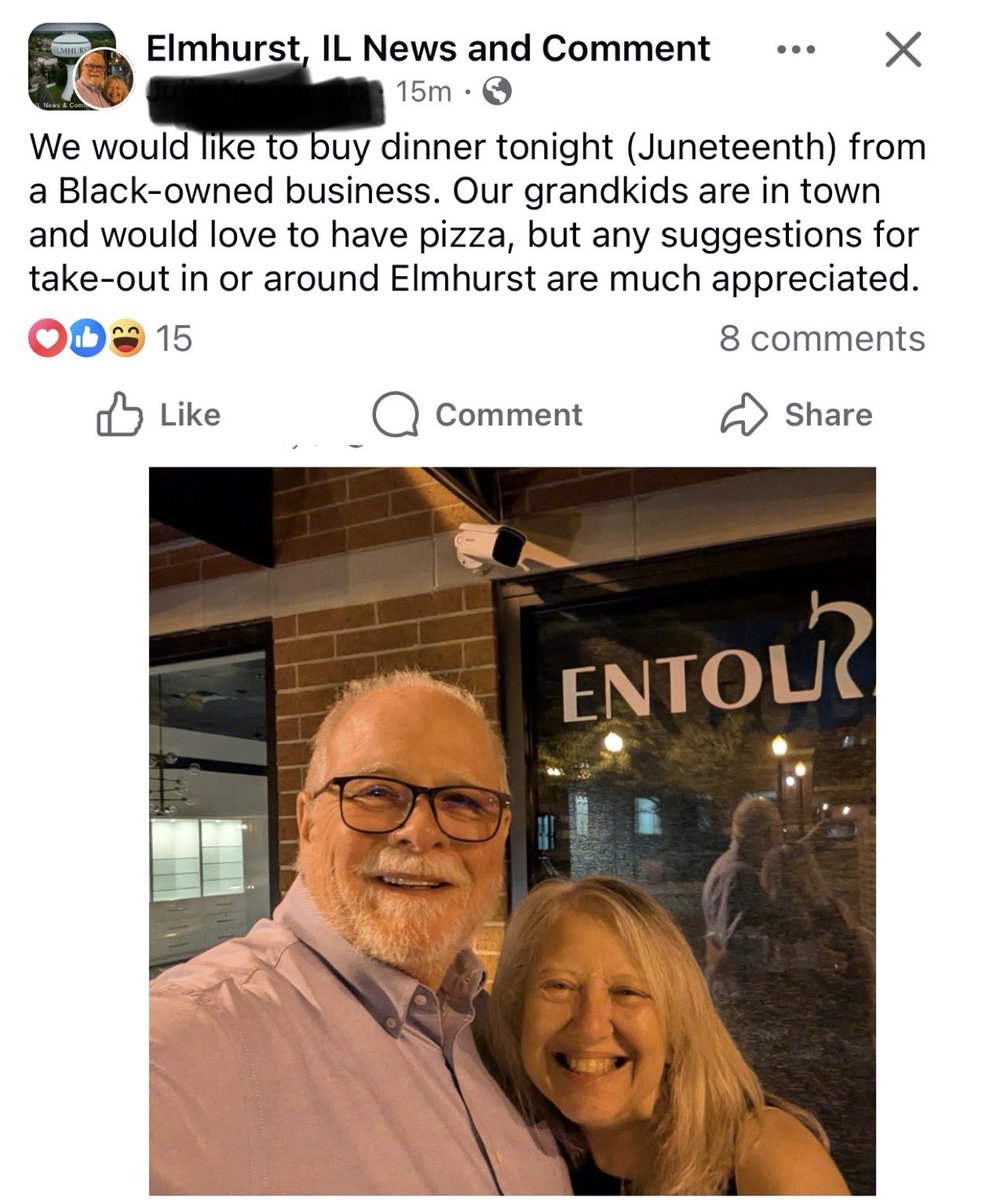
Harvard political scientist Robert Putnam studied diversity and came to conclusions that surprised him: “Diversity seems to trigger not in-group/out-group division, but anomie or social isolation. In colloquial language, people living in ethnically diverse settings appear to ‘hunker down’ – that is, to pull in like a turtle.” Putnam’s research shows that in diverse “communities” people become less trustful even of members of their own group. Distrust, isolation, and a general hardening and callousness toward others increases. In short, sentiments such as sympathy, the very basis of morality, weaken and atrophy the more “diverse” society becomes. The only alternative for those who advocate multiculturalism (or who perceive it as in their interests) is to lecture us all with abstract moral principles about the necessity of coming together and cooperating (while simultaneously, of course, proclaiming that which divides us as our greatest strength). But this approach presupposes that morality is a matter of following abstract rules. The truth, however, is that in moral judgment sentiments come first, and “reasons” follow. Unable to rely upon sentiments-based morality to bind people together in multicultural societies and make them behave, governments have to resort more and more to surveillance and policing. It is difficult to see how such societies are sustainable, and impossible to see how they are desirable.
Collin Cleary tweet media
English
23
211
1.2K
33.6K
Collin Cleary
Collin Cleary@collin_cleary·
@lowrydan11 No, none of us do. But it's great when Harvard profs have to admit this. And it provides a response when our opponents insist on having "evidence."
English
0
0
2
201
Collin Cleary
Collin Cleary@collin_cleary·
@Britski_Nic There's just no helping boomers. They have been thoroughly brainwashed. They can't even learn the hard way.
English
0
0
5
52
Massimo
Massimo@Rainmaker1973·
The obituary for Margaret Groening, the mother of The Simpsons' creator, Matt Groening.
Massimo tweet media
English
27
94
671
52.8K
Collin Cleary
Collin Cleary@collin_cleary·
HOW I DISCOVERED THE OLD RELIGION When I was a small child, my parents bought me a set of storybooks that were thematically organized. There was a volume of adventure stories, another of mysteries, science fiction, etc. And there was a volume on mythology, which retold classic myths from around the world. There was quite a bit of space devoted to the Norse stories. I read all of that, and it seemed to strike a chord deep down inside me. One evening, around sunset, I went out into my backyard, to a fort I had built with the child next door. I carried a toy sword with me. Standing on top of the fort, I carefully looked around to make sure no one could see me. Then, facing the setting sun, I lifted my plastic sword into the air with both hands, and called to Thor. I can still remember, at a visceral level, the feeling this occasioned in me. I can recall it with the same sort of vividness as I can recall an odor or a taste I experienced long ago and which made a big impression, or with which I have pleasant associations (like the odor of my grandmother’s pantry, or the perfume my mother wore). But it’s hard to describe. On the one hand, what I had done felt somehow fundamentally RIGHT. It was a feeling that seemed to say, “THIS is what I am supposed to be doing.” I seemed to feel this in my bones. At the same time, it felt forbidden, transgressive. But this made it genuinely thrilling, and can still summon that feeling as if it were yesterday (this took place probably about 50 years ago). However, it would be many, many years before I discovered that there were other people who had had similar experiences and were trying to revive the old religion. I never went through a Christian period, though. With respect to Christianity I was kind of a knee-jerk Nietzschean from early childhood on. Christianity felt weak and flaccid to me. Fortunately, though my parents were nominally Protestant Christians, we almost never went to church and I really had no religious upbringing. Anyway, this is how it started with me. If you have similar stories to share, I would love to hear them.
Collin Cleary tweet media
English
2
0
22
976
Tom Rowsell
Tom Rowsell@Tom_Rowsell·
Starting Heathenry is a NEW ritual-focused online course which will furnish you with the knowledge and confidence to practise the Germanic Heathen religion alone or with others, making wise decisions about worship based on reliable historical evidence. The course teaches you how to construct Heathen prayers for yourself, not according to the established rites of any modern group, but according to what historical sources show. Starting Heathenry assumes you are interested in Germanic paganism, know about the gods and myths, and want to begin practising this religion, but require guidance on how to do so. It is based on a micro-learning structure which is proven to improve knowledge retention by 18-80% in students compared to other learning methods. The 10 lessons include over 50 videos, and quizzes to access from your phone or computer. Access more than 5 hours of learning material bit by bit, as you please. A modern method of learning about an ancient religion. Your path to knowing the gods through ritual starts here
Tom Rowsell tweet media
English
112
106
1.1K
997.8K
Collin Cleary
Collin Cleary@collin_cleary·
The post below didn't generate much comment on X. But I reposted it on Facebook and got a lot of comments. Some were from angry Leftists who, predictably, had no arguments and engaged in name calling. But I noticed something new: many accused me of using AI to write the post, and there was a lot of talk about "big words" and "trying to sound deep." Now, I am new to AI and have only used it to create some images to illustrate my articles. But I would never use it to generate a text -- especially not a philosophical text. I take a lot of pride in my writing and would regard this as a dishonorable form of cheating. Are people now so badly educated that they cannot imagine how a relatively literate text could be produced without AI? This sort of comment reveals a lot more about the commentor than what they are commenting on.
Collin Cleary@collin_cleary

The outcome of the metaphysics of the Left is death. And what else could it be? This is an ideology that insists that nature, including human nature, is infinitely malleable. It denies difference and natural inequality. It loathes the strong and lauds the weak. It denigrates beauty and raises up ugliness. It denigrates family and celebrates the hedonism of the childless. It denies truth, while asserting what it takes to be absolute truths. It uses logic to reject logic. It moralizes, while denying morality. It promises a glorious future, while causing misery in the present. It demands we love strangers and hate our own. When the attempt is made to remake reality according to this nest of contradictions, the result can only be the destruction of life, health, happiness, civilization, and nations. It is absolutely deadly – and this is not, of course, mere speculation. The track record of the Left is one of murder, torture, tyranny, famine, poverty, and general misery unparalleled in human history. Leftism is the worst disaster ever to befall life on earth. And we should not entertain, even for a moment, that all of this was the awful result of noble intentions gone awry. One need only look at the gleeful, shrieking, hate-filled faces of the misshapen creatures who call themselves the Left today. There is no question that at the root of Leftism is a virulent nihilism: a will to destroy, to profane, and to corrupt all that is strong, healthy, and decent. At some level of their awareness, all Leftists know that their ideals will not work – and they do not care. The real point of Leftism is not to improve the world, but to destroy it. counter-currents.com/2019/06/what-i…

English
4
0
17
704
Collin Cleary
Collin Cleary@collin_cleary·
Good point. I posted this on Facebook and liberals went ape: "Human beings have evolved to prefer members of their own genetically-similar groups, and morality evolved as a mechanism to promote the cohesion of those genetically-similar groups. If Hume is right, then “moral sentiments” are at the basis of morality, not abstract principles. And if genetic similarity theory is right, the strongest sentiments we feel are for those who are biologically similar to ourselves. It follows that morality simply does not “work well” when applied outside the context of a group of genetically-similar humans."
English
2
2
22
1.1K
My ethnic homeland isn't your economic opportunity
@collin_cleary I find it fascinating how few people out there are willing to assert the real source of morality: our ethnic nature. Morality is ethnic, which is why it's not abstract, revealed, or at all universal. Our empathy is part of our genetic code. Environment mutates it.
English
2
3
66
1.4K
Novas
Novas@Porfyreos·
@collin_cleary The summary in a work like The Path of Cinnabar can easily lead to misinterpretations, and a very detailed examination would be necessary to determine the relationship between magical idealism and Traditionalism. I find Prati’s attempt interesting: medium.com/@-Novas-/the-c…
English
1
0
1
78
Collin Cleary
Collin Cleary@collin_cleary·
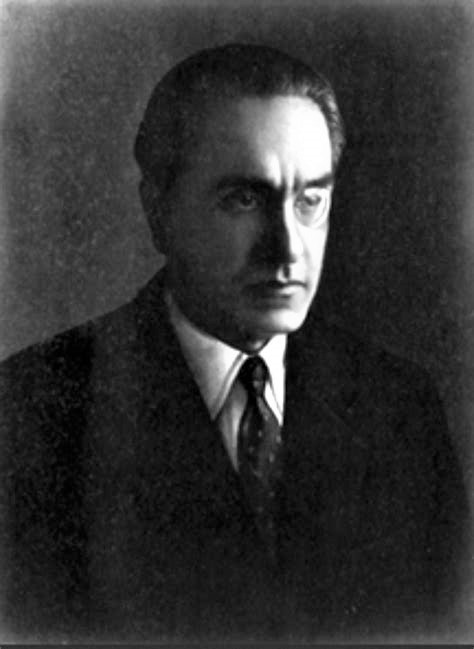
Is Evola's magical idealism compatible with traditionalism? Most Evola aficionados assume that it is. But consider the following: At a minimum, we can say that traditionalism involves looking to the distant past to recover certain objective (indeed, absolute) truths revealed to the human race in pre-history that have been largely forgotten. What, then, are we to make of magical idealism’s insistence on the “primacy of will over ‘truth’” (as Evola himself puts it in The Path of Cinnabar)? Evola places “truth” in scare quotes because he is rejecting the notion of truth as existing independently of the subject, fixed and unchangeable. Evola writes that, “existence, truth, and certainty are not to be found in the past but in the future: they are tasks.” I submit that this assertion constitutes a rejection of traditionalism at its very core. Magical idealism rejects the past as a source of truth and looks instead to a future “truth,” which will be the literal creation of the subject. The very idea of an independently existing truth under which the subject must stand is rejected as an intolerable affront to the freedom of the “I.” And the “I,” the subject, is regarded as the one absolute. All else is merely raw material on which the “I” shall stamp its “truth,” a truth which is quite literally subjective. In essence, everything other than the subject has no fixed being, and waits upon the subject to transform it and thus give it its truth. This infinite task constitutes the progressive elimination of all restraints upon human will; in other words, it constitutes the most radical humanism possible: the absolutization of the individual, human “I.” These ideas are not just incompatible with traditionalism; they constitute its antithesis. Indeed, they are the core ideals of modernity.
Collin Cleary tweet media
English
6
6
32
2K