
Sabitlenmiş Tweet
CPAY
699 posts


CPAY
@cpay_world
Decentralized crypto financial infrastructure for wallets and payments I Join Discord - https://t.co/xQoczn3w5x
Katılım Şubat 2022
1.6K Takip Edilen740 Takipçiler

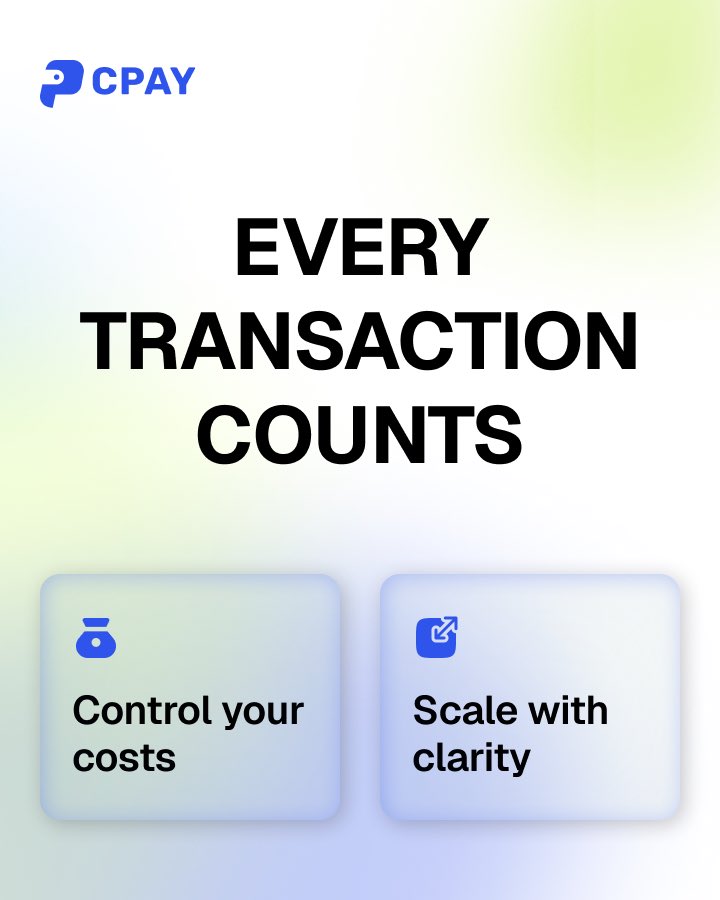
Every transaction shapes your margin.
As volume grows, costs build through:
- Provider fees
- Conversion spreads
- Routing paths
- Settlement timing
#Crypto payment gateways simplify the flow and bring clarity to costs.
With CPAY, businesses work with:
- Fixed transaction fees
- Faster settlements
- Stablecoin-based payments
- Predictable unit economics
English
𝑯𝒐𝒘 𝒎𝒖𝒄𝒉 𝒅𝒐𝒆𝒔 𝒆𝒂𝒄𝒉 𝒕𝒓𝒂𝒏𝒔𝒂𝒄𝒕𝒊𝒐𝒏 𝒂𝒄𝒕𝒖𝒂𝒍𝒍𝒚 𝒄𝒐𝒔𝒕 𝒚𝒐𝒖𝒓 𝒃𝒖𝒔𝒊𝒏𝒆𝒔𝒔 𝒐𝒏𝒄𝒆 𝒚𝒐𝒖 𝒇𝒂𝒄𝒕𝒐𝒓 𝒊𝒏 𝒆𝒗𝒆𝒓𝒚 𝒍𝒂𝒚𝒆𝒓?
As payment volume grows, cost visibility becomes harder.
Fees come from different parts of the system - processors, currency conversion, routing, and settlement timing. Each element affects the final margin.
Most teams track the main fee, while a significant share of cost sits inside spreads, delays, and infrastructure inefficiencies. Over time, this creates a gap between projected revenue and real financial outcomes.
Low-fee crypto payment gateways bring structure to this.
Transactions move through fewer intermediaries, which makes the cost per payment easier to define and control. Settlement happens faster, and capital becomes available without long delays tied to banking systems.
With platforms like 𝐂𝐏𝐀𝐘, businesses operate with a fixed transaction fee.
This creates a stable foundation for financial planning and allows teams to scale without constantly adjusting to changing costs.
Clear pricing, faster settlement, and a simplified flow turn payments into a predictable part of the business model rather than a variable expense

English
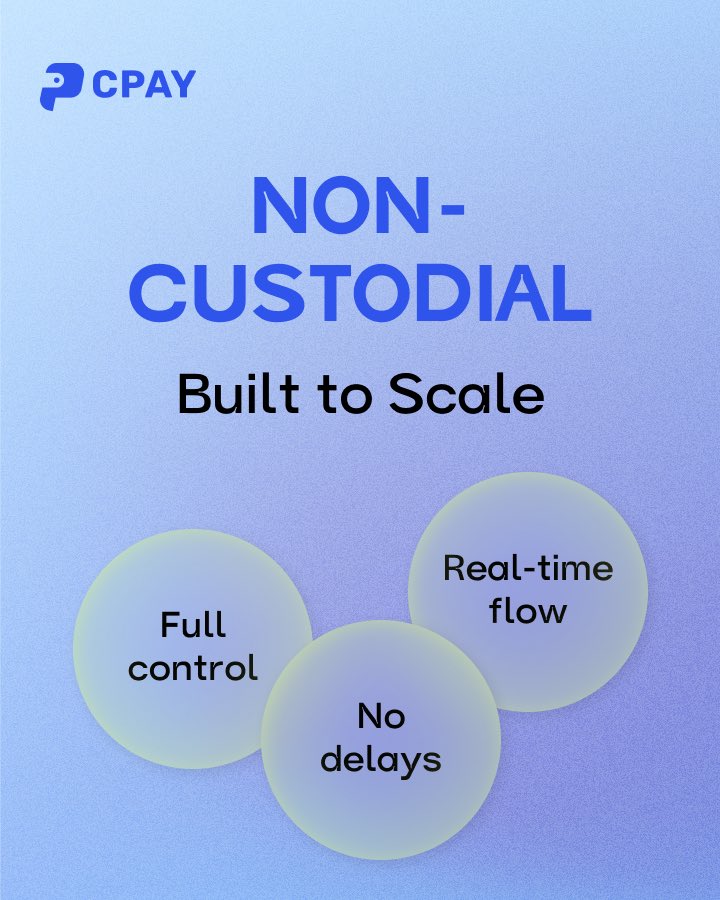
2/3 Funds stay in user-controlled wallets.
Transactions move without internal approval layers.
Routing adapts in real time depending on network conditions and liquidity.
The system stays responsive even as load increases.
At CPAY, non-custodial infrastructure is part of how payment flow is designed from the ground up.
English
1/3 𝙃𝙞𝙜𝙝 𝙩𝙧𝙖𝙣𝙨𝙖𝙘𝙩𝙞𝙤𝙣 𝙫𝙤𝙡𝙪𝙢𝙚 𝙘𝙝𝙖𝙣𝙜𝙚𝙨 𝙝𝙤𝙬 𝙥𝙖𝙮𝙢𝙚𝙣𝙩 𝙨𝙮𝙨𝙩𝙚𝙢𝙨 𝙗𝙚𝙝𝙖𝙫𝙚.
At scale, delays appear where they weren’t visible before.
Funds get locked inside providers.
Routing becomes less predictable.
Operations start reacting instead of controlling the flow.
This is where infrastructure decisions start affecting growth. Non-custodial architecture handles volume differently.
English
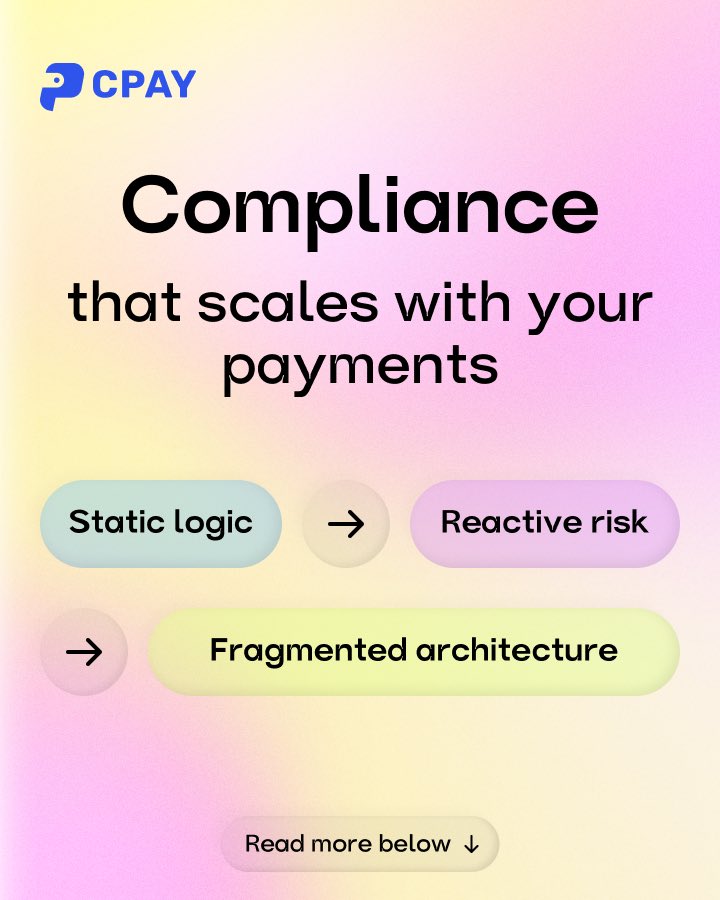
𝐖𝐡𝐚𝐭 𝐚𝐜𝐭𝐮𝐚𝐥𝐥𝐲 𝐬𝐥𝐨𝐰𝐬 𝐝𝐨𝐰𝐧 𝐜𝐫𝐲𝐩𝐭𝐨 𝐩𝐚𝐲𝐦𝐞𝐧𝐭𝐬 𝐰𝐡𝐞𝐧 𝐲𝐨𝐮 𝐬𝐭𝐚𝐫𝐭 𝐬𝐜𝐚𝐥𝐢𝐧𝐠?
It’s rarely liquidity. And almost never UX.
It’s compliance.
More volume means more checks. More checks create friction. And if your system isn’t built for it, that friction shows up everywhere.
• slower transactions
• more flags
• lower conversion
The difference comes from architecture.
When compliance is part of the system from the start, payments keep moving.
When it’s added later, growth turns into constant resistance.
So the real question is:
Is your system ready for scale - or just trying to keep up?

English

2/2 At CPAY, we focus on building this infrastructure - a non-custodial crypto payment gateway designed for scalable, multi-asset payments with automated settlement and built-in risk layers.
Because crypto payments are no longer an experiment.
They are becoming part of real financial infrastructure
English
1/2 Accepting crypto payments sounds simple.
Generate an address.
Receive a transaction.
Funds arrive.
But when a business starts processing payments at scale, crypto quickly becomes infrastructure.
Behind every payment gateway are multiple layers working together:
wallet management, blockchain monitoring, settlement logic, and risk controls.
Every transaction must be detected, verified, matched to an order, and routed correctly to treasury wallets.

English
2/2
With the right gateway - and API-driven solutions like CPAY - businesses can integrate stablecoin payments directly into checkout, accounting, and treasury workflows.
Faster settlement. Broader reach. Structured compliance.
The question is simple:
Is your payment stack aligned with how value moves in 2026?
English
1/2 𝘼𝙧𝙚 𝙘𝙖𝙧𝙙 𝙛𝙚𝙚𝙨 𝙖𝙣𝙙 𝙘𝙧𝙤𝙨𝙨-𝙗𝙤𝙧𝙙𝙚𝙧 𝙙𝙚𝙡𝙖𝙮𝙨 𝙦𝙪𝙞𝙚𝙩𝙡𝙮 𝙧𝙚𝙙𝙪𝙘𝙞𝙣𝙜 𝙮𝙤𝙪𝙧 𝙢𝙖𝙧𝙜𝙞𝙣𝙨?
Customers already hold stablecoins. They are ready to pay globally, instantly, without correspondent banking layers. Yet many websites still rely only on traditional rails built decades ago.
Adding crypto payments today is an infrastructure decision, not a marketing feature.

English
𝗜𝗻 𝟮𝟬𝟭𝟱, 𝗮𝗰𝗰𝗲𝗽𝘁𝗶𝗻𝗴 𝗰𝗿𝘆𝗽𝘁𝗼 𝗼𝗻 𝗮𝗻 𝗼𝗻𝗹𝗶𝗻𝗲 𝘀𝘁𝗼𝗿𝗲 𝘀𝗼𝘂𝗻𝗱𝗲𝗱 𝗲𝘅𝗽𝗲𝗿𝗶𝗺𝗲𝗻𝘁𝗮𝗹.
In 2026, it’s a treasury decision.
Stablecoins settle value globally. Cross-border commerce moves faster. Blockchain functions as an additional settlement rail alongside cards.
For eCommerce businesses, the focus is clear:
choose the right asset, integrate the right gateway, align treasury strategy.
Crypto payments are infrastructure.

English
𝗥𝘂𝗻𝗻𝗶𝗻𝗴 𝗮 𝗪𝗲𝗯𝟯 𝗽𝗹𝗮𝘁𝗳𝗼𝗿𝗺 𝗺𝗲𝗮𝗻𝘀 𝘁𝗵𝗶𝗻𝗸𝗶𝗻𝗴 𝗮𝗯𝗼𝘂𝘁 𝗺𝗼𝗿𝗲 𝘁𝗵𝗮𝗻 𝗷𝘂𝘀𝘁 𝘁𝗵𝗲 𝗽𝗿𝗼𝗱𝘂𝗰𝘁.
In most cases, it’s the wallet layer.
Deposits slow down, withdrawals pile up, and manual approvals turn into operational risk.
That’s why many platforms are rethinking wallets as infrastructure rather than a feature.
A system layer with programmable rules, automated flows, and multi-chain support, built to work under real trading load.
Non-custodial infrastructure shifts the trust model as well.
Assets stay on-chain, while the platform focuses on execution and risk logic instead of holding funds directly.
We explored this shift in detail in the article and looked at how API-first infrastructure like CPAY fits into modern trading platforms.
English
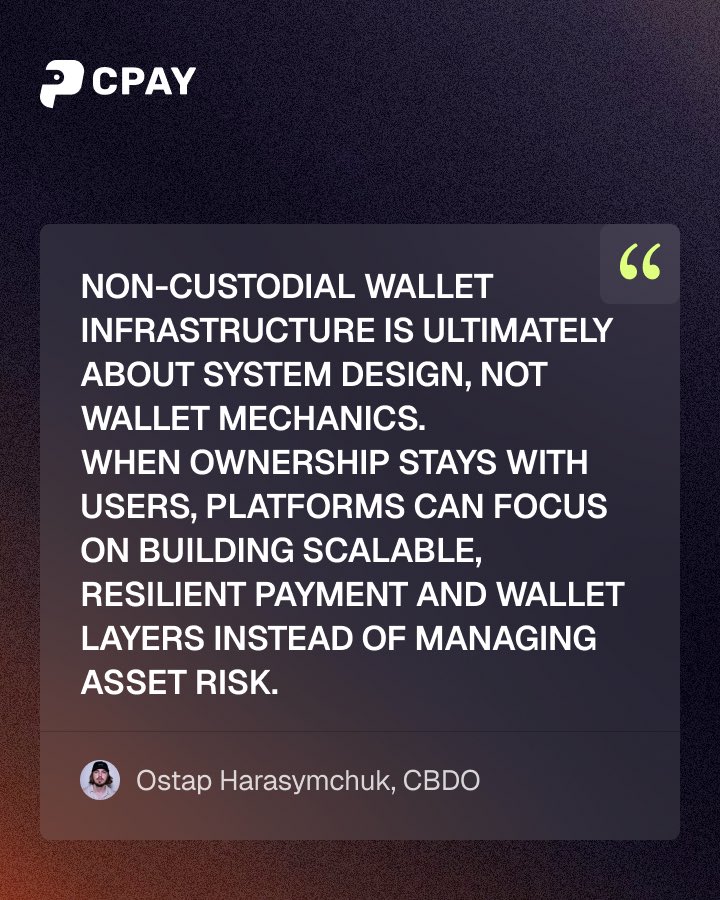
“𝘕𝘰𝘯-𝘤𝘶𝘴𝘵𝘰𝘥𝘪𝘢𝘭 𝘸𝘢𝘭𝘭𝘦𝘵 𝘪𝘯𝘧𝘳𝘢𝘴𝘵𝘳𝘶𝘤𝘵𝘶𝘳𝘦 𝘪𝘴 𝘶𝘭𝘵𝘪𝘮𝘢𝘵𝘦𝘭𝘺 𝘢𝘣𝘰𝘶𝘵 𝘴𝘺𝘴𝘵𝘦𝘮 𝘥𝘦𝘴𝘪𝘨𝘯, 𝘯𝘰𝘵 𝘸𝘢𝘭𝘭𝘦𝘵 𝘮𝘦𝘤𝘩𝘢𝘯𝘪𝘤𝘴. 𝘞𝘩𝘦𝘯 𝘰𝘸𝘯𝘦𝘳𝘴𝘩𝘪𝘱 𝘴𝘵𝘢𝘺𝘴 𝘸𝘪𝘵𝘩 𝘶𝘴𝘦𝘳𝘴, 𝘱𝘭𝘢𝘵𝘧𝘰𝘳𝘮𝘴 𝘤𝘢𝘯 𝘧𝘰𝘤𝘶𝘴 𝘰𝘯 𝘣𝘶𝘪𝘭𝘥𝘪𝘯𝘨 𝘴𝘤𝘢𝘭𝘢𝘣𝘭𝘦, 𝘳𝘦𝘴𝘪𝘭𝘪𝘦𝘯𝘵 𝘱𝘢𝘺𝘮𝘦𝘯𝘵 𝘢𝘯𝘥 𝘸𝘢𝘭𝘭𝘦𝘵 𝘭𝘢𝘺𝘦𝘳𝘴 𝘪𝘯𝘴𝘵𝘦𝘢𝘥 𝘰𝘧 𝘮𝘢𝘯𝘢𝘨𝘪𝘯𝘨 𝘢𝘴𝘴𝘦𝘵 𝘳𝘪𝘴𝘬.”
- Ostap Harasymchuk, CBDO
This principle defines how modern wallet infrastructure is built. When ownership is embedded at the cryptographic level, platforms can design APIs around orchestration, performance, and integrations instead of asset control.
As a result, wallets evolve from isolated tools into scalable infrastructure layers that support long-term product growth
English