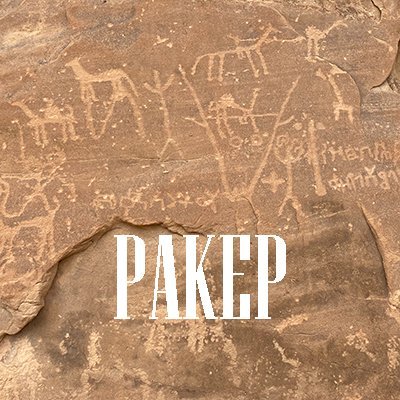
An argument that the #Holocene Humid Period in northern #Arabia is remarkably short, from only 8,800-7,900 years BP, considerably shorter than the common date of 11,000-5,500 years BP.
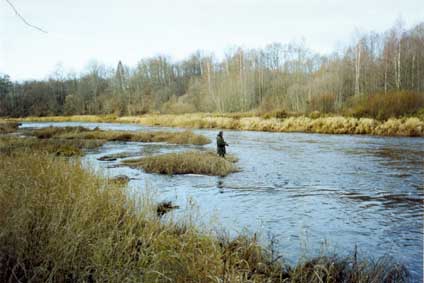
En 1875, un joven aficionado a la arqueología descubrió junto al rio Salaca, situado en la actual Lituania, cerca de la frontera con Estonia, las fosas individuales de una chica de entre 12-18 años y de un hombre de entre 20-30 años.
"Uniparental genetic markers in Native Americans: A summary of all available data from ancient and contemporary populations". R Bisso-Machado & NJR Fagundes.
This study represents the largest collection of genetic data ever assembled for Native Americans.
onlinelibrary.wiley.com/doi/10.1002/aj…
@joanferrerijane, ingeniero informático e investigador de las lenguas prerromanas. Su trabajo está detrás de plataformas y grupos como Hesperia, Littera y Aelaw, dedicadas al estudio de las lenguas prerromanas.
The Late Proto-Turkic homeland is associated with the Xiongnu. Linguistics, archaeology & population genomics point to their direct connection with Scytho-Siberians (Pazyryk and especially Uyuk) as an admixture of (Samoyed) Steppe_MLBA with Altai_MLBA indo-european.eu/2021/05/proto-…
The Proto-Samoyed homeland is associated in linguistics, archaeology, & genetics with the IA Tagar and the preceding LBA Karasuk and MBA Cherkaskul cultures of the Minusinsk Basin, with an ultimate origin in EBA cultures of North-Eastern Europe indo-european.eu/2021/05/proto-…
So excited to finally share our paper on the genetic changes during the Chalcolithic-Bronze Age transition in the Italian Peninsula! For the study,...
#aDNA#PopGen#ItalianHistory
1/6
#secsectitle0015" target="_blank" rel="nofollow noopener">cell.com/current-biolog…
Ja es pot consultar la meva contribució al llibre editat per @nmoncunill i @manuelramirez en la que faig un primer esbós de l'escriptura turdetana i com podria encaixar amb el que la toponímia i antroponímia de la zona ens transmeten de la seva llengua: academia.edu/37179111/La_es…
'The mustatils: cult and monumentality in Neolithic north-western Arabia' is out today. This work is part of the University of Western Australia's @UWAresearch work in #AlUla and #Khaybar as part of @RCU_SA archaeological program. Download here: dx.doi.org/10.15184/aqy.2… Thread 1/
Ob-Ugric languages in linguistics (dialects, areal contacts, palaeolinguistics, hydrotoponymy) and in archaeology-population genomics indo-european.eu/2021/04/ob-ugr…
Yeniseian influence on neighboring languages and widespread Yeniseic hydronymy supports its ancestral presence across Western, Southern, and Central Siberia indo-european.eu/2021/04/proto-…
Population genomic and linguistic-archaeological evidence of Dene-Yeniseian (with focus on Na-Dene), Eskimo-Aleut, and Chukotko-Kamchatkan indo-european.eu/2021/04/dene-y…
My book "Unburning Fame: Horses, Dragons, Beings of Smoke, and Other Indo-European Motifs in Ugarit and the Hebrew Bible" can now be downloaded free from Academia-dot-edu !
academia.edu/30374385/Unbur…
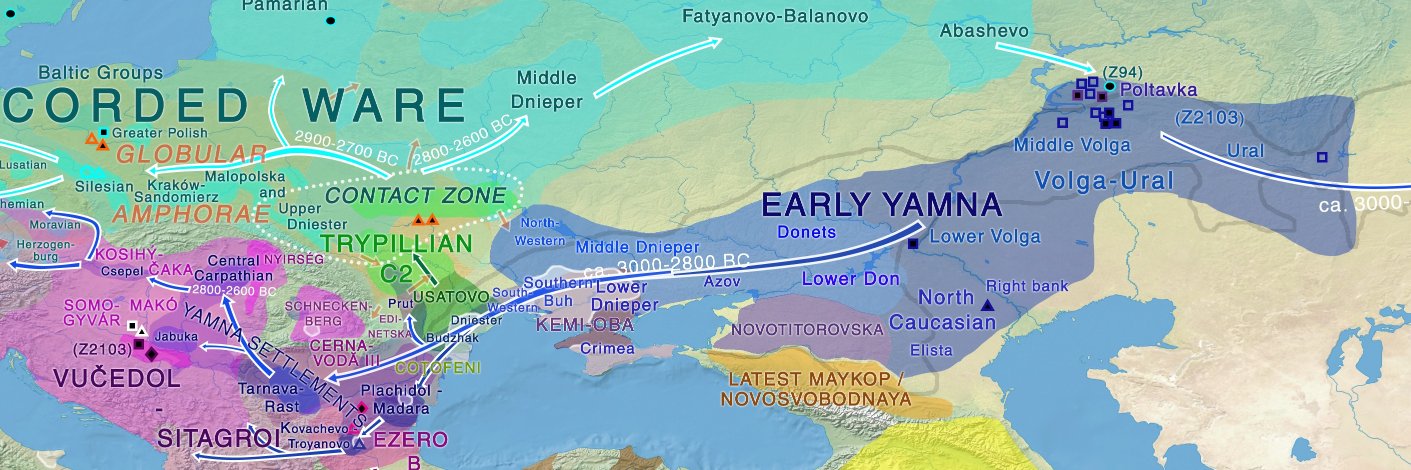
@TWalsh47601198 Those Yekaterinovka samples haven't been published yet. Those reported dates are apparently wrong, though, and now clearly earlier than Khvalynsk II; also, they might not be M269, so possibly R-P297 or R-V1636. But until the BAM files are published we can't know for sure.
@cquilesc Thank you for posting these. Looking thru these and the Reich's AADR I still can't find any R1b-L51 at Khvalynsk. Does your article on that need to be revised or updated? indo-european.eu/2018/05/haplog…
Major update to the Ancient DNA Dataset; an interesting re-dated and relabeled "Steppe-related" sample; and again on PIE kinship indo-european.eu/2021/03/anothe…