Sabitlenmiş Tweet
Dave Hooker
14.1K posts

Dave Hooker
@cropdoc2
Blessed | Associate Professor | PhD | Univ Guelph, OAC Ridgetown Campus/Plant Ag | Cropping Systems | Farmer | Dad/G'Dad of 4/3 | [email protected]

Ridgetown, Ontario, Canada Katılım Eylül 2010
1.7K Takip Edilen9.1K Takipçiler

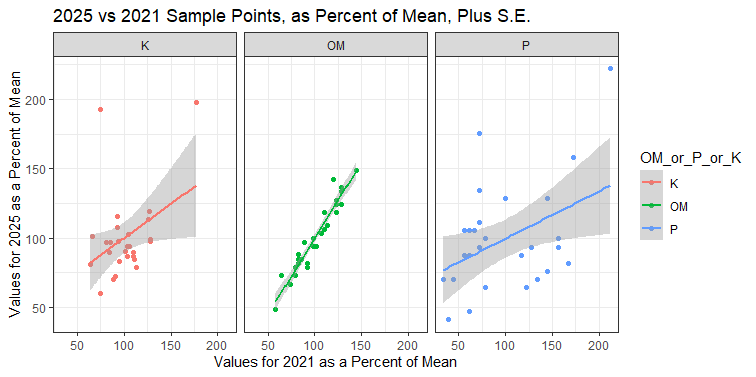
@TerryDaynard @GlenneyAg Thanks for posting! The variability in P has been observed elsewhere as well, thus VR doesn't make much sense. You're correct. The K is more variable than expected; what does the relationship look like without the 2 "outliers"? @cropdetective
English

@GlenneyAg The ROI and soil data seem to mean VR for N but not P and K, at least on that one farm in 2026 - just as you say.
My main reason for posting involved the unexpected "noise" in P and K measurements, but not in SOM.
English

Farmers in ON and adjacent areas may be interested in this. Only for one farm but strong effects. Soil OM, P and K were measured at 28 indentical spots after soys in 2021 and 2025. Results expressed as % of sample means. Thanks to @cropdetective (sample collection & analysis).

English

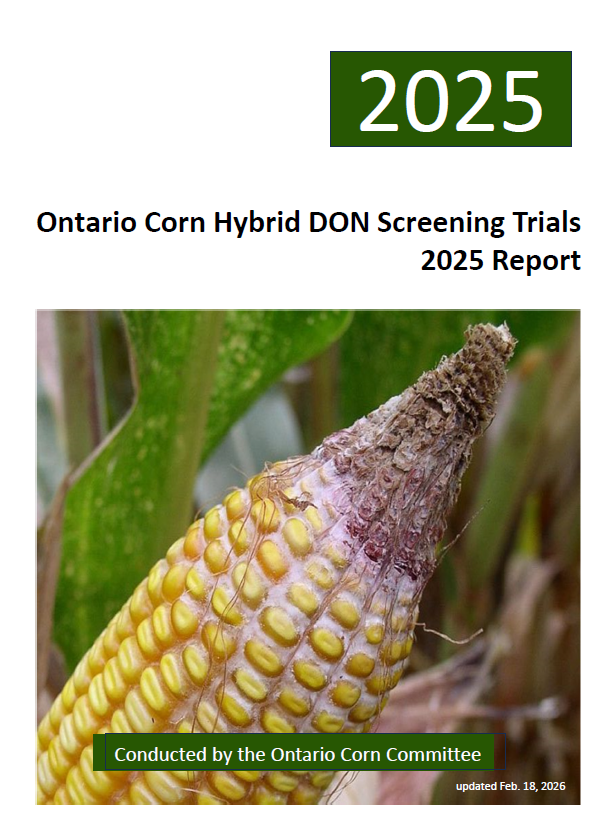
No one likes DON. The mycotoxin, that is. Hot off the press: the 2025 corn hybrid screening trial report. corn.gocrops.ca Use as one tool to manage the risk of DON mycotoxin in corn. Seed company volunteer entries. A collaborative effort that no one has ever seen. 😀 Download a pdf-or NEW this year-- sortable spreadsheets. Thank you to all sponsors: participating seed companies (@maizex, @CortevaCA, @DEKALB_Canada, @CROPLANseed, @NKSeedsCanada, @DeDellSeeds, @PRIDESeeds) @GrainFarmers @OMAFAinnovates @uofg Greenfield Ethanol @Ingredion @AlcoEnergyCA @OntarioPorkNews @ONAgBusAssoc @Seeds_Canada cc: @AlbertTenuta @Gur_sahib_singh @WheatPete

English

Crop Residue, its an issue, thx @cropdoc2
Check out realagriculture's video! #TikTok vt.tiktok.com/ZSm6jAwRQ/
English

How to buy farms with less cash.
As completed finance. You purchase 80 acres of combination ground for $400,000. 68 of those acres are dry land while the balance made up of trees, roads and waste. You plan to clean up the trees and be able to farm 77 acres. You also will be able to irrigate this property for next year, greatly increasing the value. Improvements will cost you around $80,000.
Once the improvements are complete, the property will be worth $700,000. You could coordinate with your lender to have an ‘as completed’ appraisal done and finance 65% of the final value of the property ($700,000).
◦The math: $400,000 purchase plus $80,000 of improvements equals $480,000.
$700,000 value after improvements X 65% = $455,000.
This transaction now only needs $25,000 out of pocket to be completed.
English

@TerryDaynard @karidunfield I will likely steal that phrase "misguided strategy". :)
English

@cropdoc2 @karidunfield This conclusion caught my attention:
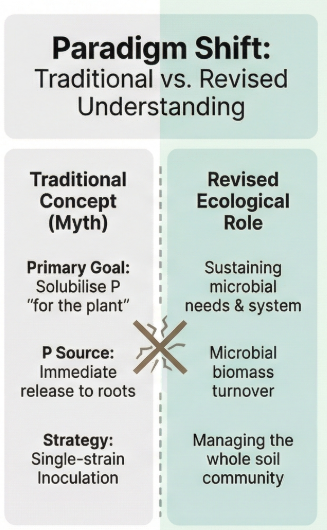
"the ‘promise’ of capturing benefit from PSM [phosphate-solubilising microorganisms] to improve the P nutrition of agricultural crops is a misguided strategy"
English

For those considering purchase of a "biological" for soil P liberation, this overview is an essential read, "Phosphate-solubilising microorganisms for improved crop productivity: a critical assessment" nph.onlinelibrary.wiley.com/doi/10.1111/np…
h/t @karidunfield
English

Thanks for sharing Terry! This paper treats the entire native soil microbiome as a single functional unit. "Instead of unreliable inoculants that often fail under real-world field conditions, focus on a paradigm shift toward managing the whole native soil microbiome for long-term phosphorus availability."#ItsaMythBust I'm anxious to know @karidunfield 's thoughts.

English

@kowalsk11 @SullivanAgro Maybe a drought effect from 2025? Some defoliators are certainly favored by drought as you know (grasshoppers, many beetles) and soybean tolerance to defoliators (and aphids) plummets in a drought.
English

@SullivanAgro @cropdoc2 Agreed. These pests are changing.
We found CRW defoliating white bean plants this summer 🥴🫠🤯

English

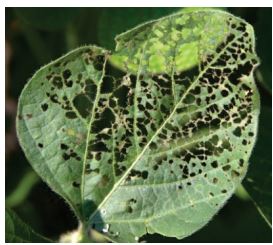
Soybean photosynthesizes efficiently through to maturity even with 30–40% defoliation before flowering: no yield loss. Leaves lost early are rapidly replaced by early R-stages. Canopy compensation in soybean can be enormous (Board & Harville, Agron J., 1996; Kropff et al., 2017). #CropPhysiology #AgronomyAha Photo: Pioneer Seeds

English

Would anyone in research have any leads on a used Lee Spider sprayer? USA friends? Cc: @Gur_sahib_singh

English

Yes. The main reason yields are usually higher with early planting is that development starts early, which results in greater resilience to a stress like defoliation. Early planting yields are often higher than late planting because of higher node numbers and a long seed fill period. Bottomline: delayed or slow early development is not the same as defoliation.
English

@cropdoc2 And the earlier the emergence date of the seed to start capturing the sunlight - the greater the recovery rate and photosynthesis efficiency ?
English

Which is brighter: a cloudy day in the summer at solar noon or bright classroom? ANSWER: on a cloudy day at summer noon, 100–300 W/m2 vs 3-7 W/m2 in a well-lit classroom. #CropPhysiology #AgronomyAhas


English

December 5 is World Soil Day. It marks a significant milestone for Ridgetown Campus. Our long-term tillage-rotation-N trial celebrates 30 years this year (1995–2025): three decades of continuous data have helped us understand various soil functions, crop rotation benefits, nutrient cycling, and long-term sustainability in Ontario cropping systems. We are grateful to everyone, past and present, who contributed to maintaining this research. #WorldSoilDay #SaveSoil

English

@WheatPete @agronomistag @TerryDaynard I'm late to the discussion. Wuest in their papers also showed that soil pore air is ~99% RH even at the wilting point. I didn't know that. ars.usda.gov/ARSUserFiles/6…
English

@agronomistag @TerryDaynard Incredibly interesting. There is something to a well prepared seedbed, certain crops grow better: corn for one (I'm a huge reduced till/no-till supporter, btw). Temperature, root exploration, nutrient uptake, but perhaps not germination....
English

Although seed-to-soil contact has some benefits, it's not needed for seed germination.
Two papers by Steward Wuest, USDA-ARS, "Unless the soil is very moist and very closely packed around the seed, most of the seed surface will be exposed to the same conditions as if no seed-soil contact existed."
acsess.onlinelibrary.wiley.com/doi/10.2136/ss…
cambridge.org/core/journals/…
No-Till Farmer@NoTillFarmr
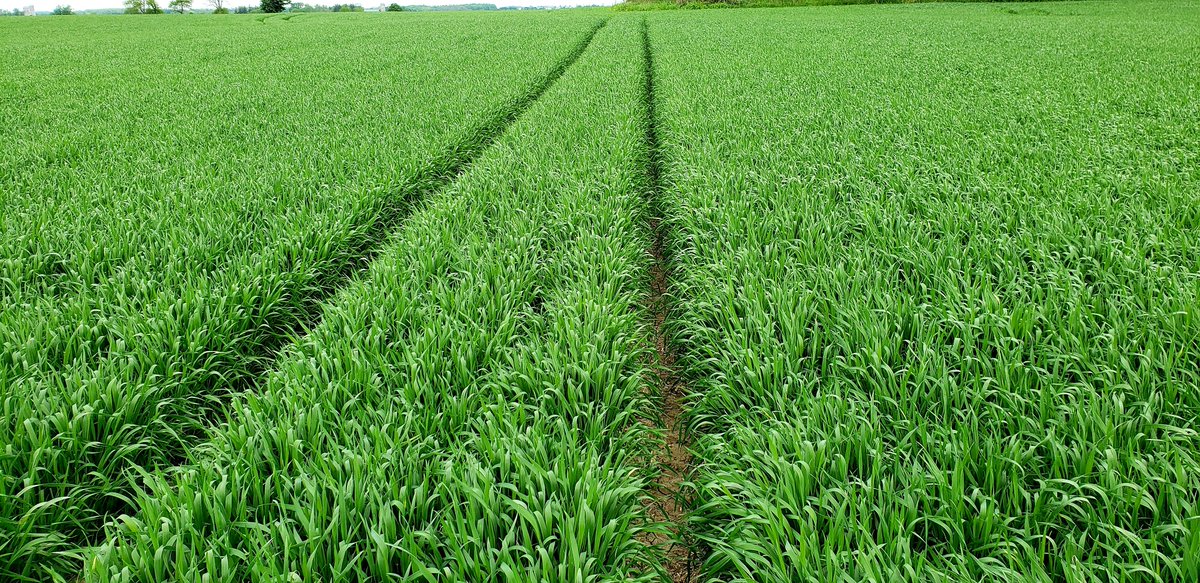
Seed-to-soil contact & proper seed singulation are very important to optimize yields & give plants the room they need to thrive in different soil conditions. @SurePointAg experts will share unique insights & solutions for improving planting outcomes » bit.ly/49DZn9R
English

@DonLunn @JohnNooyen1 @AdamJPfeffer @SullivanAgro Absolutely Don. Kernel number/ac x kernel weight are the yield components and equals mass/ac. Yield (bu/ac) is this mass divided by 56. As you know, just pointing it out. :)
English


@Shawridgefarm Shawn, I just read your post asking for controlled drainage and sub-irrigation data. Dr. Merrin Macrae @merrinm was involved in a collaboration in ON and QC about a decade ago. Here's a report, although Merrin will likely have others to share: #objectif(s)----88" target="_blank" rel="nofollow noopener">ouranos.ca/en/projects-pu…
English
Dave Hooker retweetledi

Proud of our MSc student #AidenDendooven presenting early results on revisiting Ontario P&K recs for corn & soybean at #CANVAS in SLC — @ASA_CSSA_SSSA. Thanks @GrainFarmers and @AgInnovationON for the support!
👉: scisoc.confex.com/scisoc/2025am/…

English