EK ◎☀️

3.4K posts

EK ◎☀️

EK ◎☀️

@crypto_koh11

Katılım Ağustos 2017
794 Takip Edilen60 Takipçiler
EK ◎☀️ retweetledi
roman
roman@Nozelcode·
🚨SCREEN STUDIO CUESTA $29 AL MES. ALGUIEN LO HA CLONADO Y SOLTADO GRATIS. Se llama OpenScreen. +39.000 estrellas en GitHub. Grabas tu pantalla y la convierte automáticamente en un vídeo de demo profesional. • Zoom automático en los clics • Animaciones suaves de cursor • Motion blur • Fondos personalizados con wallpapers, degradados y sombras • Overlay de webcam • Anotaciones • Edición en timeline • Export en cualquier formato. El mismo flujo que Screen Studio vende por suscripción y que Loom te cobra cada mes. Gratis. Sin marca de agua. Sin cuenta. Sin suscripción. Esto es lo que llevas de serie: → Captura de pantalla completa o ventana, con audio de sistema y micro → Zoom automático que sigue tu cursor y tus clics → Zoom manual con profundidad y timing configurables → Motion blur en las transiciones de paneo y zoom → Renderizado animado del cursor con efectos de movimiento → Burbuja de webcam con posicionamiento drag and drop → Wallpapers, colores sólidos, degradados o tu propio fondo → Anotaciones de texto y flechas sobre la grabación → Recorte en timeline y velocidad variable por segmento → Crop, resize y export en cualquier resolución o aspect ratio → Guardas el proyecto y lo reabres cuando quieras Y ahora la parte buena: Un dev lo forkeó y montó una versión todavía más avanzada llamada Recordly. Pipeline completo de animación de cursor. Grabación nativa en macOS y Windows. Comportamiento de zoom calcado a Screen Studio. Pistas de audio. Webcam con escalado reactivo al zoom. Los dos son gratis. Los dos son MIT. Los dos funcionan en Windows, macOS y Linux. Detalle que nadie está diciendo: Screen Studio es solo para Mac. Esto no. Descargas. Grabas. Exportas. Ya está. 100% open source. Licencia MIT. Enlace abajo👇
roman tweet media
Español
21
137
1K
82.1K
EK ◎☀️ retweetledi
Roan
Roan@RohOnChain·
My friend applied to 250 tech jobs in two years. No MIT. No Stanford. Last month Anthropic offered him $750,000. I asked him how he broke in from zero. He sent me the exact video that got him in. Anthropic's 2-hour course on how to become an AI engineer in 2026. Thariq Shihipar shows you exactly how to build AI agents from scratch. I watched it last night. Halfway through, I realized I could break into an AI lab in months, not years. Bookmark this and read the article below. • 00:00 - AI agent harness • 23:44 - building AI agent loops • 56:39 - AI agent context engineering • 1:33:34 - AI agent deterministic hooks • 1:50:31 - Anthropic SWE interview process
Avid@Av1dlive

x.com/i/article/2079…

English
94
703
4.6K
687.5K
EK ◎☀️ retweetledi
Vivek Sen
Vivek Sen@Vivek4real_·
ASK CLAUDE TO MAP YOUR ENTIRE APP'S ARCHITECTURE INTO A SINGLE HTML PAGE AND JSON FILE. THE HTML IS FOR YOU. THE JSON IS FOR THE NEXT AGENT WORKING ON A NEW FEATURE. YOUR CODEBASE NOW EXPLAINS ITSELF.
English
108
350
5.1K
380K
EK ◎☀️ retweetledi
Granite
Granite@Granite0x·
Met a guy making $1.1 million a year as an agents engineer at Google Cloud. Asked him how he gets agents 20x better without changing the model. He sent me the exact thing he uses himself. A repo he open-sourced 2 days ago. You won't find anything better about harness engineering, in the open. Cloned it and pointed my agent at it last night. Ryan Lopopolo. Google Cloud engineer. 'harness-engineering' - anthology + field guide + agent context bundle. You reference his docs from your CLAUDE.md. 633 stars. 48 hours old. MIT. -> github.com/lopopolo/harne… bookmark this before it gets lost.
Granite tweet media
Archive@ArchiveExplorer

x.com/i/article/2070…

English
30
196
2K
387.5K
EK ◎☀️ retweetledi
Wes Bos
Wes Bos@wesbos·
this guy wanted to know how LLMS actually work, so he wrote one from scratch this is the best thing i've watched in a long time
Wes Bos tweet media
English
15
60
1.1K
91.4K
EK ◎☀️ retweetledi
Marco
Marco@maarcoofdezz·
Ahora Claude Code puede leer documentaciones completas sin gastar un solo token. Solo necesitas conectarlo a NotebookLM de Google vía MCP. Aquí el tutorial de cómo hacerlo. ⬇️
Español
43
386
2.7K
199.6K
EK ◎☀️ retweetledi
Rion Wu
Rion Wu@rionaifantasy·
最近全网都在吹Kimi K3, 我给大家汇总了Kimi K3的所有使用渠道!!!👇 1、Kimi 网页版 场景:日常问答、搜索、写作、文件处理、Agent 任务 kimi.com/zh 2、Kimi iOS 场景:手机问答、移动办公、随手处理资料 apps.apple.com/us/app/kimi/id… 3、Kimi Android 场景:手机问答、移动办公、Agent 任务 play.google.com/store/apps/det… 4、Kimi Work 场景:本地文件处理、浏览器自动化、深度研究、PPT、表格和定时任务 要求:Kimi Work 3.1.0+,支持 Windows 和 Apple 芯片 Mac kimi.com/products/kimi-… 5、Kimi Code CLI 场景:Vibe Coding、大型代码库、跨文件修改、终端自动化 使用:安装后输入 /model 切换 Kimi K3 kimi.com/code 6、Kimi Code for VS Code 场景:在 VS Code 中读取、修改代码和执行 Agent 任务 kimi.com/code/docs/en/ 7、Kimi Code 会员 API 场景:在 Claude Code、Roo Code 等 Coding Agent 中调用 K3 模型 ID:k3;高阶会员可使用 k3[1m] kimi.com/code/console 8、Claude Code 接入 Kimi K3 场景:保留 Claude Code 的工具和操作方式,底层调用 K3 kimi.com/code/docs/thir… 9、Codex 接入 Kimi K3 场景:在 Codex 中使用 K3 完成代码理解、修改、测试和 Review 注意:目前需要通过本地兼容层进行请求转发 platform.kimi.com/docs/guide/cod… 10、OpenClaw 接入 Kimi K3 场景:搭建长期运行的个人助手,连接 Telegram、Discord、Slack 等平台 platform.kimi.com/docs/guide/use… 11、OpenCode 接入 Kimi K3 场景:开源 Coding Agent、终端编程和代码自动化 platform.kimi.com/docs/guide/ope… 12、Hermes Agent 接入 Kimi K3 场景:Skills、长期 Agent、多步骤任务和自动化工作流 platform.kimi.com/docs/guide/use… 13、Kimi API Playground 场景:不写代码测试 K3、提示词、参数、视觉输入和工具调用 platform.kimi.com/playground 14、Kimi 开放平台 API 场景:产品开发、工作流自动化、自建应用和 B 端集成 模型 ID:kimi-k3 platform.kimi.com/docs/guide/kim… 15、申请 Kimi API Key 场景:使用 Python、Node.js、cURL 或自建 Agent 调用 K3 platform.kimi.com/console/api-ke… 16、Kimi Enterprise 场景:企业团队、成员管理、数据隔离和统一付费 kimi.com/membership/pri… 目前暂未正式可用: 17、OpenRouter 目前有 K3 占位页面,但暂时无法调用 openrouter.ai/moonshot/kimi-… 18、官方开源权重 / 本地部署 完整权重预计在 2026 年 7 月 27 日前发布,目前官方 Hugging Face 尚未出现 K3 huggingface.co/moonshotai
中文
40
70
286
38.9K
EK ◎☀️ retweetledi
liam.
liam.@liambraus·
el fundador de una empresa china de IA valorada en más de $20,000,000,000 acaba de dar una clase de 40 minutos sobre enjambres de agentes la explicación más clara que he visto sobre sistemas de IA a gran escala cámbiala por tus 2 horas de Netflix de esta noche
Español
129
1.8K
11.4K
1.3M
EK ◎☀️ retweetledi
h100envy
h100envy@h100envy·
Google engineer explained how to fine-tune a tiny LLM from 46% to 90% accuracy on your phone in 21 minutes - better than $1500 on-device AI bootcamps. pick Gemma 270M -> generate synthetic task data -> fine-tune with LoRA -> quantize to int4 -> deploy to Pixel and hit 2000 tokens per second. That loop is how a 270M model beats a 70B one on your task, running fully offline in your pocket. Gemma 270M + synthetic data + LoRA + int4 quantization + on-device runtime - that's the stack. Watch and save it, then fine-tune your own tiny agent tonight.
h100envy@h100envy

x.com/i/article/2077…

English
71
878
7.2K
695.3K
EK ◎☀️ retweetledi
Atlas
Atlas@crptAtlas·
GITHUB JUST KILLED THE WORST PART OF VIBE CODING they shipped a free tool called Spec Kit and it already crossed 120,000 stars the fix is stupidly simple instead of tossing vague prompts at an agent and praying it doesn't wreck your project Spec Kit makes the AI write a full structured spec before it touches a single line of code it works through the problem first figures out what you want to build asks about the gaps lays out the project then it starts coding you get fewer insane bugs, cleaner output and results you can predict the flow looks like this: /constitution for your rules and standards /specify for what you want to build /clarify for the open questions before you start /plan for architecture and stack /tasks for the ordered work /implement to run it it plugs into Claude Code, Cursor, Copilot, Codex, Gemini CLI and 25+ other agents 120,000 stars, 10,000 forks, open source, shipped by GitHub itself learning to drive agents like this is most of what separates people getting hired as AI engineers from everyone still fighting their prompts
Atlas@crptAtlas

x.com/i/article/2074…

English
75
324
2.6K
497.8K
EK ◎☀️ retweetledi
Alex Prompter
Alex Prompter@alex_prompter·
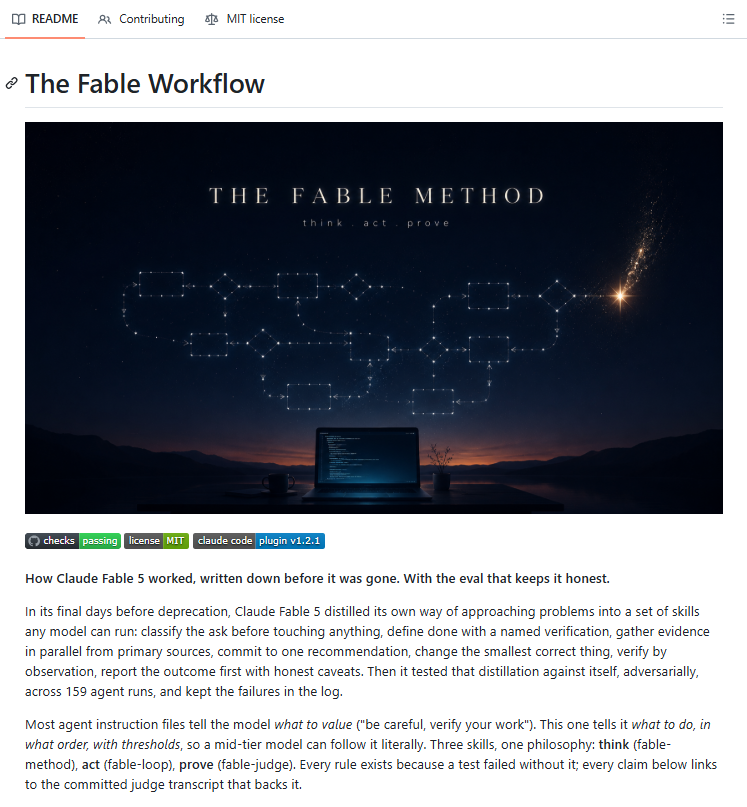
Someone distilled Fable's problem-solving approach into a plugin any model can run. 159 agent runs later, Sonnet + the plugin matched Fable 10/10 on a research task. The plugin has three parts. fable-method gives any model a structured problem-solving loop with hard failure thresholds. fable-loop runs entire tasks with adversarial verification agents checking the work. fable-judge treats every "done, all tests pass" claim as unverified and re-runs everything independently. The results are specific. Haiku went from 0/4 to 4/4 on catching a wrong test before "fixing" correct code. Sonnet + the method matched Fable itself on a five-part research task, scoring 10/10. The judge took Haiku from 3/5 to 5/5 on catching planted frauds in a fake completion report. The part that earned my trust is what it won't do. On ordinary tasks with capable models, it adds nothing. They measured that, documented it, and the README says so. The value concentrates at traps like wrong tests, false completion claims, and weak models running unattended. It supplies discipline, not knowledge. The iteration tells you a lot about the quality. v1 of the method failed its own test at 0/4. v2 failed at 1/4. v3 finally passed at 4/4. The repo includes every failed version with raw judge transcripts. The flowcharts weren't built from Fable describing how it thinks either. They recorded actual tool calls from bare Fable agents and corrected the method wherever Fable's self-description disagreed with its real behavior. Observation beat self-reporting 3 times. If you're running Claude Code with cheaper models or want to harden your agent workflows, this is worth 10 minutes of your time. To install in Claude Code, run /plugin marketplace add Sahir619/fable-method then /plugin install fable@fable-method
Alex Prompter tweet media
Alex Prompter@alex_prompter

x.com/i/article/2074…

English
31
173
1.3K
173.1K
EK ◎☀️ retweetledi
Techjunkie Aman
Techjunkie Aman@Techjunkie_Aman·
Your Linux PC can run a fully rooted Android 16 environment. No virtual machine. No dual boot. Just Waydroid. Built on Linux containers, Waydroid runs a near-native Android experience directly on your desktop. In this setup: • LineageOS 23 (Android 16) • KernelSU with root access • Linux kernel 6.19 host • Excellent desktop performance Why are people doing this? • Test root modules safely • Run Android-only apps on Linux • Development & reverse engineering • Gaming • Experiment without modifying a physical phone It's one of the most powerful Android setups you can build on Linux today.
Techjunkie Aman tweet mediaTechjunkie Aman tweet media
English
35
120
987
46.5K
EK ◎☀️ retweetledi
Josh Schultz
Josh Schultz@joshuamschultz·
This took 2.5 months, but have completed a full, agentic ERP for a company Rethought every system and approach, built a custom ERP fully agentic backed. This manages everything for them, runs agents with locally hosted small models (so no token burn) and helps run a large part of the business just by talking/typing to it Because its agentic backed, we can tune how it works by adjusting system prompts, skills, and tools. Built a backend system of record, agentic middleware, and UI. Heavily used - Our own Agentic Harness specifically for enterprise (tracking, security, audit, observability focused - with quick deployment and tuning of agents for any purpose) - Langgraph for dialed in workflows - Litellm/vllm inferencing - react front hosted as microservices and full API so they can build anything they want off of it (fastapi) This thing is next level
Josh Schultz tweet media
English
168
104
2.1K
314.8K
EK ◎☀️ retweetledi
Hasan Toor
Hasan Toor@hasantoxr·
I built an AI employee that browses websites, writes code, and completes tasks on its own. No API key. No $200 monthly subscription. Here is how I ran the entire thing locally:
English
12
7
85
25.4K
EK ◎☀️ retweetledi
Ayaan 🐧
Ayaan 🐧@twtayaan·
Someone turned Kubernetes trauma into a video game. It is called K8sQuest. 50 levels. Each one breaks something real in a local cluster. CrashLoopBackOff. ImagePullBackOff. Pending pods. Broken services. RBAC failures. Your job is to fix it using real kubectl commands on a real local cluster. No cloud. No AWS bill. No risk of actually taking down production while you learn. - 5 worlds, beginner to advanced, 10,200 total XP - Real-time monitoring so you watch your fix take effect live - Progressive hints that unlock only when you are actually stuck - Post-mission debriefs explaining why the fix worked, with real production incident examples - Built-in safety guards so you cannot nuke your own cluster by mistake - Level 50 throws 9 simultaneous failures at you at once This is not a tutorial. This is a flight simulator for the exact 2am panic every Kubernetes engineer has lived through. 1.2k stars. 126 forks. Apache-2.0. Free. Repo here: github.com/Manoj-engineer…
English
13
64
582
25.1K
EK ◎☀️ retweetledi
Harman
Harman@itsharmanjot·
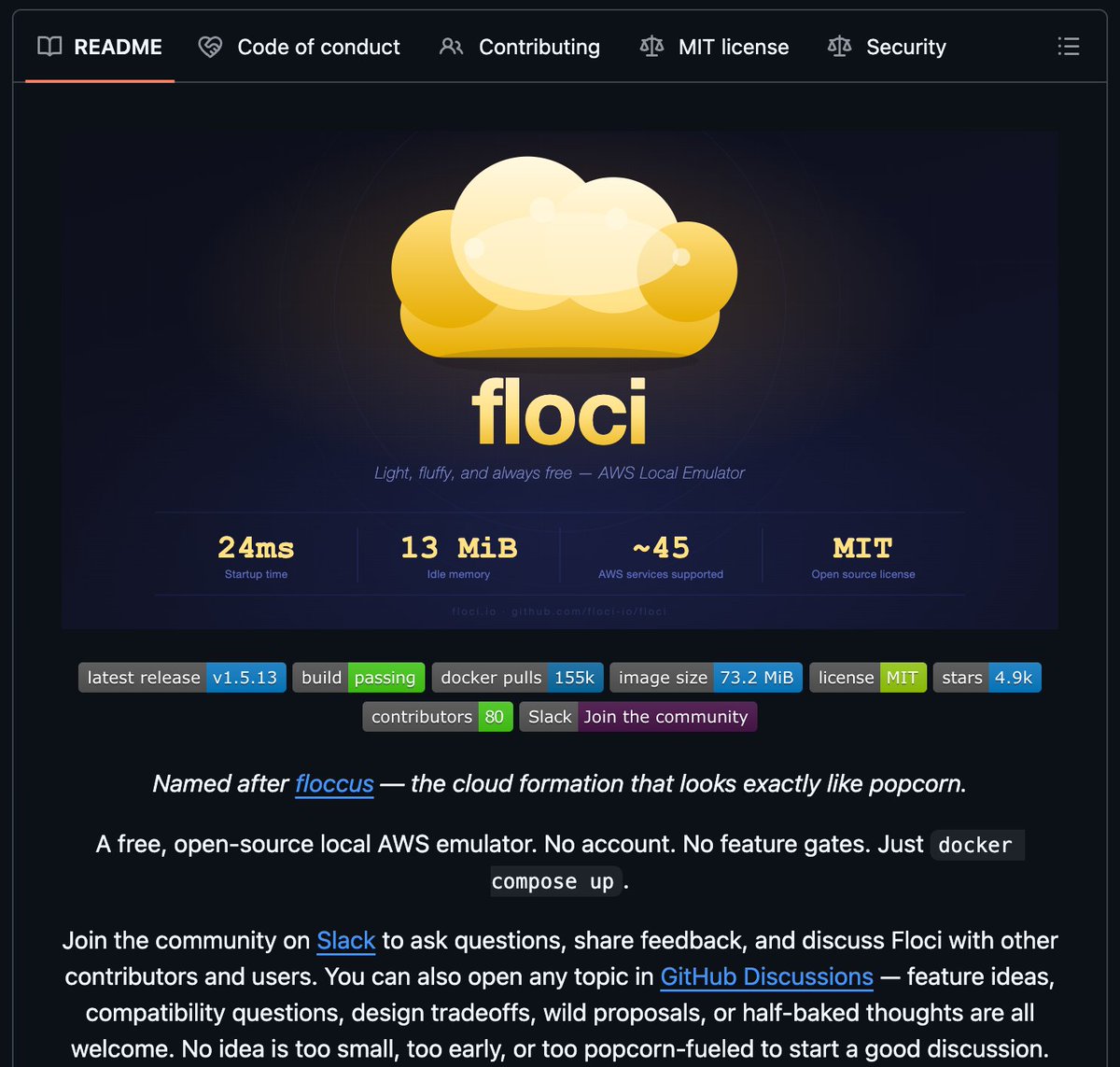
Holy shit... a team open sourced an AWS emulator that runs the entire cloud on your laptop with 13 MiB of memory. It's called Floci and it boots 45 AWS services in under a second, no Docker, no LocalStack subscription, no $30/mo dev environment bills. Every AWS dev tool before this needed Docker, gigabytes of RAM, and 30 second cold starts just to test a Lambda function. Floci is a single Go binary that runs the entire AWS stack in memory and starts faster than your terminal can render the prompt. Here's what makes it different from every AWS emulator that came before: → 13 MiB total memory footprint, the average Chrome tab uses 200x more RAM than this entire AWS clone → 45 services emulated locally including S3, Lambda, DynamoDB, SQS, SNS, IAM, CloudFormation, Step Functions, all in one binary → Sub-second cold start, your tests finish before LocalStack even pulls its Docker image → Zero dependencies, no Docker daemon, no Python runtime, no Java VM, just one Go executable → Drop-in compatible with AWS SDK and CLI, point your endpoint at localhost and every existing script works untouched Killed: $40/mo LocalStack Pro, every AWS dev environment burning $200+/mo on staging accounts, Docker Desktop eating 4GB of RAM just to run a fake S3 bucket. Pre-built binaries for Linux, macOS, Windows. No install scripts, no config files, no setup wizard. Download the binary, run it, your local AWS is live. Works in CI pipelines where spinning up Docker containers takes longer than the actual tests. 100% Opensource. Repo: github.com/floci-io/floci
Harman tweet media
English
12
180
1.2K
67.3K
EK ◎☀️ retweetledi
Matt Pocock
Matt Pocock@mattpocockuk·
Here's a step-by-step process to kill all the bloat from your Claude Code system prompt: 1. Run a proxy so you can see exactly what gets sent to Claude Code (included in the article) 2. "Fuck, there is so much cruft in there" 3. Use my settings.json to kill all the bloat Down to a clean 13K tokens to start each session with. Nice. Full process here: aihero.dev/how-to-kill-th…
English
118
162
2.1K
577.9K
EK ◎☀️ retweetledi
David Ondrej
David Ondrej@DavidOndrej1·
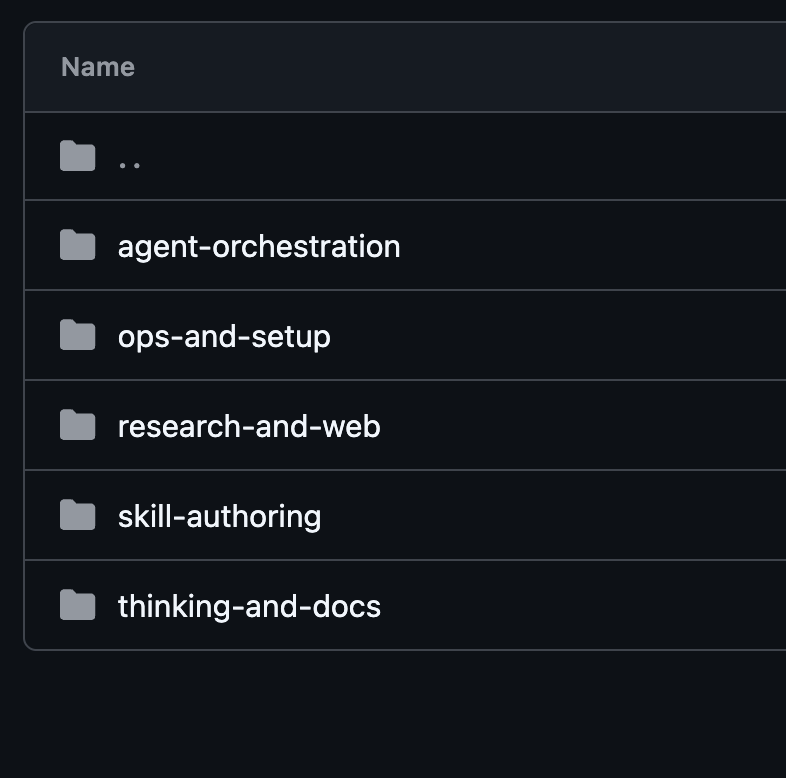
im releasing all my agent skills to the public this is hundreds of hours of trial & error every single global .agents skill i have go grab it. it's free.
David Ondrej tweet media
English
123
219
3.4K
516.3K