Raphael Scalise | Cryptostash

6.8K posts

Raphael Scalise | Cryptostash banner
Raphael Scalise | Cryptostash

Raphael Scalise | Cryptostash

@cryptoscali

CEO @Cryptostash_g | 🛡️ Regulation-first retail crypto gifting & onboarding | Web3 ✦ Fintech |

Dubai and Switzerland Katılım Ocak 2021
591 Takip Edilen903 Takipçiler
Sabitlenmiş Tweet
Raphael Scalise | Cryptostash
Raphael Scalise | Cryptostash@cryptoscali·
Most adoption problems aren’t technical. They’re behavioral. That’s harder to solve, and easier to underestimat
English
0
0
1
13
Raphael Scalise | Cryptostash
Raphael Scalise | Cryptostash@cryptoscali·
Gifting money has always been about trust. Crypto doesn’t change that it amplifies it. Which is why the experience matters more than the technology.
English
0
0
0
11
Raphael Scalise | Cryptostash
Raphael Scalise | Cryptostash@cryptoscali·
Education is important. But asking users to learn too much before they can act is a barrier, not a solution. Good systems reduce the need for explanation.
English
0
0
0
9
Raphael Scalise | Cryptostash
Raphael Scalise | Cryptostash@cryptoscali·
“Simple” is often treated like a design preference. In reality, it’s a trust requirement. Iff something handles value, confusion is already a failure.
English
0
0
0
9
Raphael Scalise | Cryptostash
Raphael Scalise | Cryptostash@cryptoscali·
Most people don’t reject crypto because of volatility. They reject it because the first interaction feels unfamiliar and risky. Adoption usually breaks at step one.
English
0
0
0
7
Raphael Scalise | Cryptostash
Momentum isn’t created by announcing things early. It’s created by removing uncertainty before others notice it existed. Quiet work scales best.
English
0
0
0
3
Raphael Scalise | Cryptostash
Crypto doesn’t need more features. It needs better integration into how people already buy, gift, and store value. That’s a harder problem than it sounds.
English
0
0
0
5
Raphael Scalise | Cryptostash
One thing I’m learning as a founder: Clarity compounds faster than effort. If the problem is well defined, the rest becomes easier not effortless, but easier.
English
0
0
0
6
Raphael Scalise | Cryptostash
Early-stage building rarely looks impressive from the outside. Most progress happens in documents, calls, and decisions that never get posted. That’s usually a good sign.
English
0
0
0
5
Raphael Scalise | Cryptostash
January isn’t about speed for us. It’s about resuming work with clearer priorities than we had in December. That’s the real advantage of a reset.
English
0
0
0
4
Raphael Scalise | Cryptostash
Raphael Scalise | Cryptostash@cryptoscali·
Building something meant to be trusted forces patience. You can’t rush systems people rely on. Especially when money is involved.
English
0
0
0
7
Raphael Scalise | Cryptostash
Raphael Scalise | Cryptostash@cryptoscali·
@Zebec_HQ Policy discussions like this are critical. Real adoption doesn’t come from narratives — it comes from systems that regulators, institutions, and consumers can all live with. Glad to see more focus on that layer.
English
0
0
0
59
Zebec Network
Zebec Network@Zebec_HQ·
🎥 The latest Future of Money is out now! This episode features leaders from NABA (North American Blockchain Association) discussing blockchain policy, adoption, and the road ahead in the US. Featuring: • Greg Leffel - Founder & Executive Director, Virginia Blockchain Council • Jessi Goostree - COO, Texas Blockchain Council & Executive Director, NABA
English
49
168
595
31.8K
Raphael Scalise | Cryptostash
Raphael Scalise | Cryptostash@cryptoscali·
@iptishax Adoption doesn’t fail because of technology. It fails when distribution, compliance, and trust aren’t designed from day one. The hard part is boring and that’s usually where real progress happens.
English
0
0
0
11
Iptisha | Circulox.org
Iptisha | Circulox.org@iptishax·
What’s really happening here (and why founders should care):- The core problem (very simply) protocols are now making serious revenue but > it’s often unclear who controls what > who actually captures value > how token holders are supposed to benefit in practice this ambiguity was fine when revenues were small but it breaks once numbers get big macro level analysis > DAOs are becoming economic institutions markets, regulators and courts will treat them accordingly > Legal scrutiny increases decentralization as a concept will be dissected and examined > founders will be forced to design constitutions (not just tweets ) so there are clearer rules, fewer gray areas, clearere incentives the industry is maturing
Stani.eth@StaniKulechov

The recent DAO vote has wrapped up, and it has raised important questions about the relationship between Aave Labs and $AAVE token holders. This is a productive discussion that’s essential for the long-term health of Aave. While it's been a bit hectic, debate and disagreement are features of decentralized governance. I want to state clearly: I am committed to making the economic alignment between Aave Labs and $AAVE token holders more clear. We haven't done a great job explaining this and will do so going forward. Another thing that’s gotten lost in this conversation is that the DAO has earned $140M this year, more than the past three years combined, and $AAVE token holders have control over this treasury. In the future, we'll be more explicit about how products built by Aave Labs create value for the DAO and $AAVE token holders. I also want to address my recent $15 million purchase of $AAVE. These tokens were not used to vote on the recent proposal and that was never my intention. This is my life's work, and I am putting my own capital behind my conviction. Lastly, the Aave ecosystem is large enough for many service providers to succeed, and we will continue to support and collaborate with teams building on the protocol. I am confident that by working together, we will build a stronger and more aligned future. $AAVE will win.

English
3
1
16
1.5K
Raphael Scalise | Cryptostash
Raphael Scalise | Cryptostash@cryptoscali·
I used to underestimate how much energy clarity takes. Explaining a simple idea correctly to regulators, partners, investors is harder than pitching something flashy. But it lasts longer.
English
0
0
0
18
Pradeep RV Singh
Pradeep RV Singh@pradeep_rvsingh·
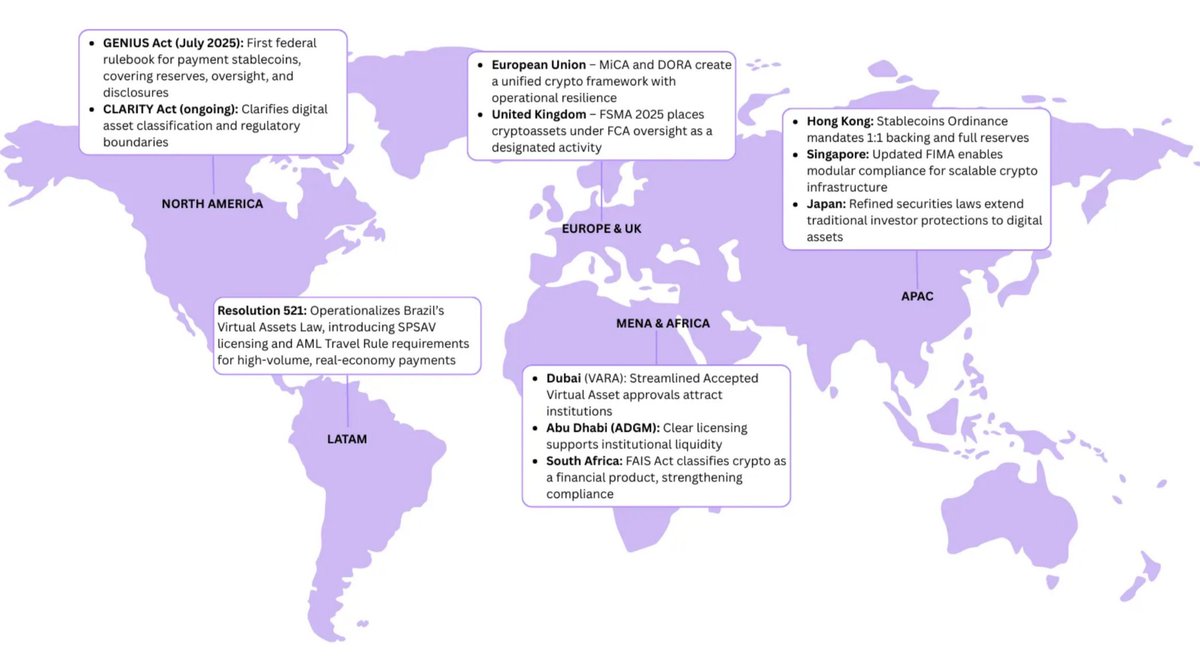
For years, the question was: “Will regulators allow this?” Today, the question is: “How do we build products that thrive within these regulatory frameworks from day one?” Regulation is no longer peripheral. It is increasingly becoming part of the code itself. As regulatory ambiguity narrows, compliance is shifting from a legal afterthought to a foundational layer of the modern financial stack. From our perspective as a global infrastructure provider, one pattern is clear: the teams that win will be those that design regulatory logic early, rather than bolt it on later. Across regions, regulatory frameworks are becoming more defined. In North America, the GENIUS Act introduces a federal framework for stablecoins, with broader digital asset legislation adding further clarity. Europe and the UK now operate under comprehensive regimes, with MiCA and DORA in force and on-chain activity firmly within regulatory scope. In Asia Pacific, jurisdictions such as Hong Kong, Singapore, and Japan are moving toward modular compliance models that support scale while adapting to local rules. MENA and Africa are seeing increased institutional momentum driven by clear frameworks in the UAE and formal classification in South Africa, while Latin America, led by Brazil, is focusing on licensing, AML integration, and real-economy payment use cases. Infrastructure is no longer just plumbing. It is a strategic layer. The stacks that succeed will be those where regulatory logic is modular, upgradeable, and built to evolve as the law does. In upcoming posts, we’ll dive deeper into the regulatory playbooks shaping each region and what they mean for builders in practice. Stay tuned!
Pradeep RV Singh tweet media
English
3
10
53
1.8K
Hydareth乍得
Hydareth乍得@0xHydar·
i’m watching @alturax as an experiment in whether crypto can finally normalize boring success not explosive upside, not viral growth but quiet continuation. the product doesn’t try to make me feel like an insider yk it doesn’t promise community driven euphoria. instead, it asks a simple question: if capital is deployed transparently and strategies are allowed to run without interference does that create a more resilient outcome over time? i don’t have a definitive answer yet, but the fact that the question is being asked seriously is what keeps me paying attention :)
Hydareth乍得 tweet media
English
392
7
443
4.9K
Crypto Tice
Crypto Tice@CryptoTice_·
MASSIVE: 🇪🇺 ETHEREUM IS BEING CONSIDERED AS A SETTLEMENT LAYER FOR A EURO STABLECOIN. This isn’t a pilot or a sandbox test. It’s Europe evaluating real financial infrastructure. Why this matters: - Public blockchains are being assessed for sovereign-grade settlement - Transparency, uptime, and security are now policy considerations - Crypto rails are moving from markets → institutions → governments This isn’t about hype. It’s about who settles money in the future. Public blockchains just entered the sovereign conversation.
Crypto Tice tweet mediaCrypto Tice tweet media
English
156
179
1.1K
139K
Coin Bureau
Coin Bureau@coinbureau·
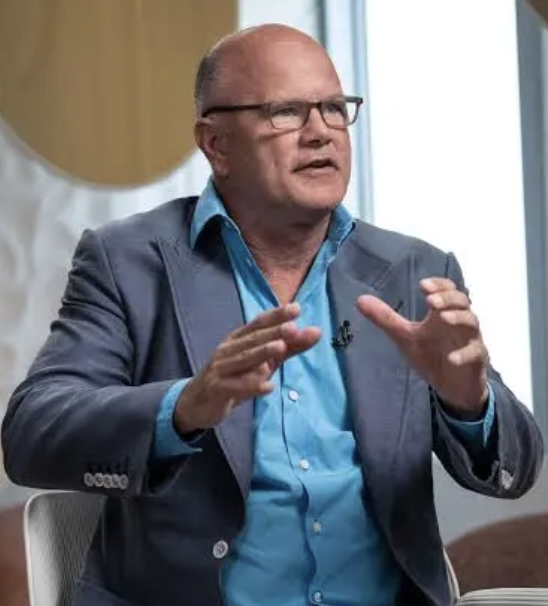
🚨XRP & ADA NEED REAL-WORLD UTILITY Mike Novogratz warns that XRP and ADA could fade if they fail to deliver real-world utility, as crypto shifts away from narrative-driven tokens toward assets with real value and business adoption.
Coin Bureau tweet mediaCoin Bureau tweet mediaCoin Bureau tweet media
English
444
214
1.4K
147.2K
Real World Asset Watchlist
Real World Asset Watchlist@RWAwatchlist_·
🚨 BREAKING: 🇺🇸U.S. regulator OCC approves federal trust charters for major crypto firms Circle, Ripple, Paxos, BitGo, and Fidelity are now cleared to operate like banks The crypto banking freeze is officially ending 🔥
Real World Asset Watchlist tweet mediaReal World Asset Watchlist tweet mediaReal World Asset Watchlist tweet mediaReal World Asset Watchlist tweet media
English
188
1.5K
6K
375.4K