CryptoScientist

6K posts

CryptoScientist banner
CryptoScientist

CryptoScientist

@cryptoscientst

Gene Therapy Research Scientist Against the Deadly Vax and the Viral Bioweapon Unleashed on the World #Bitcoin #truthseeker #unvaxxed #freedomfighter

USA Katılım Kasım 2017
876 Takip Edilen768 Takipçiler
Sabitlenmiş Tweet
CryptoScientist
CryptoScientist@cryptoscientst·
My fellow scientist peers wouldn't listen to me and most of them got vaxd. I stood for the truth and got fired after sending a company wide email warning about the dangers of the vax
English
9
2
25
0
CryptoScientist retweetledi
Answers4Sean 🇨🇦
Answers4Sean 🇨🇦@Answers4Sean·
Unfortunately I've known this for 1667 days. I knew it in my soul. I just wanted someone to admit the truth. Please help me fight back if you can. 😭😭😭💔😡 Givesendgo.com/GAWYX
Peter A. McCullough, MD, MPH®@P_McCulloughMD

Review of Sean Hartman's Autopsy Found COVID-19 Vaccine was Cause of Death Cardiologist Dr Peter McCullough @P_McCulloughMD reviewed this case and determined this young boy indeed died of fatal vaccine myocarditis. M. Nathaniel Mead, Jessica Rose, William Makis, Kirk Milhoan, Nicolas Hulscher and Peter A. McCullough. Myocarditis after SARS-CoV-2 infection and COVID-19 vaccination: Epidemiology, outcomes, and new perspectives. INTERNATIONAL JOURNAL OF CARDIOVASCULAR RESEARCH & INNOVATION. Jan-Mar 2025, VOL. 3, ISSUE 1, pp. 1-43, DOI 10.61577 ijcri.2025.100001 reseaprojournals.com/journals/cardi…

English
33
431
1.1K
14.2K
CryptoScientist
CryptoScientist@cryptoscientst·
@DOGE__news Flush the toilet while you pee. The vortex and velocity of the spiraling water will absorb the potential splash
English
0
1
1
79
CryptoScientist
CryptoScientist@cryptoscientst·
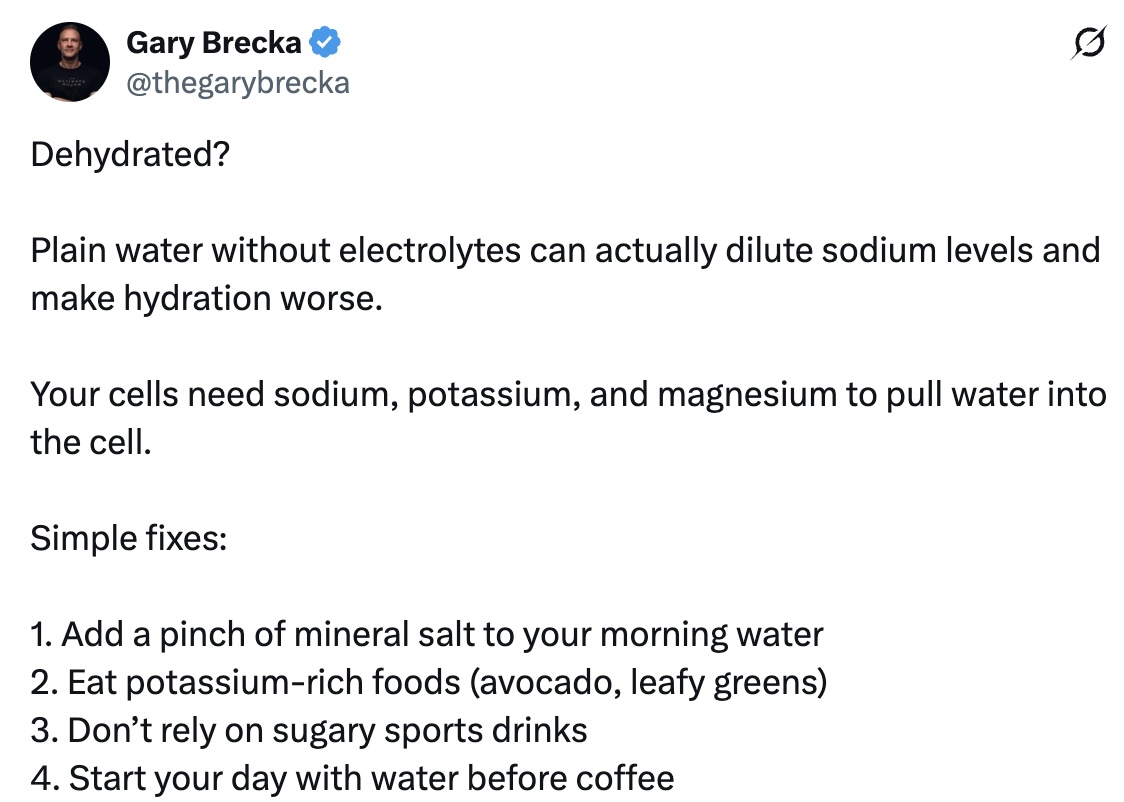
@drjasonfung Just because you have an MD doesnt make you a critical thinkers or a scientist. This is a perfect example of that type of energy. Water from the earth has minerals, filtered water doesnt or the minerals are added back to it--its not natural.and its not how early humans drank
English
0
0
0
38
Dr. Jason Fung
Dr. Jason Fung@drjasonfung·
WTF? If you drink a lot of water, you will pee it out. That's what your kidneys do (speaking as a kidney specialist). I drink plain water (yes, without salt) almost every day of my life, as did virtually all humans for the last, say, million years. No, I am not worried about 'dehydrating' myself by drinking water. 🙄
Dr. Jason Fung tweet media
English
806
323
5.4K
1.1M
NewsForce
NewsForce@Newsforce·
Every man has to face problem.
English
76
317
3.6K
107K
CryptoScientist retweetledi
Metabolic Uncle
Metabolic Uncle@MetabolicUncle·
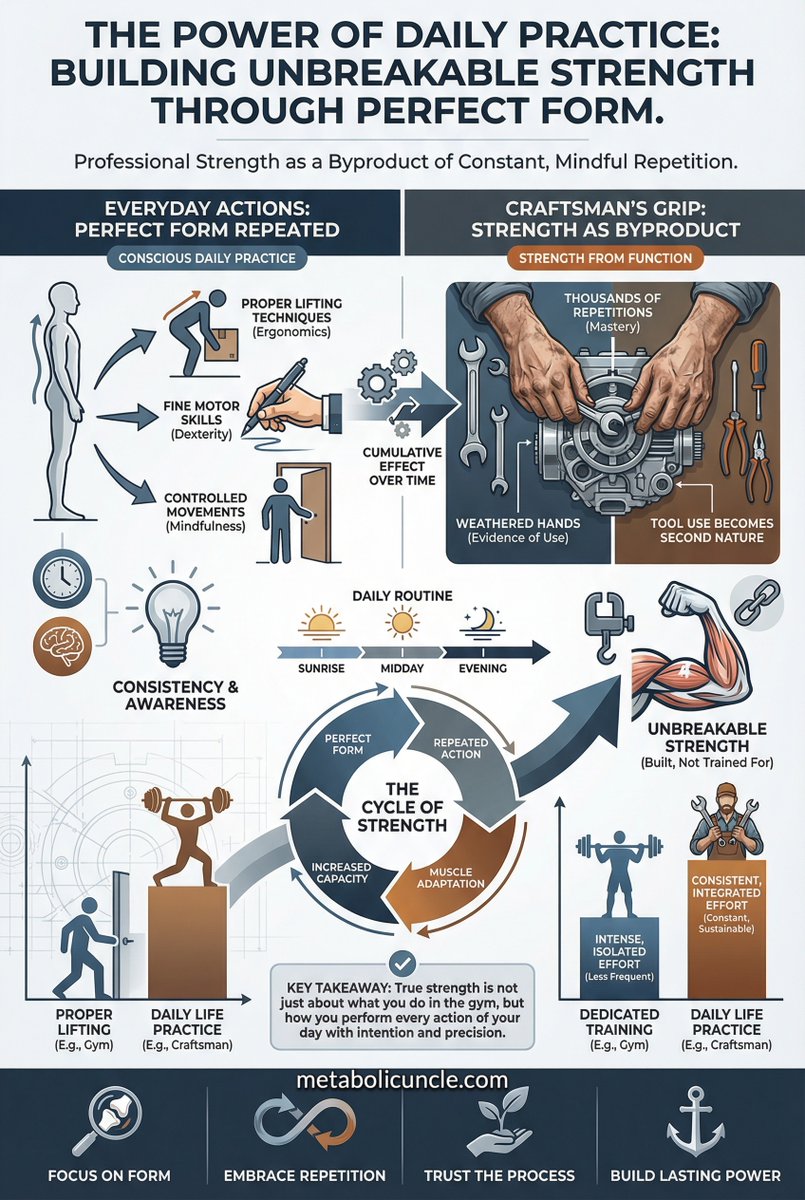
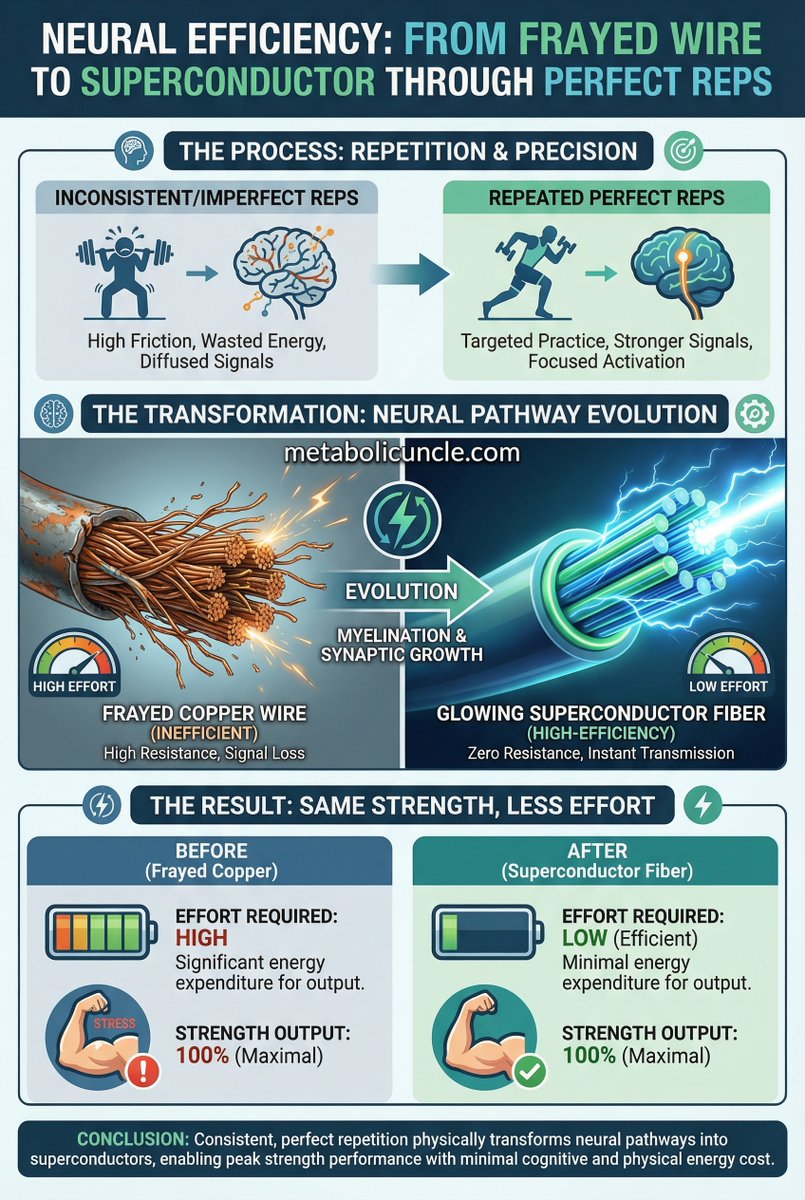
HOW TO BUILD UNBREAKABLE STRENGTH WITHOUT TOUCHING A GYM Your nervous system doesn't care about your workout split. It cares about repetition. Clean repetition. The kind that happens so often your brain stops registering it as training and starts treating it like breathing. This is the principle behind a Soviet training method that took soldiers from twenty push-ups to one hundred in under three months. Not one hundred total throughout the day. One hundred consecutive reps in a single set. And they did it without destroying their joints or accumulating fatigue that interfered with their actual military duties. The method is called Grease the Groove. Pavel Tsatsouline popularized it in the West, but the Soviets developed and refined it for decades before that. The core insight is simple but counterintuitive. Your nervous system becomes extraordinarily efficient at any movement pattern you practice repeatedly at submaximal intensity. The key word is submaximal. You're not training to failure. You're programming your neurology. Think about handwriting. If you learned to write a letter incorrectly as a child and nobody corrected it, you still write it wrong today. Your brain made that pattern permanent through repetition. The brain doesn't distinguish between good form and terrible form. It just optimizes whatever pattern you feed it most consistently. This is why volume without attention to technique builds injury patterns, not strength. THE MECHANISM BEHIND NEURAL EFFICIENCY Hebb's Law states that neurons that fire together wire together. Every time you execute a movement without fatigue, the neural pathways responsible for that movement become faster and more efficient. Your brain literally builds highways for that specific motor pattern. But this only works when you stay fresh. Tired practice creates messy signals. When lactate accumulates and muscles burn, your form degrades. Your brain receives conflicting information about how the movement should feel. Instead of building a clean motor pattern, you're teaching your nervous system to compensate and cheat. After three months of high-volume training with degraded form, you become extraordinarily efficient at moving poorly. Soviet coaches understood this. Their primary rule was simple. Stop each set the exact moment form degrades even slightly. If your hip drops, that set is over. If your lower back sags toward the floor, you're done. Quality matters infinitely more than quantity when programming your nervous system. THE PROTOCOL: HIGH FREQUENCY, LOW INTENSITY The Soviet approach sounds almost too simple to work. They distributed training across the entire day. Instead of one brutal workout session, soldiers performed ten short sets from morning to night. One set after waking. One mid-morning. One before lunch. Each set contained only ten reps. Never hard. Never tiring. Just consistent, perfect movement. By the end of the day, they accumulated one hundred total reps without ever feeling destroyed. Their bodies didn't register it as hard training. It became normal movement, like walking or climbing stairs. When something becomes normal to your nervous system, you develop extraordinary capacity for it. After three months of this pattern, the nervous system knows how to execute push-ups so efficiently that one hundred consecutive reps feels unremarkable. This isn't about building bigger muscles, though that happens as a side effect. This is about neural efficiency. Your brain becomes so good at recruiting the exact motor units needed for the movement that effort perception drops dramatically. IMPLEMENTATION FOR DAILY LIFE I'm not following classical training splits anymore. I might perform a max test occasionally, warming up and checking what my ceiling is, but I'm not doing dedicated workout sessions with prescribed sets and rest intervals. I'm using this principle for micro workouts throughout the day. Test your current maximum push-ups (or any other excercise) in one set to failure. Write that number down. Let's say it's twenty. Take fifty percent of that number. In this case, ten. For the next six days, perform ten sets of ten push-ups distributed throughout your day. Not all at once. Spread them out. One set every waking hour works well. The critical requirement is that you never feel tired. You never feel muscle burn. You never feel pumped or out of breath. When you finish each set, you should feel like you could immediately perform the same number again if you wanted to. That's the signal you're in the correct intensity zone. Six days per week. On the seventh day, complete rest. Your body needs that recovery day to consolidate all the neural patterns you built during the week. After two weeks, test your max again. Perform as many perfect reps as you can in one set. Your number will be higher. Guaranteed. Let's say it jumps from twenty to forty. Recalculate that fifty percent. For the next two weeks, you perform twenty reps per set, ten times per day. Same rules apply. Every two weeks, retest your max. Your working sets gradually increase, but they always feel easy because they're always half of what you can actually do. After three months of this, you'll have practiced over five thousand perfect push-ups. Your body stops seeing the push-up as challenging. It becomes something you simply do. When that happens, hitting one hundred in one set isn't a challenge. It's your new baseline. WORKOUT-CENTRIC VS TRULY GREASING THE GROOVE There's an important distinction between two approaches to this method. The workout-centric approach attempts to contain everything within a training session. You might perform a set, wait ten minutes for complete recovery, then perform another set. This works, but it requires blocking out significant time. If you're doing four to five sets at slightly higher intensity, you're looking at forty to fifty minutes minimum. That approach is too long for me. I don't want to block out dedicated workout time. This is why I use the truly high-frequency approach with lighter loads. I'm doing thirty to forty percent of my maximum capacity, distributed across ten sessions throughout the day. Each session takes under two minutes. The high-frequency approach is perfect for home or office implementation because it requires no equipment. You can do a pull-up if you have a bar. A table pull-up if you don't. Just push-ups. Whatever movement you choose. I've created mini full-body circuits that I cycle through. Here's my current protocol: 1. Isometric deep push-up or pull-up hold to warm up tendons. 2. A few pull-ups. 3. A few push-ups. 4. A few kettlebell snatches on both sides. That entire circuit takes less than two minutes. Each movement stays within forty to fifty percent of my maximum capacity. Doing this ten times (or more!) per day is the perfect way to break up long periods sitting at the computer. It provides some cardiovascular stimulus, increases blood flow, and activates neuronal pathways and muscles without causing fatigue, muscle burn, or lactate accumulation. If you do this every day, you'll be surprised how quickly you feel unbreakable and grow stronger without risking tendon injuries or systemic fatigue. This is the advantage of the high-frequency, low-intensity approach over the workout-centric version. STARTING POINT FOR BEGINNERS Anyone can start with one exercise and try to perform it ten times per day. It might even go as low as thirty to forty percent of maximum capacity. If someone can do thirty push-ups all-out, they might perform just ten every hour. The frequency is more important than the load per session. What is absolutely critical is that form must be flawless. This is non-negotiable. When form breaks down, when lactate starts accumulating, when muscles start burning, you're giving your nervous system false signals. It has to feel like an electrician using a screwdriver or a mechanic using a wrench every day, thousands of times. These people develop very strong forearms and grip without ever entering a gym. To achieve that, the movement must be clean with absolute control and no weakness in the movement chain. Only then will it work. Decrease your repetitions until you reach a state where the movement feels easy. Of course, you must also perform this ten times per day, spacing it roughly once every hour. FULL BODY TENSION TECHNIQUE There's a physical technique the Soviets used that makes each rep stronger. It's called full body tension. When you do a push-up, you're probably thinking only about your chest, shoulders, and arms. The Soviets viewed the body as one connected system, not separate parts. The interesting mechanism is that when you squeeze one muscle hard, the electrical signal doesn't stay localized in that muscle. It spreads to neighboring muscles and makes them fire harder as well. This is called irradiation. Before you even start the push-up, you set up three tension points. First: your hands. Press them into the floor hard as if you want to rip it apart. Imagine you're opening two big jars, one with each hand. Gently twist your palms outward without letting them slide. This creates tension in your forearms, up through your shoulders, and across your upper back. Your shoulder blades become tight and stable. Second: your core. Take a breath and brace your stomach like someone is about to punch you. Not sucking in. Not pushing out. Just creating a solid wall. Keep your ribs pulled down, not flared up toward the ceiling. This connects your upper body to your lower body. Without this, you're two separate pieces. With this, you're one solid structure. Third: your glutes. Squeeze them as hard as you can. Clench them together. This might sound strange, but glute activation is arguably the most important tension point. It prevents your hips from sagging and creates a rigid plank from shoulders to heels. The key is that you don't activate these three things sequentially. You activate all three simultaneously before you even move. Grip, brace, squeeze all at the same time. Then you perform the push-up while maintaining all three tensions throughout the entire set. Your hands stay active, your core stays braced, your glutes stay squeezed from beginning to end. The first time you try this, it will feel hard. You're using way more muscle than you're accustomed to, which means you're building more muscle throughout your entire body. Your whole body will feel tight and engaged. After three or four sessions, something will shift. You'll notice that your form stays cleaner, your reps feel more controlled, and because your form isn't breaking down, you can continue longer than usual. This is what the Soviets meant by turning the body into a machine. Every part works together. This technique gives you an instant boost in performance. You can try it on your very next set and feel the difference immediately. But it's not a replacement for the training protocol. You still need the six-day cycle with proper frequency and volume. This is the amplifier, not the source. MAKING IT WORK IN REAL LIFE The beauty of this approach is that it eliminates the need for dedicated workout time while producing superior results. You're not blocking out an hour to go to the gym. You're not changing clothes and driving somewhere. You're integrating strength development into your existing daily routine. Every hour, you drop and perform your set. Then you return to whatever you were doing. Your nervous system accumulates perfect repetitions. Your body never enters a fatigued state that requires extended recovery. You're always fresh. You're always ready. This is genuine Grease the Groove implementation. Not a workout disguised as frequent practice. Not a training session chopped into smaller pieces. It's the transformation of strength development from a scheduled activity into a continuous background process that runs throughout your entire day. The form must be perfect. The intensity must stay submaximal. The frequency must be high. Follow these three rules and your nervous system will rewire itself for extraordinary capacity in whatever movement you choose. Push-ups are just the example. The principle applies to any exercise. Start with one movement. Perform it ten times per day at thirty to forty percent of your maximum capacity. Maintain perfect form. Never feel tired. Do this six days per week. Test your max every two weeks and adjust your working sets accordingly. After three months, your capacity will have transformed completely. Your nervous system is the limiting factor for strength development far more than your muscles. Train your neurology correctly and strength becomes effortless.
Metabolic Uncle tweet mediaMetabolic Uncle tweet media
English
28
226
1.2K
44.3K
CryptoScientist retweetledi
Metabolic Uncle
Metabolic Uncle@MetabolicUncle·
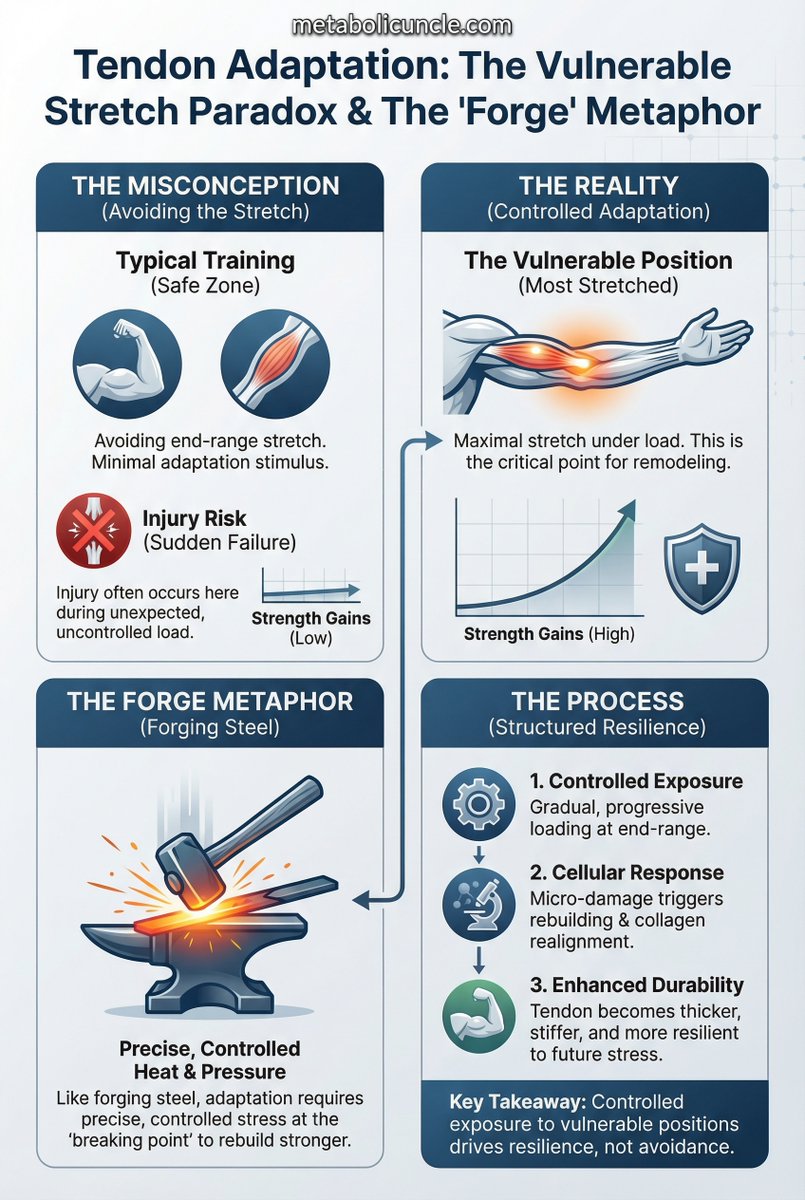
TENDON TRAINING ELIMINATES THE WEAKNESS THAT MAKES STRONG MEN FRAGILE Many guys can move serious weight in the gym but get wrecked picking up a dropped phone. That disconnect reveals something most fitness advice completely misses. Your muscles get stronger fast. Your tendons adapt three times slower. After 40, this gap becomes dangerous. One awkward movement and you're dealing with a torn Achilles, blown rotator cuff, or knee pain that won't quit for months. The standard response is backing off from activities. Taking it easy. Accepting that your body just can't handle stress anymore. That's exactly backwards. Weak tendons need controlled stress to adapt, not protection from stress. Five specific isometric holds create that adaptation. They force your tendons to handle sustained tension at their most vulnerable positions. Ten minutes, three times weekly. The results show up in everyday movement, not just gym performance. STANDING CALF RAISE HOLD Your Achilles tendon handles massive loads with every step. When it fails, you lose explosive power and develop that shuffling gait that screams fragility. The injury happens suddenly but the weakness builds over years. Eccentric loading builds tendon strength better than any other method. Tendons respond to time under tension, not repetition count. The stretched position creates the most adaptation signal. Stand on the balls of your feet at a step edge. Rise up high, then lower slowly until you feel a deep stretch in your calves. This stretched bottom position is where you hold. Your calves burn. Your Achilles feels the tension. That discomfort signals collagen remodeling in the tendon fibers. Start with 30 seconds. Add 15 seconds weekly until you reach two minutes. This takes six weeks of consistent work. Most people make three mistakes that kill their progress. First mistake is holding at the top instead of the stretched bottom. The stretched position creates tendon stress. The top position just works your calves without targeting the Achilles effectively. Second mistake is bouncing to relieve tension. Stay completely still. The sustained tension forces adaptation. Bouncing turns this into a calf exercise instead of tendon training. Third mistake is rushing progression. Adding too much time too fast creates inflammation instead of adaptation. Your tendons need gradual stress increases to remodel properly. This hold prevents the biomechanical breakdown that leads to falls and mobility loss. Your Achilles becomes capable of handling sudden direction changes and explosive movements. Stairs become effortless. You can sprint without fear. Your balance improves because ankle stability increases. No equipment needed. Just a step and two minutes. The payoff is maintaining athletic movement capacity while your peers nurse chronic tendon problems. SPANISH SQUAT HOLD Knee pain is nearly universal after 40. The standard advice is avoiding squats and accepting weak knees as inevitable. That thinking creates the exact problem it claims to prevent. The issue isn't the knee joint itself. It's weak patellar tendons that can't handle basic loads. Traditional squats train the muscles but miss the tendons. The Spanish squat hold isolates patellar tendon stress while eliminating joint compression. Place a resistance band around your knees. Stand with your back against a wall. Slide down until your thighs are parallel to the floor. Your knees should be directly over your ankles, not pushed forward. The band pulls your knees inward. Your patellar tendons resist that force while supporting your body weight. This creates tendon adaptation without grinding your knee joints. The angle matters enormously. Too shallow and you miss the tendon stress. Too deep and you create joint compression. Parallel thighs hit the zone where your patellar tendons work hardest while your knees stay protected. Start with 30 seconds using light band tension. Increase hold time first, then band resistance. Work up to 90 seconds over six weeks. The burn in your quads is normal. Sharp knee pain means you're too deep or progressing too aggressively. This eliminates the knee pain that makes stairs torture and getting up from chairs an ordeal. Your patellar tendons become load-tolerant. They can handle squats, lunges, and sudden direction changes without inflammation. Most knee problems are actually tendon problems disguised as joint problems. Weak tendons create instability, which creates compensations, which creates pain. Strong tendons create stability, which creates pain-free movement. You notice the difference in daily activities immediately. Stairs stop being a negotiation with pain. Getting out of bed doesn't require momentum and groaning. Your knees feel stable instead of fragile. You're not avoiding stress on your knees. You're preparing them to handle any stress life throws at them. Strong tendons mean strong knees. Strong knees mean confident movement. Confident movement means staying active and independent for decades. DEEP PUSH-UP ISOMETRIC HOLD Elbow and wrist pain destroy your ability to push, press, and grip. Desk work creates forward head posture that overloads your forearms. Repetitive stress from typing inflames your tendons. The result is tennis elbow, golfer's elbow, and carpal tunnel that makes basic tasks torture. The deep push-up isometric hold targets the exact problem. You're loading your elbow and wrist tendons at their most vulnerable position while building resilience through controlled stress. Get into a push-up position and lower yourself to the bottom. Your chest should be one to two inches from the floor. Your elbows stay close to your body, not flared wide. This bottom position creates maximum stretch on your elbow and wrist tendons. End range loading is the key insight. Tendons are weakest where they stretch the most. By holding at the bottom position, you're forcing adaptation at the exact point where injuries happen. Your forearm tendons learn to handle stress in their most vulnerable position. If you can't hold a full push position, start from your knees. Same principles apply. You're still loading the tendons at end range, just with less body weight. Progress from knees to full plank over four to six weeks as your tendon strength improves. Start with 20 seconds. Your arms shake. Your wrists feel the stretch. That's the signal for tendon remodeling. Add 10 seconds weekly until you reach 60 seconds. Don't rush this progression. Tendon adaptation takes time. Most people make the mistake of holding too high. They stop at mid-range where it feels easier. The bottom position is where the adaptation happens. Your tendons need to adapt to stretched positions under load. That's where real-world injuries occur. This hold eliminates the nagging elbow pain that makes lifting coffee cups uncomfortable. Your wrist tendons become resilient to repetitive stress. Tennis elbow and golfer's elbow disappear because your tendons can handle the loads that previously caused inflammation. The transfer to daily activities is immediate. Pushing doors becomes effortless. Lifting objects overhead doesn't create elbow pain. Your grip strength improves because your forearm tendons support better force transmission. You eliminate the weakness that makes simple tasks feel like injury risks. WALL EXTERNAL ROTATION HOLD Shoulder impingement and rotator cuff tears are the most common upper body injuries after 40. Forward head posture from desk work destroys shoulder mechanics. Your rotator cuff tendons get pinched between bones with every overhead movement. Eventually they tear. The wall external rotation hold targets the weakest link in shoulder stability. Your rotator cuff has four muscles but external rotation is always the weakest. When it fails, your shoulder becomes unstable and pain follows every movement. Stand arm's length from a wall. Place your right elbow against the wall at shoulder height. Your elbow should be bent 90 degrees with your forearm parallel to the floor. Press your hand backward against the wall as if you're trying to rotate your arm away from your body. This specific angle targets the posterior rotator cuff tendons that stabilize your shoulder blade. These are the muscles that pull your shoulders back and counteract forward head posture. When they're strong, your shoulders sit in proper position. When they're weak, impingement and pain follow. The wall provides perfect resistance. You control the pressure, which means you control the load on your tendons. Start with light pressure and focus on the feeling of your shoulder blade pulling back toward your spine. Begin with 30 seconds using moderate pressure. You should feel the work in the back of your shoulder and between your shoulder blades. Increase pressure first, then hold time. Work up to 60 seconds over six weeks. Most people press too hard too fast. The rotator cuff tendons are small and delicate. They adapt slowly but surely when you respect the progression. Aggressive loading creates inflammation, not strength. Consistent moderate loading creates bulletproof shoulders. This hold prevents the forward shoulder posture that leads to impingement. Your rotator cuff tendons become strong enough to stabilize your shoulder during overhead activities. Sleep becomes comfortable again because your shoulders can relax in proper position. The real world benefits are massive. Reaching overhead stops causing sharp pain. Your posture improves because your shoulders can hold themselves back. Neck pain decreases because your head sits over your shoulders instead of jutting forward. You move with confidence instead of protecting painful joints. You're not waiting for a rotator cuff tear to force you into physical therapy. You're building the tendon strength that prevents tears from happening. Strong rotator cuffs mean stable shoulders. Stable shoulders mean pain-free movement for life. ACTIVE DEAD HANG Grip strength predicts cardiovascular health, cognitive function, and lifespan better than any other single measurement. When your grip fails, everything else follows. The active dead hang isn't just hanging from a bar like dead weight. You're actively engaging your lats and shoulders to decompress your spine while building grip and upper chain tendon strength. This is compound tendon training. The difference matters. A passive hang lets your shoulders sink into their sockets. An active hang engages your lats to pull your shoulders down and back. You're creating space between your vertebrae while strengthening every tendon from your fingertips to your spine. Find a pull-up bar or sturdy overhead structure. Grab with both hands shoulder-width apart. Instead of just hanging, think about pulling your shoulders away from your ears. Your lats should engage, creating a slight hollow in your torso. This is active hanging. Start with assisted hangs if needed. Use a resistance band around your feet or stand on a box to reduce body weight. The goal is building time under tension, not ego lifting. Progress from 15 second assisted hangs to 60 second full body weight hangs over six weeks. This reverses decades of desk posture damage. Your spine decompresses, relieving pressure on discs and nerves. Your grip tendons adapt to supporting your full body weight. Your shoulder and elbow tendons get strengthened through the entire kinetic chain. The compound effect is massive. Your grip becomes vice-like. Your shoulders decompress and pain disappears. Your posture improves because your lats learn to hold your shoulders in proper position. You eliminate the forward head posture that creates neck pain and headaches. THE PROTOCOL Three times per week. Ten minutes total. Start with the minimum hold times and progress weekly. Your tendons adapt slowly but permanently when you respect the timeline. Research shows collagen synthesis peaks 72 hours after tendon loading. That's why three times per week works perfectly. You're giving your tendons the stress they need with the recovery time they require. Most training programs focus on muscle hypertrophy and ignore tendon adaptation. That creates strong muscles attached to weak tendons. The result is predictable. One awkward movement and something tears. These five holds reverse that imbalance. Your tendons become as strong as your muscles. You can handle sudden stress without injury. Your movement stays athletic and confident instead of cautious and protective. The adaptation takes weeks, not days. Tendons remodel slowly. Rushing the progression creates inflammation instead of strength. Respecting the timeline creates permanent improvement. Your body becomes resilient instead of fragile. Strong tendons mean confident movement. Confident movement means staying active for decades. Ten minutes, three times weekly. That's the investment for eliminating the weakness that makes strong men fragile.
Metabolic Uncle tweet mediaMetabolic Uncle tweet media
English
58
389
2.4K
142.2K
CryptoScientist retweetledi
Eric Daugherty
Eric Daugherty@EricLDaugh·
🚨 BREAKING: This Venezuelan man is going viral for explaining to everyone why Maduro NEEDED to be toppled The Democrats are clueless. “Venezuela has already been invaded.” 🔥🇺🇸 He knows his country. The people are ecstatic.
English
2.5K
37.2K
125.7K
4.1M
CryptoScientist
CryptoScientist@cryptoscientst·
@MayMayspeaks The put a hole in it. Or they put heat in it. Either way 20lbs of water left the barrel
English
0
0
0
5
CryptoScientist retweetledi
iamyesyouareno
iamyesyouareno@iamyesyouareno·
Everyone is allowed to be proud of who they are, except White people, according to Wikipedia.
iamyesyouareno tweet media
English
2.2K
6.4K
30.6K
30.6M
Ian Jaeger
Ian Jaeger@IanJaeger29·
Something is seriously off with this dudes body language.
English
6.2K
2.5K
14.5K
1.2M
CryptoScientist retweetledi
Dr Mark Trozzi MD
Dr Mark Trozzi MD@DrTrozzi·
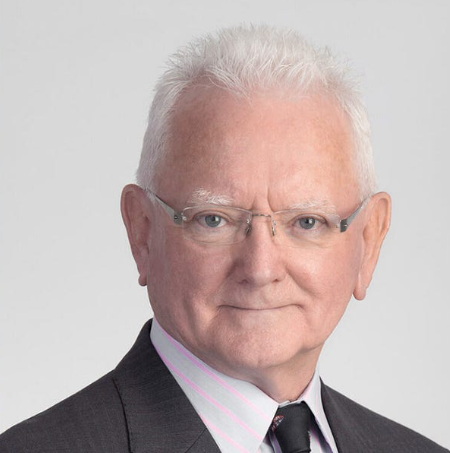
Ethical doctors who defended the public during COVID paid a brutal price. Dr. Roger Hodkinson warned early, backed the science, and protected lives. The system destroyed his career and left him in financial ruin. He stood for us. Now we stand for him. givesendgo.com/supportdrhodki…
Dr Mark Trozzi MD tweet media
English
44
621
1.5K
15.4K
Azyra
Azyra@cryptoazyra·
i am 43 years old - No hair - no girlfriend - no job - lost over 6 figures trading memecoins is it over for me? yes or no
Azyra tweet media
English
3.1K
83
1.7K
449.8K
Simon Maechling
Simon Maechling@simonmaechling·
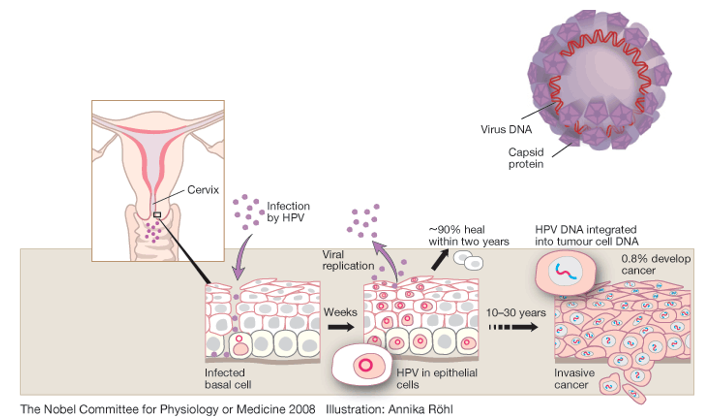
A massive global review just confirmed it. Clinical trials + real-world data from 132 million people across the globe. The HPV vaccine doesn’t just reduce cervical cancer. It almost eliminates it. Yes, you read that right. Girls vaccinated before 16 have an 80% lower risk of cervical cancer. Not a small reduction. Not “maybe.” Eighty percent. The protection isn’t only for the cervix. HPV causes cancers of the anus, penis, vagina, vulva, mouth, throat - the vaccine blocks the virus before the damage ever starts. This isn’t one study. It’s Cochrane, the gold standard of independent science. They analyzed clinical trials + real-world data from 132 million people across the globe. Not pharma PR. Not a lab press release. Global. Independent. Verified. The #1 fear? Side effects. Here’s what the data says: Arm soreness? Sure. Serious complications? No evidence. Rare side effects? Same rate as unvaccinated people. Translation: social media invented the danger. Cochrane couldn’t find it. Lawsuits against HPV vaccines? Courts dismissed claims as “speculative inferences.” Translation: conspiracy theories don’t hold up under evidence. Meanwhile, cervical cancer kills 350,000 women every year. Mostly young women. Mostly preventable. We don’t need more fear. We need more vaccination. And yes - boys should get the vaccine too. HPV doesn’t only cause cancer in women. Vaccinating boys protects everyone. Some countries are on track to eliminate HPV cancers entirely. Others are falling behind because misinformation spreads faster than vaccines. That shouldn’t be our legacy. We already have the tool to end cervical cancer. Not reduce it. End it. The only thing standing in the way is fear. Science isn’t asking for blind trust. It’s showing its receipts. Stop sharing rumors. Start preventing cancer.
Simon Maechling tweet media
English
181
2.3K
7.7K
225.2K
CryptoScientist
CryptoScientist@cryptoscientst·
@DudespostingWs Thats incredible! Unfortunately the world is too busy recognizing "independent strong women"
English
0
0
2
117
CryptoScientist retweetledi
Answers4Sean 🇨🇦
Answers4Sean 🇨🇦@Answers4Sean·
He only wanted to play hockey. He couldn't continue to play unless he took a shot. They told him it was SAFE AND EFFECTIVE. My only son lost his life after his 1st Pfizer shot. 😭😭😭😭😭😭😭😭😭💔 JUSTICE4SEAN Givesendgo.com/GAWYX
English
55
397
1.2K
9.7K