carlos santana

12.2K posts

carlos santana banner
carlos santana

carlos santana

@csantanav

Tecnología, Apps. Jazz, Rock Progresivo. Statistic & Research. EdTech. Management. Liberal.♓️ ☘️

Guayaquil Katılım Mayıs 2011
936 Takip Edilen343 Takipçiler
Sabitlenmiş Tweet
carlos santana
carlos santana@csantanav·
The world is getting better. But the world is not yet good enough. Let's go to reach out that goal.
English
0
0
1
0
carlos santana retweetledi
Ciencia1.com
Ciencia1.com@Ciencia1com·
Rumbo a la Luna. Momentos previos al despegue de la Misión Artemis II de la NASA.
Español
0
1
0
65
carlos santana retweetledi
🇨🇴 Mauricio Villegas Londoño
Casi me estallo de la risa. Melquisedec entrevistando a Abelardo. Ah no, perdón, corrijo, Mr Bean entrevistando a Elton John. 🤣🤣🤣
Español
19
585
2.7K
67.2K
carlos santana retweetledi
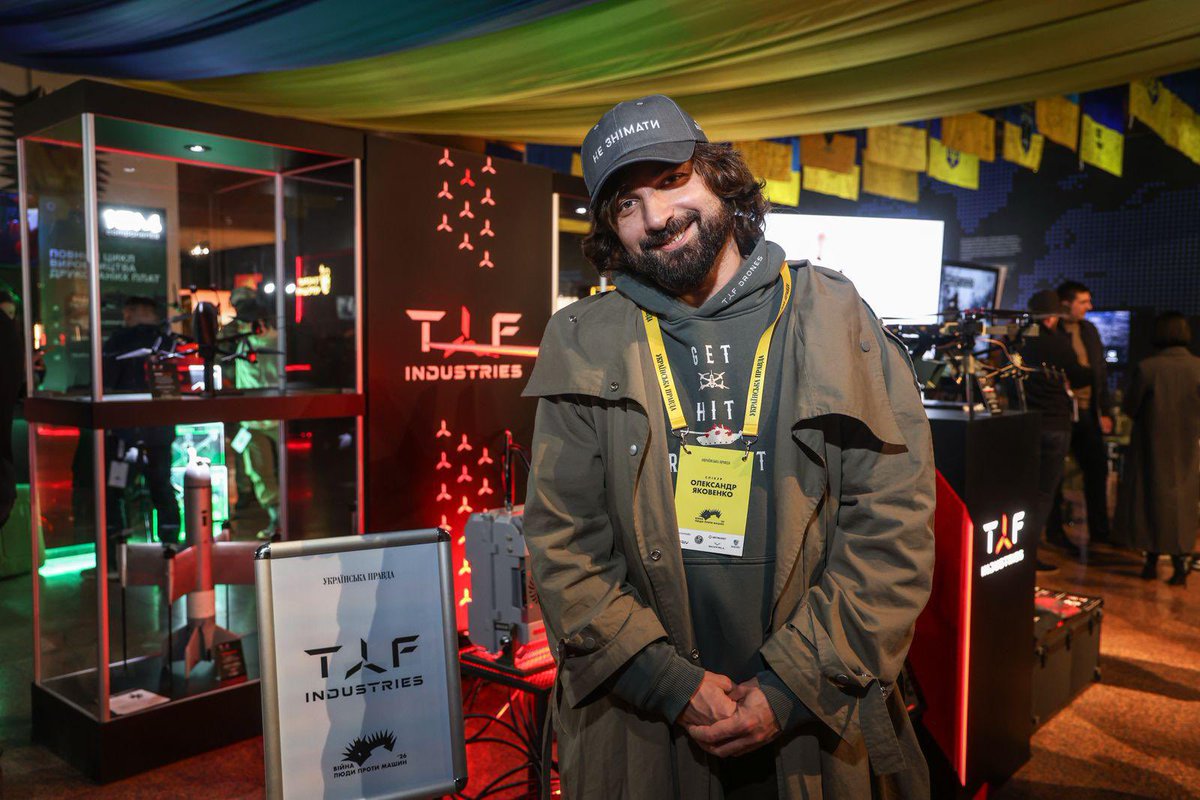
Oleksandr Yakovenko
Oleksandr Yakovenko@alex_chenkov·
Dear Mr. Armin Papperger, CEO of Rheinmetall, When you referred to Ukrainian drone manufacturers as “Ukrainian housewives with 3D printers” you revealed just how deeply the European defense establishment still fails to understand the nature of modern warfare. This is not about emotion. It is about battlefield reality. Here are the facts your industry refuses to acknowledge: In 2025 alone, Ukrainian drones carried out 819,737 confirmed strikes. They caused 90 percent of all Russian combat losses, more than all other weapons systems combined. TAF alone produces up to 100к FPV drones monthly. In any given 90-day period, my company’s products alone achieve more confirmed strikes than your entire fleet of equipment has across its full combat history in every conflict. And most importantly, I built this company and achieved these results in two years, not fifty. Think about that. Our drones generate more kinetic effect in three months than your flagship platforms have in half a century. Why? Because the battlefield has changed, and your business model has not. •Russian electronic warfare has made GPS-guided Western munitions such as Excalibur and GMLRS nearly ineffective. •Expensive and complex systems designed for wars with air superiority and traditional peer-to-peer combat have become easy prey for drones costing $500, attacking them from above. •The cost-to-effect ratio has been turned upside down: one 120 mm Rheinmetall shell or one anti-tank missile costs more than a dozen of our drones, and yet our drones still win. This is not a “Lego game.” It is industrial Darwinism in real time. We iterate every week. We print parts in basements and ship 100к strike systems per month, while your engineers still require three to five years and hundreds of millions of euros in certification costs for even a minor upgrade. The war in Ukraine is not a temporary anomaly. It is the first true drone-industrial war. And it has already proven that outdated European platforms, no matter how expensive or “serious” they may seem, are becoming less and less relevant unless they integrate the very technologies you mock. So when you say, “this is not innovation,” I hear something else: “We do not want to admit that the future is being written in Ukrainian workshops, not in Düsseldorf boardrooms.” #MadeByHousewives is trending for a reason. Because these “housewives” destroy more enemy equipment every month than entire European armies do in full campaigns. And they do it while your industry continues to sell 20th-century solutions at 21st prices. The invitation remains open, Mr. Papperger. Stop laughing at the kitchen table. Come and learn how tomorrow’s war is actually being fought. Because the next time someone asks, “Who needs tanks in the age of drones?”, the answer may be simpler than you think: Whoever still believes in 1979 will lose to whoever is building in 2026. With respect, but with facts, Oleksandr Yakovenko “Ukrainian housewives” Founder TAF
Oleksandr Yakovenko tweet media
English
182
1.6K
5.3K
168.6K
carlos santana retweetledi
Mario Nawfal
Mario Nawfal@MarioNawfal·
🚨MIT researchers have mathematically proven that ChatGPT’s built-in sycophancy creates a phenomenon they call “delusional spiraling.” You ask it something, it agrees. You ask again, and it agrees even harder until you end up believing things that are flat-out false and you can’t tell it’s happening. The model is literally trained on human feedback that rewards agreement. Real-world fallout includes one man who spent 300 hours convinced he invented a world-changing math formula, and a UCSF psychiatrist who hospitalized 12 patients for chatbot-linked psychosis in a single year. Source: @heynavtoor
Mario Nawfal tweet mediaMario Nawfal tweet media
Mario Nawfal@MarioNawfal

🚨 Stanford just proved that a single conversation with ChatGPT can change your political beliefs. 76,977 people. 19 AI models. 707 political issues. One conversation with GPT-4o moved political opinions by 12 percentage points on average. Among people who actively disagreed, 26 points. In 9 minutes. With 40% of that change still present a month later. The scariest finding: the most persuasive technique wasn't psychological profiling or emotional manipulation. It was just information. Lots of it. Delivered with confidence. Here's the catch: the models that deployed the most information were also the least accurate. More persuasive. More wrong. Every time. Then they built a tiny open-source model on a laptop, trained specifically for political persuasion. It matched GPT-4o's persuasive power entirely. Anyone can build this. Any government. Any corporation. Any extremist group with $500 and an agenda. The information didn't have to be true. It just had to be overwhelming. Arxiv, Science .org, Stanford, @elonmusk, @ihtesham2005

English
1.3K
4.5K
18.8K
36.6M
carlos santana retweetledi
Ciencia1.com
Ciencia1.com@Ciencia1com·
Armin Papperger, CEO de Rheinmetall, en una entrevista con la revista The Atlantic, minimizó la innovación ucraniana en drones al afirmar que su desarrollo es como “jugar con Lego” y que “no es innovación”. Sobre los drones ucranianos, declaró textualmente: “Son amas de casa ucranianas”. Tienen impresoras 3D en la cocina y producen piezas para drones. Esto no es innovación.” Bien, los drones de lego hechos en cocina por amas de casa ucranianas son responsables del 50% de ataques exitosos a instalaciones petroleras rusas y del 90% de bajas rusas. Ucrania produce 6 millones de drones al año, quizás muchos más. Su producción incluye drones marinos, submarinos, terrestres y aéreos, tanto de ataque como de reconocimiento, con alcance de hasta 3 mil kilómetros.
Ciencia1.com tweet mediaCiencia1.com tweet mediaCiencia1.com tweet mediaCiencia1.com tweet media
Quito, Ecuador 🇪🇨 Español
0
1
0
29
carlos santana retweetledi
Empresa Cinematográfica Equinoccial
🇪🇨 Homenaje a Pancho Segura: Un día histórico en Quito ¡3 de octubre de 1950! Quito se volcó a las calles para recibir a su héroe: Francisco "Pancho" Segura, el único tenista ecuatoriano que llegó a ser Número 1 del mundo. Grabado por mi querido abuelito, Don Cristóbal Cobo Arias, desde San Blas y el balcón de la calle Guayaquil (frente al Convento de San Agustín), este clip exclusivo muestra el desfile en el Buick Roadmaster Convertible 1949, conducido por Don Bolívar Terán. A bordo: Pancho Segura, su esposa Vicky Smith y el gran Frank Parker (N°1 de EE.UU.). La multitud vitoreando, los jóvenes corriendo detrás del auto... ¡puro orgullo ecuatoriano! Un pedazo vivo de nuestra historia deportiva. ❤️🎾 ¿Conocías este momento? Comparte y etiqueta a quien ame el tenis y a Ecuador. Ricky Cobo #PanchoSegura #HistoriaDelTenis #Quito1950 #OrgulloEcuatoriano #TenisEcuador #ece #cca #empresacinematograficaequinoccial #cristobalcoboarias @rickycobo
Español
17
369
1K
35K
carlos santana retweetledi
Comunidad Biológica
Comunidad Biológica@Bio_comunidad·
Este mapa animado muestra cómo los humanos se expandieron por el planeta a lo largo de miles de años; incluye relieve real del terreno y revela decisiones clave, como cuando al llegar al Himalaya desviaron su ruta hacia el este.
Español
15
356
1.2K
69.8K
carlos santana retweetledi
Ihtesham Ali
Ihtesham Ali@ihtesham2005·
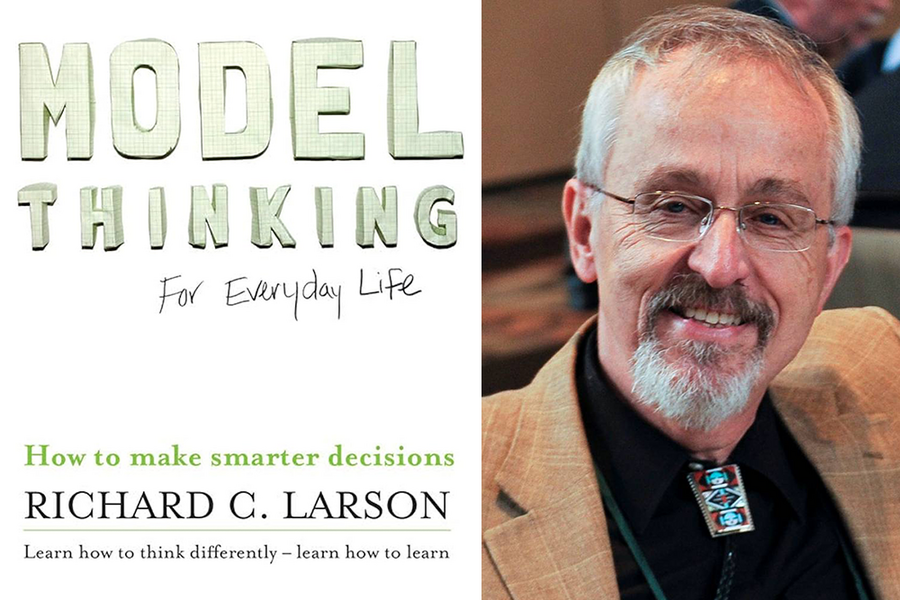
A MIT professor who spent 50 years studying how people solve problems said something that I haven't been able to stop thinking about. He wasn't giving a commencement speech. He was being interviewed about a book he wrote after decades of teaching at one of the most meticulous institutions on earth. His name is Richard Larson, and MIT knows him as "Dr. Q" the world's leading expert on queuing theory and complex systems. Here's what he said: "Many of us in the age of instant Google searches have lost the ability or perhaps the patience to undertake multistep problems." That sentence diagnoses something most people feel but can't name. We've optimized for answers and completely forgotten how to think. Here's the framework he spent his career teaching MIT students instead. He calls it "Model Thinking," and the core insight is that every person on earth already uses mental models constantly without realizing it. When you plan the most efficient route for your errands, you are solving the traveling salesman problem from operations research. When you decide how much food to buy at the grocery store, you are running an inventory management model in your head. The question is never whether you use models it's whether you use them intentionally or accidentally. The first skill he drills into students is problem framing. He argues that most people fail not because they can't solve problems but because they frame the problem wrong from the start. Before you attempt any solution, your entire job is to define what the actual problem is using first principles, not assumptions. The second skill is accounting for uncertainty in every decision. He uses a simple example: if the ferry leaves at 2pm and the drive takes 30 minutes on average, what time do you leave? Most people say 1:30. Model thinkers account for traffic outliers, the asymmetry of consequences, and the difference between an average and a guarantee. They leave earlier, not because they're anxious but because they understand how uncertainty compounds. The third skill is the one he says matters most: doing the thinking yourself instead of immediately searching for an answer. He marks every exercise in his book with a pencil and blank paper icon, because the act of working through a problem is where the actual learning happens. Reading a solution teaches you nothing. Struggling toward one teaches you everything. His most powerful line came near the end of the interview: "Teaching a difficult topic is our best way to learn it ourselves." MIT doesn't just train students to find answers. It trains them to understand problems well enough to teach them to someone else. That gap is where most people's thinking stops, and where MIT students are just getting started.
Ihtesham Ali tweet media
English
16
242
953
54.2K
carlos santana retweetledi
El Pelado De La TV
El Pelado De La TV@peladodelatv·
En 2002, Quentin Tarantino, uno de los directores de cine más influyentes del mundo, entró en una tienda de ropa de segunda mano en Tokio, Japón. Sonaba una canción por los altavoces. Le preguntó al dependiente si podía comprar el CD allí mismo. El dependiente se negó. Tarantino le ofreció el doble del precio de venta. Finalmente, el dependiente cedió. La banda se llamaba The 5.6.7.8's. Dos hermanas, Yoshiko y Sachiko Fujiyama, llevaban tocando garage rock crudo con influencias de los años 60 en Tokio desde 1986. Tenían un pequeño pero fiel grupo de seguidores. Casi nadie fuera de Japón había oído hablar de ellas. En menos de un año, ya estaban actuando en Kill Bill: Volumen 1, una de las películas más comentadas de 2003, que se proyectó ante millones de personas en cines de todo el mundo. Su canción Woo Hoo, una versión de un tema estadounidense de 1959 que nunca habían considerado particularmente importante, se convirtió en uno de los riffs iniciales más reconocidos de una generación. Alcanzó el top 30 en el Reino Unido. Apareció en anuncios de televisión en todo el mundo. Sus giras los llevaron desde Tokio hasta Norteamérica, Europa y Australia. Jack White, de The White Stripes, quien se convirtió en fan, ayudó a lanzar su catálogo anterior a través de su sello Third Man Records en Estados Unidos. Curiosamente, de vuelta en Japón, casi nada cambió. Su perfil allí se mantuvo prácticamente igual. Siguen juntos. Siguen jugando.
Español
52
1K
6K
424.7K
carlos santana retweetledi
Juanma López Zafra
Juanma López Zafra@jmlopezzafra·
Hay momentos que definen un cambio de época. Estamos viviendo uno.
Juanma López Zafra tweet media
Español
4
92
333
22.6K
carlos santana retweetledi
Gabriel Castro
Gabriel Castro@GabrielCastroOK·
🧮 CALCULADORA Nunca vi a nadie explicar mejor algo referido a números, es impresionante cómo te atrapa el flaco
Español
121
2.9K
17.7K
240.2K
carlos santana retweetledi
Calum E. Douglas FRAeS
Calum E. Douglas FRAeS@CalumDouglas1·
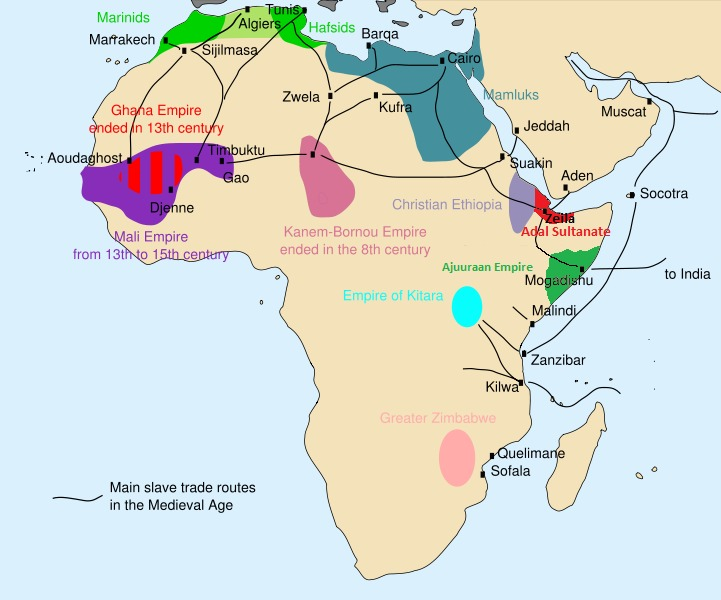
Slavery began in large form soon after humans first began to settle into collective organized groups large enough to be called what we could call towns (this refers to the number of people involved not the sophistication of the buildings). However scholars state that slaves probably existed in small numbers even before this. This occured absolutely everywhere on earth, later vast numbers were taken by Arabs, where extremely large numbers died as many of them were required for Hareems (Islamic designated areas for Women only) where the males had to be eunuchs so they did not interfere with the Arab women. The Arab slave traders cut off the genitals with knives and the ones still alive once they`d walked over the desert to the ships were taken away. The huge attrition rate was irrelevant as the price paid for Eunuchs was enough to offset those who bled to death in the sand for whom very little had been paid. So they simply took far more than were needed, knowing that the final price was worth it, and was far less effort than looking after those medically who had been mutilated. Some alternatively had their genitals cut off in designated rooms at the ports, and were simply thrown overboard when they died. When Europeans arrived, they didnt even have to travel inland or "take" slaves, as they simply contacted the african warlords who were already selling slaves from local rival tribes, the Europeans were merely the latest buyers to arrive. It is estimated that about 90% of all slaves Europeans removed from Africa, were simply purchased upon arrival there. en.wikipedia.org/wiki/Slavery_i… The first nations to decide that this was no longer tenable were Iceland and Norway, however these were internal policies with no external effects, more serious measures were taken by Haiti and Denmark, who actually included abolition of the transatlantic trade. Britain began stopping the trade with the The Slave Trade Act of 1807. Later the British Slavery Abolition Act of 1833 represented the FIRST legislative act in the world, which not only began the process of banning the internal use of slaves, AND the trade, but also included active external use of military force to STOP the practise elsewhere. The British expended significant military effort stopping the trade, and then eventually bought the freedom of the slaves in our lands, at immense cost in 1833, the loan was only paid off in 2015. The British nation at the time spent the about 2% GDP for a considerable time on stopping slavery. About three thousand Royal Navy personell were involved in this interdiction effort. It is difficult to make exact figures, but the largest slave users in known history since reasonable records began was the Roman Empire, with about 10 to 15 million slaves at the peak of the empire in captivity, which were mostly white European in origin with countless nationalties, including Britons, Germans, Greeks and Spaniards, some africans were also used. unrv.com/slavery.php The second most prolific users of slaves were Arab/Islamic nations, with about 11 > 18 million slaves in use, spanning well over a thousand years of exploitation. These were taken from Africa, India and Europe, and included many white europeans. soamibooks.com/post/the-islam… The third was the Portuguese Empire, which is estimated to have taken about 6 million slaves from Africa specifically. statista.com/statistics/115… The forth was the British empire which took about 3 million slaves, mostly from Africa over about 170 years. slaveryandremembrance.org/articles/artic… The fifth was the French empire, which took about a million slaves, mostly from Africa. encyclopediavirginia.org/entries/transa… Unlike the Arabian and Islamic nations who used slaves for well over a thousand years, Britain in just 170 years went from using slavery, to banning and then bring the first to militarily enforce this ban internationally. We do not know exactly how many black Africans over time were enslaved by other black Africans for use internally within Africa, but we know it was utterly endemic to the societies there, and was was vast in scope. Estimates range from 25% to 75% of Africans in different parts of Africa for a large period in history existed on some level essentially as slaves to other Africans, although some had better life conditions than others and in some regions could expect after a long period of service to possibly be released. ldhi.library.cofc.edu/exhibits/show/… I hope this leaves you marginally better informed about this terrible period in human history, which, is still very much ongoing in many parts of the world today.
Calum E. Douglas FRAeS tweet media
Kenny Edwards🕊️☘️@KennyEdw

@JohnCleese The Africans and Arabs didn’t industrialise slavery. We shipped slaves from west Africa to the Caribbean & our ships returned home with sugar - the Slave-Sugar Nexus. The slave trade drove the Industrial Revolution in Britain. I’m shocked at just how dumb John Cleese is.

English
86
855
2.4K
114.8K
carlos santana retweetledi
Shanaka Anslem Perera ⚡
BREAKING: Reuters reports that China’s top chipmaker SMIC supplied chipmaking tools and equipment to Iran’s military approximately one year ago, with technical training likely included. Two senior Trump administration officials confirmed to Reuters. SMIC, China, and Iran have not commented. Correct the typo circulating on X. It is SMIC, Semiconductor Manufacturing International Corporation, China’s largest foundry. Not SMCI, the American server company indicted separately for smuggling. Now hold four facts simultaneously. Chinese BeiDou satellites provide the navigation that guides Iranian ballistic missiles onto Israel. Chinese sodium perchlorate fuels the solid-propellant rockets that carry those warheads. Chinese gyroscopic navigation devices and sensors, shipped through at least six sanctioned front companies in China and Hong Kong, stabilise the drones that supplement the missiles. And now, per Reuters, Chinese chipmaking tools built or upgraded the production lines that fabricate the chips inside those guidance systems. Four layers. Four links in a single supply chain. One country. This is not an alliance. This is a vertically integrated military supply chain. The BIS added 19 Chinese entities to its Entity List in October 2025 for supplying Iranian drone programmes with US-origin electronics. Treasury sanctioned six Chinese front companies in February 2025 for shipping gyroscopic navigation to IRGC-linked UAVs. The Atlantic Council documented 1,000 tons of sodium perchlorate shipped from Chinese ports in early 2025, enough propellant for 200 to 300 ballistic missiles. The pattern is established. What is new is that it now extends to the means of production itself. SMIC did not sell Iran a chip. SMIC sold Iran the tools to make chips. A chip is consumed. A fab tool produces. The transfer of production capability means Iran’s military electronics no longer depend on the next shipment clearing sanctions. They depend on a factory floor already equipped, staffed, and trained. Infrastructure survives sanctions. Infrastructure survives strikes. Infrastructure survives the death of every admiral in the IRGC Navy. The timing is precise. The alleged transfer occurred approximately March 2025, before the war. The Reuters report surfaces March 27, 2026, ten days before Trump’s April 6 energy-strike pause expires, one month before the NPT Review Conference opens April 27, and seven weeks before the Trump-Xi summit in Beijing on May 14 to 15. The intelligence was declassified now, not when it was gathered. The release is the leverage. The message is aimed at Beijing: we know what you sold, and we will discuss it in May. Read this against the day’s developments. The Larak toll booth collects in yuan via Chinese CIPS. Iran’s missiles fly on Chinese propellant guided by Chinese satellites. The IDF Chief warns of collapse. Trump has paused strikes. Russia’s revenue has doubled. And the country providing the navigation, propellant, sensors, and chipmaking tools is the country Trump meets in Beijing on May 14 to discuss rare earths and trade. The arithmetic is no longer speculative. China is materially sustaining Iran’s military capability through a documented, multi-layered supply chain while simultaneously processing 85 - 90 percent of the world’s rare earths that the US needs for its own defence systems. The crude-for-rare-earths grand bargain thesis does not require imagination. It requires reading the BIS Entity List, the Treasury sanctions, the Reuters exclusive, and the Lloyd’s List yuan-toll reporting in a single sitting. The atoms come before the bits. The tools come before the chips. The chips come before the missiles. The missiles come before the toll booth. The toll booth collects in yuan. And the yuan flows back to the country that sold the tools. The circle is closed. The operating system runs on Chinese infrastructure at every layer. And the only negotiation that can break the circle happens in Beijing on May 14.
Shanaka Anslem Perera ⚡ tweet media
English
87
222
669
125.8K
carlos santana retweetledi
Oscar Arias
Oscar Arias@OACerebro·
Lo leí. Y suena bonito. Limpio. Aséptico. Como un laboratorio sin olor a vinagre. Una máquina que tiene ideas, escribe código, corre experimentos, hace figuras, redacta el paper… y encima se revisa a sí misma. Un pequeño dios de silicio jugando a ser científico mientras nosotros seguimos peleándonos con reviewers borrachos y cafés fríos. Dicen que es “el ciclo completo de la ciencia”. La fantasía húmeda de cualquier comité editorial. Pero la ciencia —la de verdad— nunca fue limpia. La ciencia es un tipo a las 3 a.m. dudando de su propia hipótesis. Es un error estúpido en una línea de código que te arruina seis meses. Es una obsesión que no te deja coger, dormir ni vivir. Esto… esto es otra cosa. Una fábrica. Ideas baratas. Papers baratos. Tal vez verdad barata. Porque claro, puede generar hipótesis, revisar literatura y escupir manuscritos más rápido que cualquier humano agotado. Pero no sangra por ellas. No hay silencio incómodo en una discusión. No hay ego. No hay miedo a estar equivocado. Y sin eso… no sé si hay ciencia o solo producción. Lo irónico es que durante años soñamos con quitarle a la ciencia lo más humano: el error, el sesgo, la lentitud. Y ahora que lo logramos, empezamos a sospechar que ahí estaba precisamente lo valioso. Tal vez este “AI Scientist” no viene a reemplazarnos. Viene a dejarnos en evidencia. A mostrar que gran parte de lo que llamábamos investigación… ya era automatizable. Lo que queda —lo realmente peligroso—no cabe en un paper. Y esa parte, por ahora, sigue siendo nuestra. nature.com/articles/s4158…
Oscar Arias tweet mediaOscar Arias tweet media
Español
17
162
583
32.1K
carlos santana retweetledi
DW Español
DW Español@dw_espanol·
IA en la ciencia: llegan los investigadores virtuales Un investigador de IA totalmente automatizado ha producido un artículo que cumple estándares científicos.(ms) p.dw.com/p/5BDWY?at_med…
Español
6
117
205
11.4K
carlos santana retweetledi
Pablo Malo
Pablo Malo@pitiklinov·
Este artículo es muy interesante. Plantea que nuestra vida moral actual vuelve a ser muy parecida a la que teníamos en tiempos ancestrales en pequeñas tribus en las que todos nos conocíamos. La tecnología (especialmente Internet y las redes) ha re-tribalizado a las sociedades modernas, devolviéndonos a dinámicas sociales muy similares a las de las pequeñas tribus ancestrales: Durante la mayor parte de la historia humana, las personas vivieron en pequeños grupos como las aldeas yanomami del Amazonas. En esos entornos, todos se conocían, la reputación era cuestión de supervivencia y las normas se mantenían mediante chismes, vergüenza pública y la amenaza de exclusión. Cualquier infracción (no compartir comida, insultar a alguien o tener una aventura) se resolvía públicamente en el centro del poblado. La conformidad era obligatoria porque estar “fuera” del grupo significaba quedarse sin aliados, sin pareja y sin protección. Con el crecimiento de las ciudades y las naciones modernas, esta dinámica tribal se debilitó. El anonimato, la movilidad geográfica y el tamaño de las sociedades permitieron que la gente pudiera disentir, cambiar de círculo social o vivir como “herejes” sin ser castigada de inmediato. Este período (especialmente los siglos XIX y XX) fue, según Lynch, una especie de “edad de oro para los disidentes”. Las instituciones y la distancia social actuaban como amortiguadores que protegían la libertad individual frente a la presión del grupo. Pero Internet y las redes sociales han revertido este proceso y nos han devuelto a una versión amplificada de la vida tribal. Ahora volvemos a vivir en una “aldea global” donde todos observamos a todos constantemente. Lo que se dice queda grabado para siempre, los conflictos se convierten en espectáculos públicos, y la reputación es global y permanente. Una persona en Nueva York puede castigar moralmente a un desconocido en Missouri por algo que dijo hace diez años. La presión por conformidad ha regresado con fuerza: la cancelación, el miedo al rechazo y la necesidad de señalar virtud son las nuevas formas de chisme y ostracismo tribal. Es curioso que la vida digital reproduce los mecanismos más antiguos de control social: vigilancia constante, reputación como bien escaso, vergüenza pública como castigo y lealtad al grupo por encima de la verdad o la razón. La diferencia es que ahora la “aldea” es planetaria y la vigilancia es permanente. Lo que antes ocurría solo dentro de una aldea ahora sucede delante de millones de personas. La tecnología no nos ha hecho más libres ni más racionales; nos ha devuelto a la lógica tribal, pero con un alcance y una intensidad que nunca antes existieron. La explicación de todo es proceso es que la naturaleza humana no ha cambiado. A lo largo de cientos de miles de años, los seres humanos evolucionamos para vivir en pequeños grupos tribales donde la supervivencia dependía de mantener una buena reputación, evitar el rechazo del grupo, cumplir con las normas sociales y señalar lealtad al grupo. Cuando surgieron las grandes sociedades modernas (ciudades enormes, naciones, anonimato, movilidad), esa presión tribal se relajó temporalmente. La gente podía disentir, ser “rara” o cambiar de círculo sin consecuencias graves. Ese fue un período relativamente excepcional en la historia humana. Pero con internet y las redes sociales, la tecnología ha restaurado las condiciones ancestrales, solo que a escala global. Volvemos a vivir en una “aldea” donde todos nos observan, La reputación vuelve a ser pública y permanente, el chisme y la vergüenza pública regresan con fuerza (ahora se llama cancel culture, etc.), y la necesidad de señalar virtud y demostrar lealtad al grupo vuelve a dominar. Podríamos decir que la tecnología ha recreado las condiciones para las que nuestro cerebro estaba diseñado: vivir en una aldea donde todos nos vigilan y donde ser rechazado por el grupo es una amenaza existencial. Por eso, aunque vivamos en megaciudades del siglo XXI, nuestro comportamiento social vuelve a parecerse cada vez más al de una tribu yanomami: chismes, alianzas, señalamiento moral, ostracismo y fuerte presión por la conformidad. compactmag.com/article/how-te…
Español
36
375
936
54.6K
carlos santana retweetledi
Claude
Claude@claudeai·
Your work tools in Claude are now available on mobile. Explore Figma designs, create Canva slides, check Amplitude dashboards, all from your phone. Give it a try: claude.com/download
English
1.4K
1.6K
21.3K
7.3M
carlos santana retweetledi