Cuau Suarez retweetledi
Cuau Suarez
1.2K posts


Cuau Suarez
@cuau_suarez
Soy polvo estelar, hijo de las estrellas ... Repositorio de materiales varios
Katılım Kasım 2017
443 Takip Edilen16 Takipçiler

Cuau Suarez retweetledi

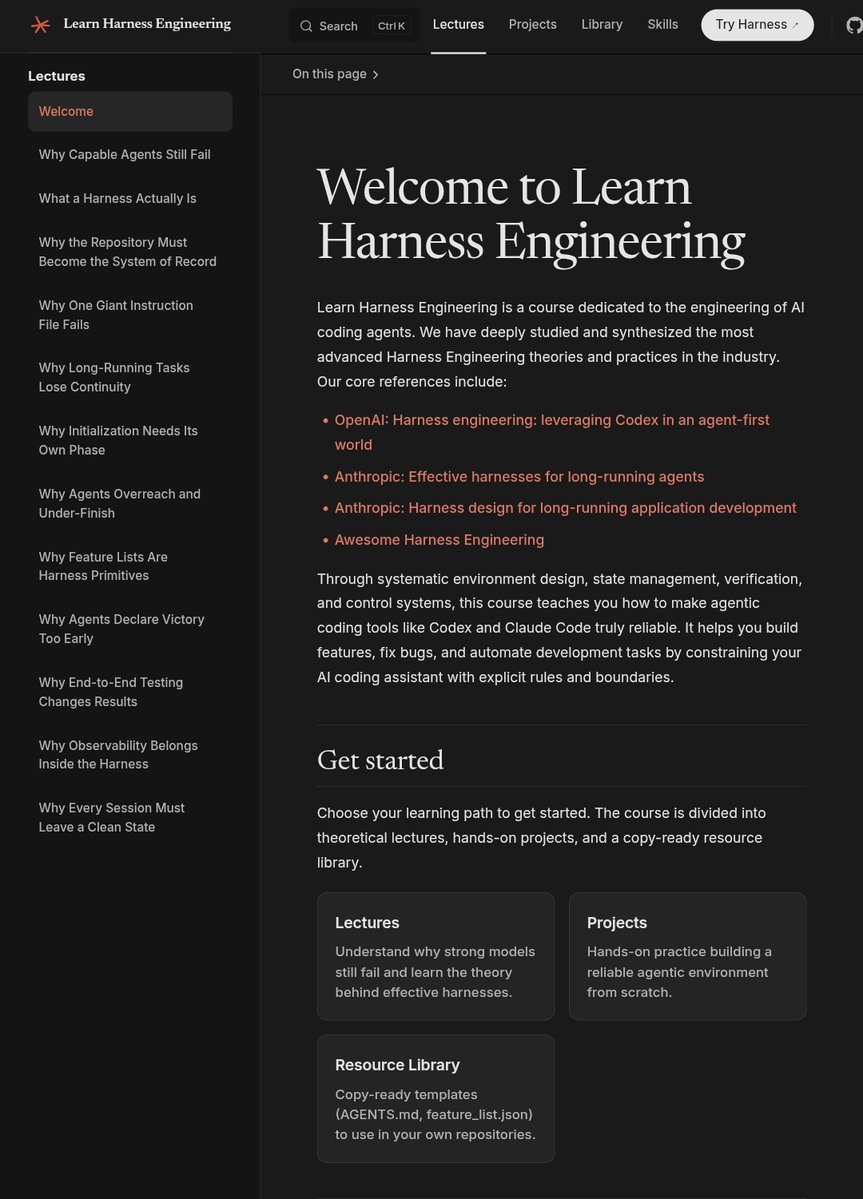
This is the best site on the internet to learn harness engineering
walkinglabs.github.io/learn-harness-…
English
Cuau Suarez retweetledi
MICROSOFT'S FREE AI AGENTS COURSE
The best resource to go from zero to building production ai agents.
→ 15+ lessons with code + videos
→ agentic RAG, multi-agent, tool use
→ memory, planning, browser-use agents
→ MCP & A2A protocols included
all free.... all open source
github.com/microsoft/ai-a…
English
Cuau Suarez retweetledi

Si hoy tuviese que aprender Claude Code, arrancaría por esto:
1) Agent loop: entender cómo Claude piensa, ejecuta acciones, verifica resultados y corrige errores mientras trabaja.
2) Permissions & Auto Mode: approvals, auto mode y qué puede ejecutar Claude automáticamente.
3) Memory (CLAUDE.md): guardar reglas, comandos y contexto para no repetir lo mismo en cada sesión.
4) MCP: conectar Claude con GitHub, Slack, databases y herramientas externas.
5) Skills: crear workflows reutilizables para tareas repetitivas o específicas del proyecto.
6) Subagents: dividir tareas grandes en agentes separados para mantener el contexto limpio.
7) Hooks: automatizar validaciones, permisos y restricciones antes o después de acciones importantes.
8) Planning: cuándo usar /plan antes de tocar código o cambiar arquitectura.
9) Session management: usar /compact, /clear, --resume y --continue para manejar sesiones largas.
10) Rewind & checkpoints: volver atrás cuando Claude rompe algo o toma un mal camino.
11) Commands: aprender /permissions, /memory, /review, /agents y otros comandos clave del día a día.
12) Effort levels: cuándo usar think, ultrathink o distintos niveles de razonamiento según la tarea.
Y recién después iría a conceptos más avanzados:
context engineering, harness, context rot, multi-agent workflows y performance.
santi@santtiagom_
Español
Cuau Suarez retweetledi

Instead of watching an hour movie, watch this. In 14 minutes, an Anthropic engineer who wrote Building Effective Agents will teach you more about building agents right than most developers figure out on their own in months.
English
Cuau Suarez retweetledi
Cuau Suarez retweetledi

A Mathematical Introduction to
Robotic Manipulation.
[📍Save for later]
It is a foundational robotics textbook that universities use to teach full graduate-level courses.
From body motion to manipulation, grasping, control, and nonholonomic planning. This is the mathematical backbone behind robot arms and hands.
📍ce.cit.tum.de/fileadmin/w00c…
——
Weekly robotics and AI insights.
Subscribe free: 22astronauts.com

English
Cuau Suarez retweetledi

Jane Street pays $650,000+ a year for quants who understand this math of systematic trading.
UC Berkeley just put the exact same knowledge for free in 1 hour.
Bookmark & watch it today, no matter what. Then read the complete blueprint below.
Roan@RohOnChain
English
Cuau Suarez retweetledi

Start learning mobile robotics now! 📚
University of Michigan released a course on autonomous mobile robotics.
It's all for free on YouTube as a series of 29 video lectures covering theory and application of probabilistic and geometric techniques for autonomous mobile robotics.
Topics include Bayesian filtering, stochastic representations of the environment, motion and sensor models for mobile robots, algorithms for mapping and localization, and application to autonomous marine, ground, and aerial vehicles.
Lecture series includes:
→ Bayes Filters and Kalman Filtering
→ Nonlinear Kalman Filtering
→ Particle Filtering
→ Symmetry & Rigid Body Motion
And more covering the fundamentals of mobile robotics perception and navigation.
University courses on mobile robotics typically cost thousands in tuition. UMich-CURLY is releasing the full lecture series for free, democratizing access to robotics knowledge (which I simply LOVE! 🫶🏼)
For anyone wanting to start working in autonomous systems, these fundamentals: Bayesian filtering, localization, mapping, are essential.
Now they're available to anyone with internet access. 🎓
🔗 Start here: youtube.com/playlist?list=…
~~
♻️ Join the weekly robotics newsletter, and never miss any news → http://
ziegler.substack.com

English
Cuau Suarez retweetledi

Cuau Suarez retweetledi

Cuau Suarez retweetledi
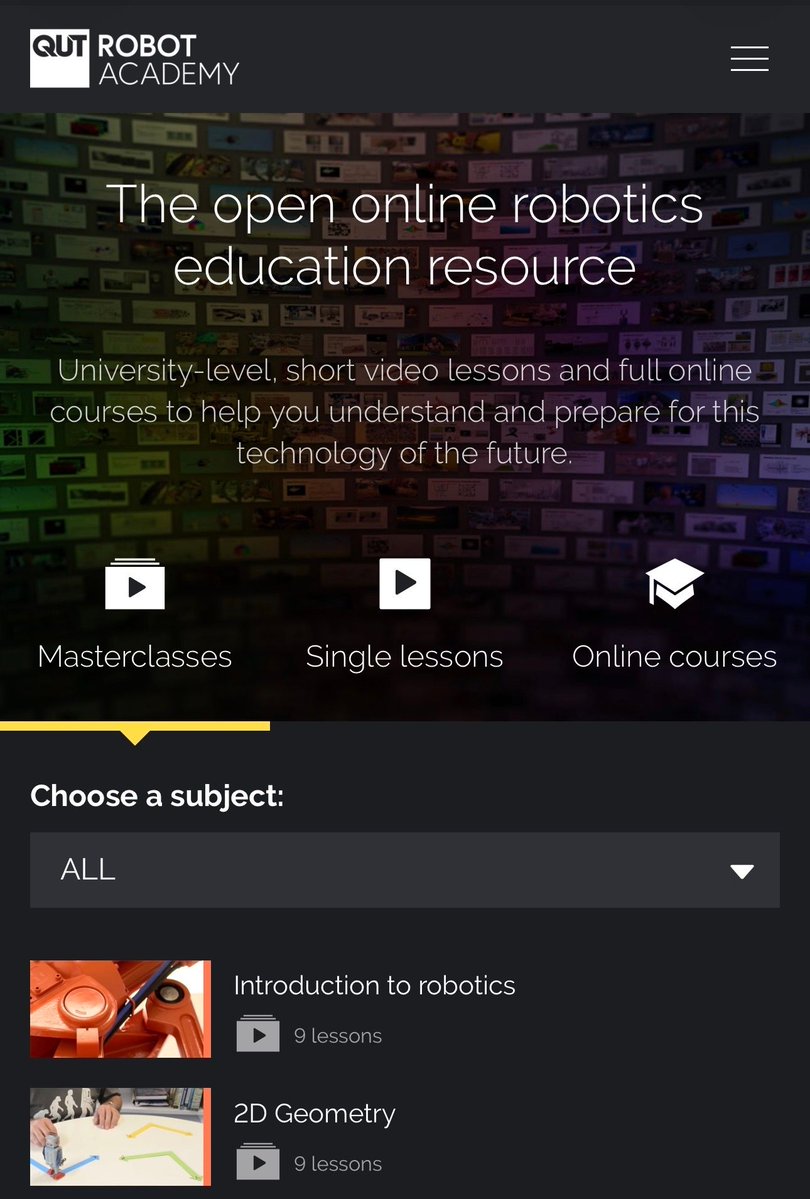
Robotics education built for people who actually want to understand it… not just pass an exam.
[📍FREE ]
Peter Corke’s Robot Academy breaks down robotics into short, focused video lessons.
What it focuses on:
• Robot motion and coordinate frames
• Forward and inverse kinematics, explained visually
• Velocity, Jacobians, and manipulability
• Path and trajectory planning
• Vision systems and camera geometry
Over 200 short lessons.
Free.
Built specifically to be accessible without a robotics degree.
📍 robotacademy.net.au
English
Cuau Suarez retweetledi

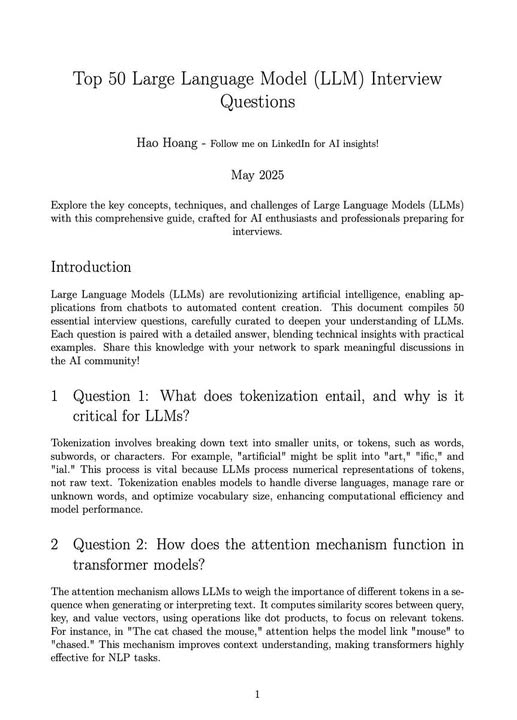
🚨 GOOGLE, META, OPENAI etc. BIG TECH are REJECTING JOB CANDIDATES BEFORE EVEN THEY FINISH TALKING.
50 LLM QUESTIONS. IF YOU CAN'T ANSWER THEM, THE INTERVIEW ENDS BEFORE IT STARTS.
The people passing these interviews are walking out with $200k+ offers.
Someone just LEAKED THE EXACT LLM INTERVIEW QUESTIONS these companies are asking right now.
And the gap between people who know these answers and people who do not is already costing careers.
Here is every category you need to know:
The Basics they always ask first:
↳ How does tokenization work and why does it matter
↳ How does attention actually work inside a transformer
↳ What is a context window and what breaks when it gets too big
↳ What are embeddings and how do they get initialized
↳ How does the model know word order without reading left to right
The fine-tuning questions that eliminate 80% of candidates:
↳ What is LoRA and why is it better than full fine-tuning
↳ What is QLoRA and when do you use it instead
↳ How do you fine-tune a model without making it forget everything it already knows
↳ What is model distillation and why do companies use it
↳ How do you handle vocabularies with millions of possible words
The generation questions most people guess on:
↳ Beam search vs greedy decoding, which one and when
↳ What temperature actually does to model output
↳ The difference between top-k and top-p sampling
↳ Why autoregressive models work differently from masked models
The advanced concepts that separate good from great:
↳ How RAG works and why it beats fine-tuning for factual accuracy
↳ Why Chain-of-Thought prompting makes models dramatically smarter
↳ What Mixture of Experts is and why every frontier model uses it now
↳ Zero-shot vs few-shot learning and when each one wins
The math questions that make people sweat:
↳ Why softmax is used inside attention and not something simpler
↳ What cross-entropy loss actually measures
↳ What KL divergence is and where it shows up in AI training
↳ Why vanishing gradients were destroying transformers and how they fixed it
If you are applying for any AI role in 2026 and you cannot answer at least 40 of these, you are not ready yet.
The full list of 50 questions is worth printing out and going through one by one.
Save this post. Your next interviewer has almost certainly pulled from this exact list.
English
Cuau Suarez retweetledi

ANDREJ KARPATHY COULD HAVE CHARGED $500 FOR THIS WALKTHROUGH.
He put it on YouTube.
Every way he personally uses LLMs in his own life. Thinking models. Deep research. File uploads. Python interpreter. Claude Artifacts.
Not theory. Not benchmarks.
The actual daily workflow of the person who built Tesla Autopilot and co-founded OpenAI.
2 hours walking through his personal LLM workflow.
The gap between people who watch this week and those who save it for later is not 2 hours.
It is everything those 2 hours quietly change about how you work for the rest of your career.
English
Cuau Suarez retweetledi

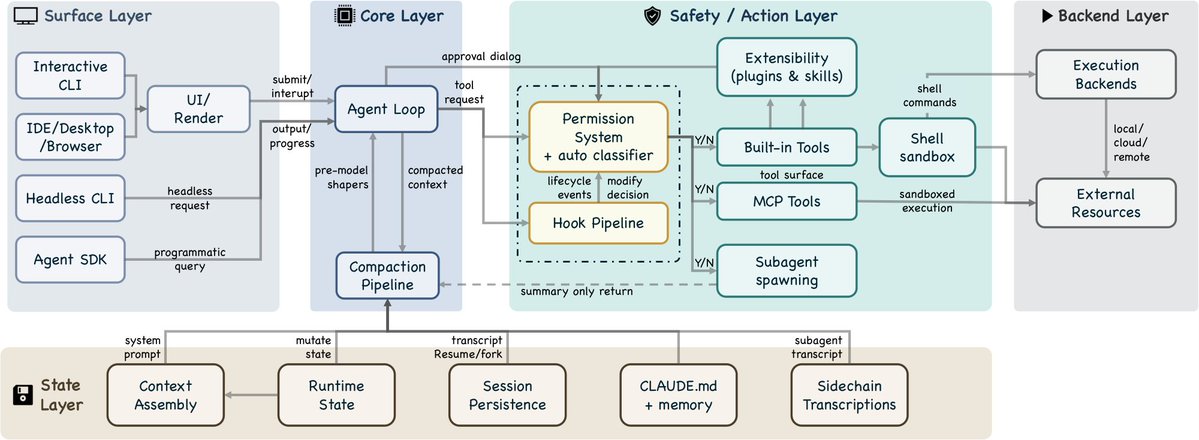
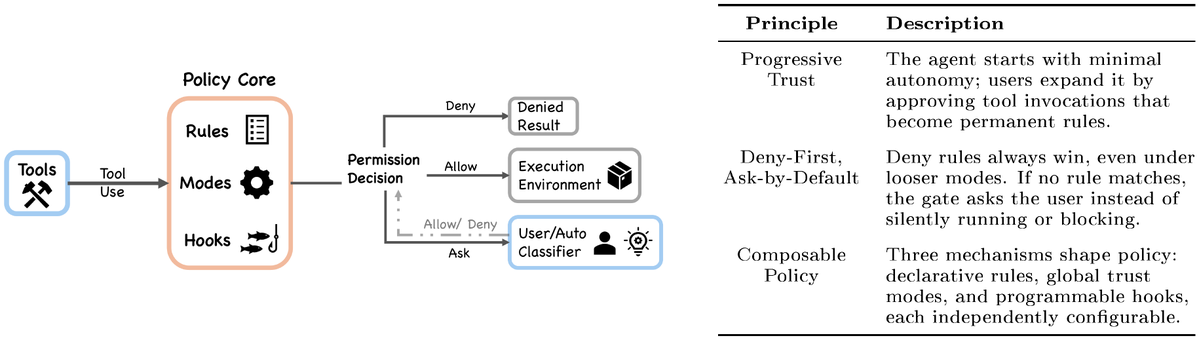
A must read for anyone interested in building practical AI systems in 2026:
Dive into Claude Code: The Design Space of Today's and Future AI Agent Systems
The paper explains the architecture of a modern production-grade AI agent system (Claude Code) by analyzing its source code. This is what they call a "harness" of an agentic coding system.
Learn by reading with an AI tutor: chapterpal.com/s/9b6bb47a/div…
PDF: arxiv.org/pdf/2604.14228


English
Cuau Suarez retweetledi

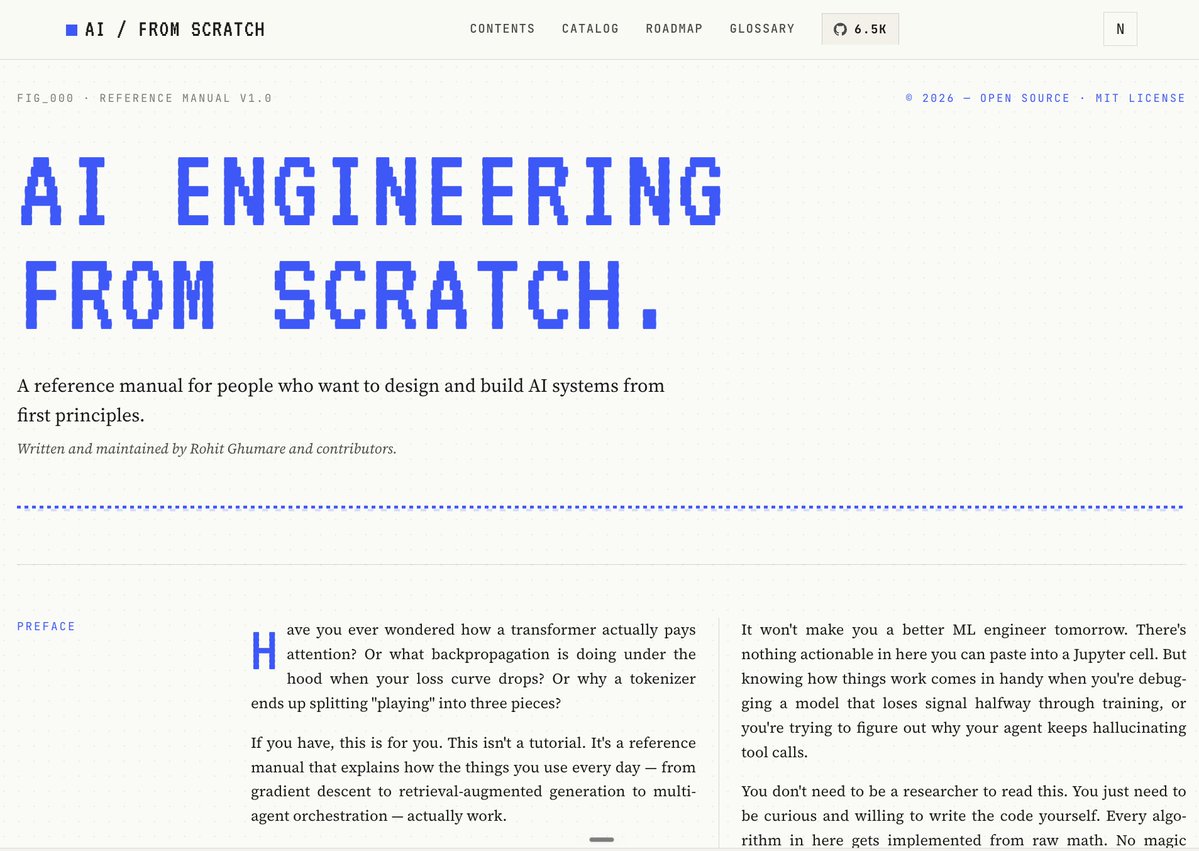
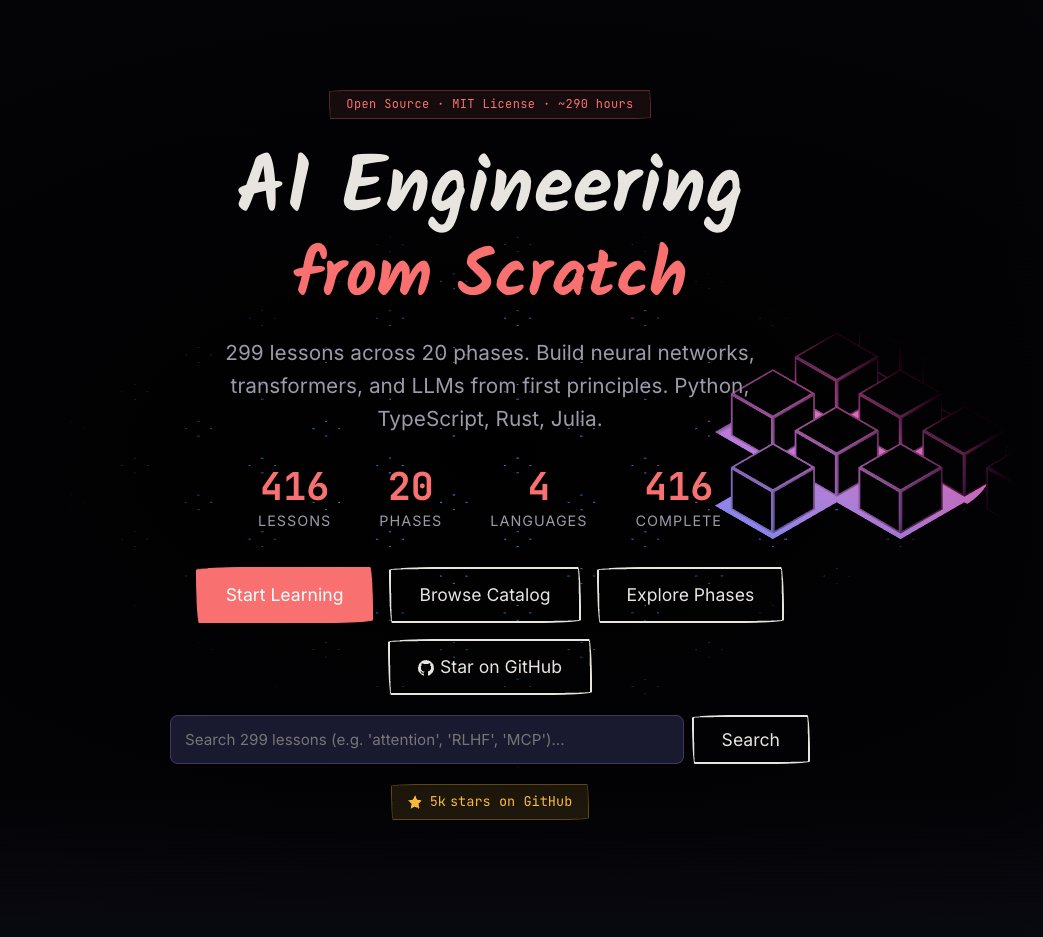
AI ENGINEERING FROM SCRATCH
> 416 Lessons
> 20+ Chapters
> In Python, Julia, Rust, Typescript
5000 GitHub Stars
Completely Open source 100%
English
Cuau Suarez retweetledi
Cuau Suarez retweetledi

Repetitive digital tasks can eat up a lot of your time.
In this course, @EstefaniaCassN teaches you how to automate them with Zapier, from basic Zaps to more advanced AI-powered workflows.
You’ll learn about triggers, actions, and how to connect the apps you already use.
freecodecamp.org/news/reclaim-y…

English
Cuau Suarez retweetledi
A full MIT course on robot mechanics and control.
If you're building or working with robotic systems, this one deserves a permanent bookmark.📌
Russ Tedrake's Underactuated Robotics at MIT covers the math and intuition behind how robots actually move — not just the surface level.
No paywalls. No prerequisites gatekeeping.
What it focuses on:
- Nonlinear dynamics and stability for robotic systems
- Trajectory optimization and motion planning
- Reinforcement learning applied to locomotion and manipulation
- Lyapunov methods and limit cycles for real control design
- Worked examples with code across the full course
Full textbook, lecture videos, and problem sets — all free.
📍 underactuated.mit.edu

English
Cuau Suarez retweetledi