Bogdan (Dan) Baciu

273 posts

Bogdan (Dan) Baciu banner
Bogdan (Dan) Baciu

Bogdan (Dan) Baciu

@curiouslinks

Finance and Technology

Dubai/Iasi/Dallas Katılım Şubat 2009
916 Takip Edilen60 Takipçiler
Bogdan (Dan) Baciu
Bogdan (Dan) Baciu@curiouslinks·
@EugeneNg So you default to FCFE versus FCFF? So not cap structure independent? Makes sense. Thx for the quick reply.
English
1
0
0
7
Eugene Ng
Eugene Ng@EugeneNg·
@curiouslinks I calculate FCF manually. It’s not difficult to calculate, it’s just OCF less capex.
English
1
0
1
14
Eugene Ng
Eugene Ng@EugeneNg·
Sharing my favourite charts from Michael Mauboussin’s latest article: “Competitive Advantage Period The Neglected Value Driver” 1 | Identifying where a company is within their life cycle is key. I prefer to invest in companies that are in the earlier to mid part of the life-cycle S-curve and tend to exit when revenue growth rapidly structurally decelerates to single digits.
Eugene Ng tweet media
English
2
3
15
1.6K
Bogdan (Dan) Baciu
Bogdan (Dan) Baciu@curiouslinks·
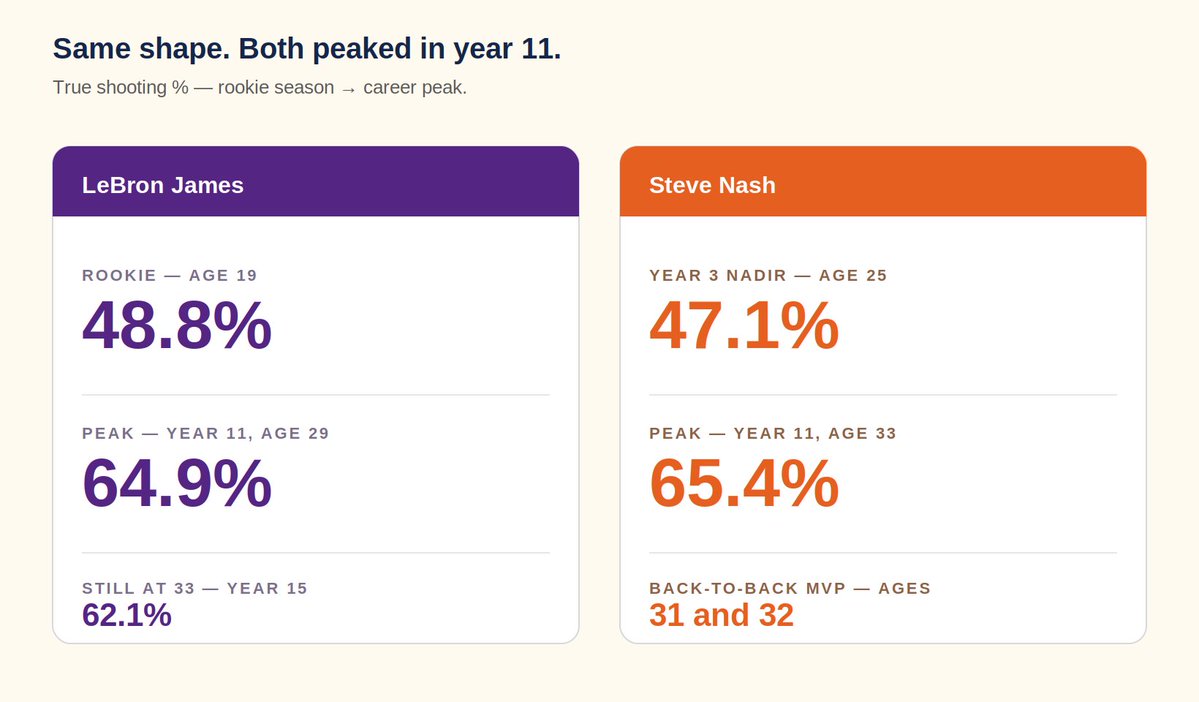
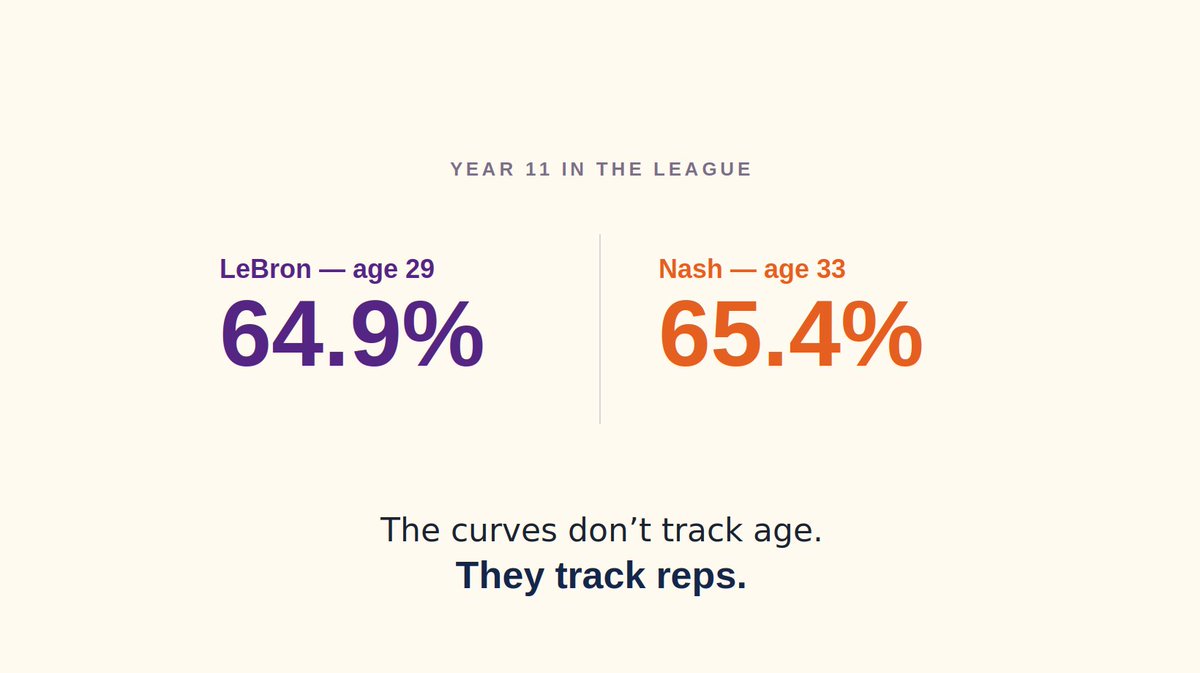
Different positions. Different eras. Same shape. LeBron: 48.8% rookie → 64.9% peak. Nash: 47.1% trough → 65.4% peak. Reindex to year-in-league and the curves line up.
Bogdan (Dan) Baciu tweet media
English
1
0
0
21
Bogdan (Dan) Baciu
Bogdan (Dan) Baciu@curiouslinks·
Fun little analysis. You can get better with age. Even if you’re pretty good to start with. This chart proves that with two great examples. Arguably the GOAT LeBron James came in below average — 48.8% TS (True Shooting percentage) as a rookie. 2x MVP Canadian legend Steve Nash hit a year-3 trough at 47.1% (age 25). Both peaked in year 11 in the league.
Bogdan (Dan) Baciu tweet media
English
1
0
0
78
Bogdan (Dan) Baciu
Bogdan (Dan) Baciu@curiouslinks·
Fascinating chart. This time maybe it’s not different.
Bogdan (Dan) Baciu tweet media
Alex Clayton@afc

We at @meritechcapital are excited to share our 2025 markets update. Each year, we deliver a markets update presentation to our limited partners at our annual meeting and we've made it public this year.

English
0
0
0
17
Bogdan (Dan) Baciu retweetledi
Eugene Ng
Eugene Ng@EugeneNg·
Knowledge is addition, wisdom is subtraction.
English
2
9
27
3.8K
Bogdan (Dan) Baciu
Bogdan (Dan) Baciu@curiouslinks·
@EugeneNg Super interesting. Totally agree. FCF is relatively painful to compute for private and public companies. Do you use a proxy or do you just dig in and do the work to calc it regardless of the difficulty?
English
1
0
1
8
Eugene Ng
Eugene Ng@EugeneNg·
2 | Multiples have become the most popular valuation method. For example, for non-financials, I use EV/FCF and P/E for financials. I do not use DCF and they are going to be precisely wrong.
Eugene Ng tweet media
English
2
0
2
249
Trystan
Trystan@KosmynkaOS·
We are the only AI Operating system that is built for work Retain full control: Permissions, Approvals, Memory, Logs, System access, Human review. The first wave of AI was chatbots. The next wave is AI workers. SomaOS is the operating system for the AI workforce. Check us out: SomaOS.one Check out the GitHub: github.com/TryKosm
Trystan tweet media
English
4
0
20
1.7K
Trystan
Trystan@KosmynkaOS·
Hey friends, as you know, I left Apple six months ago to build enterprise AI agents. The more I looked at the space, the more obvious the gap became Companies are about to have AI agents doing real work Not just answering questions →Checking systems →Drafting emails →Updating records →Finding problems →Preparing decisions →Moving work forward That only works if agents are managed That is why @SomaOS is here
Trystan tweet media
English
19
11
301
21.7K
Bogdan (Dan) Baciu
Bogdan (Dan) Baciu@curiouslinks·
Quote: “No pure managers: Every leader at Coinbase must also be a strong and active individual contributor. Managers should be like player-coaches, getting their hands dirty alongside their teams.” This has always seemed like the way to go to me. I always phrased it as “I can lead but I like to, and can, do work too.” Wonder if this is the future for all jobs?
Brian Armstrong@brian_armstrong

This is an email I sent earlier today to all employees at Coinbase: Team, Today I’ve made the difficult decision to reduce the size of Coinbase by ~14%. I want to walk you through why we're doing this now, what it means for those affected, and how this positions us for the future. Why now Two forces are converging at the same time. We need to be front footed to respond to both. First, the market. Coinbase is well-capitalized, has diversified revenue streams, and is well-positioned to weather any storm. Crypto is also on the verge of the next wave of adoption, with stablecoins, prediction markets, tokenization, and more taking off. However, our business is still volatile from quarter to quarter. While we've managed through that cyclicality many times before and come out stronger on the other side, we’re currently in a down market and need to adjust our cost structure now so that we emerge from this period leaner, faster, and more efficient for our next phase of growth. Second, AI is changing how we work. Over the past year, I’ve watched engineers use AI to ship in days what used to take a team weeks. Non-technical teams are now shipping production code and many of our workflows are being automated. The pace of what's possible with a small, focused team has changed dramatically, and it's accelerating every day. All of this has led us to an inflection point, not just for Coinbase, but for every company. The biggest risk now is not taking action. We are adjusting early and deliberately to rebuild Coinbase to be lean, fast, and AI-native. We need to return to the speed and focus of our startup founding, with AI at our core. What this means To get there, we are not just reducing headcount and cutting costs, we’re fundamentally changing how we operate: rebuilding Coinbase as an intelligence, with humans around the edge aligning it. What does this mean in practice? - Fewer layers, faster decisions: We are flattening our org structure to 5 layers max below CEO/COO. Layers slow things down and create coordination tax. The future is small, high context teams that can move quickly. Leaders will own much more, with as many as 15+ direct reports. Fewer layers also means a leaner cost structure that is built to perform through all market cycles. - No pure managers: Every leader at Coinbase must also be a strong and active individual contributor. Managers should be like player-coaches, getting their hands dirty alongside their teams. - AI-native pods: We’ll be concentrating around AI-native talent who can manage fleets of agents to drive outsized impact. We’ll also be experimenting with reduced pod sizes, including “one person teams” with engineers, designers, and product managers all in one role. In short: AI is bringing a profound shift in how companies operate, and we’re reshaping Coinbase to lead in this new era. This is a new way of working, and we need to leverage AI across every facet of our jobs. To those who are affected I know there are real people behind these decisions — talented colleagues who have poured themselves into this company and our mission. To those of you who will be leaving: thank you. You’ve helped build Coinbase into what it is today, and I am sincerely grateful for everything you've done. All impacted team members will receive an email to their personal account in the next hour with more information, and an invitation to meet with an HRBP and a senior leader in your organization. Coinbase system access has been removed today. I know this feels sudden and harsh, but it is the only responsible choice given our duty to protect customer information. To those affected, we will be providing a comprehensive package to support you through this transition. US employees will receive a minimum of 16 weeks base pay (plus 2 weeks per year worked), their next equity vest, and 6 months of COBRA. Employees on a work visa will get extra transition support. Those outside of the US will receive similar support, based on local factors and subject to any consultation requirements. Coinbase prides itself on talent density. Our employees are among the most talented people in the world, and I have no doubt that your skills and experience will be highly sought after as you pursue your next chapters. How we move forward To the team that is staying, I know this is a difficult day. We’re saying goodbye to colleagues and friends you've been in the trenches with. But here’s what I want you to know as we move forward together: Over the past 13 years, we have weathered four crypto winters, gone public, and built the most trusted platform in our industry. We’ve made it this far by making hard decisions and by always staying focused on our mission. This time will be no different – nothing has changed about the long term outlook of our company or industry. And most importantly, our mission has never been more important for the world. Increasing economic freedom requires a new financial system, and we’re building it. The Coinbase that emerges from this will be more capable than ever to achieve our mission. Brian

English
0
1
1
35
Bogdan (Dan) Baciu
Bogdan (Dan) Baciu@curiouslinks·
This is interesting and as an aside Edwarde Tufte made an observation about this. He said long ago computers had the decision to be file-first or program-first. File-first you open your file and drag in whatever program you want (Word, Excel, Powerpoint) and it works additively. But we went program first (you open Powerpoint and are “stuck” in a .pptx file). I think often that we made the wrong decision structurally on choosing the architecture we did.
Tejas Gawande@tejgw

We almost lost an enterprise deal because @Chronicle_HQ couldn't export to PPT. That moment gave us the simplest product framework we use today: Every tool has inflows and outflows. If either is broken, then adoption stalls. 1/ Inflows: This is what users need to bring into your product to get their job done. - PDFs - URLs - Brand kits - Figma files - References - Granola transcripts If your product makes this painful, users give up before they ever taste what you built. 2/ Outflows: This is what users need to send out after the job is done. - CRM syncs. - PDF exports. - PPT exports. - Shareable links. If the artefact cannot travel outside your app, adoption dies at the last mile. But once we added PPT import and PPT export, the enterprise conversations we'd been losing suddenly started closing.

English
0
0
0
27
Bogdan (Dan) Baciu
Bogdan (Dan) Baciu@curiouslinks·
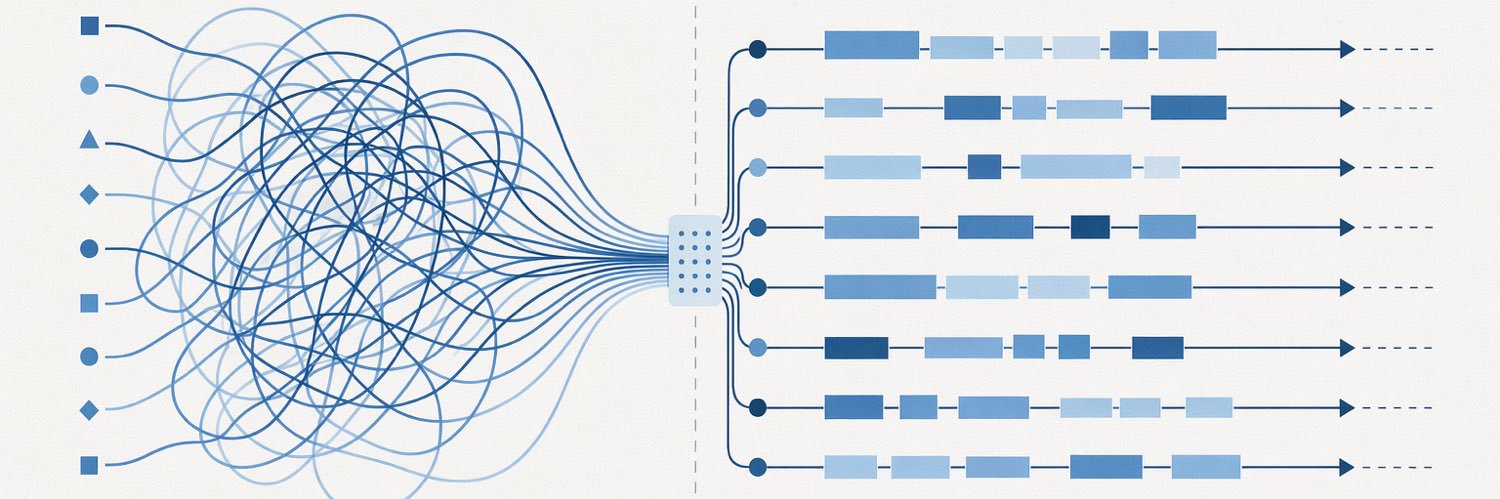
What they built is intellectually perfect. It is also practically unreplicable for almost any business on earth. You need the data, the engineering culture, the ML platform, the funding, and a decade of doing it right from day one. Most companies have one of those things. Uber has all of them.
English
1
0
0
15
Bogdan (Dan) Baciu
Bogdan (Dan) Baciu@curiouslinks·
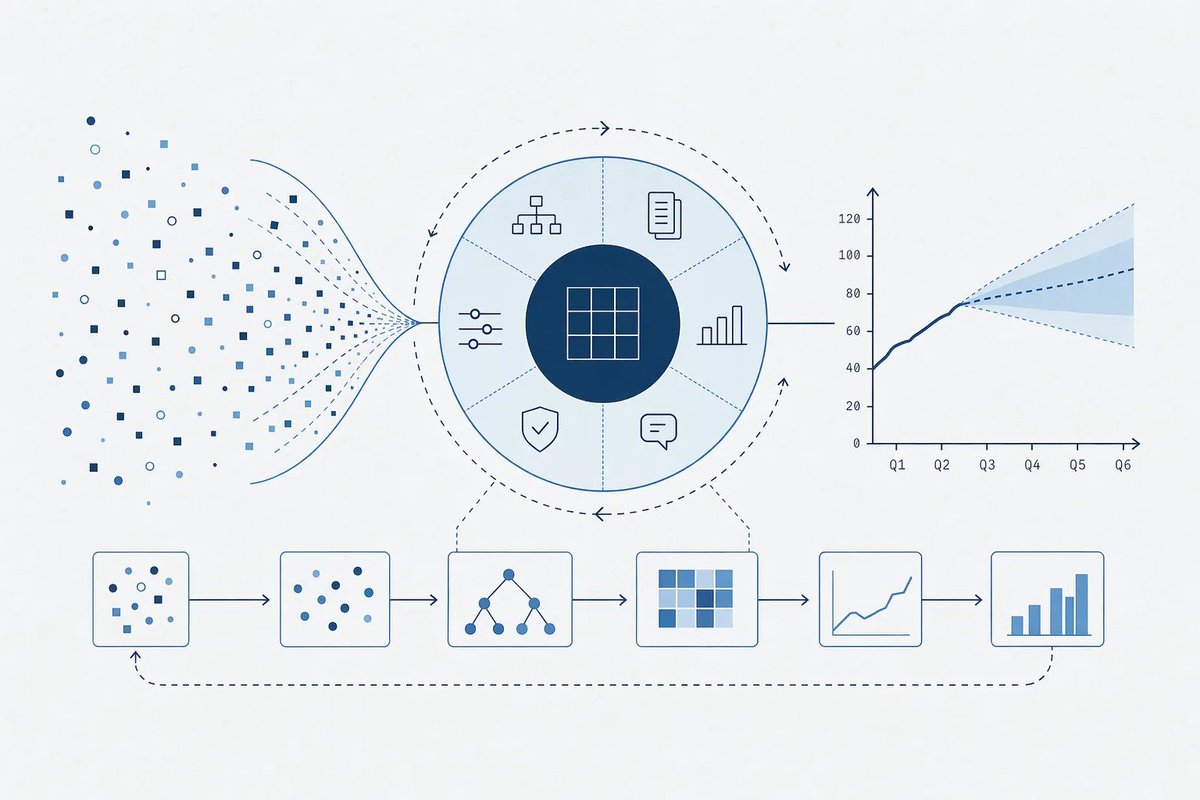
Uber forecasts ~$200B in gross bookings across 850+ markets — without a budget season. No annual cycle. No "first draft" reviews. No reconciliation week. One continuous loop, running against a directed graph of every metric in the business. Here's the breakdown 🧵
Bogdan (Dan) Baciu tweet media
English
1
0
0
24