Curriculum Insight Project

24.9K posts

Curriculum Insight Project banner
Curriculum Insight Project

Curriculum Insight Project

@CurriculumIP

A collaborative effort to illuminate the K-12 curriculum landscape for educators & advocates. We get into the important weeds for popular and emerging programs.

Katılım Eylül 2018
527 Takip Edilen2.7K Takipçiler
Curriculum Insight Project retweetledi
Ali Young
Ali Young@Ali_in_Edu·
“Wit & Wisdom, Bookworms, Core Knowledge, EL Education, Reading Reconsidered, Fishtank, Guidebooks, Arts and Letters, and ARC Core all expose every student to grade level texts. Consider those options.” 100% these are the things we need to be explicitly saying!
Curriculum Insight Project@CurriculumIP

LAUSD, the nation’s second-largest district, has announced plans to end mandatory use of iReady—except for struggling readers. Looking at the issues with iReady for struggling readers, we cannot endorse this decision. A recent overview from @karenvaites:

English
2
1
6
697
Curriculum Insight Project retweetledi
SoL in the Wild
SoL in the Wild@SoLInTheWild·
After my first full school year committed to explicit instruction, cognitive science, and knowledge-building curriculum, my summer work looks very different. I’m not spending the summer overhauling my instructional approach. That work has been done. This summer is all about refining: 1️⃣Automating Knowledge for Future Use and Learning 2️⃣Sequencing Curriculum for Cognitive Coherence 3️⃣ Routines as Cognitive Supports All of this work will be through the lens of the Modal Model of Memory. New blog: “What I’m Refining After a Year of Explicit Instruction”👇
SoL in the Wild tweet media
English
2
16
70
3.8K
Curriculum Insight Project retweetledi
Karen Vaites
Karen Vaites@karenvaites·
The good news: this is better policy than previous. The bad news: iReady doesn’t work to accelerate below grade level readers. It tracks kids into a self-fulfilling cycle of below grade level texts. In other words, it’s the literal opposite of what LAUSD should be doing.
Tyler Kingkade@tylerkingkade

UPDATE: LAUSD is changing how it uses i-Ready -- the district confirmed to me that from now on, *only* students who are below grade level will have to use i-Ready's weekly personalized lessons Previously, most LA schools required *all* kids to use it, often for up to 90 min/wk

English
4
8
47
6K
Curriculum Insight Project retweetledi
The Principal’s Office
The Principal’s Office@educator4ever36·
Oh great - let’s use what we know is a failed program on the students who are struggling the most. We won’t subject our on level learners to this crap, but it’s perfectly fine for our struggling learners. I can’t be the only one mystified by this.
Curriculum Insight Project@CurriculumIP

LAUSD, the nation’s second-largest district, has announced plans to end mandatory use of iReady—except for struggling readers. Looking at the issues with iReady for struggling readers, we cannot endorse this decision. A recent overview from @karenvaites:

English
9
4
39
3.6K
Curriculum Insight Project
LAUSD, the nation’s second-largest district, has announced plans to end mandatory use of iReady—except for struggling readers. Looking at the issues with iReady for struggling readers, we cannot endorse this decision. A recent overview from @karenvaites:
Curriculum Insight Project tweet media
English
3
3
14
7.9K
Curriculum Insight Project retweetledi
Rod
Rod@rodjnaquin·
What I deeply appreciate about Michele Caracappa's approach from a dialogic perspective is how she treats professional development as part of a complete system, not just random workshops. She focuses on what teachers actually need and can use right away in their classrooms. Instead of just teaching teachers new information, she emphasizes changing how they actually teach every day. open.substack.com/pub/michelecar…
Rod tweet media
English
0
2
3
258
Curriculum Insight Project retweetledi
Amanda Spielman
Amanda Spielman@amanda_spielman·
Excellent in a very under-researched area. Not wasting children’s time and adult resource on wasteful interventions is almost as important as doing the right things.
Peps@PepsMccrea

🚨New paper released today: 10 Common SEN Mis(Interventions)—An Evidence Summary steplab.co/news/common-se… Supporting students with Special Educational Needs (SEN) is a vital and growing challenge for schools. But it’s not straightforward. Learning is complex, marketing claims are confident, and the evidence is often hard to access. As a result, we can sometimes end up adopting approaches which are less effective than we initially think. For some, this may well be uncomfortable reading. As a profession, many of us have put time, effort and belief into these things, and lots will have seen students who looked like they were getting something from it. However, it’s essential that we temper our intuition with evidence, because ultimately: our most vulnerable students deserve it. This new paper co-authored with @Barker_J is an attempt to raise the visibility of the best available evidence around several commonly used SEN interventions. For each, we provide an overview of what the research says, offer a more informed approach, and provide a suite of rigorous links to help you get started. We hope it will serve as a useful resource and over time: push us to be even more 'evidence demanding' as a profession. As ever, let me know what you think. If you have pushes or suggestions for how this paper could be better, hit reply and give it to me straight. 👊

English
10
17
100
31.6K
Curriculum Insight Project retweetledi
Carl Hendrick
Carl Hendrick@C_Hendrick·
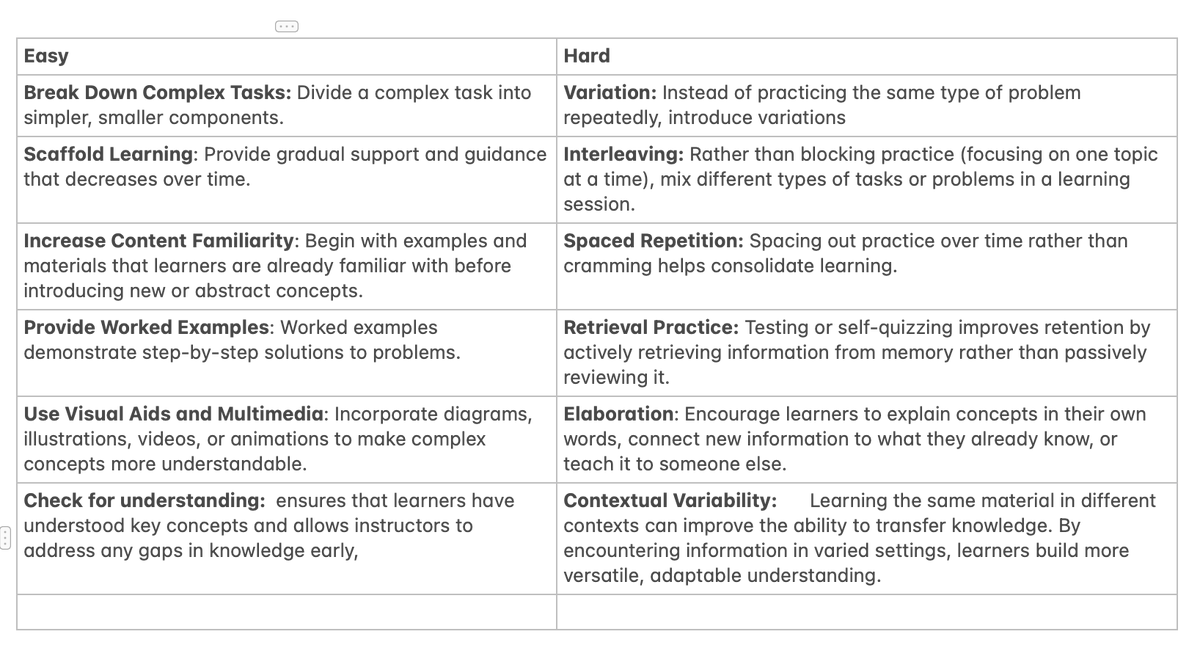
So to learn anything effectively, the process needs to be paradoxically both easy and hard. Like everything else, Shakespeare had a handle on this hundreds of years before everyone else. As Duke Senior says in As You Like It: "Sweet are the uses of adversity."
Carl Hendrick tweet media
English
3
25
74
6.8K
Curriculum Insight Project retweetledi
Karen Vaites
Karen Vaites@karenvaites·
State leaders in multiple states appear to be pushing myths/misinfo about decodable texts. "Yes. Someone from our state department told us that kids should only be reading decodable texts through 2nd grade. All kids; whether they needed it or not. We were to assume that they’d all make the magical leap from simple words (nothing past open/closed 2 syllable words as taught by our phonics program) to reading 2+ syllable words, along with much more complex syntax, vocabulary, and conceptual understanding in 3rd grade—not to mention know how to self-monitor and fix up at point of error or confusion— because of all the language they’d get from our read alouds k-2. Bananas!" From a vigorous Facebook group conversation:
Karen Vaites tweet media
English
6
4
28
6K
Curriculum Insight Project retweetledi
Sean Morrisey
Sean Morrisey@smorrisey·
@margaretmckeow2 @Doug_Lemov This has always been my biggest issue with balance literacy. Teachers spent more time on vocabulary context lessons than actually teaching vocabulary or morphology.
English
1
3
25
1.1K
Curriculum Insight Project retweetledi
Karen Vaites
Karen Vaites@karenvaites·
The good news: this is better policy than previous. The bad news: iReady doesn’t accelerate below grade level readers. It tracks kids into a self-fulfilling cycle of below grade level texts. In other words, it’s the literal opposite of what LAUSD should be doing. We explained in this piece, which was linked from your reporting: curriculuminsightproject.substack.com/p/were-ready-t…
Karen Vaites tweet media
English
1
3
13
591
Curriculum Insight Project retweetledi
Sean Morrisey
Sean Morrisey@smorrisey·
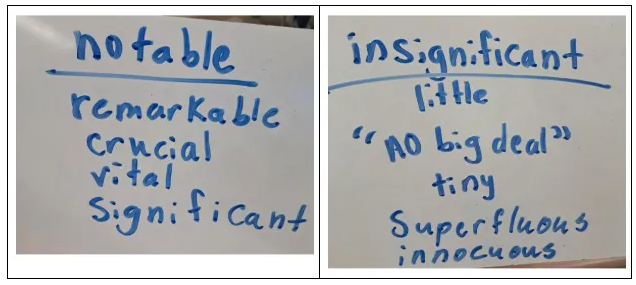
Is it notable or insignificant? This explicit vocabulary routine has had remarkable success in my classroom over the years.
Sean Morrisey tweet media
English
4
5
85
3.5K
Curriculum Insight Project retweetledi
Tyler Kingkade
Tyler Kingkade@tylerkingkade·
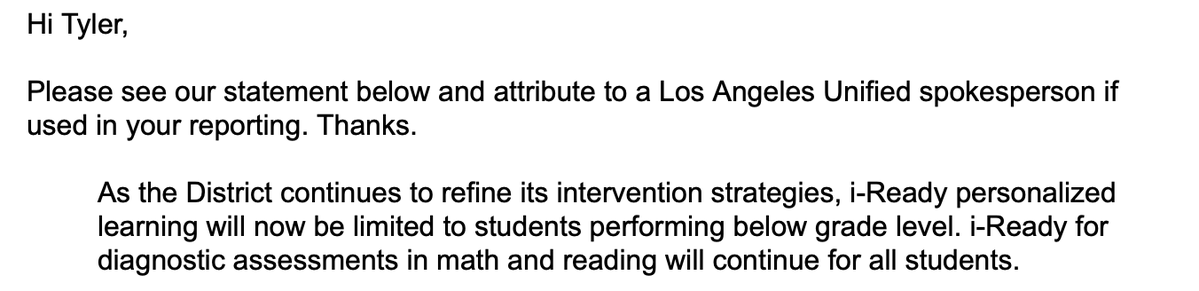
UPDATE: LAUSD is changing how it uses i-Ready -- the district confirmed to me that from now on, *only* students who are below grade level will have to use i-Ready's weekly personalized lessons Previously, most LA schools required *all* kids to use it, often for up to 90 min/wk
Tyler Kingkade tweet media
Tyler Kingkade@tylerkingkade

A growing number of families and educators say they’re fed up with i-Ready’s personalized math and reading lessons, which feature repetitive cartoons and slow voice-overs. Full story --> nbcnews.com/news/education… @NBCNews

English
12
15
67
23.5K
Curriculum Insight Project retweetledi
Doug Lemov
Doug Lemov@Doug_Lemov·
There are seven key themes Colleen Driggs, Erica Woolway and I write about in our new book, The Teach Like a Champion Guide to the Science of Reading: 1) The fracturing of student attention (and how to implement attention-reinforcing low tech; high text classrooms). 2) The importance of fluency to comprehension, the hidden epidemic of dysfleuncy, especially in older grades (and what to do about it). 3) The importance of background knowledge to understanding in reading (and how to design lessons to be more knowledge rich). 4) The centrality of vocabulary to a knowledge rich classroom (and how to teach vocabulary more effectively). 5) The synergy between intentional writing activities and better reading (and how to understand different types and purposes of writing, especially short, mid-stream writing). 6) The necessity of reading whole books, great ones, together as a class (and why the science clearly supports this). 7) The importance of close reading (and how putting complex passages in a cognitively privileged environment can help students learn to read “above their comfort zone”). Many of these topics are on the top of people’s minds right now and if that includes you, the book will help you think about how to teach and design lesson materials accordingly. It’s full of videos of real classrooms and samples from our own curriculum. amazon.com/Teach-Champion…
English
2
12
41
3.3K
Curriculum Insight Project retweetledi
Karen Vaites
Karen Vaites@karenvaites·
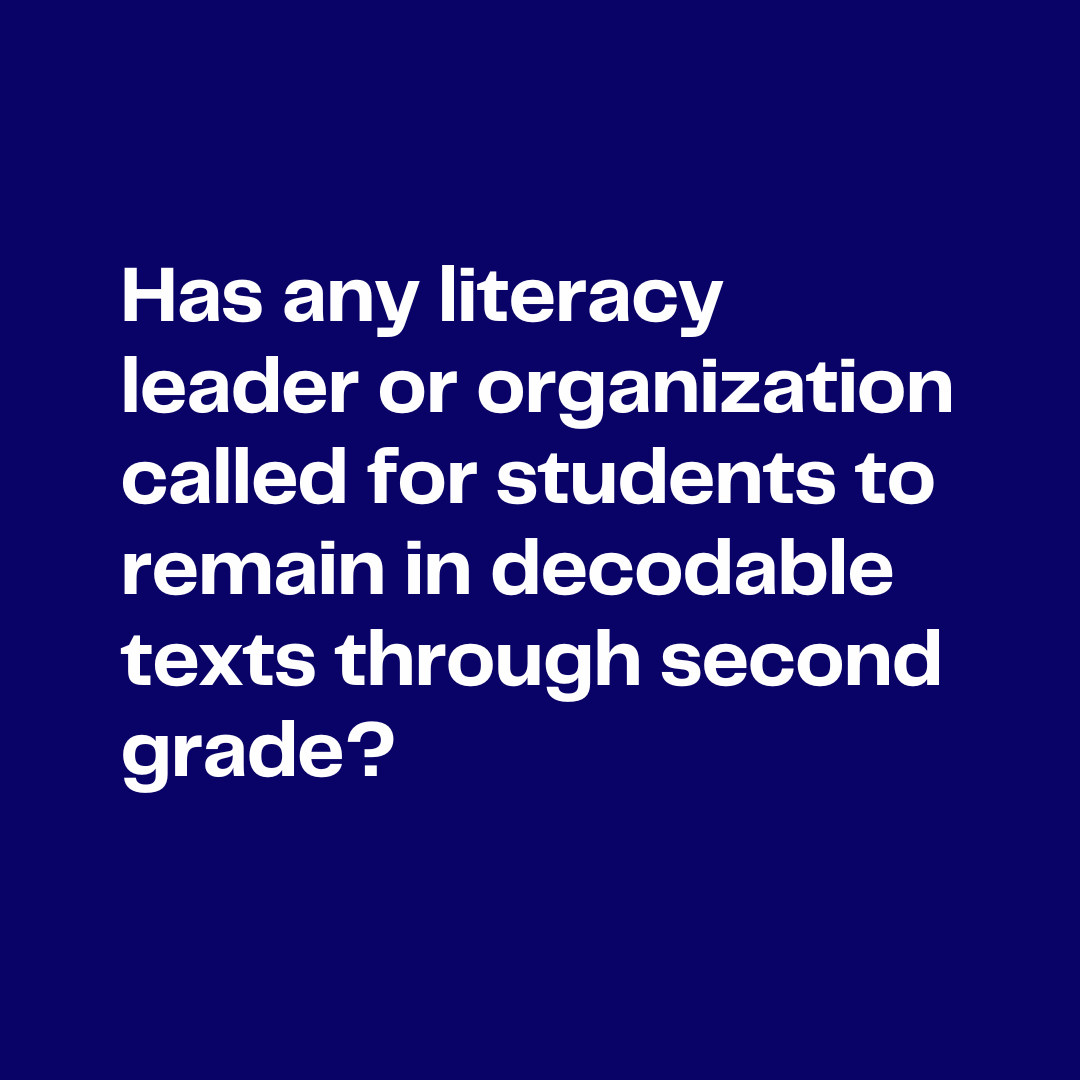
Here's an important question. Somehow, US educators are getting the impression that students should only work with decodable texts (or listen to read alouds) until they have learned all sound-letter correspondences. In fact, some believe it's risky or dangerous to allow students to work with non-decodable texts before they have "mastered" all GPCs. Only... no one seems to know where this impression came from. I spent the last week asking reading researchers this question: "Have you seen anyone recommend leaving kids in decodable texts-only through second grade?" Not only do researchers believe this is not best practice, no can point to *anyone in the research or literacy community* pushing this approach. Yet educators got this memo, and some state leaders seem to have this impression, too. My question: how and why has this impression formed? If this is just an urban legend, can we nip it in the bud? @MeganGierka @margaretmckeow2 @janhasbrouck @SoRclassroom @AnjanetteMcNee2 @AbbyTeachesDSM @Suchmo83
Karen Vaites tweet media
English
10
4
26
2.5K
Curriculum Insight Project retweetledi
margaret mckeown
margaret mckeown@margaretmckeow2·
We tested learning from context on 13 of our colleagues by blacking out words in stories for 4th and 6th graders. Results varied greatly – identifying word meaning was successful about half the time.
thereadingforum@ReadingForum_Ed

We are happy to be sharing Beck et al.'s classic paper on vocabulary and contexts as our final post for the 25-26 academic year. Please enjoy and share. thereadingforum.com/vocabulary-dev…

English
4
5
27
11K
Curriculum Insight Project retweetledi
Karen Vaites
Karen Vaites@karenvaites·
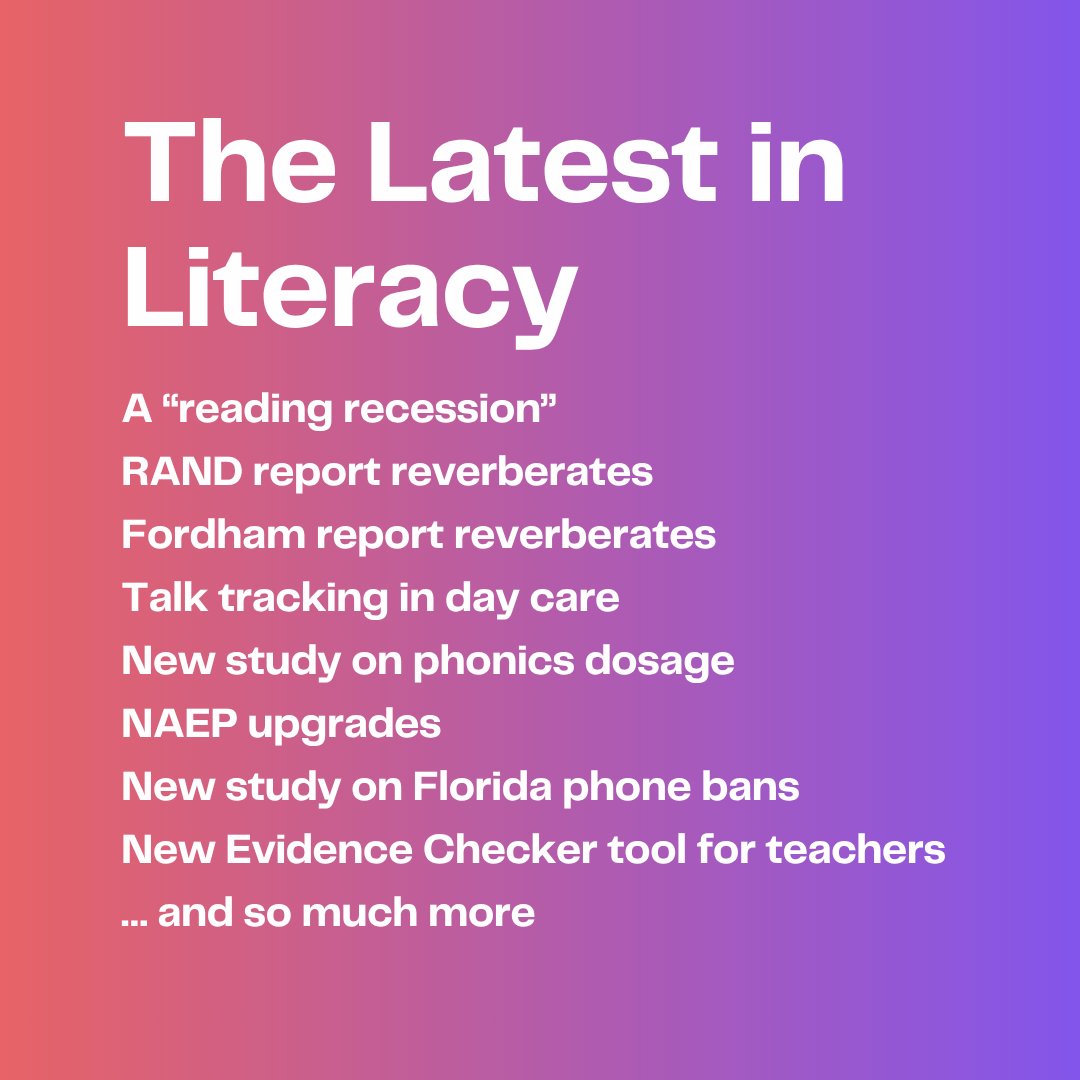
Weekend catch-up reading... Get your weekend catch-up reading!!! This week's dense roundup surely has something you missed:
Karen Vaites tweet media
English
1
3
9
769