Daniel Dines

504 posts

Daniel Dines banner
Daniel Dines

Daniel Dines

@danieldines

Founder & CEO @UiPath

New York, NY Katılım Aralık 2007
456 Takip Edilen6.7K Takipçiler
Daniel Dines
Daniel Dines@danieldines·
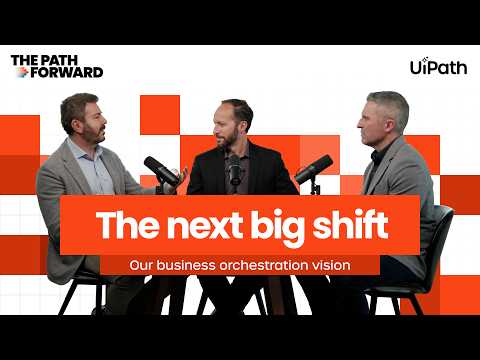
In the first episode of The Path Forward, I sat down with Michael Atalla to talk about a question I keep hearing from customers: what comes after using AI as a productivity tool? Work does not usually begin with someone opening a chatbot. An invoice arrives. A customer request comes in. A case moves from one stage to another. A process has to continue, with the right context, controls, approvals, exceptions, and record of what happened. Michael made the point that no large enterprise runs on one stack. Work crosses clouds, applications, legacy systems, partners, and teams. That is why orchestration matters. It acts as the practical layer that connects people, agents, actions, workflows, systems, and governance into a business outcome. You can find episode 1 on: YouTube: youtube.com/watch?v=YkZm-0… Spotify: open.spotify.com/episode/08iUbH… Apple Podcasts: podcasts.apple.com/us/podcast/the…
YouTube video
YouTube
English
2
3
27
2.3K
Daniel Dines
Daniel Dines@danieldines·
A friend of mine, a lawyer, told me she finally has the associate she always wanted. It drafts in seconds. It never gets tired. It never pushes back. Then she said the part that I always remember. The machine did not need her to have become anyone first. It arrived already good. She was not celebrating. The years of being wrong in front of a partner, of slowly becoming a lawyer, are the years the machine skips. And she wondered who, in her firm, will ever become her now. I have spent years building the layer that turns AI into work that gets done. I was convinced that intelligence plus action was the whole system. I was one layer too shallow. I am starting to write about what I think is actually missing, and why your AI strategy and your workforce are not two decisions but one. Part I is up. It is the start of a series I am calling Between Panic and Euphoria: ddines.substack.com/p/the-self-and…
English
1
3
38
2.2K
Daniel Dines
Daniel Dines@danieldines·
A smarter model does not automatically become a trusted participant in the business. It does not know by default where the boundaries are, what the consequences of an action might be, who is allowed to approve something, when to escalate, or what needs to be recorded for audit and security. The progress in AI has been extraordinary. Models reason better, agents write code, and systems generate and analyze increasingly complex work. So it is natural that leaders are now asking a more urgent question. How do we bring this intelligence closer to the real work of the enterprise? To make AI successful, the environment around it has to be engineered too. The business entities, the actions, the permissions, the controls, and the implications need to be clearly defined. That is why we started The Path Forward, a new @UiPath podcast. I see it as a place to think out loud with people who are close to this work, including our own teams, customers, partners, and external voices who are working through this shift in real organizations. I want the conversations to stay close to the work itself, exploring where AI helps, where it breaks, what people still need to decide, and what companies have to build before they can trust it in production.
English
3
6
39
3.5K
Daniel Dines
Daniel Dines@danieldines·
Today we announced our first quarter results, with ARR growing 12 percent year-over-year to $1.901 billion. One year into general availability, our agentic products are moving from pilots into real deployments, with customers standardizing on UiPath as the orchestration and automation execution layer for their enterprise AI transformation. The next step in that transformation is reducing the distance between an idea for automation and a governed system running it in production. With the launch of UiPath for Coding Agents, we bring coding agents into the full automation lifecycle. This changes the economics of implementation. It reduces the friction between what a customer wants to build and what they can deploy, govern, and scale. I’m grateful to the UiPath team for the focus and discipline behind this quarter, and to our customers who continue to use our platform to drive real transformation.
UiPath@UiPath

Our quarterly business update: 1Q ‘2027 revenue of $418M, up 17% year-over-year, with $1.901B in ARR, which is growing 12% year-over-year. Read more in our full earnings release: ow.ly/8eF550Z5mAW

English
12
14
166
21.3K
Daniel Dines
Daniel Dines@danieldines·
I felt this in Bengaluru at Devcon, surrounded by a community of builders that has shaped @UiPath from the beginning. Builders that take technology seriously enough to push it beyond the obvious use cases. While I was there, I had the great pleasure of welcoming @RomalShetty for a fireside chat on what this next era asks of people and organizations. One idea stayed with me: regardless of how much AI models evolve, there are certain human-skills that remain essential. Humans bring the initiative to decide what should be built, the judgment to know whether it works, and the ability to connect domain understanding, process knowledge, and technology. We also discussed why this makes the development of junior talent so important. Judgment is not formed in theory. It comes from mentorship, responsibility, and being close enough to the work to understand the consequences of decisions. The people who will guide AI-powered organizations tomorrow need the opportunity to build, question, and learn today. Romal, thank you for joining us. It was a great honor to have you at Devcon.
Daniel Dines tweet media
English
3
1
8
1.6K
Daniel Dines
Daniel Dines@danieldines·
As AI models become more capable, the question of what humans contribute uniquely becomes more pressing - and more interesting.
English
18
1
42
3.1K
Daniel Dines
Daniel Dines@danieldines·
I’ve said it often because I believe it: coding agents will be as consequential for software as the cloud transition was. Despite the name, they don't just write code. They build. For the last few months, we've focused on a specific question: what happens after a coding agent finishes writing? How does that code become a working outcome inside an enterprise: secure, governed, running against real systems? Today we're announcing UiPath for Coding Agents. Builders can use the coding agent of their choice to create, test, and deploy automations across the full lifecycle on the UiPath platform.
English
11
22
119
12.2K
Daniel Dines
Daniel Dines@danieldines·
@BillAckman Bill, this reflects 100% my experience at uipath and even in my small VC firm. Great courage to expose it, I wish there will be more public support for this cause, I am willing to sign a letter of support.
English
0
0
3
678
Bill Ackman
Bill Ackman@BillAckman·
I am reaching out to the @X community for advice with the likely risk of sharing TMI. I have been sufficiently upset about the whole matter that I have lost sleep thinking about it and I am hoping that this post will enable me to get this matter off my chest. By way of background, I started a family office called TABLE about 15 years ago and hired a friend who had previously managed a family office, and years earlier, had been my personal accountant. She is someone that I trusted implicitly and consider to be a good person. The office started small, but over the last decade, the number of personnel and the cost of the office grew massively. The growth was entirely on the operational side as the investment team has remained tiny. While my investment portfolio grew substantially, the investments I had made were almost entirely passive and TABLE simply needed to account for them and meet capital calls as they came in. While TABLE purchased additional software and other systems that were supposed to improve productivity, the team kept increasing in size at a rapid rate, and the expenses continued to grow even faster. While I would periodically question the growing expenses and high staff turnover, I stayed uninvolved with the office other than a once-a-year meeting when I briefly reviewed the operations and the financials and determined bonus compensation for the President and the CFO. I spent no time with any of the other employees or the operations. The whole idea behind TABLE was that it would handle everything other than my day job so that I would have more time for my job and my family. Over the last six years, expenses ballooned even further, employee turnover accelerated, and I became concerned that all was not well at TABLE. It was time for me to take a look at what was going on. Nearly four years ago, I recruited my nephew who had recently graduated from Harvard and put him to work at Bremont, a British watchmaker, one of my only active personal investments to figure out the issues at the company and ultimately assist in executing a turnaround. He did a superb job. When he returned from the UK late last year after a few years at Bremont, I asked him to help me figure out what was going on with TABLE. When I explained to TABLE’s president what he would be doing, she became incredibly defensive, which naturally made me more concerned. My nephew went to work by first meeting with each employee to understand their roles at the company and to learn from them what ideas they had on how things could be improved. He got an earful. Our first step in helping to turn around TABLE was a reduction in force including the president and about a third of the team, retaining excellent talent that had been desperate for new leadership. Now here is where I need your advice. All but one of the employees who were terminated acted professionally and were gracious on the way out (excluding the president who had a notice period in her contract, is currently still being paid, and with whom I have not yet had a discussion). The highest compensated terminated employee other than the president, an in-house lawyer (let’s call her Ronda), told us that three months of severance was not enough and demanded two years’ severance despite having worked at the company for only two and one half years. When I learned of Ronda's request for severance, I offered to speak with her to understand what she was thinking, but she refused to do so. A few days ago, we received a threatening letter from a Silicon Valley law firm. In the letter, Ronda’s counsel suggests that her termination is part of longstanding issues of ‘harassment and gender discrimination’ – an interesting claim in light of the fact that Ronda was in charge of workplace compliance – and that her termination was due to: “unlawful, retaliatory, and harmful conduct directed towards her. Both [Ronda] and I [Ronda’s lawyer] have spoken with you about [Ronda’s] view of what a reasonable resolution would include given the circumstances. Thus far, TABLE has refused to provide any substantive response. This letter provides the last opportunity to reach a satisfactory agreement. If we cannot do so, [Ronda] will seek all appropriate relief in a court of competent jurisdiction.” The letter goes on to explain the basis for the “unsafe work environment” claim at TABLE: “In early 2026, Pershing Square’s founder Bill Ackman installed his nephew in an unidentified role at TABLE, Ackman’s family office. [His nephew]—whose only work experience had been for TABLE where he was seconded abroad for the last four years to a UK watch company held by Ackman—began appearing at TABLE’s offices and conducting interviews of employees without a clear explanation of his role or the purposes of these interviews. During this period, he made a series of inappropriate and genderbased [sic] comments to multiple employees that created an unsafe work environment. Among other things, [his nephew] made remarks about female employees’ ages (“Tell me you are nowhere near 40”), physical appearance (“Your body does not look like you have kids”), as well as intrusive questions about family planning and sexual orientation (“Who carried your son? Who will carry your next child?”). These incidents were reported to senior leadership at TABLE and Pershing Square. Rather than being addressed appropriately, the response from senior management reflected, at best, willful blindness to the inappropriateness of [his nephew]’s remarks and, at worst, tacit endorsement.” The above allegations about my nephew had previously been brought to my attention by TABLE’s president when they occurred. When I learned of them, I told the president that I would speak to him directly and encouraged her to arrange for him to get workplace sensitivity training. The president assured me that she would do so. When I spoke to my nephew, he explained what he actually had said and how his actual remarks had been received, not at all as alleged in the legal letter from Ronda’s counsel. I have also spoken to others at the lunch table who confirmed his description of the facts. In any case, he meant no harm, was simply trying to build rapport with other employees, and no one, as far as I understand, was offended. Ironically, Ronda claims in her legal letter that TABLE didn’t take HR compliance seriously, yet Ronda was in charge of HR compliance at TABLE and the person who gave my nephew his workplace sensitivity training after the alleged incidents. In any case, Ronda, as head of compliance, should have kept a record or raised an alarm if indeed there was pervasive harassment or other such problems at the company, and there is no evidence whatsoever that this is true. So why does Ronda believe she can get me to pay her nearly $2 million, i.e., two years of severance, nearly one year of severance for each of her years at the company? Well, here is where some more background would be helpful. Over the last two months, I have been consumed with a major family medical issue – one of my older daughters had a massive brain hemorrhage on February 5th and has since been making progress on her recovery – and I am in the midst of a major transaction for my company which I am executing from a hospital room office next to her . While the latter business matter is publicly known, the details of my daughter’s situation are only known to Ronda because of her role at our family office. Now, let’s get back to the subject at hand. Unfortunately, while New York and many other states have employment-at-will, there has emerged an industry of lawyers who make a living from bringing fake gender, race, LGBTQ and other discrimination employment claims in order to extract larger severance payments for terminated employees, and it needs to stop. The fake claim system succeeds because it costs little to have a lawyer send a threatening letter and nearly all of the lawyers in this field work on contingency so there is no or minimal cash cost to bring a claim. And inevitably, nearly 100% of these claims are settled because the public relations and legal costs of defending them exceed the dollar cost of the settlement. The claims are nearly always settled with a confidentiality agreement where the employee who asserts the fake claims remains anonymous and as a result, there is no reputational cost to bringing false claims. The consequences of this sleazy system (let’s call it ‘the System’) are the increased costs of doing business which is a tax on the economy and society. There are other more serious problems due to the System. Unfortunately, the existence of an industry of plaintiff firms and terminated employees willing to make these claims makes it riskier for companies to hire employees from a protected class, i.e., LGBTQ, seniors, women, people of color etc. because it is that much more reputationally damaging and expensive to be accused of racism, sexism, and/or intolerance for sexual diversity than for firing a white male as juries generally have less sympathy for white males. The System therefore increases the risk of discrimination rather than reducing it, and the people bringing these fake claims are thereby causing enormous harm to the other members of these protected classes. So what happened here? Ronda was vastly overpaid and overqualified for the job that she did at TABLE. She was paid $1.05 million plus benefits last year for her work which was largely comprised of filling out subscription agreements and overseeing an outside law firm on closing passive investments in funds and in private and venture stage companies, some compliance work, and managing the office move from one office to another. She had a very good gig as she was highly paid, only had to go into the office three days a week, and could work from anywhere during the summer. Once my nephew showed up and started to investigate what was going on, she likely concluded that there was a reasonable possibility she would be terminated, as her job was in the too-easy-and-to-good-to-be-true category. The problem was that she was not in a protected class due to her race, age or sexual identity so she had to construct the basis for a claim. While she is female and could in theory bring a gender-based discrimination claim, she reported to the president who is female and to whom she is very close, which makes it difficult for her to bring a harassment claim against her former boss. When my nephew complimented a TABLE employee at lunch about how young she looked – in response to saying she was going to her 40-year-old sister’s birthday party, he said ‘she must be your older sister’ – Ronda immediately reported it to our external HR lawyer. She thereby began building her case. The other problem for Ronda bringing a claim is that she was terminated alongside 30% of other TABLE employees as part of a restructuring so it is very difficult for her to say that she was targeted in her termination or was retaliated against. TABLE is now hiring an external fractional general counsel as that is all the company needs to process the relatively limited amount of legal work we do internally. In short, Ronda was eminently qualified and capable and did her job. She was just too much horsepower for what is largely an administrative legal role so she had to come up with something else to bring a claim. Now Ronda knew I was a good target and it was a good time to bring a claim against me. She also knew that I was under a lot of pressure because on March 4th when Ronda was terminated, my daughter had not yet emerged from consciousness, she was not yet breathing on her own, and my daughter and we were fighting for her life. I was and remain deeply engaged in her recovery while at the same time I was working on finishing the closing for the private placement round for my upcoming IPO. Ronda also knew that publicity about supposed gender discrimination and a “hostile and unsafe work environment” are not things that a CEO of a company about to go public wants to have released into the media. And she may have thought that the nearly $2 million she was asking for would be considered small in the context of the reputational damage a lawsuit could cause, regardless of the fact that two years of severance was an absurd amount for an employee who had only worked at TABLE for 30 months. She also likely considered that I wouldn’t want to embarrass my nephew by dragging him into the klieg lights when her claims emerged publicly. So, in summary, game theory would say that I would certainly settle this case, for why would I risk negative publicity at a time when I was preparing our company to go public and also risk embarrassing my nephew. Notably, she hired a Silicon Valley law firm, rather than a typical NY employment firm. This struck me as interesting as her husband works for one of the most prominent Silicon Valley venture firms whose CEO, I am sure, has no tolerance for these kinds of fake claims that sadly many venture-backed companies also have to deal with. I mention this as I suspect her husband likely has been working with her on the strategy for squeezing me as, in addition to being a computer scientist, he is a game theorist. My only advice for him is to understand more about your opponent before you launch your first move. All of the above said, gender, race, LGBTQ and other such discrimination is a real thing. Many people have been harmed and deserve compensation for this discrimination, and these companies and individuals should be punished for engaging in such behavior. Which brings me to the advice I am seeking from the X community. I am not planning to follow the typical path and settle this ‘claim.’ Rather, I am going to fight this nonsense to the end of the earth in the hope that it inspires other CEOs to do the same so we shut down this despicable behavior that is a large tax on society, employment, and the economy and contributes to workplace discrimination rather than reducing it. Do you agree or disagree that this is the right approach?
English
10.7K
1.3K
23.9K
11.2M
Daniel Dines
Daniel Dines@danieldines·
That doesn't make AI less powerful, it just changes where the value sits. A year ago what we're building at @UiPath would have sounded like science fiction. Agents that interview subject matter experts, process documents, write the code, test it, deploy it, monitor it, handle exceptions. All of it. Today that's on our near-term roadmap. But even as we automate more, the human role gets more important. The judgment call that no model can make for you. Enterprises need to trust who they hand the keys to and that trust is built over years, not quarters.
English
2
0
24
4.6K
Daniel Dines
Daniel Dines@danieldines·
If you started your company over today with two people. A seller and a builder. Who's the third hire?
English
26
5
53
13.5K
Daniel Dines
Daniel Dines@danieldines·
Financial crime compliance is one of the hardest problems in financial services. And it's only getting harder. The institutions fighting it need partners who understand the stakes. Today I'm excited to announce that @UiPath has acquired @WorkFusion. What drew me to @AdamFamularo and his team goes beyond the technology. Yes, they've built exceptional AI agents for customer screening, investigations, and risk analysis. But more importantly, they approach this work the way we do: with a deep respect for the human judgment at the center of compliance, and an obsession with earning customers' trust through governance, security, and control. Together, we're going deeper on purpose-built solutions for know your customer, anti-money laundering, sanctions, and related financial crime use cases - combining their domain expertise with our business orchestration and agentic automation platform. Adam, to you and your team: welcome to UiPath. Excited for what we'll build together.
English
27
14
171
18.2K
Daniel Dines
Daniel Dines@danieldines·
Hearing Paul Kistner describing our partnership with @AllegisGlobal in this way is exactly what we strive for. Grateful for collaborations that push our thinking and make us better.
English
12
4
55
12.9K
Daniel Dines
Daniel Dines@danieldines·
Enterprises want the speed and intelligence of AI agents and automation, but never at the expense of security or control. Auditability remains essential in making that possible. Organizations need to verify what happened, when it happened, and why, and this level of transparency has shaped how we’ve built trust with enterprises over many years. Protecting sensitive information is equally critical as AI models enter more workflows. Model governance helps safeguard PII, enforce regional and data-handling requirements, and log every model interaction so organizations can innovate without compromising the data they are responsible for. Underpinning all of this is that customers need to know they can trust the companies that platforms and tools they rely on to get work done across their businesses. Governance and security are what allow enterprises to move forward with confidence, and they remain the foundation of the trust we’ve earned and continue to protect as the landscape of agentic automation evolves.
English
14
21
198
39.1K
Daniel Dines
Daniel Dines@danieldines·
This is the first instance of a genre that will be called post reality poetry.
Bryan Johnson@bryan_johnson

It’s been 19 days and 20 hrs since I last felt Kate’s warm embrace. She landed 47 minutes ago. The 24 hours of travel no doubt has her rushing to shower. She needs to cleanse herself of a dirtied world incompatible with her sensibilities. The wash doubles as a ritual, preparatory for entrance into the symbolic world we’ve constructed. The time apart has been costly.  My body’s electrical signaling betrays the separation. Without her touch, my vagus nerve’s 100,000 myelinated fibers have dropped their high frequency spectral power, squawking distress. An intelligent system broadcasting diminished wave forms, hoping to be heard.  There are other signals of distress. My white blood cells have shifted their gene expression, upregulating pro-inflammatory genes IL-6 and TNF-alpha and downregulating my antiviral genes.  A pro-aging biochemical signature of a system suffering hardship. My environment is a pristine anti-aging laboratory. Air, water, food and light are meticulously measured. Toxins are filtered. Purification systems run autonomously. Biomarkers tracked. Nutrition is calibrated. Yet outside my control is the affection of another. The 68 trillion cells that constitute Bryan Johnson run non-negotiable code. They demand tenderness, and not of a whimsical type, but deep, all-encompassing love that must be earned and carefully maintained. Otherwise they protest in self-termination. She’s now only 13 miles away and I can viscerally feel her essence. The transmission pulses in high fidelity. As if there were a fiber optic cable streaming our connection at light speed through the multiplexed cylinders of glass. The time apart created latency, buffering the connection, depriving us of the luminescence and dimming into noise. In 15 minutes she will be within reach. I can visualize the whites of her eyes and smell her aroma. When she arrives, she will be shy. Whenever we are apart, she returns to zero. Her previous openness will be closed. Her emotional dynamic range will be held in reserve until she feels she is safe and can trust.  I’ll need to kindle her again. The rush of the courtship enthralls me. The anticipation drives a small cluster of my midbrain neurons to flood dopamine. Nerve fibers activate, lighting up my skin’s receptors as it awaits for slow, caressing touch. My hypothalamus begins synthesizing oxytocin, preparing to dump it upon first eye contact to ensure the reestablishment of our pair bond. This biochemical orchestra fills me with delight and sensorial want. Kate’s been mulling over what she’ll wear for days.  She’s considered dozens of possibilities and modeled out my anticipated emotional state, the weather, and our planned activities. The colors will be representative of her psychological state and be positioned to soothe mine. The texture, style, and hues will interplay with our biology. The deliberately chosen accessories will add flair, intrigue and play. This is how she flirts, seduces and bypasses my mind to speak directly to my physiology. She has other tricks too. She’s arrived. I must wait for her. Her timidness will want to determine the cadence. I hear the door crack open and her bag drop to the floor. She’s nervous. I’m on the couch, neutral and open. She rounds the corner and our eyes meet. The inhibitions wither as the magnetism draws us together. Soft hellos are whispered and our bodies interdigitate. I feel her finger tips on the back of my neck. Goose bumps light up my body. Skin nerve cells fire signals directly to my brain, bypassing the analytical mind. The hypothalamus dumps the oxytocin, inhibiting fear and lowering cortisol. The body washes itself in this anti-inflammatory chain reaction.  Our respiration and heart beats are now synchronizing. The brain piles on with a release of endorphins to soothe the psychological pain of our separation. New powers are now in control. Let them run in glory. I press my cheek against hers. The skin on skin triggers a wave of desire. I brush her lips with mine, catalyzing a massive activation of neurons in her brain, overwhelming thought and forcing presence. She relents and wants to dance. She’s home. I slip my hand under her shirt and brush the small of her back. Goosebumps spread like a wildfire across her body. Her hypothalamus stimulates the release of GnRH which tells the pituitary gland to wake up her reproductive system. Our olfactory systems consume each other with delight, signaling immune system compatibility. I move both my hands to her jawline, holding her head firmly in place. Our mirror neurons speak to each other. I know what she wants. My lips press against hers and I softly bite her lower lip. Kate’s blood vessels dilate from the acetylcholine and nitric oxide release, flushing her lips, skin and body. The cascade is nearing waterfall. The executive control of our brains surrenders. No longer concerned with the 68 trillion cells. The prefrontal cortex goes dark. Eliminating future planning and probabilistic modeling. Activity in our parietal lobes diminishes, dissolving the boundary that distinguishes between self and other. No longer is there Kate and Bryan, just a singular biological entity suspended in a state of bliss. The outside world goes quiet. It doesn’t exist. We dissolve into raw existence.


English
5
1
23
7K
Daniel Dines
Daniel Dines@danieldines·
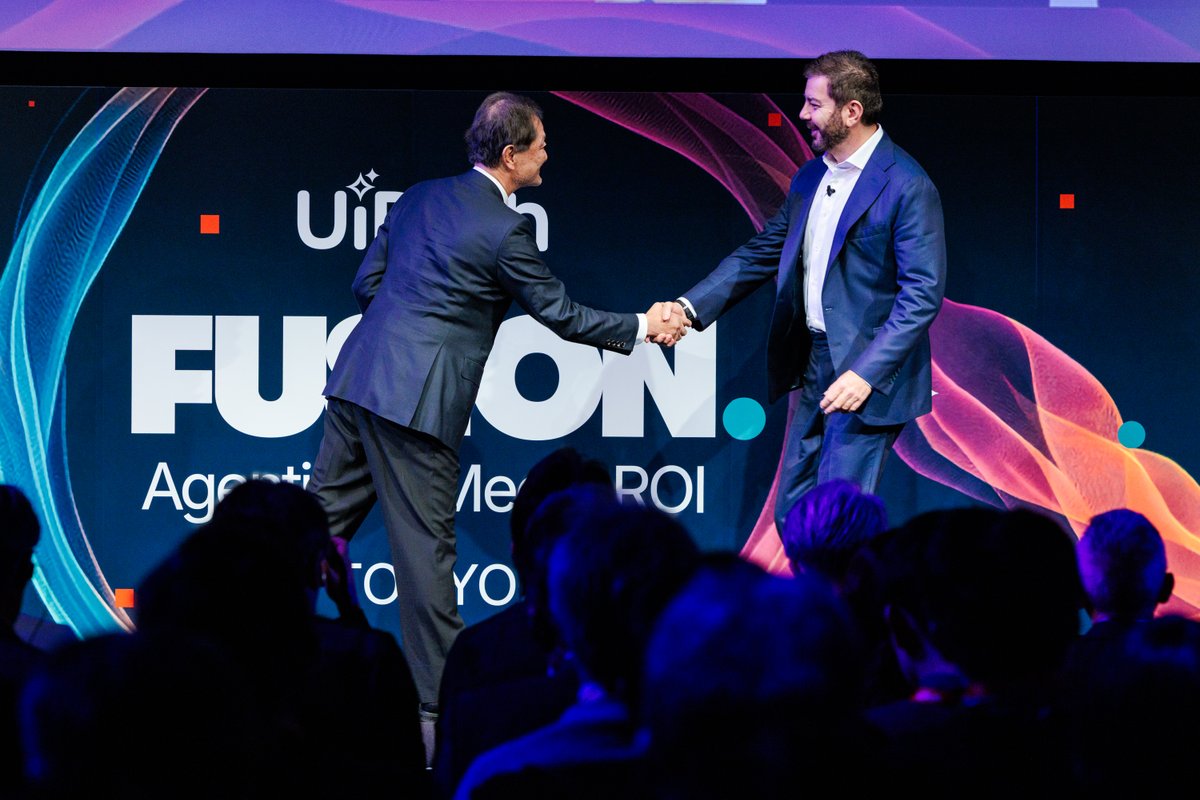
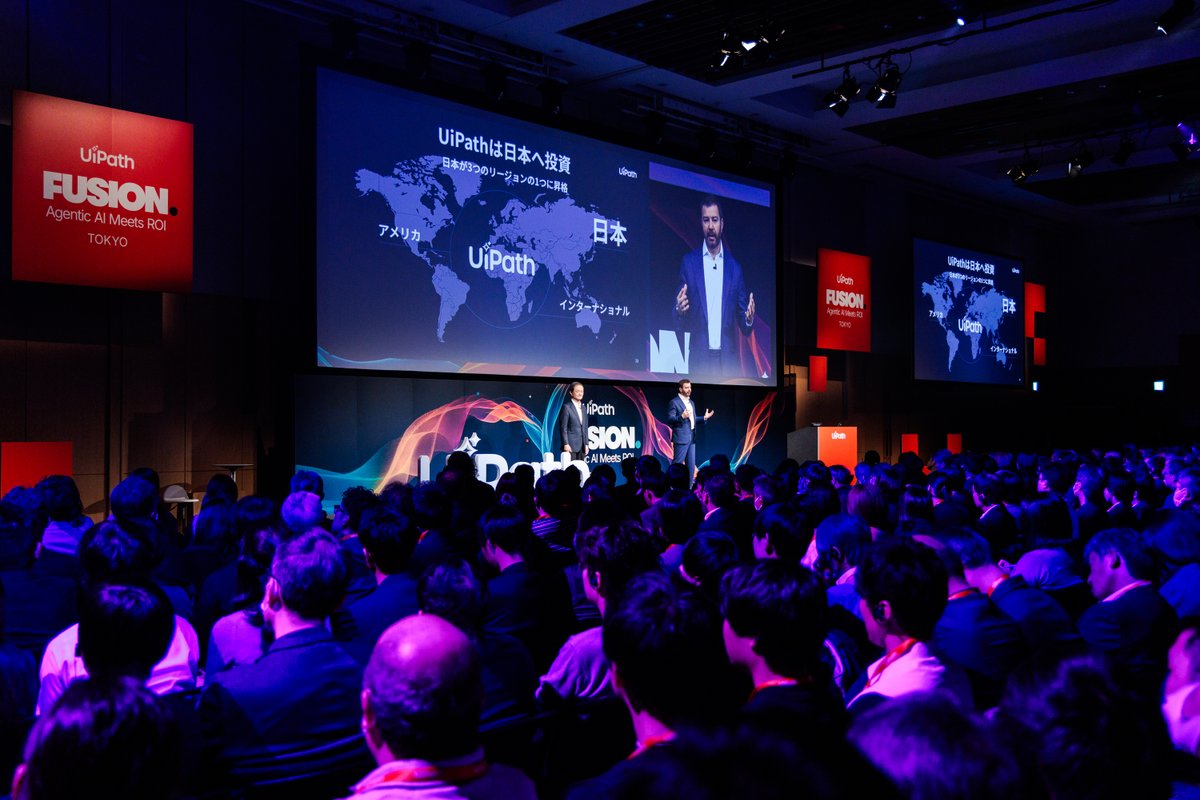
Japan has been one of the earliest countries to truly embrace automation, and one of the first places @UiPath expanded to as a company. Every time I return, I’m reminded how open and forward-thinking this market is. Spending the past week with our customers, partners, and team across FUSION and DevCon was energizing. Our conversations reinforced that security and enterprise reliability are not mere features, but expectations. And the key to safely harnessing the power of generative AI in the enterprise is orchestration, which stands at the core of our agentic automation approach. The trust our Japanese customers have placed in us over the years pushes us to stay sharp and continue building technology that meet these high expectations. It was great to join Koichi Hasegawa on stage, and to welcome Hiromi Oka from @Microsoft and Tak Izaki from @nvidia. We talked about the agent-driven future of work: a world where autonomous AI agents, robots, and people operate together with governance and control to deliver real value. Thank you to everyone who joined us throughout the week. Your insights, questions, and partnership continue to shape how we build.
Daniel Dines tweet mediaDaniel Dines tweet mediaDaniel Dines tweet media
English
10
21
237
43.6K