
Dante retweetledi

We have already written extensively about Rafael Pavarotti — his background, his vision, and his role in shaping the visual identity of Confessions II as both photographer and director. But when the projections entered the frame, a new name appeared in the credits. One that almost nobody has paid attention to.
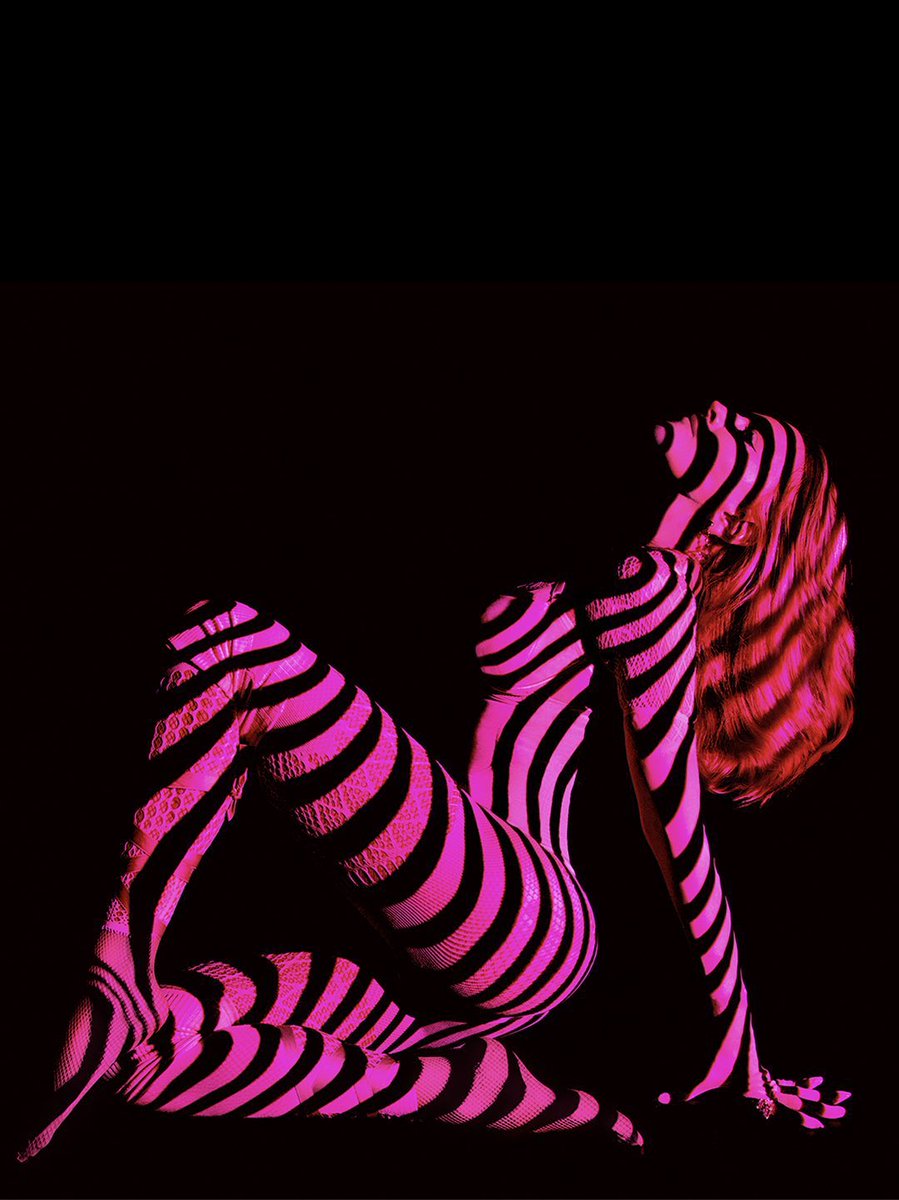
There is one image that stands slightly apart from the rest of the Confessions II visual campaign so far: the photograph used for the Grindr Exxxclusive picture disc. Beloved by fans from the moment it surfaced, it shows Madonna’s body wrapped in projected light — bands of magenta and shadow mapping her form like a second skin. It feels different from the other shots. And it quietly points back to something fans of the original album will recognise immediately: the graphic language of Confessions on a Dance Floor (2005), where Madonna collaborated with photographer Steven Klein and art director Giovanni Bianco — a name not unknown to us, having had the privilege of interviewing him in the past — on an artwork built around projected light, colour fields and the body as surface. The projection work on this new image takes that visual DNA a step further, almost literally.
The person responsible is Oliver Allaux. A multidisciplinary artist with a background in architecture, Allaux is co-founder of Rhizome Creative and one of the most respected 3D projection mappers in the New York scene, with over a decade of work spanning nightlife, festival stages, fine art and fashion.
In a recent Instagram post, he wrote: “Last December, I got to use Madonna’s body as a canvas… It’s finally starting to be released!!!”
He had travelled to London to work directly with Madonna and her creative team, staying under NDA for months. And the Grindr picture disc is far from the only evidence of his work — sharp-eyed fans will already have spotted his projections in some of the footage released so far, with in all likelihood much more still to come.
What he created is not decoration. It is a conceptual statement: the body as architecture, as mappable surface, as something to be redrawn through light. In the context of a record explicitly about the body, about dancing, about physical transcendence, the decision to bring in someone like Allaux is quietly radical.
English