
Sabitlenmiş Tweet
The Missing Data Depot
2K posts

The Missing Data Depot
@data_depot
Exploring the stuff that's left out of our conversations about politics. https://t.co/UjnF6tbukq
Katılım Mart 2022
766 Takip Edilen20K Takipçiler

Great new data tool shows that prestigious schools are also those best positioned to survive the challenges facing higher ed in the coming years. Smaller, less prestigious schools, however, may be in trouble.
E.g. Private R1's (e.g. Ivies) & selective public flagships (e.g. UVa, UNC, UT Austin) score highly on both "Institutional Resilience" (Can they absorb financial & enrollment shocks?) & "Post-College Market Position" (How well do they position grads for the labor market ahead?).
By contrast, many public & private MA-granting institutions (e.g. Faulkner University, Troy University, Ashland University) score poorly on both resilience & post-college market position.


Kyle Saunders@profgoose
You can search for your school on the site "Mapping the Structural Divide" in US Higher Education: kylesaunders.com/university-map (🧵 below this tweet:)
English

How did social science research become so strongly left-leaning ? The Pipeline Model from @PsychRabble
provides an answer:
“The Pipeline Model suggests the existence of distributed coordination b/w the political far left, academia & mass media. Left media can refer to “scholarship” that reflects the ax-grinding ideologies of those who produce it far more than it reflects anything that is actually true, thereby creating the impression that left-affirming claims have more credibility than they deserve.”
“But leaving that aside for now, the main point here is self-selection: Once academia’s well-deserved reputation as a club for lefties that creates a hostile environment for righties gets around, it would be likely that selection into academia of far left radicals would exceed their representation in the general population.”
Marian L Tupy@Marian_L_Tupy
"All disciplines showed leftward movement between 1990 and 2024." So, the collapse of communism resulted in academia turning MORE left-wing. I welcome intelligent explanations as to why that may have been the case. link.springer.com/article/10.100…
English

These perceptions are arguably more important than where the faculty actually stand b/c students who feel politically out of step w/ their professors report far more self-censorship & far less comfort expressing themselves.
More here: themissingdatadepot.substack.com/p/the-high-edu…

English

Faculty surveys w/ N's large enough to identify the distribution of faculty ideology on a particular campus are rare & limited by selection bias.
An alternative approach is to ask students about the faculty's politics. They can accurately perceive where the faculty stand.

Brian Fitzpatrick@btfitzpat
Is it really possible to get more conservatives in academia? I have some bad news: it is going to be difficult. lawliberty.org/diversifying-t…
English

Debates about faculty viewpoint diversity often focus narrowly on political ideology.
As @Musa_alGharbi has shown, other imbalances may also shape academia & the research it produces.
E.g. How would research look if faculty were more Christian, less "left", less LGBTQ, etc.?

English

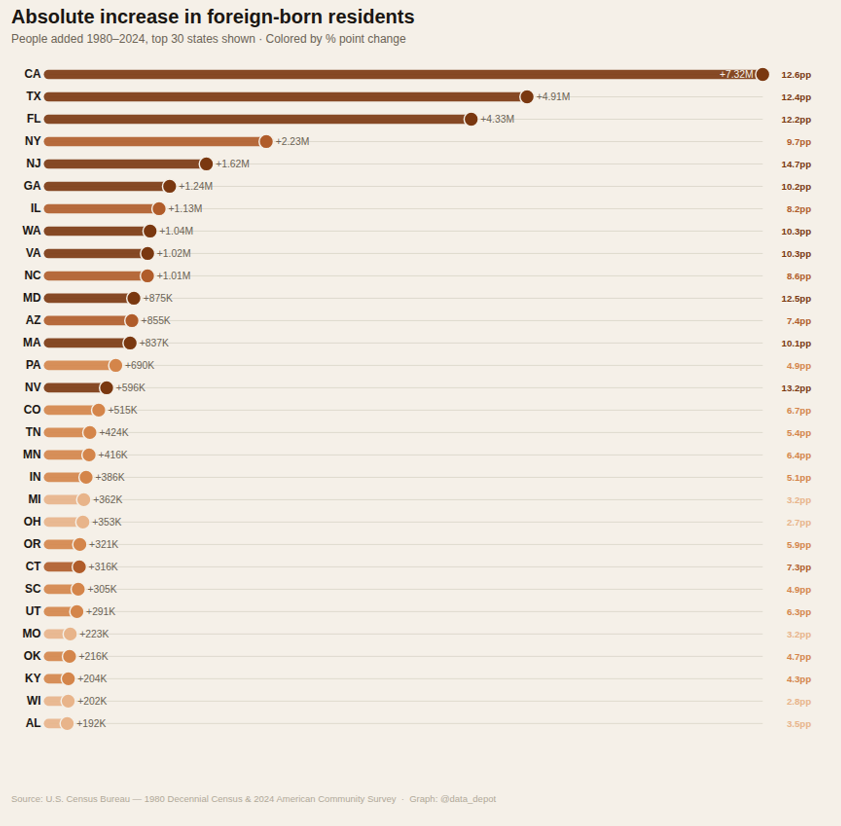
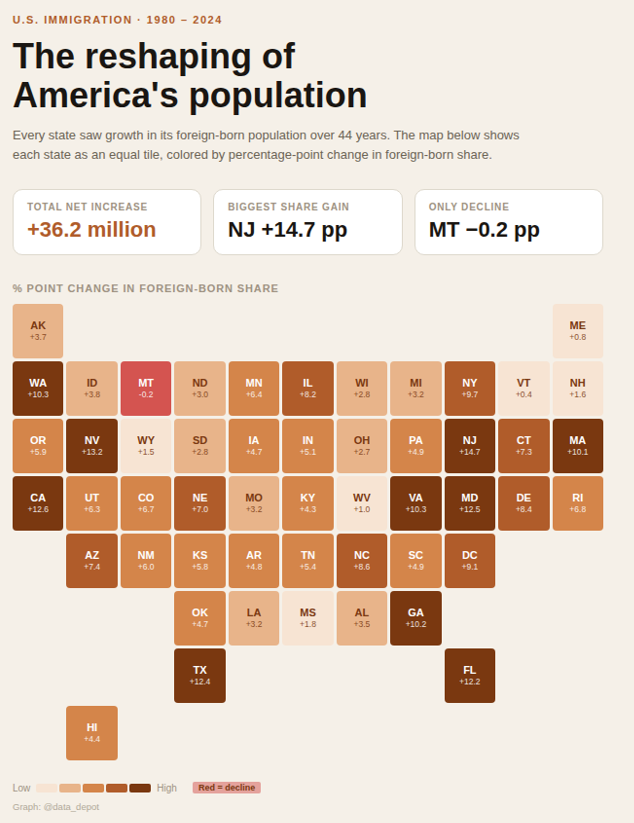
The U.S. foreign-born population grew by ~36 million b/w 1980 & 2024. But there's wide variation across states:
▪️NJ added 15-points to its foreign-born share (the most of any state)
▪️CA & TX alone account for 35% of the total national increase
▪️MT is the only state where the foreign-born share declined

English

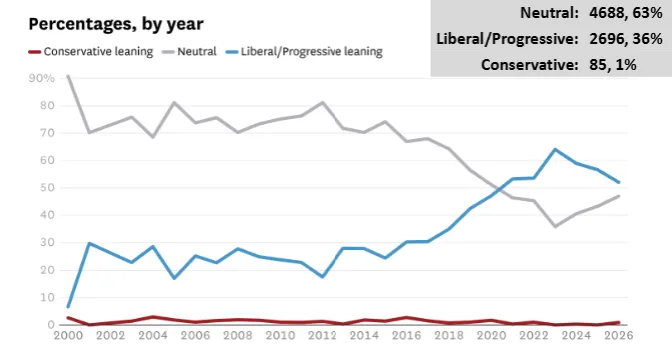
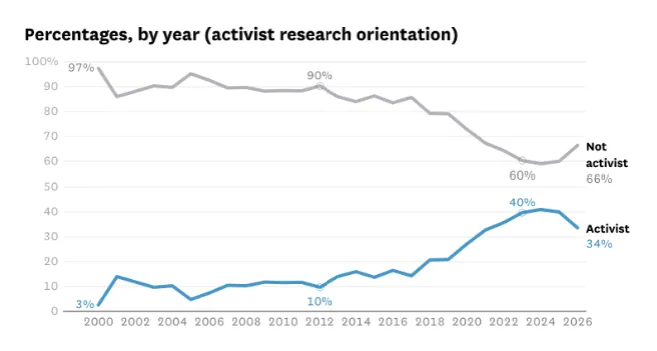
In other words, the change in academia has simultaneously occurred along two distinct dimensions (ideology & activism). The growing activism makes the growing progressivism less palatable.
Read more here: unsafescience.substack.com/p/the-singeing…
Watch the talk here: youtube.com/watch?v=VSvS6y…

YouTube
English