David Finkelshteyn

293 posts

David Finkelshteyn banner
David Finkelshteyn

David Finkelshteyn

@davidf_ai

CEO | AI Drug Innovation, LLMs & MVP Development, Data-Driven Software Solutions, Big Data, Cloud Systems, and Scalable AI Solutions

Israel Katılım Haziran 2024
1.7K Takip Edilen346 Takipçiler
David Finkelshteyn
David Finkelshteyn@davidf_ai·
What happens to demand if you change the price? 👀 In the last two videos, we looked at how AI can help retailers: • Test products before manufacturing • Simulate shopper behavior before real A/B tests Now we’re looking at the next big decision: pricing. The problem is that most forecasting models confuse correlation with causation. They may see discounts during weak demand and assume the discount caused the weak demand. But in reality, the discount may be a response to weak demand. This video explores causal forecasting, using AI to estimate the real effect of pricing decisions before taking action. What we’re solving here is simple: Helping retailers make better pricing, inventory, and promotion decisions with less guessing. 📝 Paper - arxiv.org/abs/2312.15282 🌐 Website - pivot-al.ai 📧 Email - Support@pivot-al.ai #AI #RetailTech #Forecasting #Ecommerce
English
0
0
1
19
David Finkelshteyn
David Finkelshteyn@davidf_ai·
In the previous video, we talked about testing products before manufacturing them 👀 Previous Video - x.com/davidf_ai/stat… Now the next question is even more interesting: What if you could test shoppers… before testing on real shoppers? Amazon researchers built AI-powered “synthetic shoppers” that simulate how different customer personas browse, click, and buy products. Not to replace humans but to help teams test ideas earlier, reduce risk, and avoid expensive failed experiments. The real shift here is not better chatbots. It’s using AI as a decision-making layer before launch. 📝 Paper - arxiv.org/abs/2503.24228 🌐 Website - pivot-al.ai 📧 Email - Support@pivot-al.ai #AI #Ecommerce #GenerativeAI #ProductDevelopment
David Finkelshteyn@davidf_ai

What if the future of product development is… not making the product first ? 👀 Some companies are now using AI to test what customers want before spending money on manufacturing, inventory, or photoshoots. This changes product building from “make and hope” to “test, learn, then build.” 📝 Paper - arxiv.org/html/2503.2218… #AI #Ecommerce #ProductDevelopment #GenerativeAI

English
0
0
1
39
David Finkelshteyn
David Finkelshteyn@davidf_ai·
$10M Seed Raised: Helical Scales Virtual AI Lab for Pharma ! AI biotech startup Helical has raised $10 million in seed funding to build what it calls a “virtual AI lab” for pharmaceutical research and drug discovery. The round was backed by redalpine, Gradient, Frst, BoxGroup, and notable angel investors including Aidan Gomez, Ivan Zhang, Clem Delangue, and Mario Götze. 🔗 Helical is building the application layer for biological foundation models: ✅ Virtual AI Lab for Pharma: Creating a system where scientists can run scalable and reproducible in-silico experiments instead of relying solely on costly and time-consuming wet-lab testing. ✅ Beyond Another Foundation Model: Focused on building usable discovery systems that researchers can trust, operate, and reproduce across therapeutic workflows. ✅ Accelerating Drug Discovery: Enabling computational workflows across target discovery, biomarker development, patient stratification, and RNA therapy design. ✅ AI Meets Biology at Scale: Orchestrates leading bio foundation models into a unified platform aligned to pharma and biotech research needs. 🚀 With this new seed funding, Helical plans to: ✅ Expand its engineering and AI research teams. ✅ Scale its virtual AI lab platform for pharmaceutical companies. ✅ Advance reproducible computational experimentation in biology. ✅ Push biological foundation models closer to real-world drug discovery applications. 👏 Huge congratulations to Founder Rick Schneider, Co-founders Maxime Allard, Mathieu Klop, the entire Helical team, and investors redalpine, Gradient, Frst, BoxGroup, and participating angels on this exciting milestone for AI-driven pharma innovation! Blog & Image source - helical.bio/blog/helical-r… #Biotech #DrugDiscovery #SeedFunding #LifeSciences
David Finkelshteyn tweet media
English
0
0
1
44
David Finkelshteyn
David Finkelshteyn@davidf_ai·
What if the next breakthrough in aging… is already sitting on 💊 pharmacy shelves ? Not a new drug. An existing one, just used differently. In this video, we break down how researchers from Northeastern, Harvard, and Brigham are approaching aging in a completely new way Instead of building drugs from scratch… They analyzed 6,000+ existing drugs to see: Do they already impact the biology of aging? Using a system called SHARP, they mapped aging-related genes across the human interactome and found something interesting: Aging isn’t random. It clusters into biological modules. From there, they filtered drugs that: • Target those modules • Reverse aging-related gene activity The result ? 370 potential candidates… in weeks Including known names like metformin and rapamycin and even unexpected ones like a common nasal decongestant. The takeaway is simple: The future of longevity might not come from new inventions… But from rethinking what we already have. 🎥 Watch the video - this one changes how you think about drug discovery. 📝 Paper - pmc.ncbi.nlm.nih.gov/articles/PMC12… #HealthcareAI #DrugDiscovery #Longevity #PrecisionMedicine
English
0
0
1
21
David Finkelshteyn
David Finkelshteyn@davidf_ai·
Why does cancer treatment fail… even when doctors do everything right? 🧬 Because the real problem is hiding… at the single-cell level. Some cells respond. Some don’t. And those few resistant cells? They decide everything. In this video, we show how AI can detect drug resistance before treatment even starts. No guessing. No waiting months to see failure. Just knowing… what will work. 🎥 Watch this, it changes how you think about cancer treatment. 📝 Paper - nature.com/articles/s4146… #HealthcareAI #CancerResearch #PrecisionMedicine #AIinHealthcare
English
0
0
1
20
David Finkelshteyn
David Finkelshteyn@davidf_ai·
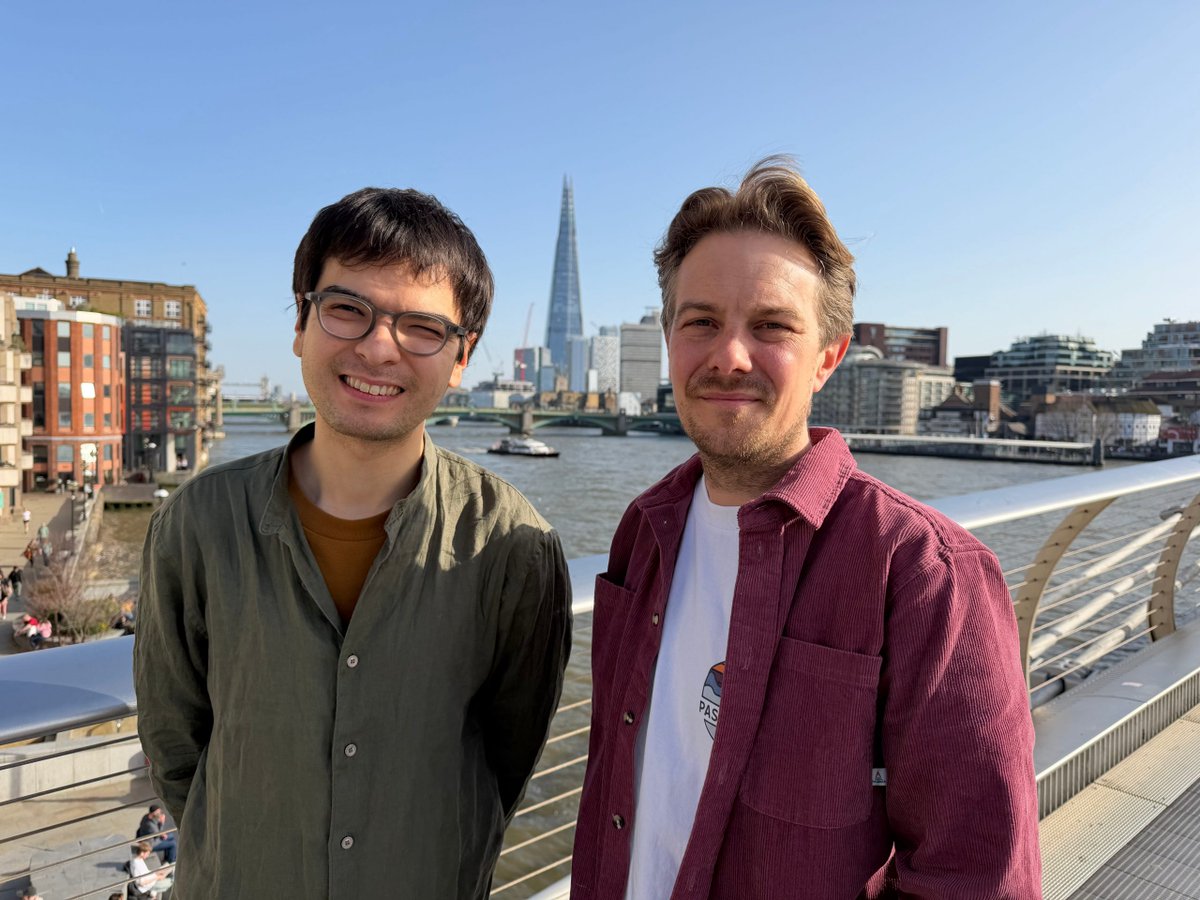
€4.1M (£3.6M) Raised: Ternary Therapeutics Scales AI Platform for Molecular Glues ! London-based biotech startup Ternary Therapeutics has raised €4.1 million (£3.6 million) in seed funding led by European venture firm daphni. The round also saw participation from Pace Ventures, the i&i Biotech Fund, and the UK Innovation & Science Seed Fund (UKI2S) managed by Future Planet Capital. 🔗 Ternary is turning the discovery of molecular glues into a repeatable engineering system: ✅ Tackling the "Undruggable": Developing an AI platform to intentionally design molecular glues, a new class of medicines capable of targeting disease-driving proteins that lack obvious drug-binding sites. ✅ AI Meets Physics & Biology: Combines machine learning, physics-based molecular modeling, and rapid laboratory testing in a continuous, self-improving feedback loop. ✅ Strategic Leadership Addition: Appointed Dr. Ian Taylor to the Board of Directors. Dr. Taylor is a veteran of targeted protein degradation research and formerly served as CSO and President of R&D at Arvinas. ✅ Early Momentum: Has already built a pipeline of preclinical programs focused on inflammatory and neuroinflammatory diseases, alongside securing early research collaborations with pharma partners. 🚀 With this new seed funding, Ternary Therapeutics will: ✅ Expand its computational and laboratory teams to scale its AI-driven platform. ✅ Advance its lead programs toward preclinical development and the clinic. ✅ Build the foundation for long-term, strategic partnerships with major pharmaceutical companies. 👏 Huge congratulations to Co-founder & CEO Dr. Chris Tame, the entire Ternary Therapeutics team, and investors daphni, Pace Ventures, i&i Biotech Fund, and UK Innovation & Science Seed Fund [UKI2S] on this exciting milestone for the UK biotech ecosystem! Blog & Image source - thebusinessjournal.co.uk/london/uk-biot… #Biotech #TechBio #DrugDiscovery #AIinPharma #MolecularGlues #SeedFunding #LondonTech #LifeSciences #Innovation
David Finkelshteyn tweet media
English
0
0
1
33
David Finkelshteyn
David Finkelshteyn@davidf_ai·
You know about SOAR? 🧬 Most people don’t. But it might change how we discover drugs. Here’s the problem… A lot of drug research today is basically guessing in the dark. We know something is wrong in the body… But we don’t always know exactly where it’s happening. And that matters more than you think. The same cells can: • Cause disease • Or fight it Depending on where they are located. So what is SOAR? Think of it like a molecular GPS for human tissue. It shows: • Which genes are active • In which cells • In which exact location So instead of guessing… You can actually see the problem. And then AI comes in It helps: • Understand how cells communicate • Spot patterns we would miss • Suggest drugs that target the right place Not just the disease… But where it actually lives. This is where things start to change. Because once you can see biology at this level… Drug discovery becomes a lot more precise. 🎥 Watch this video for a more detailed understanding ! 📝 Paper - science.org/doi/10.1126/sc… #SOAR #HealthcareAI #DrugDiscovery #PrecisionMedicine #AIHealthcare
English
0
0
1
31
David Finkelshteyn
David Finkelshteyn@davidf_ai·
What if I say, your pill/medicine is manufactured for you at every hospital using your own protected pen drive ? You won’t believe it, right ? Imagine safely receiving your exact prescribed pill at your nearest hospital within minutes, eliminating waiting times, reducing transportation needs, and ensuring high reliability with every dose. But right now, this $422.60B healthcare industry still relies on one size fits all drugs, causing millions of ineffective treatments and side effects, but this is now changing. AI-driven 3D printing medicine is now solving this hardest problem: ensuring every printed dose is consistent, reliable, and clinically safe. By training neural networks on real printing data and inverting them to go from desired dose, optimal parameters, we can eliminate variability in droplet size and formulation, unlocking more precise, safer & reliable personalized medicine for millions of people. Check out the first video in this series - x.com/davidf_ai/stat… 📌 Support links - mordorintelligence.com/industry-repor… - pmc.ncbi.nlm.nih.gov/articles/PMC10… #AI #3DPrinting #PrecisionMedicine
English
0
0
2
39
David Finkelshteyn
David Finkelshteyn@davidf_ai·
Last video… we showed how to design the perfect pill 💊 So you would think… problem solved. But it’s not. Because even the perfect design can fail. Not in theory… In reality. In this video, we show the part nobody talks about 👇 Can you actually print that pill the same way every time? Because in pharma… Even a small variation = big problem. So instead of guessing… AI steps in Now it can: • Predict if a pill will print reliably • Analyze materials and printer behavior • Suggest the exact settings needed But here’s the twist We don’t ask: “What happens if we print like this?” We ask: “How should we print to get exactly what we want?” This changes everything. Because now… You’re not just designing medicine. You’re making sure it works in the real world. 🎥 Watch the video to see how it works. 📝 Paper - lnkd.in/dzJJczBx Check out the previous videos in sequence to understand this better 👇 1st - lnkd.in/dSDxsZqU 2nd - lnkd.in/dcn8h7Dp hashtag#Healthcare hashtag#PrecisionMedicine hashtag#HealthTech hashtag#PharmaTech
English
0
0
1
27
David Finkelshteyn
David Finkelshteyn@davidf_ai·
Last video… we showed something 🤯 crazy, pills 💊 can now be 3D printed and customized for each person. One pill. Multiple drugs. Controlled release. Sounds like the future. But here’s the real question… 👉 How do you even design that pill ? Because it’s not simple. You need to decide: • What materials to use • How the structure looks • When each drug should be released Traditionally, this means trial and error… Printing again. Testing again. Waiting again. Slow. Expensive. Painful. Now imagine this instead: Testing thousands of pill designs…without printing a single one. This is where AI changes everything. AI can: • Predict how a pill dissolves • Optimize drug release timing • Learn from past data + simulations Some models even “evolve” better designs (like natural selection). Others control the printer itself: 🔥 Temperature ⚙️ Speed 📐 Layer thickness So instead of guessing… You print only what is most likely to work. This is the real shift: From manufacturing pills → to engineering medicine If you didn’t watch the previous video on 3D printed pills…You won't understand, so please go check it out first; it will connect the dots. 🎥 Previous video here - x.com/davidf_ai/stat… 📝 Reference Papers 1. pmc.ncbi.nlm.nih.gov/articles/PMC11… 2. pmc.ncbi.nlm.nih.gov/articles/PMC12… #Healthcare #AI #PrecisionMedicine #HealthTech #PharmaTech
English
0
0
1
35
David Finkelshteyn
David Finkelshteyn@davidf_ai·
Most 💊 medicine today is still one size fits all. But patients are 🙅🏻‍♂️ not the same. In this video, we show how 3D printing is changing how drugs are made, now it is possible to create personalized pills for each person. One pill can: • Combine few drugs together (polypill) • Control how fast or slow each drug works • Adjust dose based on patient need Even the shape of the pill matters — it changes how medicine is released inside body. This helps in real life: 👵 Easier for older people to manage treatment 👶 Safer doses for children 📉 Less missed medication The shift is simple: From standard medicine → to medicine made for you And with AI, this will become even more advanced. 🎥 Watch the video to see how it works. 📝 Paper - lnkd.in/dgwk7_7d #Healthcare #PrecisionMedicine #HealthTech #PharmaTech
English
0
0
1
26
David Finkelshteyn
David Finkelshteyn@davidf_ai·
Many clinical trials show conflicting results even when testing the same treatment. 🧪 The reason is often not the drug… but the patient population. Understanding clinical outcomes requires more than comparing trial results. It requires analyzing who was enrolled and how those differences impact effectiveness. In this video, we explore the RCT Twin methodology a digital twin approach that simulates how trial results change across different patient groups, combining trial data with real world EHR data and causal modeling. This is the shift happening in healthcare: From “Does this treatment work ?” → to “For which patients does it work ?” If you’re working on AI in healthcare or clinical research, this is a direction worth paying attention to. 📄 Full paper: lnkd.in/eUddd_C9 #HealthcareAI #ClinicalTrials #PrecisionMedicine #AIinHealthcare #HealthTech
English
0
0
1
29
David Finkelshteyn
David Finkelshteyn@davidf_ai·
Clinical trials have one big problem. 🧪 Same treatment… different results. This creates confusion — but often the issue is not the drug, it is the patient population inside the trial. So results don’t always transfer well → and decisions become uncertain. In this video, we show a different approach: 🧬 Digital twins for clinical trials With this approach: • You simulate one trial using another trial’s patient population • You test how outcomes change across different cohorts • You understand what is driving the result — treatment or population But here is important point: Not all trial results are universal. ⚙️ Population-aware modeling Instead of taking results at face value, it: • Reconstructs trials with different patient profiles • Uses real-world data (EHRs) • Applies causal graphs to keep relationships clinically valid Result? 📉 Benefits can disappear 📈 Or reappear — depending on who is enrolled Main idea: We should not only ask “Does treatment work?” We must ask “For which patients it works?” 🎥 Watch the video to understand how it works. 📄 Full paper: lnkd.in/e93Vx9ME #AI #ArtificialIntelligence #HealthcareAI #ClinicalTrials #PrecisionMedicine #HealthTech
English
0
0
1
33
David Finkelshteyn
David Finkelshteyn@davidf_ai·
Healthcare AI has one big problem. 🏥 Hospitals need more data to build better models… But they cannot share patient data. So data stays in silos → and models become weaker. In this video, we show a different approach: 🤝 Learning together without sharing data With Federated Learning: • Each hospital trains model on its own data • Only model updates are shared (not patient records) • Central system combines everything into stronger model But here is important point: Not all data is same quality. ⚙️ Fused Weighted Adaptive Federated Learning (FW) Instead of simple averaging, it: • Gives more weight to better data • Adapts based on performance • Keeps privacy and improves accuracy Result? 📈 ~91.9% accuracy on real dataset 🚀 Better than standard approaches Main idea: You don’t need to move all data to one place to build strong AI. Sometimes better is to learn together, but keep data local. 🎥 Watch the video to understand how it works. 📄 Full paper: arxiv.org/abs/2602.00751 #AI #ArtificialIntelligence #HealthcareAI #FederatedLearning #DataPrivacy #HealthTech
English
0
0
1
28
David Finkelshteyn
David Finkelshteyn@davidf_ai·
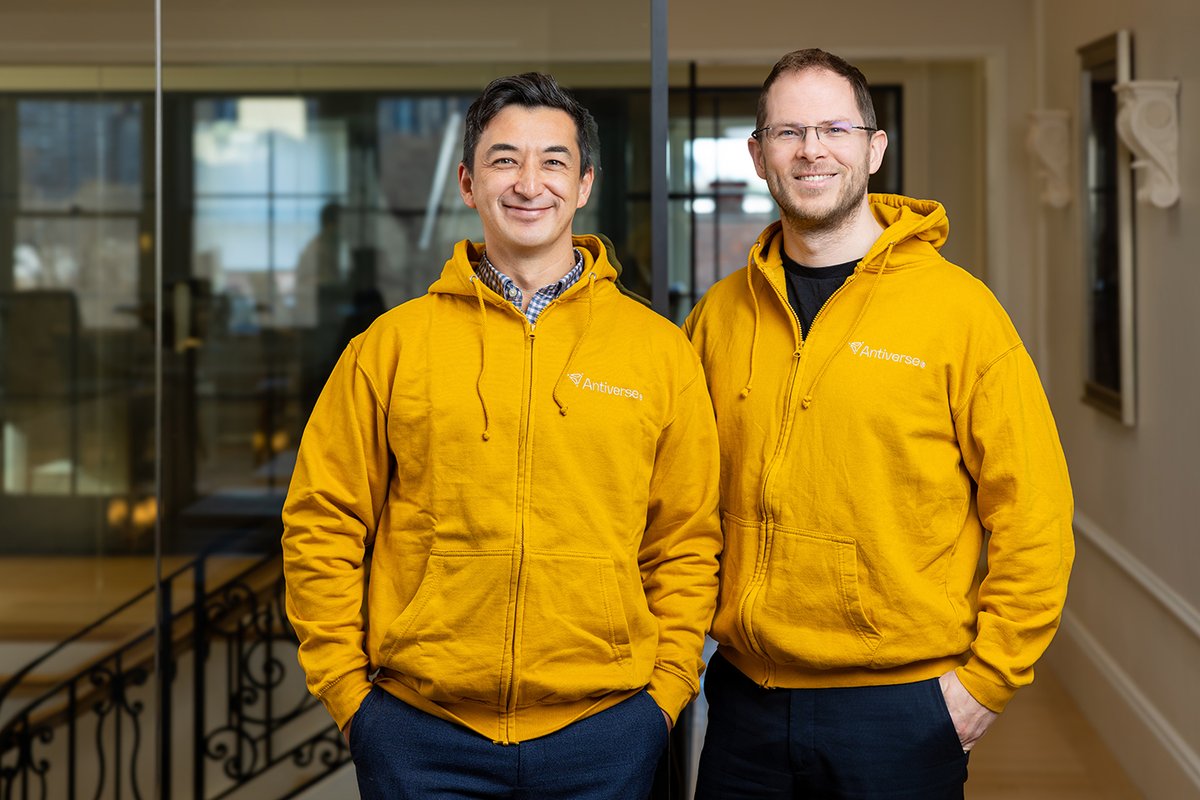
$9.3M Raised: Antiverse to Tackle Undruggable Disease Targets with AI! Cardiff-based techbio company Antiverse has raised $9.3 million in a Series A financing round. The round was led by Soulmates Ventures, with participation from Innovation Investment Capital, DOMiNO Ventures, and existing investors including DBW, Kadmos Capital, and i&i Biotech Fund. 🔗 Antiverse is tackling some of the most technically demanding problems in drug discovery: ✅ Undruggable Targets: Uses an AI-led computational platform to design therapeutic de novo antibodies against historically challenging targets, such as G-protein coupled receptors (GPCRs) and ion channels. ✅ Lab-in-the-Loop: Combines generative machine learning models with proprietary programmable cell-line engineering and in-house laboratory validation to rapidly design, build, and test candidates. ✅ Major Partnership: Alongside the funding, Antiverse announced a research agreement with the Cystic Fibrosis Foundation to design novel antibodies targeting the historically difficult extracellular region of the CFTR protein. ✅ Rapid Execution: The platform is capable of moving from target identification to functional, epitope-specific antibodies in under four months. 🚀 With this new Series A funding, Antiverse will: ✅ Scale its generative AI antibody design platform. ✅ Accelerate its internal therapeutic pipeline and advance lead programs toward in vivo efficacy studies. ✅ Expand its strategic discovery collaborations with pharmaceutical and foundation partners. 👏 Huge congratulations to Co-founders Murat Tunaboylu (CEO) and Ben H.), the entire Antiverse team, and lead investor Soulmates Ventures on this massive step forward in biologics! Reference & Image by - soulmatesventures.com/making-the-und… #TechBio #AIinPharma #DrugDiscovery #Antibodies #SeriesA #DeepTech #Biotech #CysticFibrosis #Innovation #Antiverse
David Finkelshteyn tweet media
English
0
0
1
67
David Finkelshteyn
David Finkelshteyn@davidf_ai·
Pharmacy forecasting often fails for a simple reason. 💊 Most systems treat each drug as an isolated product. But in reality, medicines are deeply interconnected: • Substitutes replace each other • Some drugs are commonly prescribed together • Demand shifts when availability changes Ignoring these relationships leads to real problems: 🚨 Stockouts that affect patient care 📦 Over-ordering that wastes storage and capital In this video, we break down a hybrid AI approach to smarter pharmacy forecasting: 🧠 Knowledge Graphs (KG) map relationships between drugs 🔗 Graph Convolutional Networks (GCN) learn patterns from those connections 📈 LSTM models capture how demand changes week to week The result? Forecasting that understands both relationships and time patterns. In tests on real pharmacy sales data, this approach reached 8.24% error, outperforming several traditional forecasting models. The takeaway is simple: Better forecasts come from understanding how products relate to each other, not just how they sell individually. 🎥 Watch the video to see how this approach works. 📄 Full paper: arxiv.org/abs/2602.00751 #AI #ArtificialIntelligence #HealthcareAI #PharmaTech #SupplyChainAI #DataScience
English
0
0
1
31
David Finkelshteyn
David Finkelshteyn@davidf_ai·
Most Healthcare AI pilots fail in production. 🚨 Not because the models are bad… But because clinical environments are incredibly hard to engineer. In this video, we break down what it actually takes to build trustworthy clinical AI. It comes down to 4 pillars: 🏗 Architecture Keep clinical workflows stable. Treat LLMs as plug-ins triggered by clinical events (appointments, visits, lab results). ⚙️ ML Ops Version models, test changes on real clinic cases, and monitor metrics like failures, latency, and clinician corrections. 📋 Governance Every AI output must have clear ownership routed to clinicians for approval with a full audit trail. 🤖 Agents Purpose-built AI agents that support the workflow (previsit history gathering, postvisit documentation, etc.). But the real key? 👩‍⚕️ Human-in-the-loop review. In one deployment: ✅ 81% approved ✏️ 19% corrected 🚫 0% rejected Those corrections become the feedback loop that improves the system. Because clinical AI shouldn’t behave like a chatbot. It must be designed like a safety-critical system. 🎥 Watch the breakdown in the video below. #HealthcareAI #AIinHealthcare #HealthTech #ClinicalAI #AIGovernance
English
1
0
1
28
David Finkelshteyn
David Finkelshteyn@davidf_ai·
Everyone says, “We’ll regulate AI when it goes public.” ⚖️ But what if that’s already too late? What if the real governance challenge isn’t public release… but what happens 💻 inside AI labs before anyone else sees it? In this video, we break down a new paper on the governance blind spot of “internal deployment.” One striking detail: Anthropic reportedly shared that ~90% of their internal code is AI-generated. That’s not a product launch. That’s upstream transformation. Internal deployment can: 👉 Automate R&D 👉 Accelerate critical business processes 👉 Operate on sensitive proprietary data 👉 Shape tomorrow’s public models But the major 2025 EU and US frameworks struggle to govern it. The paper identifies three structural gaps: 📌 Scope ambiguity – When does internal use trigger obligations? 📌 Point-in-time compliance – Systems evolve between assessments. 📌 Information asymmetry – Regulators often can’t independently verify What internal systems exist, and what they can do. This creates a policy catch-22: Regulators need information to justify stronger oversight. But they often need stronger oversight to access that information. Here’s the core insight: If internal systems shape tomorrow’s external capabilities, governance cannot begin at public release. Internal deployment is upstream. The choices made inside organizations today define what the world interacts with tomorrow. If you care about the future of AI governance, this conversation is critical. 🎥 Watch the video below. 📄 Full paper: lnkd.in/dEJrRach #ai #artificialintelligence #aigovernance
English
0
0
1
59
David Finkelshteyn
David Finkelshteyn@davidf_ai·
@Vsync_66 That's super great, would love to know more about it ! Let's try to connect next week !
English
1
0
0
7
Vihaan Kodiganti
Vihaan Kodiganti@Vsync_66·
@davidf_ai I’m actually building an AI mental health app. It’s called LeoIgnite AI
English
1
0
1
12
David Finkelshteyn
David Finkelshteyn@davidf_ai·
Where would you invest in AI mental health in 2026 ?
English
1
0
1
25