Dawid Cedrych

4.6K posts

Dawid Cedrych banner
Dawid Cedrych

Dawid Cedrych

@dcedrych

working on @altalogy - a design and engineering studio behind @rollupsHQ, @morningbrew, @chemistry, @hummingbirdvc, @intelligenceco and more.
Katılım Nisan 2014
997 Takip Edilen2.2K Takipçiler
Sabitlenmiş Tweet
Dawid Cedrych
Dawid Cedrych@dcedrych·
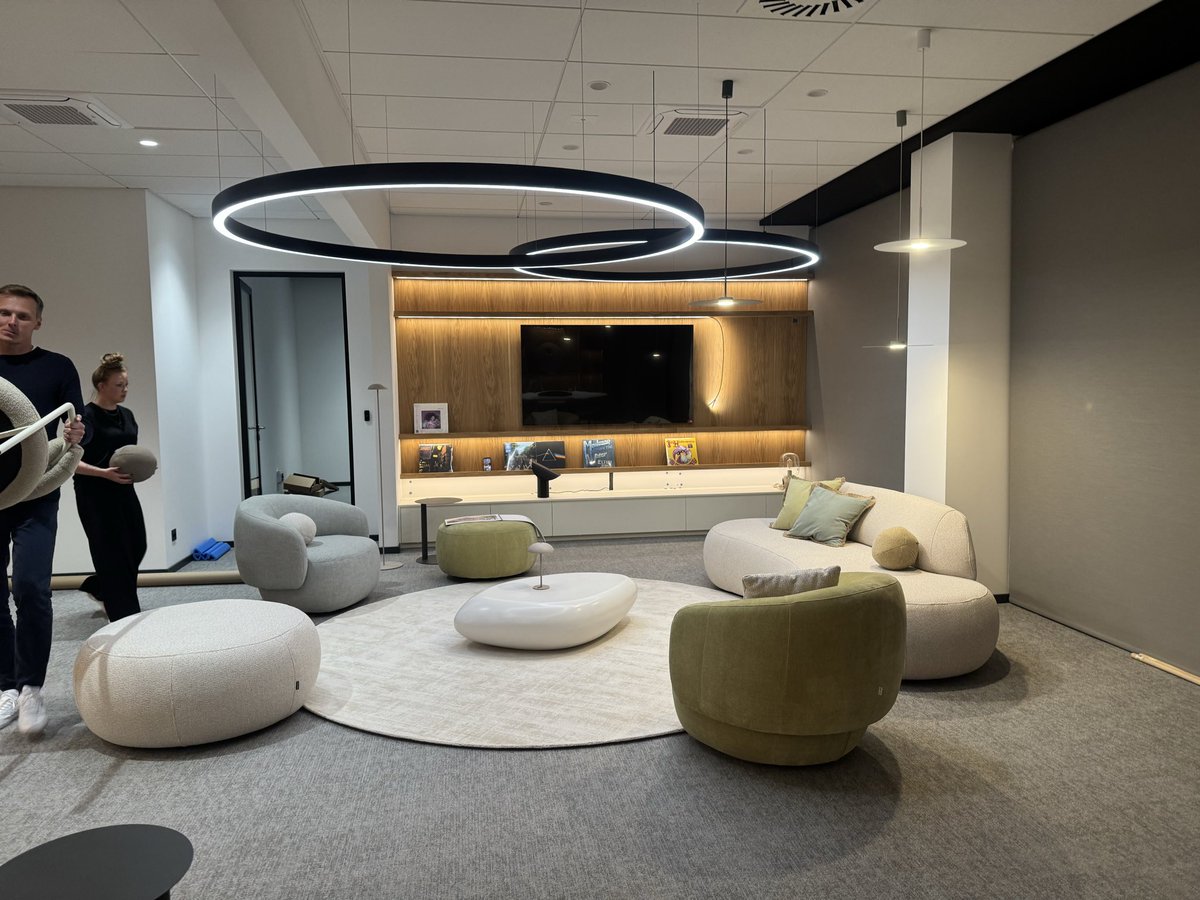
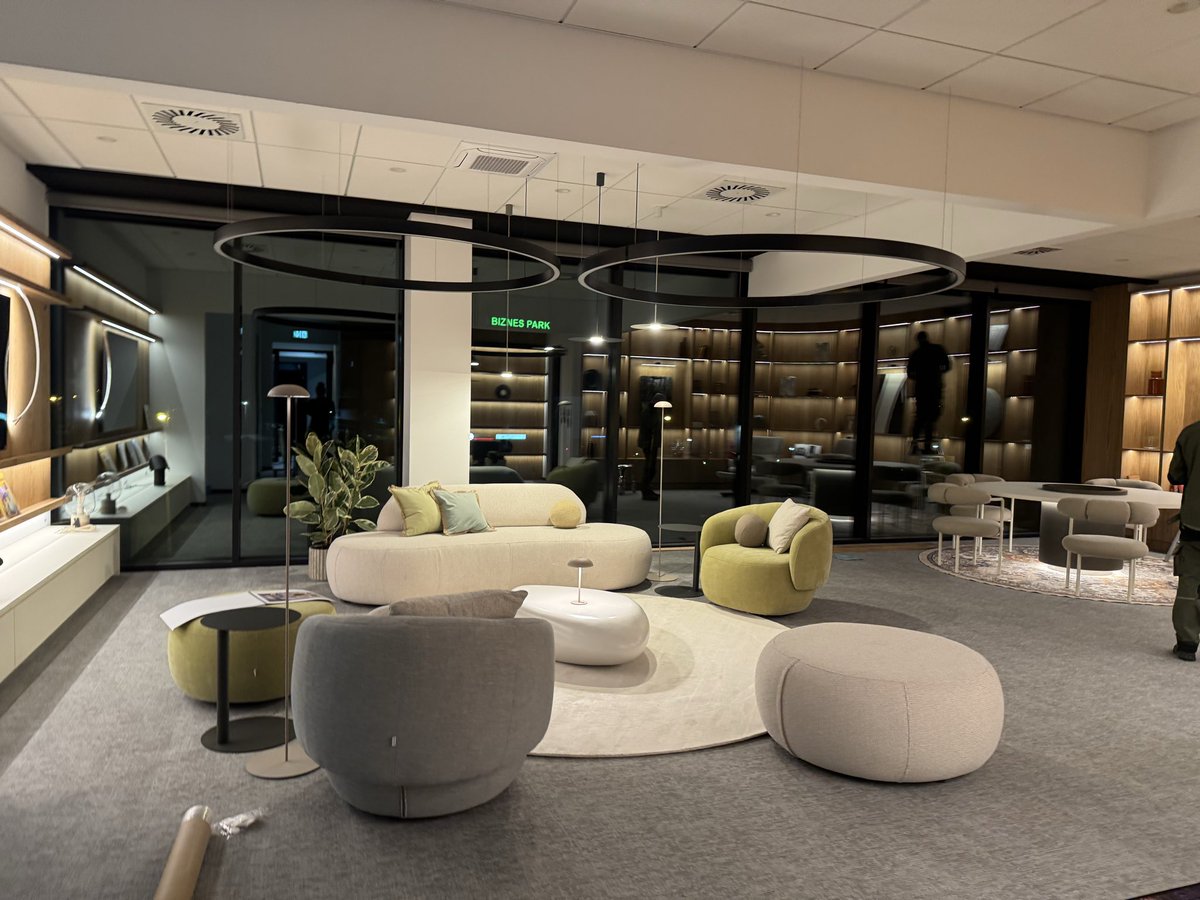
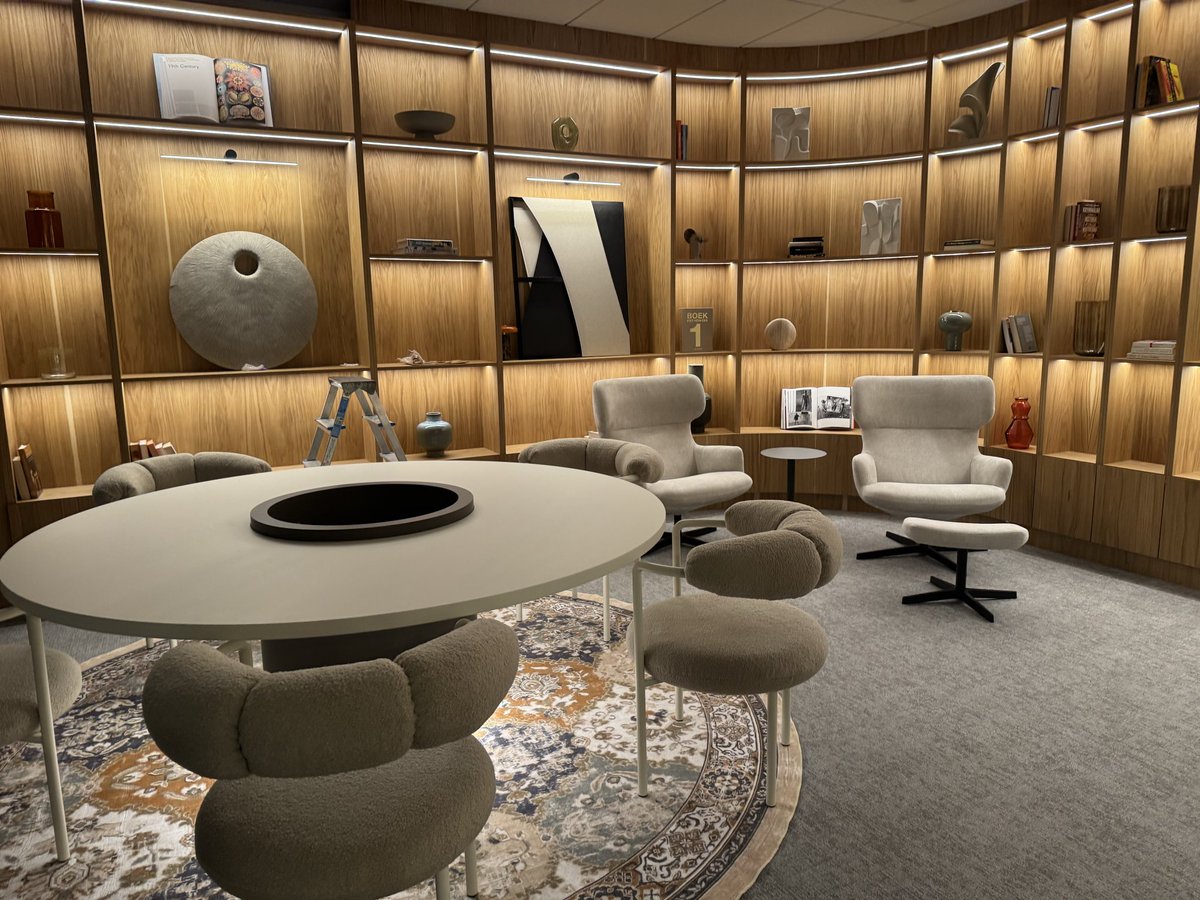
New HQ is coming together nicely
Dawid Cedrych tweet mediaDawid Cedrych tweet mediaDawid Cedrych tweet media
English
2
3
20
2.5K
Dawid Cedrych
Dawid Cedrych@dcedrych·
You and I visit Rome to drink a spritz near the Trevi Fountain. Peter casually attends private lectures on the Antichrist. We're not the same
Dawid Cedrych tweet media
English
0
0
0
85
Dawid Cedrych
Dawid Cedrych@dcedrych·
@ShaanVP I’ve been listening to your pod for 7 years to see this tweet
English
1
0
3
1.2K
Shaan Puri
Shaan Puri@ShaanVP·
There’s better life advice in two Disney movies than every podcast combined
English
48
5
247
41.2K
vittorio
vittorio@IterIntellectus·
this is actually insane > be tech guy in australia > adopt cancer riddled rescue dog, months to live > not_going_to_give_you_up.mp4 > pay $3,000 to sequence her tumor DNA > feed it to ChatGPT and AlphaFold > zero background in biology > identify mutated proteins, match them to drug targets > design a custom mRNA cancer vaccine from scratch > genomics professor is “gobsmacked” that some puppy lover did this on his own > need ethics approval to administer it > red tape takes longer than designing the vaccine > 3 months, finally approved > drive 10 hours to get rosie her first injection > tumor halves > coat gets glossy again > dog is alive and happy > professor: “if we can do this for a dog, why aren’t we rolling this out to humans?” one man with a chatbot, and $3,000 just outperformed the entire pharmaceutical discovery pipeline. we are going to cure so many diseases. I dont think people realize how good things are going to get
vittorio tweet mediavittorio tweet mediavittorio tweet mediavittorio tweet media
Séb Krier@sebkrier

This is wild. theaustralian.com.au/business/techn…

English
2.5K
19.9K
117.9K
17.3M
Dawid Cedrych
Dawid Cedrych@dcedrych·
Do you think Albert Einstein would have ever published Special Relativity if he’d checked every comma and grammar in claude?
English
0
0
0
79
Dawid Cedrych
Dawid Cedrych@dcedrych·
Fwiw, the fancy landing page got me extremely excited about micro, even when on waitlist I would email you to test the product sooner. It basically communicated to me that you're serious about craft and are willing to invest in it. Also, don't know about the details of working with the agency, but I highly respect them so it was also a strong signal to me.
English
1
0
6
1.2K
brett goldstein
brett goldstein@thatguybg·
last year we wasted $120K and 6 months on a fancy landing page this year I vibe coded a better one in a weekend starting with a very simple claude code prompt:
English
49
18
418
56.7K
cora.ai
cora.ai@cora_ai·
It's time to break-up with the old way of running post-sales. @cora_ai - the first proactive AI agents for customer success. Winning the deal is just Day 0. Cora is the AI for everything that comes next.
English
8
5
29
108.9K
Willem
Willem@vanlancker·
THE BLEAKNESS OF THE BRAND AGE... PG’s essays on builders and innovation are some of the clearest thinking about the startup world. They are essential. But when he writes about art and design, he tends to apply an engineer's lens that flattens the subject. In this piece he frames design as something to solve and brand as something like the decorative facade constructed when real innovation runs out... He goes on that at the end of golden ages we are met with a bleak reality that the hollowness of brand is all we can compete on. Early industries compete on technological advancement. Later, when products become indistinguishable, companies compete on brand. He frames it as a cosmetic layer applied to otherwise solved problems. He makes a similar move in his essay How Art Can Be Good, resolving artistic quality as something judged objectively by an audience rather than as personal expression (I find this take particularly jarring given his background studying painting at RISD, one of the more intuitively-driven art schools.). The premise assumes that the only meaningful axis of improvement is technical performance. Once precision, efficiency, or cost reach a plateau, the remaining differentiation is treated as superficial, or worse, as a distortion. But value rarely evolves that way... In most product categories, value tends to evolve in layers. At first, the question is functional: does it work at all? Then it becomes experiential: how well does it work, and how does it feel to use? Eventually the frontier becomes cultural: what does this object express, and who does it belong to? Engineering dominates the first phase. Design often shapes the second. Brand emerges in the third, when products begin to carry shared meaning. As industries mature, competition shifts toward these cultural and human needs: what identity a product signals, what kind of world it helps create. As makers, we start by solving the functional problem. Over time the work moves up the ladder of human needs. Those dimensions are often symbolic rather than purely functional, but they are not trivial. They are where design often differentiates. PG is right that brand can become hollow: his account of Patek Philippe cynically creating an asset bubble through artificial scarcity is convincing, and the "comb-over effect" of individually rational steps producing something freakish is well observed (see: Richard Mille). But he makes the mistake of treating this endpoint as the definition of brand itself. Brand at its best is not manufactured scarcity or centrifugal weirdness. It is what happens when product, design, and point of view become coherent to people and begin to signal shared meaning. The watch example he builds the entire essay around actually illustrates the shift. Once quartz solved the problem of precision, watches didn't become irrelevant, their significance as cultural objects was enhanced. They became artifacts of craftsmanship, history, identity, and taste. The engineering problem was solved, but the human one remained. PG sees this transition and concludes that the remaining activity is empty. A designer sees it and recognizes a different kind of problem being solved. His strongest claim, that branding is “centrifugal” while design is “centripetal,” deserves a direct response. It's true that good design often converges. But convergence on what exactly? PG assumes it converges on functional optima: the thinnest case, the most accurate movement. Design converges on human optima: on how something communicates, on the relationship between an object and the person holding it. Brian Eno (whose writing on creative practice is akin to PG’s for startups) has a useful frame here called axis thinking. Most fields get stuck optimizing along a single axis, and the real leap comes from shifting to a different axis entirely. That's what happens when watches move from precision to cultural meaning. It's moving to a different center. That center is just as real, even if it can't be measured with a chronometer. When PG writes that “there's no function for form to follow” in the brand age, he's defining function too narrowly. Expressing identity, signaling values, triggering emotions, these are very real functions. They're just not engineering functions. If his interpretation were correct, if everything beyond technical performance were decorative, whole domains of human creation would stop making sense. Why design new chairs once ergonomics are understood? Why design new garments when we have ones that work perfectly well? Why open new restaurants when we already know how to cook? The answer is that these fields serve a hierarchy of needs that extends well beyond the functional, and the work of addressing those higher needs is not lesser work. This matters now more than it has in decades. As AI compresses the cost of building software toward zero, we are entering a new version of the quartz crisis: one that affects nearly every product built on code. PG's framework would predict that what follows is a rather bleak brand age: superficial differentiation over commoditized technology. But if value evolves in layers, what actually follows is a design age, a period where the human dimensions of product become the primary frontier. When done well, design, taste, point of view, brand, and cultural meaning won't be regarded as decoration applied after the engineering is done, but rather be the work that matters most. Engineering solves problems. Design and brand determine what those solutions mean to people.
Paul Graham@paulg

The Brand Age: paulgraham.com/brandage.html

English
23
30
290
51.2K
Dawid Cedrych
Dawid Cedrych@dcedrych·
@vanlancker "Engineering solves problems. Design and brand determine what those solutions mean to people." You're so real for this
English
1
0
9
802
Dawid Cedrych
Dawid Cedrych@dcedrych·
Peter Principle for creative studios: You go upmarket until you work only on navy-white wordpress sites and pptx files.
English
0
0
0
95
Joe Bernstein
Joe Bernstein@Bernstein·
More of parenting than I expected is sitting lifelessly on the couch from 530-730pm while your children physically and mentally break you
English
138
362
12.1K
1.1M
Dawid Cedrych
Dawid Cedrych@dcedrych·
And LinkedIn just keeps rolling with the biggest company on earth
Dawid Cedrych tweet media
English
0
0
0
117
Dawid Cedrych
Dawid Cedrych@dcedrych·
@hunterthompson The problem with notion is that it’s never a source of truth. Your invoicing software is, your contract signature software is, but notion is always just a record layer that starts no actual workflow
English
0
0
0
31
Hunter Thompson
Hunter Thompson@hunterthompson·
@dcedrych Yeah I think this is exactly it. Most of the software out there is over-engineered. I wanna make something dead simple where I just have tabs for all the things above. Strip everything away. I've used Notion for years and it's the closest but some things are just awkward.
English
1
0
0
249
Hunter Thompson
Hunter Thompson@hunterthompson·
I've tried all the project management/biz ops platforms and they all stink for different reasons. Seriously considering building my own with Claude to handle clients, projects, payments, contracts, e-signatures, cash flow — all of it. Good or bad idea? Anyone done this?
English
9
0
4
1.5K
Dawid Cedrych
Dawid Cedrych@dcedrych·
One of the most fascinating design projects we've worked on. Every decision from brand, through website to product came down to one tension: familiar enough to trust, modern enough to excite. An exercise in constraints and trade-offs that was at the same time a pure joy to work on thanks to @jhnling, @Zachkirshner and @Gfang200 H/t to our team members @muamartaw @szafrankasiaa and @arcadius_c ❤️
John Ling@jhnling

Meet Meridian: Turn Hours in Excel into Minutes If you work in Excel, Meridian is built for you. Meridian works with companies like Decagon, OffDeal, a top investment bank, and other financial institutions. We’re an AI-powered workspace that automates Excel modeling work with full traceability back to source data. We raised $17 million in seed funding, co-led by @a16z and @TheGP to bring @MeridianAgent to more finance teams.

English
0
4
8
542
Andy McCune
Andy McCune@9th·
Looking for a studio to design and build the new @thecosmos marketing site. Who should we work with?
English
95
5
200
26K
Dawid Cedrych retweetledi
Avery Chernin
Avery Chernin@AveryChernin·
Why would I pay $17.99/month for your SaaS when I could spend 6 weeks vibe-coding a shittier version that doesn't work?
English
194
237
4.4K
185.2K