Sabitlenmiş Tweet
Dan Dworkis MD PhD FACEP
391 posts

Dan Dworkis MD PhD FACEP
@ddworkis
ER doc focused how humans and systems keep working when things go wrong. RAND | USC | MCTI | lead: @TheEmergMind
Katılım Aralık 2011
541 Takip Edilen737 Takipçiler

SpaceX is actively hiring world-class engineers/physicists for SpaceXAI, even if you have zero prior experience in AI. Smart humans figure it out fast.
Please send an email with ~3 bullet points demonstrating evidence of exceptional ability to ai_eng@spacex.com.
English

If you run a resuscitation program, train residents or nurses, or think about team readiness in high-stakes environments — try it and tell me what you find. #FOAMed
Live app: sfl-halosim.streamlit.app
Code: github.com/EmergencyMind/…
English

Introducing HALOSim! >> Most ER and ICU providers go months between live cardiac arrests.
We published the data: 98% of nurses exceeded a 90-day gap between real exposures. That's a structural exposure problem that most systems have no way to see.
sfl-halosim.streamlit.app
English

All systems fail, but not all failures are created equal.
New piece in @PsychToday on the three axes of failure design:
- Failing toward vs. away
- Failing early vs. late
- Failing partially vs. completely
psychologytoday.com/us/blog/the-em…
English
Dan Dworkis MD PhD FACEP retweetledi

There's a physicist at Stanford named Safi Bahcall who modeled this exact principle and the math is wild.
He calls it "phase transitions in human networks." When you're stationary, your probability of a lucky event is limited to your existing surface area: the people you already know, the places you already go, the ideas you've already been exposed to. Your opportunity window is fixed.
When you move, your collision rate with new nodes in a network increases nonlinearly. Double your movement (new conversations, new cities, new projects) and your probability of a serendipitous encounter doesn't double. It roughly quadruples. Because each new node connects you to their entire network, not just to them.
Richard Wiseman ran a 10-year study at the University of Hertfordshire tracking self-described "lucky" and "unlucky" people. The single biggest differentiator wasn't IQ, education, or family money. Lucky people scored significantly higher on one trait: openness to experience. They talked to strangers more, varied their routines more, and said yes to invitations at nearly twice the rate.
The "unlucky" group followed the same routes, ate at the same restaurants, and talked to the same 5 people. Their networks were closed loops. No new inputs, no new collisions.
Luck isn't random. Luck is surface area. And surface area is a function of movement.
The lobster emoji is doing more work than most people realize. Lobsters grow by shedding their shell when it gets too tight. The growth requires a period of total vulnerability. No protection, no armor, soft body exposed to the ocean.
That's the cost of movement nobody posts about. You have to be uncomfortable first. The new shell only hardens after you've already moved.
ຸ@D9vidson
a moving man will meet his luck 🥀
English

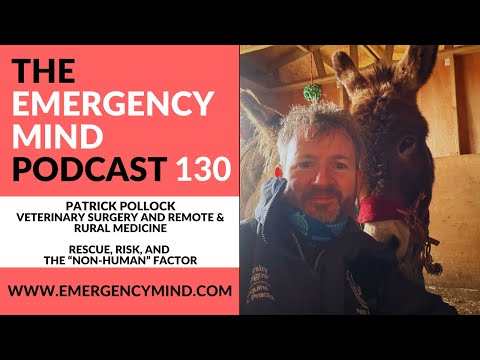
EP 130 of @TheEmergMind Podcast with Patrick Pollock. Seriously never thought I'd end up connecting horses to AI, but here we are.
youtu.be/Iyy4gEni3Kg

YouTube
English

When we talk about teamwork under pressure, we usually assume the team is made of humans. This conversation (about horses, not AI) pushed me to think more about what happens when it isn't.
youtu.be/Iyy4gEni3Kg

YouTube
English

Lots more to dig into here - curious what you think.
psychologytoday.com/us/blog/the-em…
English

AI is moving from tool -> co-pilot in medicine, and it's time to start thinking about how to be a good teammate.
My latest in @PsychToday: How Human-AI Teams Make Hard Decisions.
psychologytoday.com/us/blog/the-em…
A few key ideas:
English