SmoKING retweetledi
SmoKING
3.8K posts

SmoKING retweetledi
SmoKING retweetledi
SmoKING retweetledi

🚨 WARNING: SOMETHING BIG IS COMING
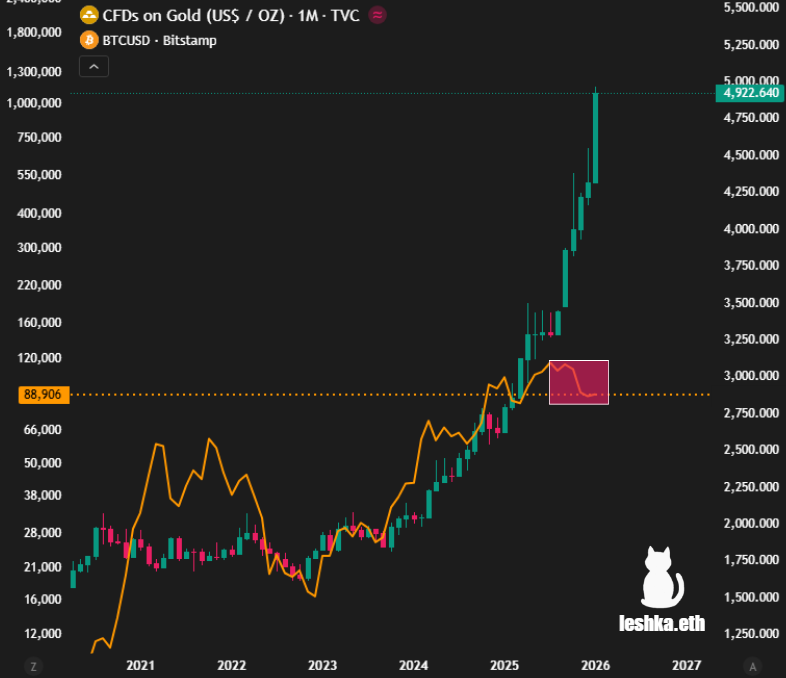
2007-2009 HOUSING COLLAPSE:
Gold pumped $670 - $1,060
2019-2021 COVID-19:
Gold pumped $1,200 - $2,030
2025-2026 NOTHING (YET):
Gold pumped $2,060 - $5,520
If you still think nothing will happen
YOU'RE WRONG.
Gold doesn't move like this in a normal market.
Gold moves like this when TRUST is breaking.
The TOP is close
Then everything will start to collapse like house of cards
Within HOURS, not days or months
Follow and turn notifications on
I'll post the final warning BEFORE it hits the headlines

English

@VladK133 When is Ranked season 1 ending? Saw your comment on it weeks ago, that it would end in 8 days. You removed it afterwards apparently, but I been grinding to get to Icon that whole week and trying to buy the M4 associated with it aswell. Can you provide some clarity?
English
SmoKING retweetledi

As the industry moves towards the tokenization of everything, Fidelity's Center for Applied Technology (FCAT®) is well-suited to help secure assets moving across chains.
The FCAT DVN is now live and already verifying value movement going between chains for @OndoFinance.
Fidelity Center for Applied Technology (FCAT®)@FCATalyst
The FCAT DVN is now live on @LayerZero_Core! The DVN offers foundational infrastructure for institutions seeking trustworthy cross-chain operations. Leveraging LayerZero’s neutral interoperability infrastructure with FCAT’s verification capabilities, @OndoFinance is the first organization to use the DVN. Check out the full story now: fcatalyst.com/trends-and-sig… #FCAT #Web3 #Interoperability #Blockchain
English

@playoffthegrid Would have love to see a gun in the shape of a guitar, missed opportunity, but we rock on baby!
English

Urm, this is very misleading:
"Zero... provides a credible alternative to centralized cloud providers like AWS"
At a high-level, all you need to know is that Zero works by proving hosted computation is correct. The proving overhead makes computation 100,000X more expensive.
Zero uses the Jolt zkVM to run computations, and generate proofs that computation has been performed correctly. The 100,000X cost multiplier number comes from the Jolt project itself, as per this linked content from the fall of 2025: a16zcrypto.com/posts/article/…
Factually-detached as marketing in our industry typically is, I feel duty bound to share the truth because harmful market confusion has now been caused by a succession of networks marketing themselves as "world computers" capable of providing onchain cloud, when they can't remotely do anything of the sort.
Hosting computation and apps fully onchain on the Internet Computer network, by comparison, doesn't involve an insane overhead, which is why the network is actually being used for sovereign cloud, and as a self-writing cloud backend by Caffeine. We don't want people to get confused.
LayerZero naturally fails to mention the 100,000X expense overhead and instead bamboozles readers with descriptions of its "QMDB" verifiable database, and lofty claims that Zero could potentially process 2 million TPS (transactions per second). Team posts generally also include some idealist blockchain polemic for good measure, to emphasize they are the real deal.
But just focus on the 100,000X cost multipler. The claim that Zero can provide onchain cloud that rivals AWS doesn't pass the smell test!
That does mean the Jolt zkVM ("zero knowledge virtual machine") developed by a16z Research, is anything less than very impressive. It delivers major advances in the field and can be accurately described as an incredible piece of work. I can even imagine the Internet Computer network using it for much more specific purposes in the future.
But, "The Network is The Cloud" paradigm cannot remotely be delivered by Zero so long as it relies on Jolt to prove the correctness of compute, which adds this insane overhead (Jolt runs the compute at near native speed, and it's the generation of the proof that creates the massive overhead)...
Example 1: If a database command takes 1 second to run on some machine, then if that machines runs the computation using Jolt, it will take longer than a whole day for the computation to complete!
Example 2: If a single server machine is running at full utilization, then to run that workload on Jolt, we must offload its proving work to other server machines. Since dividing proving work amongst different servers introduces additional overhead, around an additional 125,000X server machines will be required to prove the computation taking place. You read that correctly!
LayerZero claims the Zero L1 can process 2 million TPS of general-purpose cloud logic. If we assume a standard server/node handles 2,000 TPS of complex SQLite logic (for example, SQLite can be embedded inside a Wasm canister smart contract on the Internet Computer), LayerZero would need 1,000 servers just for execution. But to provide the Jolt proofs they promise, they would need an additional 125,000,000 servers (125 million servers) running at full capacity just to keep up.
This would require an unimaginably large data center to be available for proving (one orders of magnitude larger than has ever been created before) and somehow the network would have to pay for that.
LayerZero is aware of these issues, and so let's look at how they hope to get around them, and the sacrifices Zero makes, which sheds light on the validity of its deccentralization claims.
LayerZero hopes to leverage two technical angles to make this scheme practical.
Firstly, zkVMs like Jolt allow computation and proving to be separated. Essentially, the computation runs on Jolt first at near native speed, producing an "execution trace" as a side effect, then that trace is used to generate the proof in a separate process that can run afterwards (which proof creation adds the 100,000X computational cost overhead).
Secondly, the job of creating the proof from the trace can be divided amongst different machines ("sharded"), to speed up proof generation. For example, dividing the work of proof generation among 10 machines might produce a 9X speedup (rather than a 10X speedup owing to the overhead of sharding). Note that although a speedup is achieved, the overall cost multiplier increases beyond 100,000X owing to the overhead involved with sharding/parallelization.
Zero is composed of multiple "atomicity zones," which scale Zero's capacity horizontally. An atomicity zone is roughly analogous to an Internet Computer subnet.
Each atomicity zone reaches "soft finality" first, which occurs when the computation completes. Then "hard finality" is achieved later when the proving/generation of the proof of correctness is complete.
Let's assume that proving is offloaded to some other capacity within the network, so computation can proceed at near native speed, delivering soft finality fast, while the proving catches up in the background, providing hard finality later.
Firstly, we can see that while computation can proceed ahead of proving in bursts, proving must generally keep pace with computation, otherwise it will fall further and further behind. Ultimately, that means that computation is like a high-speed car that can only drive as fast as a person in the back can draw a map of where it's going.
Secondly, we see that Zero is probably relying on the idea that people will be happy with soft finality. This is why their SVID (Scalable Verifiable Information Dispersal) module essentially shares *claims* about the state of atomicity zones across the network, rather than proven state created by hard finality.
Thirdly, we can see that Zero's idea about the network relying on sharing data for which only soft finality has been achieved is flawed. Why? Because different atomicity zones will wish to rely on the state/data of others in their own computations. This results in easy-to-understand phenomenon called "fan out."
Let's say Zone A shares soft finality data with Zone B, which performs some actions, updating its own data, which is shared with Zone C. If Zone A cannot later produce a proof to show that its data was correct at the time it was shared with B, and it reached hard finality, then Zone A must rollback to the previous valid hard finality state—which in turn means that Zone B must rollback, and Zone C must rollback.
In a global onchain cloud environment, one app can call another app, that can call another app, ad infinitum. This "fan out" makes reverting state near impossible, especially if proving falls well behind computation.
According to the "Zero: Technical Positioning Paper," if a proof fails, the system will use on-chain governance (directed by voting by ZRO holders/validators) to manually "adjust protocol parameters" or "upgrade validator software" to fix the problem. Obviously, if this ever became necessary, implementing the fix will not be so easy, and will take the network down for a very long time indeed.
So what is LayerZero thinking? My guess is that they assume by partnering with trusted centralized parties like Google and Citidael, and getting them to run atomicity zones, their soft finality will be reliable enough that state reversions won't ever be necessary.
We saw something similar in Optimism, the so-called Ethereum L2, which was run on a tightly-controlled network of machines. It was possible to submit a fraud proof to the network showing that something had gone wrong, but there was no way to revert to the state in such a case. It really was truly optimistic!
If this understanding is correct, it means Zero is really a network depending on trust in institutions, rather than the math of zkVM proving per se. Since the network will be relying on soft finality and trust in institutions, rather than the hard finality provided by proving, it's not clear what the benefit of using Jolt exactly is—if the real purpose is to attach Zero to the buzz around zero knowledge proofs, then potentially this will become one of the most expensive marketing exercises in history.
But, you say, this SURELY cannot be true!
Well, this is where I landed looking at how they claim Zero works—although my time is limited, and I could have made mistakes. I hope they let me know if I have.
My guess is that LayerZero justifies the current design of Zero on the basis that hardware cavalry is coming to make their architecture work better in the future.
Specialized zk hardware, such as ZK-ASIC or FPGA devices that can be installed into servers, much like the Bitcoin mining cards that do hashing, are in development by companies like Ingonyama, and might reduce the proving overhead to 1,000x - 5,000x if their claims are accurate.
Obviously, that kind of overhead will still be far too high for Zero to provide onchain cloud that can rival AWS, but, if it enables them to ditch soft finality, removing the impossible-to-satisfy requirement that the network can run global state reversions across atomicity zones, Zero will be interesting as a solution for hosting DeFi.
I wish them well.
LayerZero@LayerZero_Core
English
SmoKING retweetledi

⚡ INSIGHT: Near AI's Illia Polosukhin (@ilblackdragon) is building a more secure Rust-based version of OpenClaw that won't leak your private keys, called IronClaw.
AI Eye via Cointelegraph Magazine


English
SmoKING retweetledi

The Zero Upgrade
"probably the most industry defining announcement we have seen in a long time, and I don't say that lightly, for a number of reasons, mainly because I know they're a team that can deliver on what they have actually said"
LayerZero@LayerZero_Core
English
SmoKING retweetledi
SmoKING retweetledi

Two and a half years ago, after watching every chain hit the same wall, we bet everything on an idea most people told us was impossible.
Zero, the last blockchain.
LayerZero@LayerZero_Core
English
SmoKING retweetledi

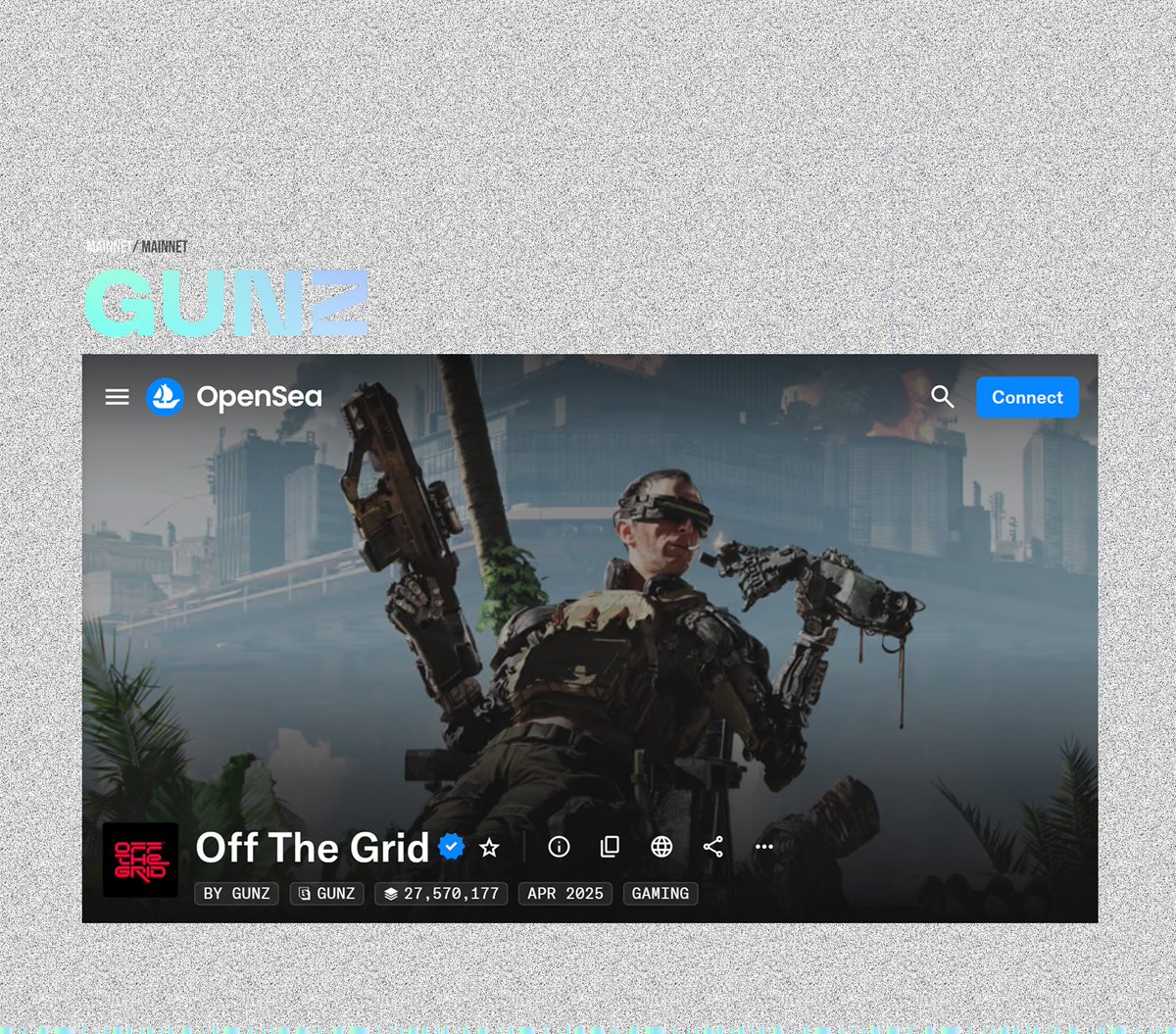
FLAW is officially the FIRST GUILD to enter a partnership with @playoffthegrid
This wouldn’t be possible without the players and community backing the vision.
A major step forward - and just the beginning.
English
SmoKING retweetledi
SmoKING retweetledi

CS2 skin economy = $1-2B+ traded annually.
Proven model.
But here's the difference:
CS2: Valve owns it (you rent)
GUNZ: You own it (blockchain proves this)
CS2: Trade only on Steam (or risky secondary markets)
GUNZ: Trade anywhere, verified by blockchain
CS2: Can't verify scarcity
GUNZ: Every item provably unique
CS2 proved the market exists.
GUNZ proves true ownership works.
Goodnight, Zeroes.
English
SmoKING retweetledi

Real talk.
I know this market is super hard for a lot of you.
It's brutal and has been extremely hard to navigate, even for the most seasoned traders/investors.
I've personally taken a decent hit since portfolio highs and underperformed the benchmark overall, despite having some wins in 2025.
My best advice now, based on 7 years in this market (and almost completely wiping myself out twice), is:
1. Prioritise survival over all else - even if it means making less money short-term, you'll stay in the game for longer, which is a stronger predictor of long-term success.
2. Forget your portfolio's all-time high number. This is easier said than done, as even I wrestle with the comparison regularly. But it does no good. All you can do is your absolute best to allocate your current funds/income. This means making objective decisions based on what you think will happen from NOW, not on past performance (sunk costs). If this means you need to cut some bad positions at a loss, do it. The market doesn't care about your past bias. More broadly, this also includes assessing your ideal % allocation to the crypto space overall. Define your number (if you're more risk-off, it could be 5-10% - if you're more risk-on, 25%, and if you're 50%+, make sure you have a good reason). There's no right or wrong, I just think it's important to make sure your actual positioning aligns with your real goals. Good rule of thumb: if you're panicking during this dip, you're probably overexposed.
3. Consolidate into quality assets only. This isn't the time to hold sub-par assets. Quality (in my mind) = revenue-generating assets, with strong PMF and survivability (due to business model/mindshare) during bad periods. These are the tokens that will bounce back the strongest (these are also represent the best R/R for fresh buys).
Remember, we've been here before. I became a millionaire in 2021 and roundtripped 80% of my gains in 2022. I saw half my portfolio get wiped in a day in 2020. I had millions in paper profits wiped towards the end of 2024. Markets are brutal. But that's where you get your edge. If you're able to be a true survivor, stay engaged when others simply aren't willing to, you'll have a huge advantage. Use these periods to learn, reflect, and level up. Investing/trading is an identity. You need to own it and not let price dictate your motivation. Does a pro athlete let a loss dictate their willingness to get better? No, they get up, dust themselves off, learn, and go again.
English