DEAI

315 posts

DEAI banner
DEAI

DEAI

@deaiofficial

DEAI is a decentralized AI + RWA infrastructure protocol deployed on Base, connecting real-world compute with on-chain value. Users can participate via RWA-back


America Katılım Nisan 2023
48 Takip Edilen5.2K Takipçiler
DEAI
DEAI@deaiofficial·
Watching these brilliant technology flowlines, it feels like data is accelerating. The evolution of the DEAI ecosystem never stops. ✨ Don't blink, because something brand new is coming very soon. Trust us, tomorrow will be better, we are already on our way. Soon. 👀 #DEAI
DEAI tweet media
English
0
1
1
3.1K
DEAI
DEAI@deaiofficial·
The market is a maze—too many doors, too much noise. DEAI doesn’t give you more opinions. It turns on-chain chaos into a door you can walk through: readable, verifiable, actionable. One right door beats ten hype narratives.
DEAI tweet media
English
6
0
1
2.6K
DEAI
DEAI@deaiofficial·
The door is open—the next phase begins. DEAI keeps turning on-chain complexity into executable answers—past the noise, into the future.
DEAI tweet media
English
0
0
1
3.6K
DEAI
DEAI@deaiofficial·
Web3 solves how value is recorded and distributed. AI solves how information is understood and transformed. The next-generation ecosystem will not be built on only one of them. It needs all three at once: on-chain transparency, structured mechanisms, and the decision efficiency brought by intelligent agents. That is exactly what DEAI is building. Using Web3 to create a trusted value network, and AI to enhance every ordinary user’s ability to understand markets, participate in ecosystems, and execute strategies. When technology stops being a tool for only a few and becomes productivity for many, the era of AI × Web3 truly begins.
DEAI tweet media
English
0
0
0
89
DEAI
DEAI@deaiofficial·
DEAI Intelligent Agent Technical Weekly Report – Feb 14 This week, DEAI intelligent agent development continued advancing along five primary tracks: “engineering foundation, model integration, document/RAG, market data channels, and integration & deployment.” The overall focus remained on stabilizing the end-to-end pipeline (Question → Tool Invocation → Structured Output → Frontend Rendering), while further strengthening key modules through engineering hardening and performance consistency optimization. I. Weekly Progress Overview Engineering Foundation Backend FastAPI environment setup and database design: 95% Frontend React Native base navigation and UI component library: 90% AI / RAG Domestic large model API integration (DeepSeek / Doubao): 95% PDF / whitepaper parsing and vector database (Pinecone) setup: 85% RAG retrieval accuracy tuning (prompt engineering optimization): 75% Market Data Binance real-time price WebSocket integration: 65% Basic price trend chart (Chart) display: 65% Integration & Deployment Frontend-backend API integration and joint debugging: 85% Demo environment (China-based servers) deployment and stress testing: 85% II. Completed / Ongoing Highlights (Technical Notes) Backend (FastAPI + Data Layer) The backend has entered a “near-production delivery state”: layered architecture, unified exception handling/response schema, and logging plus request tracing fields are largely in place. API behaviors have become increasingly consistent, facilitating subsequent stress testing and production issue diagnosis. Database design has converged to 95%: centered around domain objects such as Users/Sessions, Knowledge Base Documents, Vector Index Metadata, Tool Invocation Audits, and Market Data Cache. Key fields, indexes, and constraints continue to be refined, balancing query performance and auditability. Engineering hardening continues: timeout controls, retry strategies, standardized error codes, and critical tool-call tracing have been reinforced, enabling operable end-to-end replay and fault diagnosis capabilities. Frontend (React Native) The 90% completion reflects readiness for delivery and scalability: the navigation architecture is stable, and the base UI component library now supports intelligent agent conversations, structured result cards, citation evidence blocks, and market modules in combined presentation. Component standards further unified: interaction and styling rules for cards, lists, and state pages (Loading / Empty / Error) have been consolidated, reducing UI inconsistencies and rework risk during integration. Model Integration (DeepSeek / Doubao) Model integration remains at 95% and has entered a stabilization phase: a unified provider adapter layer now covers authentication, streaming output, timeout/retry handling, and usage/cost tracking, significantly improving controllability of the invocation chain. Output consistency strengthened: through structured schema/template constraints to reduce format drift, ensuring stable frontend rendering and laying the foundation for future auditing and data accumulation. RAG (Parsing, Vectorization & Accuracy Optimization) The document pipeline has reached high completion (85%): PDF/whitepaper parsing, cleaning, chunking, storage, and vectorization processes are largely stable. Pinecone index structures (namespace/metadata) have converged, supporting future expansion of data sources and incremental update strategies. Retrieval fine-tuning has progressed to 75%: transitioning from “runnable” to “measurable and optimizable.” Systematic parameter tuning is underway around chunk granularity, top-k selection, recall/re-ranking strategies, citation constraints, and prompt optimization. The objective is to improve hit rate, reduce hallucination rate, and continuously strengthen citable, traceable, and verifiable evidence-chain outputs. Market Data (Binance WebSocket + Chart) WebSocket market channel progressed to 65%: connection, subscription, heartbeat, and reconnection logic are capable of stable operation. Further strengthening subscription frequency control and data jitter handling is underway, with potential introduction of caching/aggregation strategies to reduce volatility when necessary. Chart display progressed to 65%: foundational trend visualization is complete, continuing to converge toward real-time data synchronization consistency (refresh cadence, disconnect states, data compensation/backfill strategies). Integration & Deployment Frontend-backend integration remains at high completion (85%): core APIs and data structures are largely converged, and end-to-end rendering stability has significantly improved. Remaining work focuses on edge cases, exception handling, and performance optimization. Domestic demo environment deployment and stress testing progressed to 85%: deployment pipelines and infrastructure availability validation are nearing completion. Ongoing stress testing of critical paths (model invocation, retrieval, market subscription) continues to verify stability and resource utilization. III. Risks & Dependencies RAG quality convergence: final user experience still depends on evaluation datasets and continuous tuning. Externally, it is recommended to communicate under the positioning of “iterative optimization in progress,” with the strict rule that all answers must include cited evidence. Model API stability and cost: peak rate limits and provider-side fluctuations require continuous monitoring, along with fallback/caching/retry ceiling mechanisms to ensure pipeline stability and cost control. Market data channel jitter and real-time consistency: high-frequency data may cause jitter and reconnection overhead; frequency control and cache aggregation are necessary to maintain curve smoothness and stability. Demo environment external factors: network policies, certificates, and container image pulls may still impact timelines. It is recommended to maintain scheduling buffers and continue stress testing validation.
English
0
0
0
106
DEAI
DEAI@deaiofficial·
DEAI Agent — Weekly Technical Report This week, DEAI Agent development moved into a system convergence & usability delivery phase. Progress across the four tracks (engineering foundation, model integration, document/RAG, and market data channels) continued steadily, with the focus shifting from “feature completion” to end-to-end consistency, stability, and demo readiness. The core loop (Query → Tool Invocation → Structured Output → Frontend Rendering) is now largely operational, while frontend–backend integration and the domestic demo environment are approaching high completion. I. Progress Overview Engineering Foundation Backend FastAPI setup & database design: 95% React Native navigation & UI component library: 90% AI / RAG Domestic LLM API integration (DeepSeek / Doubao): 95% PDF / whitepaper parsing & vector DB (Pinecone) setup: 85% RAG retrieval accuracy tuning (prompt engineering optimization): 75% Market Data Binance real-time price feed via WebSocket: 60% Basic price trend charts (Chart) display: 60% Integration & Deployment Frontend–backend API integration & joint debugging: 85% Demo environment (domestic server) deployment & load testing: 80% II. Key Completed / In-Progress Work (Technical Notes) Backend (FastAPI + Data Layer) Backend architecture is approaching a pre-production baseline: layered structure, unified exception/response handling, and logging/tracing fields are largely in place, improving observability and incident diagnostics. Database design reached 95%: core domain objects — user/session, knowledge-base documents, vector index metadata, tool-call audit logs, and market data cache — have been converged with key fields, indexes, and constraints to support performance and audit traceability. Engineering hardening on critical paths continues: timeout control, retry policies, error-code normalization, and tool-call trace logging to support replay and root-cause analysis. Frontend (React Native) Navigation and foundational UI library are stabilizing into a delivery-ready shell, capable of hosting “agent chat + structured result cards + evidence blocks + market components.” UI expressions are further standardized: report cards (Conclusion/Evidence/Risks/Actions) and citation/evidence sections are being componentized to reduce future iteration cost. Model Integration (DeepSeek / Doubao) Model-side integration is in the stabilization phase (95%): unified provider adapters covering authentication, streaming output, timeout/retry, and usage/cost telemetry are largely complete. Output consistency is being strengthened: structured output constraints (template/schema-driven approach) are applied to reduce format variance and ensure reliable frontend rendering and auditability. RAG (Parsing, Vectorization & Accuracy Optimization) Document pipeline reached high completion (85%): PDF/whitepaper parsing, cleaning, chunking, ingestion, and vectorization flows are stabilizing; Pinecone index structure (namespace/metadata) is largely finalized and ready for scaling to additional sources. Retrieval tuning progressed to 75%: moving from “runnable” to “measurable + convergent,” with systematic optimization across chunk granularity, top-k recall, reranking strategy, citation constraints, and prompt engineering, targeting higher hit-rate and lower hallucination risk with verifiable, traceable evidence chains. Market Data (Binance WebSocket + Charts) WebSocket market channel is at 60%: connection, subscription, heartbeat, and reconnection are running stably; work is ongoing on subscription frequency control, jitter handling, and cache/aggregation strategies. Chart display is also at 60%: baseline trend visualization is in place; next improvements focus on real-time data binding consistency (refresh cadence, disconnect states, backfill/compensation). Integration & Deployment Frontend–backend integration reached 85%: core APIs and data structures are largely converged; remaining work concentrates on edge cases, error states, and performance optimizations. Domestic demo environment reached 80%: deployment workflow and baseline availability checks are near completion, while certificate/network policies/image dependencies are being closed out with continued load-testing validation. III. Risks & Dependencies RAG quality convergence: final user experience still depends on evaluation sets and iterative tuning; externally, it’s best framed as “ongoing optimization,” with “evidence-backed answers” as the quality benchmark. Model endpoint stability & cost volatility: rate limiting, provider-side fluctuations, and cost control require monitoring and fallback safeguards (fallback/caching/retry caps) to protect the end-to-end experience. Real-time data jitter: high-frequency market data can introduce jitter and reconnection overhead; frequency control plus caching/aggregation are necessary to maintain smooth charting and stability. Domestic demo environment externalities: network policies, certificates, and image pulls may affect cadence; buffer time and continuous stress testing are recommended.
English
0
0
1
2.6K
DEAI
DEAI@deaiofficial·
Markets pull back. Noise gets louder. DEAI keeps building—turning every dip into infrastructure for the next breakout. Past the headlines, through the keyhole of the future. ✨
DEAI tweet media
English
6
1
1
5.1K
DEAI
DEAI@deaiofficial·
DEAI Agent — Weekly Technical Progress Bulletin Dear DEAI Ecosystem Users, This week, DEAI Agent R&D continued to advance along four core tracks — engineering foundation, model integration, document/RAG pipeline, and market data channels. Our objective is to solidify a demonstrable end-to-end loop: User Query → Tool Invocation → Structured Output → Frontend Rendering. The project is now moving through a steady cadence of feature hardening, stability improvements, and integration, while frontend–backend integration and domestic demo environment deployment have both been initiated in parallel. I. Weekly Progress Overview Engineering Foundation Backend FastAPI setup & database design: 75% React Native navigation & UI component library: 75% AI / RAG Domestic LLM API integration (DeepSeek / Doubao): 95% PDF / whitepaper parsing & vector DB (Pinecone) setup: 60% RAG retrieval accuracy tuning (prompt engineering optimization): 45% Market Data Binance real-time price feed via WebSocket: 50% Basic price trend charts (Chart) display: 50% Integration & Deployment Frontend–backend API integration & joint debugging: 30% Demo environment (domestic server) deployment & load testing: 20% II. Key Completed / In-Progress Work (Technical Notes) Backend (FastAPI + Data Layer) The core service scaffold has progressed toward a deliverable baseline: strengthening layered architecture (API/Service/DAL/Worker), unified response and exception handling, and reserved fields for logging and distributed tracing — improving observability and incident diagnosis efficiency. The initial database model has moved from “schema drafting” toward “supporting a functional loop”: key objects including user/session, knowledge-base documents, vector index metadata, tool invocation logs, and market data cache have been expanded with critical fields and indexing strategy to support performance and auditability. OpenAPI contract consolidation continues: normalization of fields, status codes, and error codes to reduce ambiguity and rework during integration. Frontend (React Native) Navigation and core user flows are progressing steadily, providing a stable foundation for presenting agent capabilities and future extensibility. Component library standardization: buttons, cards, lists, tags, and Loading/Empty/Error states have been unified — enabling the next step of rendering “Conclusion + Evidence Chain + Action Suggestions” in a card-based UI. Display structures are reserved for charts and evidence blocks to ensure retrieval citations and market signals can be productized cleanly in the interface. Model Integration (DeepSeek / Doubao) The unified adapter layer is in finalization (95%): Provider abstraction, authentication, streaming output, timeout/retry, and usage/cost telemetry fields are largely complete. Current emphasis is shifting to stability and consistency: completing rate-limiting and graceful degradation (fallback) paths, and tightening structured output consistency via templated / schema-driven constraints to ensure demo reliability and real-world UX stability. RAG (Parsing, Vectorization, Accuracy Optimization) Document parsing and vector DB have reached a “runnable + extensible” phase (60%): PDF/whitepaper extraction and chunking strategy are being refined; Pinecone index structures (namespace/metadata) and ingestion pipelines are being hardened. Retrieval accuracy optimization has entered a mid-stage (45%): systematic prompt engineering and retrieval parameter tuning (chunk granularity, top-k, recall/rerank strategy, citation constraints) are underway, aiming to produce answers with verifiable citations, traceable sources, and audit-ready evidence chains. Market Data (Binance WebSocket + Charts) WebSocket market data channel is at a usable mid-point (50%): connection, subscription, heartbeat, and reconnection logic are functional, with continued work on subscription frequency control and stability safeguards. Chart display has progressed in parallel (50%): baseline trend visualization is in place, moving toward “real-time data binding + consistent rendering.” Integration & Deployment Frontend–backend integration has started (30%): focusing on aligning API contracts and end-to-end data flow, gradually stabilizing fields and rendering behavior. Domestic demo environment deployment and load testing have initiated (20%): infrastructure availability verification is underway to pave the way for subsequent stability hardening and demo delivery. III. Risks & Dependencies (Expectation Management) RAG accuracy & stability: measurable convergence depends on evaluation sets and iterative tuning; short-term external communication should use an “internal test / iterative refinement” narrative. Model endpoint stability & cost: continued work is required on rate limiting, retries, usage monitoring, and fallback strategies to prevent peak-time instability and keep costs predictable. WebSocket stability & data jitter: subscription frequency and reconnection behavior must be validated under load; introducing a cache/aggregation layer may be required to reduce jitter. Domestic demo environment: network policies, certificates/filings, and container image dependencies may affect cadence; buffer time is recommended. DEAIDAO February 2, 2026
English
0
0
0
4.1K
DEAI
DEAI@deaiofficial·
DEAI Agent Weekly Tech Report(2026-01-25) Dear DEAI Ecosystem Users, This week, DEAI Agent development progressed across four core tracks: engineering foundation, model integration, document/RAG pipeline, and market data connectivity. The goal is to establish an end-to-end workflow: question → tool invocation → structured output → frontend rendering. Backend–frontend integration and domestic demo environment deployment are also underway. 1) Weekly Progress Overview Engineering Foundation Backend FastAPI framework and initial database modeling: 60% Frontend React Native navigation and base component library: 60% Model Layer Unified adapter layer for domestic LLMs (DeepSeek / Doubao): 80% Supports streaming responses, retries, and timeouts (engineering-grade stability) RAG / Document Foundation PDF/whitepaper parsing + Pinecone vector database pipeline: 40% (runnable path established) Retrieval accuracy tuning framework initiated: 20% (focus on “runnable + measurable”) Market Data Binance WebSocket market feed: 30% Trend chart rendering: 30% Integration & Deployment API integration, domestic demo environment deployment, and load testing: in progress 2) Key Items Completed / In Progress Backend: Established layered architecture (API/Service/DAL/Worker), standardized response and exception handling, logging fields, and tracing placeholders. The initial schema covers sessions/users, knowledge base documents, vector index metadata, tool-call records, and market data cache. OpenAPI draft is in place to align the API contract. Frontend: Core navigation flow implemented. Base UI components (buttons, cards, lists, tags, Loading/Empty/Error states) standardized to support future “conclusion + evidence” card-based rendering. Model Integration: Completed provider abstraction and unified adapters for DeepSeek / Doubao, including auth, streaming output, retries/timeouts, and usage/cost tracking fields. Prompt framework v1 is introduced to enforce structured outputs. RAG: Advanced PDF text extraction and chunking strategy; Pinecone namespace and metadata design completed; ingestion pipeline engineering in progress. Market Data: WebSocket connection, subscription, heartbeat, and reconnection framework completed; RN chart components integrated and moving toward real-time binding. 3) Risks & Dependencies RAG accuracy: Short-term performance depends on tuning cycles and evaluation set construction; recommend communicating externally with an “iterative internal testing” posture. Model stability & cost: Rate limiting, retries, and usage monitoring must be reinforced to avoid peak-load experience degradation. WebSocket reliability: Subscription frequency and reconnection strategy require stress testing; adding a cache layer may be necessary to reduce volatility. Domestic demo environment: Network policy, certificates, and image pulling may affect timelines; buffer is recommended. DEAIDAO January 25, 2026
English
0
1
1
3.1K
DEAI
DEAI@deaiofficial·
DEAI trading volume has officially surpassed $500,000. This is not hype — it’s real participation and growing consensus. Thanks to every builder, holder, and supporter. The DEAI story is gaining momentum.
DEAI tweet media
English
14
1
1
8.1K
DEAI
DEAI@deaiofficial·
🚀 The new DEAI is going live At 08:24 (UTC+8) , DEAI will officially launch on Base · Uniswap V2. 🔹 Time: 2026.01.22 08:24 (UTC+8) 🔹 Network: Base 🔹 DEX: Uniswap 🔹 Contract: 0x04CBd9cBA03f1fbE845408e9e85aE20490586105 A new chapter begins. Welcome to the next evolution of DEAI.
DEAI tweet media
English
1
2
2
14.2K
DEAI
DEAI@deaiofficial·
When data enters the spiral, answers start to glow. DEAI AI—one level deeper, one step faster.
DEAI tweet media
English
11
0
0
7.2K
DEAI
DEAI@deaiofficial·
The core is lit—another layer of “drops” is unlocking. One more part of the SNAIL airdrop is coming soon.
DEAI tweet media
English
9
0
0
7.1K
DEAI
DEAI@deaiofficial·
This isn’t an update—it’s a switch to the next-generation mechanism. Snail Plan’s Dual-Token Helix is live: snail.deaieco.com Get in now—don’t watch others run this cycle for you.
DEAI tweet media
English
8
0
0
6.2K
DEAI
DEAI@deaiofficial·
SNAIL LP Mining is now live ✅Rewards started accruing from 2026/01/06 08:00 (UTC+8) on a per-block basis. Add liquidity to start earning.
DEAI tweet media
English
9
0
1
7.1K
DEAI retweetledi
Watcher.Guru
Watcher.Guru@WatcherGuru·
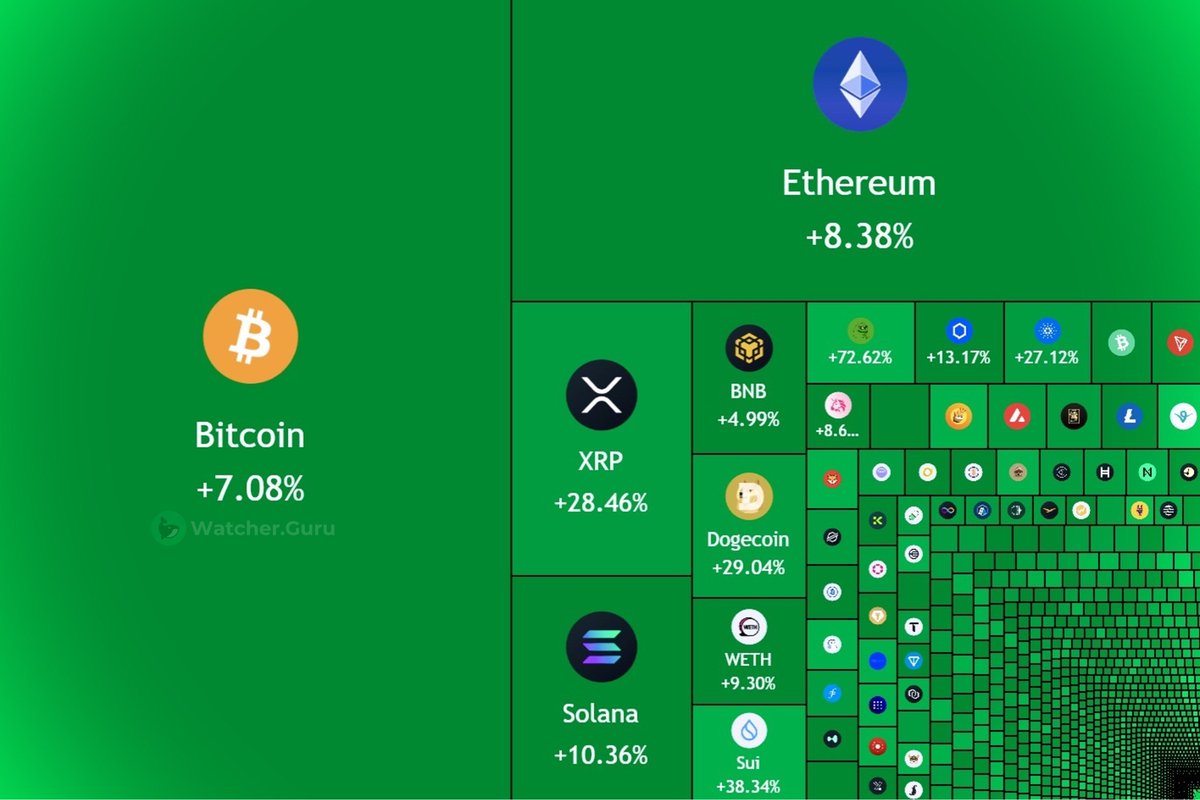
JUST IN: $250,000,000,000 added to the cryptocurrency market cap so far in 2026.
Watcher.Guru tweet media
English
901
1.6K
12.7K
599.5K
DEAI
DEAI@deaiofficial·
SNAIL Public Sale closed at 220.37%.🎉 This isn’t just hype — it’s a clear choice. Every contribution raised the starting line for DEAI’s new ecosystem. Next, we’ll complete final settlement and oversubscription refunds according to the rules. Updates soon.
DEAI tweet media
English
15
0
9
15.1K
DEAI
DEAI@deaiofficial·
DEAI Ecosystem Contributor Airdrop — SNAIL snapshot is complete ✅ Allocations will be determined based on community contribution and participation. 📸 Snapshot: Dec 25 Please stay tuned for further updates and announcements.
DEAI tweet media
English
22
0
7
13.8K