
Minette MEYO-NDO

2.4K posts

Minette MEYO-NDO banner
Minette MEYO-NDO

Minette MEYO-NDO

@deb_camer

Ph.D, University lecturer. Wife, mother, disciple of Jesus. #BigDreamer #ResearchAddict #GoodGospelMusicLover. #GODLover because #GODisAble

Cameroon Katılım Ekim 2012
220 Takip Edilen548 Takipçiler
Minette MEYO-NDO retweetledi
Sanya Jain - Your Grad Coach
Sanya Jain - Your Grad Coach@yourgradcoach·
10 Steps to Write a Solid Cover Letter for a PhD Application 💡 Tailored for Research & Academic Excellence 1️⃣ Start with an Engaging Opening Kick off with a strong opening paragraph that grabs attention. Mention the program, specific lab, or professor you’re targeting, and why you’re excited to apply. 👉 Example: “As a passionate researcher in immunology, I am inspired by your groundbreaking work on T-cell signaling published in Nature Immunology.” 2️⃣ Highlight Urgent Research Questions Connect your application to the big-picture challenges in the field. Frame your research interests as solutions to these challenges. 🧠 Example: “With the rising threat of antibiotic resistance, my work focuses on exploring new pathways in microbial interactions.” 3️⃣ Showcase Relevant Skills Focus on the technical and transferable skills that align with the professor’s research or program goals. Use specific examples. 🛠 Example: “Using CRISPR-Cas9, I developed a high-throughput system to identify gene targets in cancer biology.” 4️⃣ Discuss Your Research Impact Explain how your past research contributes to the field and aligns with the program’s focus. Include measurable outcomes where possible. 📈 Example: “My Master’s thesis led to a 20% improvement in the efficiency of protein folding algorithms, now adopted by two labs.” 5️⃣ Align with the Professor’s Work Reference specific papers, methods, or research by the professor to show that you’ve done your homework. 📚 Tip: “Your publication on metabolic pathways in rare diseases aligns with my interest in enzymatic therapies for genetic disorders.” 6️⃣ Demonstrate Enthusiasm for the Program Highlight unique aspects of the PhD program or institution, such as facilities, collaborative opportunities, or interdisciplinary research. 🏛 Example: “The advanced imaging facilities at [University] would be instrumental in my exploration of molecular interactions.” 7️⃣ Mention Long-Term Career Goals Explain how the program will help you achieve your career aspirations. Connect this to broader impacts in your field. 🌍 Example: “This PhD program will equip me to lead translational research efforts, ultimately advancing cancer therapeutics.” 8️⃣ Use a Professional Yet Personal Tone Be formal but let your passion shine through. Show that you’re not just qualified but genuinely excited about contributing to the field. ✨ Example: “I am deeply committed to uncovering the molecular mechanisms that drive autoimmune diseases.” 9️⃣ End with a Confident Conclusion Wrap up with gratitude and a clear indication of your next steps. Show eagerness to discuss your application. ✅ Example: “I look forward to the opportunity to discuss how my background and skills align with your research vision.” 🔟 Proofread & Format Carefully Ensure your letter is error-free, well-structured, and concise. Limit it to one page and format professionally. 🖋 Tip: Use bold for key points and section headers for clarity. Structure Recap: 📌 Intro | 🧪 Research Alignment | 🎯 Skills | 🌟 Program Fit | ✨ Closing Let your passion and expertise shine! 💪
English
1
5
26
2.8K
Minette MEYO-NDO retweetledi
Emmanuel Tsekleves
Emmanuel Tsekleves@PhDtoProf·
Here's how to choose the perfect AI tool for each phase of your research journey!
Emmanuel Tsekleves tweet media
English
1
12
32
4.5K
Minette MEYO-NDO retweetledi
Emmanuel Tsekleves
Emmanuel Tsekleves@PhDtoProf·
Considering a postdoctoral fellowship? Here are 15 exceptional programmes that could be your next big step!
Emmanuel Tsekleves tweet media
English
10
277
1.1K
188.2K
Minette MEYO-NDO retweetledi
Emmanuel Tsekleves
Emmanuel Tsekleves@PhDtoProf·
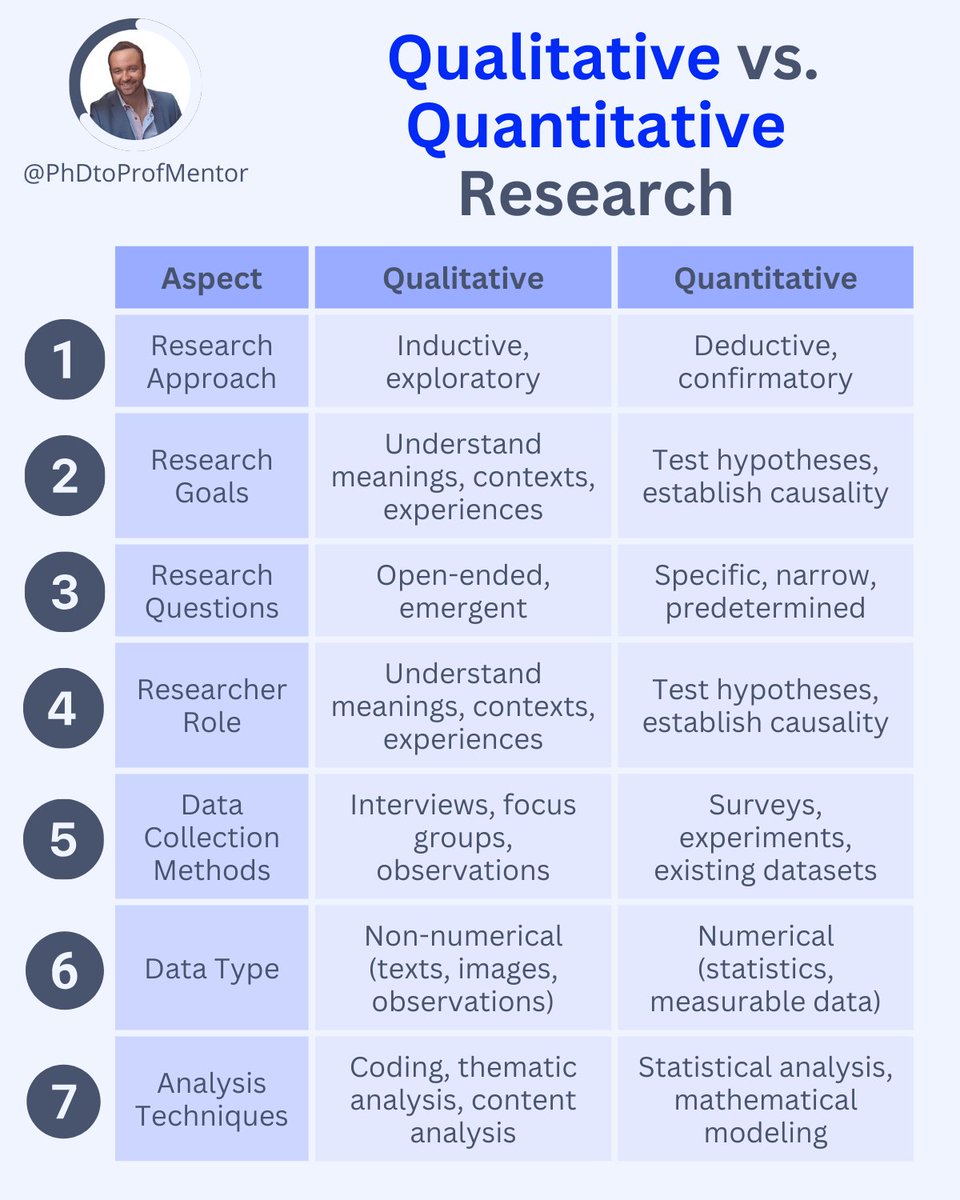
Qualitative vs Quantitative Research → 7 differences you need to know: Understanding these will help you make informed decisions. Each approach offers unique insights and outcomes.
Emmanuel Tsekleves tweet media
English
4
99
291
34.5K
Minette MEYO-NDO retweetledi
Emmanuel Tsekleves
Emmanuel Tsekleves@PhDtoProf·
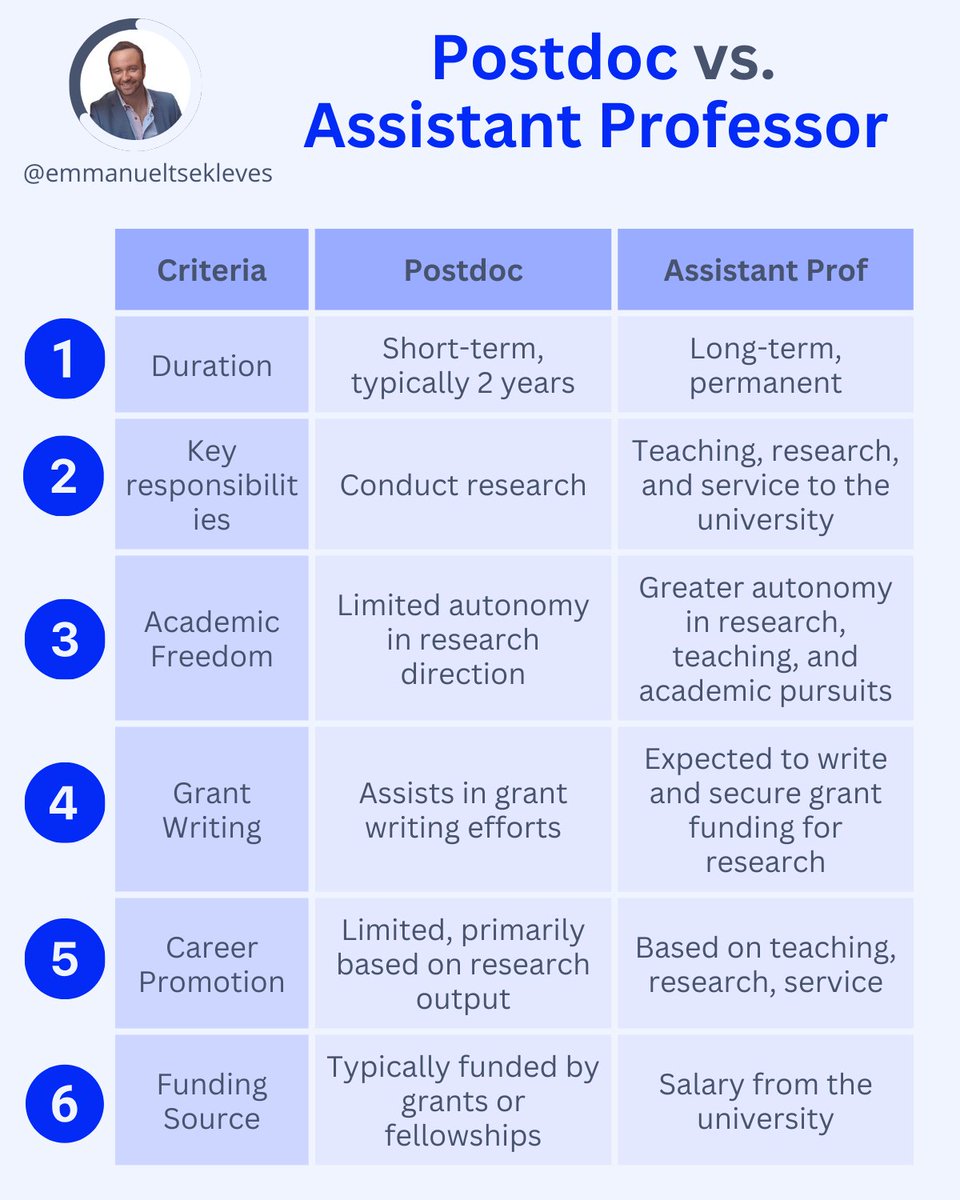
🔄 repost to help a friend :) -------------------- If you liked this, join my exclusive newsletter that teaches you how to secure academic jobs and navigate academia as an early career researcher: phdtoprof.systeme.io/newsletter
Emmanuel Tsekleves tweet media
English
0
1
3
484
Minette MEYO-NDO retweetledi
Tulsi Soni
Tulsi Soni@shedntcare_·
17 No-Interview Remote Jobs that are ALWAYS Hiring. Save for Later🔖
Tulsi Soni tweet media
English
41
110
432
137K
Minette MEYO-NDO retweetledi
FELIX
FELIX@FellMentKE·
Are you between the ages of 20-44 with no job or source of income? I have the perfect remote jobs for you. Here are 18 unique remote sites where you can get paid weekly in USD. OPEN THIS ↓
English
111
1.2K
5.5K
1.2M
Minette MEYO-NDO retweetledi
Scholarship for PhD
Scholarship for PhD@ScholarshipfPhd·
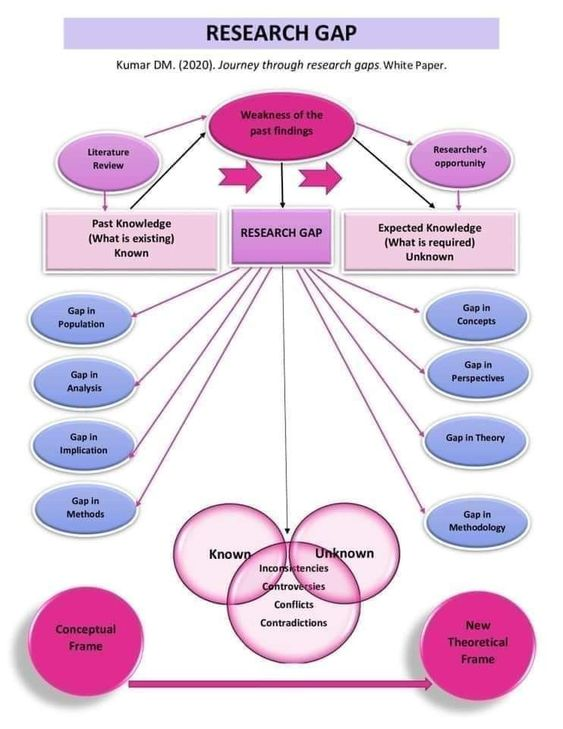
Research Gap
Scholarship for PhD tweet media
English
0
90
402
43.6K
Minette MEYO-NDO retweetledi
Prof Lennart Nacke, PhD
Prof Lennart Nacke, PhD@acagamic·
Most PhD students fail at research questions. (I used to be one of them) See, back when I started my research journey, I thought coming up with research questions was pure luck. Just throw something at the wall and hope it sticks. Wrong. Here’s the step-by-step breakdown:
Prof Lennart Nacke, PhD tweet media
English
10
133
615
70.5K
Minette MEYO-NDO retweetledi
Prof Lennart Nacke, PhD
Prof Lennart Nacke, PhD@acagamic·
After reviewing 500+ papers for top journals, I've cracked the code on perfect scientific paper structure. The anatomy of a scientific paper nobody tells you about. Think of your paper as a story: • Abstract = movie trailer • Introduction = opening scene • Methods = behind the scenes • Results = plot twists • Discussion = the big reveal Most researchers get stuck on the abstract and introduction. Why? They try to cram everything in. Be selective and precise.
Prof Lennart Nacke, PhD tweet media
English
7
161
580
66.3K
Minette MEYO-NDO retweetledi
Atal
Atal@ZabihullahAtal·
Avoid Direct Copying ChatGPT or any AI text AI-generated text is easily spotted within seconds. Here's a smart hack to make your content more human-like and avoid detection:
Atal tweet media
English
10
33
134
27.6K
Minette MEYO-NDO retweetledi
Scholarship for PhD
Scholarship for PhD@ScholarshipfPhd·
Best Practices for Using AI When Writing Scientific Manuscripts (1/3)
Scholarship for PhD tweet media
English
7
387
1.6K
228.7K
Minette MEYO-NDO retweetledi
Faheem Ullah
Faheem Ullah@Faheem_uh·
PhD Students - How to write the Introduction section of your paper? Introduction section is the make or break for your paper. It is where you must establish your point, or your paper might fail to fly. Here is how you can write a good introduction section. 𝟏. 𝐈𝐧𝐭𝐫𝐨𝐝𝐮𝐜𝐞 𝐲𝐨𝐮𝐫 𝐭𝐨𝐩𝐢𝐜 Start your introduction section by introducing the broader topic of the paper. Then slowly go into the details that why this topic is important. You need to bring some interesting facts and stats here to convince the reader that this paper is worth reading. 𝟐. 𝐃𝐞𝐬𝐜𝐫𝐢𝐛𝐞 𝐭𝐡𝐞 𝐛𝐚𝐜𝐤𝐠𝐫𝐨𝐮𝐧𝐝 After introducing the topic, now you need to briefly report what work has already been done on this topic. You can mention the most related 4-6 papers that covered this topic. These papers should not be discussed in as much detail as you discuss them in the related work section. The point here is to move the reader towards the gap statement i.e., what is missing in the existing literature. 𝟑. 𝐄𝐬𝐭𝐚𝐛𝐥𝐢𝐬𝐡 𝐲𝐨𝐮𝐫 𝐫𝐞𝐬𝐞𝐚𝐫𝐜𝐡 𝐩𝐫𝐨𝐛𝐥𝐞𝐦 After discussing the existing work, you should clearly state what is the crisp problem being addressed in this paper. You have to make sure that the research problem is directly connected to the background section reported in the previous part. 𝟒. 𝐂𝐥𝐞𝐚𝐫𝐥𝐲 𝐬𝐭𝐚𝐭𝐞 𝐲𝐨𝐮𝐫 𝐨𝐛𝐣𝐞𝐜𝐭𝐢𝐯𝐞𝐬 Once the overall research problem is established, now you need to go into a bit more specifics. This you will do via presenting your objectives. Now objectives can be specified in two ways - a thesis statement or research questions. You can present this part in bold or italics so that it can be easily focused by the reader. 𝟓. 𝐁𝐫𝐢𝐞𝐟𝐥𝐲 𝐫𝐞𝐩𝐨𝐫𝐭 𝐲𝐨𝐮𝐫 𝐦𝐞𝐭𝐡𝐨𝐝𝐨𝐥𝐨𝐠𝐲 Now the reader knows what exactly has been done in this research. So, here you tell the reader how this research has been carried out. You don't need to go full scale but in a shorter form, report what methodology has been used to conduct this research. 𝟔. 𝐏𝐫𝐞𝐬𝐞𝐧𝐭 𝐭𝐡𝐞 𝐨𝐮𝐭𝐥𝐢𝐧𝐞 𝐨𝐟 𝐭𝐡𝐞 𝐩𝐚𝐩𝐞𝐫 In this final part, you should tell the reader what they should expect in the rest of the paper. This means how the rest of the paper has been structured i.e., what are the different sections and what is in each section. Some researchers also present contributions before the outline of the paper. 𝑆𝑜𝑚𝑒 𝑔𝑒𝑛𝑒𝑟𝑎𝑙 𝑡𝑖𝑝𝑠 1) Use solid references to support your motivation. 2) Do not make big claims that your results can't support. 3) Avoid complexity, explain in simple terms. 4) Keep its flow like a story. Avoid abrupt jumps. 5) Avoid typos at any cost in the introduction section. PS: There are many styles for writing introduction section, which varies across domains. This is just one of them. Anything you'd like to add? #phd #research
Faheem Ullah tweet media
English
15
436
1.8K
198.3K
Minette MEYO-NDO retweetledi
Md Santo
Md Santo@codeMdSanto·
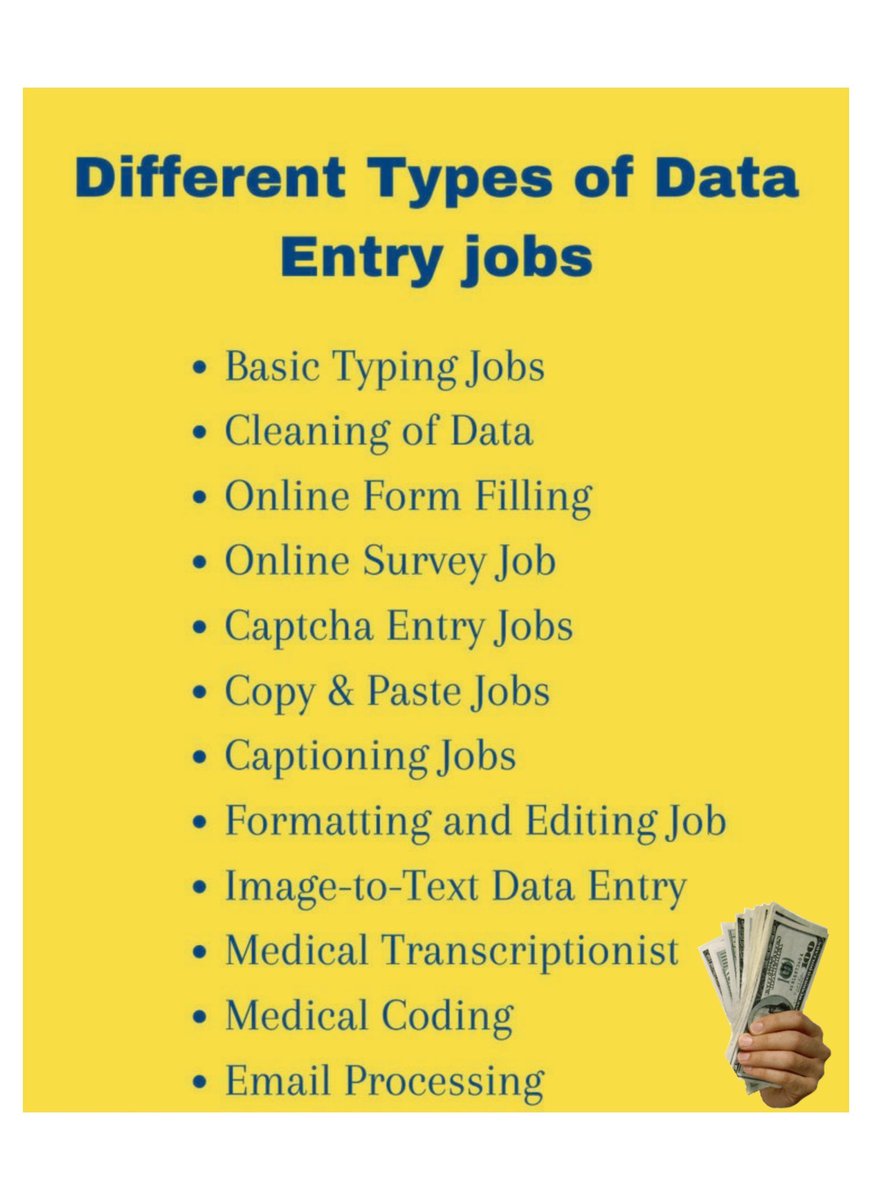
57 Websites that'll pay you $100/hr for data entry jobs: I have prepared a list of 57 Websites that'll pay you $100/hr for data entry jobs With Just a Smartphone or Laptop and Internet. For absolutely FREE: To get it: 1. Follow Me 2. Like and Retweet 3. Reply with "ENTRY"
Md Santo tweet media
English
609
373
681
81.7K
Minette MEYO-NDO retweetledi
Abhishek
Abhishek@HeyAbhishek·
This just changed online education forever. I figured out how to create a PowerPoint presentation from any PDF. Here’s how to use AI to create beautiful presentations:
Abhishek tweet media
English
25
6
56
13.8K
Minette MEYO-NDO retweetledi
Nelly;
Nelly;@nrqa__·
ChatGPT's latest version, GPT-4o, is an excellent writing assistant. If used properly, it can save you a lot of time and effort. But most people spend $20/month on this. Here's how to use GPT-4o as a writing assistant at a lower cost↓
Nelly; tweet media
English
32
7
67
13.3K