Anibe✨
29K posts

Anibe✨
@deborah_oa
Digital Health, Pharma & Tech | Product and Strategy.

Katılım Nisan 2015
1.2K Takip Edilen2K Takipçiler
Sabitlenmiş Tweet
Anibe✨ retweetledi
Anibe✨ retweetledi
Anibe✨ retweetledi

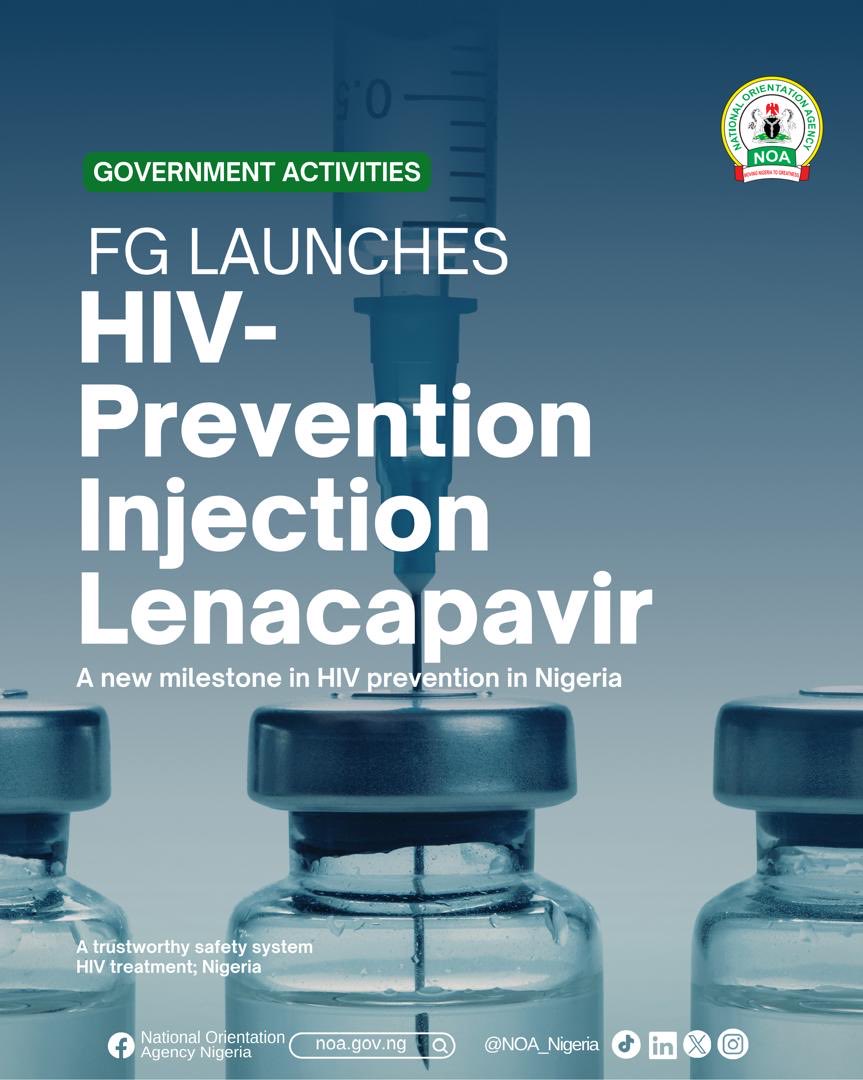
FG Launches HIV-Prevention Injection Lenacapavir
On March 24, 2026, in Abuja, the Federal Government of Nigeria, through the Honourable Minister of Health and Social Welfare, Dr. Muhammad Ali Pate
Read More : noa.gov.ng/news

English
Anibe✨ retweetledi
Anibe✨ retweetledi

THISSSSSSS. that's why i refuse to buy into this AI panic! to use AI effectively, you have to be already a specialist, if not it'll give you rubbish and you'll take. it's not AI that will replace you, its people who use AI to work smarter, faster and better that will replace you
RayBae🧚🏾@RayEsq08
The scariest part about Claude and Chat is it sounds like it knows what it’s talking about unless you actually know what its supposed to be talking about..
English
Anibe✨ retweetledi
Anibe✨ retweetledi

A Danish scientist counted bugs on the same windshield, same road, same conditions, every year for 20 years. By year 20, 80% of the insects were gone.
In Germany, a group of volunteer bug scientists did something even bigger. They set traps in 63 nature reserves, not farms, protected land, and weighed everything they caught. Same traps, same method, 27 years straight. The total weight of flying bugs dropped 76%. In midsummer, when insects should be peaking, it was 82% gone. A follow-up in 2020 and 2021 checked again. No recovery.
In the UK, they literally ask drivers to count splats on their license plates after a trip. The 2024 count came back 63% lower than just 2021. Three years.
A 2020 study pulled together 166 surveys from 1,676 locations around the world. Land insects are disappearing at roughly 9% every ten years.
Here’s where it hits your plate. About 75% of the food crops we grow depend on insects to pollinate them, everything from apples to almonds to coffee. One 2025 study modeled what a full pollinator collapse would look like: food prices jump 30%, the global economy takes a $729 billion hit, and the world loses 8% of its Vitamin A supply.
Birds are already feeling it. North America has lost 2.9 billion birds since 1970. A study from just weeks ago found half of 261 bird species on the continent are now in serious decline, and the losses are speeding up in farming regions. The birds that eat insects lost 2.9 billion. The birds that don’t eat insects? They gained 26 million. That ratio tells the whole story.
One of the German researchers behind the 27-year study drives a Land Rover. He says it has the aerodynamics of a refrigerator. It stays clean now.
MAVERICK X@MAVERIC68078049
I am sure many of you have noticed this.
English