Declan Joseph Deasy

71.6K posts

Declan Joseph Deasy banner
Declan Joseph Deasy

Declan Joseph Deasy

@declandeasy

Informatics Engineer. 🇮🇪& 🇪🇺. Social Democrat. Feminist. We’re in the digital age. 📱🇪🇺

Katılım Ağustos 2011
4.8K Takip Edilen1.6K Takipçiler
Brigid Laffan
Brigid Laffan@BrigidLaffan·
When you leave office it is far better to retire with dignity. Very unseemly that Michael D comments on former officials who have no means of defending themselves
Brigid Laffan tweet media
English
60
20
157
19.5K
Declan Joseph Deasy retweetledi
Mark Carney
Mark Carney@MarkJCarney·
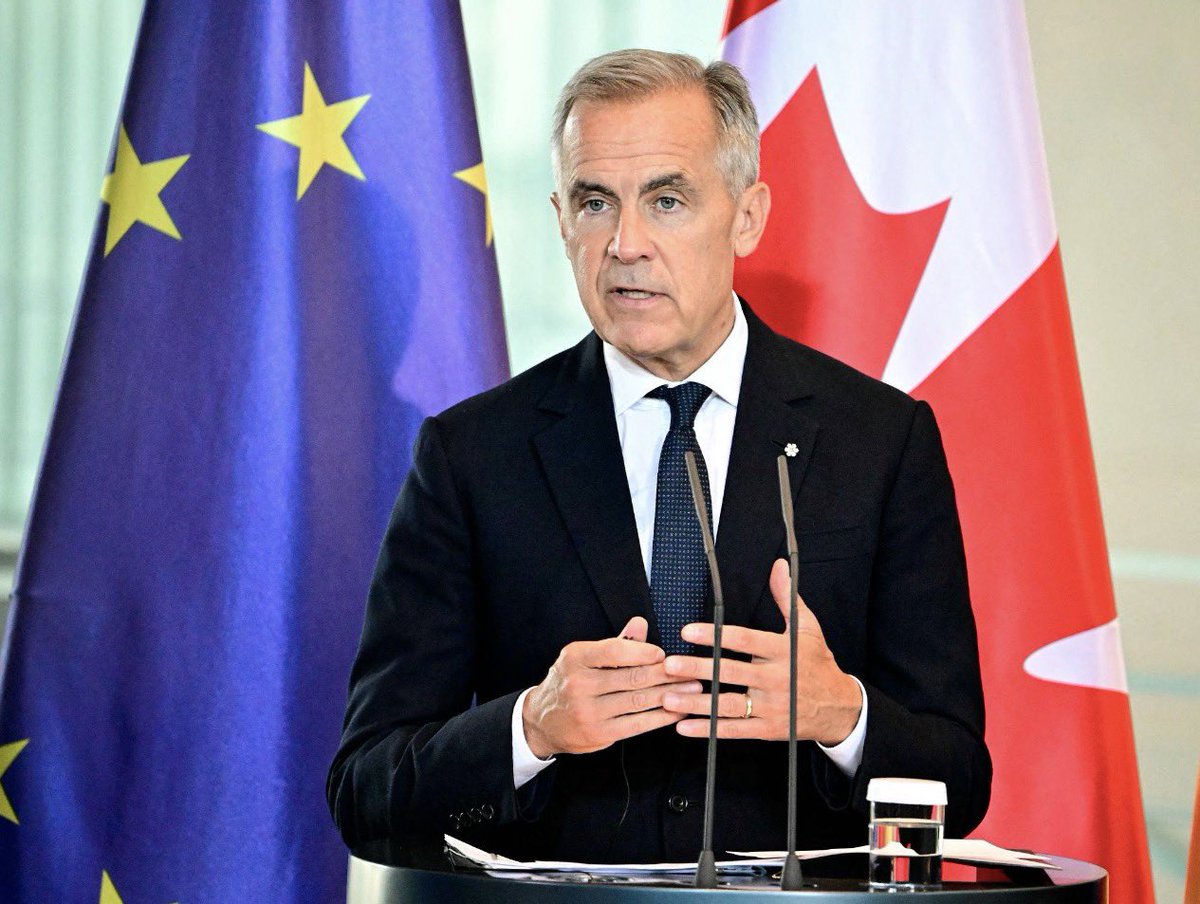
Landed in Yerevan, Armenia, for the 8th European Political Community Summit. This is the first time a non-European nation has taken part. Bound by shared values, Canada is working with our European partners to create more certainty, security, and prosperity for all our peoples.
English
1.6K
3K
15.7K
437.4K
Declan Joseph Deasy retweetledi
Sheff+Ukraina 🇫🇮🇺🇦
"The 'diplomacy' of a real estate developer and a son-in-law is a joke that isn't funny. Steve Witkoff and Jared Kushner have visited Moscow 8 times but keep 'getting seasick' on the train to Kyiv.They aren't diplomats; they are deal-makers trying to trade Ukrainian blood for 'infrastructure profits'. This is not just an insult to Ukraine—it is a historic disgrace for the United States. While they play business games, we fight for survival. Washington must realize: real peace is not a real estate deal.
Sheff+Ukraina 🇫🇮🇺🇦 tweet media
English
325
4.4K
11.9K
178.2K
Declan Joseph Deasy retweetledi
Balls.ie
Balls.ie@ballsdotie·
Insane anchor leg from Sharlene Mawdsley to qualify Ireland for the women's 4 x 400 at the World Championships🔥 Beast mode💪
English
45
228
3.4K
211.4K
Declan Joseph Deasy retweetledi
D.Radka, #NAFO 🇨🇿🤝🇺🇦
- Kaja Kallas: "Washington is not trying to manage Europe. It is trying to dissolve it. They do not like the European Union,... The tactics, resemble those used by the EU's adversaries.. The answer is not bilateral deals with Trump. It is unity. Because when Europe stands together, it is an equal power. And that is exactly what Washington cannot stand."
D.Radka, #NAFO 🇨🇿🤝🇺🇦 tweet media
English
560
2.7K
7.6K
122.3K
Declan Joseph Deasy retweetledi
Mykhailo Rohoza
Mykhailo Rohoza@MykhailoRohoza·
When Barack Obama entered the Hiroshima Peace Memorial Park on May 27, 2016 — becoming the first sitting U.S. president to visit the city destroyed by the United States in August 1945 — the world focused on his speech. Cameras showed the wreath at the cenotaph. Headlines rightly emphasized the weight of the moment. But almost no one noticed a short, quiet Japanese man standing among the official delegation. His name was Shigeaki Mori. He was eight years old on the day of the atomic bombing. By 2016, he was the only person who knew the names of all twelve Americans who died in Hiroshima — U.S. prisoners of war whom America had never fully accounted for. Mori spent forty years finding them. Not for money. Not by order. Simply because he believed the dead should have names. He was born in Hiroshima on March 29, 1937. On the morning of August 6, 1945, he was crossing a small bridge about 2.5 kilometers from the epicenter. The blast threw him into the stream below. Decades later, he recalled: “I climbed out and saw a woman stumbling toward me. Her body was covered in blood, her organs hanging out. Holding them, she asked where the hospital was. I cried and ran away.” He was eight. And there were no hospitals left. Mori survived. He grew up in postwar Japan, worked ordinary jobs — in a brokerage, later at a piano factory — but dreamed of becoming a historian. He never got a formal degree. So he became one on weekends. In the 1970s, a professor showed him a document: a list of twelve American airmen shot down over Japan in 1945. They were crew members of two B-24 bombers — Lonesome Lady and Taloa — captured and held in Hiroshima, just 400 meters from where the bomb exploded. They died from their own country’s bomb. For decades, their story was barely acknowledged. Families were told only: “missing, presumed dead.” No details. No truth. Mori decided to find it. Without funding or institutional support, he spent decades reconstructing their fate — comparing archives, tracking records, even locating surviving crew members. One by one, he restored their identities. Then he wrote letters. In broken English, he contacted families across the U.S. — often seventy years too late — explaining what had happened to their sons, brothers, husbands. In 2008, he published his research, which eventually led the U.S. government to officially acknowledge the deaths of the twelve American POWs in Hiroshima. In 2016, a documentary introduced his story to a wider audience. During Obama’s visit, Mori was invited to attend. In his speech, Obama mentioned the victims — including “twelve Americans held in captivity.” For the first time, a sitting U.S. president publicly acknowledged them on Japanese soil. After the speech, Obama approached Mori — a small, elderly man who bowed politely. Then, unexpectedly, the president opened his arms. They embraced. The image went around the world. In 2018, at age 79, Mori visited the United States for the first time. He attended memorial events, spoke publicly, and finally met some of the families he had written to for decades. When asked why he devoted his life to Americans who died beside him, Mori answered: “My work was not about people from an enemy country. It was about human beings.” Shigeaki Mori died in Hiroshima on March 14, 2026. He was 88 years old.
Mykhailo Rohoza tweet media
English
83
1.8K
6K
130.3K
Declan Joseph Deasy retweetledi
D.Radka, #NAFO 🇨🇿🤝🇺🇦
„We support the sovereignty and territorial integrity of Ukraine as we always did. Crimea is Ukraine Donbas is Ukraine. Kyiv is Ukraine. And they will always be.“ - Maia Sandu President of Moldova 🫡 Just, Awesome woman 😉
D.Radka, #NAFO 🇨🇿🤝🇺🇦 tweet media
English
70
467
1.6K
11K
Declan Joseph Deasy retweetledi
Michael Crick
Michael Crick@MichaelLCrick·
John Major speaks so much sense in this Newsnight interview. He had huge difficulties in his six and a half years as PM, but almost thirty years on from leaving office he's become the wisest of our nine living prime ministers.
BBC Newsnight@BBCNewsnight

“The first role of any Government… is to leave something better for the next generation than your generation inherited - this is not done now” Ex-PM Sir John Major says young people are inheriting a “more difficult” and “less favourable world”. #Newsnight

English
278
333
2.1K
162.1K
Declan Joseph Deasy retweetledi
Sviatlana Tsikhanouskaya
Sviatlana Tsikhanouskaya@Tsihanouskaya·
On this day in 2004, Europe chose unity over division. Ten countries 🇨🇾🇨🇿🇪🇪🇭🇺🇱🇻🇱🇹🇲🇹🇵🇱🇸🇰🇸🇮 joined the 🇪🇺—opening a new chapter of freedom, stability, and opportunity. Belarus deserves the same path. We will bring our country back to Europe's family—where it rightfully belongs.
Sviatlana Tsikhanouskaya tweet media
English
37
235
1.3K
23.9K
Declan Joseph Deasy retweetledi
BBC Newsnight
BBC Newsnight@BBCNewsnight·
“The first role of any Government… is to leave something better for the next generation than your generation inherited - this is not done now” Ex-PM Sir John Major says young people are inheriting a “more difficult” and “less favourable world”. #Newsnight
English
221
543
2.6K
394.5K
Declan Joseph Deasy retweetledi
Verso Europa 🇪🇺
Verso Europa 🇪🇺@VersoEuropa·
“Canada looks first to the European Union to build a better world.” Prime Minister Mark Carney The European Union is the world’s most successful project of peace, prosperity, and cooperation.
Verso Europa 🇪🇺 tweet media
English
655
900
3.6K
51.1K
Declan Joseph Deasy retweetledi
Ihtesham Ali
Ihtesham Ali@ihtesham2005·
An MIT engineer published a 13-page essay in The Atlantic magazine in July 1945 describing a desktop machine called the Memex. It would store every book, every photo, and every letter a person owned, let them browse the contents by clicking links between documents, and let them save trails of related thoughts. He invented the personal computer, hyperlinks, Wikipedia, and the World Wide Web in a single magazine article 50 years before any of it existed. I read it cover to cover in under an hour and walked away convinced I had just read the blueprint for the world I live in. His name was Vannevar Bush. The essay is called As We May Think. The context for what he wrote matters because it explains how a single person could see so far ahead. Vannevar Bush was not a futurist. He was not a science fiction writer. He was the most powerful scientist in the United States during World War II. He ran the Office of Scientific Research and Development, which coordinated the Manhattan Project, the development of radar, the proximity fuse, mass production of penicillin, and almost every other major American scientific breakthrough of the war. He had personally directed the work of 30,000 scientists. He reported directly to President Roosevelt. When the war was ending in the summer of 1945, he sat down to write something that had been forming in his head for years. The essay was published in The Atlantic in July 1945. It is 13 pages. The atomic bombs dropped on Japan three weeks later. Here is what he saw, and why one essay accidentally became a blueprint for the world I live in. His opening problem was specific. Scientists were producing more research than humans could read. The body of human knowledge was growing exponentially. Any single researcher had access to a tiny fraction of what was relevant to their work. Most discoveries were being lost not because they were wrong, but because nobody could find them. Bush called this the central problem of the post-war world. Information was abundant. Attention was scarce. The bottleneck was no longer producing knowledge. The bottleneck was retrieving it. He proposed a solution. He called it the Memex, short for memory extender. The Memex was a desk-sized machine. The user sat in front of it. It had screens. It had a keyboard. It used microfilm because the transistor had not been invented yet, but the function he described is exactly what a hard drive does today. The user could store every book they had ever read, every note they had ever taken, every photo they had ever owned, and every letter they had ever written. All of it accessible in seconds. That alone would have been a stunning prediction. He described a personal computer in 1945. There were no personal computers. The first electronic computer in the world, ENIAC, would not be unveiled for another year, and it weighed 30 tons and filled a room. He was describing a machine the size of a desk that could hold everything a single person knew. But the desktop machine was the small idea. The big idea is the part that almost nobody who quotes the essay actually understands. Bush argued that the way humans store information in books and libraries was wrong. Books are organized by category. Library shelves are organized by Dewey decimal. Any given fact has one position in the hierarchy. To find it, you have to know the category it lives in. He pointed out that this is not how the human brain works at all. The brain does not store information by category. The brain stores information by association. You think of your grandmother and immediately remember a song. The song reminds you of a vacation. The vacation reminds you of a meal. The meal reminds you of a person you have not thought about in years. Each thought triggers another, not because they share a category, but because they are linked. Bush proposed that information storage should imitate the brain. Documents should be linked to other documents directly. Click on one, jump to another. Click on a footnote, see the source. Click on a name, see the person's other writings. He called these connections "associative trails." This is hypertext. He invented it on paper in 1945. Tim Berners-Lee, the man who actually built the World Wide Web (WWW) at CERN in 1989, has cited this essay directly as his inspiration. The HTTP protocol, the HTML standard, the entire system of clicking from one document to another that you use a thousand times a day, descends from an idea Bush sketched on paper before the bombs dropped on Japan. The third part of the essay is the part that hit me hardest. Bush argued that the user of the Memex would not just consume information. They would build their own trails through it. They would save sequences of documents that mattered to them. They would annotate them with their own notes. They would share their trails with other people. Other researchers would inherit those trails and extend them. He was describing personal annotation, social bookmarking, link sharing, the entire creator economy, and the collaborative editing model behind Wikipedia. He was describing it in 1945. He was describing it in plain English in a popular magazine. He even predicted that some users would build trails so valuable that they would be paid to produce them. He said professional trail-blazers would emerge as a new kind of expert, paid to organize and connect knowledge for others. This is, more or less, every newsletter writer, every YouTube explainer, every modern educator. He saw the entire economy of online knowledge work coming. The fourth thing he predicted is the one that should make you stop and put your phone down. Bush wrote that the Memex would extend the human brain. Not metaphorically. Literally. He argued that the machine would become an external memory that humans would access as easily as their own thoughts. The boundary between the brain and the machine would dissolve in normal use. People would stop thinking of the Memex as a separate device. They would think of it as part of how they thought. This is exactly what has happened to the smartphone in the last 15 years. You do not memorize phone numbers anymore. You do not memorize directions. You do not memorize most facts. You offload everything to a glass rectangle in your pocket and treat the rectangle as part of your own mind. Bush predicted this in 1945. He thought it would be a triumph for human civilization. The strangest part of reading the essay in 2026 is realizing how few people have actually read it. The essay is free online at The Atlantic. It is in the public domain. It is 13 pages. You can read it in 30 minutes. Steve Jobs read it. Doug Engelbart, the man who invented the computer mouse, said the essay was the foundation of his life's work. Tim Berners-Lee said it was the foundation of the web. T ed Nelson, who coined the word "hypertext," said it was the seed of his entire career. Every single major step of the digital revolution came from people who read this essay carefully and decided to build it. The man who wrote it died in 1974 at age 84. He lived just long enough to see the early internet take shape, and just early enough that he never saw it become what it is now. He never saw a personal computer in a home. He never used a search engine. He never followed a hyperlink in his life. He just wrote down, in 13 pages, the world the rest of us would spend 80 years building for him. You are reading these words right now on a device that is the Memex. You found this post by following an associative trail that did not exist when he wrote the essay. You will probably share this post with someone else and extend the trail. He saw all of this before he had any reason to believe it was possible. The blueprint for the world you are living in is one click away from you, and most people who use it every day have never read the original.
Ihtesham Ali tweet media
English
45
315
834
52.4K
Declan Joseph Deasy retweetledi
D.Radka, #NAFO 🇨🇿🤝🇺🇦
"The determination of the Ukrainian people is a light for the entire free world... Ukraine chose to resist. And it has remained standing." - Maia Sandu Very well said😉 Awesome 🫡
D.Radka, #NAFO 🇨🇿🤝🇺🇦 tweet media
English
29
209
959
6.3K
Declan Joseph Deasy retweetledi
Cliona Connolly
Cliona Connolly@ClionaConnolly·
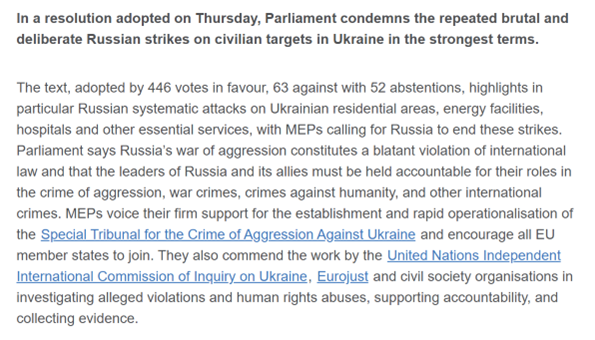
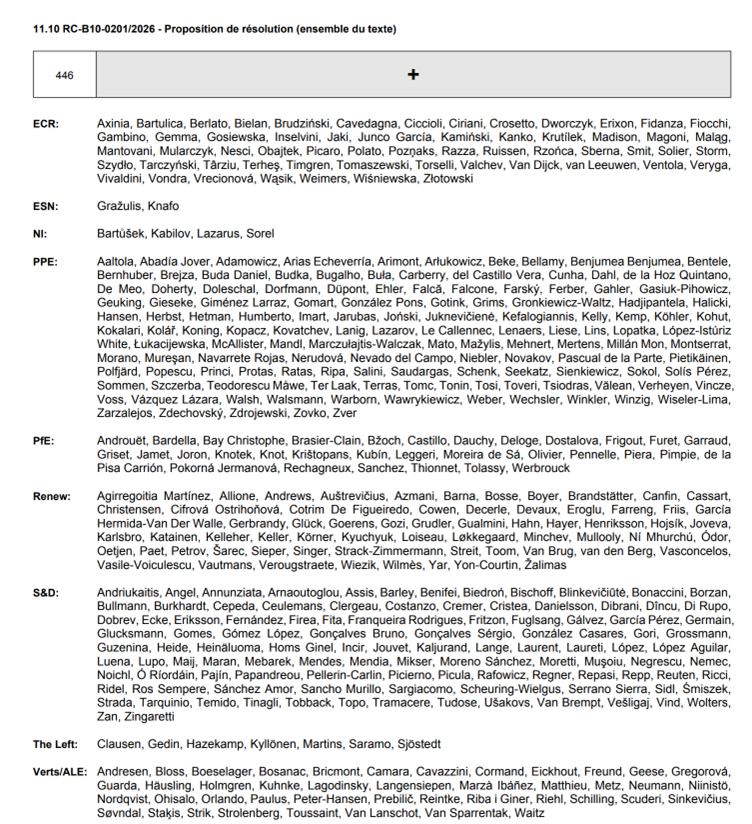
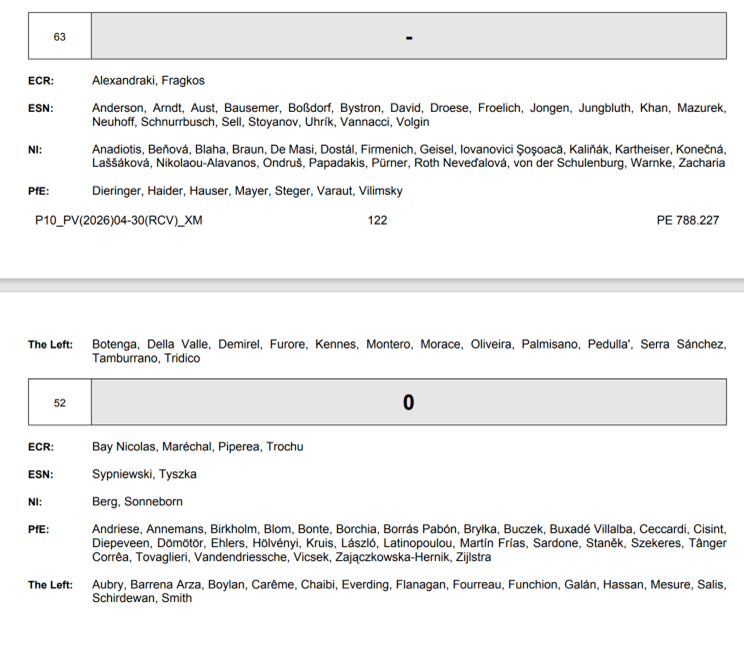
The European Parliament demands justice and accountability for civilian victims in Ukraine: 3 Irish Left MEPs did not support this call - Sinn Féin’s MEPs Boylan & Funchion and independent MEP Flanagan abstained. europarl.europa.eu/news/en/press-…
Cliona Connolly tweet mediaCliona Connolly tweet mediaCliona Connolly tweet media
English
18
36
65
8.3K