Martin Schäfer

1.1K posts

Martin Schäfer banner
Martin Schäfer

Martin Schäfer

@demeco_project

Linguist @[email protected] #IchBinHanna

Leipzig, Germany Katılım Ekim 2017
496 Takip Edilen339 Takipçiler
Martin Schäfer
Martin Schäfer@demeco_project·
Three years to fill a professorial position, ok, but how long does it take to stop the process without any results? Congrats to the University of Vechta for taking 2.5 years to come to such a decision "aus sachlichem Grund"/'for reasons' #GermanAcademia #ichBinHanna
Martin Schäfer tweet media
English
4
3
59
0
Martin Schäfer
Martin Schäfer@demeco_project·
@AlanLangus Very interesting! Where did you get your participants from and how many did you have? And does participating at all come with a bias specific types of parents (e.g., academics?)
English
0
0
1
0
Alan Langus
Alan Langus@AlanLangus·
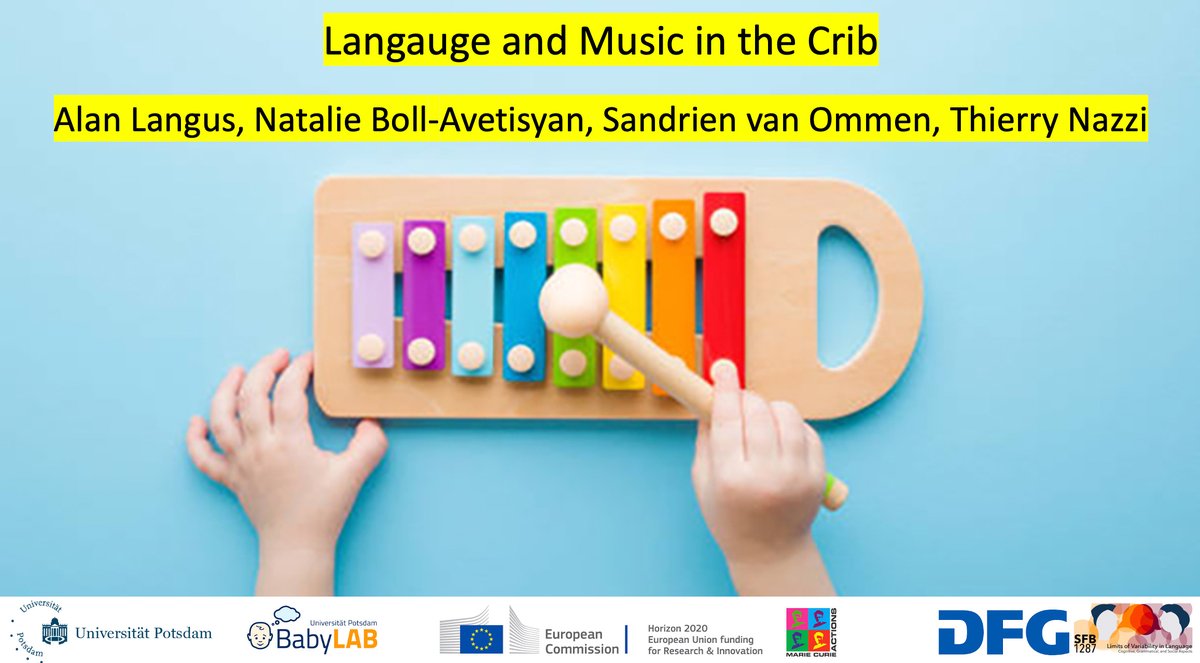
Our results show that exposure to a variety of linguistic and musical activities at home may boost infants’ ability to perceive rhythmic cues in spoken language as categorical. The results suggest that rhythm in music and language may emerge from shared cognitive resources (6/6)
English
1
1
11
0
Alan Langus
Alan Langus@AlanLangus·
Years of experience with music can boost our ability to perceive spoken language. Could early exposure to linguistic and musical activities at home also boost young infants’ ability to perceive speech rhythm under conditions of variability? #linguistweets #linguisTW0815 (1/6)
Alan Langus tweet media
English
1
3
35
0
Martin Schäfer
Martin Schäfer@demeco_project·
Comparing speed and human propensity pairs with distributional semantics shows very mixed results with regard to typical features of derivation and inflection. Maybe that is the reason why -ly is hard to classify. For more: martinschaefer.info/publications/d…
English
0
0
5
0
Martin Schäfer
Martin Schäfer@demeco_project·
And is there really no meaning change? For a start, there are pairs like hard/hardly and short/shortly. And, in general, pairs from the speed-class like quick/quickly seem more obviously unchanged than pairs from the human propensity class like intelligent/intelligently
English
1
0
5
0
Martin Schäfer
Martin Schäfer@demeco_project·
The relation between 'quick' and 'quickly' is traditionally described as derivation, but more recently as inflection. What is the difference between the two, what is the role of word class here, and how can we investigate this further? #linguistweets #linguisTW0745
English
1
1
16
0
Axinja Hachfeld
Axinja Hachfeld@AxinjaHachfeld·
Meiner Erfahrung nach werden Bewerber*innen in #Berufungsverfahren nicht über #Abbruch eines Verfahrens schriftlich informiert. Dabei hätten sie, nach #DHV-Jurist Ostermeyer (F&L, 11/22,S871) rechtliche Möglichkeiten. Habt ihr andere Erfahrungen? #ichbinhanna
Axinja Hachfeld tweet media
Deutsch
4
2
8
0
Martin Schäfer
Martin Schäfer@demeco_project·
And feel free to replace "were" by either ":" or "where" :)
English
0
0
0
0
Martin Schäfer
Martin Schäfer@demeco_project·
"Was soll denn der Klamauk?" "Ach Ihr Süßen, kommt ..." [father trying to put small daughter on his bike, mother commenting on the two; overheard in Leipzig] #GermanConversationSnippet
Deutsch
0
0
0
0
Martin Schäfer
Martin Schäfer@demeco_project·
@matt_boot_ Li & Thompson 1981 Mandarin Chinese: A Functional Reference Grammar is also very reader-friendly. No characters, only Pinyin with tone marks.
English
1
0
6
0
Martin Schäfer
Martin Schäfer@demeco_project·
Absolutely in awe of the mind-blowing level of pure opaqueness reached in German legalese: of course, if clicking on a button is marked as "kostenpflichtig" 'with costs', it is quite obviously "nicht kostenpflichtig" 'without costs' #German #Legalese #opacity
Martin Schäfer tweet media
English
0
0
2
0
Lieke Gelderloos
Lieke Gelderloos@liekegelderloos·
@tallinzen We have the word "zuigeling" in Dutch which means "suckling" so it seems very reasonable to me that we went with a loanword instead
English
1
0
4
0
Tal Linzen
Tal Linzen@tallinzen·
Loanwords are so strange sometimes. Did Germans not have the concept "baby" when they first met English speakers?
English
10
1
46
0
Martin Schäfer
Martin Schäfer@demeco_project·
@derwahremawa Wobei die meisten promovierten Großeltern doch wahrscheinlich schon nicht mehr teil dieser 1,2 %, nicht dass das dann nicht immernoch weit überproportional wäre
Deutsch
0
0
0
0
Matthias Warkus
Matthias Warkus@derwahremawa·
Nur zum Abgleich: Insgesamt 1,2 % der Deutschen sind promoviert. Diese Leute sind offensichtlich in weit überproportionalem Maße mit euch verwandt
Deutsch
1
1
11
0
Matthias Warkus
Matthias Warkus@derwahremawa·
Wie viele eurer Eltern und Großeltern (zusammengerechnet) waren/sind promoviert?
Deutsch
7
1
10
0