io10

287 posts

io10

io10

@dev10TLC

Skills Worth More Than Money ✨. Web3 Smart Contract Developer | Security Researcher

Katılım Ekim 2024
355 Takip Edilen350 Takipçiler
Sabitlenmiş Tweet
io10
io10@dev10TLC·
My 1st 🥇. Thank God for this win. Also huge thanks to the velvet team and @cantinaxyz for the opportunity. I’m really happy with this and this one in particular means a lot and signals I’m on the right track. Long live contests 💕
Cantina 🪐@cantinasecurity

Another leaderboard locked in: Final results from the @Velvet_Capital competition are confirmed. 🪐 🥇 io10: $11,741.93 🥈 @KupiaSecurity: $10,702.06 🥉 Zeros (0xBeastBoy & @thepantherplus): $6,851.60 Thanks to all 699 participants that contributed. Full breakdown below.

English
19
2
170
8.5K
io10
io10@dev10TLC·
I am currently in a similar scenario but I tend to limit my AI dependence to certain scenarios for example, when learning, I try to grasp every concept by myself first and go as deep as I can. Once I truly feel I have exhausted my capacity on a certain problem, I try to structure my thoughts into detailed notes and dive deeper into those to spot any gaps. Once this is done, I plug the input into an LLM to get a different view on my summary and potentially where my understanding may have been incorrect. Then I find where the gaps in my notes where and plug them and more importantly, understand why the gaps occurred in the first place. This is more time consuming but there is no substitute for being able to understand problems quickly and developing my own process. The quicker and more efficiently I can do this, the less dependence on AI is required as a from time to time, the LLM will hallucinate so I don’t tend to trust it completely either. I treat it as a more of an enhancement tool
English
1
0
1
6
0xLoopTheory
0xLoopTheory@0xLoopTheory·
I feel like I currently live in two worlds at once. In my day job, I work in cybersecurity, and I keep AI on the edge of my workflow by choice. In my private life, research, writing, and side projects, I am deep in it. AI is part of how I think, build, explore, draft, test ideas, and move faster. And it splits me in two. On one side, I love what I am doing. AI enhances it. It helps me go deeper, connect dots faster, and turn vague ideas into something concrete. For research, writing, and learning, it often feels like having a second brain next to me. On the other side, it is strangely refreshing to keep some distance from it in my day job. There is value in doing the work yourself. There is value in being slower, more deliberate, more skeptical. Especially coming from cybersecurity and cryptography, I still deeply believe in being in the driver seat. But then the conflict comes back. I get bothered by tasks where I know AI could help. Repetitive writing. Summaries. Structuring thoughts. Drafting documentation. Searching through complexity. The kind of work where I can almost feel the wasted time because I know another mode of working exists. At the same time, not all AI output is satisfying. Speed is not the same as quality. Assistance is not the same as understanding. And using AI everywhere can slowly blur the line between amplification and dependence. That is the tension I am sitting with. I do not want to reject AI. I also do not want to outsource my judgment, my craft, or my responsibility. I want to use it well. Deliberately. With taste. With control. With security in mind. But I am still figuring out what that actually means in practice. Do you separate AI-heavy work from AI-light work? Do you feel the same conflict? Or have you already found a healthy way to integrate it without feeling like you are giving something up?
English
1
2
4
80
io10
io10@dev10TLC·
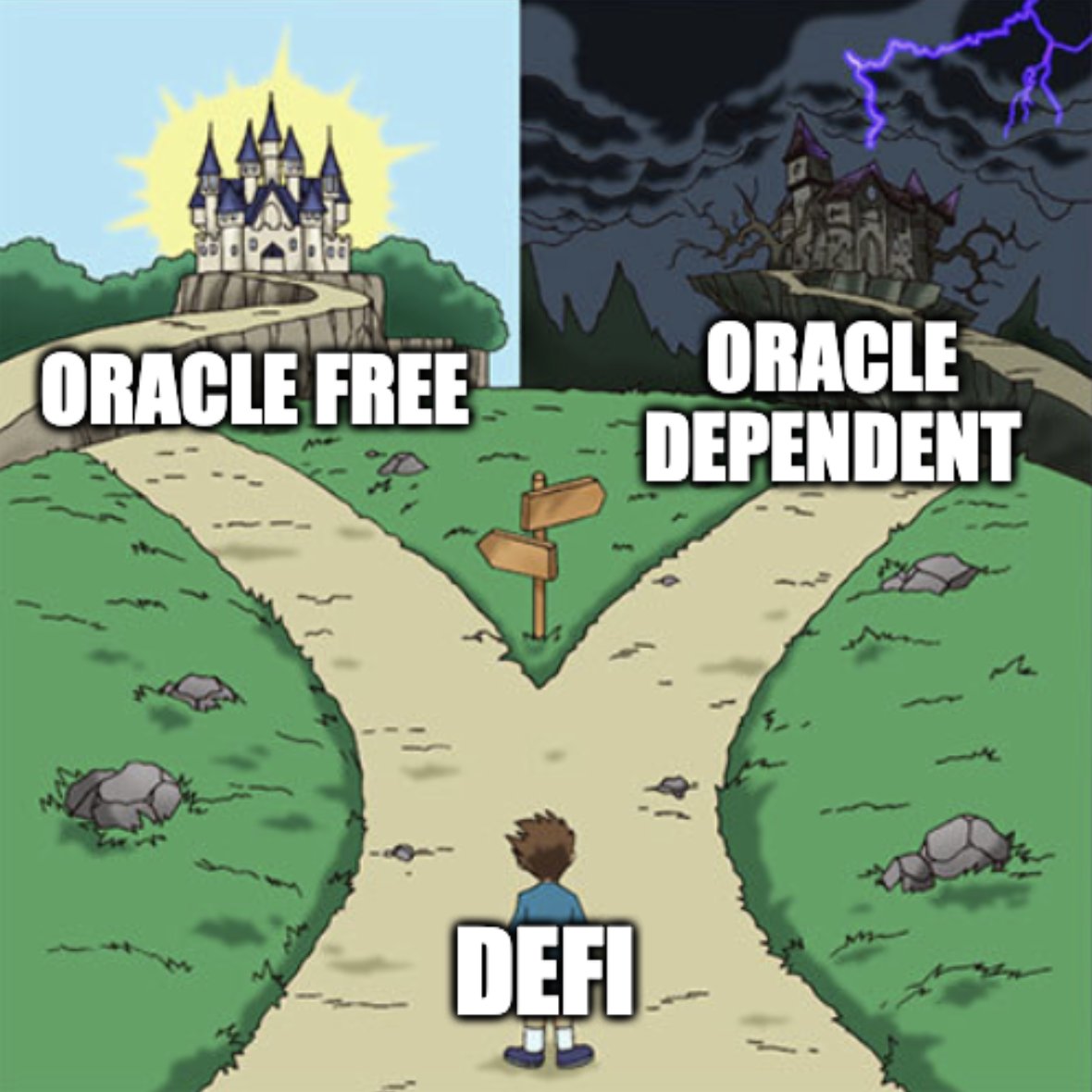
@ammalgam What does oracle free even look like ? Unless you are referring to centralized oracles , I can’t see a way any system works without its internal oracles and some sort of backup oracles which is the argument for a more centralised one
English
1
0
0
27
io10
io10@dev10TLC·
@0xKaden I 100% agree with this
English
0
0
0
33
kaden.eth
kaden.eth@0xKaden·
i still don't like using LLMs to write audit findings/reports i find that the process of clearly explaining a finding helps me understand it more thoroughly. it also gives me a deeper understanding of the relevant logic/behavior same for writing proof of concepts the only way i derive value from using LLMs as part of my audit process is in reviewing the work that i have already done, whether that's checking for bugs i may have missed or reviewing my writing, otherwise i will end up biased and do a worse job
English
4
0
35
2.2K
io10
io10@dev10TLC·
@0xLoopTheory Thanks ser , appreciate the response
English
0
0
1
12
0xLoopTheory
0xLoopTheory@0xLoopTheory·
Today I finished Cryptopals Set 6. ✅ I’m genuinely grateful for this journey. These first six sets reinforced so much foundational knowledge — but more importantly, they deepened it. This wasn’t a passive review; it was hands-on, adversarial thinking, implemented from scratch. What I worked through (and truly internalized): - Symmetric crypto primitives (XOR, AES, block modes) - Padding, parsing, and why edge cases matter - MACs, hashes, and length extension attacks - PRNGs and why “random” is often very not - Diffie-Hellman, SRP, and protocol-level failures - RSA fundamentals, malleability, broadcast attacks, signature forgery - How real cryptographic breaks emerge from tiny assumptions Doing everything in Rust made this even better. Strong typing, explicitness, and ownership forced clarity — no hiding behind libraries, no magic helpers. Every mistake was visible. Every fix was earned. It was an absolute blast. For now, I’ll pause Sets 7 & 8 and shift gears: Next up is working through a Cryptology Manual that I received a while back, focusing on reinforcing the theory and re-implementing core constructions myself. Fewer challenges, more depth. Fewer puzzles, more first principles. Cryptopals didn’t just teach techniques — it taught how to think like an attacker. And that mindset is staying with me. Onward.
English
1
0
3
74
io10
io10@dev10TLC·
@0xLoopTheory That’s pretty cool, thanks ser , is there any links you could share I could use to get started
English
1
0
2
18
0xLoopTheory
0xLoopTheory@0xLoopTheory·
Cryptopals is cryptography (the actual math/algos and how they fail in practice): you code the primitives, then you break them via classic attacks and bad implementations. It’s a super practical way to learn the underlying principles—modes, padding, MACs, RSA/DSA, DH, randomness, all that—by doing challenges. The Ethereum Yellow Paper is Ethereum-specific: it’s the formal spec of the EVM/state transition/gas. Great if you want to understand how Ethereum works internally, but it won’t teach you cryptography fundamentals the way Cryptopals does.
English
1
0
1
26
io10
io10@dev10TLC·
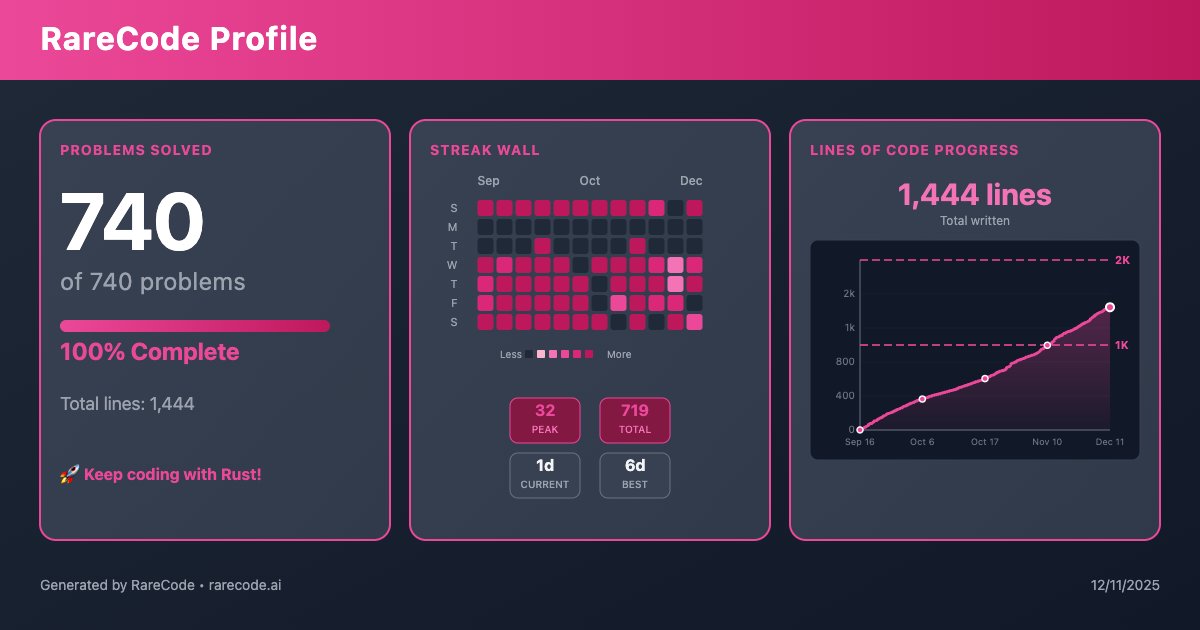
By far the smoothest programming language learning experience i have ever had. Looking forward to more lessons. I will definitely be renewing. Thank you @RareCodeAI @Jeyffre
io10 tweet media
English
0
0
5
722
io10
io10@dev10TLC·
@Jeyffre I’m using rare code as well to get rust proficient and it’s already helped me write a few scripts for some work I was doing. Can’t wait to finish it and start looking at implementations and trying to recreate. The more rust the better
English
0
0
1
63
Jeffrey Scholz
Jeffrey Scholz@Jeyffre·
How much you learn directly determines how successful you will be. How much you learn is directly determined by how *consistent* you are. Look at this graph — 9 weeks of 30 minutes Rust practice every day. Not 30 minutes of passively consuming content and doing soft recall exercises. 30 minutes of direct practice doing the thing you want to get good at. Forgive the all caps letters, but YOU GET GOOD AT RUST BY WRITING RUST. YOU GET VERY GOOD AT RUST BY WRITING A *LOT* OF RUST. Anything else is your brain trying to trick you into being lazy and doing proxy work instead of the real thing. The whole point of RareCode is to take away the “what Rust should I write today” barrier and just give you some code to write is appropriate to your level of experience. There are of course a bunch of other pedagogical strategies (and dare I say innovations) integrated into the platform. But those are relatively minor optimizations compared to the most important factor — be a tool to empower consistency.
0xLoopTheory@0xLoopTheory

Unbelievable, but I did it — I completed all 740 problems on @RareCodeAI 🦀 This journey has been absolutely incredible — by far the best way I’ve ever learned a new programming language. The structure, the gradual progression, and the focus on building intuition rather than memorization — it just clicked. The approach that @RareSkills_io brought to life through @RareCodeAI truly resonated with me. It made #rustlang (@rustlang) feel logical, rewarding, and fun — every exercise was a step forward, every small success a reminder of progress. I’m humbled and grateful for how much I’ve learned, and I’m excited to start applying these new skills — first in my mutation testing project, zk-mutant. Over the past weeks, I found myself reading real Rust codebases and actually understanding them — something that once felt far away. Now, I can’t wait to build. And to the RareCode team — you won’t have to deal with my daily tags anymore 😅 I hope they weren’t too annoying. They were simply my way of saying: “this is awesome — thank you.” Thank you @RareCodeAI and @RareSkills_io for this amazing learning journey ❤️

English
6
7
164
13.1K
io10
io10@dev10TLC·
Seeing news on this balancer hacks make me upset . All SR’s and white hats need to keep improving so shit like this becomes rarer. I feel like the space has definitely evolved and is improving but it’s still not fast enough
English
0
0
3
182
io10
io10@dev10TLC·
I like working on difficult things. Repetitive tasks give me brain rot
English
0
0
4
197
io10
io10@dev10TLC·
@pochsid Wdym by complete things instead of understanding them
English
1
0
0
17
pochsi
pochsi@pochsid·
@dev10TLC Hii bro I'm forgetting things, I'm watching cyfrin videos writing notes, writing code, I feel much more interesting and sometimes I myself urge to complete things rather than to understand them, I want to know how the learning process should be? could u please dm or answer this
English
1
0
0
15
io10
io10@dev10TLC·
Love being busy and learning new things but I do miss competing . Need to solidify some core learning and improve some skills which should free up some time soon ✨
English
1
0
7
357
io10
io10@dev10TLC·
Had a pretty interesting conversation about how rust was developed. Never knew it started off as a side project lol
English
0
0
3
300
io10
io10@dev10TLC·
Knowing the right question to ask is an underrated skill
English
0
2
9
1.3K
io10
io10@dev10TLC·
I’m starting to enjoy learning different languages simultaneously. It really helps to connect the dots. The fundamentals are mostly similar besides a few nuances but there’s still a lot to learn and I’m looking forward to all of it !
English
0
0
2
189
io10
io10@dev10TLC·
Curiosity is the key to make it in anything you want to do. May not seem like it but the skills are worth more than the money
English
0
2
12
466
io10
io10@dev10TLC·
EIP-5095: Principal / Yield Tokens Most experienced SR's already know about principal/yield tokens but my first time coming across this took some time to get my head around so i decided to read the related EIP and i will be discussing main points to note from the EIP over the next few posts. You can read more about ERC-5095 at: eips.ethereum.org/EIPS/eip-5095 "The primary examples include yield tokenization platforms which strip future yield leaving a principal token behind, as well as fixed-rate money-markets which utilize principal tokens as a medium to lend/borrow." Lets go over what 'stripping future yield' means: When you deposit a yield-bearing asset (e.g. stETH), it naturally earns yield over time. Yield tokenization splits that asset into two separate tokens: Principal Token – Represents the initial value of your deposit. Yield Token – Represents the right to the future yield that will accumulate This separation allows both parts to be traded or used independently. Example in DeFi: Let’s say you deposit 1000 USDC into a fixed-rate lending protocol for 1 year at 5% APY. Instead of holding the yield-bearing asset as a single token, the protocol mints: 1000 pUSDC → Principal Token (redeemable for 1000 USDC in 1 year) yUSDC → Yield Token (entitles the holder to the 5% yield over the year) Now: You can sell the yield to someone else right now (e.g., yUSDC) Or sell the principal and hold the yield or use either in DeFi — e.g., to borrow/lend separately.
English
1
0
5
271
io10
io10@dev10TLC·
watch out for unbounded parameters (arrays) in functions with no access control. Worst case, DOS finding that is relatively easy to spot , best case (for whitehat lol), opens a rabbit hole that can lead to a deeper vulnerability
English
0
0
6
361