Oluwamide MLHC 🐐

890 posts

Oluwamide MLHC 🐐 banner
Oluwamide MLHC 🐐

Oluwamide MLHC 🐐

@dewapakununkguy

Web3 enthusiast, AI researcher, block chain educator, NFTs collector, Metaverse user and DeFi trader

Nigeria Katılım Şubat 2024
674 Takip Edilen54 Takipçiler
Oluwamide MLHC 🐐 retweetledi
Ajoje⚽⚖️
Ajoje⚽⚖️@israel_ajoje·
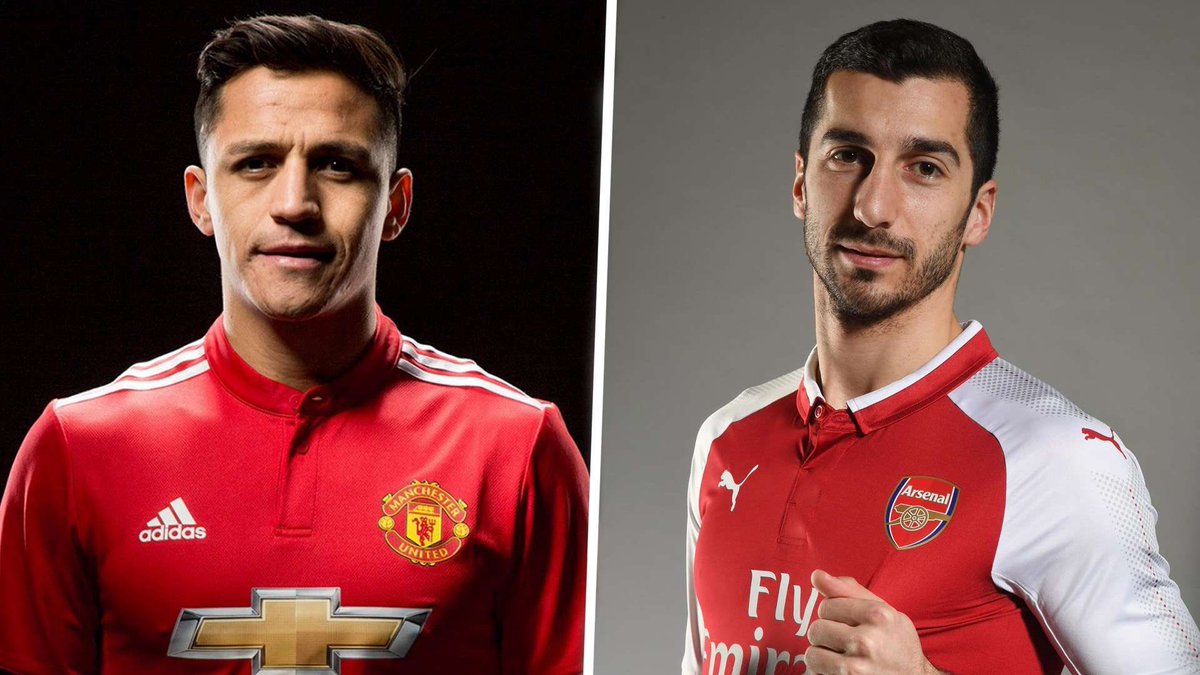
MYTH V REALITY MYTH: Clubs own player registrations, so they can transfer a player to any club they choose without the player's agreement. REALITY: A club can agree a transfer fee with another club without the player's involvement. But the player cannot be transferred without agreeing to and signing a new employment contract with the engaging club. Here is what is actually happening when two clubs agree a transfer fee. The selling club is agreeing to release their registration rights for a sum of money. That is all. They are not transferring a human being. They are not compelling anyone to work somewhere new. The moment the conversation shifts from club to club, to club to player, the entire dynamic changes. And that is why you hear terms like “personal terms”. For example, if a player- say Marcus, a 26-year-old midfielder under contract at a mid-table Championship side. A Bundesliga club comes in with a fee the Championship club happily accepts. The deal is done at boardroom level in 48 hours. Marcus is then told he is moving to Germany. But Marcus has a young family settled in England, and the terms being offered by the Bundesliga club do not reflect what he believes he is worth. He can say no. Legally, clearly, and without consequence to his existing contract. Remember the Mkhi Sanchez swap deal some years ago? It was rumored that Mkhi didn’t want to go to Arsenal and that the deal was going to fail. He eventually went and it wasn’t because anyone forced him to, but because he wanted to. Finally, in practice, while players can’t be forced out of clubs even though a transfer fee has been agreed, some of them prefer to leave because not leaving means they’d be in a hostile environment where they may not get game time or be treated professionally. So they leave- but it’s not because they are contractually mandated to. It’s simply because of other factors. I hope you have learned something today. My name is Ajoje. I am a FIFA Licensed Agent and International Sports Lawyer. I write on the Law and Business of Football, a lot. Repost and Follow if you want to read more posts like this.
Ajoje⚽⚖️ tweet media
English
4
25
130
13.6K
Oluwamide MLHC 🐐 retweetledi
Ajoje⚽⚖️
Ajoje⚽⚖️@israel_ajoje·
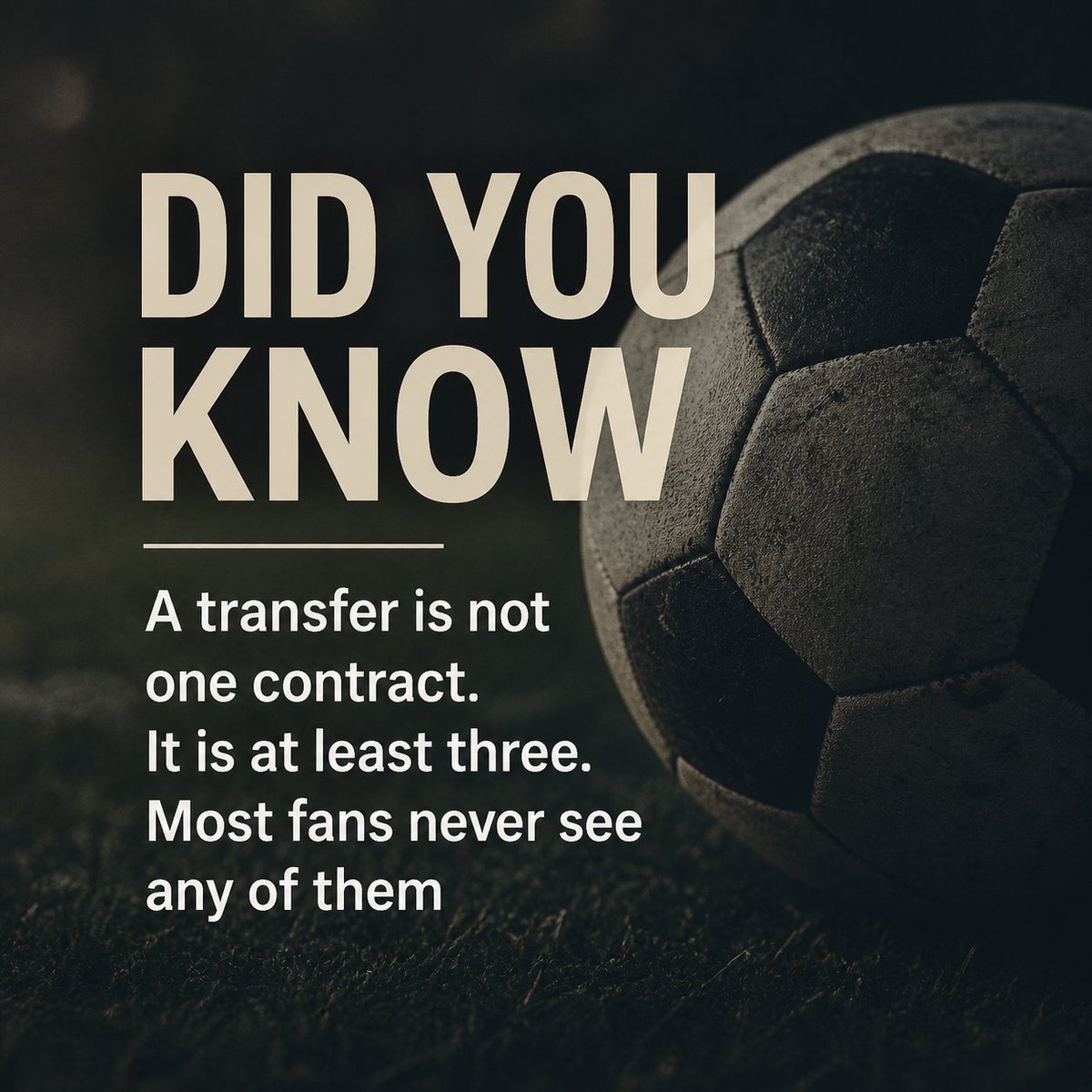
DID YOU KNOW??? A football transfer does not involve just one contract. It involves at least three. Most fans never see any of them. I will share them with you now. When a deal is announced, what makes the news is a fee, a shirt number, a wage figure, and a medical photo. What very few people know is the legal infrastructure that made it possible. At the very least there are three separate documents, three separate parties, and three separate sets of obligations. Here is what each one does. The first of course is the transfer agreement. This is strictly between the two clubs. The player is not even a party to it. It records the fee, the payment structure, any instalments, and any sell on clauses. When your favorite club pays a certain sum to sign a player for example, the agreement that makes the exchange possible is this contract, along with every condition attached to it. The second is the employment contract between the player and the new club. This is the document the player actually cares about. It covers salary, bonuses, contract length, image rights, release clauses, buyout clauses. Simply speaking, the transfer agreement tells the clubs what they owe each other. The employment contract tells the player what the club owes him and what he owes the club. The third is the termination agreement between the player and the selling club. This is the one most people forget exists. A player sold while he has a subsisting contract with a club does not simply walk out of it. Their existing employment contract must be formally ended. Both parties must consent. Depending on the deal, outstanding wages or settlements may need to be resolved here too. Generally, it is in fact the first contract that is signed because it is the basis upon which the other two exist. There are often more documents beneath these three, viz., side letters, image rights arrangements, loan clauses, solidarity contributions, and so on. Each one governs specific obligations between a specific set of parties. I hope you have learned something today. Ajoje. FIFA Licensed Agent and International Sports Lawyer. Follow for the law and business of football.
Ajoje⚽⚖️ tweet media
English
14
65
239
11.3K
Oluwamide MLHC 🐐 retweetledi
Ajoje⚽⚖️
Ajoje⚽⚖️@israel_ajoje·
Who pays agents? Players or clubs. The answer depends on two things- one is who hired the Agent. If the club hired the agent to help negotiate a transaction or to help find a player, then the club has to pay him without question. However, when the agent is hired by a player, it comes down to one number. Most people don’t know this. That number is $200,000. A yearly salary of $200,000 is the threshold in the FIFA Football Agent Regulations that determines who picks up the agent's bill. Once that number is crossed, the player has to pay their own agent directly. The club cannot do it on their behalf. It is prohibited. This is a specific exception to the general "Client Pays" rule, which normally requires players to pay their agents directly As per the FFAR, if the player earns $200,000 and above, the fee is capped at 3% of the player's annual remuneration, paid by the player, from the player's pocket. But for players earning $200,000 or below? The club can pay the agent fee on the player's behalf. And critically, that fee does not come out of the player's wages. The club covers it separately. And as a matter of fact, the agent’s cut in cases like this is 5%, not 3. Now think about what that means in practice. The overwhelming majority of professional footballers in the world earn below that threshold. Generally, I am not talking about the Premier League or La Liga. I am talking about players in Asia, Oceania, African and so on. Players earning modest salaries in competitive environments, trying to navigate transfers and contracts without the resources to fund professional representation. The regulation, when applied correctly, was designed with those players in mind. A footballer in Kano or Accra or Alexandria can access licensed agent representation without surrendering a percentage of a salary that may already be thin. Now, the problem is not the rule. The problem is that most of those players have never heard of it. They do not know what they are entitled to. And in that gap, they get exploited. Moreover, I should have you know that the parts of the FFAR that provide for these have been the subject of serious legal disputes and have as a result been suspended by FIFA. Know the rules. They exist for you. I hope you’ve learned something today. My name is Ajoje. I am a FIFA Licensed Agent and International Sports Lawyer. I write on the Law and Business of Football, a lot. Repost and Follow if you want to read more posts like this.
Ajoje⚽⚖️ tweet media
English
16
47
155
10.5K
Oluwamide MLHC 🐐 retweetledi
Ajoje⚽⚖️
Ajoje⚽⚖️@israel_ajoje·
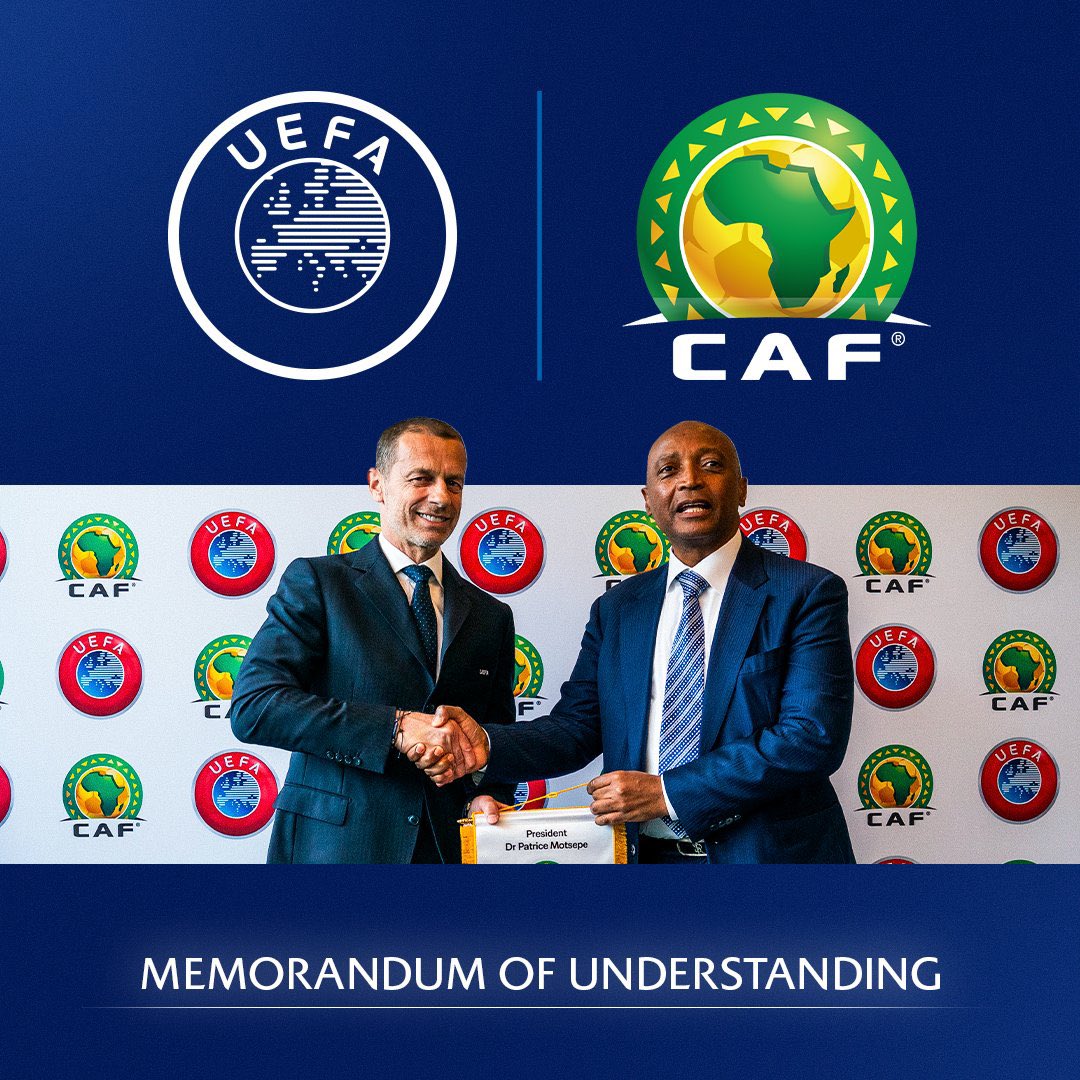
UEFA has 55 member associations, combined annual revenues exceeding €4 billion, and some of the most sophisticated football development infrastructure on the planet. CAF has 54 member associations, the most naturally talented football continent in the world, and a development gap that has consistently prevented that talent from being realised at home. Today in Vancouver, the two confederations signed a Memorandum of Understanding that is specifically designed to start closing that gap between Europe and other continents. Some of the best players in European football came from around the world. The list runs back decades and it runs deep. UEFA knows this. CAF knows this. What today's agreements acknowledge is that the relationship between the three continents cannot continue to be built purely on individual talent leaving Africa for Europe. It needs structure, investment and a formal framework behind it. The MoU runs until June 30 2031 and covers seven specific areas. -Youth and women's football, including the partner confederations member associations participating in selected UEFA youth competitions. -Football development programmes through the UEFA Together initiative. -Coach education and the sharing of technical knowledge across both confederations. -Referee development, with elite officials gaining international experience through each other's competitions. -Institutional knowledge exchange including observer programmes at major tournaments. -Education and capacity development with access to UEFA Academy programmes. -And governance coordination with regular progress reviews to ensure delivery. UEFA has already signed similar agreements with CONCACAF and CONMEBOL. African football is now formally part of that continental development framework. CAF president Patrice Motsepe has spoken about building African football into one of the best in the world. This agreement is the most concrete structural step toward that ambition that has been taken in years. Check the link below to see a copy of the MoU. editorial.uefa.com/resources/02a4… My name is Ajoje. I am a FIFA Licensed Agent and International Sports Lawyer. I write on the Law and Business of Football, a lot. Repost and Follow if you want to read more posts like this.
Ajoje⚽⚖️ tweet media
English
3
23
78
4.9K
Oluwamide MLHC 🐐 retweetledi
Ajoje⚽⚖️
Ajoje⚽⚖️@israel_ajoje·
What does it take to be a FIFA Licensed Agent? A lot of people are working in football representation right now without a licence. That is illegal and they know it. But the industry is beginning to get cleaner. If you want to operate long term, you need the FIFA Football Agent Licence. Here is how it works. First, you have to be eligible to get the license in the first place.. Article 5 of the FIFA Football Agent Regulations disqualifies you if you have serious criminal convictions, been bankrupted, ties to betting companies, ownership stakes in clubs or academies, or if you worked as an unlicensed agent in the last 24 months. FIFA checks everything to the best of their ability. You may not get to the next stage if you have issues with any of the above. The application window opens every January and closes in early March. For 2026 that deadline was 6 March. Whenever the window is open, you are register on the FIFA Agent Platform, choose your exam language, select your session, and pay a non-refundable fee of around £75. The price may vary tho. It was £150 when I wrote it. The exam itself is 20 multiple choice questions. It is done in 60 minutes and it is open book but limited strictly to official FIFA materials. You can't usethird party notes, YouTube videos, or anything else. The pass mark is 75 percent, meaning you need to get 15 correct answers out of 20. This part is a bit crazy tho- you are asked 20 multichoice questions in an open book exam and you think it's easy. The issue is that the study material is 1,100 pages long. So you actually need to study the material thoroughly before the exam. The exam has a 37% pass rate. You dont want to find out how in the hard way. The course topics cover the RSTP, FIFA Statutes, Ethics Code, the Clearing House, and safeguarding. It runs in late April or early May. Results come back in early June. This year's exams are being held in both months. If you pass the exam, you pay roughly USD 600 for the licence. Then USD 300 every year after that, plus mandatory continuing professional development to keep it active. The licence is global. It does not expire unless you don't renew or you lose eligibility. But understand this clearly: the licence is the entry ticket, not the destination. Most agents grind in lower leagues for years before building anything meaningful. As much as you need the license, you need good players and good network. Know that and know peace. I hope you have learned something today. My name is Ajoje. I am a FIFA Licensed Agent and International Sports Lawyer. I write on the Law and Business of Football, a lot. Repost and Follow if you want to read more posts like this.
Ajoje⚽⚖️ tweet media
English
13
35
104
7.4K
Oluwamide MLHC 🐐 retweetledi
Mazi Nathan
Mazi Nathan@rukky_nate·
Have you ever wondered why celebrities, especially footballers, prefer wired headphones over wireless earbuds? It isn’t about the vintage look or fad. it’s a security protocol. Bluetooth signals are broadcast in the open, making them vulnerable to interception, spoofing, and remote location tracking. For high profile people, a wireless signal that connect your Bluetooth to your phone is a huge liability. A wire on the other hand, creates a closed circuit that cannot be hacked from a distance. In a world of constant digital noise, the zero-wireless signal footprint is the ultimate privacy, security and communication move. Now you know why the likes of Mbappe, Ronaldo, Rashford, Zendaya, and other celebrities prefers wired headphones. Will you ditch a wireless earbuds for a wired headset?
Mazi Nathan tweet mediaMazi Nathan tweet mediaMazi Nathan tweet mediaMazi Nathan tweet media
English
25
27
137
16.8K
Szymanski
Szymanski@Szymansk_ii·
Which state are you currently chatting from, indicate with the number. I'm chatting from 24
Szymanski tweet media
English
602
53
533
21.8K
Oluwamide MLHC 🐐 retweetledi
Szymanski
Szymanski@Szymansk_ii·
🚨In 2012 a man bet his entire life savings on Bitcoin at $5 a coin. In January 2012, Erik Finman was 12 years old His grandmother gave him $1,000 He put all of it into Bitcoin Bitcoin was trading at roughly $10 to $12 per coin at the time He bought around 100 Bitcoin His parents and teachers told him it was a waste His high school teachers told him he was going nowhere He made a bet with his parents If he became a millionaire before turning 18 they would not force him to go to college By 2013 Bitcoin hit $1,200 and his $1,000 had grown to around $100,000 He used some of the gains to start a small educational startup called Botangle at 13 years old He sold Botangle in 2014 for 300 Bitcoin At that point Bitcoin was around $200 That sale added 300 more coins to his stack at what turned out to be the cycle low By 2017, when Bitcoin hit $18,000, Erik Finman was 18 years old His Bitcoin was worth over $4 million • He won the bet • He never went to college • His parents had to put it in writing • He said in interviews that his teachers had told him he would end up working at McDonald's At Bitcoin's peak in October 2025 at $126,198, his original 100 coins from the $1,000 investment would have been worth $12.6 million His additional 300 Bitcoin from the Botangle sale would have been worth $37.8 million $1,000 given by a grandmother A 12 year old who believed his teachers were wrong The teachers were wrong
Szymanski tweet media
English
101
86
655
28.5K
Oluwamide MLHC 🐐 retweetledi
Power Matrix
Power Matrix@powermatrixs·
The 10 best color combinations for men 1.
Power Matrix tweet media
English
201
2.3K
23K
3.3M
Oluwamide MLHC 🐐 retweetledi
Ajoje⚽⚖️
Ajoje⚽⚖️@israel_ajoje·
In November 1996, a photograph appeared in the Liverpool Echo showing an 11-year-old Everton mascot walking out for the Merseyside derby. That child was Wayne Rooney. It is one of the earliest recorded images of the use of mascots- which has since become one of the most commercially valuable traditions in world football. Every Premier League matchday, over 440 children walk onto pitches across England holding the hands of professional footballers. Most people assume it has always been this way. It has not. And the story of how it started is more interesting than the tradition itself. The practice began informally in the mid-1990s with one or two children per team. It became global policy in 2002 when FIFA partnered with UNICEF on a campaign called Say Yes for Children, designed to protect children's rights worldwide. The most visible element was simple: one child walked out with every player before every World Cup match, wearing FIFA/UNICEF t-shirts as a symbolic reminder that football had a responsibility beyond the result. From 2002, it became commercialised. McDonalds became the primary sponsor of the Player Escort Programme at the World Cup and European Championships. At the 2006 World Cup they sent 1,408 children from 35 countries to Germany. At the 2010 World Cup, 1,408 children from 47 countries. At the 2014 World Cup in Brazil, 1,408 children again, this time from across 70 countries. According to available estimates, McDonald's pays FIFA between $10 million and $25 million per year for its overall World Cup sponsorship, of which the Player Escort Programme is the centrepiece. What started as a UNICEF advocacy moment is now one of the most consistently sponsored pieces of real estate in world football. The handshake before kickoff. The anthem. And eleven small children holding hands with eleven millionaires. All three have a sponsor. And it all started from somewhere. My name is Ajoje. I am a FIFA Licensed Agent and International Sports Lawyer. I write on the Law and Business of Football, a lot. Repost and Follow if you want to read more posts like this.
HAMZZY@Hamzythacreator

Why do footballers always walk out with little kids before a match? No jokes… what’s the actual reason? 🤔

English
16
87
421
70.3K
Oluwamide MLHC 🐐 retweetledi
Ajoje⚽⚖️
Ajoje⚽⚖️@israel_ajoje·
Someone is wondering why City, not Arsenal are top when they both have the same number of points. The Premier League uses five tiebreakers to separate clubs that finish level on points. Most fans know the first one. Almost nobody knows the last three. And right now, with five games left in the 2025-26 season, every single one of them matters. According to Section C of the Premier League Handbook 2025-26, under the heading Determination of League Table Placings, when two or more clubs finish level on points the following criteria are applied in this exact order. First, goal difference across all 38 league games. Second, total goals scored across the season. Third, head-to-head points between the tied clubs specifically. Fourth, away goals scored in those head-to-head matches. Fifth, and only if all four criteria above have failed to separate the clubs and the position is material to the title, European qualification or relegation, a one-off playoff at a neutral ground determined by the Premier League Board. City and Arsenal currently lead the Premier League with 70 points. Both clubs have won 70 points with five games remaining and the title would be decided entirely by earlier mentioned tiebreakers. The title has been decided by goal difference exactly once in Premier League history. In 2011-12, Manchester City and Manchester United both finished on 89 points. City had +64. United were on +56. Aguero's 94th-minute winner against QPR is the reason most people know that rule exists. This season, the margin is one goal. Every match between now and 24 May counts. Ladies and Gentlemen, we have a beautiful run-in on our hands My name is Ajoje. I am a FIFA Licensed Agent and International Sports Lawyer. I write on the Law and Business of Football, a lot. Repost and Follow if you want to read more posts like this.
The Touchline | 𝐓@TouchlineX

🚨 𝗕𝗥𝗘𝗔𝗞𝗜𝗡𝗚: Manchester City are now TOP of the Premier League!

English
66
602
3.8K
626.5K
Oluwamide MLHC 🐐 retweetledi
Ajoje⚽⚖️
Ajoje⚽⚖️@israel_ajoje·
Ever heard of a Multi Club ownership model? In 2015, 62 football clubs worldwide were operating inside multi-club ownership structures. By 2023 that number was 301. The rules designed to govern the model were written for 62. Nobody has fully rewritten them for 301. Manchester City and Girona once played in the Champions League in the same season. They are owned by the same group and although there was a lot of legal rigmarole involved, UEFA allowed it. That alone should tell you that the regulations around multi-club ownership are more flexible than most people realise, and tto be honest with you, it is more contested than the people who benefit from them would like you to know. Multi-club ownership is exactly what it sounds like. One entity buys controlling or significant stakes in more than one club across different leagues and countries. The City Football Group for example owns Manchester City, Girona, New York City FC, Melbourne City and several others. INEOS owns Manchester United and Nice. RedBird owns AC Milan and holds stakes in Liverpool's parent company. This is now the dominant direction of travel in football investment. UEFA's rule is simple on paper. It says no two clubs under the same decisive influence can play in the same UEFA competition in the same season. Decisive influence is the phrase that matters, and it is the basis on which every legal argument so far has been hinged. Are you with me? In recent times, Manchester City and Girona both qualified for the Champions League in the same season. UEFA allowed them both to play because City Football Group structured its governance such that no single entity held decisive influence over both clubs simultaneously. However, Aston Villa that same season reduced its stake in Vitória SC from 46 percent to 29 percent and removed its board representatives specifically to satisfy UEFA and keep both clubs in European competition. The rule creates a threshold. The ownership structures are engineered to sit just below it. Now look at Crystal Palace. They won the FA Cup in 2025, earning a Europa League place. John Textor held 43 percent of Palace through his Eagle Football Holdings vehicle while also owning Lyon, who separately qualified for the Europa League. UEFA's compliance deadline was March 1, 2025. Textor agreed to sell his Palace shares to Woody Johnson of the New York Jets but the sale completed after the deadline. CAS confirmed the breach and demoted Palace to the Conference League. Lyon, who finished sixth in Ligue 1, kept the Europa League spot. Palace won a trophy, Lyon finished sixth in their league but somehow (I don’t know and I should find out), he trophy was worth less than the league position in UEFA's framework. The contrast with City Football Group and INEOS is what Palace supporters cannot move past. Larger MCO groups navigated the same rules by structuring governance arrangements that satisfied the threshold on paper. Palace had a minority shareholder who missed a deadline. The rule applied to both situations in theory. The outcomes were not equal in practice. Football can sometimes be funny like that. My name is Ajoje. I am a FIFA Licensed Agent and International Sports Lawyer. I write on the Law and Business of Football, a lot. Repost and Follow if you want to read more posts like this.
Ajoje⚽⚖️ tweet media
English
3
19
89
8.9K
Oluwamide MLHC 🐐 retweetledi
Ajoje⚽⚖️
Ajoje⚽⚖️@israel_ajoje·
Top Football Leagues and their ownership structures: Spain and the socioa Germany built the 50+1 rule to keep fans in control and clubs out of debt. Spain went the opposite direction. In 1990 it passed a law forcing most professional clubs to become private companies. According to LaLiga's own Economic-Financial Report for the 2024-25 season, the net senior debt of La Liga clubs now stands at €4.794 billion. The medicine has now made the patient sicker. The law was Ley 10/1990, the Spanish Sports Act, passed on 15 October 1990 and in force by 1992. Spanish clubs at the time were member-owned associations carrying significant debt and operating with limited financial accountability. The stated purpose at the was to help them achieve spending discipline- or that was what they thought. That meant that if you wanted to play in La Liga or the Segunda División, you became a "Sociedad Anónima Deportiva", a SAD, basically a sports public limited company subject to corporate governance rules and shareholder structures. However, back then, there was an exception built into the law. Clubs that had maintained a positive balance sheet since the 1985-86 season were permitted to retain their association status. Only four qualified. They were FC Barcelona, Real Madrid, Athletic Club de Bilbao, and CA Osasuna were the four clubs that did not convert. Every other professional club in Spain became a corporation. That's why you still hear terms like "socios" voting during Madrid and Barcelona Presidency elections and all. Cos they remained member owned. However, the results for those who did convert were not what the government promised. Transfer fees kept rising and wages kept rising. The shareholder model created incentives to spend for short-term results rather than long-term stability. Spanish clubs entered the 1990s with a combined debt estimated at around 172 million euros. By 2024-25 that figure had grown to nearly 4.8 billion. By the time Ley 39/2022 replaced the original law and removed the mandatory conversion requirement entirely, three decades of corporate football had left its mark. The four clubs that were never forced to convert remain some of the four most institutionally powerful in Spanish football. My name is Ajoje. I am a FIFA Licensed Agent and International Sports Lawyer. I write on the Law and Business of Football, a lot. Repost and Follow if you want to read more posts like this.
Ajoje⚽⚖️ tweet media
English
13
45
184
64.9K
Oluwamide MLHC 🐐 retweetledi
Ajoje⚽⚖️
Ajoje⚽⚖️@israel_ajoje·
Let me shock you in a minute. The two most valuable clubs in La Liga have no shareholders, no owner and no private equity firm behind them. They are owned by their members. And they have been, since before any of us were born. FOr example, in practice, Florentino Perez did not buy Real Madrid. Neither did Joan Laporta did not buy Barcelona. They ran for the job, campaigned, and won votes. And the same people who voted them in can vote them out. That is the socios model in Spain. And it is the ownership structure that has quietly defined the most powerful clubs in Spanish football for over a century. A "socio," which translates roughly as "partner," is a dues-paying member of the club who collectively owns it alongside tens of thousands of others. There are no shareholders, no dividends and no controlling stake held by any individual or corporation. The club belongs to its members and is run by a president they elect on a mandate they can remove. Like I said yesterday, the four clubs still operating under this model in Spain are FC Barcelona, Real Madrid, Athletic Club de Bilbao, and CA Osasuna. Each applies the model differently but the legal and governance structure is the same across all four. Barcelona has over 140,000 socios as of 2025, having added 10,619 new members in the 2024-25 season alone, the highest number under the current board. Real Madrid has a publicly stated 95,000 socios as of 2024. Athletic Club adds a dimension that makes it arguably the purest expression of the model anywhere in world football. Since 1911, the club has maintained a policy of signing only players born in the Basque Country or who learned their football in a Basque club. That is not just member ownership. They have written member identity written into the transfer policy. Athletic Club is one of only three clubs, alongside Real Madrid and Barcelona, never to have been relegated from La Liga, which makes the achievement all the more remarkable given the self-imposed constraints on recruitment. Osasuna, based in Pamplona, is the smallest of the four. Its significance in this story is largely symbolic. It is proof that the model is not exclusive to the richest clubs. Despite all of this, the practical limits of the socios model are real. Under this structure there are no dividends and all revenue must be reinvested in the club. Think of it like a hybrid of a company limited by guarantee and a non Governmental Organization. No private equity firm can inject capital overnight and no individual can write a cheque to close a gap. The club grows at the pace its revenues allow, which is why Barcelona's debt crisis of the early 2020s was so damaging. A member-owned club with no external safety net has nowhere to turn when it overspends except its own future earnings. And yet the clubs that were never forced to convert remain the most powerful in Spain. The model does not guarantee financial discipline, as Barcelona's recent history shows clearly. But it does guarantee something the SAD model cannot. The club remains the club's. Hope you have learned something today. My name is Ajoje. I am a FIFA Licensed Agent and International Sports Lawyer. I write on the Law and Business of Football, a lot. Repost and Follow if you want to read more posts like this.
Ajoje⚽⚖️@israel_ajoje

Top Football Leagues and their ownership structures: Spain and the socioa Germany built the 50+1 rule to keep fans in control and clubs out of debt. Spain went the opposite direction. In 1990 it passed a law forcing most professional clubs to become private companies. According to LaLiga's own Economic-Financial Report for the 2024-25 season, the net senior debt of La Liga clubs now stands at €4.794 billion. The medicine has now made the patient sicker. The law was Ley 10/1990, the Spanish Sports Act, passed on 15 October 1990 and in force by 1992. Spanish clubs at the time were member-owned associations carrying significant debt and operating with limited financial accountability. The stated purpose at the was to help them achieve spending discipline- or that was what they thought. That meant that if you wanted to play in La Liga or the Segunda División, you became a "Sociedad Anónima Deportiva", a SAD, basically a sports public limited company subject to corporate governance rules and shareholder structures. However, back then, there was an exception built into the law. Clubs that had maintained a positive balance sheet since the 1985-86 season were permitted to retain their association status. Only four qualified. They were FC Barcelona, Real Madrid, Athletic Club de Bilbao, and CA Osasuna were the four clubs that did not convert. Every other professional club in Spain became a corporation. That's why you still hear terms like "socios" voting during Madrid and Barcelona Presidency elections and all. Cos they remained member owned. However, the results for those who did convert were not what the government promised. Transfer fees kept rising and wages kept rising. The shareholder model created incentives to spend for short-term results rather than long-term stability. Spanish clubs entered the 1990s with a combined debt estimated at around 172 million euros. By 2024-25 that figure had grown to nearly 4.8 billion. By the time Ley 39/2022 replaced the original law and removed the mandatory conversion requirement entirely, three decades of corporate football had left its mark. The four clubs that were never forced to convert remain some of the four most institutionally powerful in Spanish football. My name is Ajoje. I am a FIFA Licensed Agent and International Sports Lawyer. I write on the Law and Business of Football, a lot. Repost and Follow if you want to read more posts like this.

English
10
130
605
58.1K
Oluwamide MLHC 🐐 retweetledi
Ajoje⚽⚖️
Ajoje⚽⚖️@israel_ajoje·
Vincent Kompany has been Bayern Munich's head coach for 100 games. In those 100 games, his side have won 76, drawn 13 and lost 11. They have scored 302 goals ad they've racked an average of 2.41 points per game.All of that pales in comparison to what they have done tonight. They have just made their most emphatic statement yet. Bayern beat Real Madrid 4-3 at the Allianz Arena to advance 6-4 on aggregate and reach the Champions League semi-finals. It was a match that had everything. Bayern trailed for a long time in the game before Diaz and Olise scored late goals to send them ahead. That is the story of this Bayern side. They score, they concede, they score again. They have scored in every single one of their 45 competitive matches this season. Harry Kane has 50 goals in all competitions from 39 appearances. Michael Olise leads Europe for assists in 2025-26 with 25 across all competitions. And the context of tonight matters. Bayern's 2-1 win at the Bernabeu last week was their first victory over Real Madrid since 2012 and their first at the Bernabeu since 2001. Over two legs across both grounds they have now beaten the 15-time European champions 6-4. They are not fluking this one. They are letting Europe know they are not backing down. Kompany is 38 years old. He managed Burnley in the Championship not long ago. He is now in the Champions League semi-finals with the most prolific team in Europe. Nobody who watched him play in that Manchester City defence would be surprised. The composure was always there. Now the results are confirming it. Bayern will meet PSG in the semi-finals. It will probably be the most entertaining team in the competition against the defending champions. At the other end, Atletico Madrid will be facing Arsenal in the semis. We all have something crunchy to look out for. Don't we? My name is Ajoje. I am a FIFA Licensed Agent and International Sports Lawyer. I write on the Law and Business of Football, a lot. Repost and Follow if you want to read more posts like this.
FC Bayern München@FCBayern

Wir stehen im 𝐇𝐀𝐋𝐁𝐅𝐈𝐍𝐀𝐀𝐀𝐀𝐀𝐋𝐄𝐄𝐄𝐄𝐄𝐄!!! 🤩❤️🤍

English
9
34
278
22.1K
Oluwamide MLHC 🐐 retweetledi
Ajoje⚽⚖️
Ajoje⚽⚖️@israel_ajoje·
Arsenal drew 0-0 tonight at the Emirates and most people will have found it boring. I think those people missed the point. I find it interesting that Arsenal kept a clean sheet, protected their aggregate lead, and are in the Champions League semi-finals for the second consecutive season. But the story is not just about tonight. In 11 Champions League matches this season, Arsenal have conceded just 5 goals and kept 7 clean sheets in the most competitive club tournament in the world. That doesn't sound boring to me. It sounds like the foundation of something. If you doubt me, check the stats. Arsenal's Champions League results under Arteta since returning in 2023: 23/24, Quarter-final vs Bayern Munich: Drew 1st leg 2-2, lost 2nd leg 0-1. ❌ 24/25, Semi-final vs PSG: Lost 1st leg 0-1, lost 2nd leg 1-2. ❌ 25/26, Quarter-final vs Sporting CP: Won 1st leg 1-0, drew 2nd leg 0-0. ✅ Semi-finals Three seasons back in the competition. Quarter-finals, semi-finals, semi-finals again. The progress is obvious. But here is what makes this Arsenal side genuinely different from the version that used to exit this competition with its head bowed. The numbers at the back. In this season's Champions League, Arsenal have played 11 matches, conceded just 5 goals, and kept 7 clean sheets. That is a clean sheet in nearly two out of every three games in the most competitive club tournament on the planet. Barcelona, for comparison, have conceded 45 goals in the same competition over the past two seasons and have not kept a clean sheet in 14 consecutive Champions League matches. Arsenal did not win tonight. They did not need to. They kept the ball, kept their shape, kept Sporting CP at arm's length, and kept a clean sheet at home for the sixth time in this campaign. The 0-0 was not a performance that will be remembered. The semi-final place it earned will be. And that is history for you. It doesn't care about nuance. Arteta has never won the Champions League. He has never been to the final. But he has taken a club that spent six years out of this competition entirely and quietly rebuilt it into one of the four best teams in Europe. That is not nothing. That is the foundation of something. My name is Ajoje. I am a FIFA Licensed Agent and International Sports Lawyer. I write on the Law and Business of Football, a lot. Repost and Follow if you want to read more posts like this.
Arsenal@Arsenal

CHAMPIONS LEAGUE SEMI-FINALISTS ✨

English
105
369
2.4K
486.2K
Oluwamide MLHC 🐐 retweetledi
YabaLeftOnline
YabaLeftOnline@yabaleftonline·
Process of bone regeneration after injury.
English
53
222
1.4K
88.1K
Oluwamide MLHC 🐐 retweetledi
Szymanski
Szymanski@Szymansk_ii·
Omor guyyyyyy… so this is how they make football 😮
English
33
34
142
7.2K
Oluwamide MLHC 🐐 retweetledi
POOJA!!!
POOJA!!!@PoojaMedia·
The new FIFA rules ahead of the World Cup. Culled from 433
POOJA!!! tweet mediaPOOJA!!! tweet mediaPOOJA!!! tweet mediaPOOJA!!! tweet media
English
67
143
1.4K
59.9K