Diego Lambás

4.6K posts

Diego Lambás banner
Diego Lambás

Diego Lambás

@diegolamoda

Katılım Mayıs 2010
435 Takip Edilen340 Takipçiler
Diego Lambás retweetledi
Rubén Martín AS
Rubén Martín AS@RubenMartinAS·
El Madrid en sus 3 partidos en el Bernabéu en Liga ha superado en posesión al rival (72%, 58% y 71%) En esos 3 encuentros ha hecho un total de 32 faltas, recibiendo 5 tarjetas amarillas Los rivales han hecho un total de 35 faltas, sin recibir NI UNA SOLA tarjeta amarilla 🤨
Español
125
946
4K
273.5K
Diego Lambás retweetledi
DMR
DMR@imlsaman·
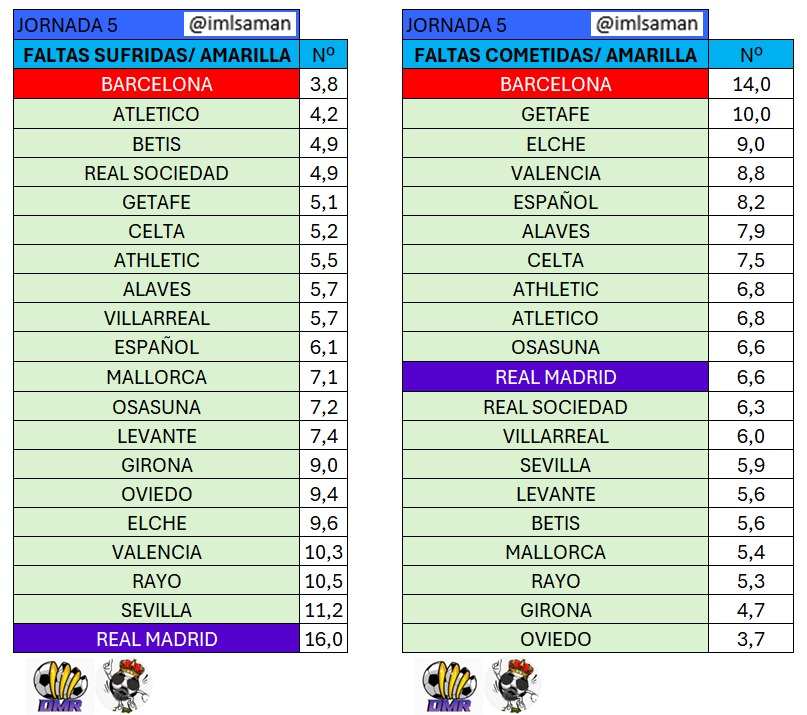
Bueno pues sigue subiendo la apuesta el CTA. A Jornada 5, con los tres partidos jugados hasta el momento así estaría la clasificación de faltas necesarias para amarilla.
DMR tweet media
Español
69
841
2.7K
233K
Diego Lambás retweetledi
Helena 🇮🇨
Helena 🇮🇨@HdeHelena_RM·
🔊 Un minuto, dos formas de narrar.
Español
252
2.8K
13.2K
647.9K
Diego Lambás retweetledi
Coach L22
Coach L22@israelloranca·
Hay mucha gente que sigue sin entender que la Copa de Europa no se merece, se gana.
Español
25
607
3.3K
44.7K
Diego Lambás retweetledi
MarcaScroll
MarcaScroll@MarcaScroll·
MarcaScroll tweet media
ZXX
44
1.7K
10K
546K
Diego Lambás retweetledi
Noah Jakob Rettberg 🇩🇪🇪🇺
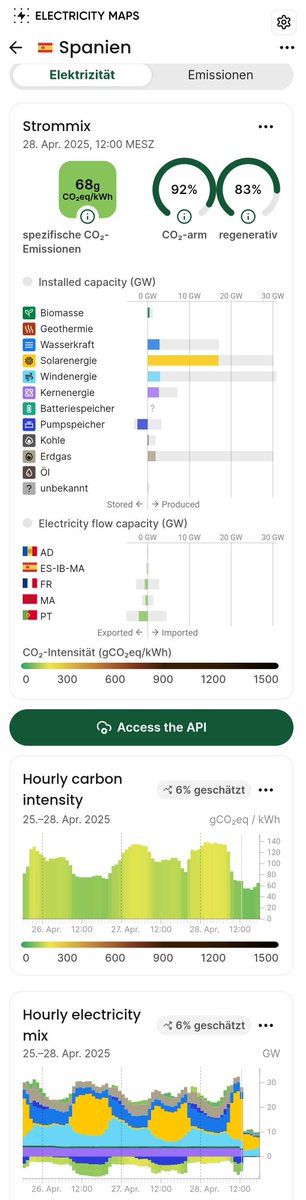
"What the Hell is Going On in Spain?" At around half past eleven today, Spain and Portugal experienced an almost nationwide blackout. Small parts of southern France were also briefly affected but reportedly regained power quite quickly. The Portuguese grid operator currently attributes the likely cause to weather-related oscillations in power lines, which caused the grid to collapse. At the time of the load shedding, Spain’s electricity supply was in a very fragile state: 70% of the electricity was generated by producers without grid-synchronous inertia. Grid-synchronous inertia refers to turbines in nuclear, coal, gas, or hydroelectric power plants that drive the generators of these plants. The rotational speed of these turbines is synchronized with the frequency of the power grid. Thus, the grid frequency is directly linked to the rotational energy of the turbines. If the frequency drops, it means that the load on the grid exceeds the output of the power plants connected to it. In such a case, the rotational energy of the turbines is converted into electricity to stabilize the grid. The valves on the turbines respond by opening further to support the grid. The opposite situation can also occur: if there is excess generation, that energy is absorbed as rotational energy, and the turbine valves close accordingly to adjust to the new load. Although the rotational energy compared to the grid’s power consumption is not large, it is sufficient to stabilize excessive load fluctuations or absorb surplus generation until the valves have time to react. This principle of grid-synchronous rotating masses has been the foundation of our power grids for over 100 years, ensuring that at every moment exactly as much electricity is produced as is consumed. Over the past two decades, Europe has been rapidly building power generation facilities that do not use grid-synchronous turbines, but instead produce direct current, which is converted to alternating current via inverters: Wind and solar energy. These inverters can generate high-quality alternating current, but they cannot replace the function of grid-synchronous inertia. The more wind and solar power is integrated into the grid, the fewer conventional power plants with grid-synchronous turbines remain. The fewer grid-synchronous turbines there are, the less inertia there is to buffer instantaneous fluctuations in load. If there is insufficient buffering, even small fluctuations can quickly cause the grid frequency to deviate dangerously from the ideal value of 50 Hz. Consumers and producers alike respond to this by disconnecting from the grid for self-protection, which can trigger a cascading collapse. What exactly tipped the balance in Spain remains unclear. However, we do know that the Spanish grid was in a highly volatile state at the time of the collapse. Please note: This text is an AI translation of my orginal German language Tweet.
Noah Jakob Rettberg 🇩🇪🇪🇺 tweet media
Noah Jakob Rettberg 🇩🇪🇪🇺@NoahRettberg

"Was zur Hölle ist los in Spanien?" Etwa um halb zwölf kam es heute in Spanien und Portugal zu einem nahezu landesweiten Blackout. Kleine Teile Südfrankreichs waren wohl auch kurzfristig betroffen, hatten aber ziemlich schnell wieder Strom. Der portugiesische Netzbetreiber gibt bisher als vermutlichen Grund wetterbedingte Oszillationen in Stromleitungen an, welche das Stromnetz zum Zusammenbruch brachten. Die spanische Stromversorgung war zum Zeitpunkt des Lastabwurfs in einem sehr fragilen Zustand: 70 % des Stroms kam aus Erzeugern, die keine netzsynchronen Schwungmassen besitzen. Netzsynchronen Schwungmassen beziehen sich auf Turbinen in Kern-, Kohle-, Gas- oder Wasserkraftwerken, welche die Generatoren dieser Kraftwerke antreiben. Dabei ist die Drehzahl dieser Turbinen synchronisiert mit der Frequenz des Stromnetzes. Die Netzfrequenz ist damit gekoppelt an die Rotationsenergie der Turbinen. Geht die Frequenz herunter, bedeutet dies, dass die Last am Netz die Leistung der angeschlossenen Kraftwerke übersteigt. In diesem Fall wird Rotationsenergie der Turbinen in Strom umgewandelt, welcher das Netz stützt. Die Ventile an den Turbinen der Kraftwerke reagieren darauf, indem sie sich weiter öffnen, um das Netz zu stabilisieren. Den gegenteiligen Fall gibt es auch: Hierbei geht überschüssige Leistung am Netz in Rotationsenergie über, woraufhin die Ventile an den Turbinen schließen, um sich an die neue Last anzupassen. Die Rotationsenergie der Turbinen ist im Vergleich zum Stromverbrauch am Netz zwar nicht groß, reicht aber aus, um übermäßige Last zu stützen oder überschüssige Leistung abzufangen, bis die Ventile Zeit haben zu reagieren. Dieses Prinzip der netzsynchronen rotierenden Schwungmassen ist seit über 100 Jahren Grundlage unserer Stromnetze und sorgt dafür, dass in jeder Sekunde so viel Strom produziert wird, wie verbraucht wird. Seit nun zwei Jahrzehnten bauen wir in Europa massive Mengen an Stromerzeugern zu, die eben keine netzsynchronen Turbinen haben, sondern stattdessen Gleichstrom produzieren, der mittels Wechselrichtern in Wechselstrom umgewandelt wird: Wind- und Solarkraft. Diese Wechselrichter können zwar sehr überzeugenden Wechselstrom erzeugen, aber nicht die Funktion der netzsynchronen Schwungmassen ersetzen. Je mehr Wind- und Solarenergie am Netz ist, desto weniger netzsynchrone Turbinen konventioneller Kraftwerke sind vorhanden. Je weniger netzsynchrone Turbinen existieren, desto weniger Schwungmasse steht als Puffer bereit, um instantane Lastschwankungen abzufangen. Sind die Puffer nicht ausreichend vorhanden, kann es schnell dazu kommen, dass selbst kleine Schwankungen die Netzfrequenz zu sehr vom Idealwert von 50 Hz abweichen lassen. Darauf reagieren Verbraucher und Produzenten gleichermaßen, indem sie zum Selbstschutz vom Netz gehen, was einen kaskadierenden Zusammenbruch hervorrufen kann. Was tatsächlich in Spanien das "Boot zum Kentern" brachte, steht noch nicht fest. Wir wissen aber, dass das Netz in Spanien zum Zeitpunkt des Zusammenbruchs in einem sehr volatilen Zustand war.


English
112
1.4K
3.6K
820.8K
Diego Lambás retweetledi
Guillermo Ferrer
Guillermo Ferrer@fenris1234·
A ver: voy a contar de forma simple que es la estabilidad de la red electrica. La red electrica funciona a una frecuencia de 50 o 60 hz segun el pais. Eso significa que los electrones cambian de sentido en el cable 50 o 60 veces por segundo Si te desvias mucho, fries las cosas
Español
146
1.5K
7.7K
1.1M
Diego Lambás retweetledi
Bonet
Bonet@BonetMM·
Resumen de#TheTinglao en solo tres imágenes
Bonet tweet mediaBonet tweet mediaBonet tweet media
Español
21
346
1.1K
28.6K
Diego Lambás retweetledi
Naninho
Naninho@SrNaninho·
"Han empezado a cantar, señor..." ⏳🏟️🤍
Español
12
768
5.4K
233.8K
Diego Lambás retweetledi
Alessandro
Alessandro@alessRM15·
“Sobre el cadáver del león festejan los perros. Sin embargo, el león sigue siendo león y los perros siguen siendo perros.”
Alessandro tweet media
Español
106
2.1K
10.2K
234.7K
Atlético de Madrid
Atlético de Madrid@Atleti·
Critican hasta los aciertos... Algunos están acostumbrados a tener siempre el viento a favor.
Español
5.4K
18.2K
68.2K
0
Diego Lambás retweetledi
Floper
Floper@_Floper·
Todo vuelve. TODO.
Floper tweet media
Español
37
1.9K
8.9K
188.6K
Diego Lambás retweetledi
BRUS ®
BRUS ®@Brus__ElVikingo·
📚 Instrucciones básicas para lanzar penaltis
BRUS ® tweet media
Español
20
1.1K
4.4K
162.7K
Diego Lambás retweetledi
Dragon Ball Perfect Shots
Dragon Ball Perfect Shots@DBPerfectShots·
All Goku's transformations (SSJ 1, 2, 3 & 4) in Dragon Ball Daima
Indonesia
448
10.1K
71.4K
3.5M
Diego Lambás retweetledi
IAM 7-5-2026 FAN ACCOUNT
IAM 7-5-2026 FAN ACCOUNT@inakiangulo·
El fútbol español está amañado. No hay más.
Español
133
1.4K
7.4K
138.5K
Diego Lambás retweetledi
Israel, estado terrorista y genocida
La jornada laboral empieza desde que me levanto por ir a trabajar hasta que llego a mi casa tras trabajar, todo lo que haga por y para el trabajo es tiempo de trabajo y roba tiempo de mi vida. La jornada laboral real son 50 horas semanales y este artículo es una basura.
xataka@xataka

La jornada laboral real de España no son 37,5 horas semanales: son 25,5 horas de media xataka.com/empresas-y-eco…

Español
198
6.4K
30.9K
1.4M
Diego Lambás retweetledi
Marina Glezer
Marina Glezer@MarinaGlezer·
También se puede.
Marina Glezer tweet media
Español
285
8.4K
74.7K
1.1M
Diego Lambás retweetledi
Maketo Lari
Maketo Lari@MaketoLari·
Vinicius (395), Rodrygo (183), Camavinga (181) y Bellingham (104) acumulan 863 faltas sufridas sancionadas en La Liga y 436 faltas cometidas sancionadas. Entre los 4 jugadores han provocado 2 expulsiones rivales y han sufrido 3 expulsiones (saldo negativo de 🟥= -1)
Español
26
543
1.5K
70.2K