Diginitytools retweetledi

The New Face of Pig Butchering: How Fake Liquidity Mining Pools Drain Wallets
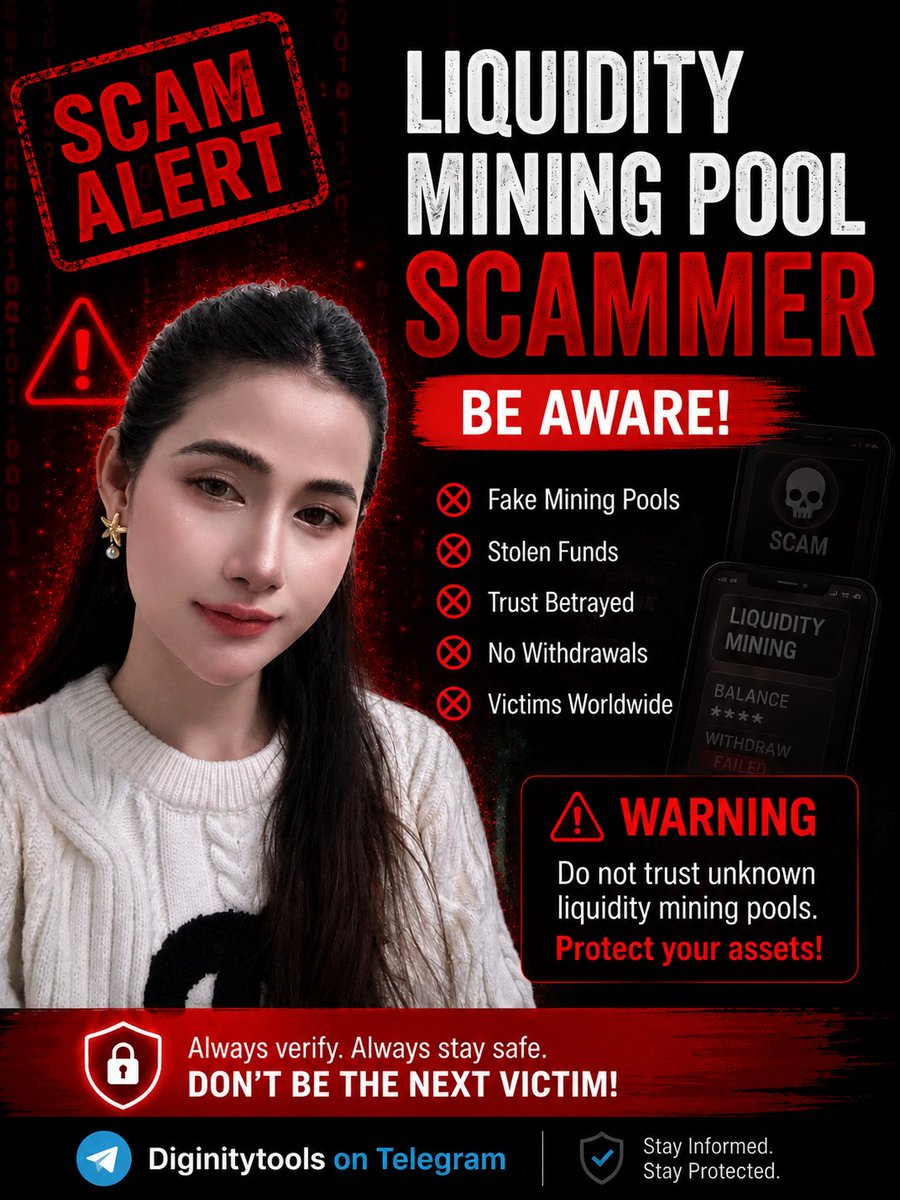
In the evolving landscape of crypto crime, the "Pig Butchering" (Sha Zhu Pan) scam has become a sophisticated, multi-billion dollar industry . While traditional romance scams involve fake investment tips, the latest and most dangerous evolution involves Fake Liquidity Mining Pools.
Scammers are no longer just asking for wire transfers; they are building elaborate decentralized finance (DeFi) illusions that allow them to drain victims’ wallets directly through smart contracts .
The "Liquidity Mining" Trap
In this hybrid attack, the scammer (met on a dating app like MeetMe or Tinder) grooms the victim for weeks. Instead of asking for direct money, they guide the victim to a legitimate wallet (e.g., Trust Wallet). The victim is then directed to a third-party website that claims to offer a high-yield "liquidity mining" or "liquidity pool" investment .
The fraud is technical but brutal: the victim is tricked into signing a smart contract that grants the scammer permission to withdraw funds. Initially, the scam may show "profits" to lure larger deposits. However, once a significant sum is invested (often $20k-$30k+), the scammers execute a "rug pull," draining the wallet completely .
Early Detection: The Onchain Red Flags
Because these scams occur entirely on the blockchain, victims often realize the fraud only after funds are gone. However, you can identify the scam at the earliest stages by checking the wallet address and liquidity pool contract before investing.
Use these three techniques to avoid the trap:
1. Use a Wallet Scanner (Risk Assessment)
Before interacting with any DeFi site, paste the contract address or the scammer’s wallet address into a blockchain risk analysis tool (such as QuillCheck or a browser extension scanner) These tools analyze whether the wallet is associated with:
· High-risk "honeypot" behavior.
· Low liquidity (scammers can’t withdraw instantly if liquidity is locked; fake pools often have unlocked liquidity).
· A history of "rug pulls" or malicious forks .
2. Analyze the Approval Function (Revoke.cash)
Legitimate mining pools require you to "approve" a contract to use your tokens. Scam contracts ask for an "Unlimited Approval."
· Action: Go to Revoke.cash and connect your wallet. This tool shows you every contract you have "approved."
· The Red Flag: If you see an approval to a contract you do not recognize immediately after visiting the scammer’s site, revoke it instantly before moving funds .
3. Verify Wallet Age and History
Scammers use "mule" wallets to launder money. Use a blockchain explorer (like Etherscan) to check the wallet address the scammer provides for deposits.
· The Red Flag: If the wallet is only a few days old but shows thousands of dollars in inflows and immediate outflows (a pattern of consolidation), it is almost certainly a scam wallet
Verdict
If a romantic interest you have never met in person insists on moving your conversation to WhatsApp or Telegram and then guides you to a "mining pool" or "liquidity pool" website, it is a scam. The professional financial market does not require you to "connect your wallet" to a stranger’s link to generate daily returns. Protect your assets by staying on-chain and skeptical. Learn more today: t.me/Diginitytools



English