Dineth Pramodya

83 posts

Dineth Pramodya

Dineth Pramodya

@dinethlive

Design + Engineering · iGaming · Applied AI

Sri Lanka Katılım Mart 2019
439 Takip Edilen55 Takipçiler
Guillermo Rauch
Guillermo Rauch@rauchg·
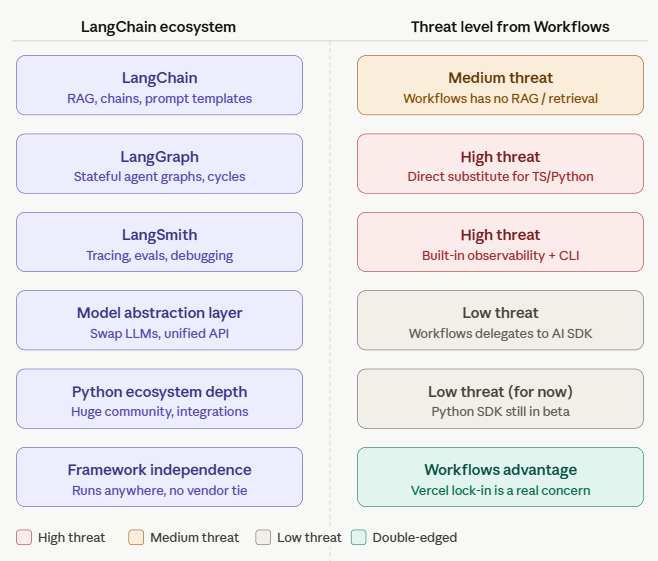
The hardest thing about agents and backends is durability. @workflowsdk fixes this. That LLM you're calling *will* go down. That service *will* rate limit you. That database *will* unexpectedly slow down. You *will* get paged 💀 I've been looking for a unicorn for a decade. I wanted the level of reliability of combining stuff like SQS / Kafka / microservices, and I absolutely did not want *that* at the same time 😂 Truly reliable systems like that are notoriously difficult to reason about, to develop locally, to test, to simulate, to deploy… Workflow SDK solves that without compromises. We're doing what Next.js did for the frontend, but for one of the most important problems of the new generation of backend applications. Notably, Workflow SDK has an incredible self-hosting and multi-cloud story from day 0. We've taken amazing lessons from Next.js and poured them into the many Worlds (adapters) you can deploy to. Congrats to Pranay and the Workflow team on a generational ship: vercel.com/blog/a-new-pro…
Guillermo Rauch tweet media
Vercel@vercel

Vercel Workflows is GA. Your code is the orchestrator. Ship agents, backends, or any long-running process without managing queues, retries, or workers. vercel.com/blog/a-new-pro…

English
67
46
625
123K
Lukas
Lukas@lukasminnebeck·
Claude Code has been disgustingly slow lately. Is it just me?
English
5
0
4
607
Yashu Sharma 🍊
Yashu Sharma 🍊@heyitsyashu·
@steipete Pete why doesn’t OpenAI have a price between 20$ and $200/m… surely this has to be in the works??
English
2
0
70
14.6K
unusual_whales
unusual_whales@unusual_whales·
BREAKING: We’ve given Claude direct access to the full options and equities market. Introducing the Unusual Whales MCP Server. It connects any AI assistant to live, structured market data in real time. Build a trading bot. A finance dashboard. Build whatever you want. Thread:
English
189
311
3.4K
891.9K
Dineth Pramodya retweetledi
Guillermo Rauch
Guillermo Rauch@rauchg·
Almost every SaaS app inside Vercel has now been replaced with a generated app or agent interface, deployed on Vercel. Support, sales, marketing, PM, HR, dataviz, even design and video workflows. It’s shocking. The SaaSpocalypse is both understated and overstated. Over because the key systems of record and storage are still there (Salesforce, Snowflake, etc.) Understated because the software we are generating is more beautiful, personalized, and crucially, fits our business problems better. We struggled for years to represent the health of a Vercel customer properly inside Salesforce. Too much data (trillions of consumption data points), the ontology of Vercel was a mismatch to the built-in assumptions, and the resulting UI was bizarre. We generated what we needed instead. When you don’t need a UI, you just ask an agent with natural language. We’ve also been moving off legacy systems with poor, slow, outdated, and inconsistent APIs, as well as just dropping abstraction down to more traditional databases. UI is a function 𝑓 of data (always has been), and that 𝑓 is increasingly becoming the LLM.
English
262
135
2K
847.1K
Patrick Collins
Patrick Collins@PatrickAlphaC·
Decentralization doesn’t matter, until it’s all that matters
English
34
46
331
10.9K
Dineth Pramodya
Dineth Pramodya@dinethlive·
@PatrickAlphaC Love this! I receieve projects more than before because they come with after validation phase! feels more efficient than before AI period!
English
0
0
0
11
Patrick Collins
Patrick Collins@PatrickAlphaC·
My gym coach just made a new gym website without ever having written a line of JS in their life, because I spent 3 hours with them showing how to use Claude Code. We live in a crazy timeline. I think it’s awesome, more people will be able to do more things.
English
33
8
253
8.1K
Dineth Pramodya retweetledi
Guillermo Rauch
Guillermo Rauch@rauchg·
AI is an amplifier of your intellect and values. A mirror of your soul. If you were a confirmation bias person, AI can be catastrophic for you. There’s some way to contort almost any prompt to give you the answer you’re looking for. The extreme version of this is AI psychosis. If you’re a “more is more” product company, then you’ll inundate yourself in garbage. Imagine joining a company that invented a custom operating system, programming language, and every kind of app they need just because they can. I’m somewhat conflicted here. The more software gets produced, the more Vercel benefits. It all needs to be built, hosted, secured, and scaled. And yet I don’t think every single line of code is worth your company producing. Play the long term game.
English
131
73
896
69.7K
Dineth Pramodya retweetledi
Patrick Collins
Patrick Collins@PatrickAlphaC·
Security through obscurity is not security. The reason we built web3 is to have a credibly neutral and transparent ecosystem. Close sourcing your smart contracts should never be your security solution, it is the illusion of security.
English
27
23
276
12.5K
Dineth Pramodya retweetledi
Andrej Karpathy
Andrej Karpathy@karpathy·
I think it must be a very interesting time to be in programming languages and formal methods because LLMs change the whole constraints landscape of software completely. Hints of this can already be seen, e.g. in the rising momentum behind porting C to Rust or the growing interest in upgrading legacy code bases in COBOL or etc. In particular, LLMs are *especially* good at translation compared to de-novo generation because 1) the original code base acts as a kind of highly detailed prompt, and 2) as a reference to write concrete tests with respect to. That said, even Rust is nowhere near optimal for LLMs as a target language. What kind of language is optimal? What concessions (if any) are still carved out for humans? Incredibly interesting new questions and opportunities. It feels likely that we'll end up re-writing large fractions of all software ever written many times over.
Thomas Wolf@Thom_Wolf

Shifting structures in a software world dominated by AI. Some first-order reflections (TL;DR at the end): Reducing software supply chains, the return of software monoliths – When rewriting code and understanding large foreign codebases becomes cheap, the incentive to rely on deep dependency trees collapses. Writing from scratch ¹ or extracting the relevant parts from another library is far easier when you can simply ask a code agent to handle it, rather than spending countless nights diving into an unfamiliar codebase. The reasons to reduce dependencies are compelling: a smaller attack surface for supply chain threats, smaller packaged software, improved performance, and faster boot times. By leveraging the tireless stamina of LLMs, the dream of coding an entire app from bare-metal considerations all the way up is becoming realistic. End of the Lindy effect – The Lindy effect holds that things which have been around for a long time are there for good reason and will likely continue to persist. It's related to Chesterton's fence: before removing something, you should first understand why it exists, which means removal always carries a cost. But in a world where software can be developed from first principles and understood by a tireless agent, this logic weakens. Older codebases can be explored at will; long-standing software can be replaced with far less friction. A codebase can be fully rewritten in a new language. ² Legacy software can be carefully studied and updated in situations where humans would have given up long ago. The catch: unknown unknowns remain unknown. The true extent of AI's impact will hinge on whether complete coverage of testing, edge cases, and formal verification is achievable. In an AI-dominated world, formal verification isn't optional—it's essential. The case for strongly typed languages – Historically, programming language adoption has been driven largely by human psychology and social dynamics. A language's success depended on a mix of factors: individual considerations like being easy to learn and simple to write correctly; community effects like how active and welcoming a community was, which in turn shaped how fast its ecosystem would grow; and fundamental properties like provable correctness, formal verification, and striking the right balance between dynamic and static checks—between the freedom to write anything and the discipline of guarding against edge cases and attacks. As the human factor diminishes, these dynamics will shift. Less dependence on human psychology will favor strongly typed, formally verifiable and/or high performance languages.³ These are often harder for humans to learn, but they're far better suited to LLMs, which thrive on formal verification and reinforcement learning environments. Expect this to reshape which languages dominate. Economic restructuring of open source – For decades, open-source communities have been built around humans finding connection through writing, learning, and using code together. In a world where most code is written—and perhaps more importantly, read—by machines, these incentives will start to break down.⁴ Communities of AIs building libraries and codebases together will likely emerge as a replacement, but such communities will lack the fundamentally human motivations that have driven open source until now. If the future of open-source development becomes largely devoid of humans, alignment of AI models won't just matter—it will be decisive. The future of new languages – Will AI agents face the same tradeoffs we do when developing or adopting new programming languages? Expressiveness vs. simplicity, safety vs. control, performance vs. abstraction, compile time vs. runtime, explicitness vs. conciseness. It's unclear that they will. In the long term, the reasons to create a new programming language will likely diverge significantly from the human-driven motivations of the past. There may well be an optimal programming language for LLMs—and there's no reason to assume it will resemble the ones humans have converged on. TL; DR: - Monoliths return – cheap rewriting kills dependency trees; smaller attack surface, better performance, bare-metal becomes realistic - Lindy effect weakens – legacy code loses its moat, but unknown unknowns persist; formal verification becomes essential - Strongly typed languages rise – human psychology mattered for adoption; now formal verification and RL environments favor types over ergonomics - Open source restructures – human connection drove the community; AI-written/read code breaks those incentives; alignment becomes decisive - New languages diverge – AI may not share our tradeoffs; optimal LLM programming languages may look nothing like what humans converged on ¹ x.com/mntruell/statu… ² x.com/anthropicai/st… ³ wesmckinney.com/blog/agent-erg…#issuecomment-3717222957" target="_blank" rel="nofollow noopener">github.com/tailwindlabs/t…

English
700
654
8.1K
1.2M
Google Antigravity
Google Antigravity@antigravity·
Whether you’re crafting code or managing a fleet of agents, the agent adapts to your personal preferences. A breakdown of the 4 modes in @antigravity 👇
English
63
69
859
55.6K
Dineth Pramodya
Dineth Pramodya@dinethlive·
@antigravity @NanoBanana Before this video I used it! Really helpful to accelarate the workflow with this. Also noticed inifnite img generation without using them to continue with tasks list.
English
0
0
0
491
Google Antigravity
Google Antigravity@antigravity·
Watch how the agent in Antigravity uses @NanoBanana to generate stunning images and then integrates them into your project. It's that easy.
English
122
149
2.2K
131.5K
Dineth Pramodya retweetledi
Michael Boswell
Michael Boswell@mjboswell·
Some people still don’t grasp this simple truth: at scale, continued AI progress is about how efficiently you can turn energy into intelligence. You can engineer around almost anything. Thermodynamics is not one of them.
English
86
68
1.3K
107.6K
Dineth Pramodya
Dineth Pramodya@dinethlive·
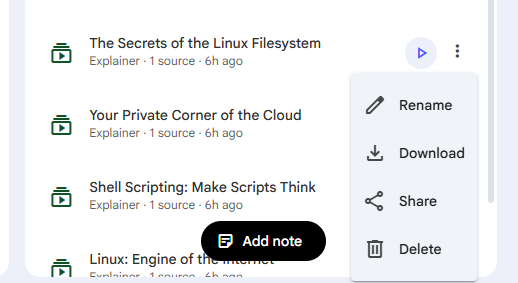
Feature Request, 1. It would be helpful to see which source is currently selected for a specific generation. 2. To prevent accidental generations, adding a "Stop" button or a confirmation prompt would make the user experience much smoother.
Dineth Pramodya tweet media
English
0
0
1
68
NotebookLM
NotebookLM@NotebookLM·
Question for the crowd: Have you ever generated an artifact (AO, VO, Infographic, Slide Deck, etc) and not opened it? What was the reason? Feel free to select an option in the poll or reply with your answer!
English
69
11
153
50.6K
Car
Car@CarOnPolymarket·
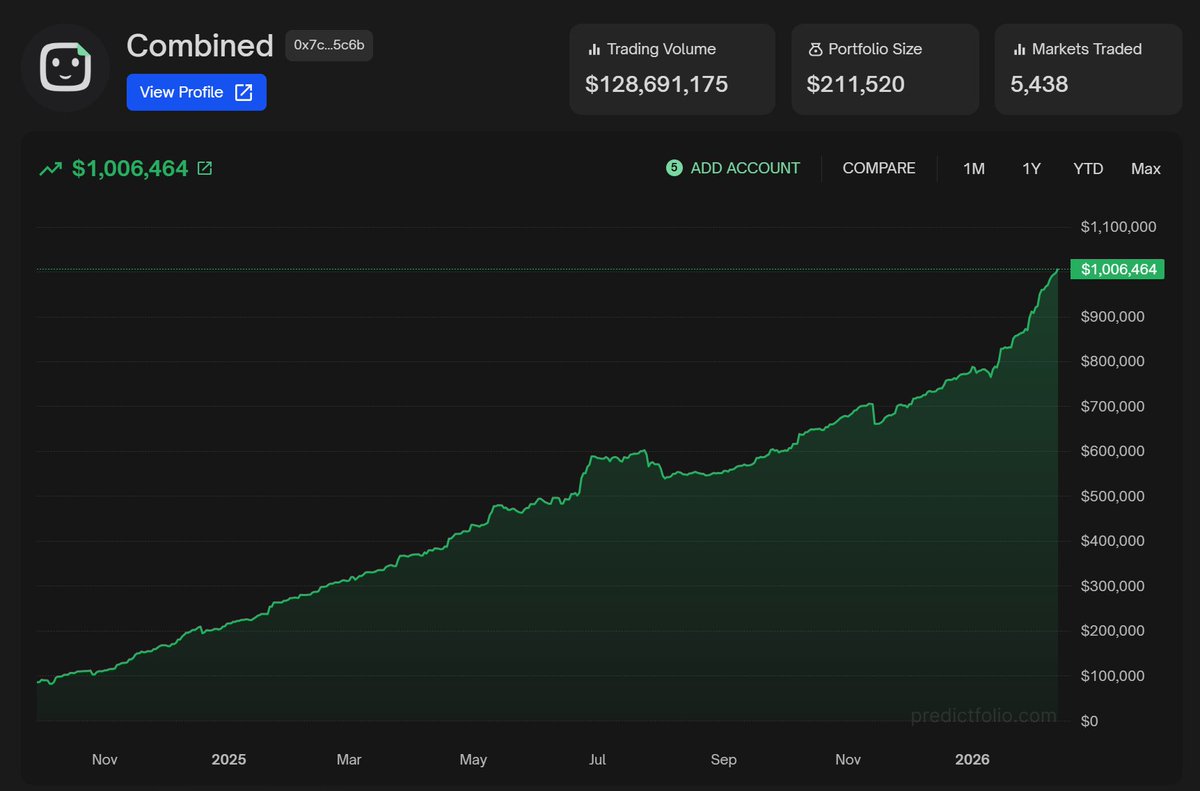
I started with a couple hundred dollars to test the platform, I was down -$2K in my first months. Now im at $1M. So cool My main account: poly.market/user/Car
English
6
3
74
6.1K