Davide Coluccia

65 posts

Davide Coluccia banner
Davide Coluccia

Davide Coluccia

@dm_coluccia

Assist. Prof. @BristolUniEcon: innovation, labor, history. Previously: @NUEconomics, @unibocconi, @SantAnnaPisa, among others. Roman.

Bristol, England Katılım Ağustos 2022
590 Takip Edilen298 Takipçiler
Davide Coluccia retweetledi

Paul Hufe
Paul Hufe@PaulHufe·
Last day of BÆM 2026. We conclude with a workshop on "Fairness in the Economy." We again have a jam-packed program of great presentations: baem.info/Program_FIE_26… Stay tuned for live coverage!
English
2
3
7
671
Davide Coluccia
Davide Coluccia@dm_coluccia·
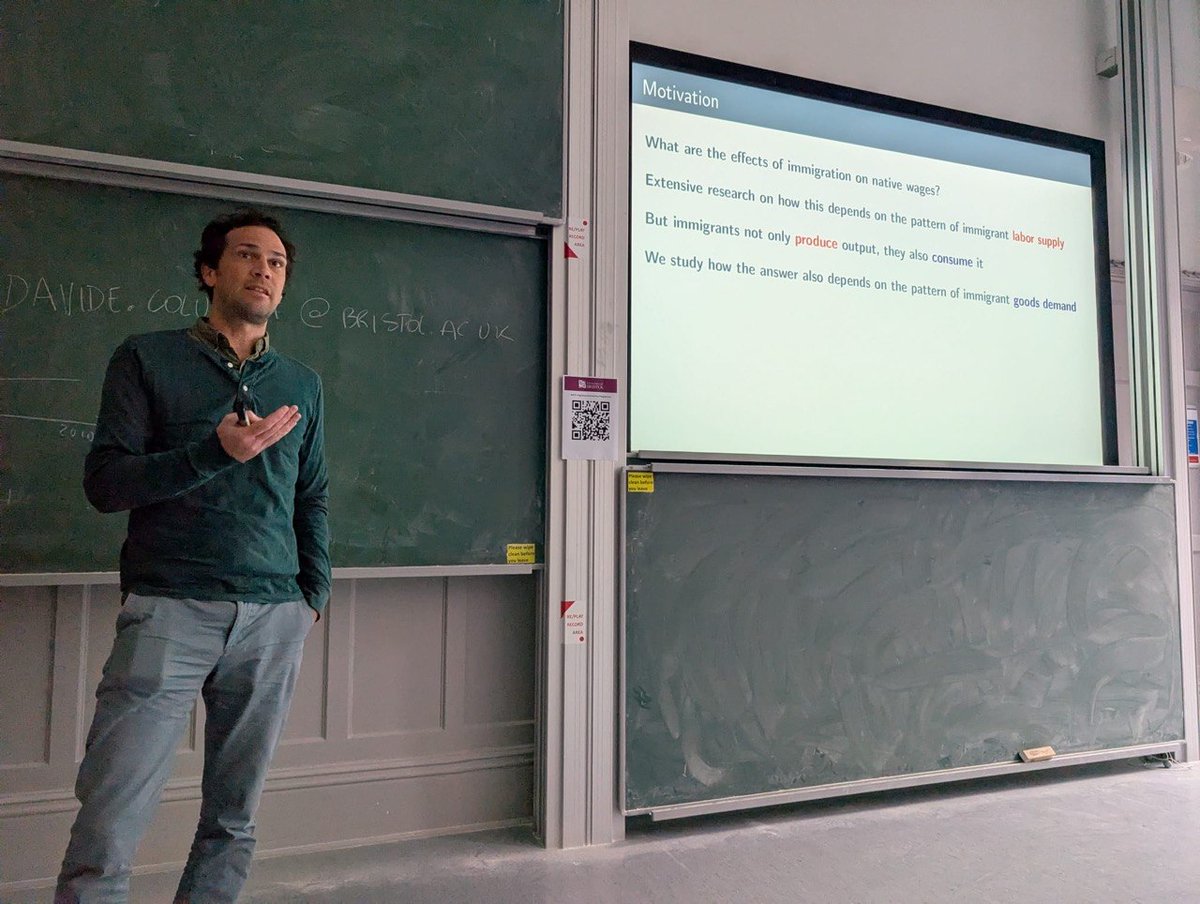
@TomanBarsbai Closing talk by our fourth invited speaker @JoanMonrasEcon: immigrants are not just producers, but also consumers. Using Norwegian data and EU expansions, natives in jobs exposed to immigrant demand experience large, persistent income gains. The labor supply curve slopes upward.
Davide Coluccia tweet media
English
0
3
8
634
Davide Coluccia
Davide Coluccia@dm_coluccia·
The second session of the 2026 Bristol Applied Economics Meeting is on the Economics of Migration. We have an amazing program ahead of us. Stay tuned for one key takeaway per talk. Program: baem.info/Program_MIG_26…
Davide Coluccia tweet media
English
18
3
9
842
Davide Coluccia
Davide Coluccia@dm_coluccia·
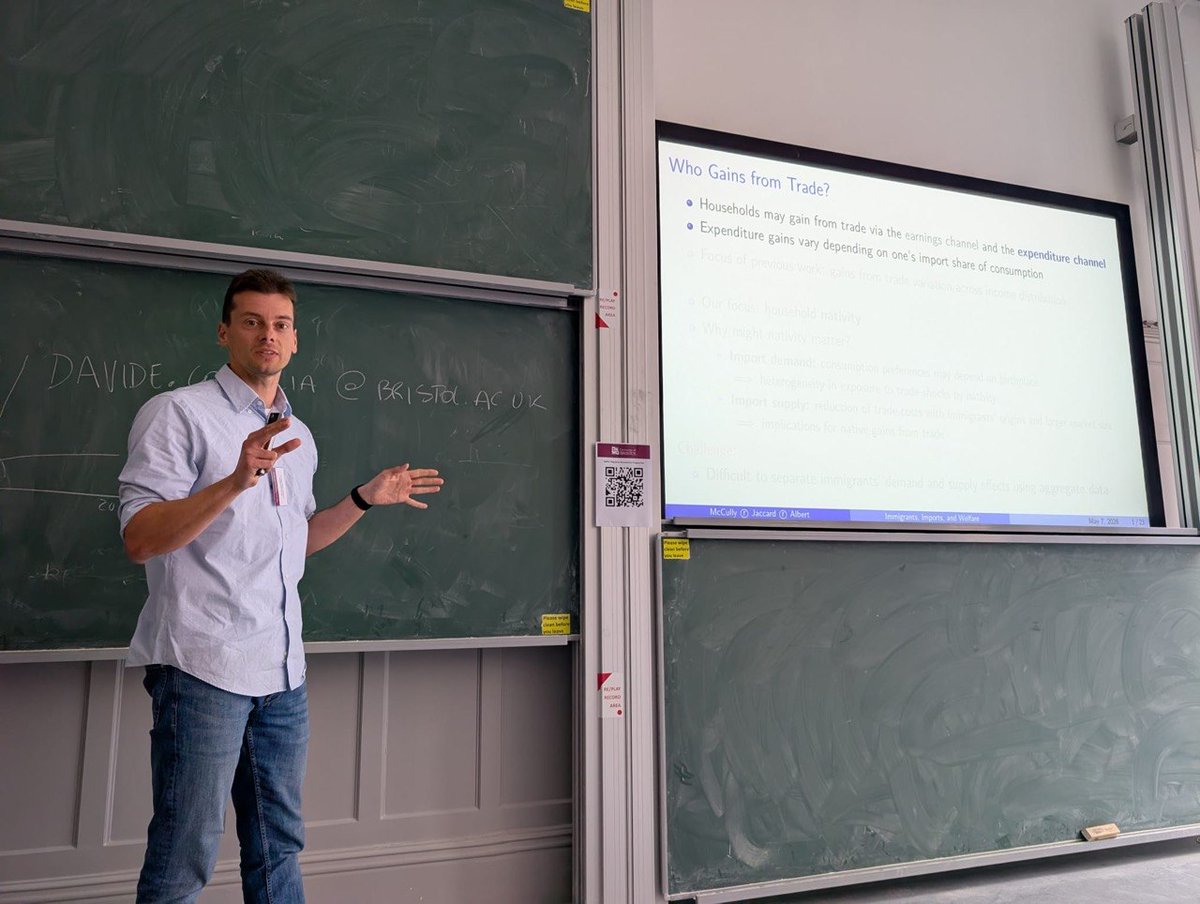
@TomanBarsbai @ChrisFAlbert shows that US immigrants buy substantially more imported goods than natives. They also reduce trade costs and increase local import supply, with small spillovers to natives. Tariffs hit immigrant households far harder than natives.
Davide Coluccia tweet media
English
0
2
2
339
Davide Coluccia
Davide Coluccia@dm_coluccia·
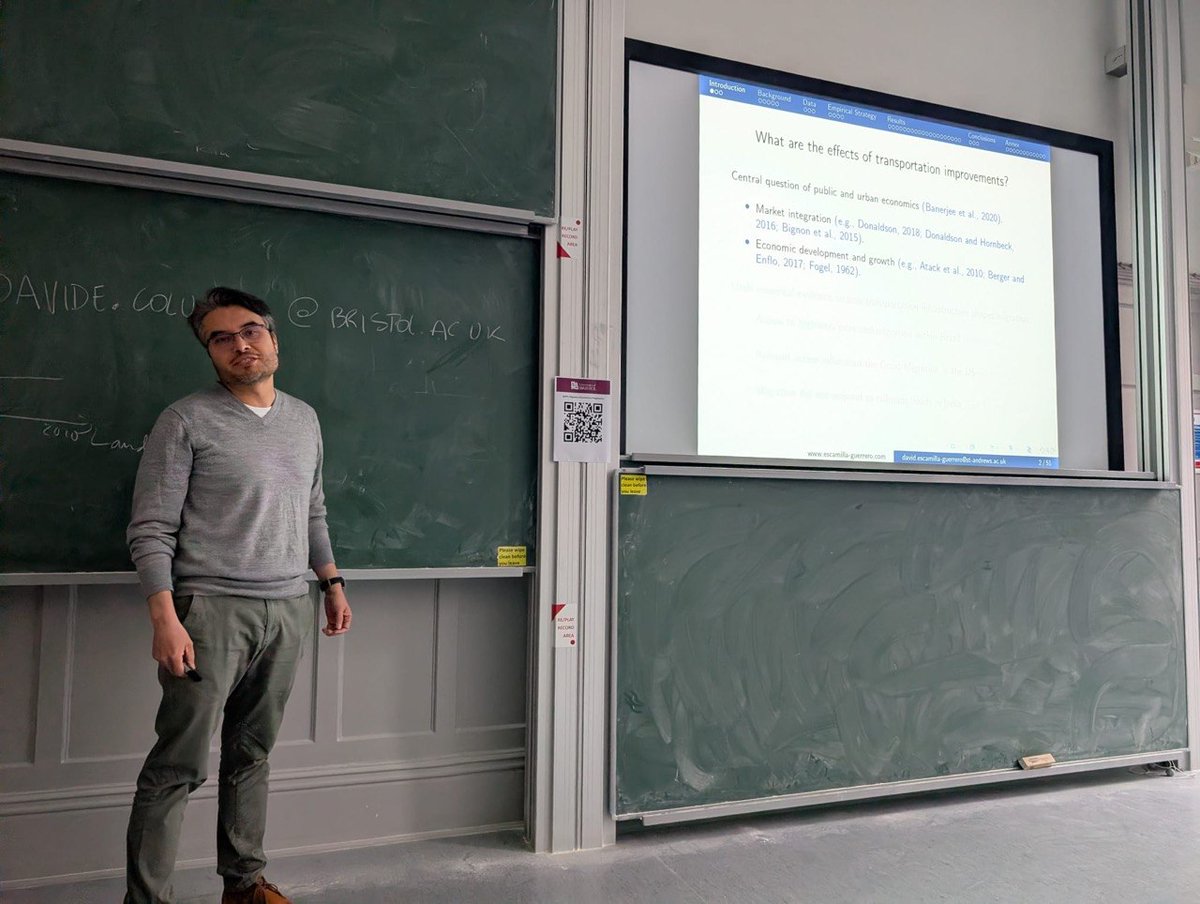
@TomanBarsbai @drescamillag documents that early 20th-century railroad access in Mexico doubled migration to the US. The effect persists, despite railroads becoming obsolete. Mechanism: migrant-assisting institutions emerged, turning rail lines into persistent migration corridors.
Davide Coluccia tweet media
English
0
2
6
199
Davide Coluccia
Davide Coluccia@dm_coluccia·
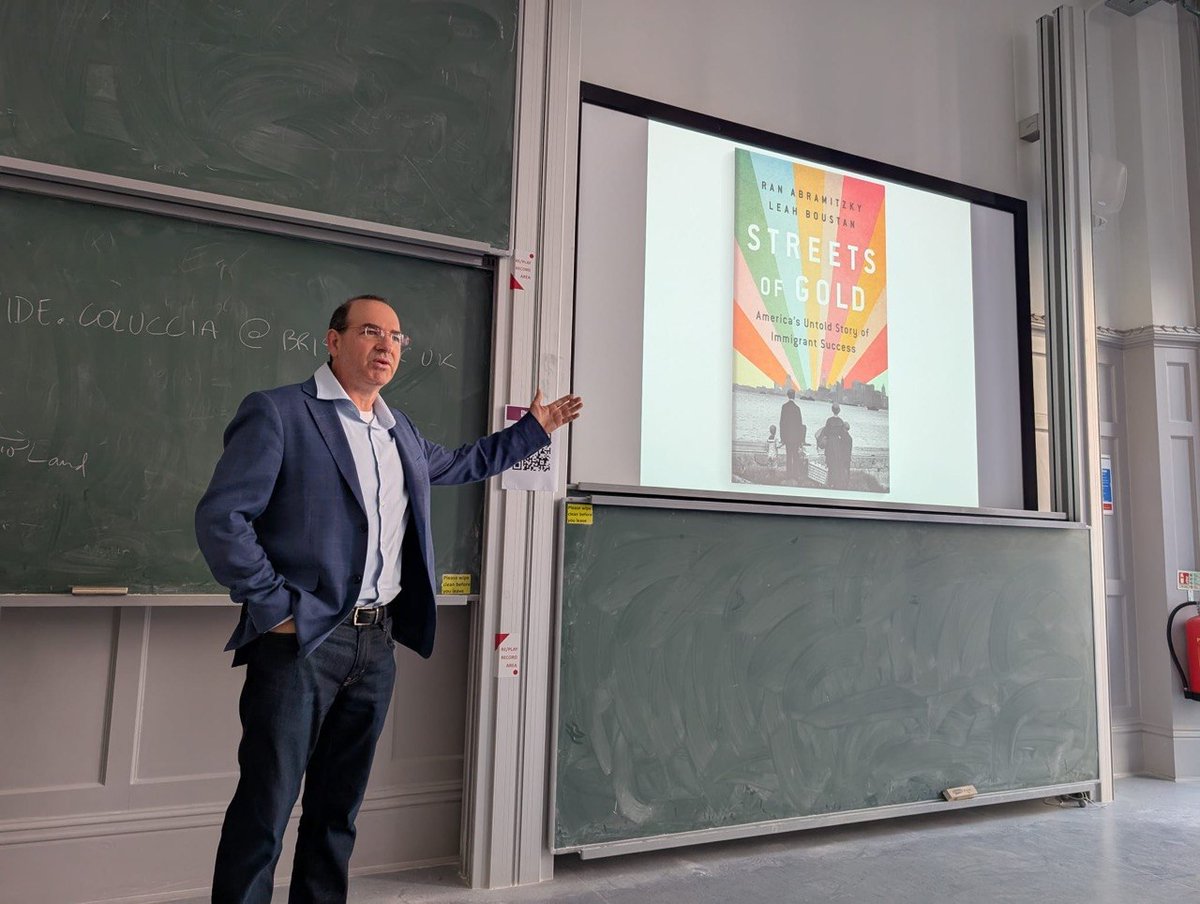
@TomanBarsbai Our third invited speaker, Ran Abramitzky (@StanfordEcon), on the interaction between immigration and politics: if immigrants' outcomes are positive, why is immigration politics so negative? Long-run perspective using historical US data.
Davide Coluccia tweet media
English
0
2
5
283
Davide Coluccia
Davide Coluccia@dm_coluccia·
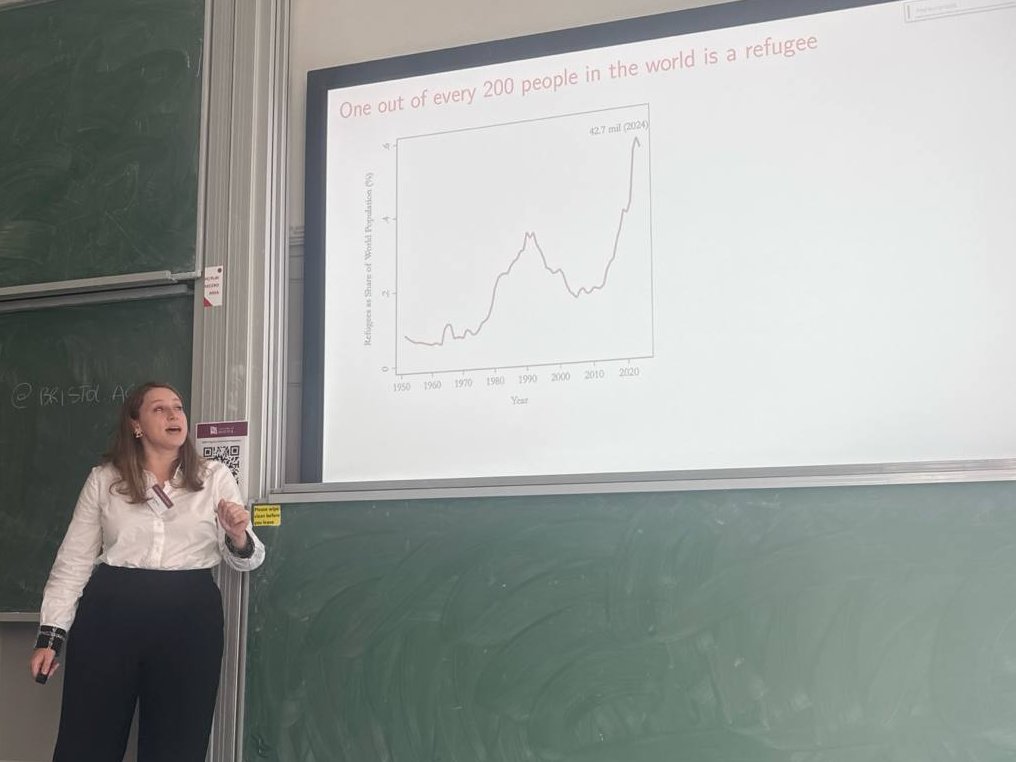
@TomanBarsbai @sosakalli shows Greek Orthodox refugees expelled from Anatolia to Greece in the 1920s (and their descendants) initially lagged in education but eventually outperformed natives. They also favored more portable degrees such as engineering & medicine.
Davide Coluccia tweet media
English
0
2
5
246
Davide Coluccia
Davide Coluccia@dm_coluccia·
@TomanBarsbai Can migrant letters shape culture at origin? @MartinFS13 presents evidence from 6,000+ letters by 19th-century Irish migrants in North America. The Catholic Church’s staggered expansion in the US increased religious content, contributing to a Catholic revival in Ireland.
Davide Coluccia tweet media
English
0
2
5
210
Davide Coluccia
Davide Coluccia@dm_coluccia·
@TomanBarsbai Second day! First up is @DSchindlerEcon showing that sexual violence committed by French-Moroccan soldiers in Italy during WWII triggered a far-right shift after the recent arrival of immigrants from Syria/MENA. Mechanism: selective recall of collective memory.
Davide Coluccia tweet media
English
0
2
2
320
Davide Coluccia
Davide Coluccia@dm_coluccia·
@TomanBarsbai Closing talk by Mushfiq Mobarak (@YaleEconomics), who revisits a central question in development: when mobility can unlock opportunity, should policy be designed to help people move?
Davide Coluccia tweet media
English
0
2
7
422
Davide Coluccia
Davide Coluccia@dm_coluccia·
@TomanBarsbai @Sarah_Winton_ studies Jordan’s decision to grant Syrian refugees the right to work. Refugees moved to better jobs, while Jordanians shifted out of the most exposed occupations. Result: higher output, lower inequality, and the largest gains for the poorest Jordanians.
Davide Coluccia tweet media
English
0
2
3
218
Davide Coluccia
Davide Coluccia@dm_coluccia·
@TomanBarsbai Next up, @Linchuan_Xu studies labor recruitment agencies in China. By connecting workers in poorer regions to jobs in high-wage cities, these middlemen increase temporary migration, narrow regional wage gaps, generate output gains, and capture a large share as profits.
Davide Coluccia tweet media
English
1
3
5
239
Davide Coluccia
Davide Coluccia@dm_coluccia·
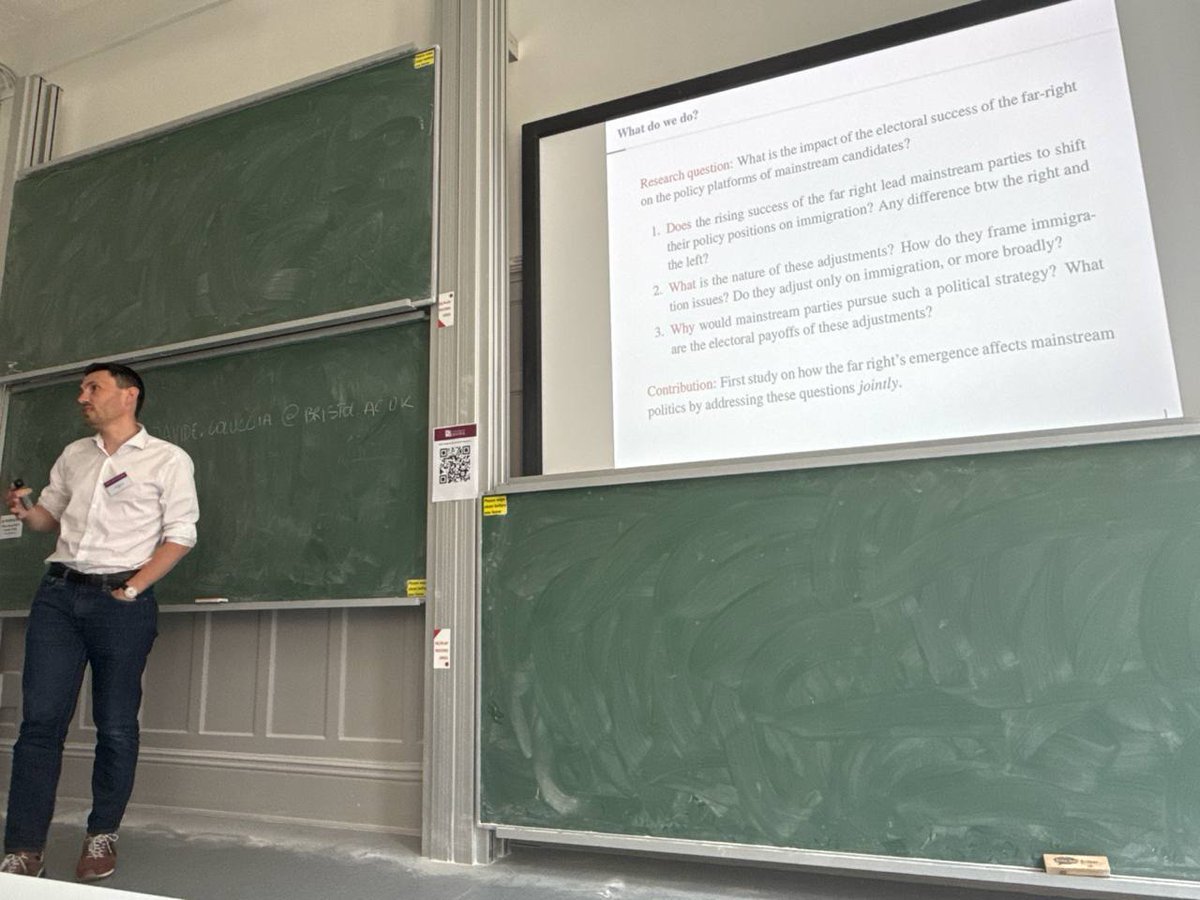
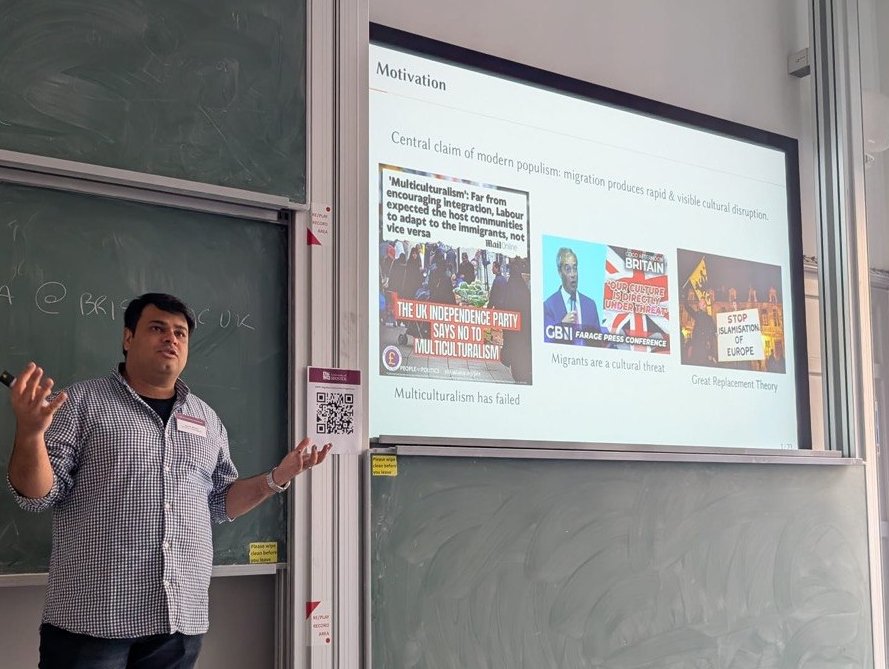
@TomanBarsbai Jérôme Valette (@CEPII_Paris) studies how far-right movements reshape mainstream politics in France. As the Front National gained votes, mainstream right candidates moved to its terrain, talking more negatively about immigration and linking it to crime and welfare.
Davide Coluccia tweet media
English
0
1
1
158
Davide Coluccia
Davide Coluccia@dm_coluccia·
@TomanBarsbai With @ctheoharides, we turn to how migration moves more than people. International mobility can carry skills, ideas, and human capital across borders, with important lessons for how policy shapes who benefits from these flows.
Davide Coluccia tweet media
English
0
2
2
196
Davide Coluccia
Davide Coluccia@dm_coluccia·
@TomanBarsbai Final speaker before lunch: @GovindYajna, who studies France’s 1993 reform requiring children of immigrants to formally request French citizenship. The reform weakened French identity, increased perceived discrimination, and reduced cultural integration.
Davide Coluccia tweet media
English
0
2
3
196
Davide Coluccia
Davide Coluccia@dm_coluccia·
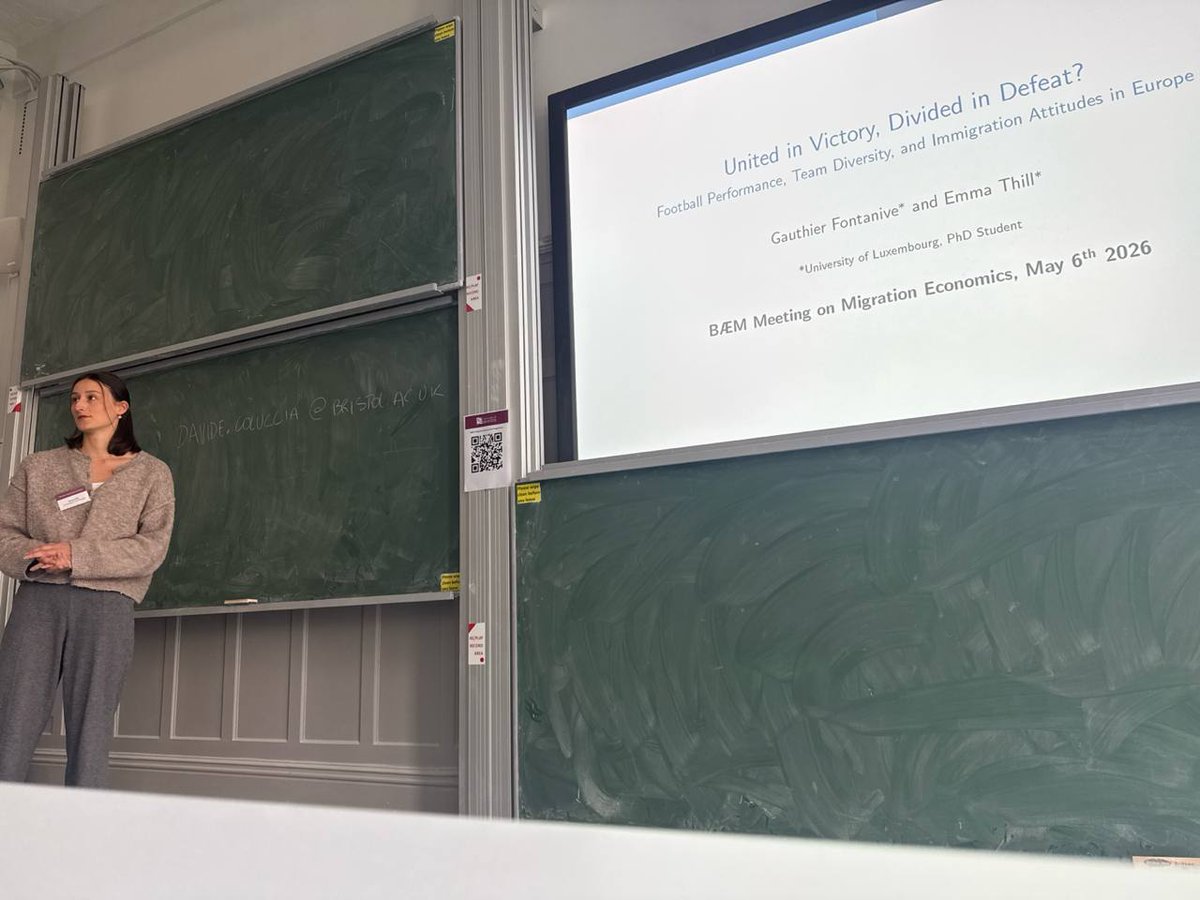
@TomanBarsbai Emma Thil (U. of Luxembourg) studies how European national football shapes immigration attitudes. When diverse teams win, people become more open to immigration. When they lose, immigrant-origin players become scapegoats, and support for the far right increases.
Davide Coluccia tweet media
English
0
2
3
207
Davide Coluccia
Davide Coluccia@dm_coluccia·
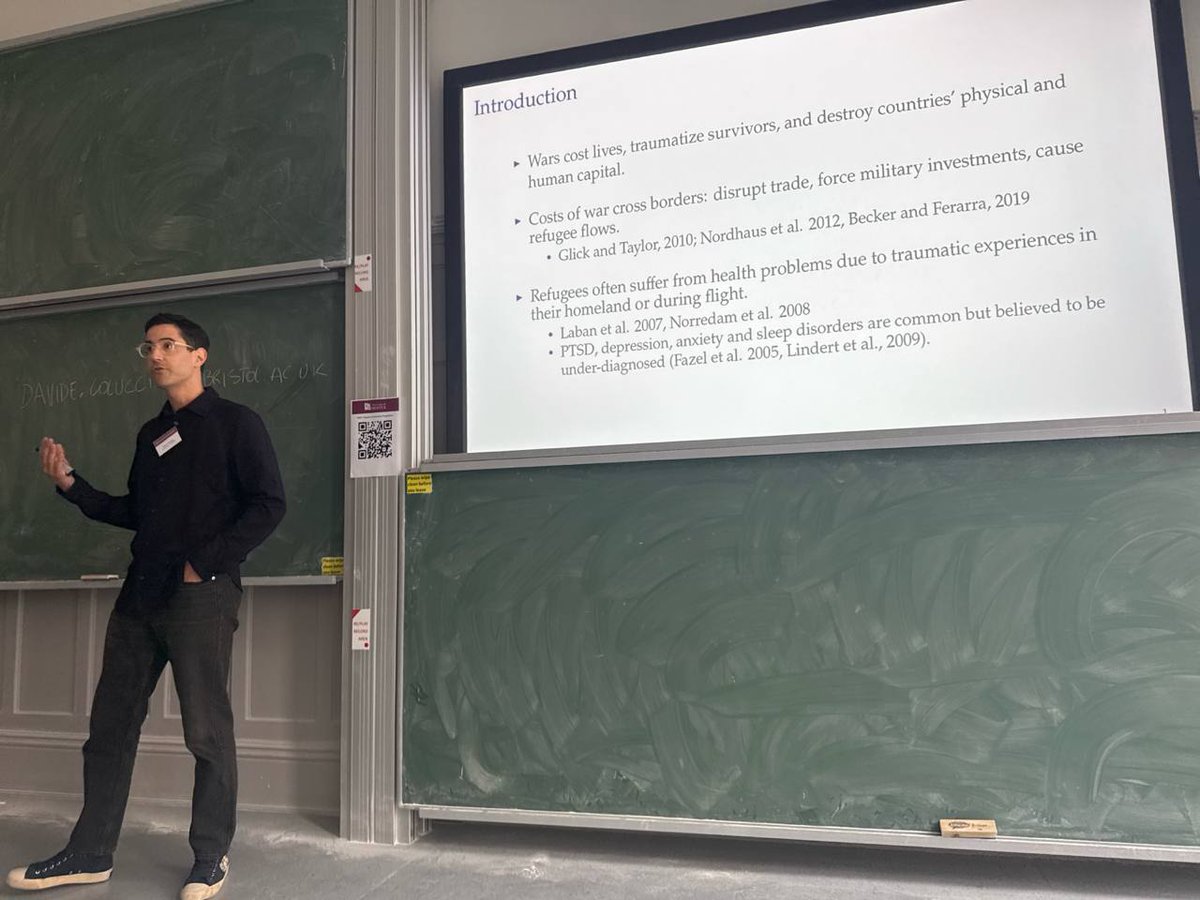
@TomanBarsbai Next, @mkaradja shows that war reaches people who never enter the conflict zone. After Russia’s invasion of Ukraine, Ukrainians in Sweden saw mental-health prescriptions rise by 30%, while also working and earning more to support family and friends at home.
Davide Coluccia tweet media
English
0
3
8
1.8K
Davide Coluccia
Davide Coluccia@dm_coluccia·
@TomanBarsbai @AlexMYarkin on how the internet changed the migration experience. As access expands at home, immigrants in the US stay connected to origin networks, leading to lower English proficiency and naturalization, but less segregation and higher well-being.
Davide Coluccia tweet media
English
0
3
2
396
Davide Coluccia
Davide Coluccia@dm_coluccia·
@TomanBarsbai Next, Mette Foged (@uni_copenhagen) studies Denmark’s decision to label high-immigrant neighborhoods as “ghettos.” Rather than fostering social cohesion, the policy backfired: families chose more foreign-sounding names and cultural distance widened.
Davide Coluccia tweet media
English
0
2
2
261
Davide Coluccia
Davide Coluccia@dm_coluccia·
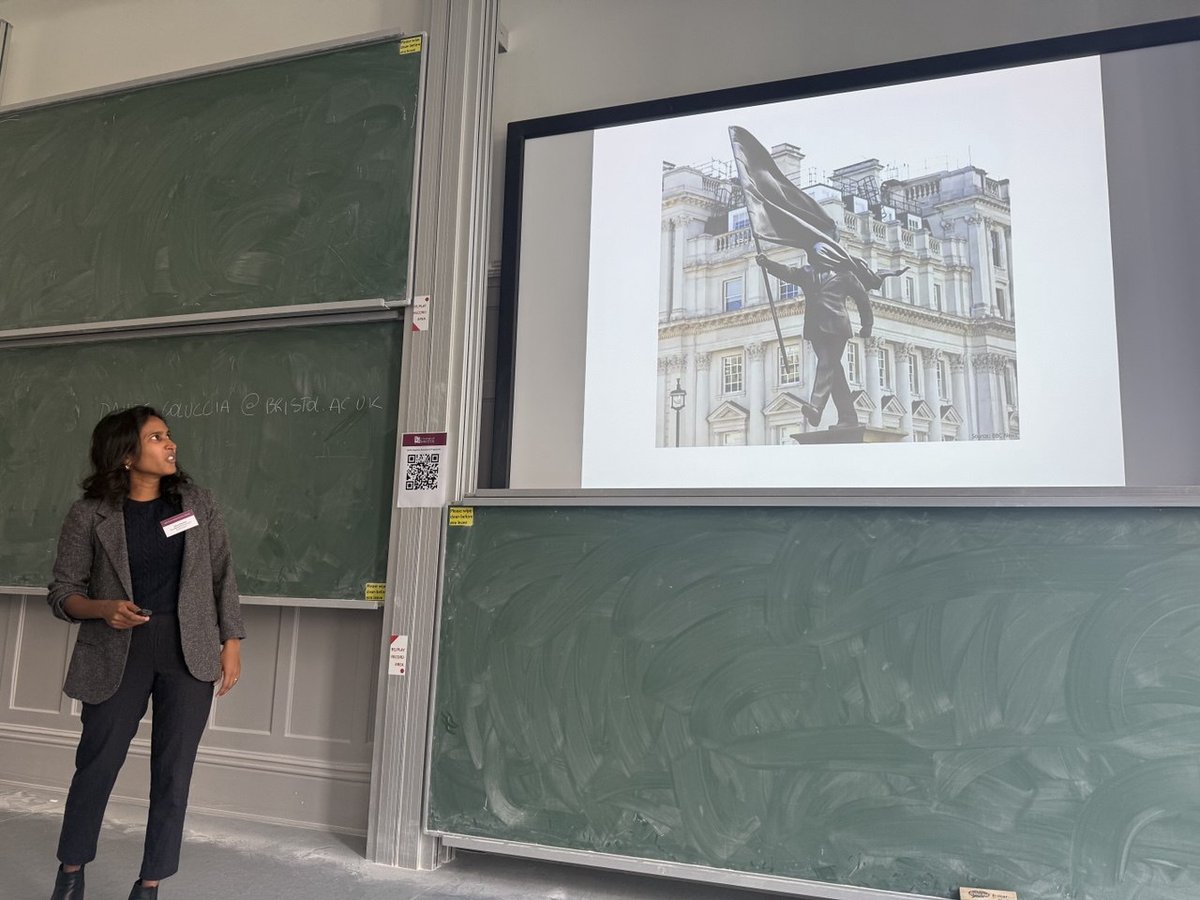
First up is Apurav Bhatiya (@unibirmingham), who shows that violence against Hindus in India fuels anti-Muslim rhetoric in Westminster. Why? UK MPs respond to constituency pressures in areas with larger Hindu communities.
Davide Coluccia tweet media
English
0
2
4
180